Tuna, Teyari and the Taste of Tokyo
There were a few things I knew I absolutely had to experience in Japan.
Rugby? Check.
Sake? Absolutely.
Hiroshima, Osaka and Kyoto? Of course.
Mount Fuji? Naturally.
But there was one more box I wanted to tick before we left: I wanted to get up close and personal with Japan’s famous fish market. The worlds largest fish market. Approximately 700 tonnes sold daily. That amounts to about 1.7 billion USD each day 5 days a week in 1 hour. That is crazy!
And when I say close, I mean I wanted to see the fish, the people, the tools, the traditions and the food that make their way from the sea to the plate.
Enter Toyosu Market.
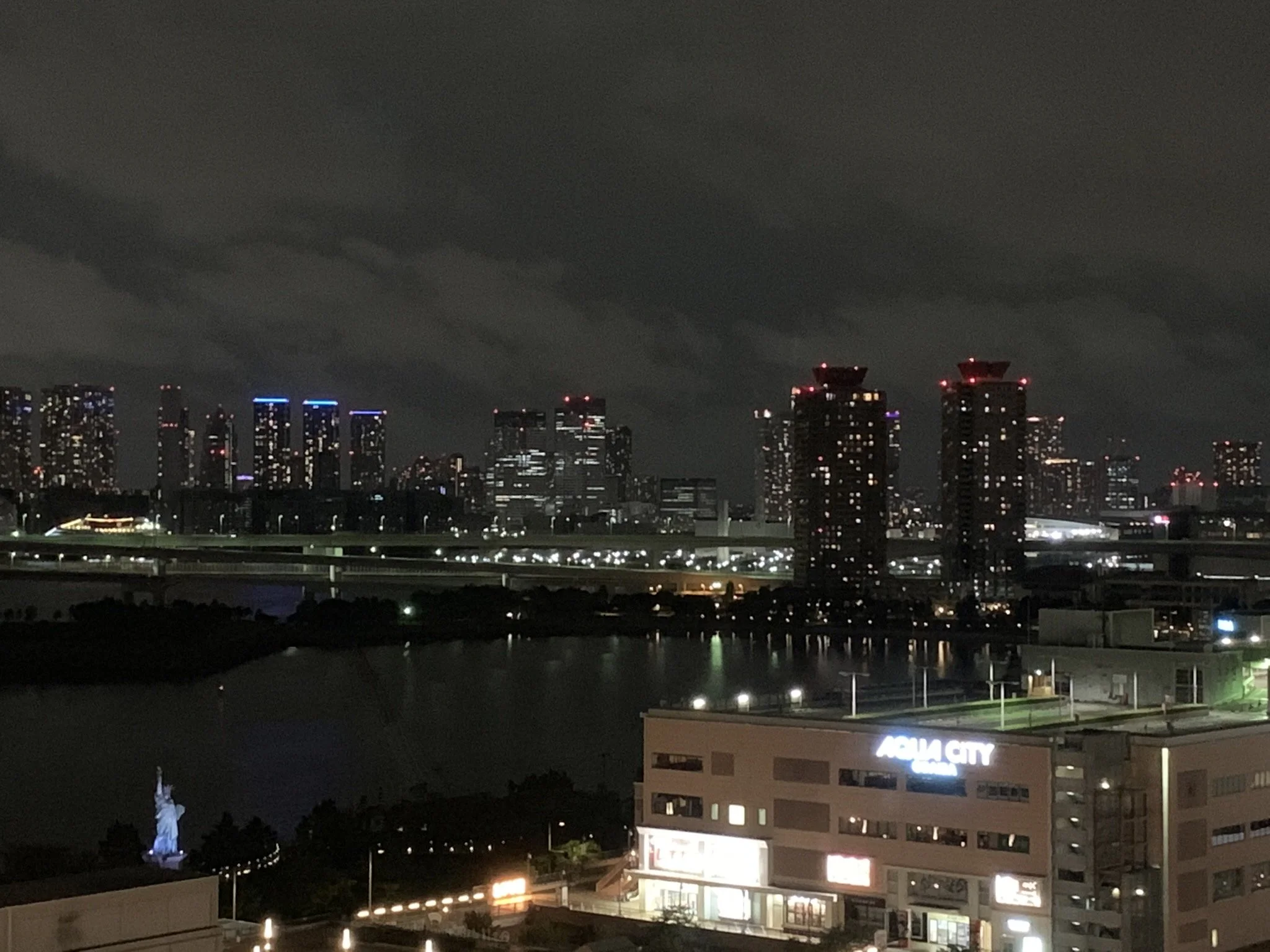
If you want to understand Tokyo’s fish market, you’d better be prepared to set your alarm for a time when most sensible people are still sleeping.
Tokyo’s legendary Tsukiji Fish Market, was once one of the world’s great seafood markets and, at its peak, handled more than 2,000 tonnes of fresh seafood a day. But as the market grew, so did the crowds and the demands on the aging facility.
In October 2018, the wholesale functions — including the famous tuna auctions — moved to a brand-new facility at Toyosu, built on reclaimed land in Tokyo Bay.
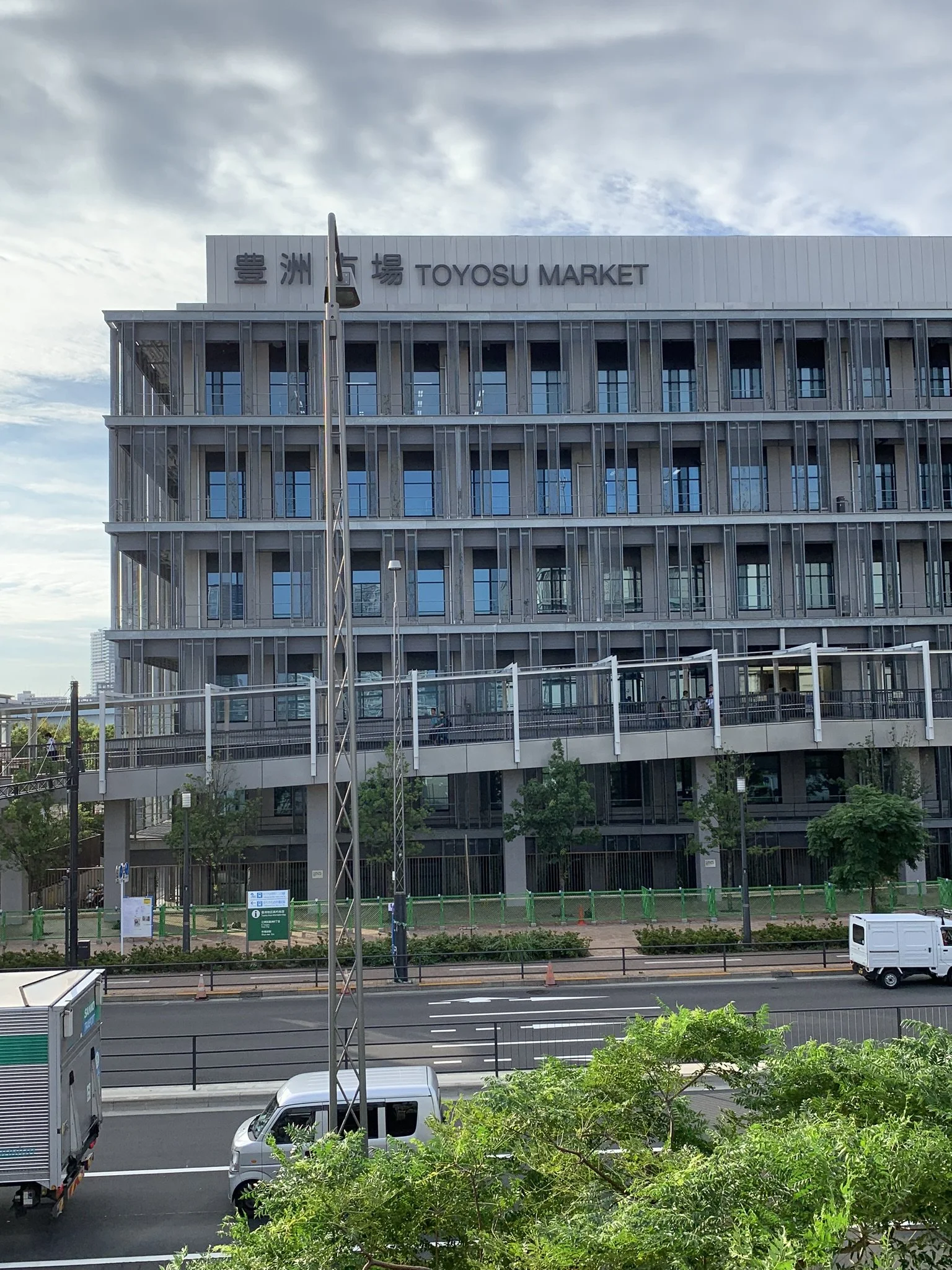
Toyosu was designed to handle the scale and logistics of a modern international food market. It is almost twice the size of the former Tsukiji site and includes climate control, food-safety systems and more efficient logistics.
I found an experience on Airbnb that sounded almost too good to be true.
Toshi’s World’s Largest Fish Market Tour was a roughly six-hour food adventure that would take us into Toyosu, through the tuna auction experience, around the market and later into other food areas of Tokyo before finishing with a meal prepared from ingredients we helped select.
Toshi is a restaurant owner who has spent years working around Tokyo’s central fish markets. His connections meant we weren’t simply walking through as tourists; we were getting an education from someone who actually understood the business behind the fish.
It was worth every penny.
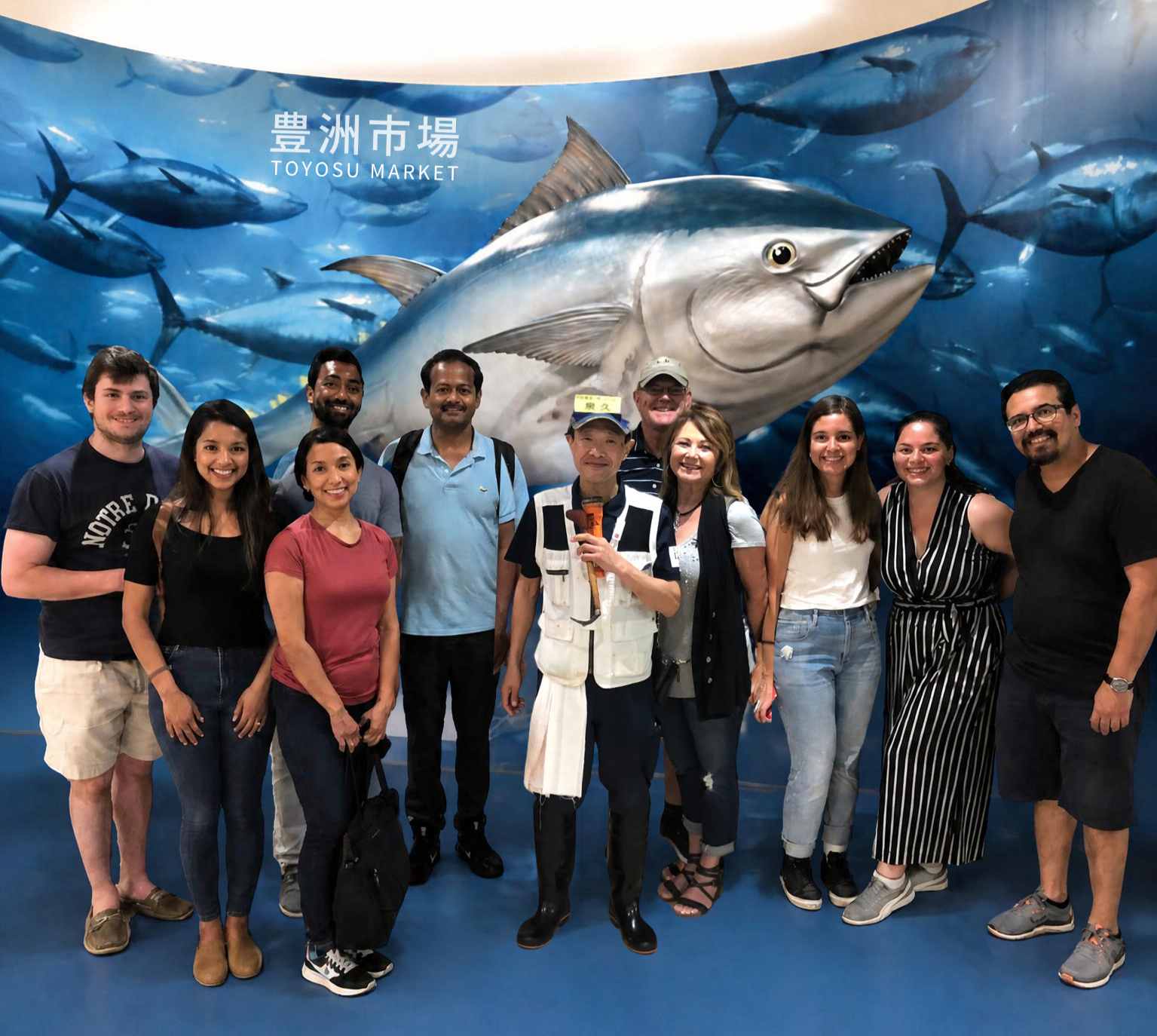
There were ten of us on the tour, and somewhere between trying to find our meeting point and navigating the ungodly hour, we met the other guests who would become our temporary fish-market family.
Our First Stop: The Tuna Auction
The first thing you need to know about Toyosu is that the tuna auction does not wait for tourists.
The market opens to visitors at about 5:00 a.m., but behind the scenes, the work begins much earlier — around 2:00 a.m. The tuna auction begins around 5:30 a.m. The close-up observation area requires advance registration and a lottery, while the public viewing walkway allows visitors to watch from above.
We stood above the auction floor, looking down at row after row of enormous tuna.
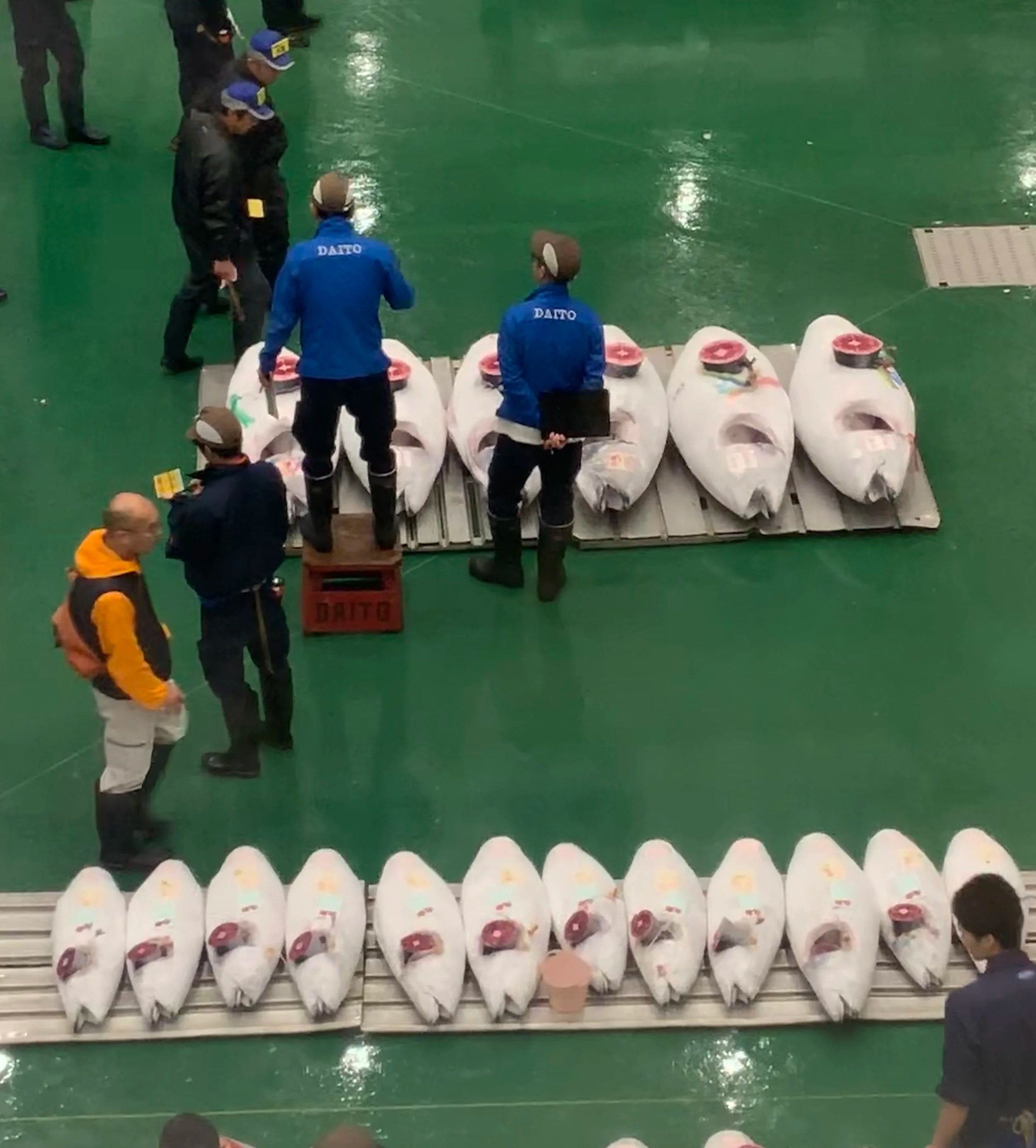
Frozen bluefin tuna lay lined up across the floor.
Before the auction, buyers carefully inspect the fish. With a small sample cut from the tail, they examine the colour, texture and fat content. The buyers know exactly what they’re looking for.
I was just trying to keep up.
Then the auction started.
Our guide, Toshi, even pretended to be the auctioneer for the day. I’m not sure what he was saying, but the video still makes me smile. See video on link below.
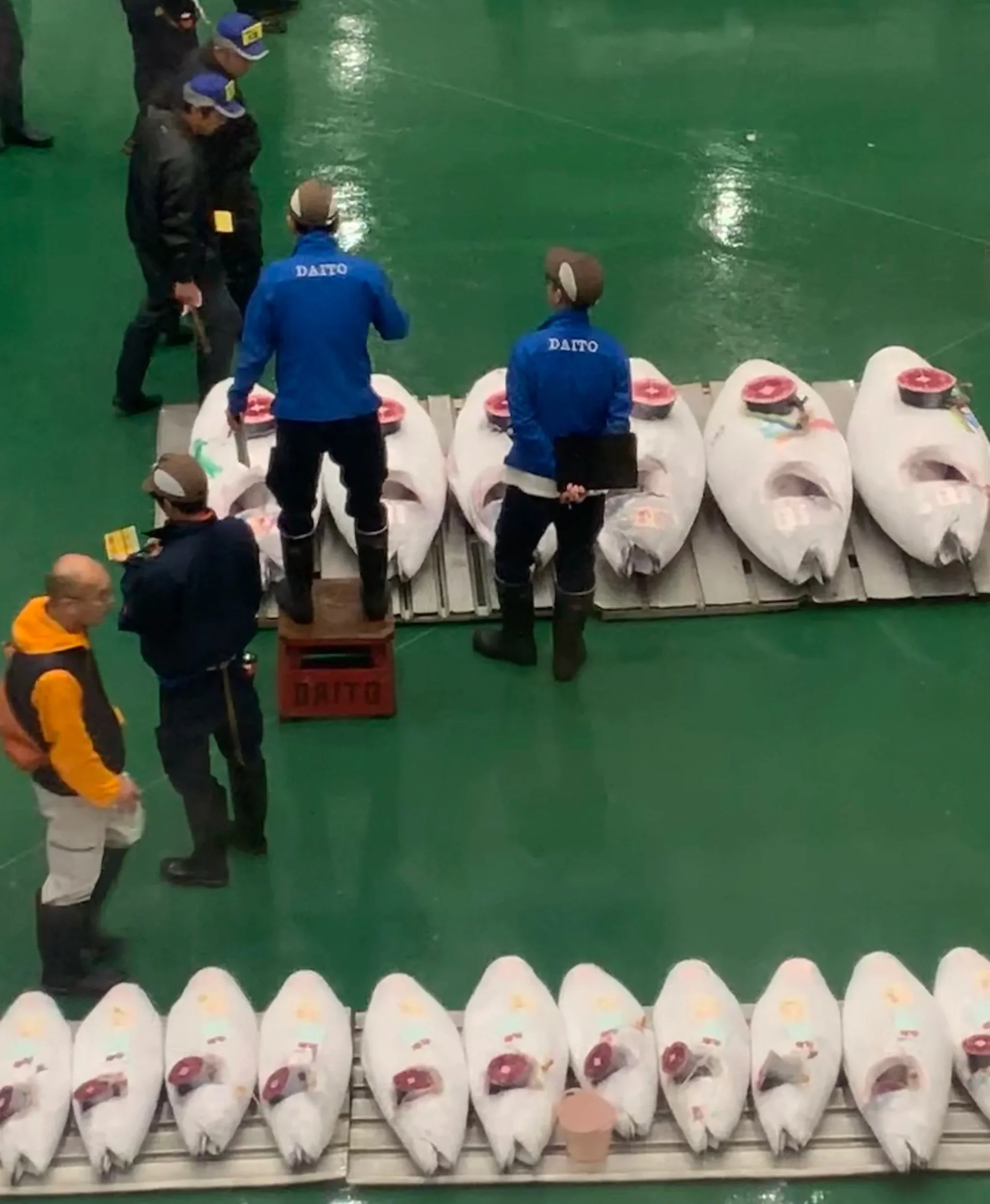
The auctioneer jumped up on a box. Bells rang. Buyers watched. Hands went up.
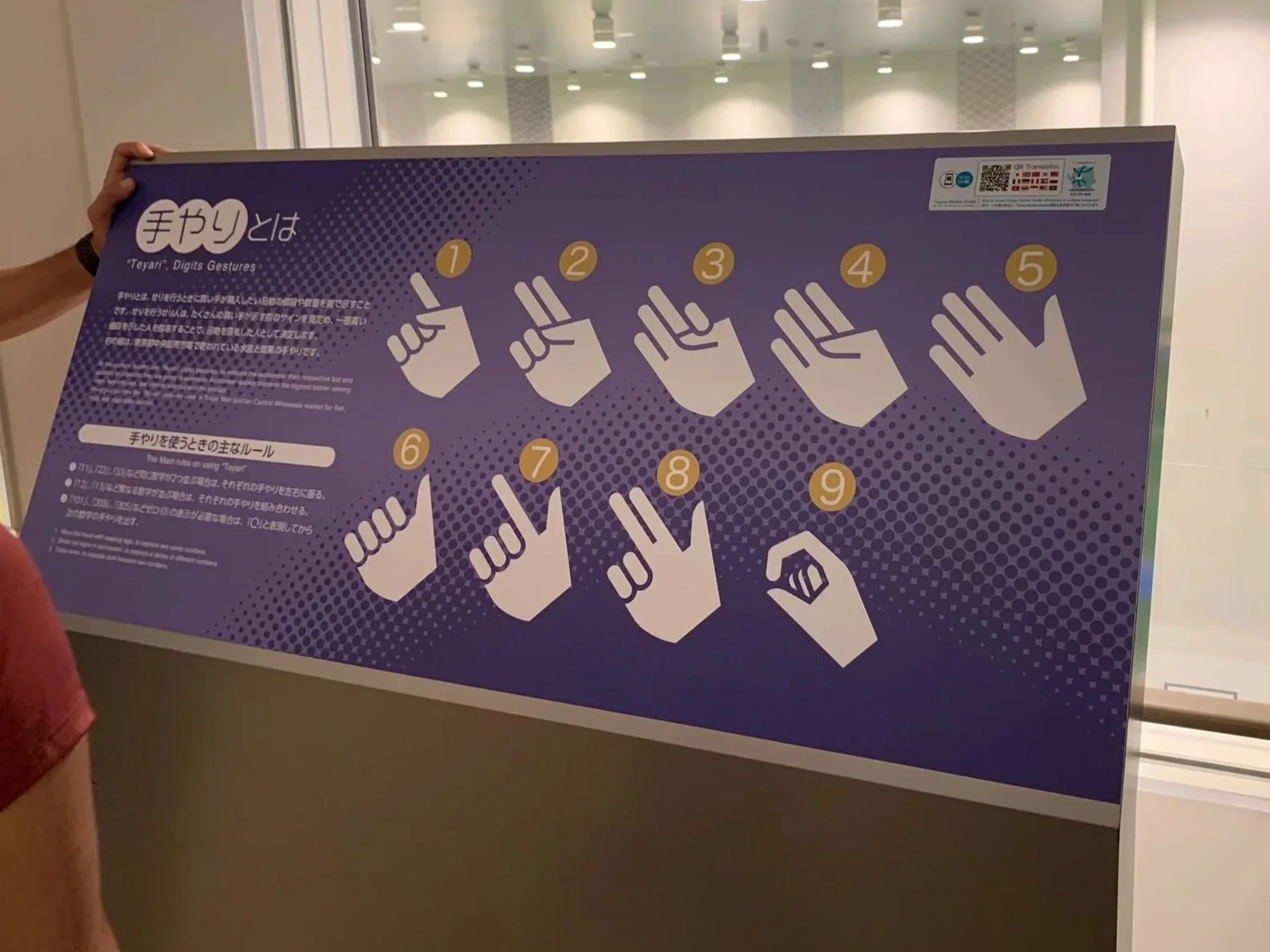
But here’s the fascinating part: much of the bidding happens through teyari, traditional hand signals used to communicate bids.
No waving a paddle. No shouting, “I’ll give you $50!”
Just highly practised finger movements that the buyers and auctioneers understand almost instantly.
Some bids can be completed in seconds.
Blink and you’ve missed it.
What struck me most was the expertise behind the process. The buyers weren’t simply guessing at the value of a fish. They were assessing its quality, fat content and condition before committing serious money.
Toyosu is an international marketplace, and the tuna arriving there can come from waters around Japan and fishing grounds around the world.
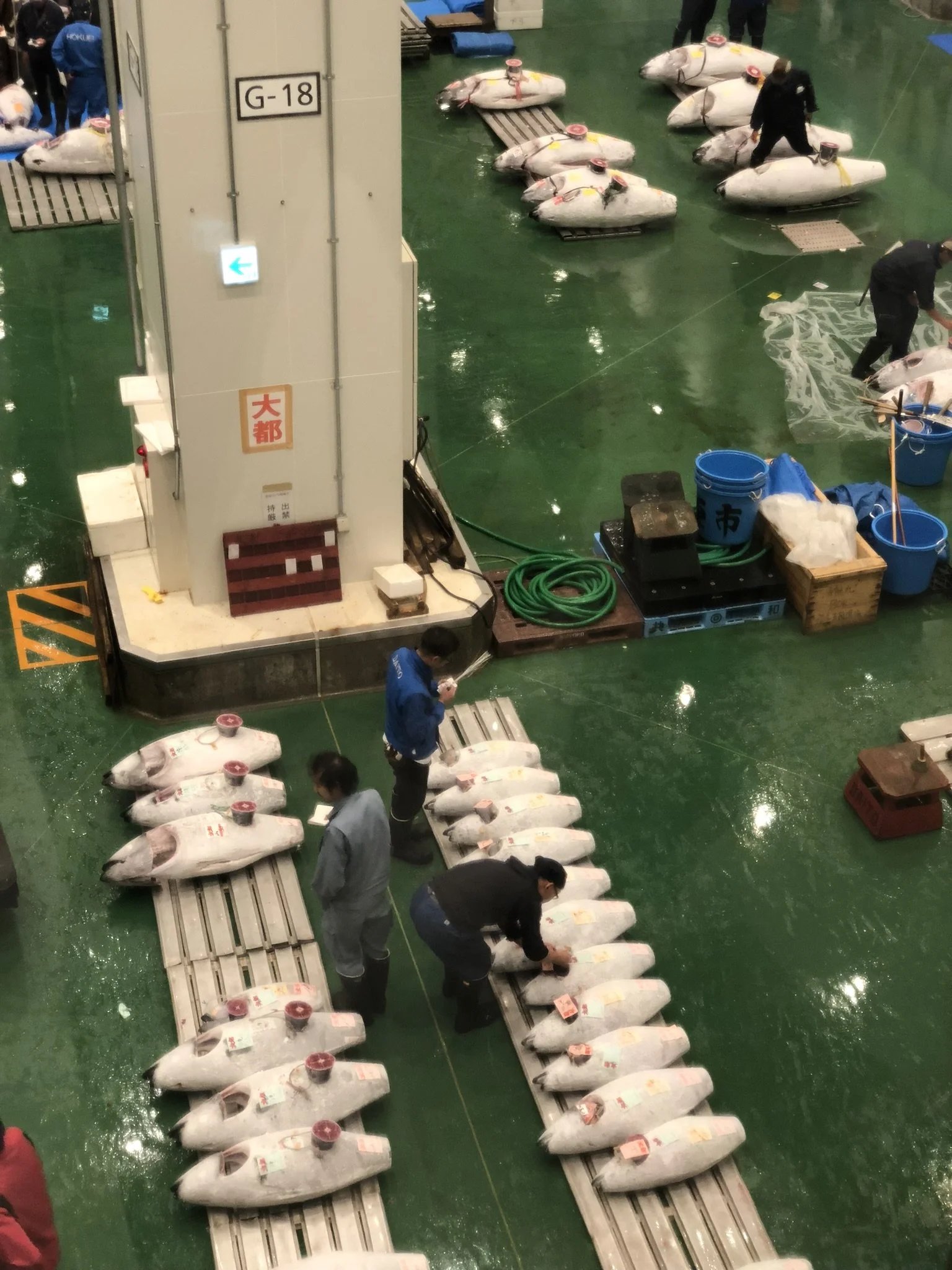
I spotted a large bluefin that had come from the East Coast of Canada, this enormous international food chain suddenly felt very personal. Imagine a fish can leave Canadian waters and end up being evaluated at dawn in Tokyo. Think about that the next time you order tuna.
Incredible isn’t it?
Once the bidding finished, the atmosphere changed almost instantly.
Forklifts and workers moved in. Purchases organized, tagged and whisked away.
The floor, which moments earlier had been filled with tuna and auction activity, was cleared with remarkable efficiency.
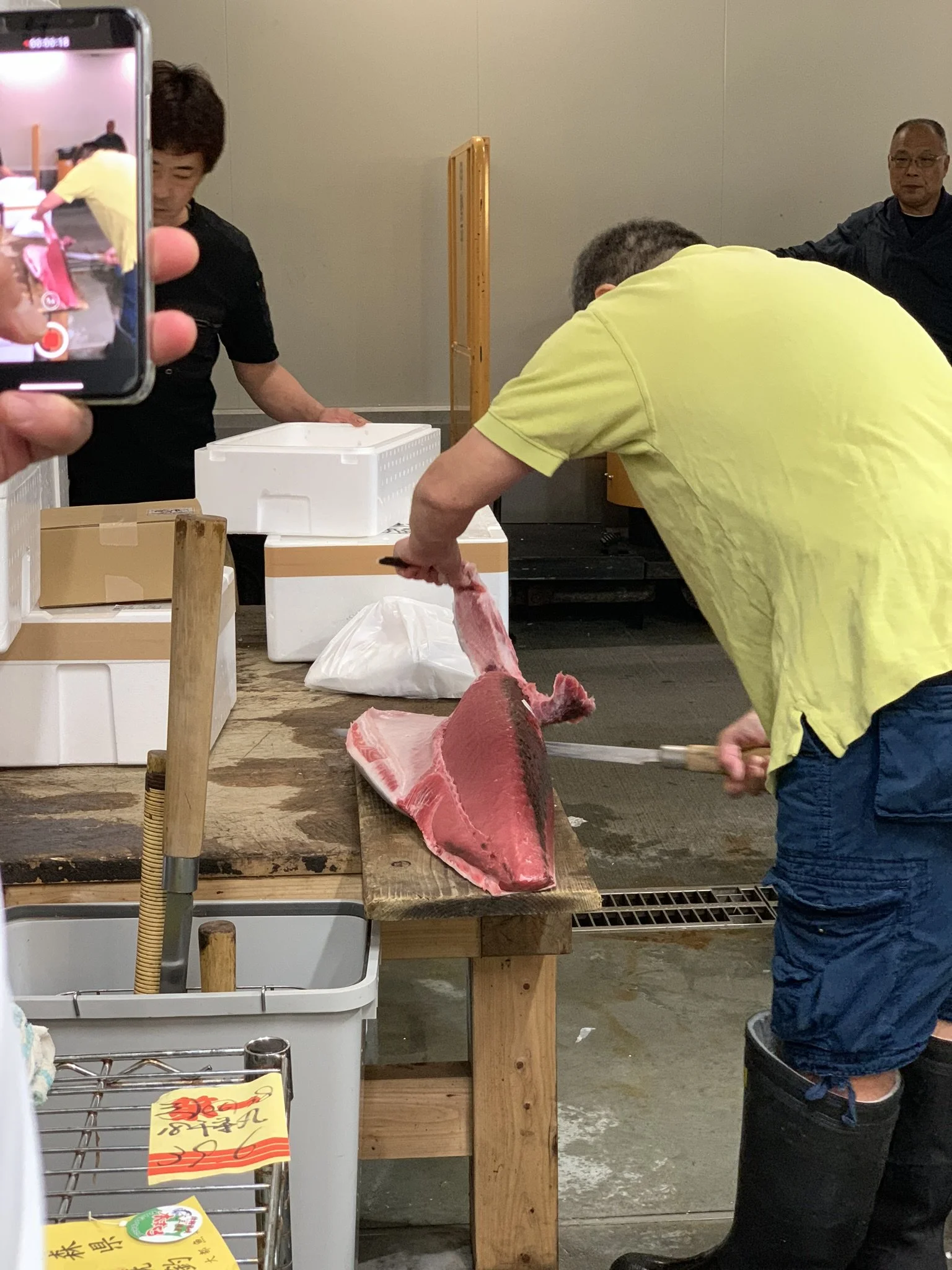
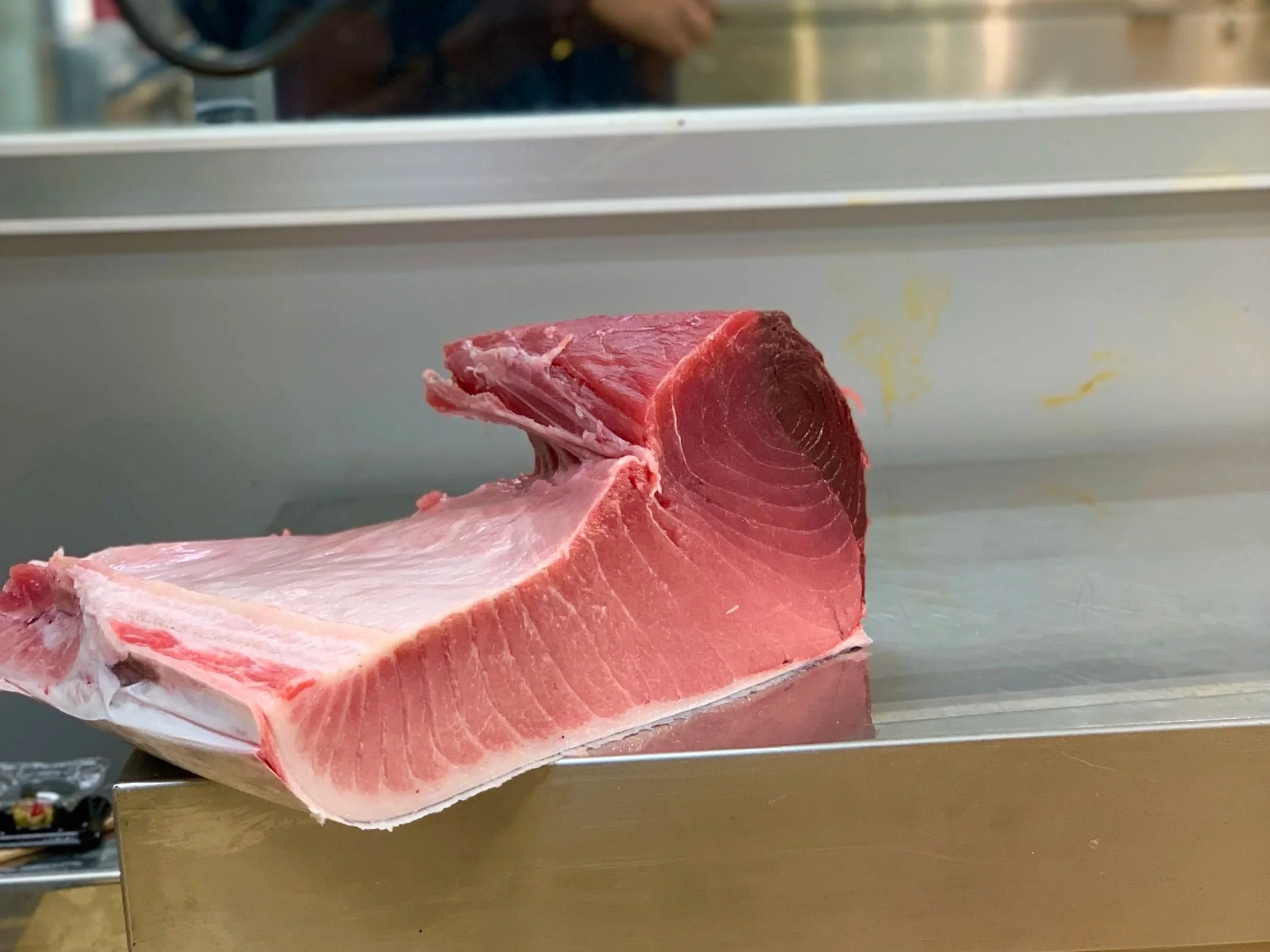
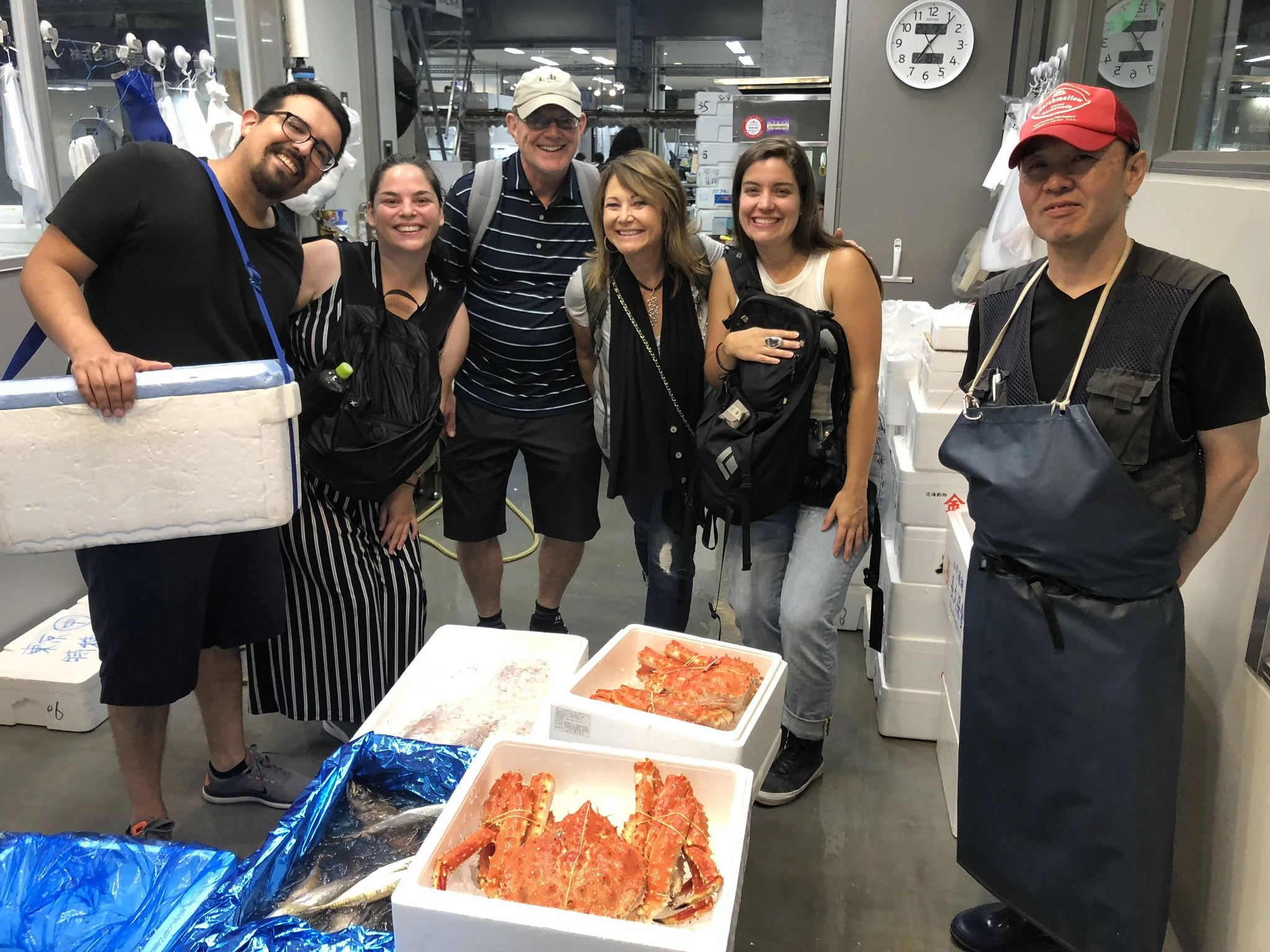
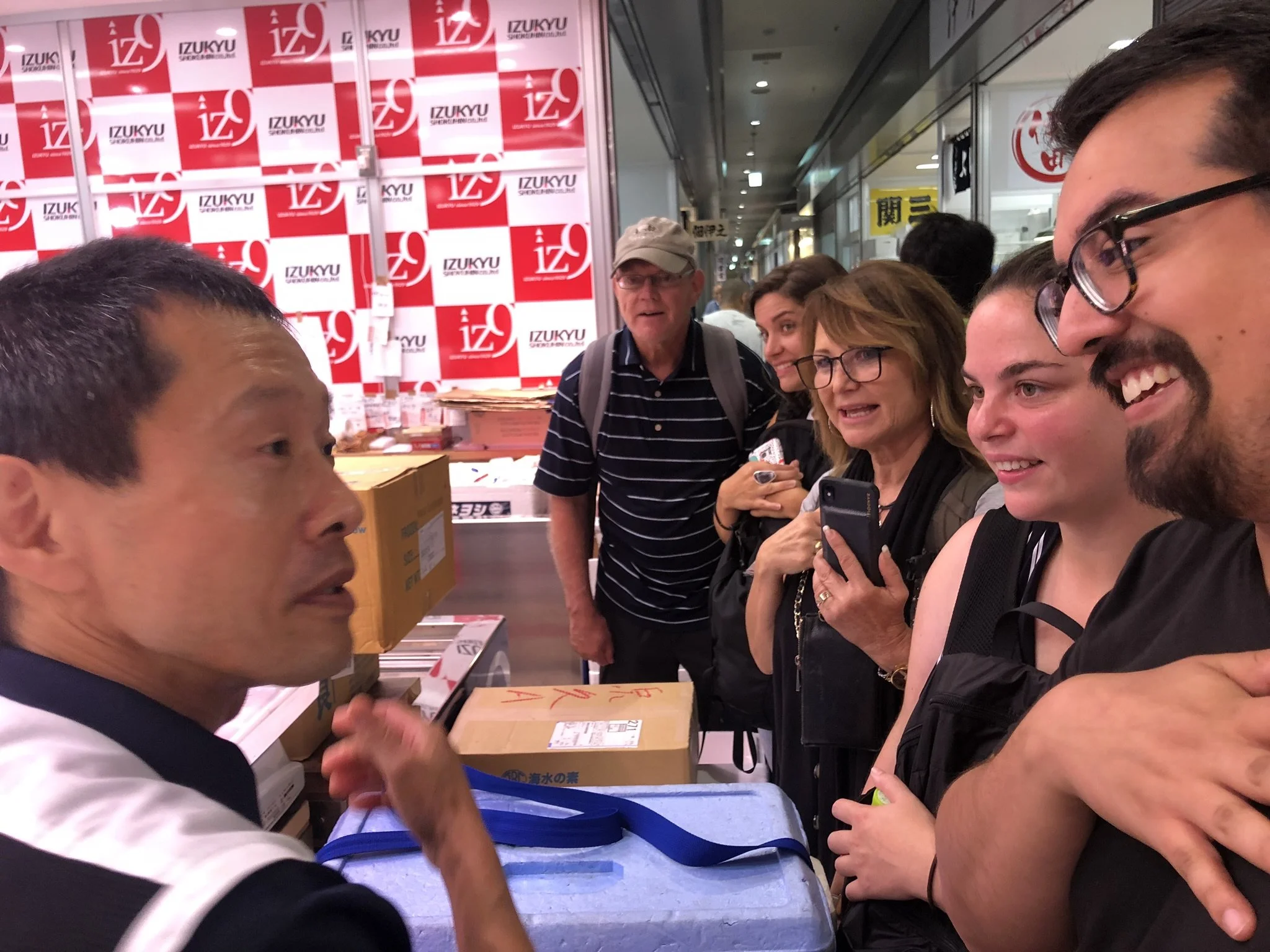
With the auction over, it was time for us to head down and experience the working market area, where we could see the people behind the seafood trade doing what they do every day.
This was where the whole thing became much more than an attraction.
It was craftsmanship.
I watched fishmongers work with their knives and tools with a confidence that comes from years of repetition.
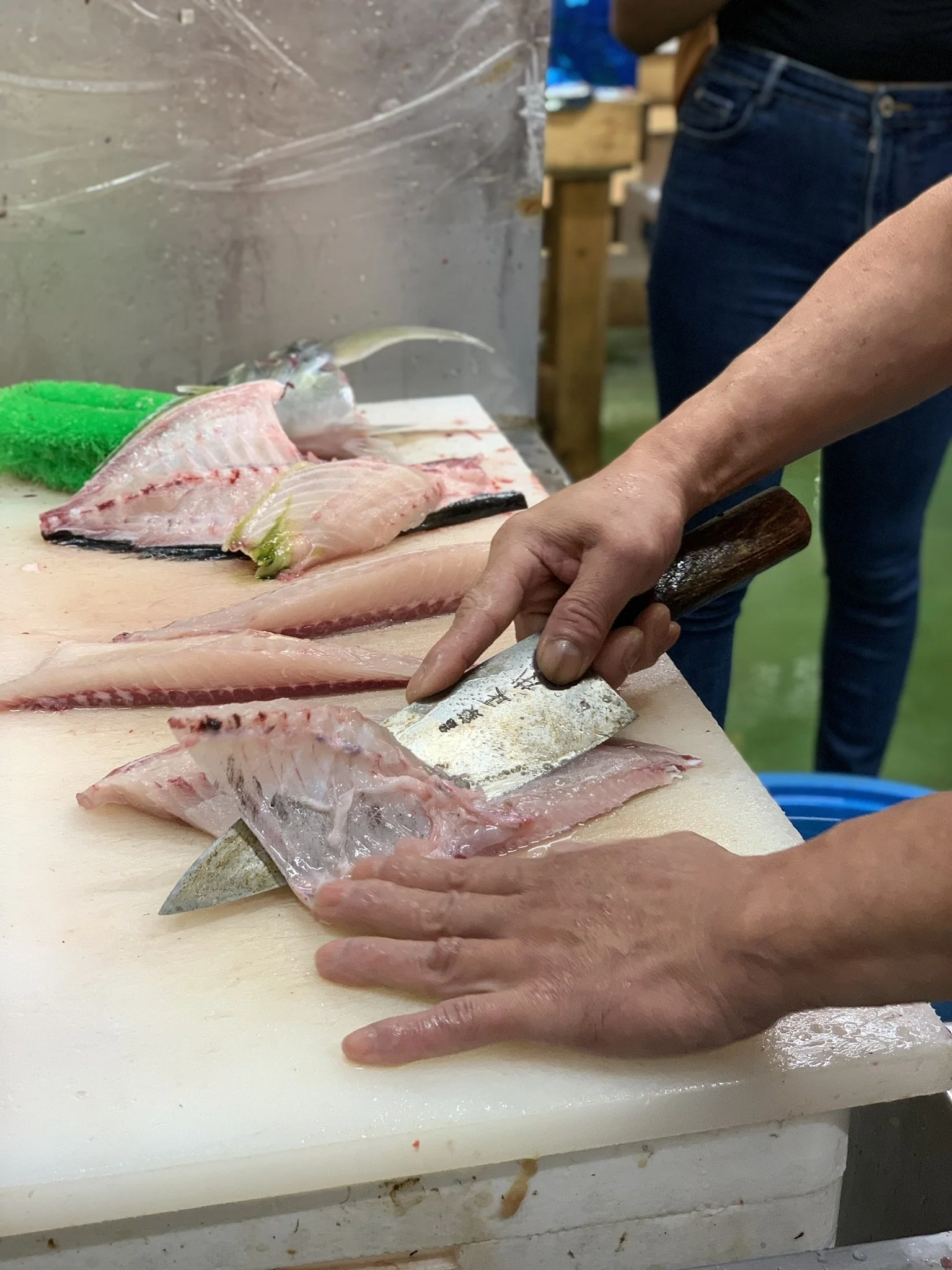
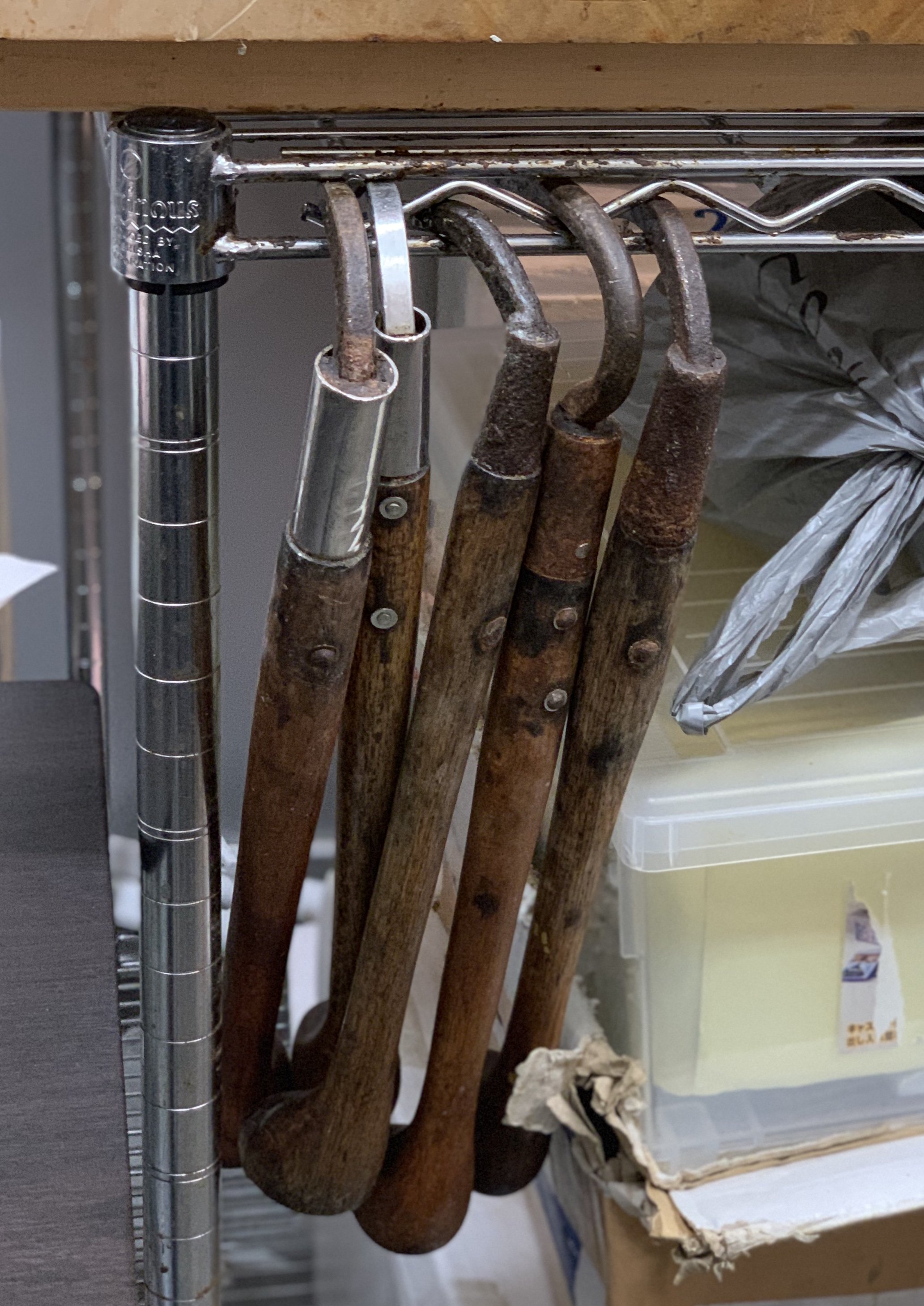
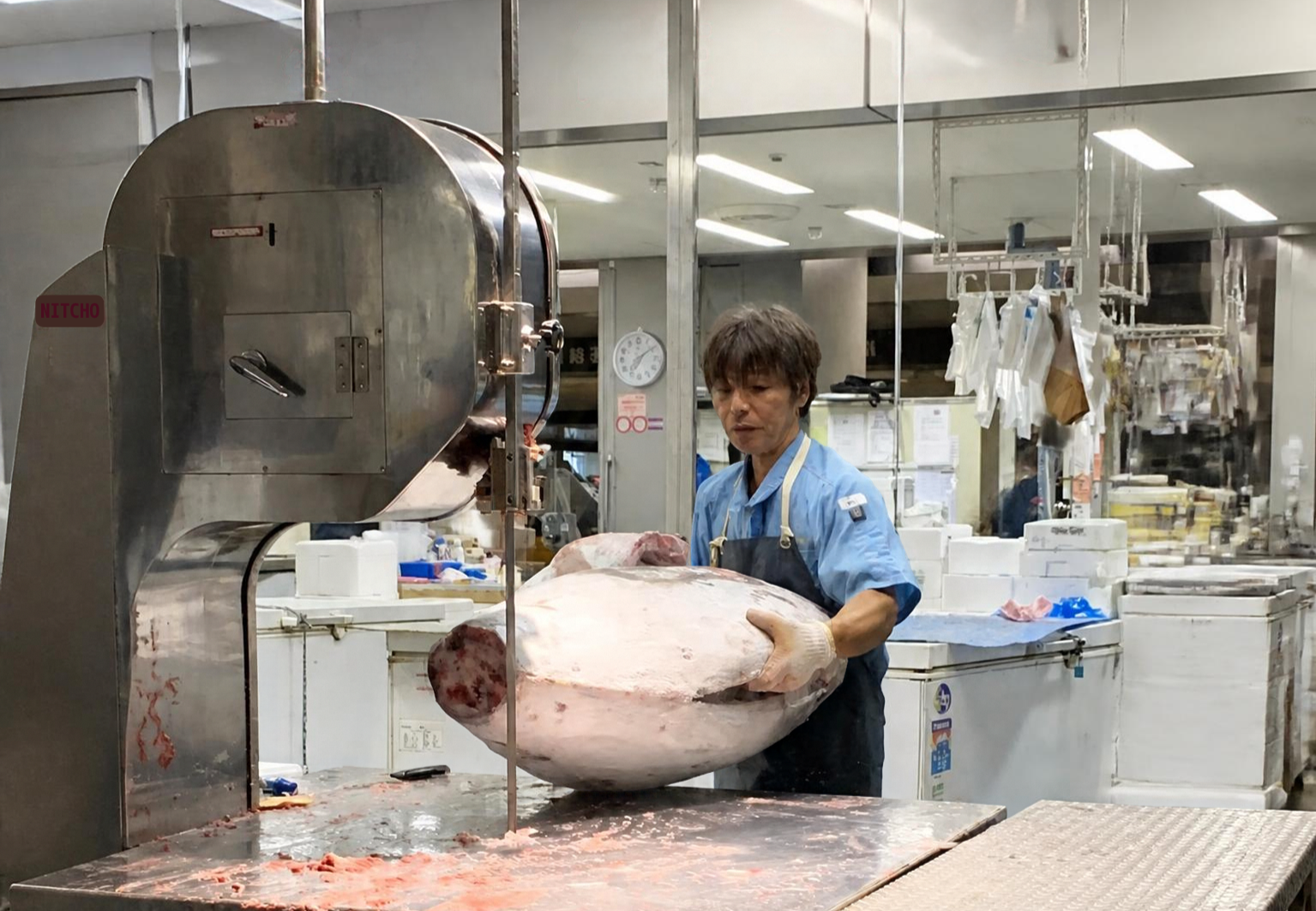
Large frozen tuna were cut with serious-looking equipment, including bandsaws, and prepared for shipment.
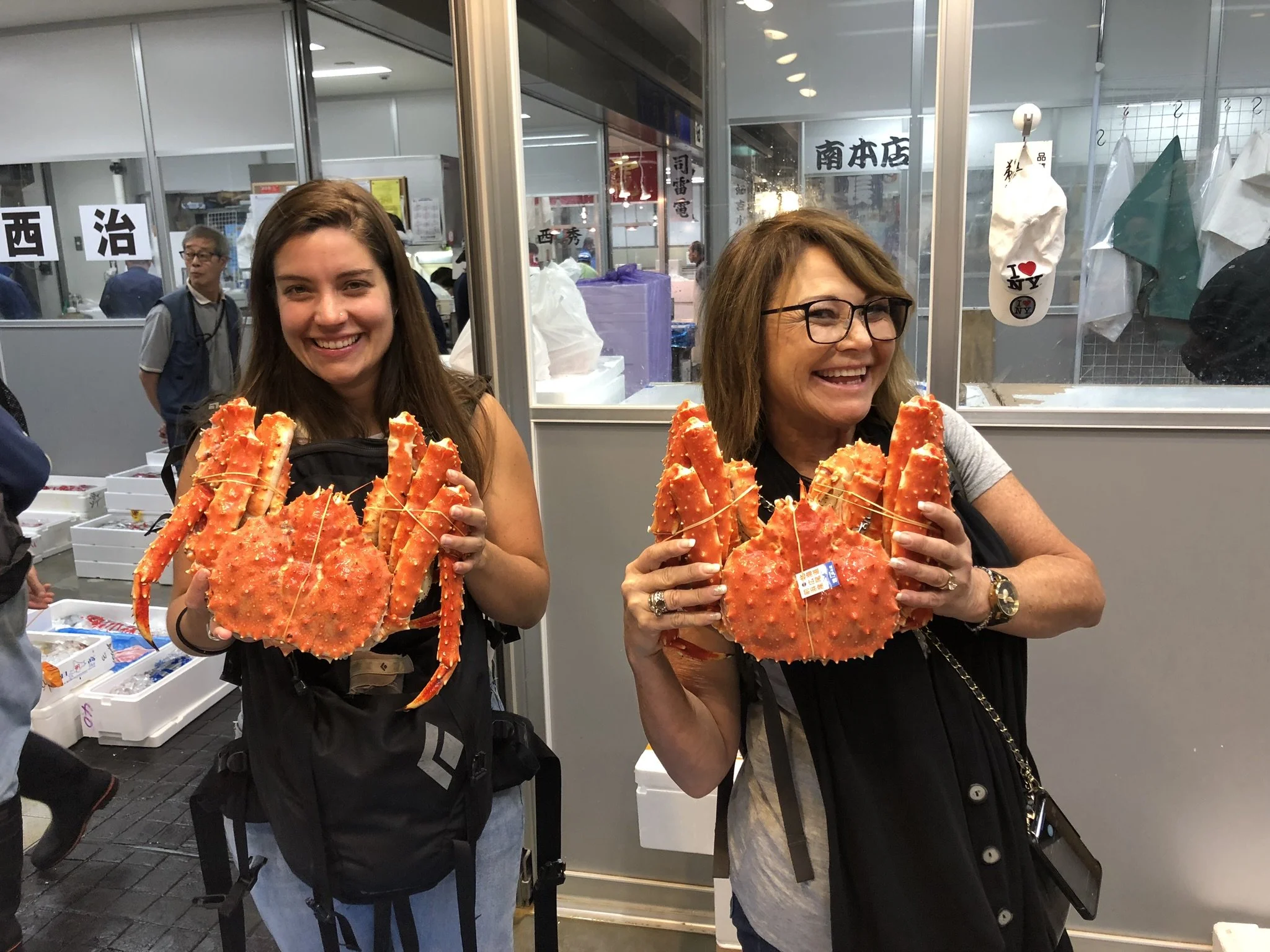
We meandered through numerous stalls, and the crabs caught my eye.
I have never seen crabs that big.
If someone had put one of those on my dinner plate at home, I would have needed a platter.
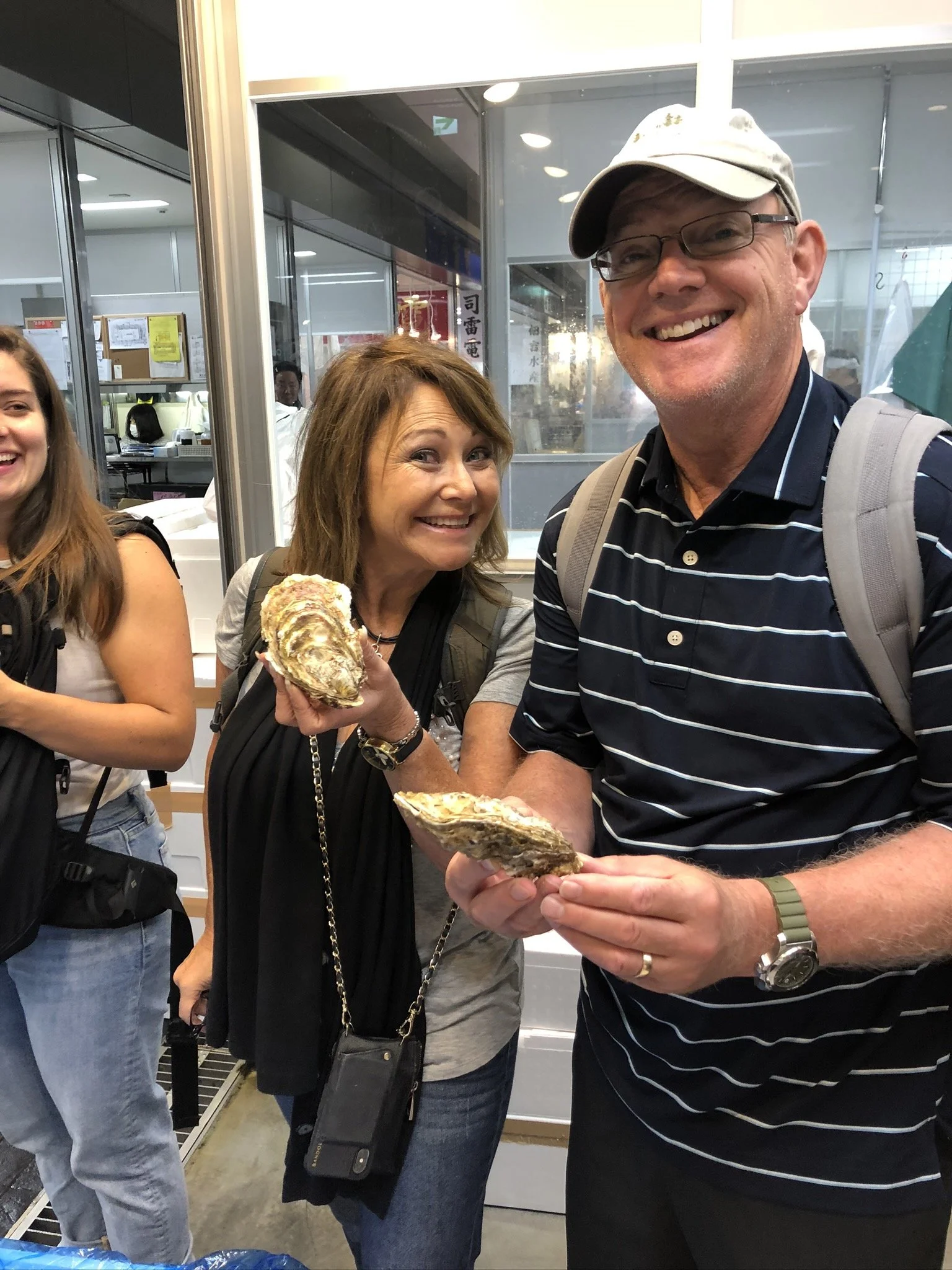
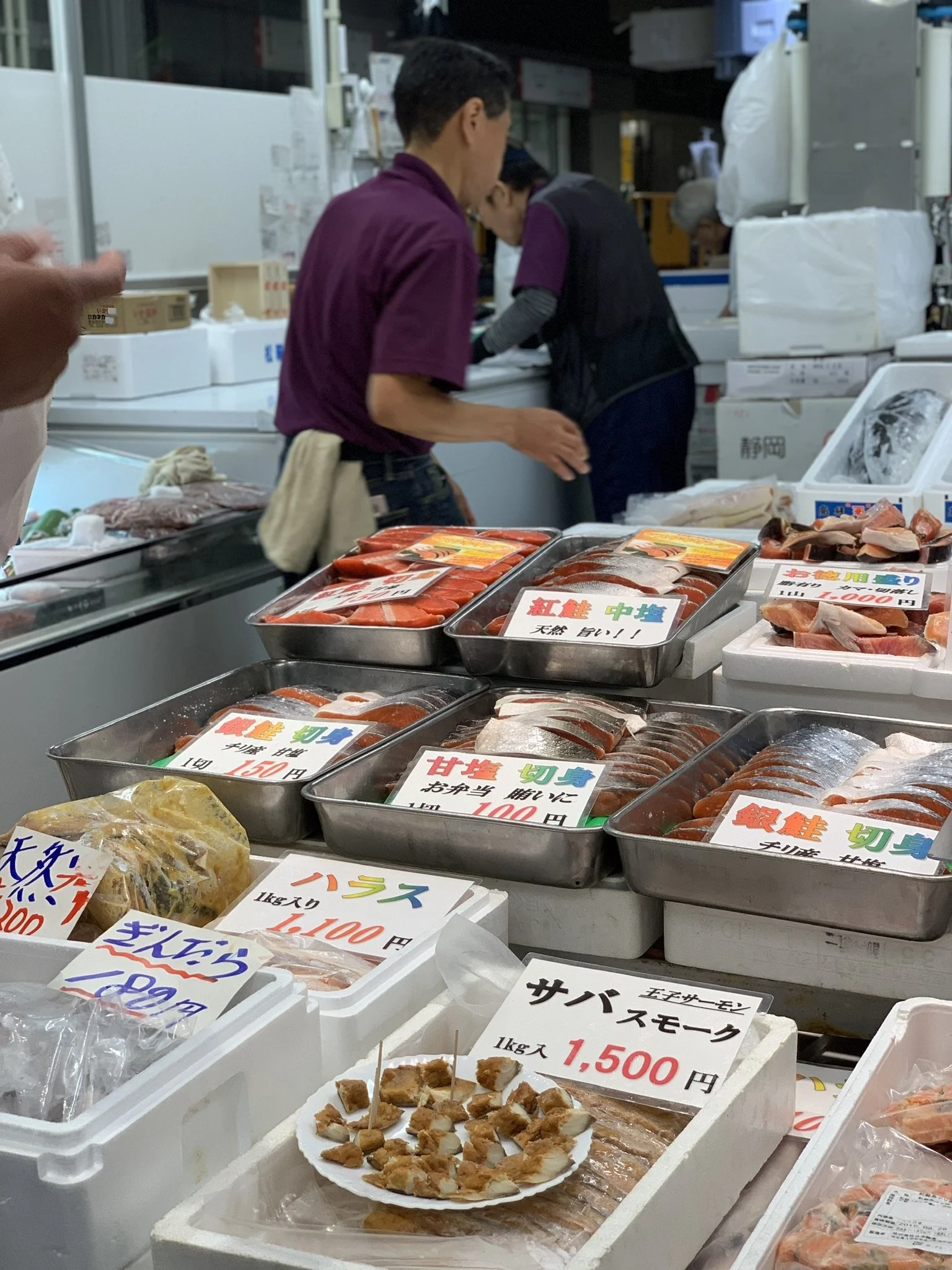
Octopus, shellfish, fish of every description… we had so much fun learning and sampling.
Everywhere I looked, there was something that made me stop and say:
“What is THAT?”
And that’s exactly why I love food travel.
You don’t just taste your way through a country.
You learn.
Toyosu isn’t only about fish. The market’s Uogashi Yokocho is home to specialty shops selling ingredients and professional food equipment — everything from wasabi, kombu and bonito flakes to knives and kitchen tools.
These aren’t souvenir shops created for tourists.
They’re places where professionals shop.
There were samples of ingredients I’d never seen before, and I developed serious knife envy.
After watching the knife demonstration and listening to the explanations, I knew I wasn’t leaving Japan without one.
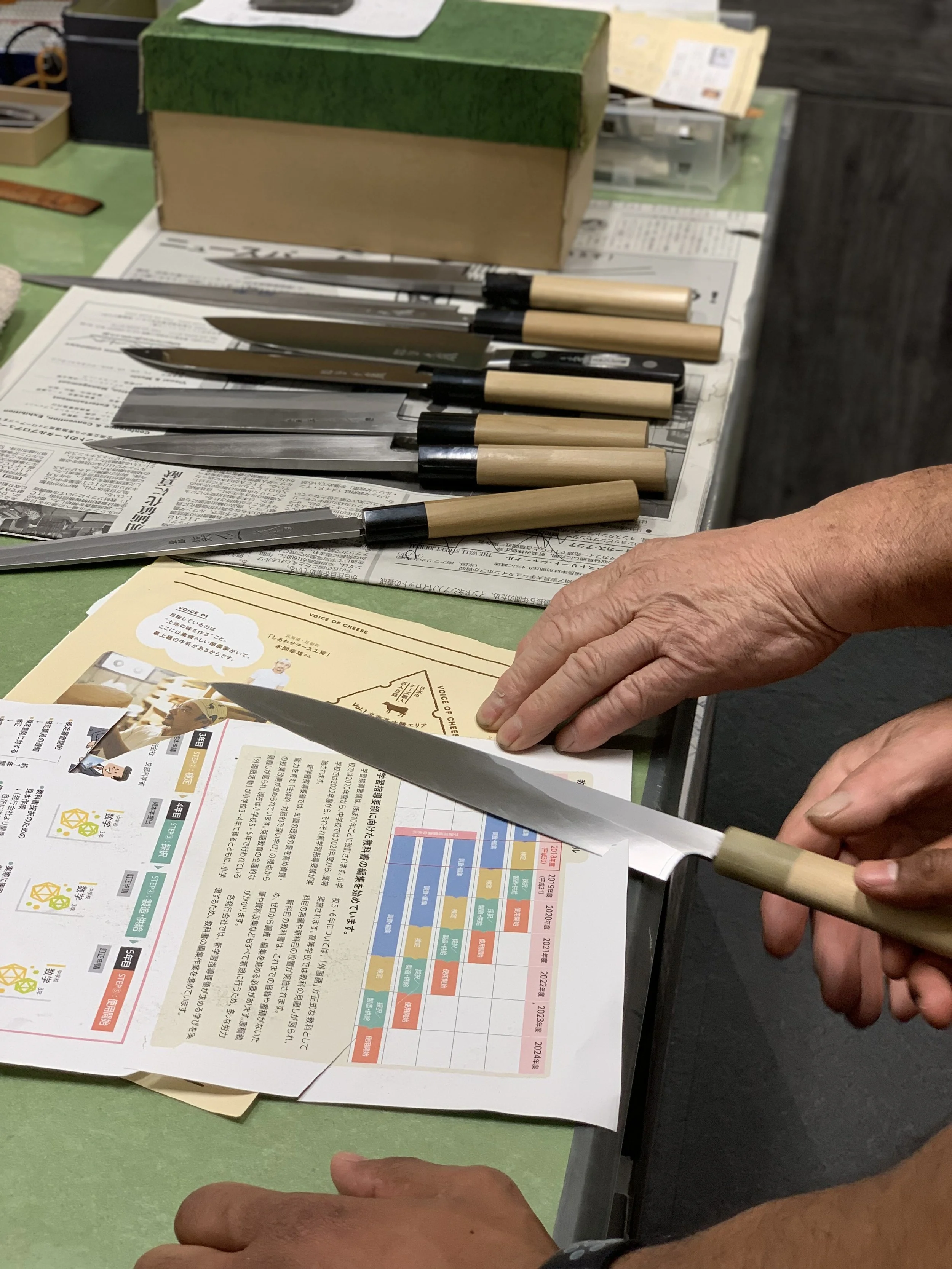
Choosing it was not easy.
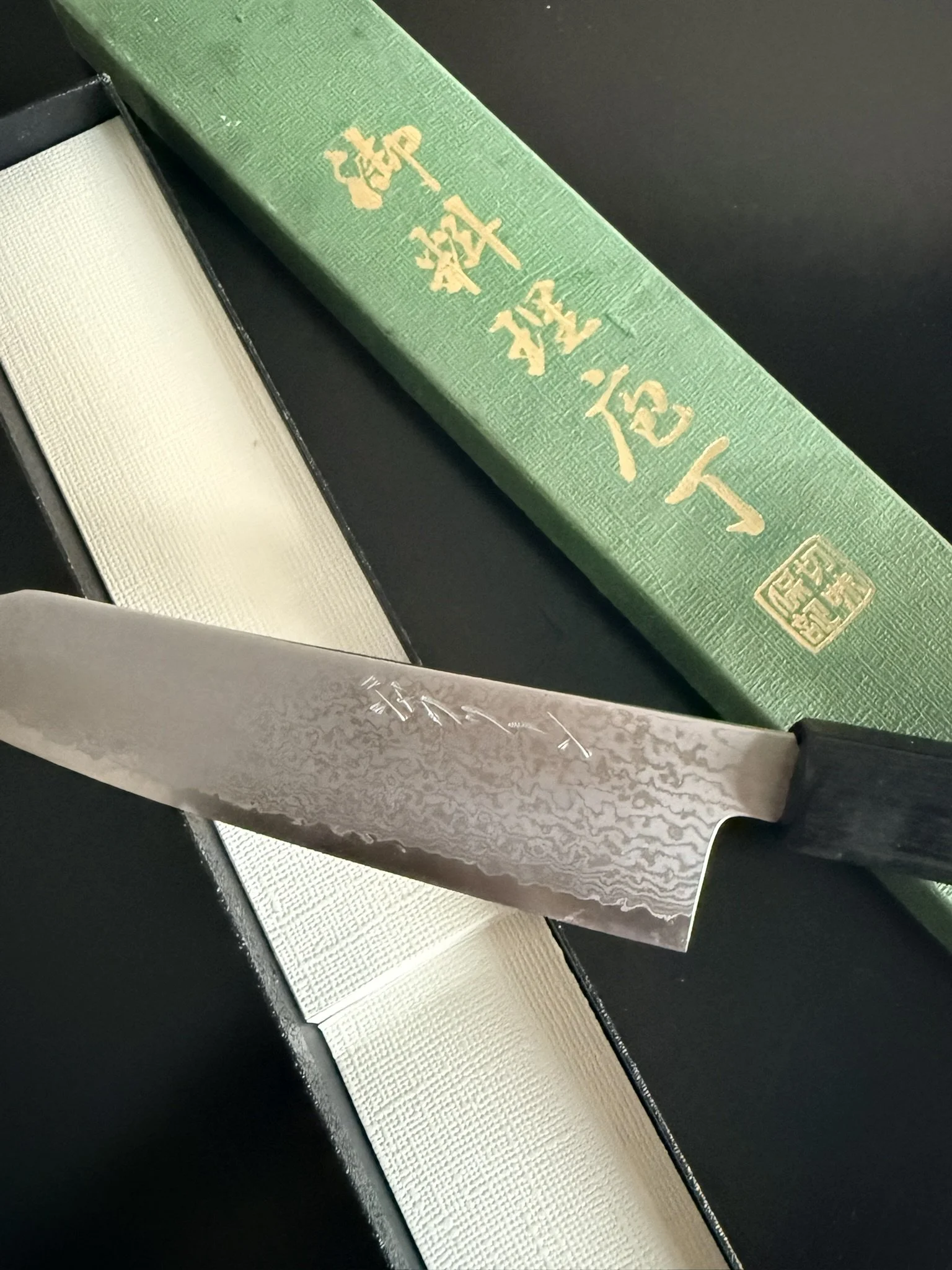
There were so many beautiful knives that making a decision was harder than I expected. After looking, comparing and asking questions, I finally chose a Kaneyoshi-saku Santoku knife — 兼義作.
The Santoku is one of Japan’s most versatile kitchen knives, designed for everyday cutting of meat, fish and vegetables. In fact Santoku translates to "three virtues" or "three uses," which refers to the knife's proficiency in handling meat, fish, and vegetables, or its capability to chop, slice, and dice
This Kaneyoshi-saku Santoku is made in Japan and has a 16.5-centimetre blade. The current line is produced by Yaxell.
I had my name engraved on it. And here’s the funny part. I can’t actually read Japanese.
So when I picked it up, I had to trust the person doing the engraving. I’m still hoping it says Jacqueline.
Maybe it says something profoundly philosophical.
Maybe it says, This woman really likes knives.
I guess I’ll never know.
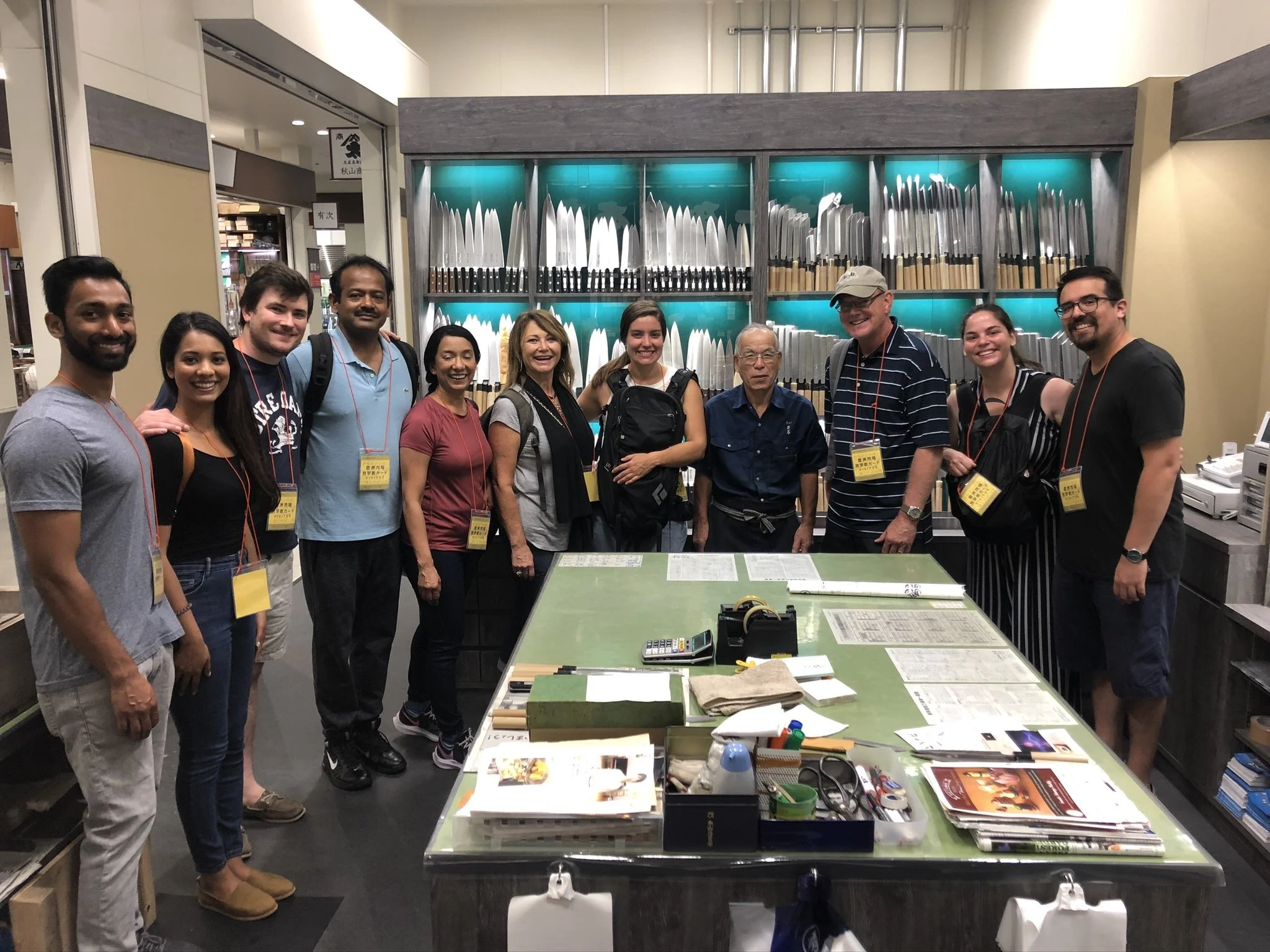
What I do know is that every time I use it in my kitchen in Canada, I’ll remember standing in Toyosu, watching Japanese craftsmen work.
That is my kind of souvenir — something I can actually use and a story attached to it.
If you’re thinking about buying a Japanese kitchen knife, do your research before you go.
There are different shapes, steels, handles, edges and purposes, and it is very easy to fall in love with approximately 47 knives in the space of ten minutes.
Wasabi
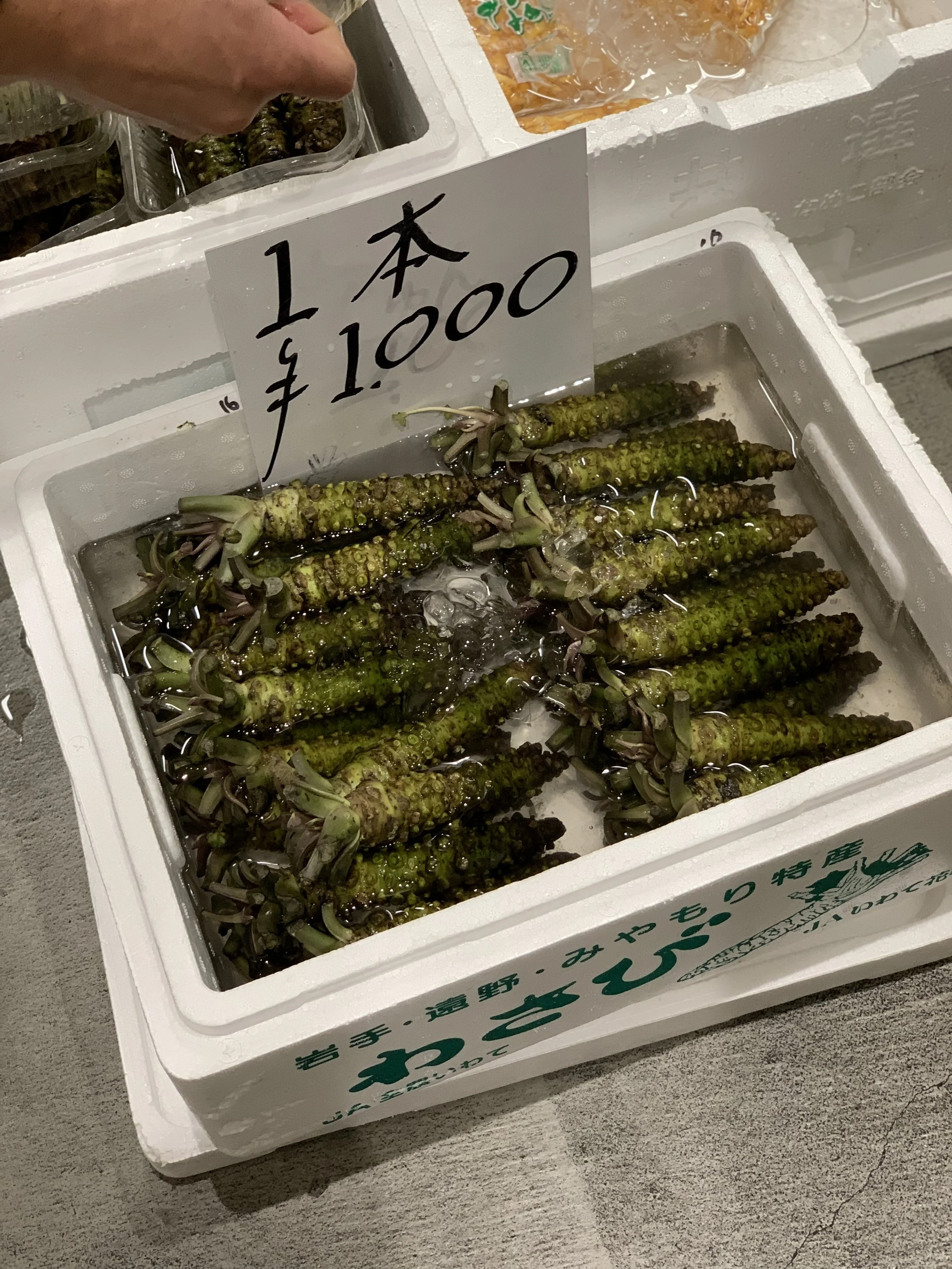
Fresh wasabi was not a produce item I had ever seen or purchased before.
I’d always known wasabi as that little green mound beside sushi or something that came from a jar.
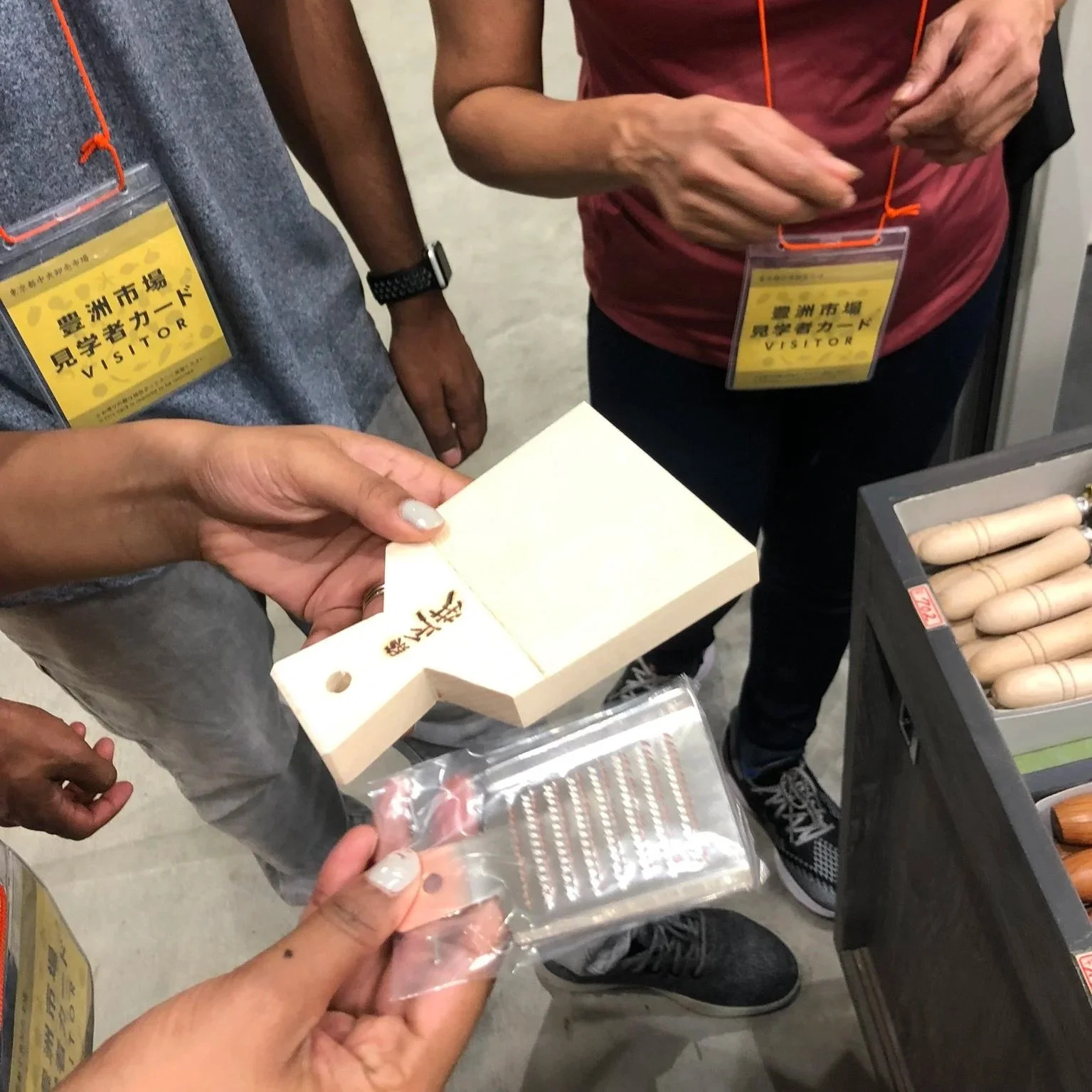
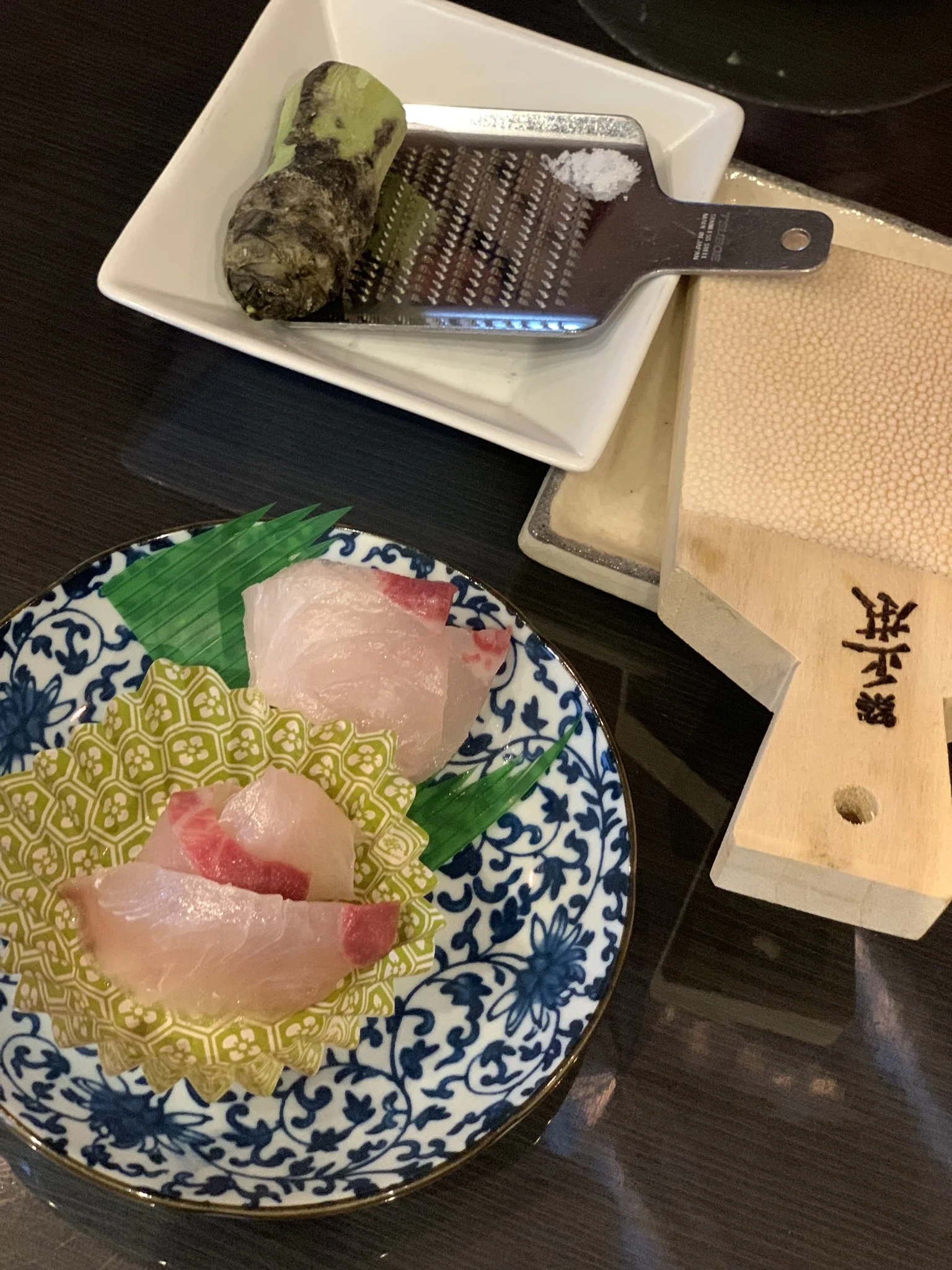
Seeing the actual root — and watching it being grated on a wooden paddle covered with sharkskin — was one of those small food discoveries that makes travel so memorable.
The sharkskin helps create the fine texture needed to release the wasabi’s flavour. It was such a simple, traditional tool, but I thought it was incredibly cool.
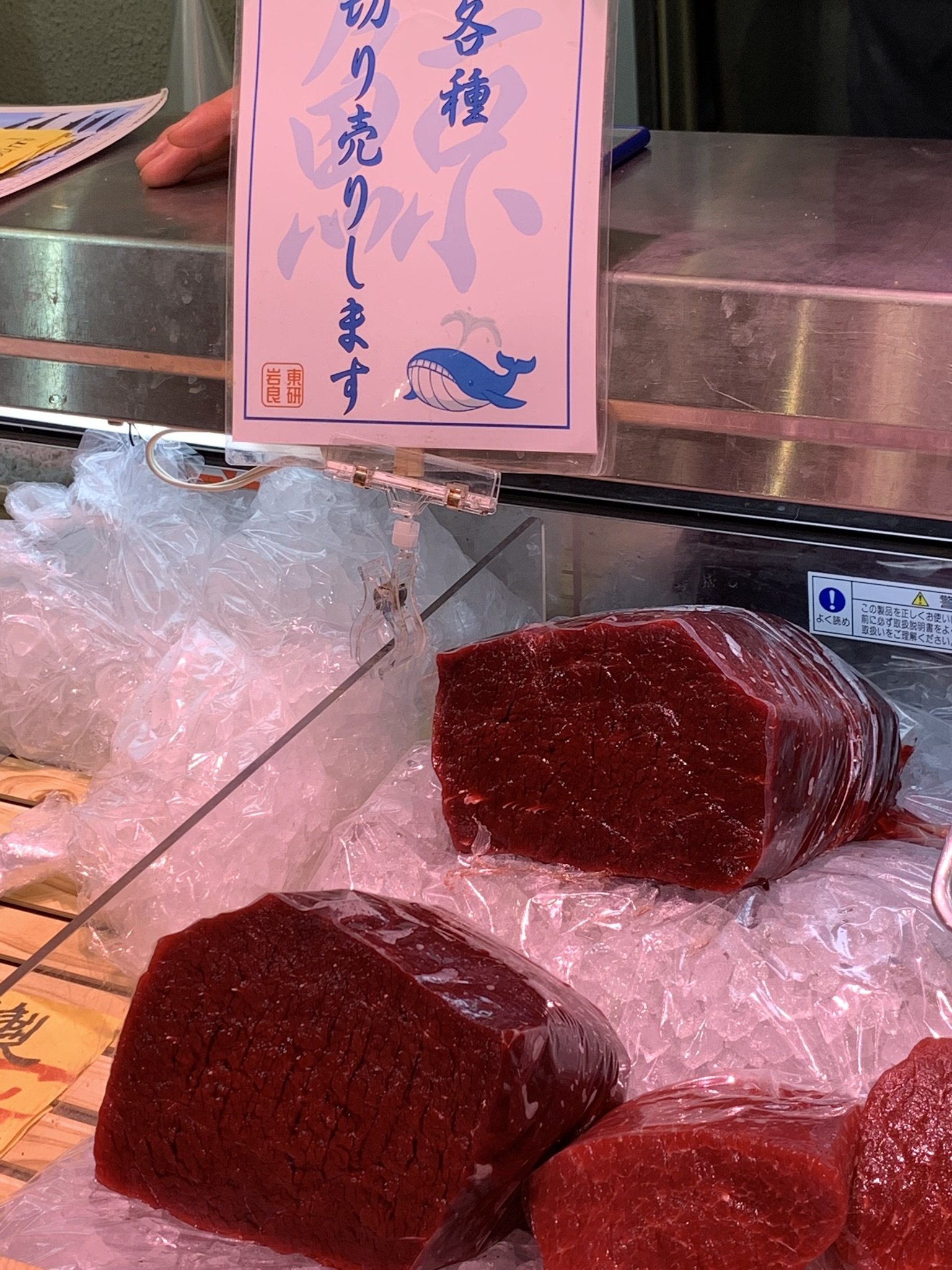
We had the opportunity to taste whale blubber.
Whale has a long history in parts of Japanese food culture, although it isn’t an everyday food for most Japanese people today. Traditional dishes using salted whale blubber remain part of regional food traditions, including dishes in Niigata and Hokkaido.
And the blubber is exactly what you would expect from something called blubber.
Rich.
Very fatty.
Very distinctive.
I was not a fan.
But it did make me think about the very different food traditions surrounding marine mammals in northern communities, including Inuit foodways in Canada.
There is a connection in the broadest sense: in cold northern environments, marine animals have historically provided concentrated sources of energy and nutrients.
But the traditions are not the same, and I wouldn’t want to suggest that Japanese whale food and Inuit foods are interchangeable. They’re distinct cultures with their own histories, species, practices and meanings.
I actually thought whales were not allowed to be caught, but what do I know?
After the market, we toured around Tokyo. It was so nice having a local guide, and Toshi was a master with his camera, having us move from one area to another while dashing behind us to capture his panoramic shots.
Next, we headed into another food area of Tokyo, where Toshi continued turning the morning into a food lesson about dashi.
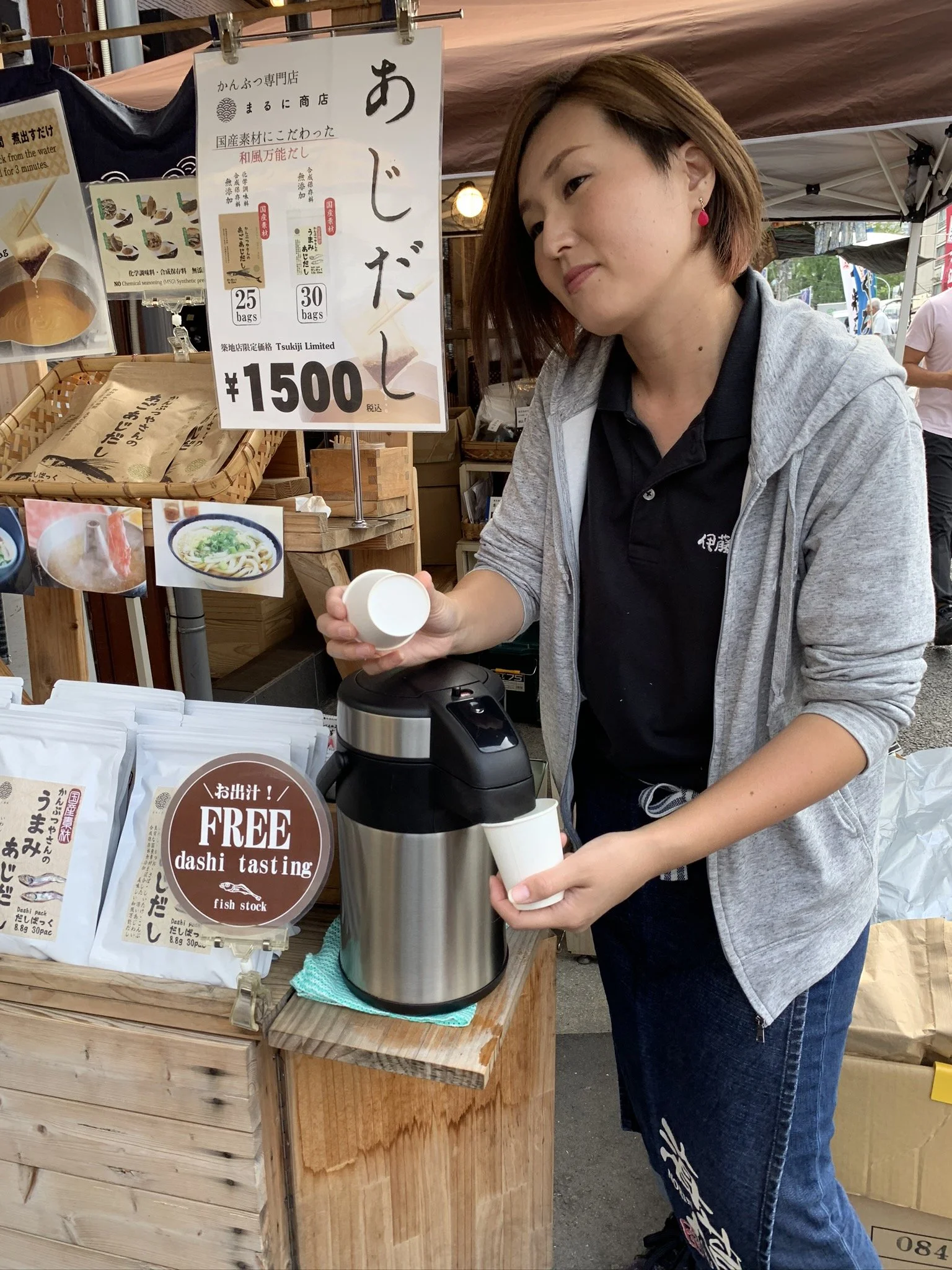
If you’ve eaten Japanese food, you’ve probably tasted dashi without even realizing it.
Dashi is a foundational Japanese stock, commonly made with ingredients such as kombu seaweed and bonito flakes. It provides the deep, savoury umami that makes Japanese soups, sauces and other dishes taste so much more complex than their ingredient lists might suggest.
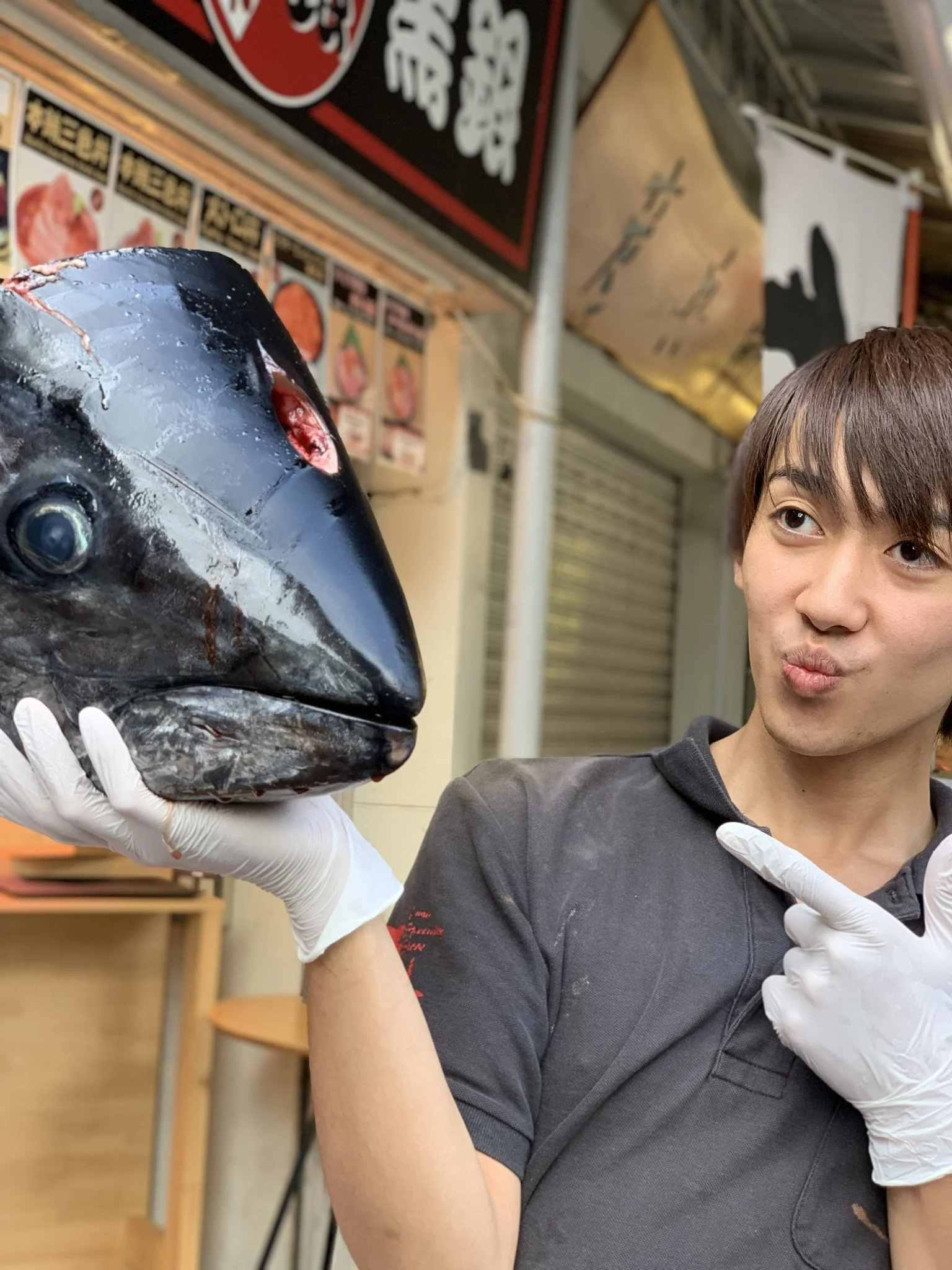
I appreciated how much of the fish gets used.
The head isn’t simply garbage. Bones aren’t automatically garbage. Trimmings can become stock.
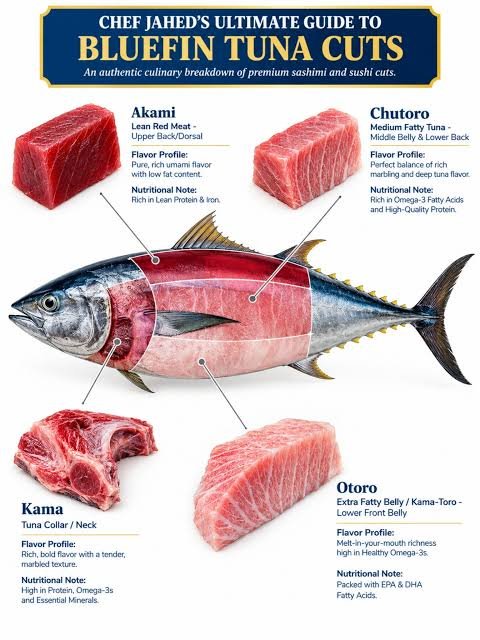
Different cuts have different culinary uses.
That philosophy of using the whole ingredient is something I love about food culture.
It’s practical.
It’s economical.
And when you’re dealing with an expensive ingredient like tuna, wasting the good stuff doesn’t make much sense.
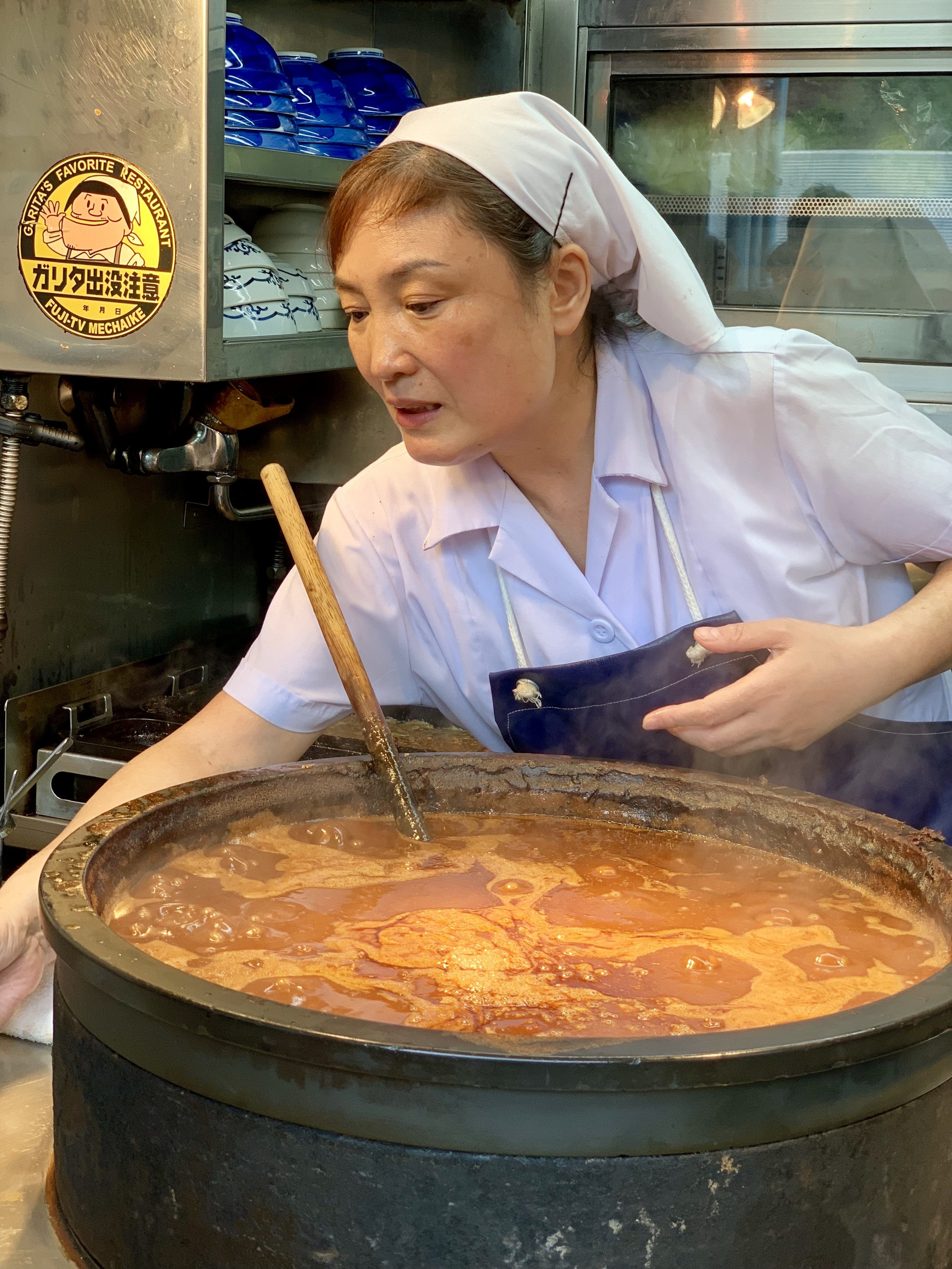
After hours of walking, learning, tasting, shopping and probably asking Toshi approximately 9,000 questions, we finally arrived at the restaurant.
And this was the payoff.
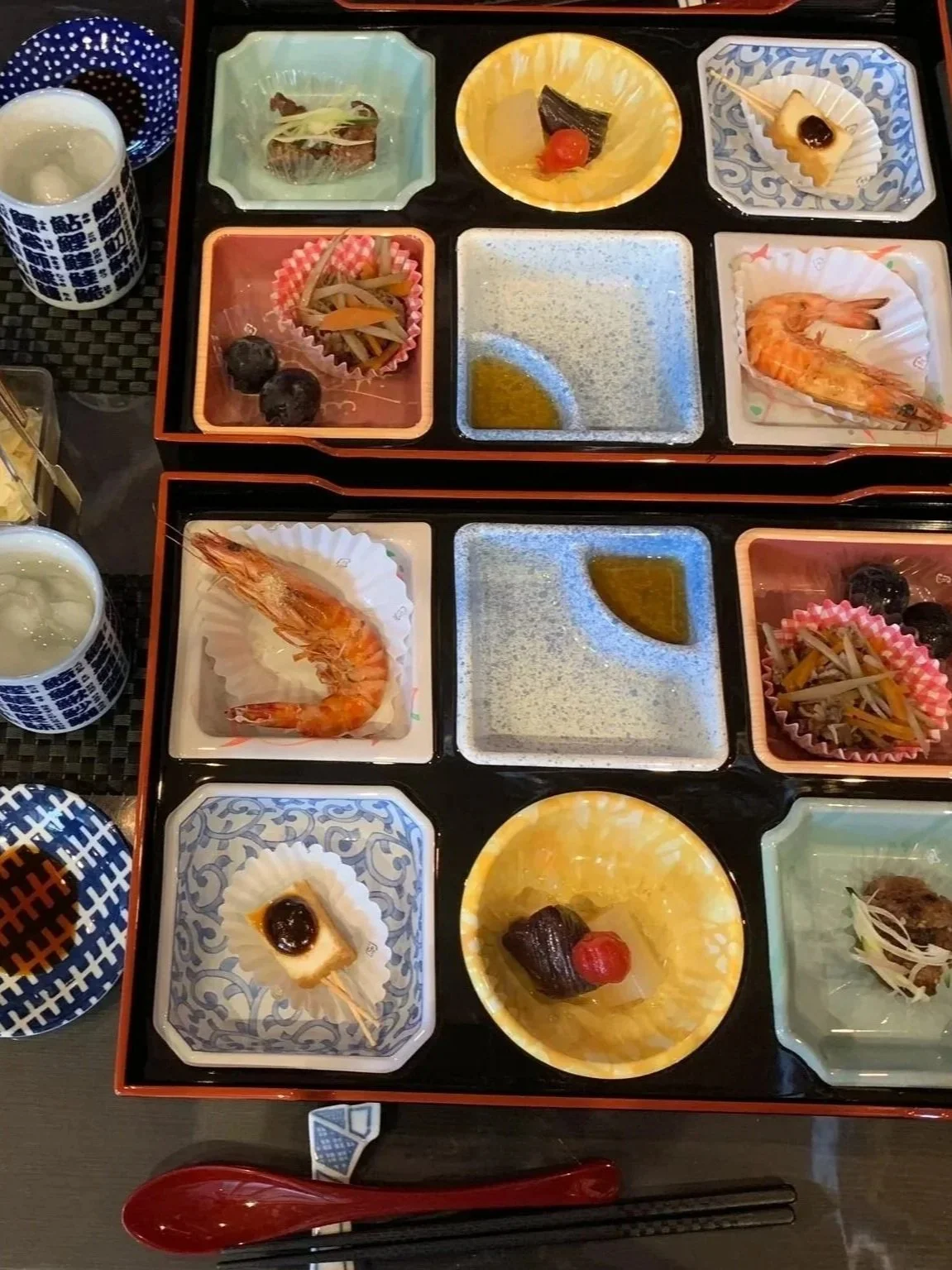
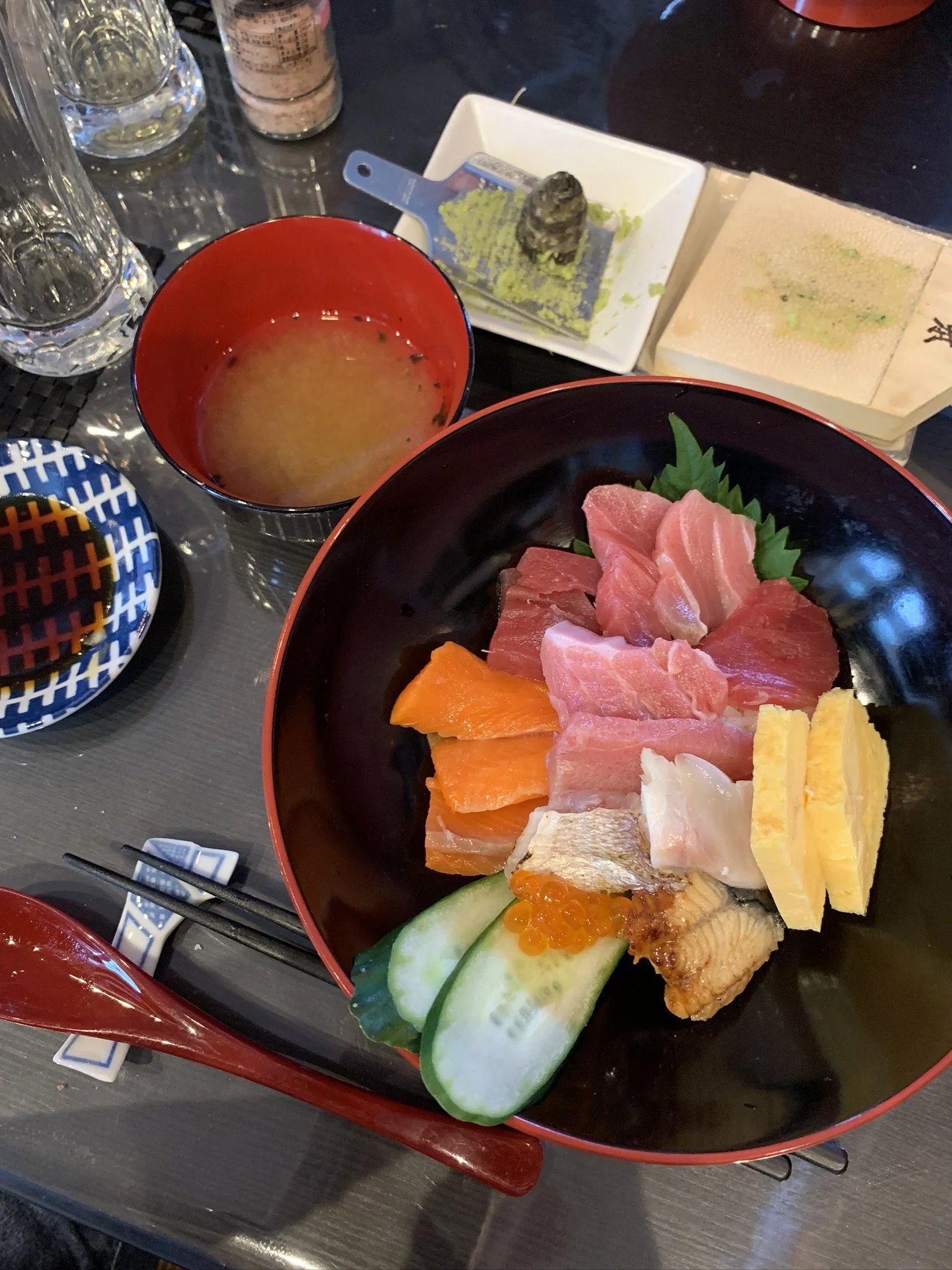
The ingredients we’d been learning about appeared on the table, transformed into a beautiful meal served in individual bento-style boxes.
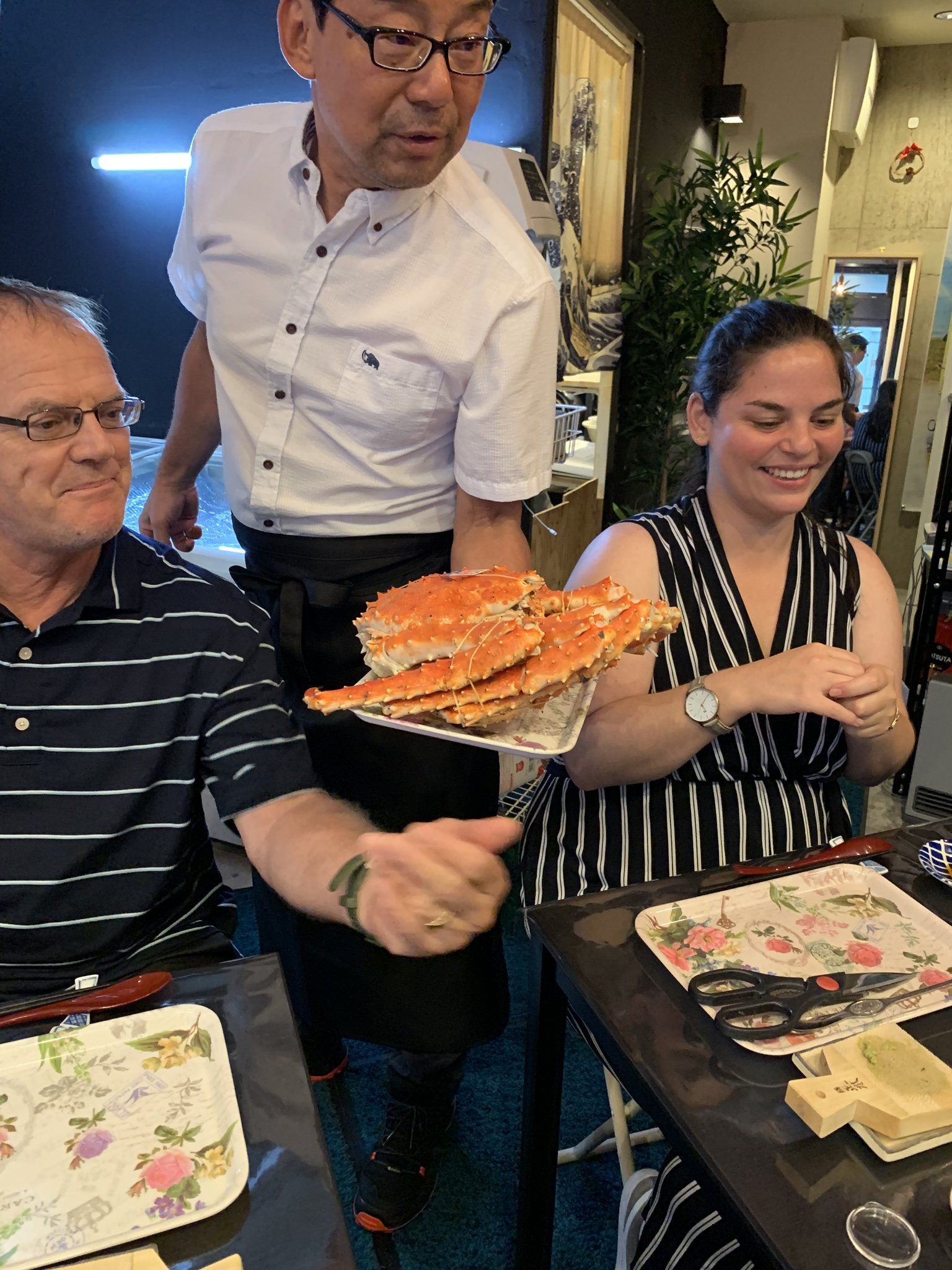
And yes, that enormous crab made another appearance.
This time, it was on all of our plates.
It was an incredible way to finish the experience. We had watched the auction, seen the professionals at work, chosen ingredients and now had the chance to eat them.
That is food travel at its best.
Our tour concluded with a little entertainment under the dessert heading.
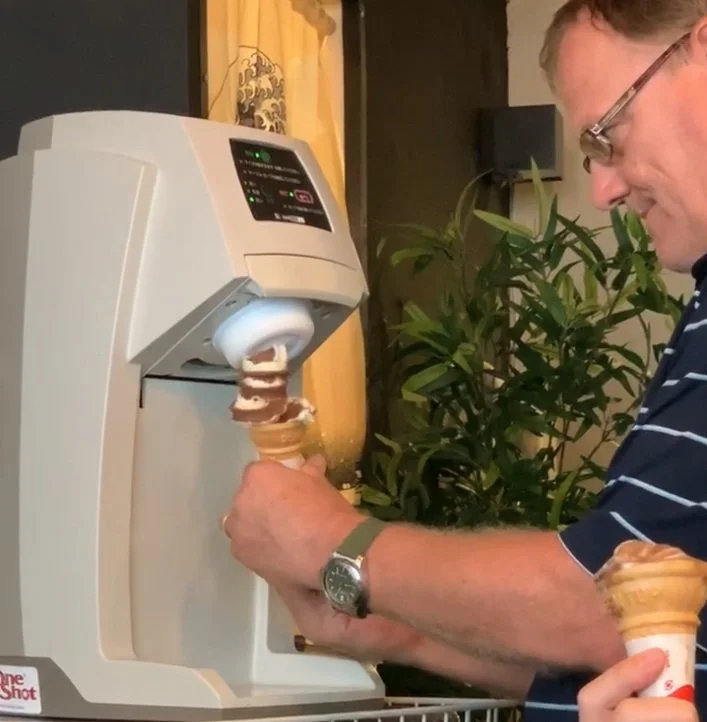
Don decided to try his hand at making soft-serve ice cream with one of those beautiful swirls on top.
Let’s just say… there may be a little more practising required.
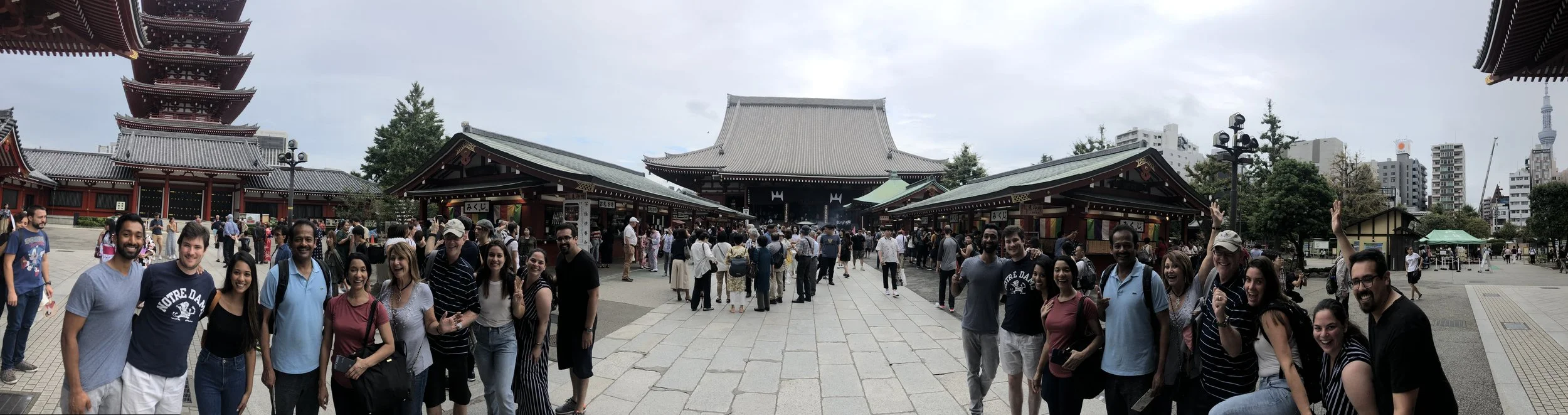
Having hit my Tokyo highlights and travelled to so many different areas of japan, I felt I could finally say:
“Been there, done that!”
Thank You Toshi for a day filled with learning and tasting.
It was time to leave this beautiful country or organization and beauty.
Japan was a breath of fresh air in a world of chaos. So, on that note, I say さようなら — Sayonara.
If you would like to do your own fish market. Here is Toshi’s link https://www.airbnb.ca/experiences/105164 Please say hi from us.