Tokyo- Rugby, Sake And The Art Of Saying “Kanpai”
There are days in Japan when the itinerary goes exactly as planned.
And then there are days when you show up at a locked door with five friends, discover that the people standing beside you are from South Africa, and somehow end up drinking sake with them before watching their team play rugby.
Yep. This was one of those days.
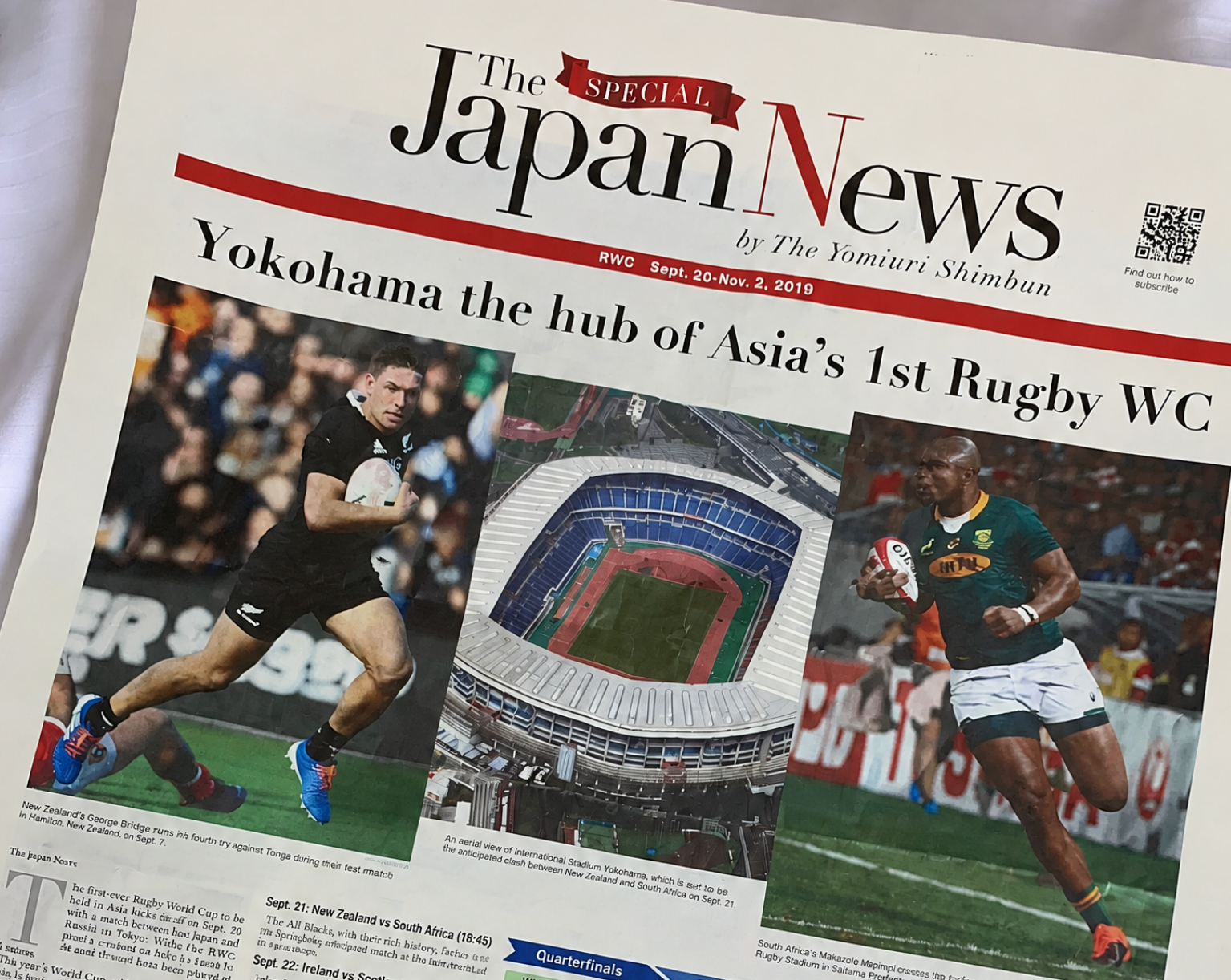
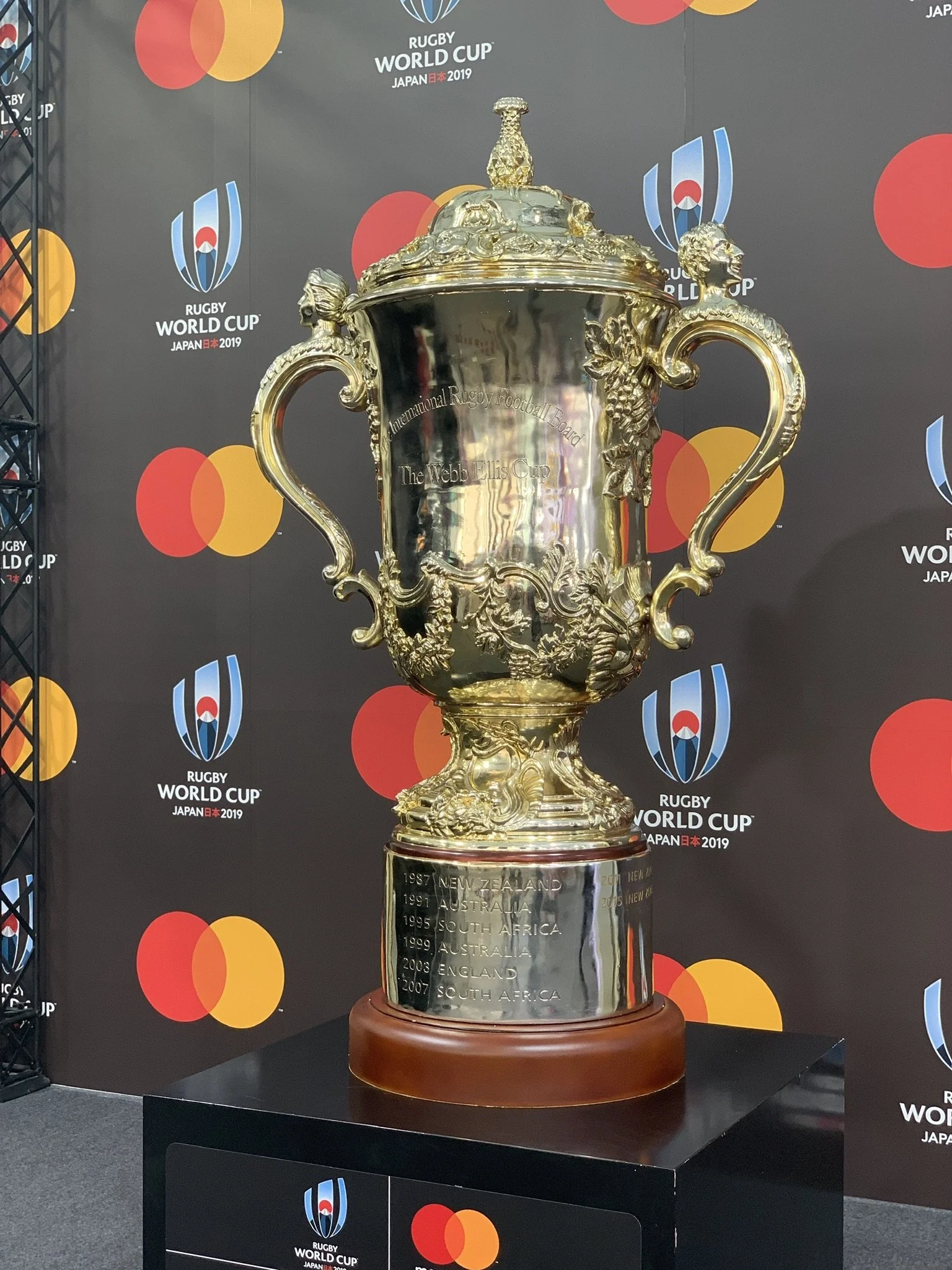
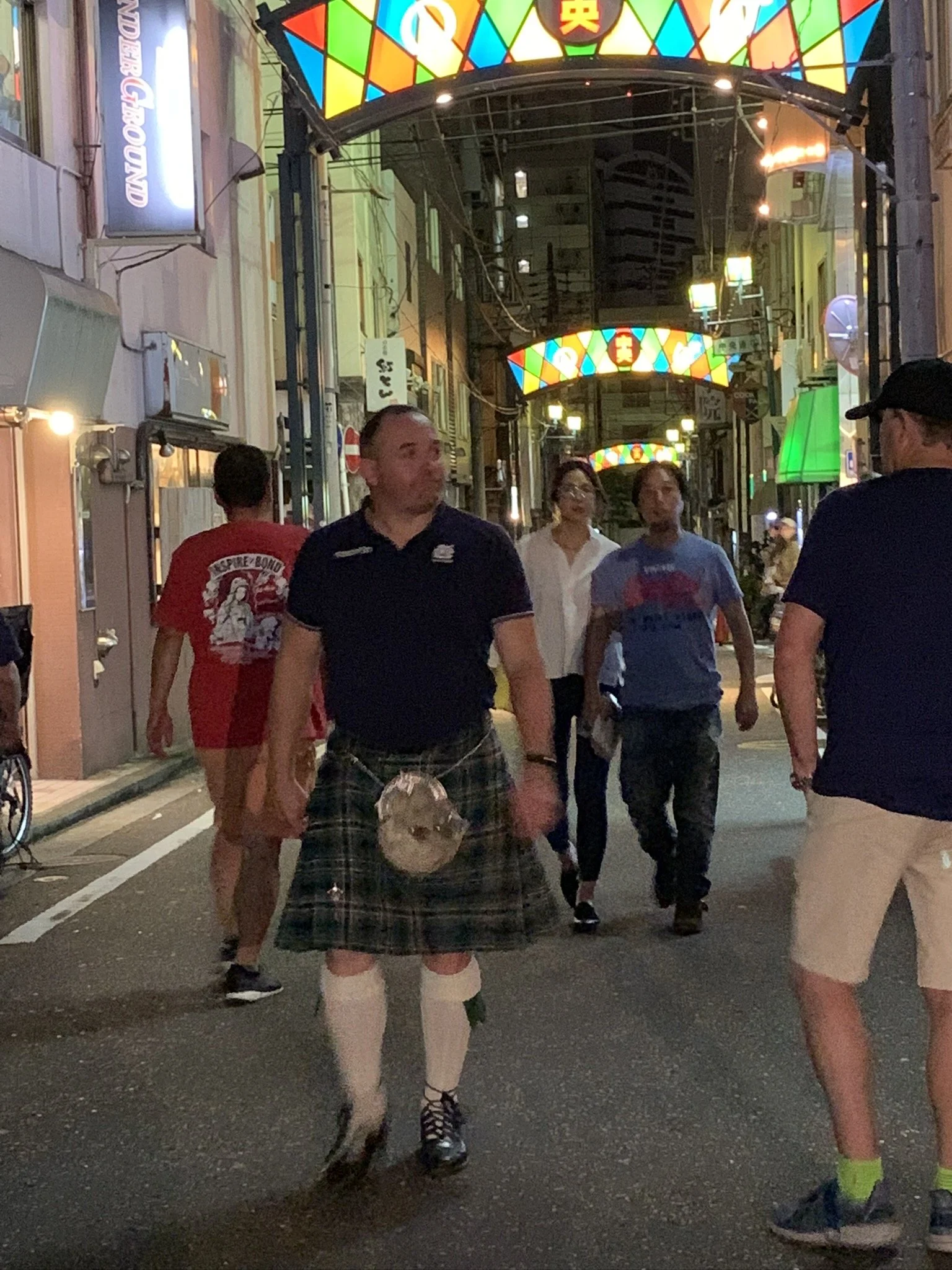
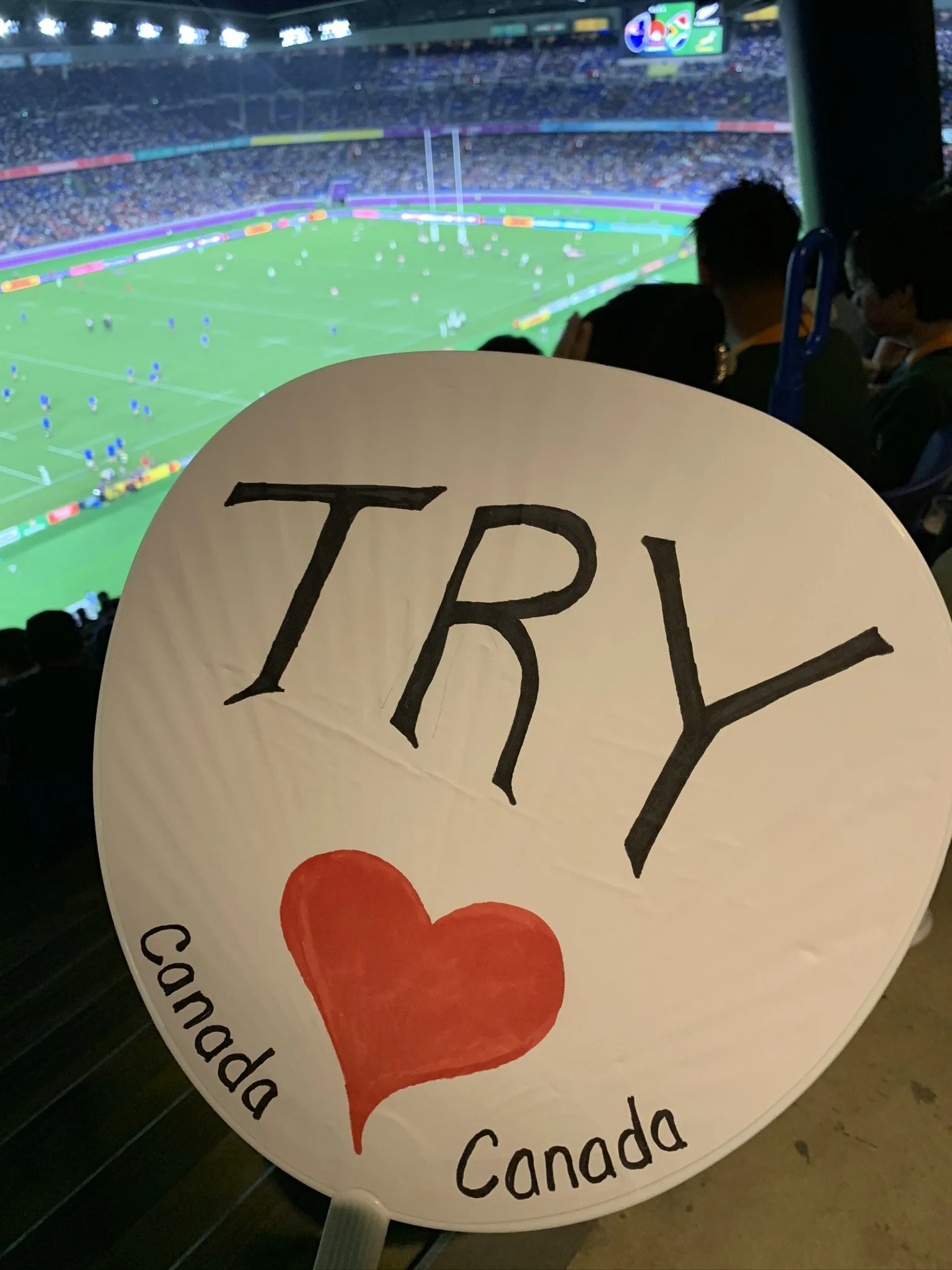
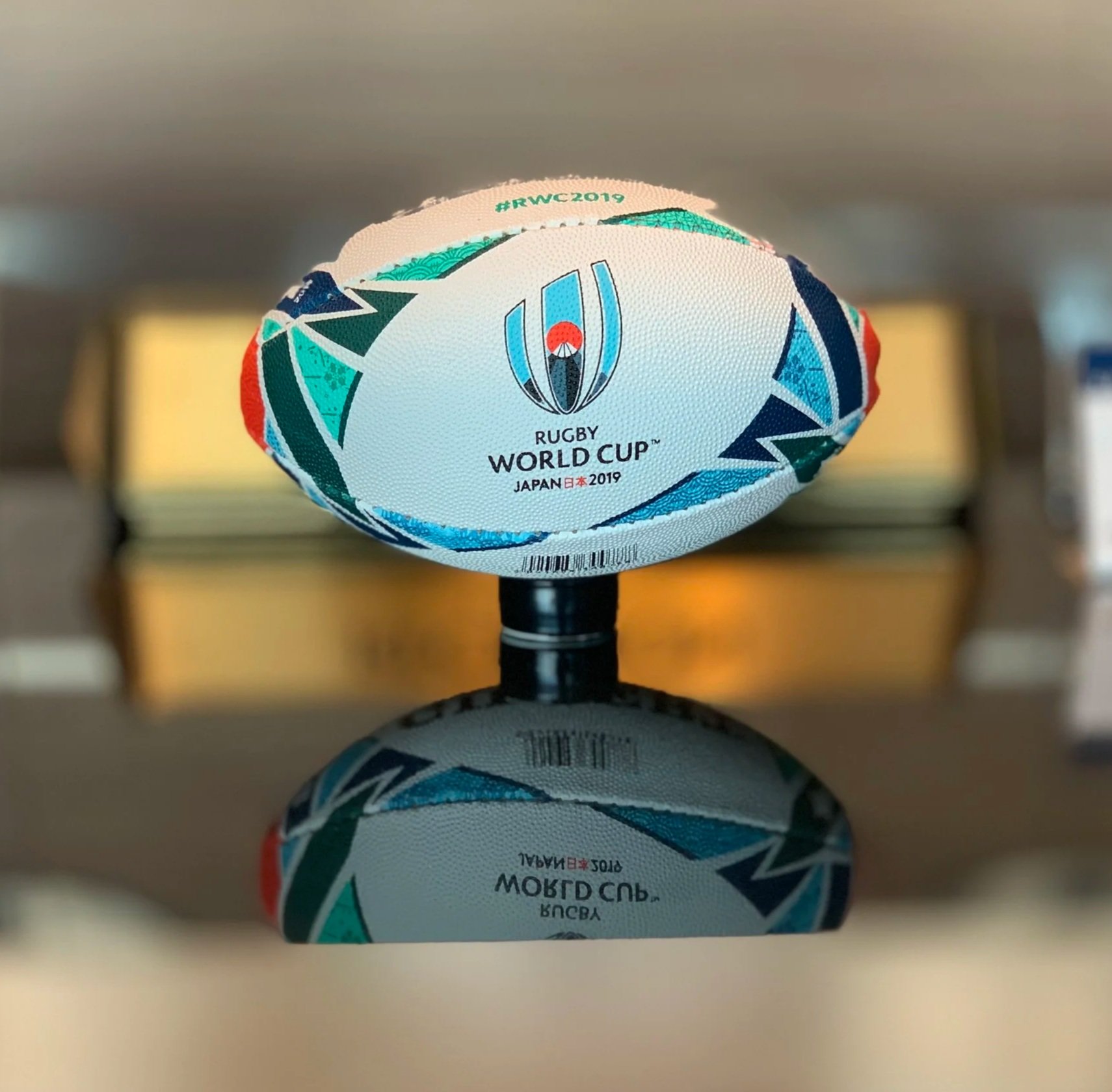
Our morning started innocently enough with breakfast. We were still very much in rugby mode because the Rugby World Cup had taken over the city. Rugby statues and references seemed to be everywhere, team jerseys were everywhere, and large groups of people were speaking all kinds of languages. The excitement surrounding the Rugby World Cup was electrifying.
Today, on my agenda, was another priority I had been looking forward to even before we arrived in Japan:
Sake.
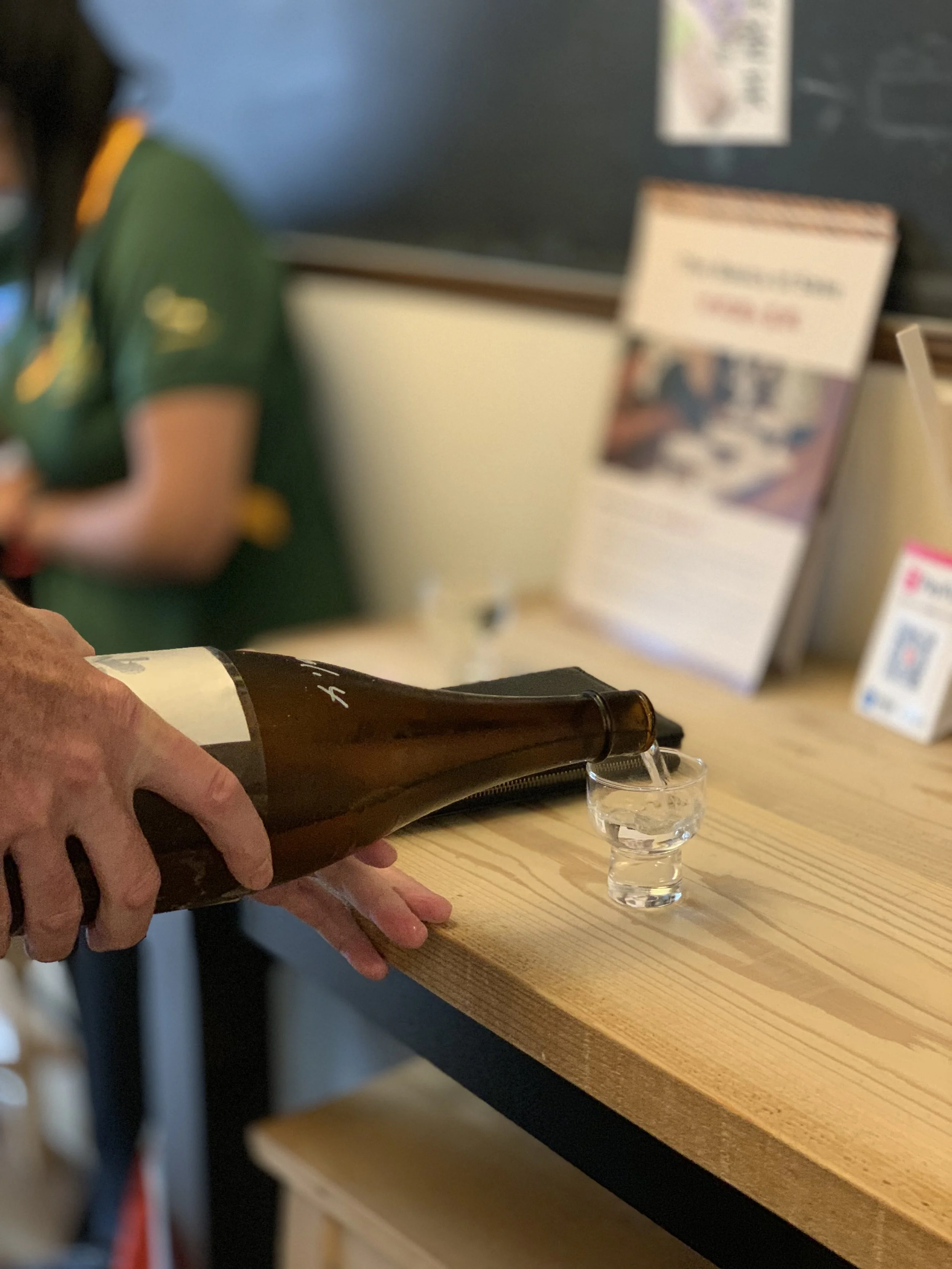
I knew I wanted to learn more than simply ordering a little cup of it at a restaurant. I wanted the real experience—to understand what I was drinking, how it was made and, most importantly, why there were so many different bottles staring back at me from Japanese shelves.
So, before our trip, I found a sake tasting hosted by Brian Hutto, contacted him by email and arranged for the six of us to come.
Or at least, I thought I had arranged it.
As we got closer to our arrival, I reached out again.
And again.
And again.
Crickets.
No confirmation.
No fault to Brian. I probably should have confirmed details two or three weeks ahead rather than a couple of days before.
Now, most people might have taken that as a fairly obvious sign that the plan wasn’t happening. We hadn’t paid, and we had no confirmation.
Me?
I told the gang, “We’re going. I’m sure it’ll work out.”
Fortunately, I travel with friends who apparently have an extraordinary amount of faith in me. Remember that I am the woman who once managed to get into Oprah without a ticket, but that’s another story…

We jumped on the train and headed toward our destination, with me maintaining a level of optimism that perhaps wasn’t entirely supported by the evidence.
Amazing what you can run into when your not looking. Check out these owls.


Before jumping into Sake there was one very important travel rule to address:
Never drink on an empty stomach.
Naturally, we stopped for food.
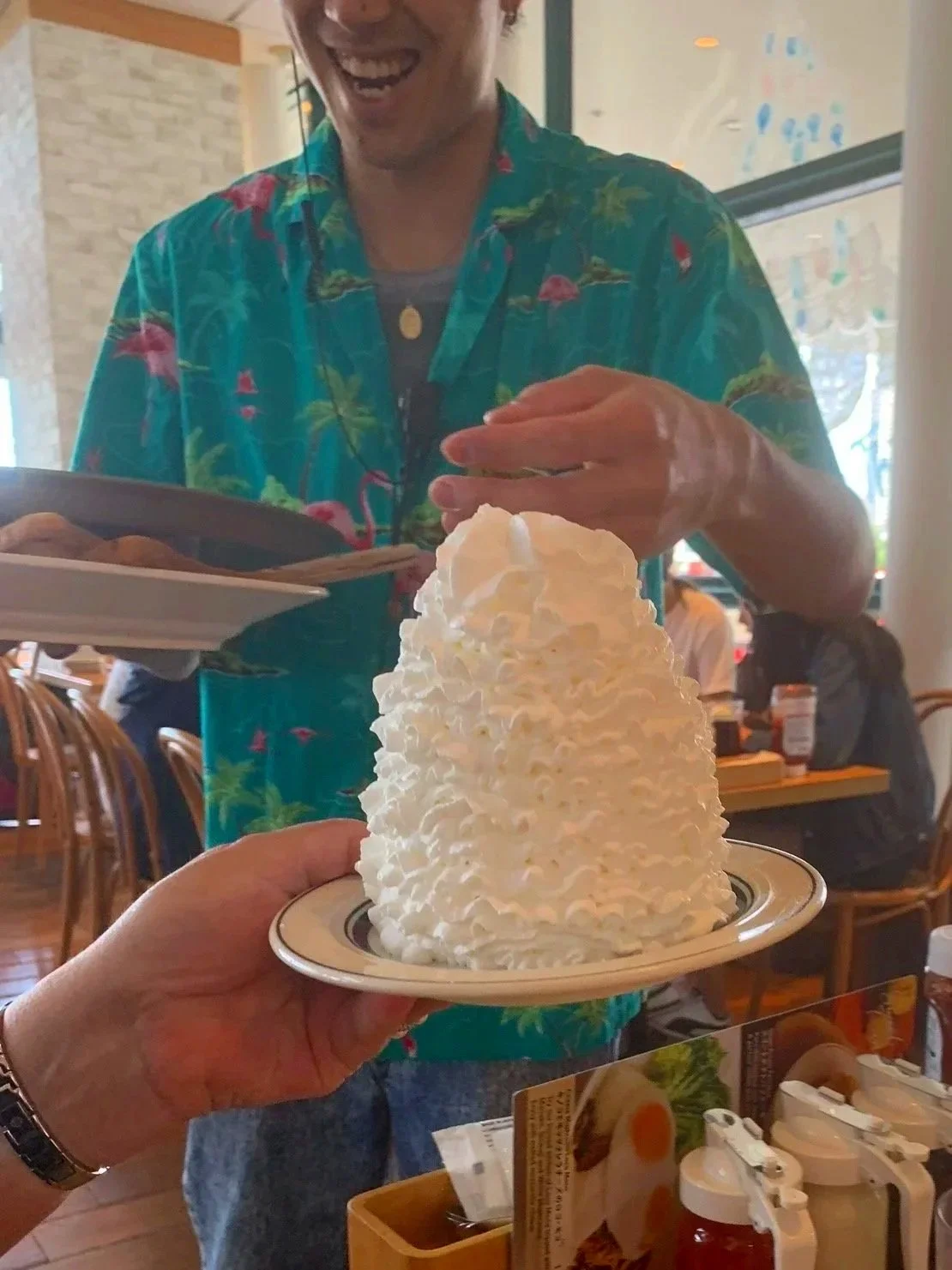
Eggs’n Things
And I swear, this restaurant should have advertised itself as “Whipped Up — would you like some pancakes with your whipped cream?”
Certainly not a dollop of whipped cream.
It was a beehive.
Not a cute little backyard beehive either. I’m talking full-on, architectural whipped-cream engineering.
We ate, laughed and filled our stomachs.
And off we went, wandering into a completely different part of the city, following our directions and looking increasingly like six tourists who were very confident about where they were going while having absolutely no idea where they were going.
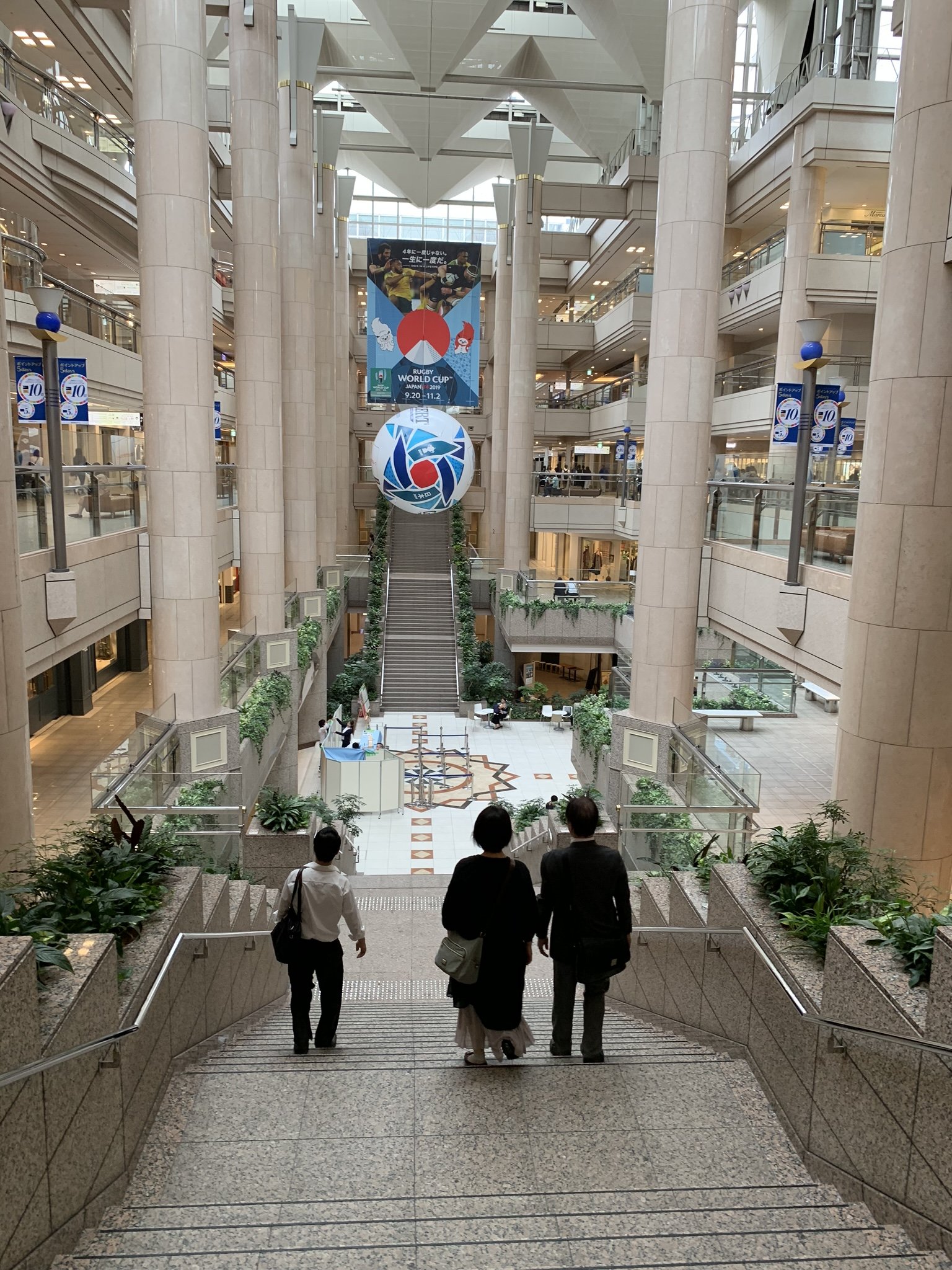
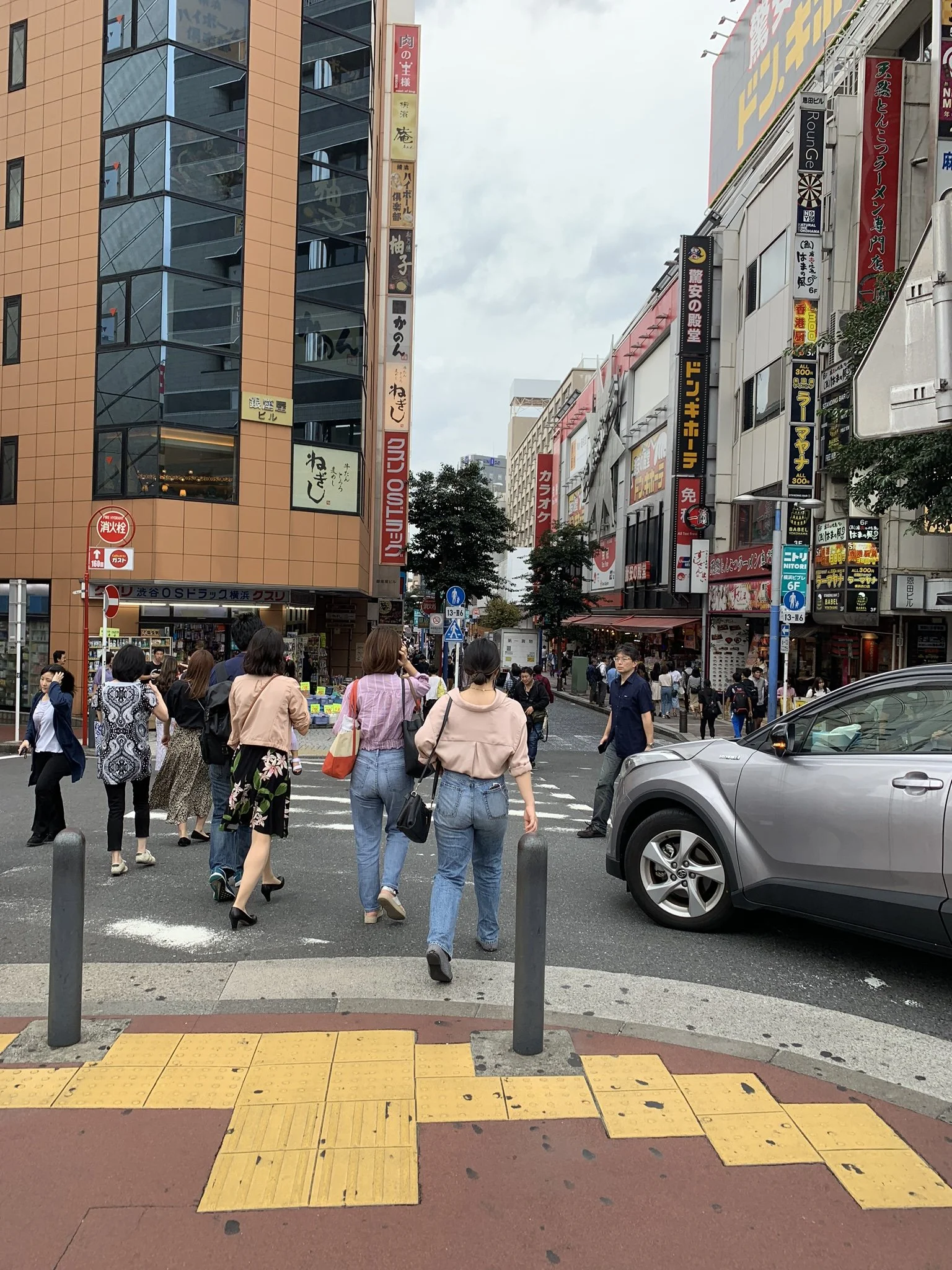
I noticed a group of South Africa fans ahead of us heading in exactly the same direction.
We meandered further into the area as the streets narrowed.
Hmm. Interesting.
Were they going where we were going? This is not a high tourist area.
What were the odds?
We arrived at the locked door together and started chatting.
We discovered that they actually had a confirmed reservation.
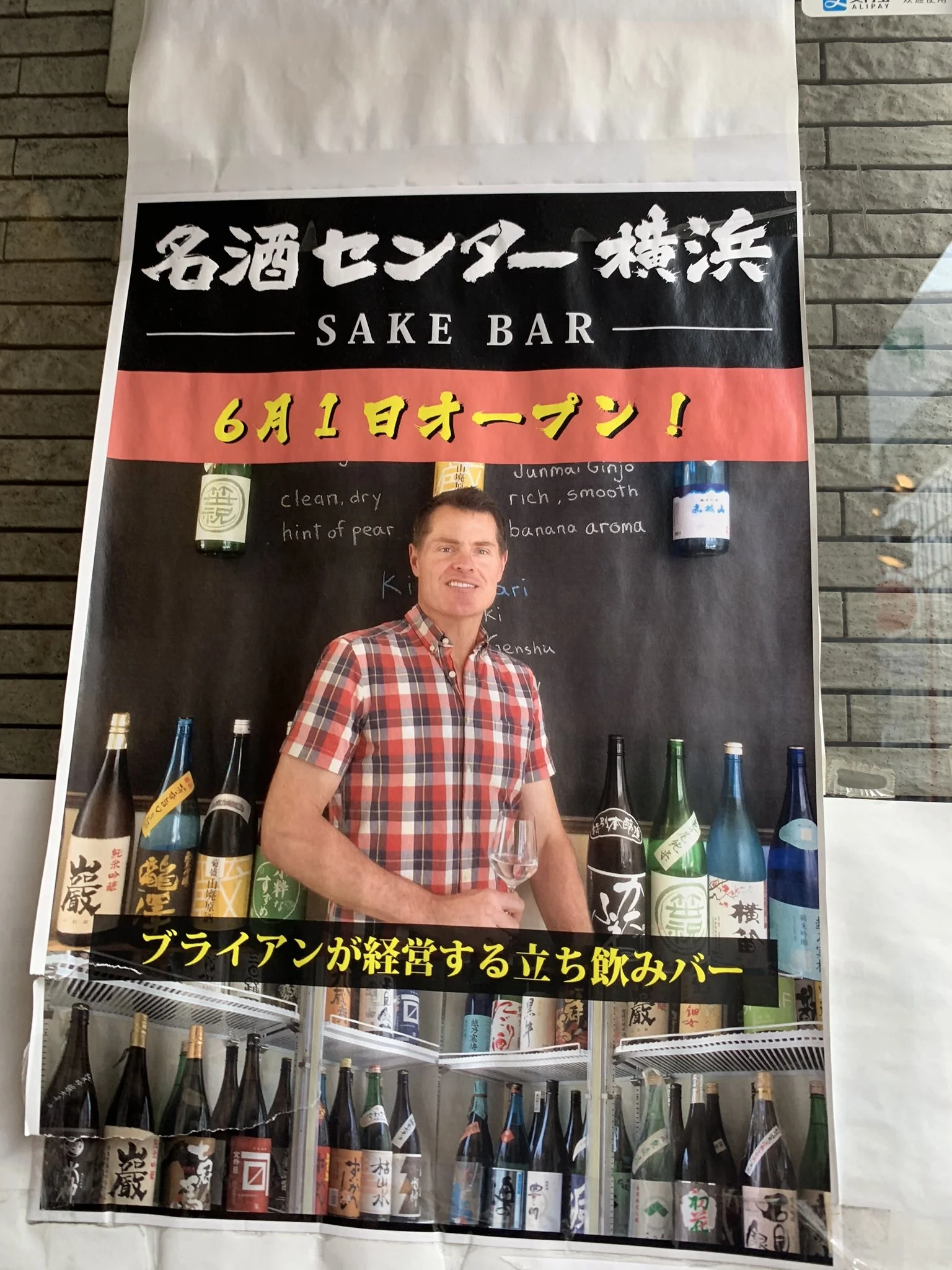
We did not. Oh no!
I explained our situation and our hope that somehow we might still get in.
And then came the little bit of travel magic I was hoping for.
Some of their group had apparently enjoyed themselves a little too enthusiastically the night before and decided they were no longer interested in attending the sake tasting.
Which meant there was suddenly room for six Canadians.
Our score!
Seriously, I do have some of the best luck—and thank God, because I think my group may have roasted me had it not turned out this way.
Yes, I am still that forever optimist.
I’m telling you, sometimes travel is less about having the perfect plan and more about being willing to walk through the door when it unexpectedly opens.
TTP—Trust The Process.
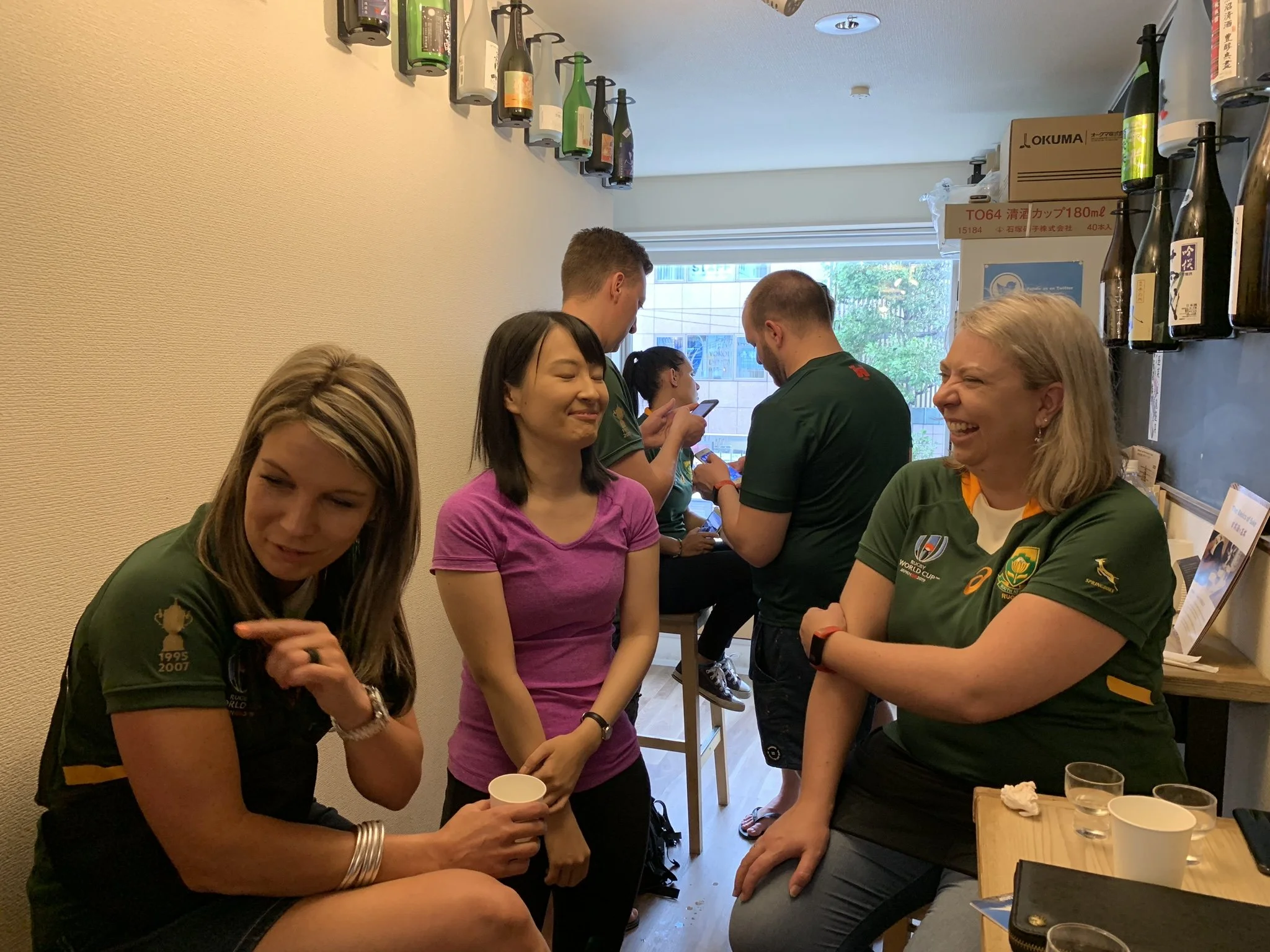
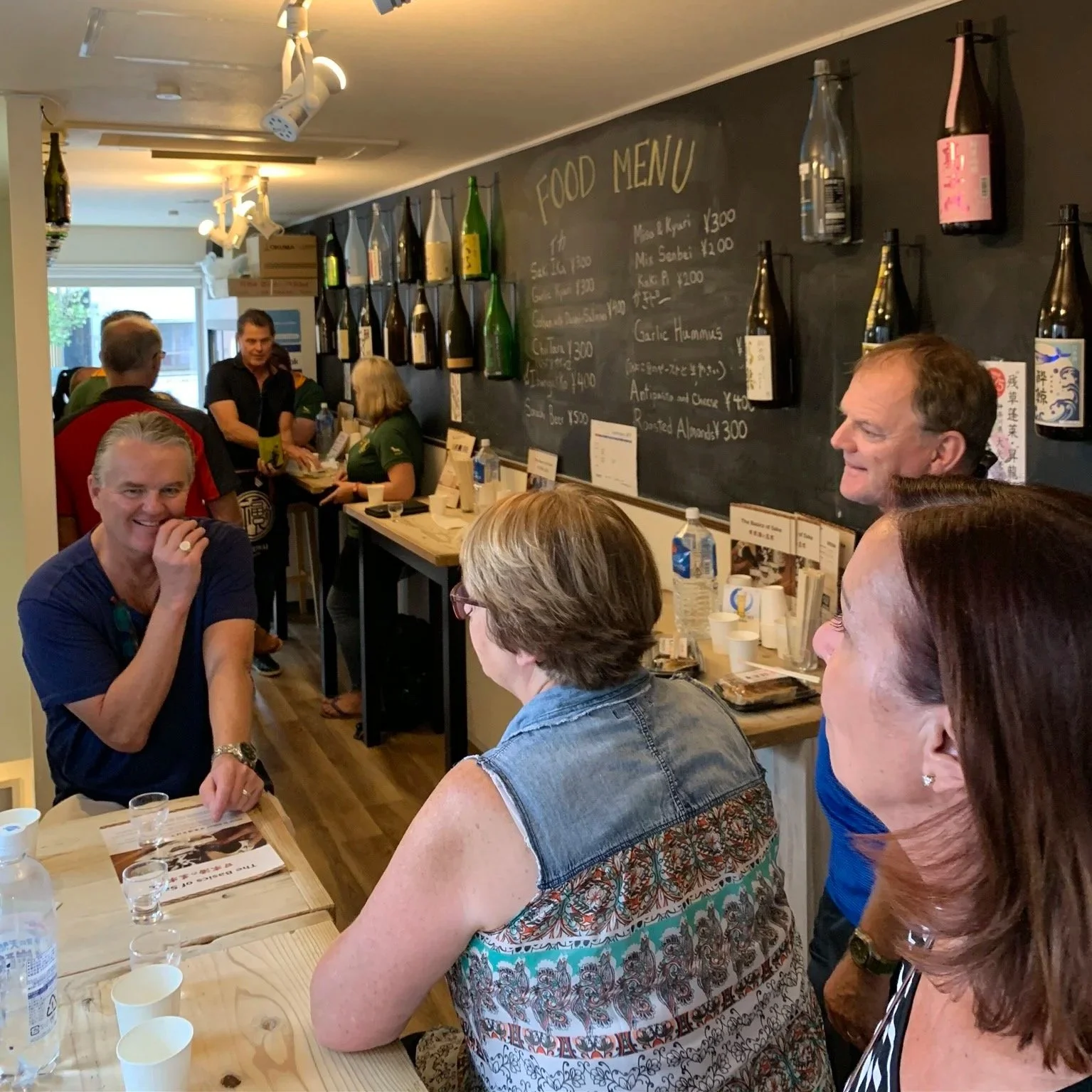
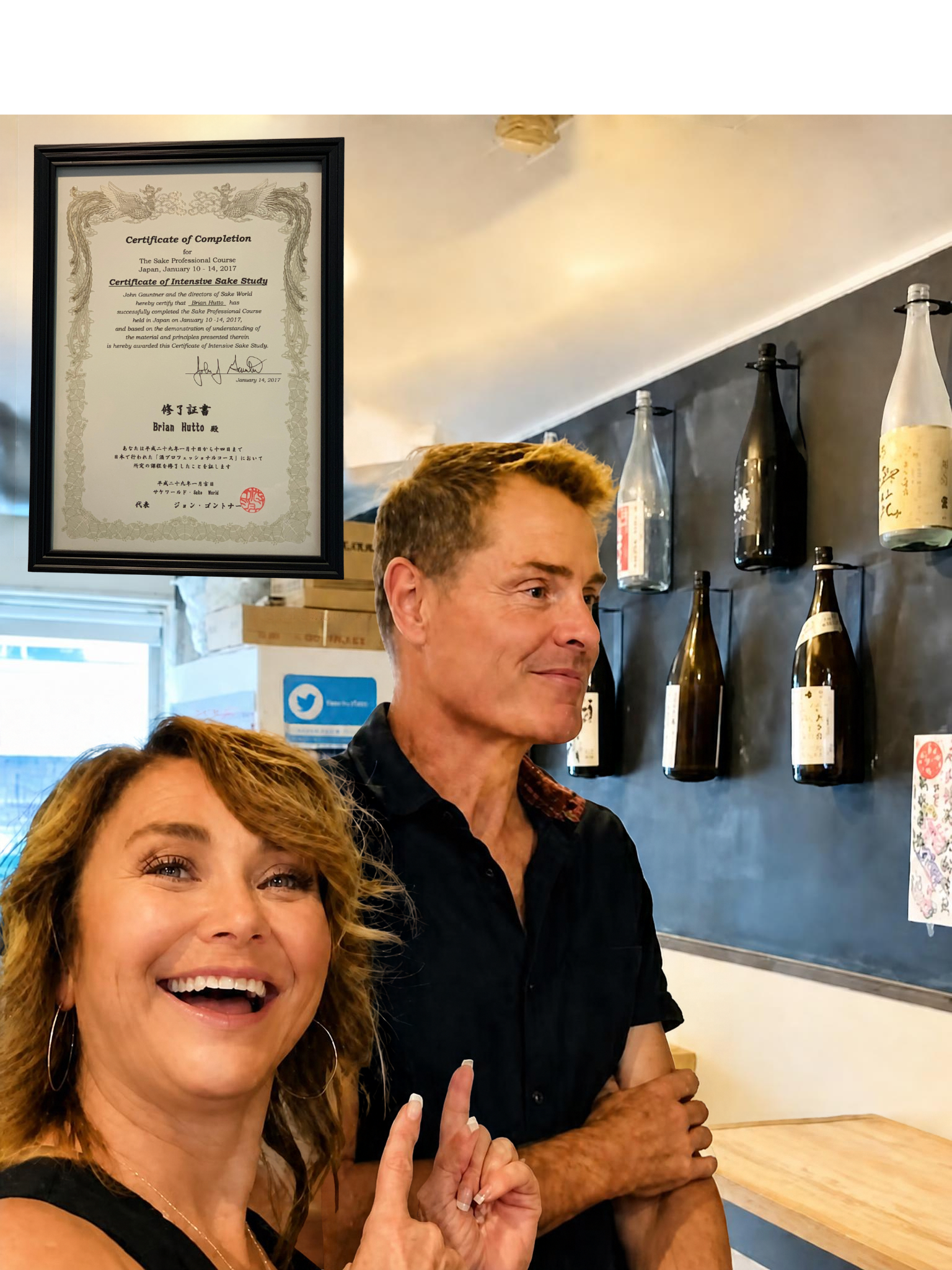
We climbed the stairs and finally met Brian Hutto and his partner.
And what followed was far more than a few drinks.
It was an education in sake, Japanese food and Japanese drinking culture.
So… What Exactly Is Sake?
First, let’s clear up one thing.
Sake isn’t wine.
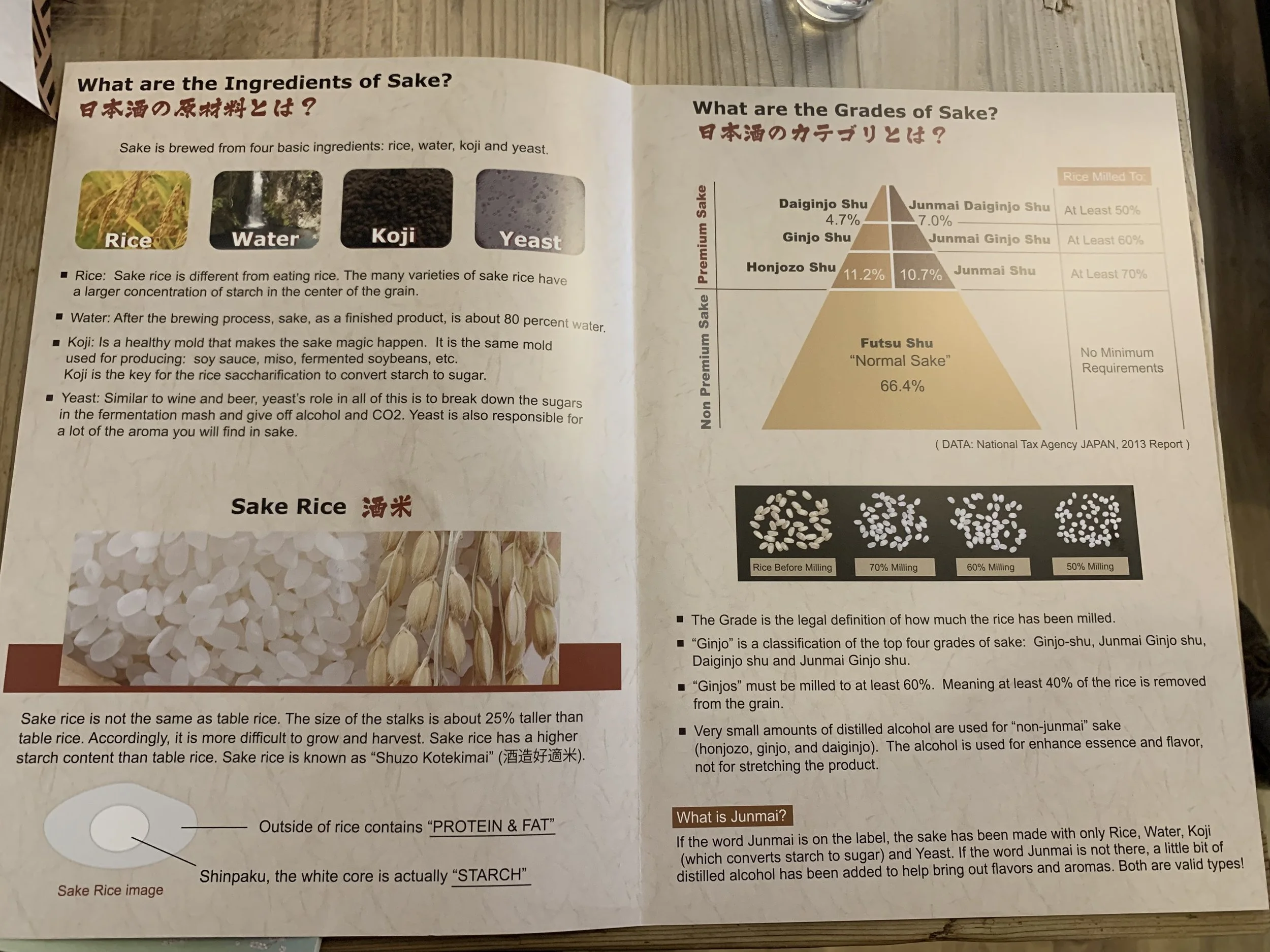
It is a fermented alcoholic beverage brewed primarily from rice, water, koji and yeast. The process begins with polished rice and koji—a mold, Aspergillus oryzae, cultivated on steamed rice. The koji produces enzymes that break the rice starches into sugars, while yeast converts those sugars into alcohol.
Remarkably, these processes happen together during sake brewing.
Okay, was that a little too much information?
Don’t worry. I promise I will get back to the actual drinking.
I do, however, think it helps explain why sake can have such a fascinating range of aromas and flavours.
And here’s another surprise: sake isn’t necessarily the fiery drink many people expect. The Japan Sake and Shochu Makers Association notes that sake is commonly around 15% alcohol, although the exact strength varies.
And yes…
We discovered a lot of different sake that afternoon.
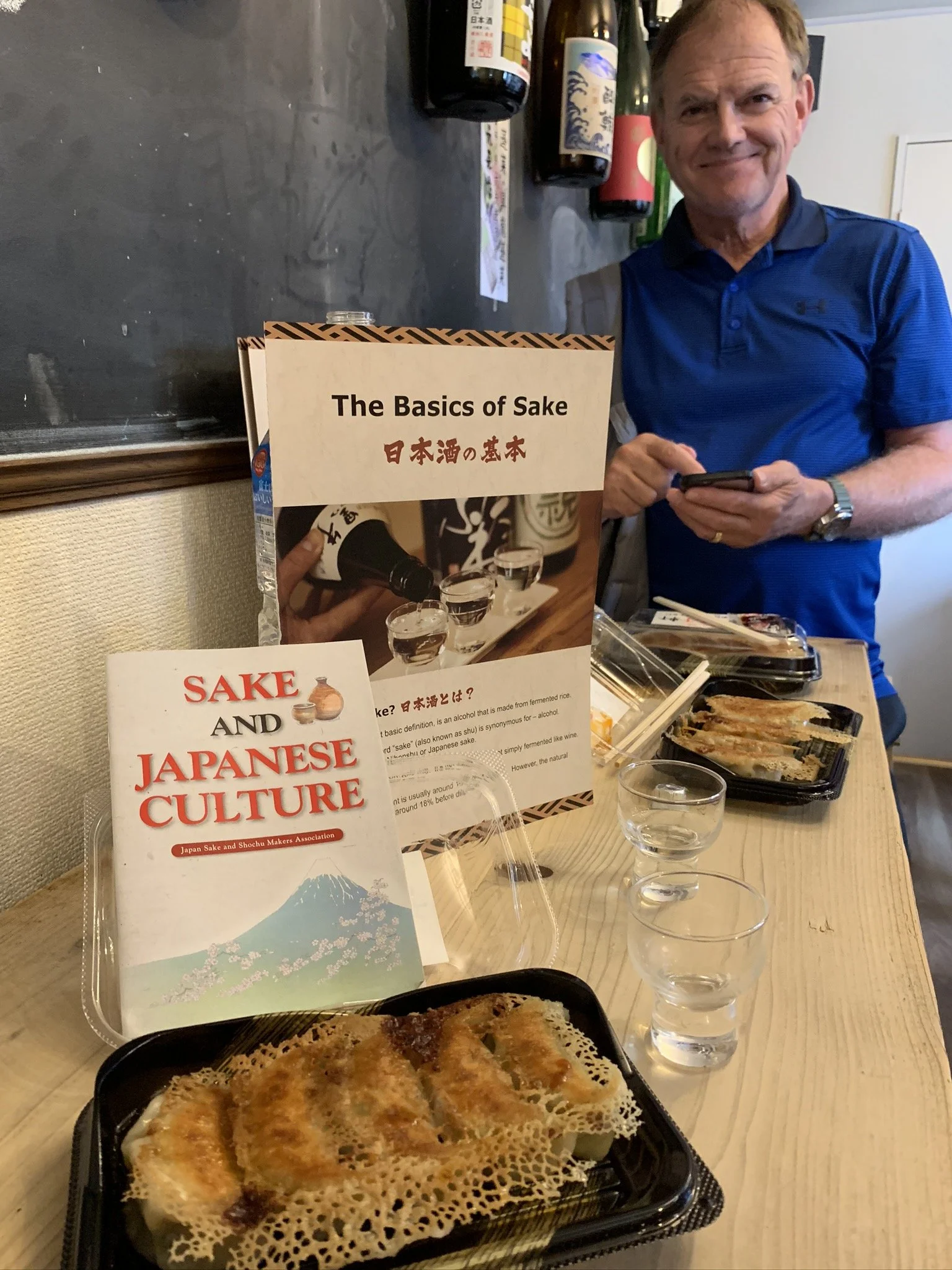
Okay, I’m saying it now.
Maybe a few too many…
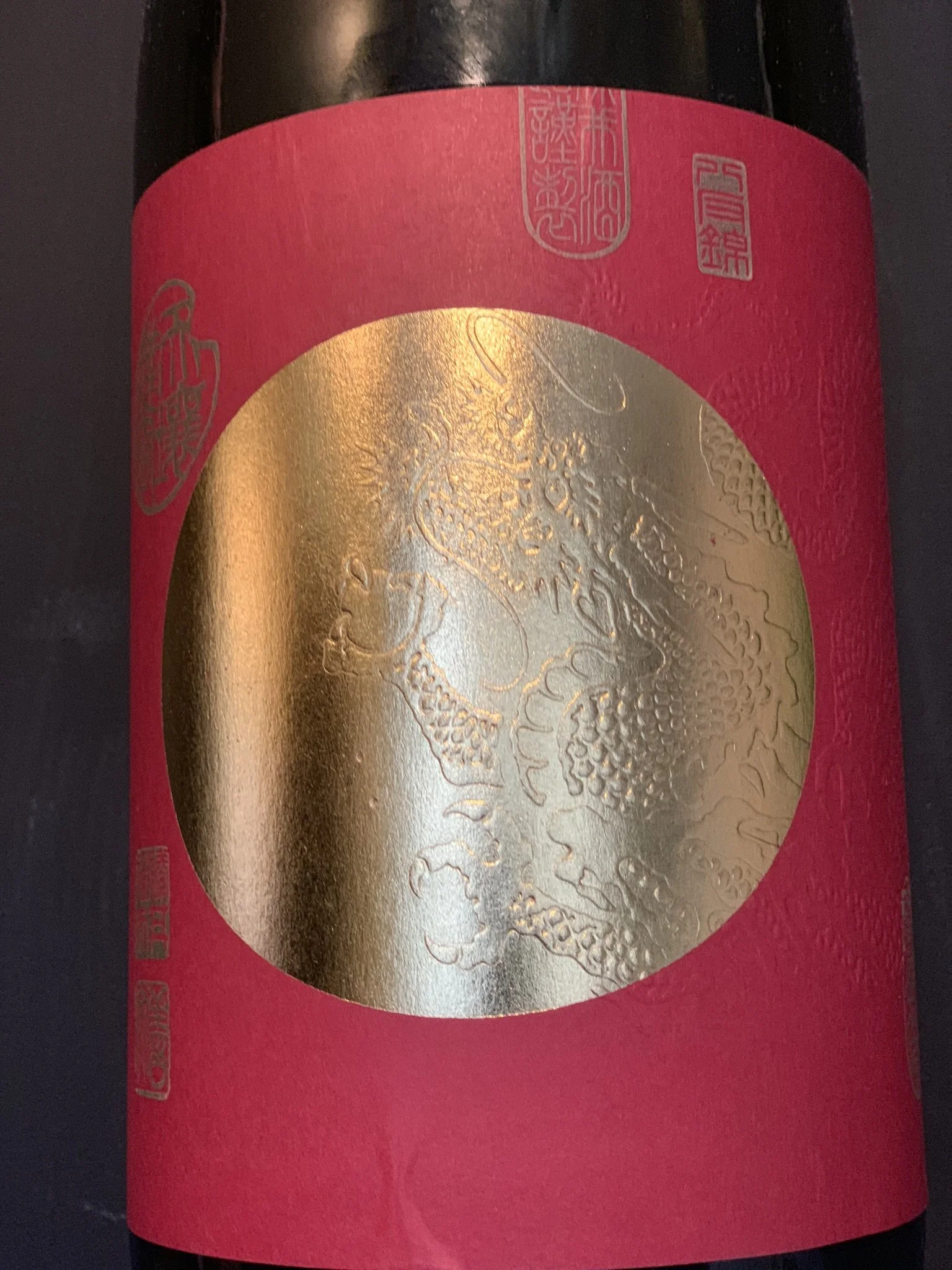
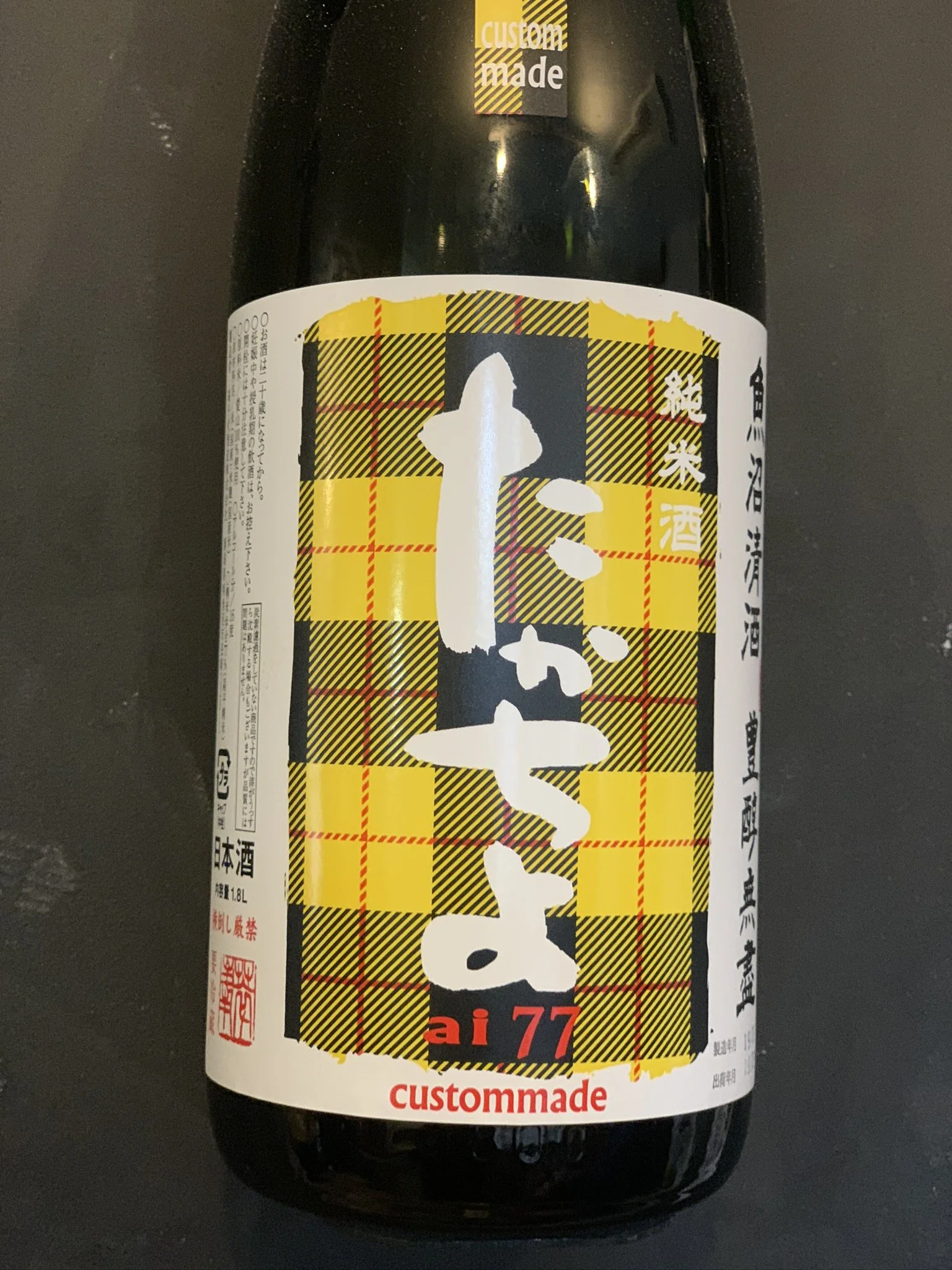
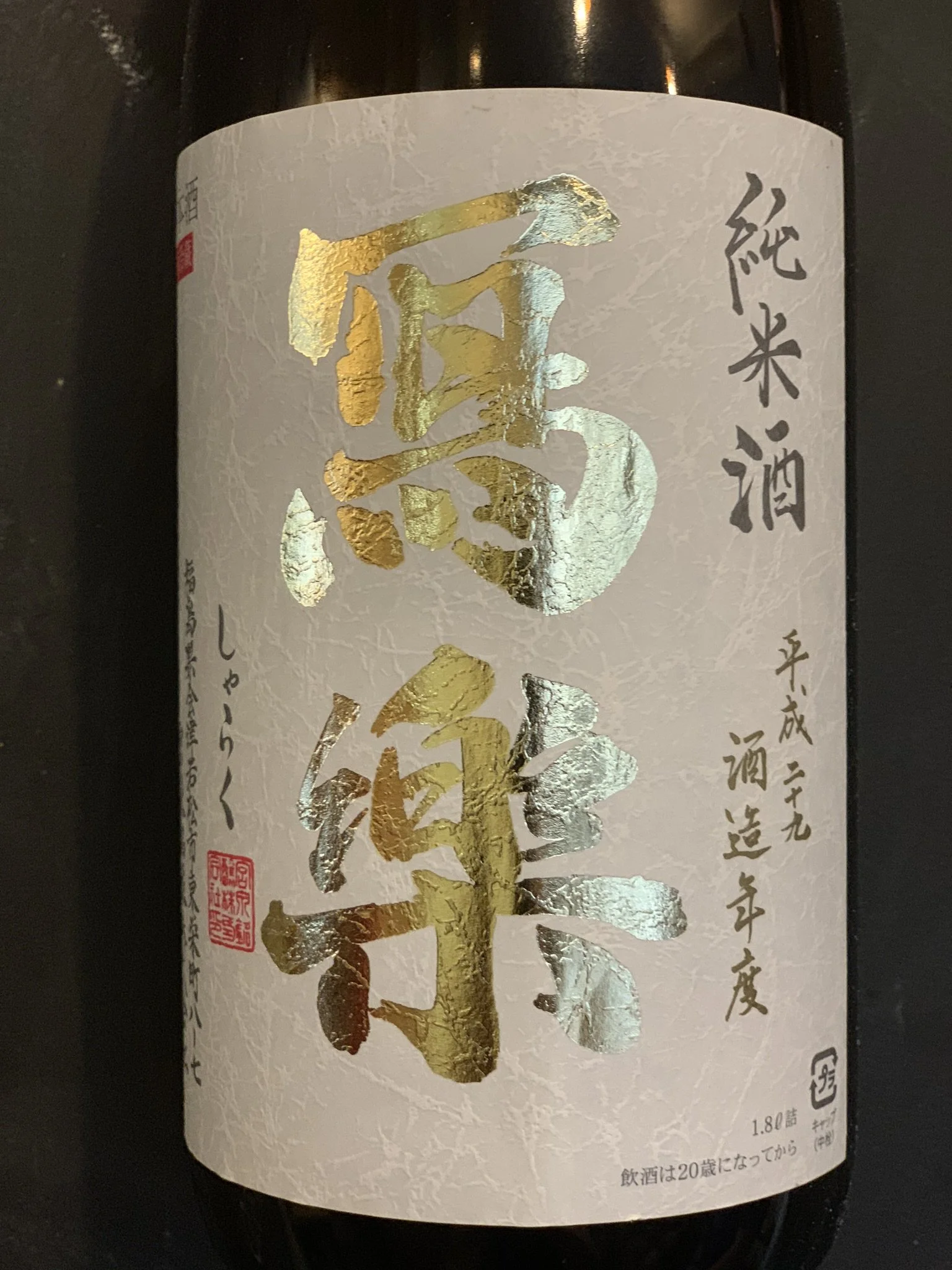
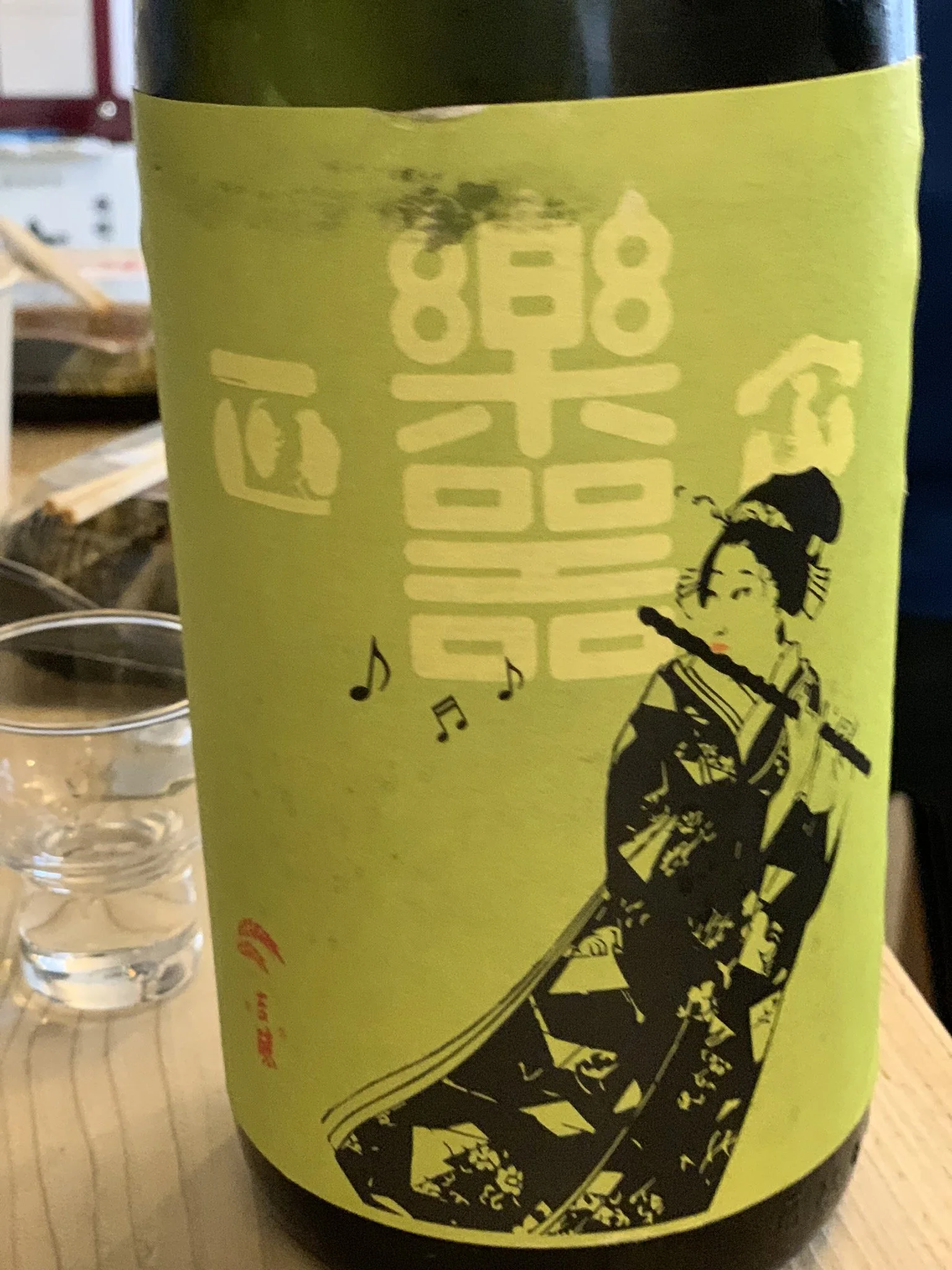
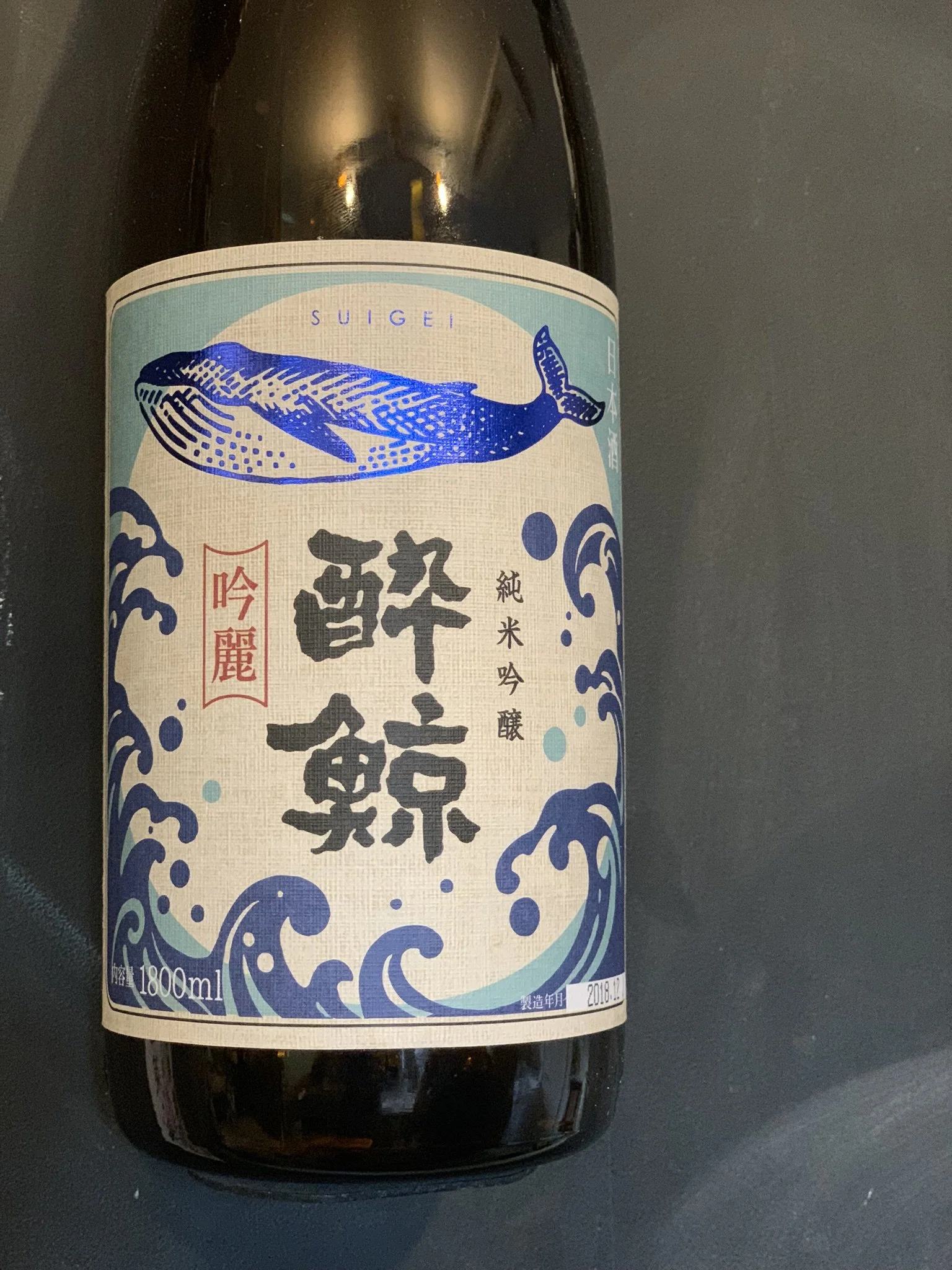
One of my favourite parts of the tasting was learning how much information is hiding on a sake label.
Suddenly, those beautiful Japanese characters weren’t just pretty artwork.
They were telling a story.
We tasted different styles and began noticing differences in aroma, sweetness, dryness, texture and finish. I started understanding why choosing a bottle at random from a restaurant menu is really only scratching the surface of the sake world.
It’s a little like wine.
You can order a glass.
Or you can start learning about the grape, the region, the producer, the production method and the reason that particular bottle tastes the way it does.
That’s where things get really interesting.
And yes, naturally, there’s an app for that.
If you become as fascinated by Japanese sake labels as I did, SakeWiz is worth knowing about. It’s designed to help identify sake and provide information about different bottles, which makes it particularly useful when you’re staring at a Japanese label wondering whether you’ve just discovered something extraordinary—or simply chosen something because the bottle was pretty.
And let’s be honest…
I’ve been known to choose wine for that reason too.
Check out these artful labels.
WOW.
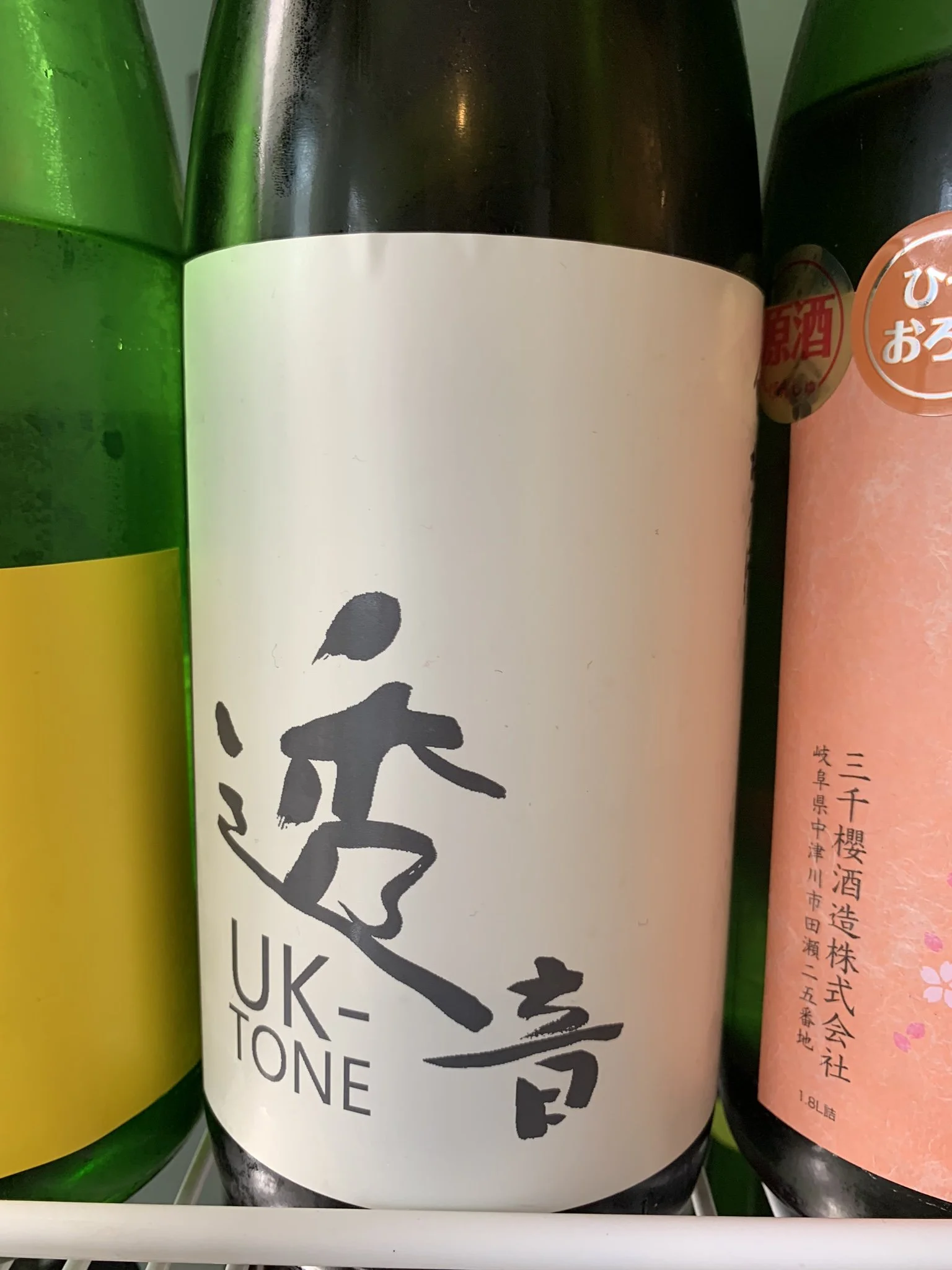
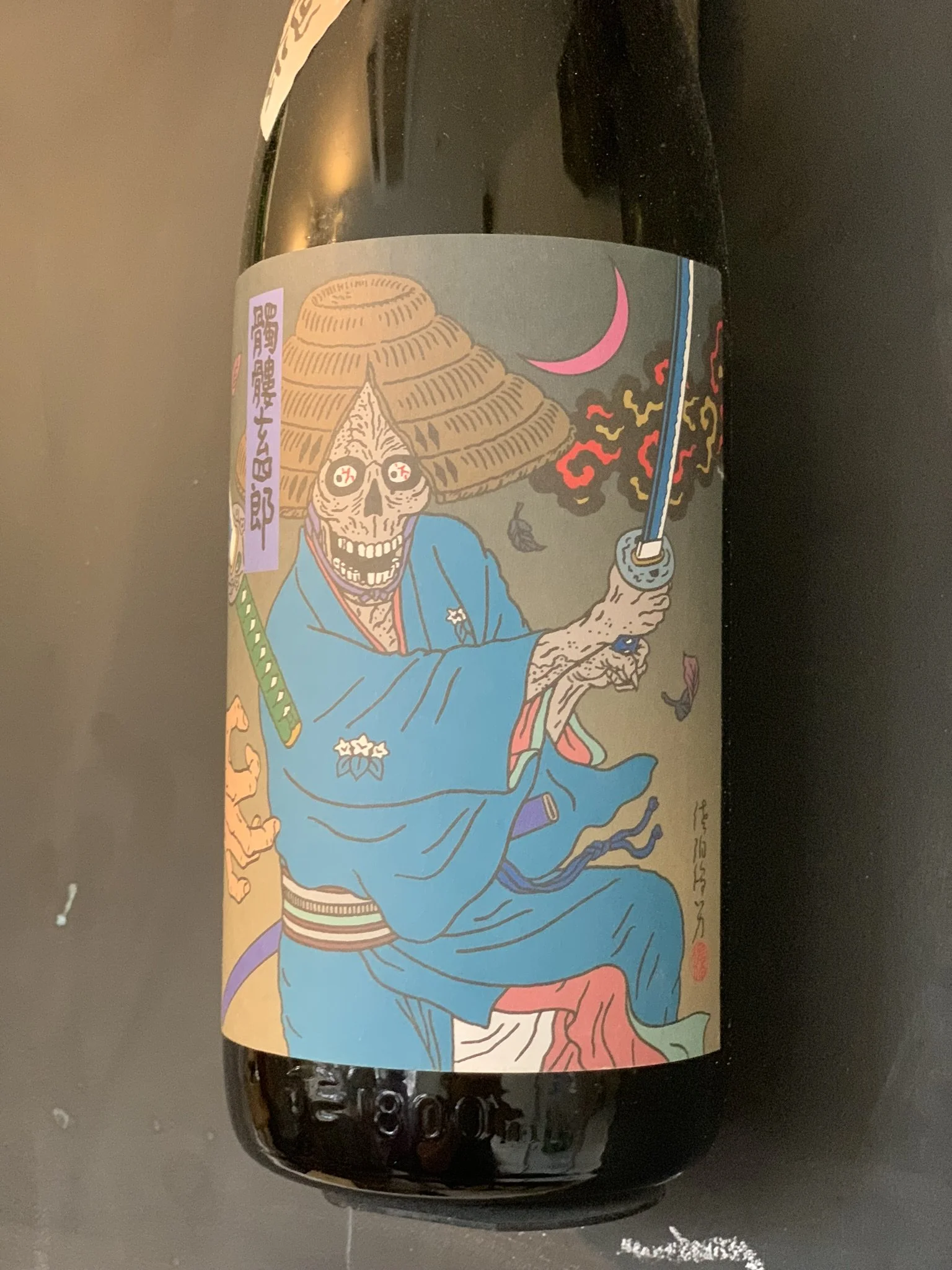
I was overwhelmed—and definitely tipsy—when we left. Purchasing a bottle from Brian wasn’t an option because we were heading directly to the rugby game.
I needed TIME and both information and a clear enough head to make my informed decision.
One thing for sure. I wasn’t leaving Japan without bringing home sake.
After spending an afternoon learning, laughing, eating and drinking with people we’d never met before, we had to admit that we couldn’t stay at the sake table forever.
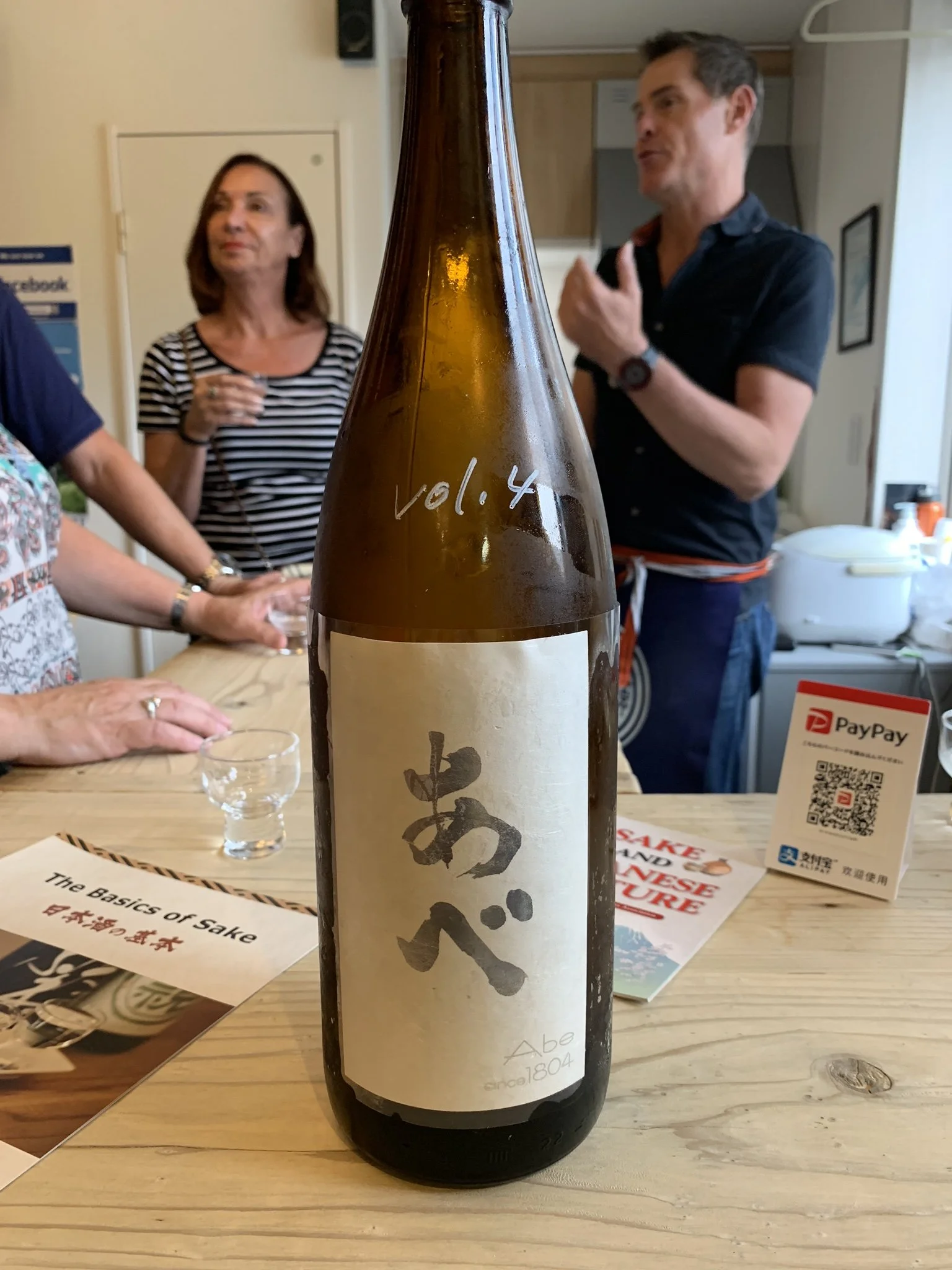
This became increasingly evident by the noise level, the animated conversations and the moment when sake started finding its way onto the floor…
It was time for rugby.

And guess who we were playing?
Yep.
South Africa.
The same South Africans we’d met that morning were now our worthy opponents.
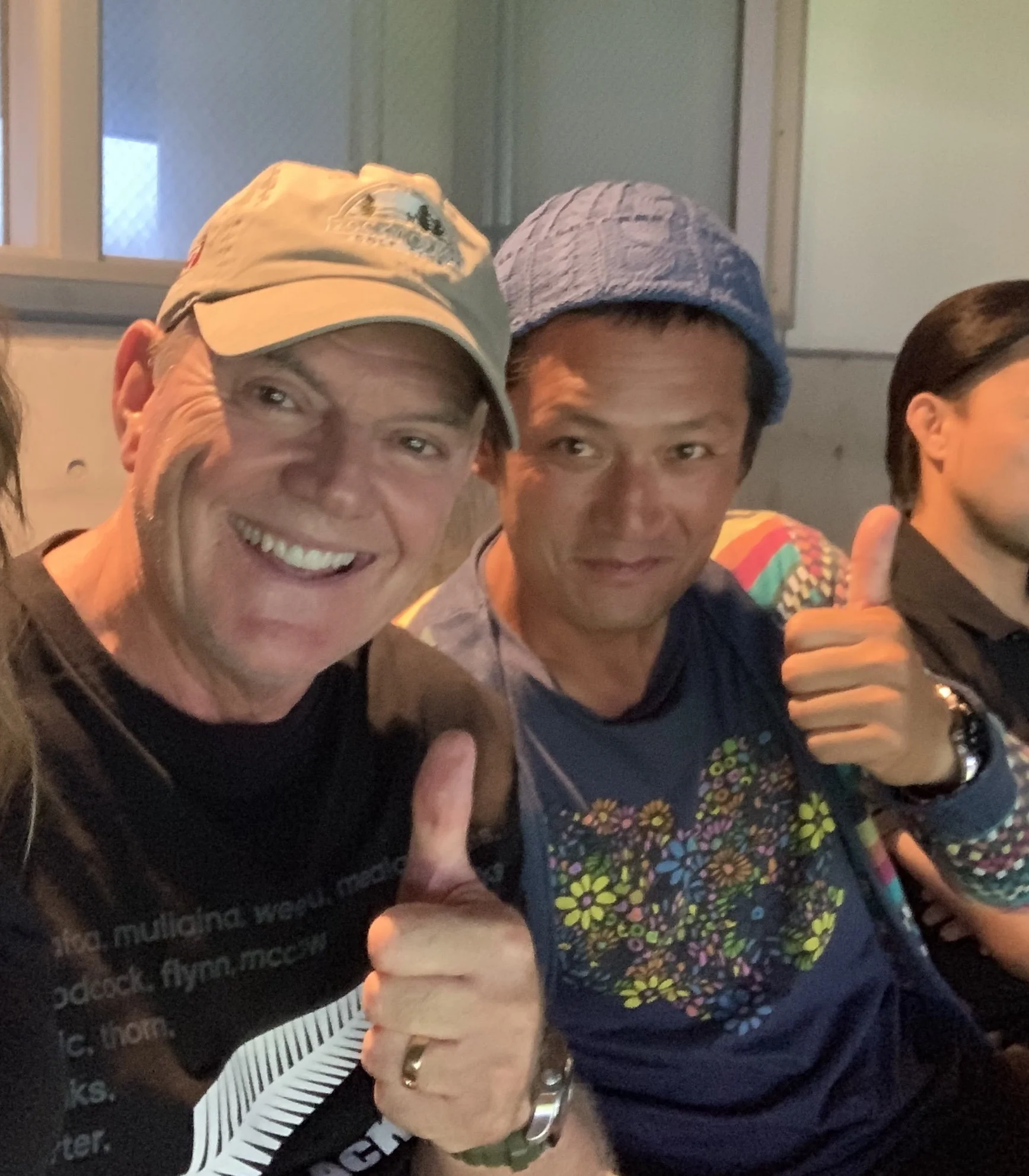
Peter is from New Zealand and, of course, we were his posse.
What were the odds?
A little cautionary note for anyone buying tickets online for a major sporting event: be careful where you buy them.
Going to the All Blacks game wasn’t actually in our original plans. We had picked up our tickets through one site, while Pete and Sue found two additional tickets privately. Their tickets were oposite side so we split up,
Before the game,Ie checked in by phone to see if we could somehow locate each other inside the stadium. That’s when things took a rather unexpected turn. We discovered that the tickets Pete and Sue had supposedly purchased were fraudulent.
Fortunately, the stadium officials were incredibly helpful. They were eventually able to accommodate Pete and Sue so they could get into the stadium and watch the game.
Can you imagine the alternative? We’re inside watching the All Blacks play, while Pete — a New Zealander and a TOTAL All Blacks fan — is standing outside the stadium without a ticket. Talk about a travel disaster!
Thankfully, it all worked out, and our entire travel crew made it inside. But it was definitely a reminder that when you’re buying tickets for a major event, especially through a private seller, a great deal can turn into a very expensive headache. Keep your receipts, screenshots, payment records and every bit of communication. You never know when that paper trail might save the day.

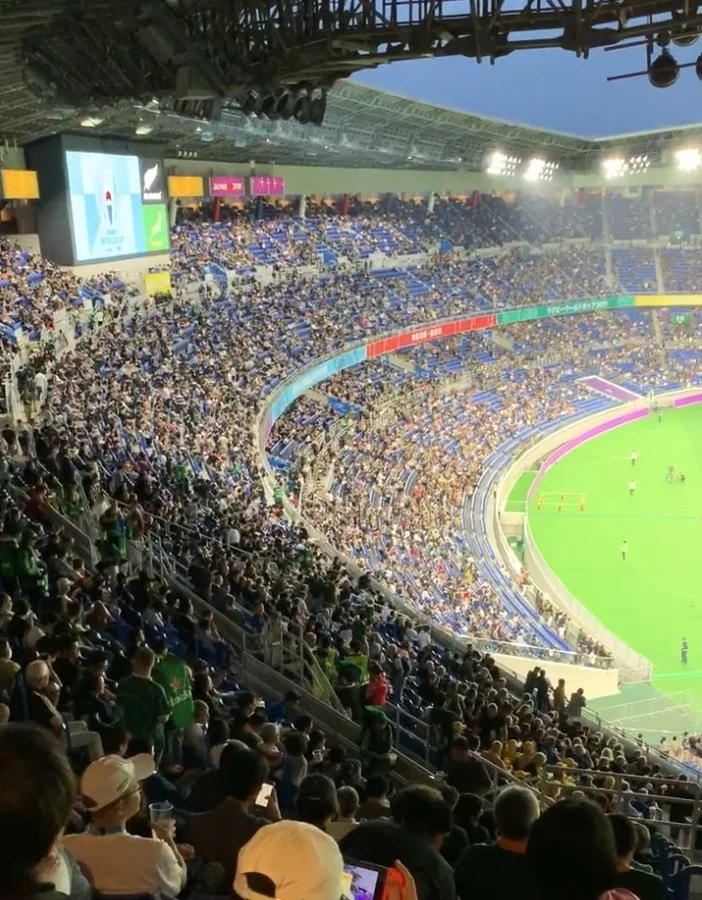
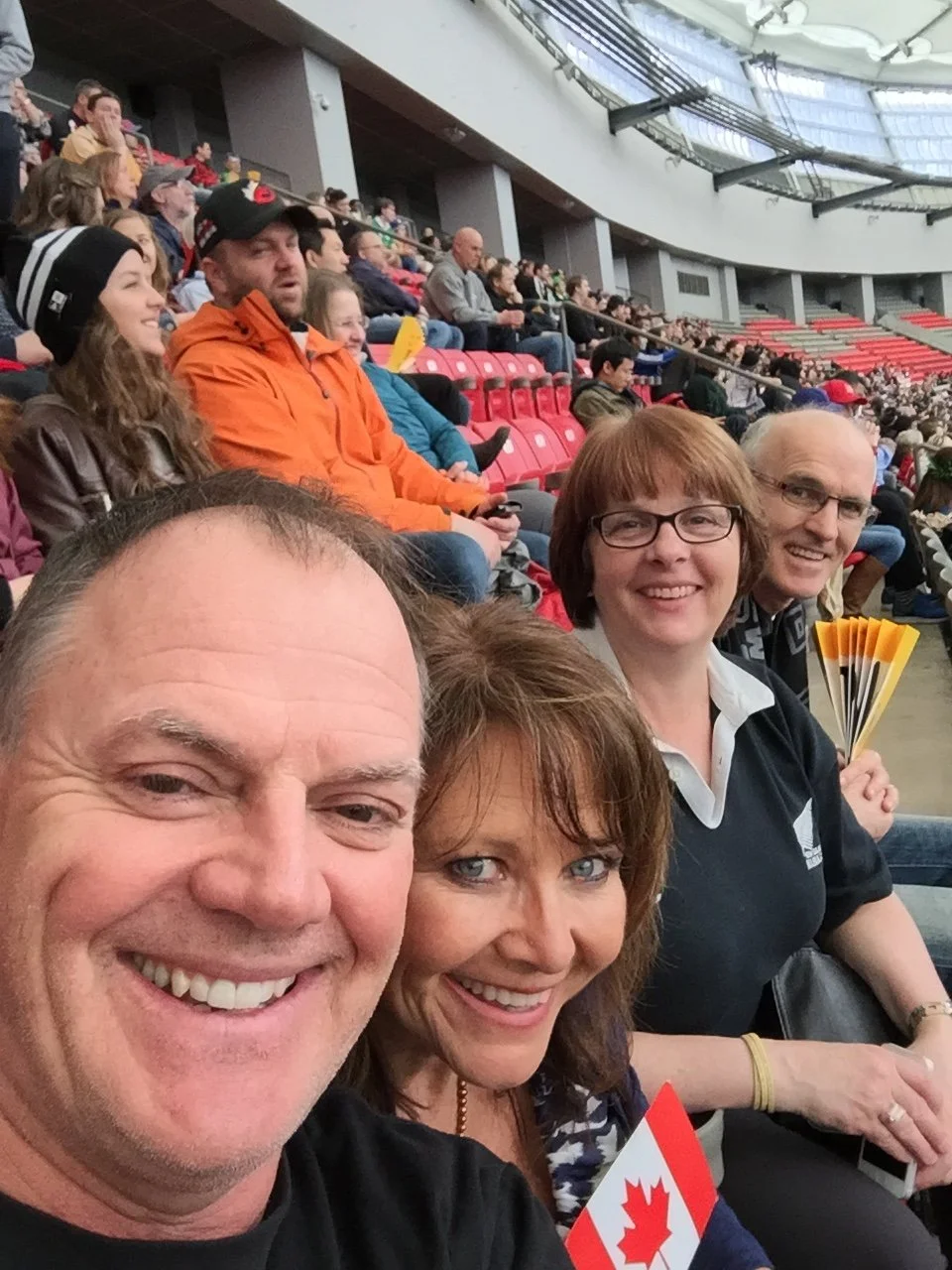
We headed to the stadium, joining the sea of rugby fans.
And then came one of my favourite moments of any rugby experience:
The haka.
If you’ve never seen the All Blacks perform a haka live, a video doesn’t quite prepare you for it.
It isn’t simply an angry stare-down before the game.
Haka is a living expression of Māori culture, connected to identity, pride, heritage, unity and mana. The All Blacks’ repertoire includes Ka Mate and Kapa o Pango, each with its own history and meaning.
And when thousands of people go quiet and those players begin…
Well.
Let’s just say the atmosphere changes.
You’ll understand exactly what I mean.
Here’s where my sake story becomes slightly unreliable.
I remember the second half being 23–13 to New Zealand.
I also remember that we’d been drinking sake.
A fair amount of sake.
So I wasn’t about to put my reputation on the line by pretending I had taken perfect notes.
Thankfully, history has my back.
New Zealand defeated South Africa 23–13 at Yokohama’s International Stadium on September 21, 2019, in the opening Pool B match of the Rugby World Cup. There were over 63,000 people in attendance.
And yes…
The All Blacks won.
Pete was flying high.
The rest of us were pretty happy too.
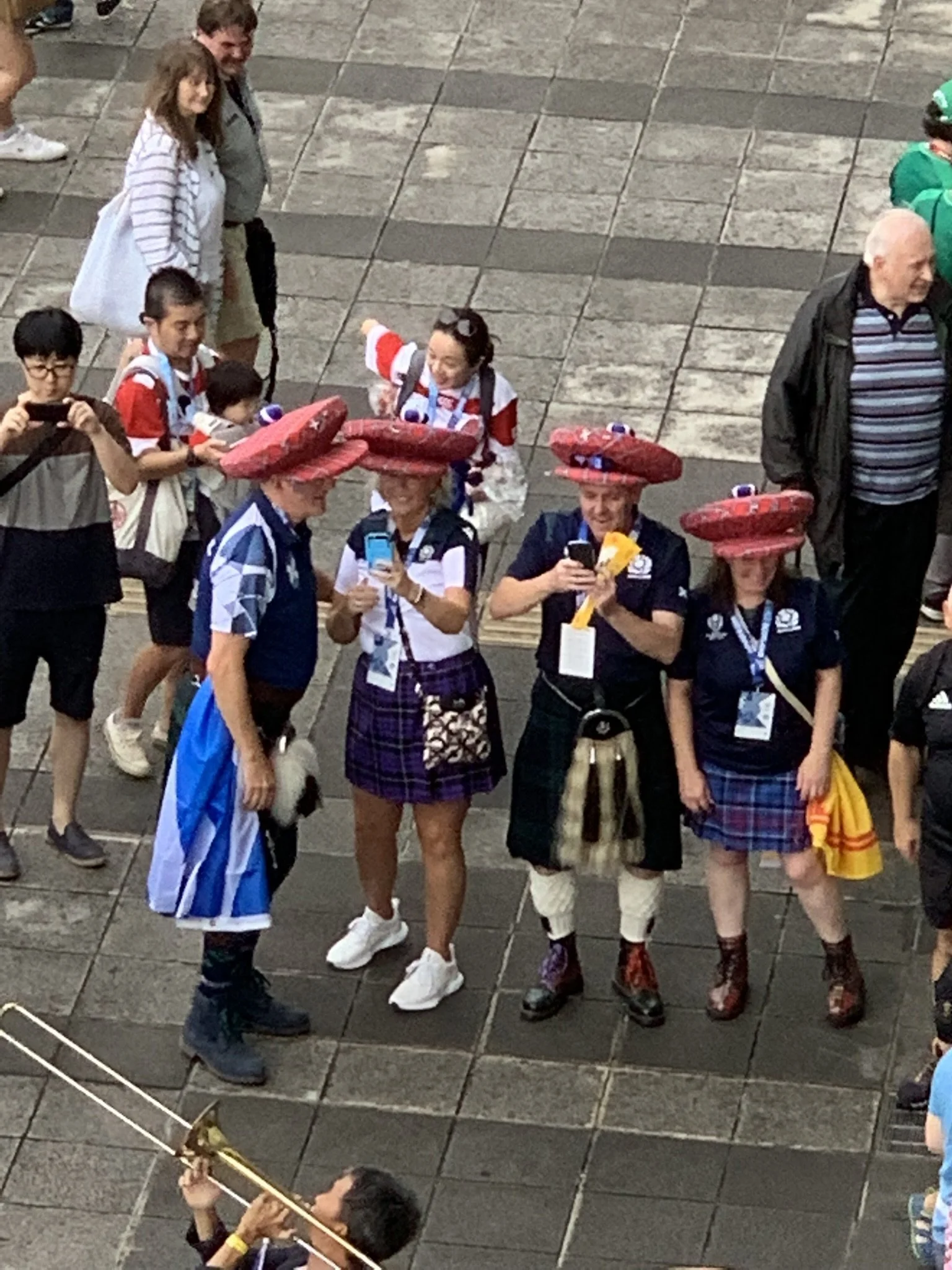
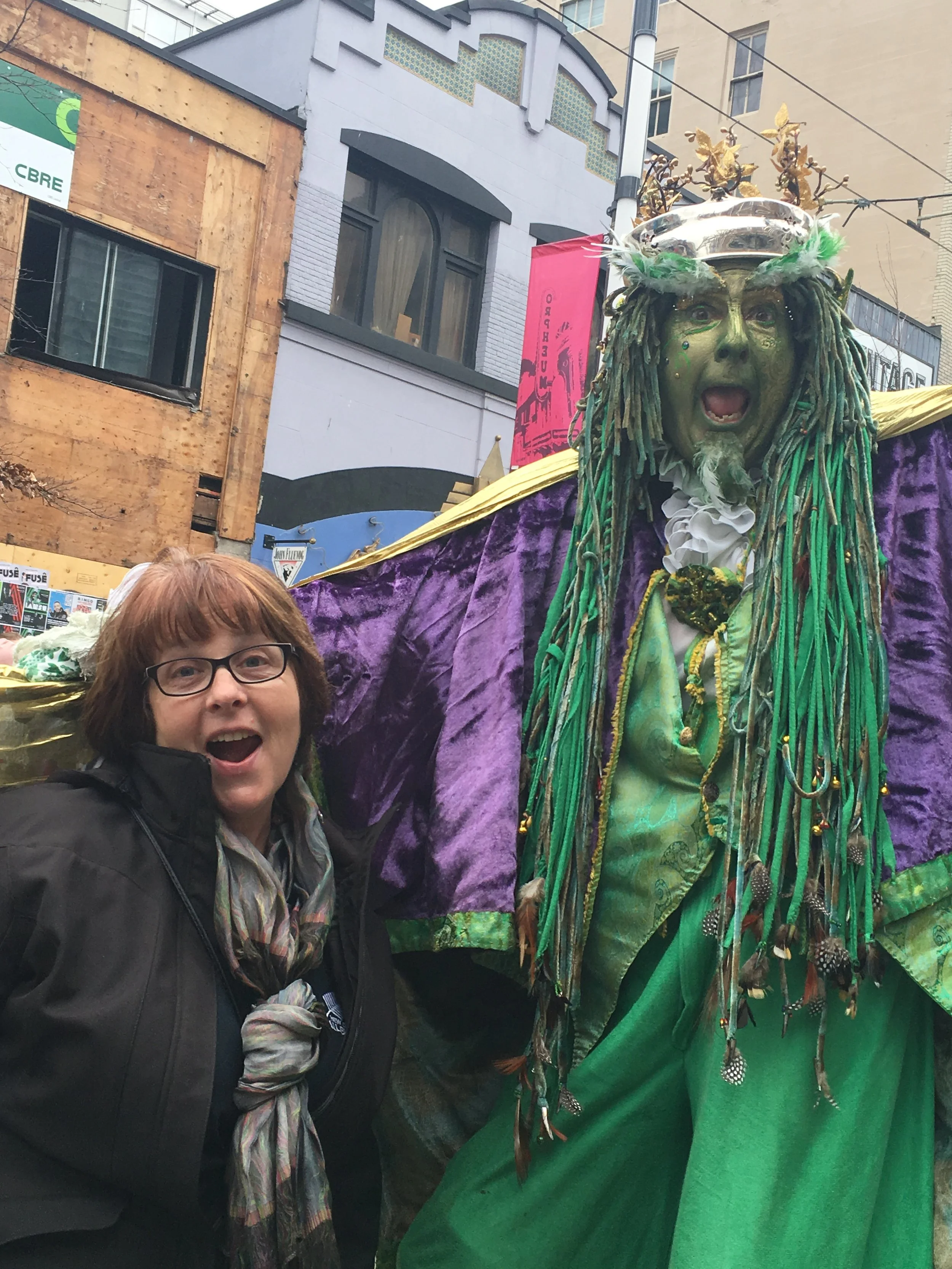
We attended 2 games in total, the other was Ireland and Scotland. OMG the outfits. I loved the buzz.
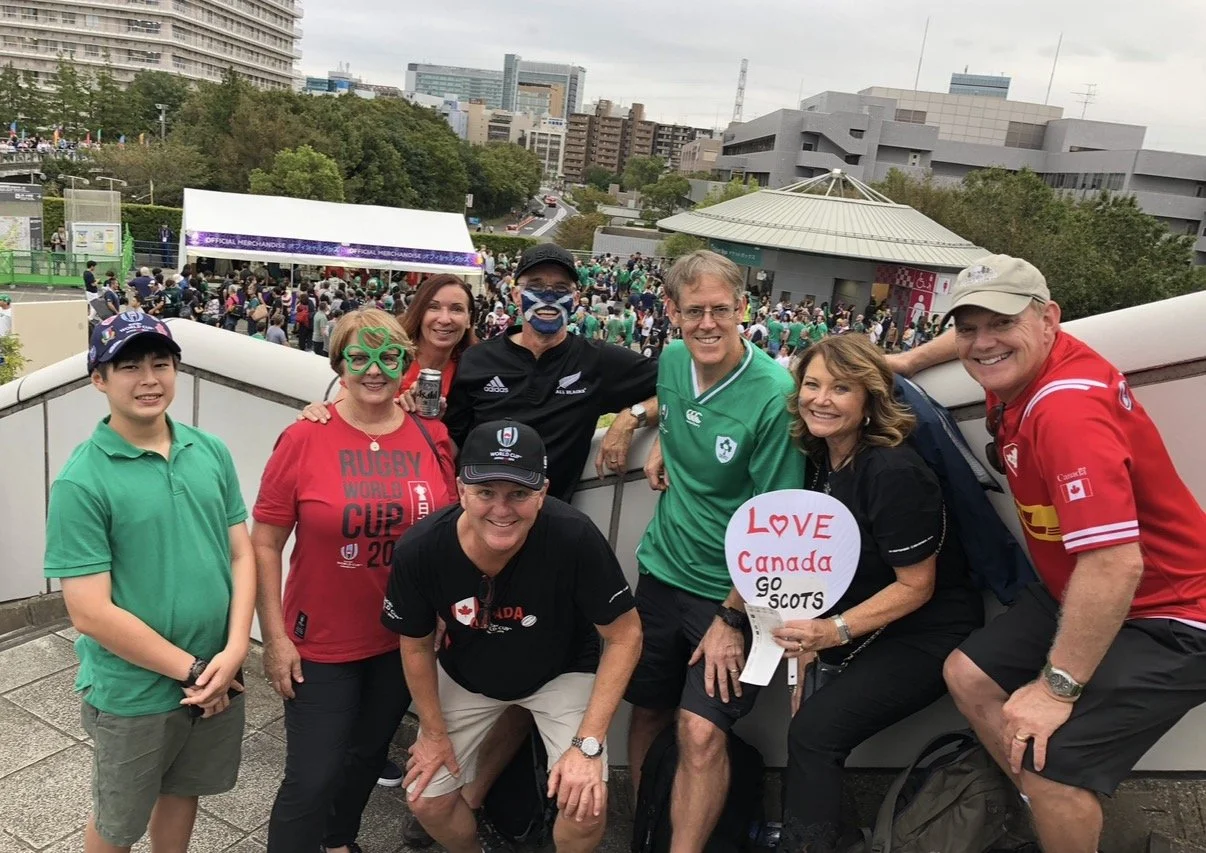
Getting out of the stadium was another adventure.
The streets were packed with rugby fans, and the crowd moved at approximately the speed of a glacier. The rain started to drizzle.
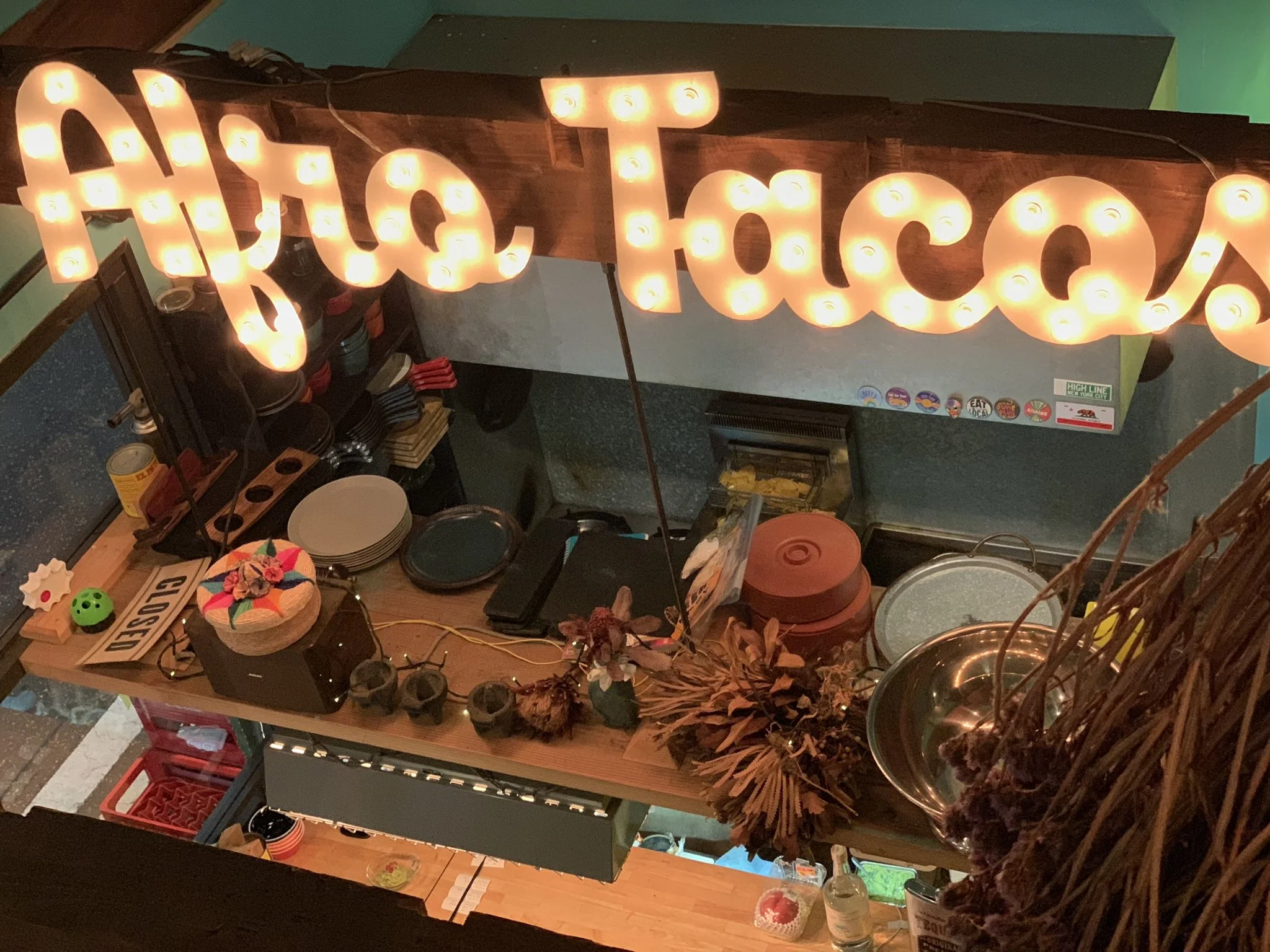
We were trying to take shortcuts so we could actually get a step or two without getting soaked, we eventually found our way to a little place tucked down a side street called Afro Taco.
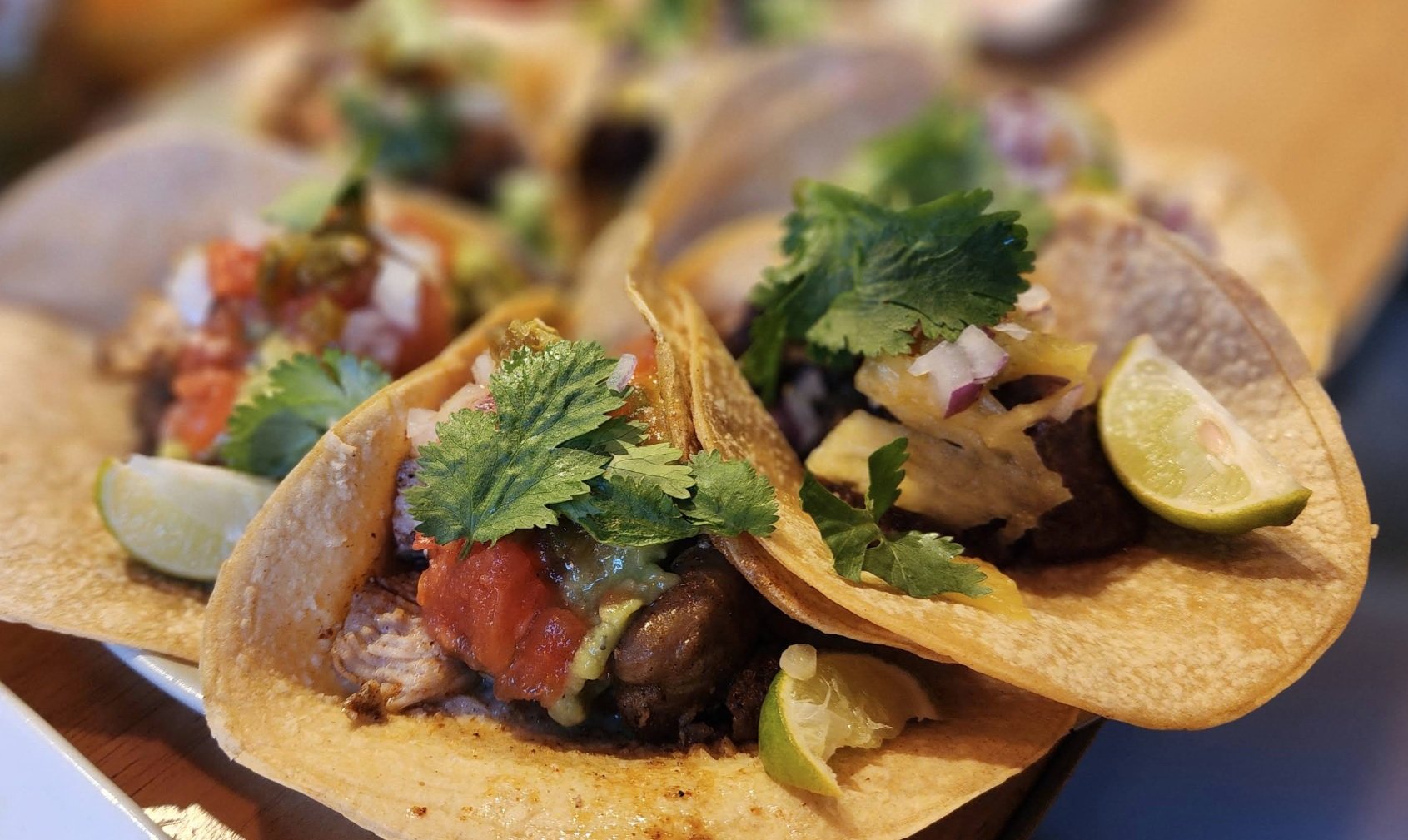
Our day had included pancakes with a mountain of whipped cream, sake with some delicious Japanese small plates, South African rugby fans, the haka and a World Cup match…
Tacos seemed entirely reasonable.
Why not travel the world through tastes?
Somewhere between the first sip of sake and the final rugby whistle, the day had become one of those travel stories you couldn’t possibly have planned.
Which, I’ve discovered, are usually the best ones.
Not sure if Darrel agreed.

On a final note, the sake I chose is particularly beautiful, and the story behind it is what sold me.
The brewery associated with the bottles is Hasegawa Shuzo in Niigata, a region with a long and important sake-brewing tradition.
The information I have for my particular set describes the bottles as Daiginjo, one of the premium categories of sake, with rice polished so that only 40% and 45% of the original grain remains.
That polishing matters.
The outer layers of a rice grain contain more proteins, fats and other components that can contribute to stronger flavours. For highly polished sake, much of that outer portion is removed, leaving a smaller, starch-rich centre.
The result can be a more delicate and aromatic style of sake.
The set also describes a traditional shizuku shibori pressing method, where the sake is allowed to drip from bags rather than being aggressively pressed. This gentle extraction is prized for producing particularly refined sake.
Of course, I couldn’t bring home the sake without bringing home something to drink it from.
Look at this little beauty.
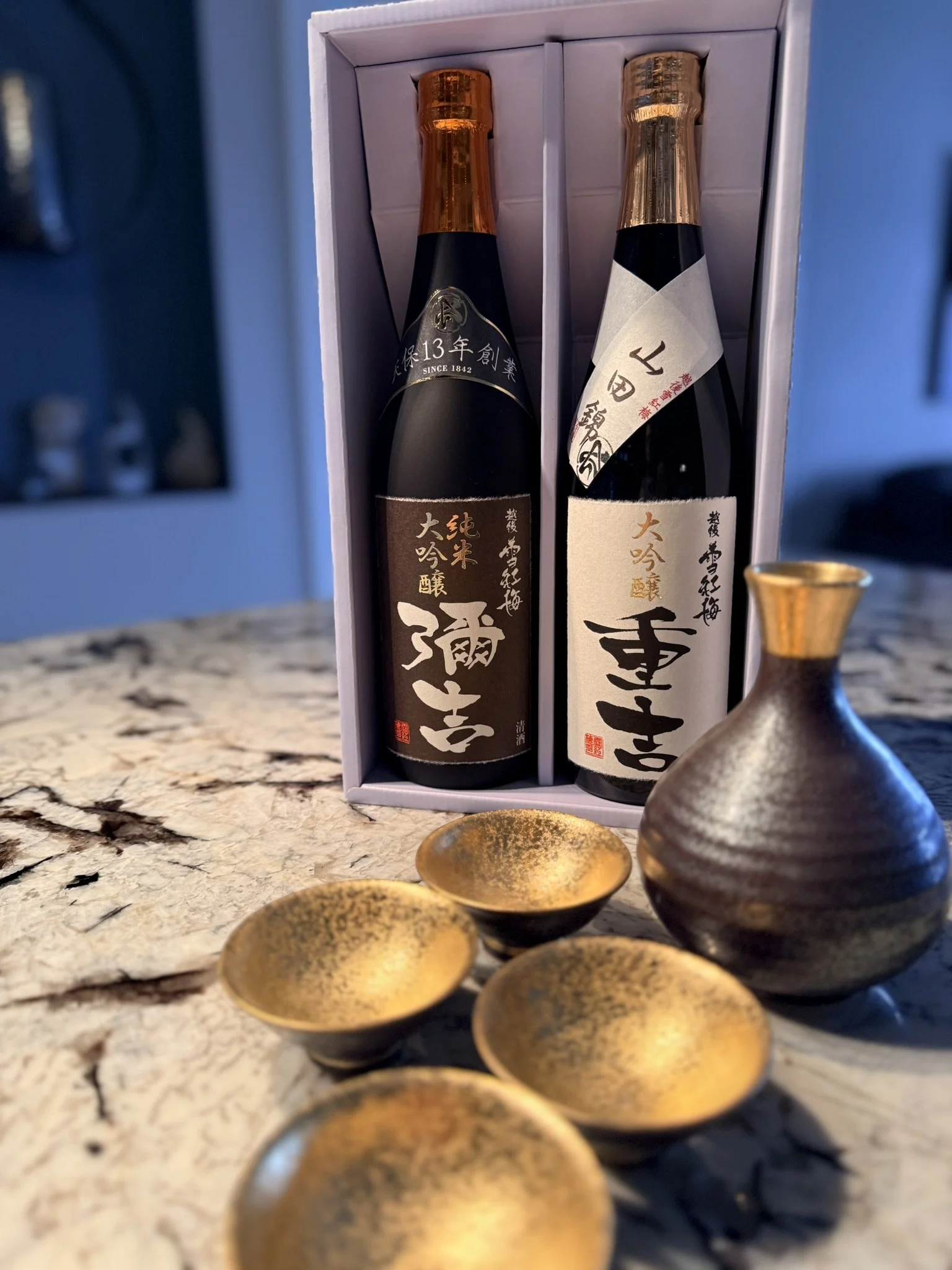
The bottle-shaped vessel in my photograph is a tokkuri, the traditional ceramic flask used for serving sake. The small cups are generally called ochoko; if they are a little larger, they may be described as guinomi. The terminology can overlap depending on the size and style.
I love that the Japanese don’t treat the vessel as merely a container.
The shape, material and size can all become part of the drinking experience.
And suddenly, my little sake set isn’t just a souvenir.
It’s a reminder of a completely unexpected afternoon in Japan.
And One More Word You Need to Know…
There is one Japanese word that everyone should know before embarking on a sake adventure:
Kanpai!
It means “cheers” and literally carries the idea of “dry the cup.” But don’t panic—nobody expects you to throw back your entire drink every time someone says it.
In modern Japanese drinking culture, kanpai is the signal that the gathering has officially begun.
And here’s the part I really love.
Kanpai isn’t just about drinking.
Japanese sake culture places considerable emphasis on the people you’re drinking with. When sharing sake, pouring for others rather than simply filling your own cup can be a gesture of consideration and hospitality. The Japan Sake and Shochu Makers Association describes sake as a vehicle for communication between groups.
So when you raise your cup and say kanpai, you’re not simply saying “Cheers.”
You’re joining the group.
Kanpai!
See you on the next adventure.