Hiroshima & Miyajima Island: A Journey Through Peace, and Unforgettable Moments
Some places change the way you travel.
Others change the way you think.
Hiroshima did both.
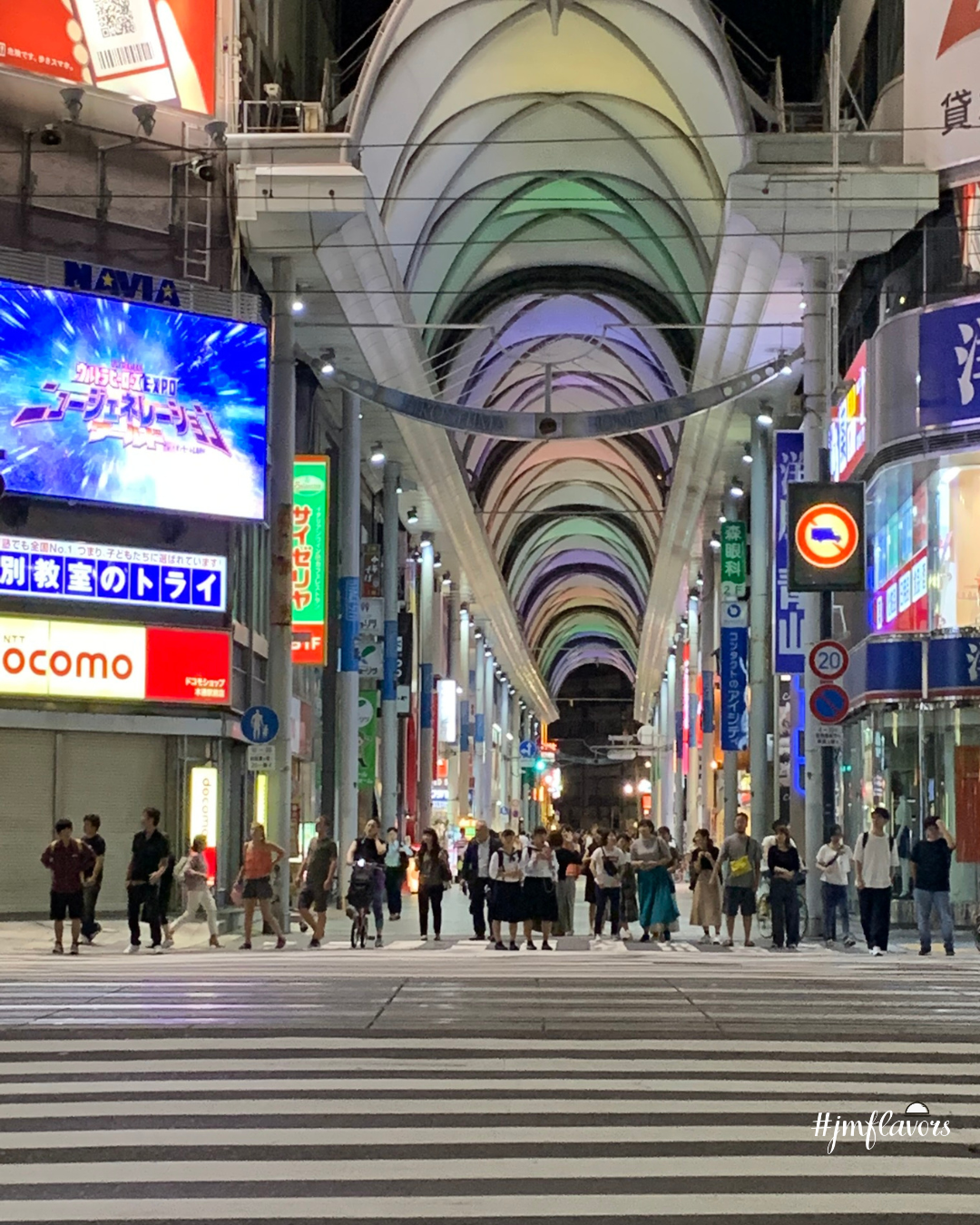
After an eleven-hour flight from Vancouver to Osaka and a ride aboard Japan’s remarkably efficient Shinkansen bullet train, we arrived in Hiroshima—not searching for beautiful scenery or incredible food, but to stand where history changed forever.
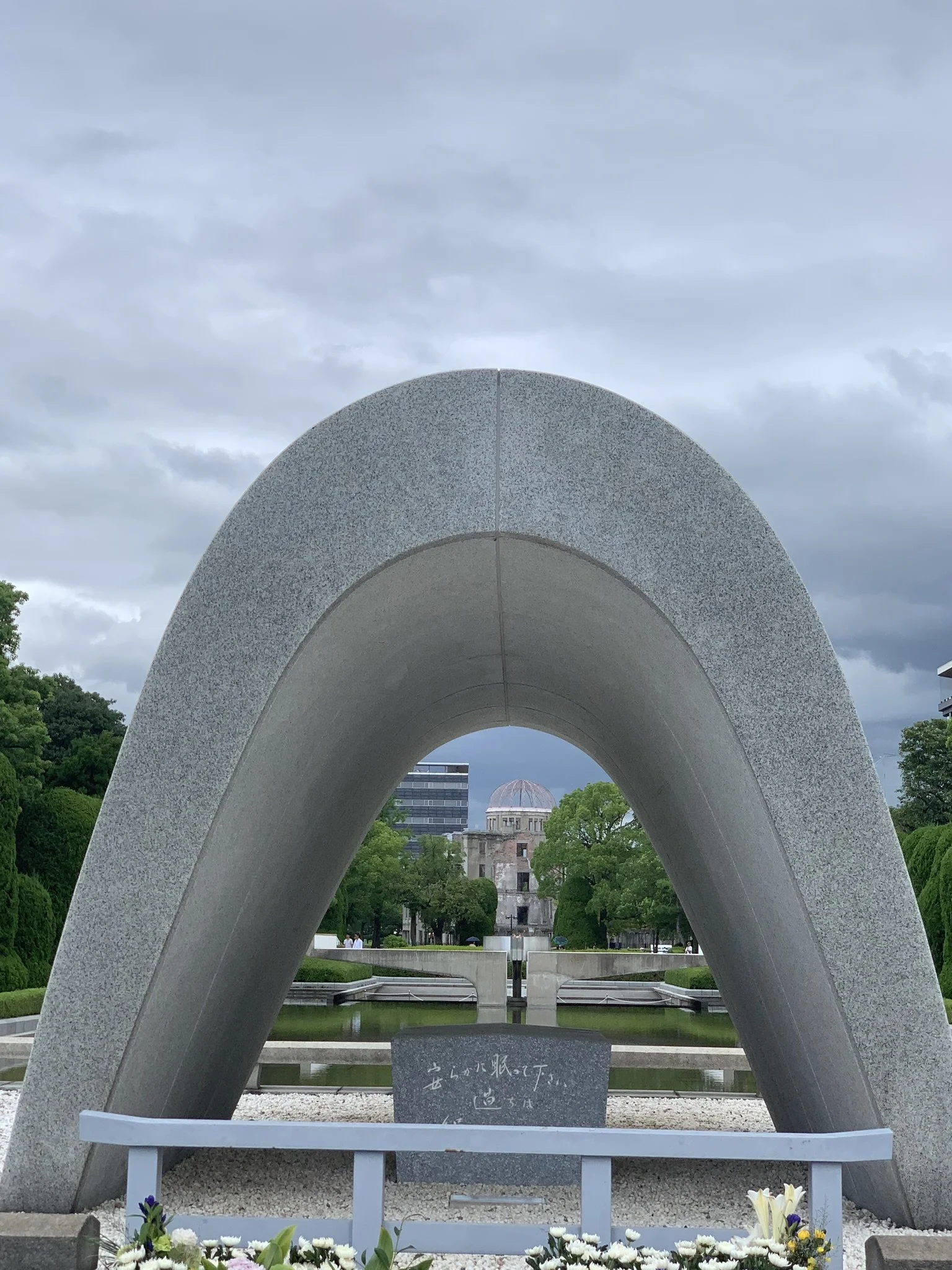
Nothing prepares you for your first glimpse of the Atomic Bomb Dome.
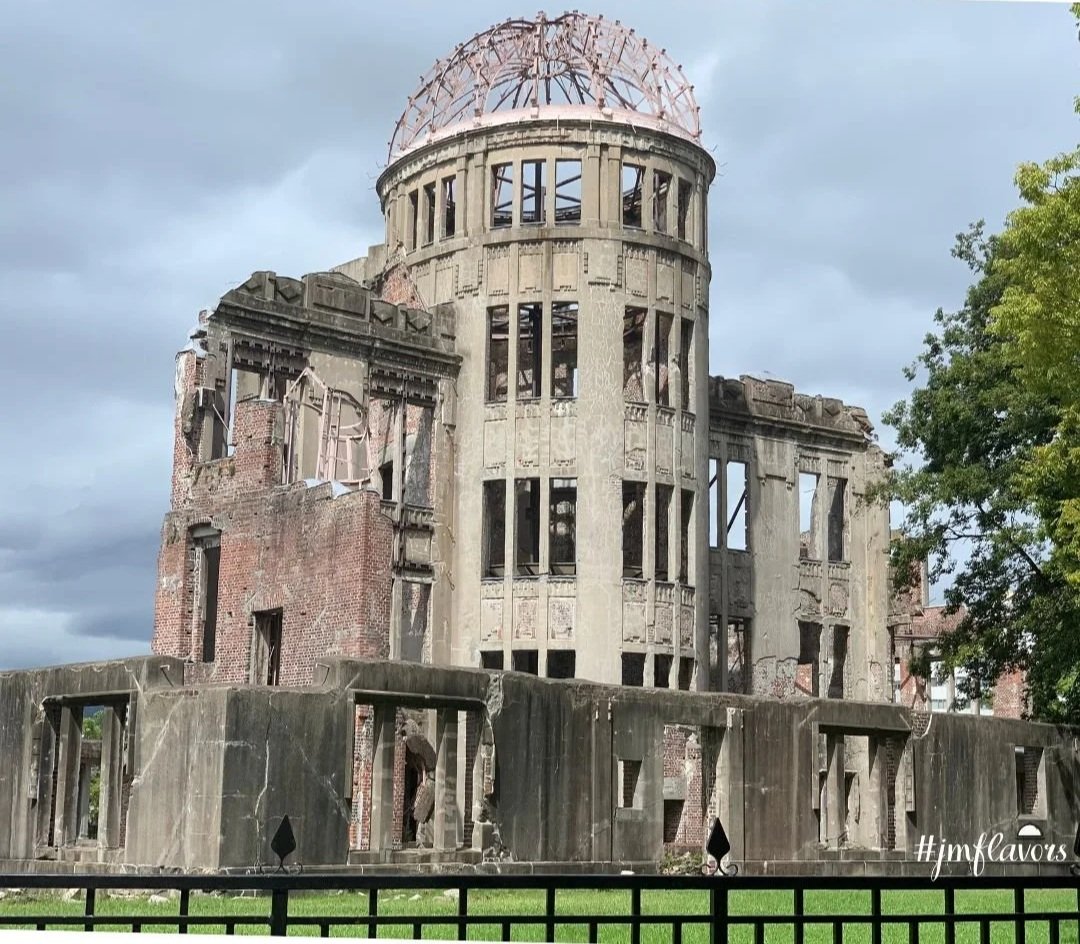
The skeletal remains of what was once the Hiroshima Prefectural Industrial Promotion Hall stand frozen in time, almost exactly as they were on August 6, 1945, when the world’s first atomic bomb used in war exploded nearly overhead. Surrounded by the calm waters of the Motoyasu River and the lush greenery of Hiroshima Peace Memorial Park, the building is hauntingly silent.
It isn’t simply a monument.
It is a witness.
As we wandered through the park, entered the Hiroshima Peace Memorial Museum. The silence spoke louder than any words. Horrific, Shameful, Two words… I had to leave - it was very emotional.
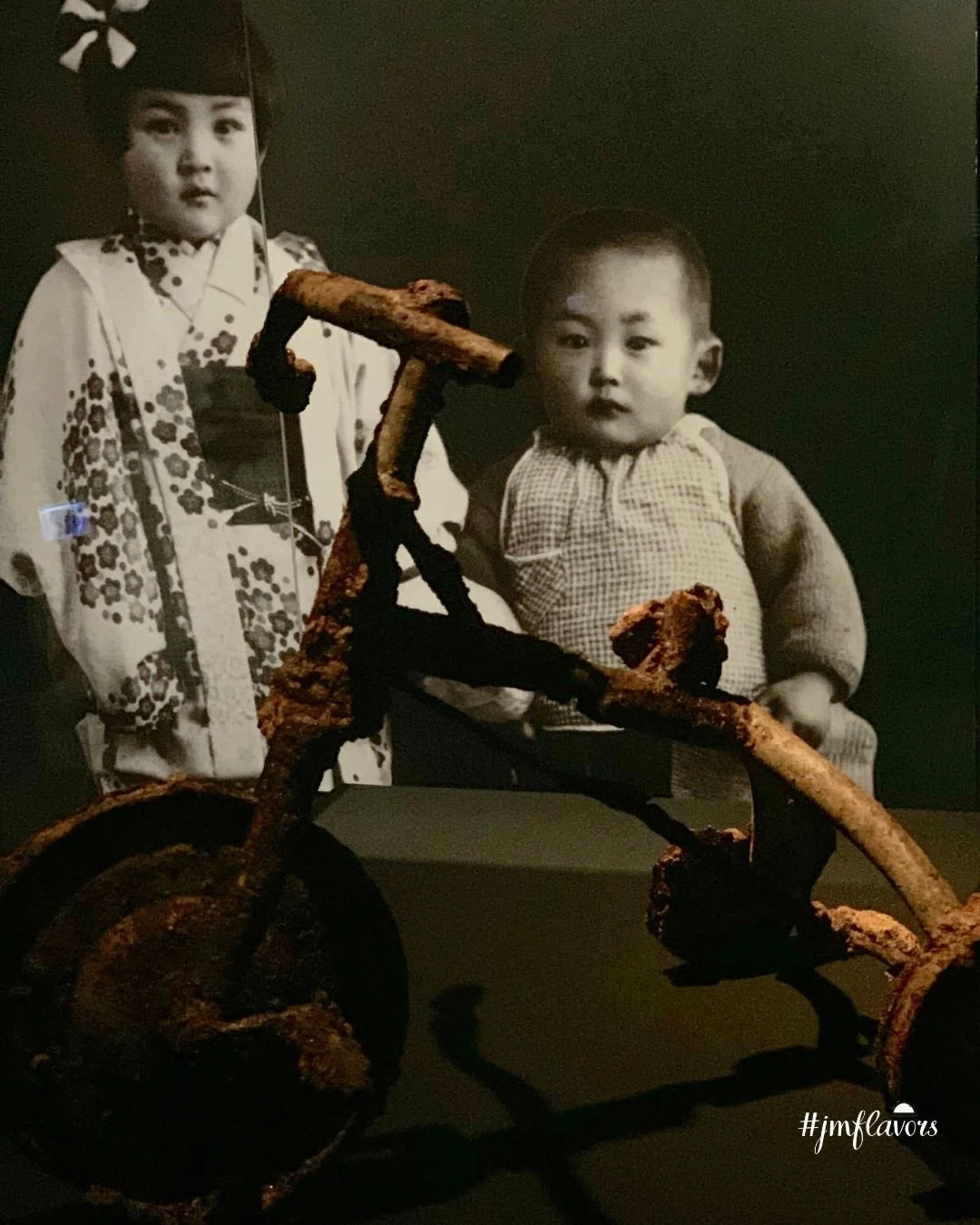
Shinichi Tetsutani and his tricycle
Shinichi Tetsutani was just 3 years and 11 months old. He was riding his little bicycle when the atomic bomb exploded.
That night, he cried for water over and over until he died.
His father buried him in the backyard with his bicycle, believing his little boy could keep riding forever.
Some stories don’t need embellishment. They simply need to be remembered.
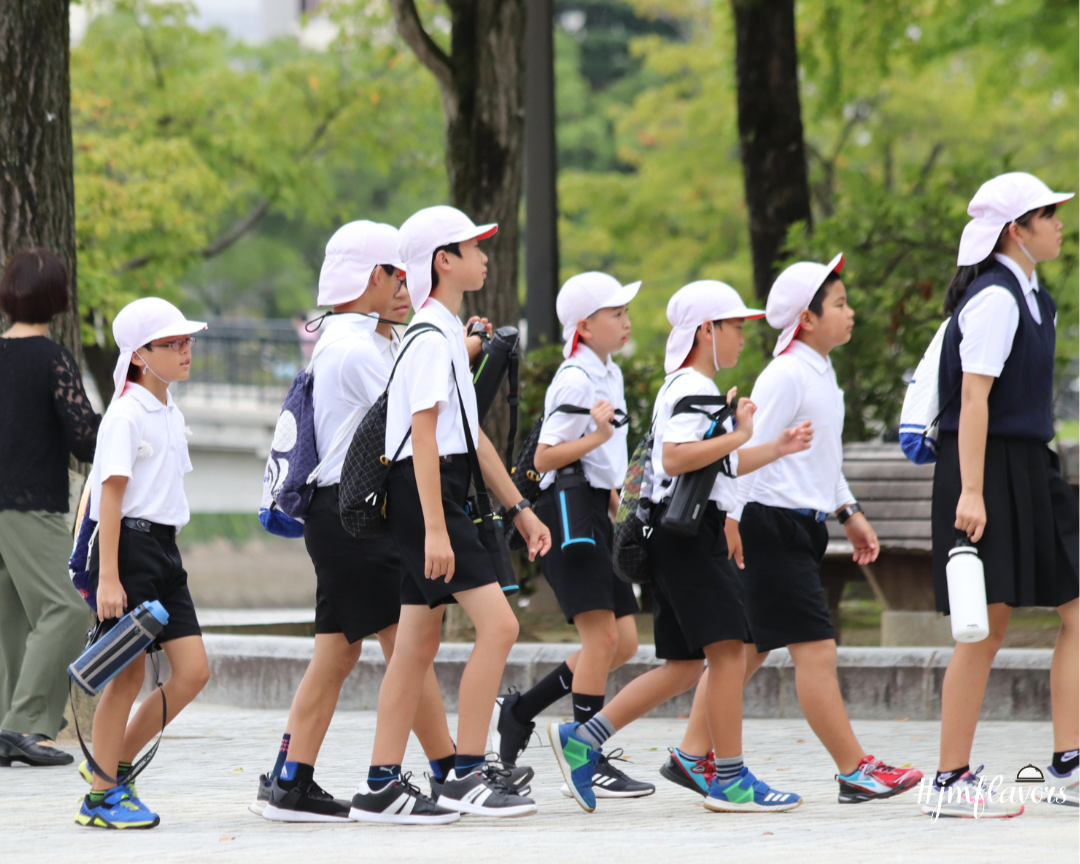
Outside we see school children in crisp uniforms quietly walked past, many stopping to bow or leave colourful strings of folded paper cranes. Their presence somehow made the experience even more emotional. Here was a new generation learning one of history’s hardest lessons—not through anger, but through remembrance.
Another story stayed with me long after we left.
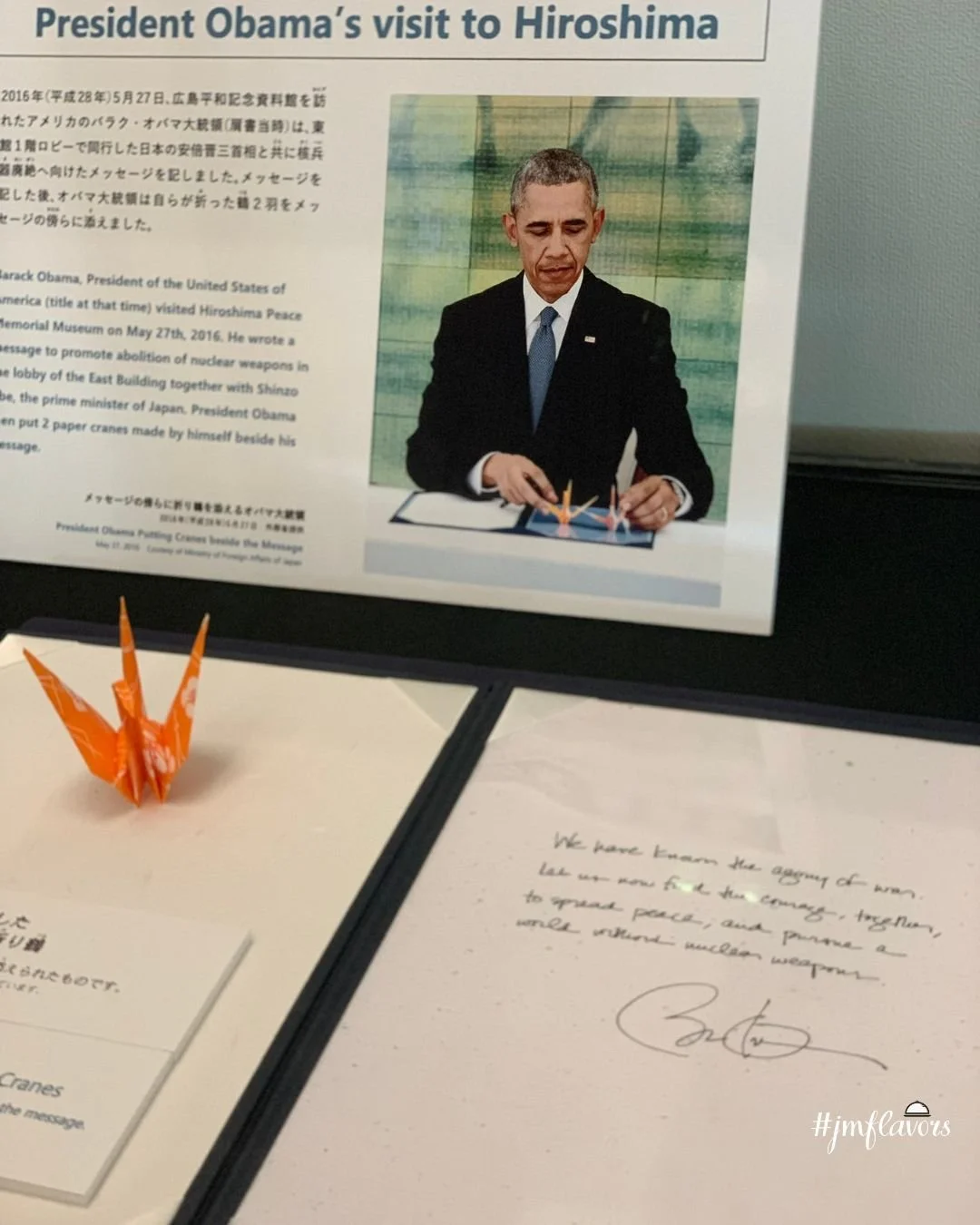
Sadako Sasaki was only two years old when the bomb fell. Years later, she developed leukemia from the radiation exposure. Believing an ancient Japanese legend that anyone who folded one thousand paper cranes would be granted a wish, she began folding cranes from every scrap of paper she could find. Her wish wasn’t simply to recover—it became a wish for peace.
Today, thousands upon thousands of colourful origami cranes arrive from around the world every year, filling the Children’s Peace Monument with messages of hope from people who have never met but share the same dream.
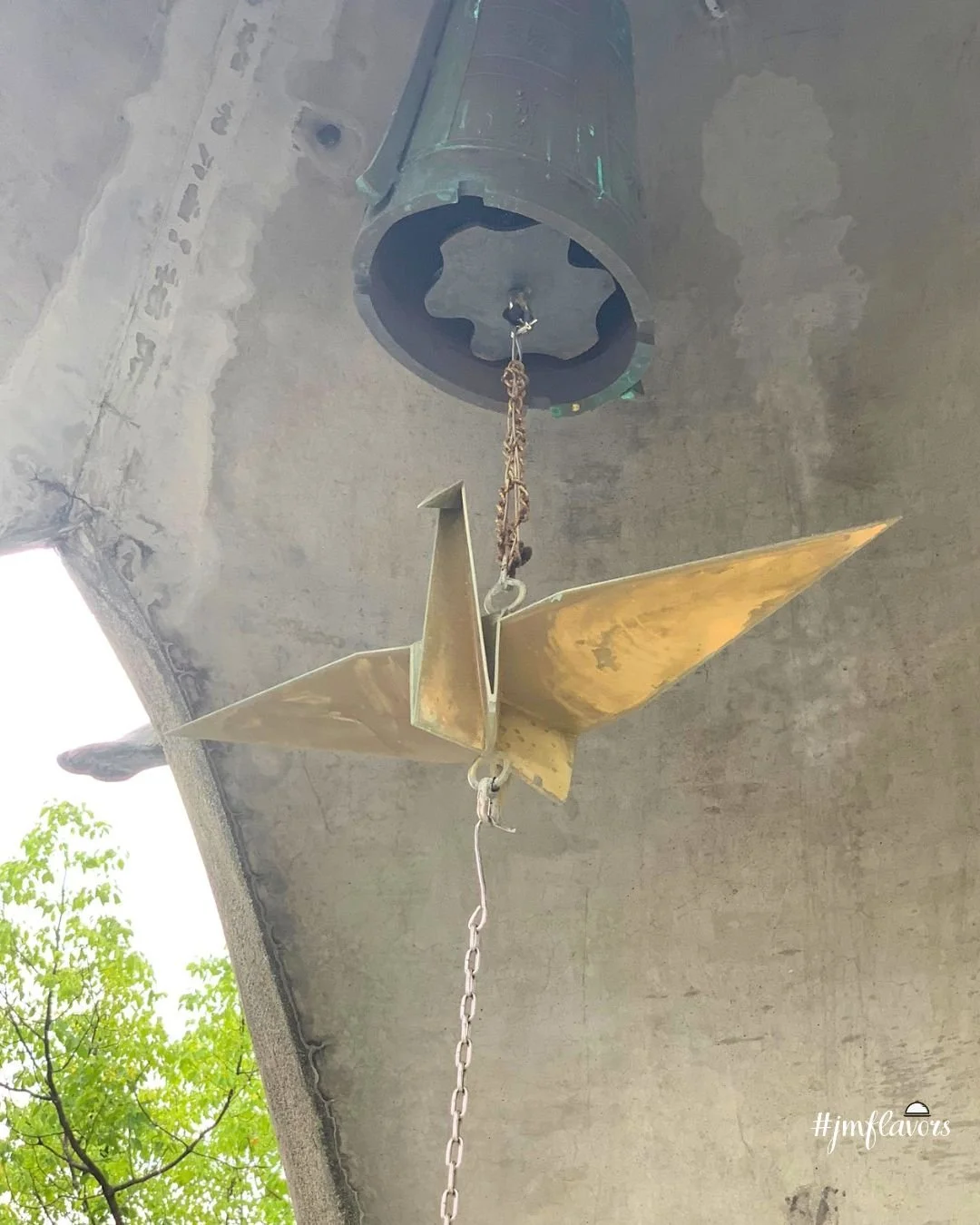
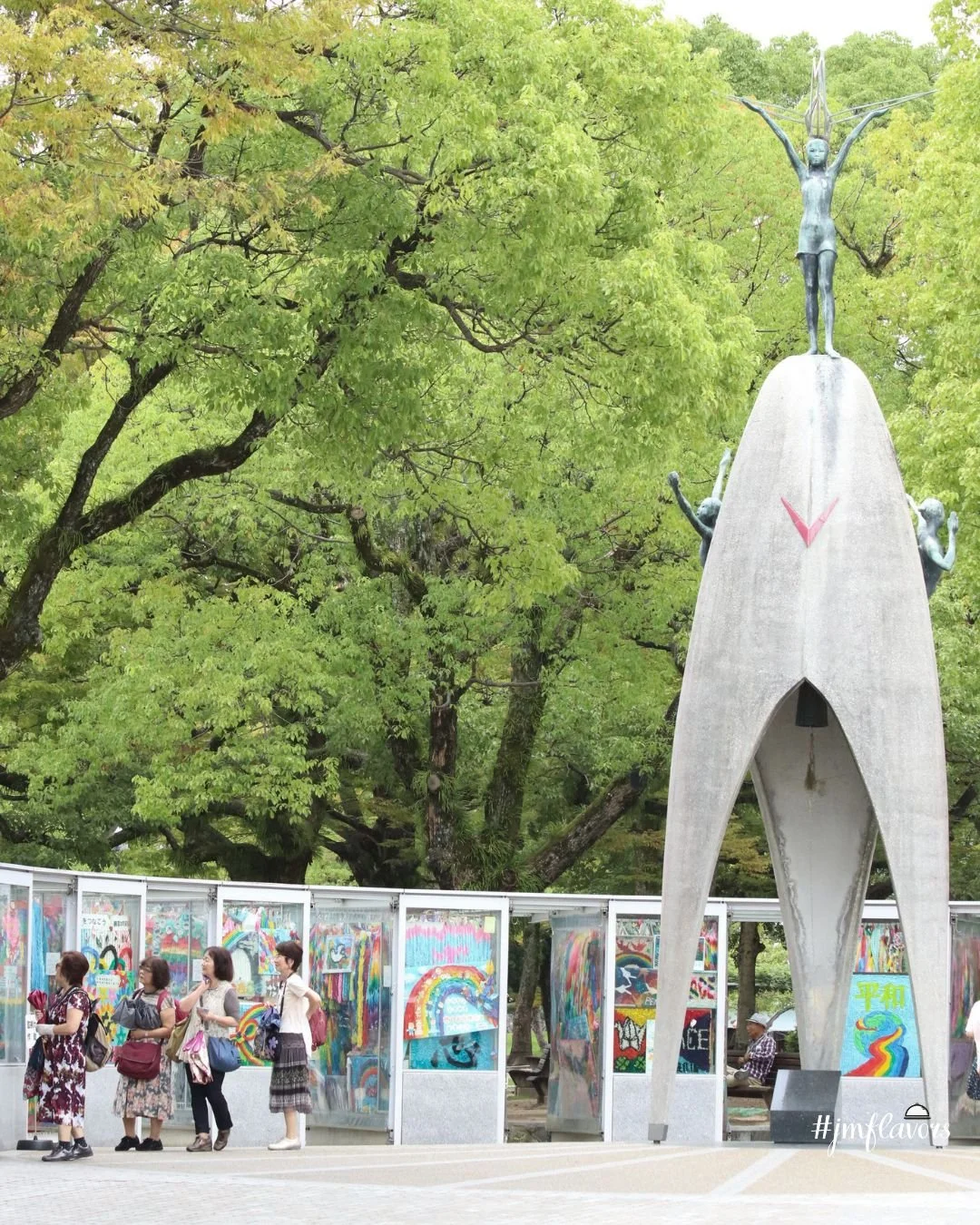
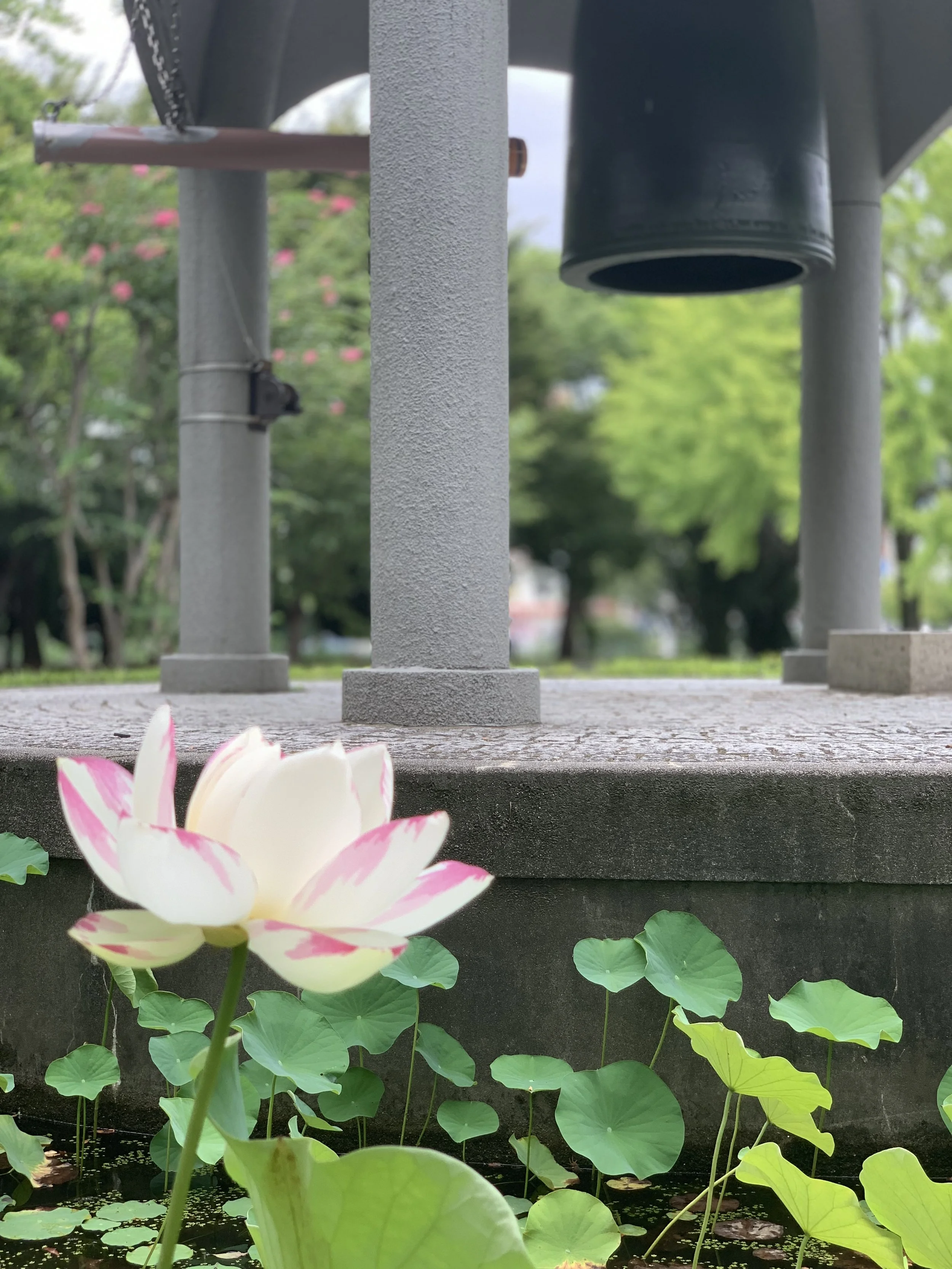
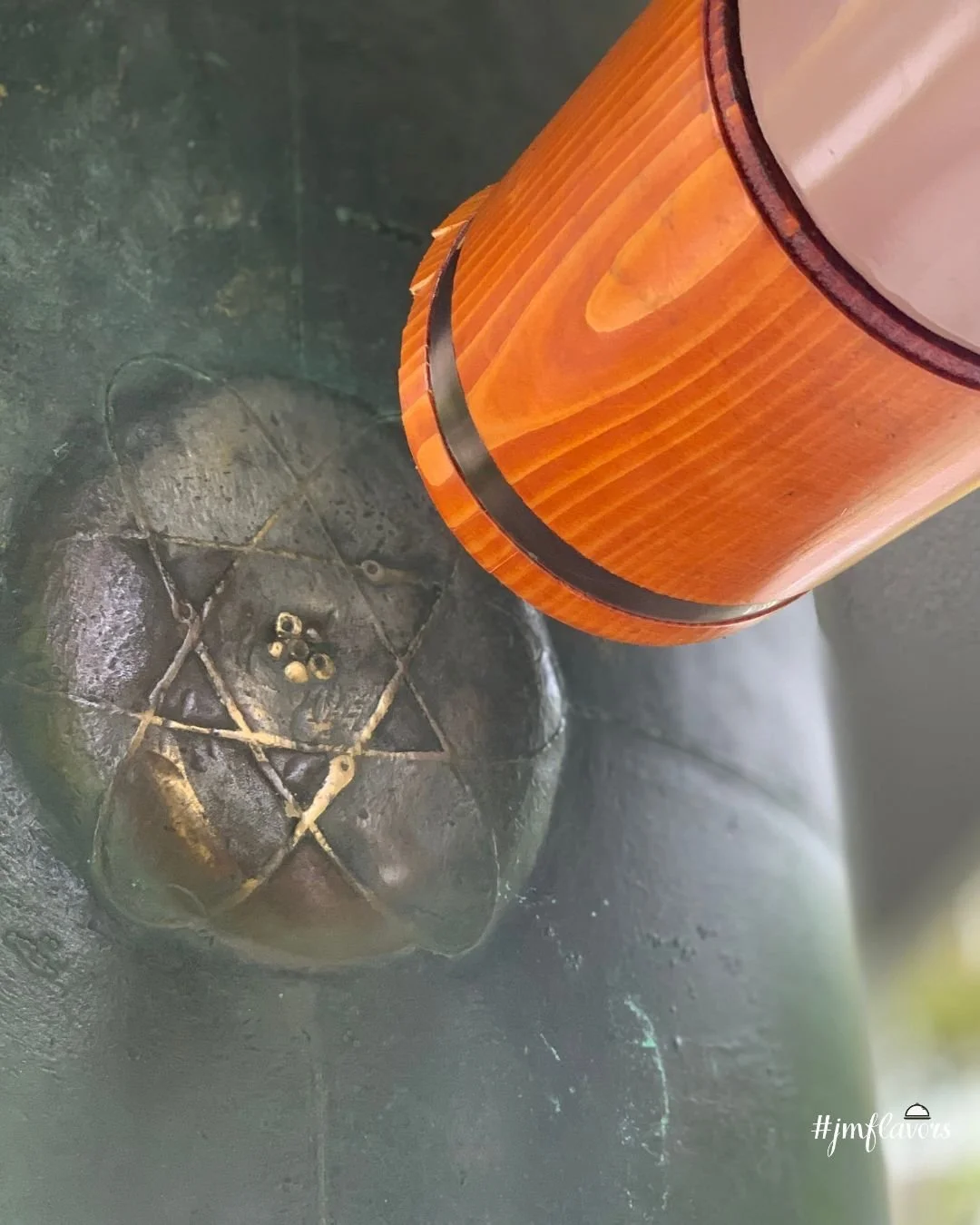
Nearby stands the Bell of Peace.
Visitors are invited to gently ring it, allowing its deep, resonating tone to drift across the park. The inscription reads:
“May all the people of the world live together in peace.”
Standing there looking at the bell, it was impossible not to pause and reflect.
Hiroshima isn’t an easy destination.
Nor should it be.
It reminds us of humanity’s capacity for unimaginable destruction while simultaneously showing our extraordinary ability to rebuild with compassion, dignity and hope.
Then, almost as though Japan knows we all need to breathe again, the journey continues.
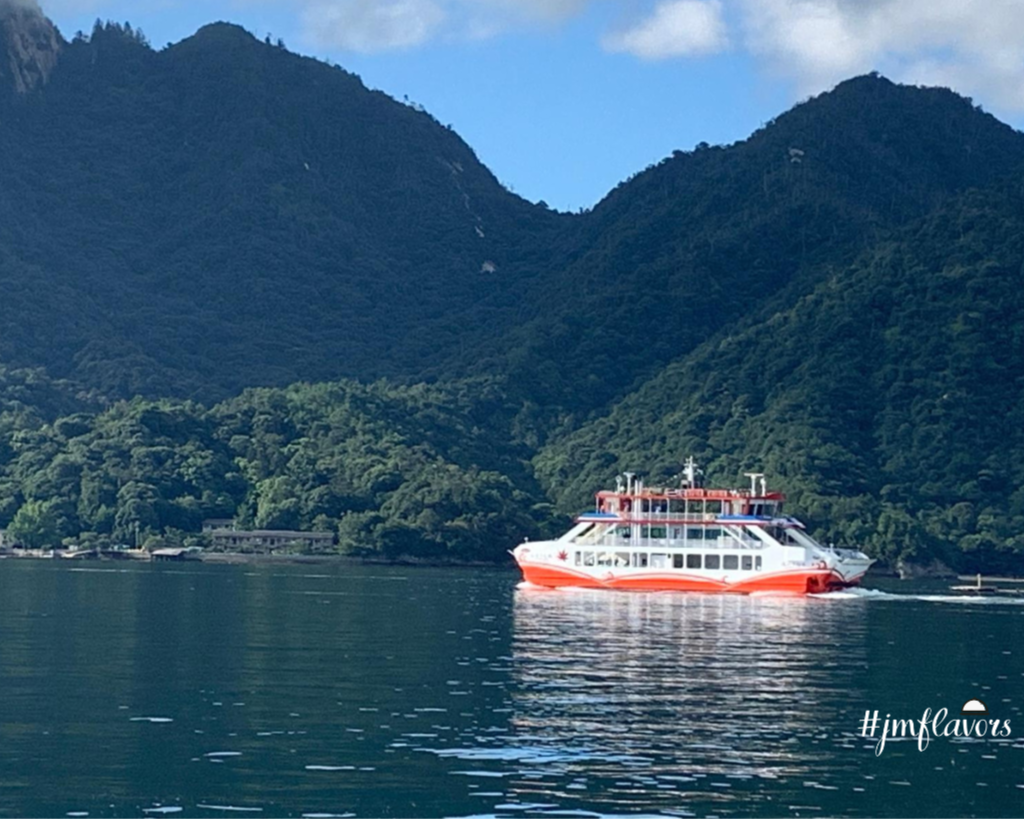
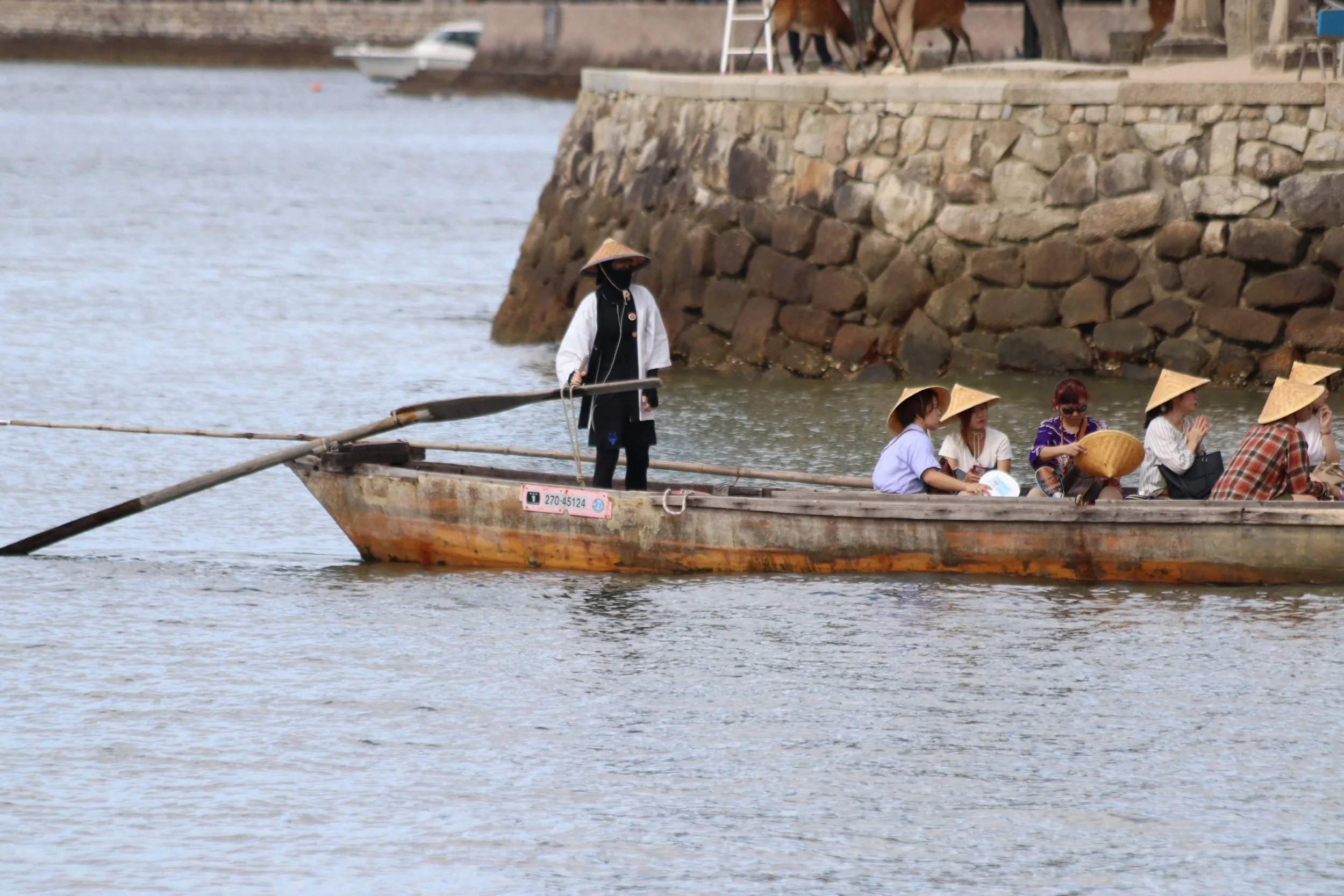
A short ferry ride across Hiroshima Bay carries visitors to Miyajima Island, where the atmosphere changes almost instantly. The city’s solemn reflection gives way to quiet mountain paths, stone lanterns, ancient temples and the gentle sound of waves lapping against the shore.
Within minutes of stepping off the ferry, we had our first encounters with some of the island’s residents.
Traditional girls in dress
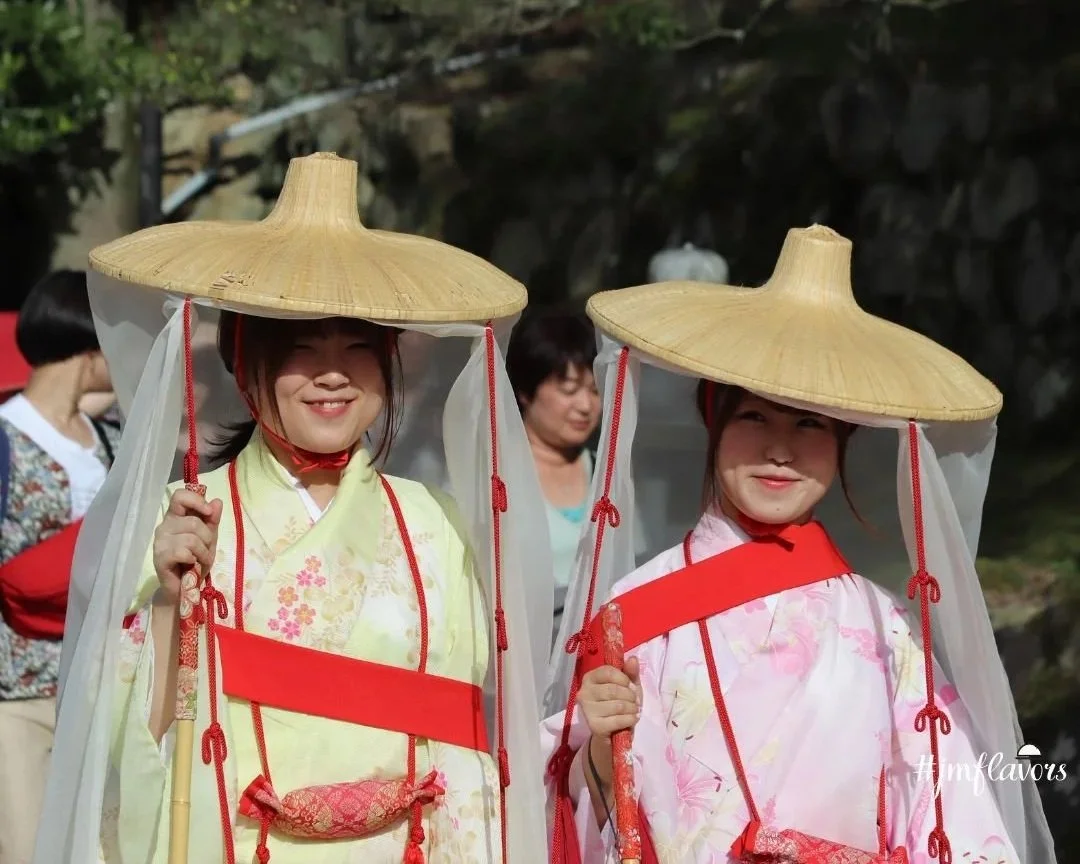
and Sika deer.
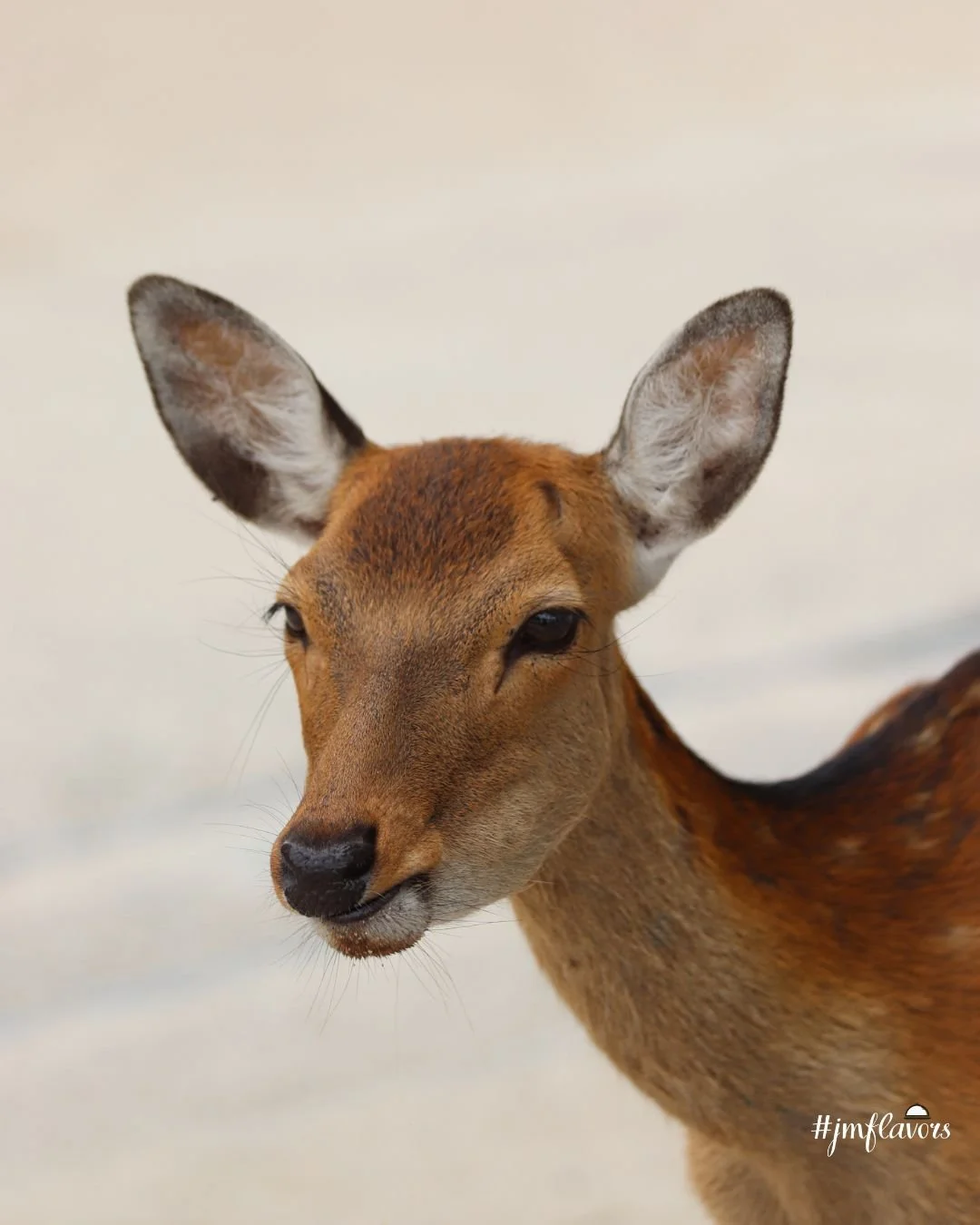
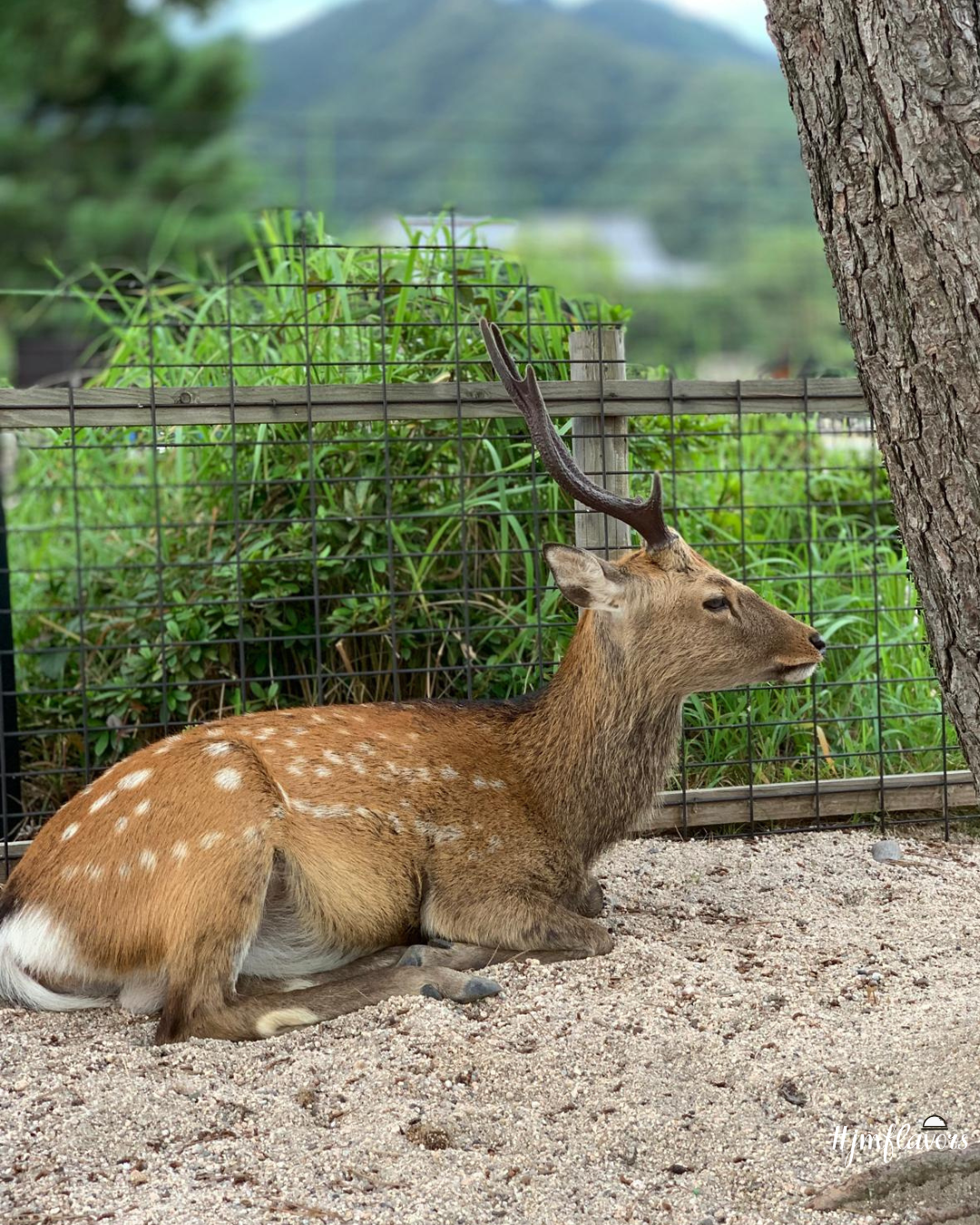
They wandered freely among visitors with an almost peaceful confidence, occasionally stopping to investigate backpacks or patiently posing for photographs. Considered sacred messengers of the gods in Shinto belief, they have become as much a symbol of Miyajima as the famous shrine itself.
Our home for the evening was a traditional Japanese ryokan. Our Stay was at Miyajima Hotel Makoto close to ferry and had a beautiful view.
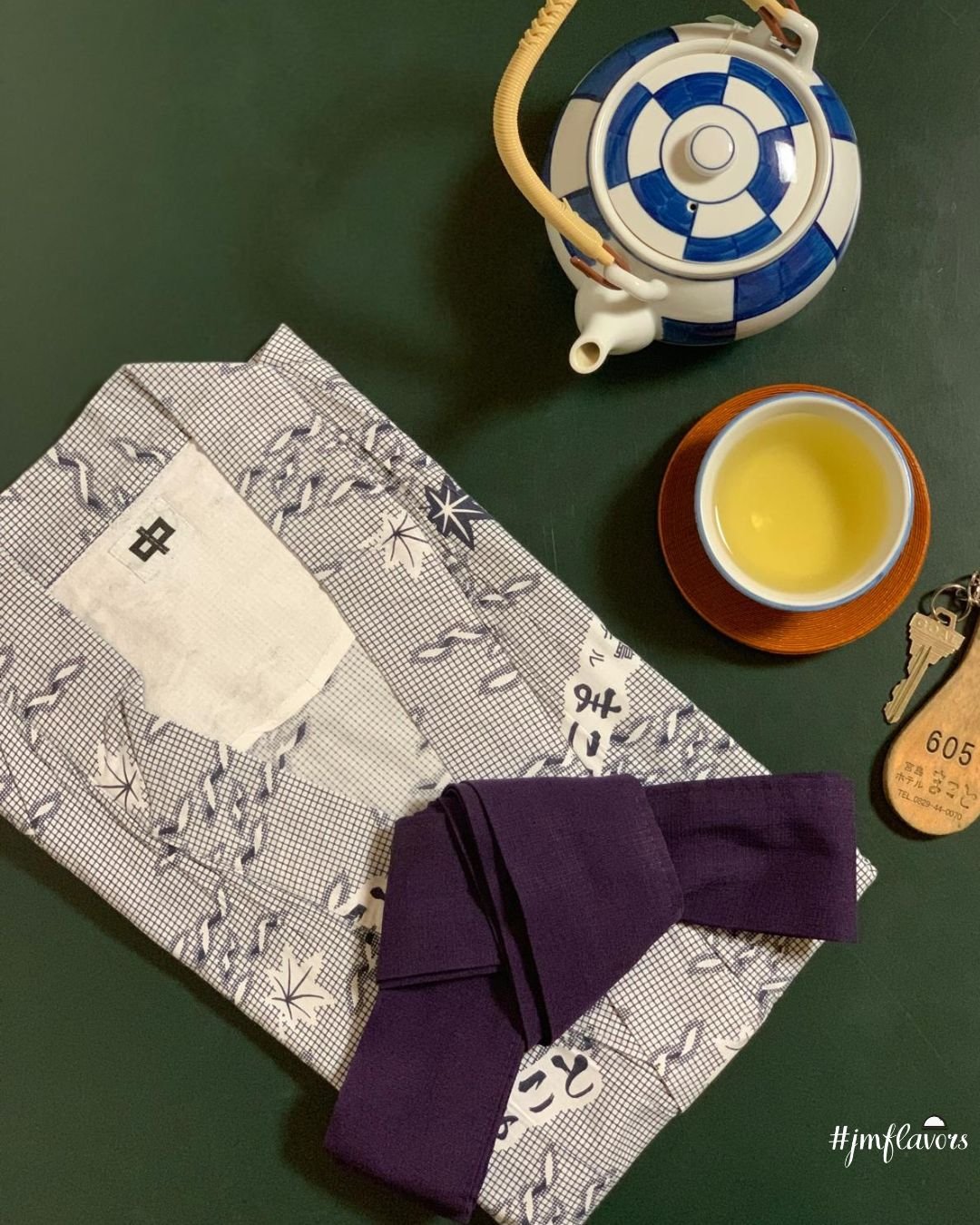
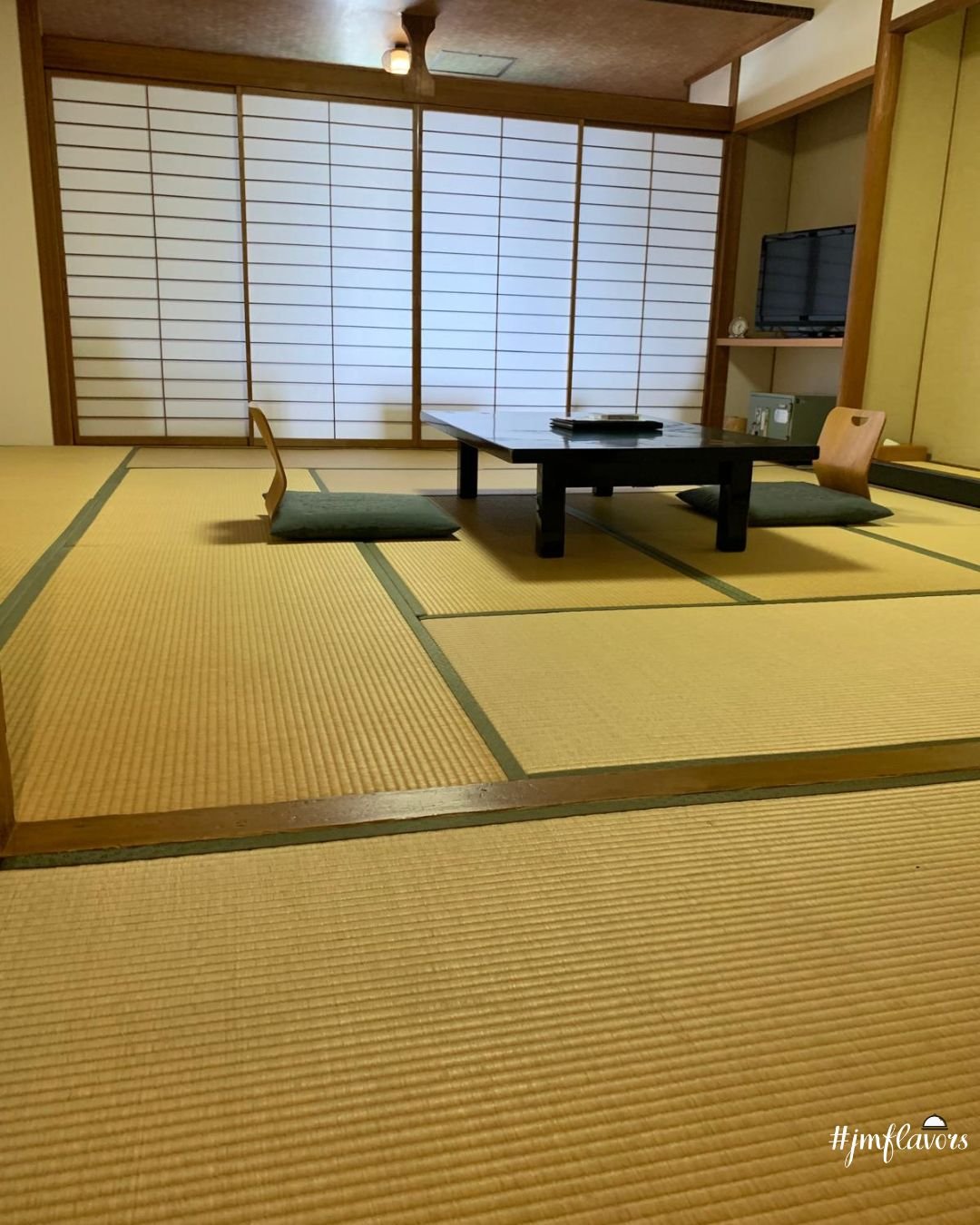
Shoes were left neatly at the entrance before stepping onto soft tatami mats. Slippers were provided for walking through the inn, but never worn on the tatami themselves—a small gesture of respect that reflects the care found throughout Japanese culture.
There are may customs and rules. I am sure I broke many daily but I did attempt to watch and learn as we traveled. I wanted to pay my respect for the country and it’s people. As they Say - “When is Rome…”
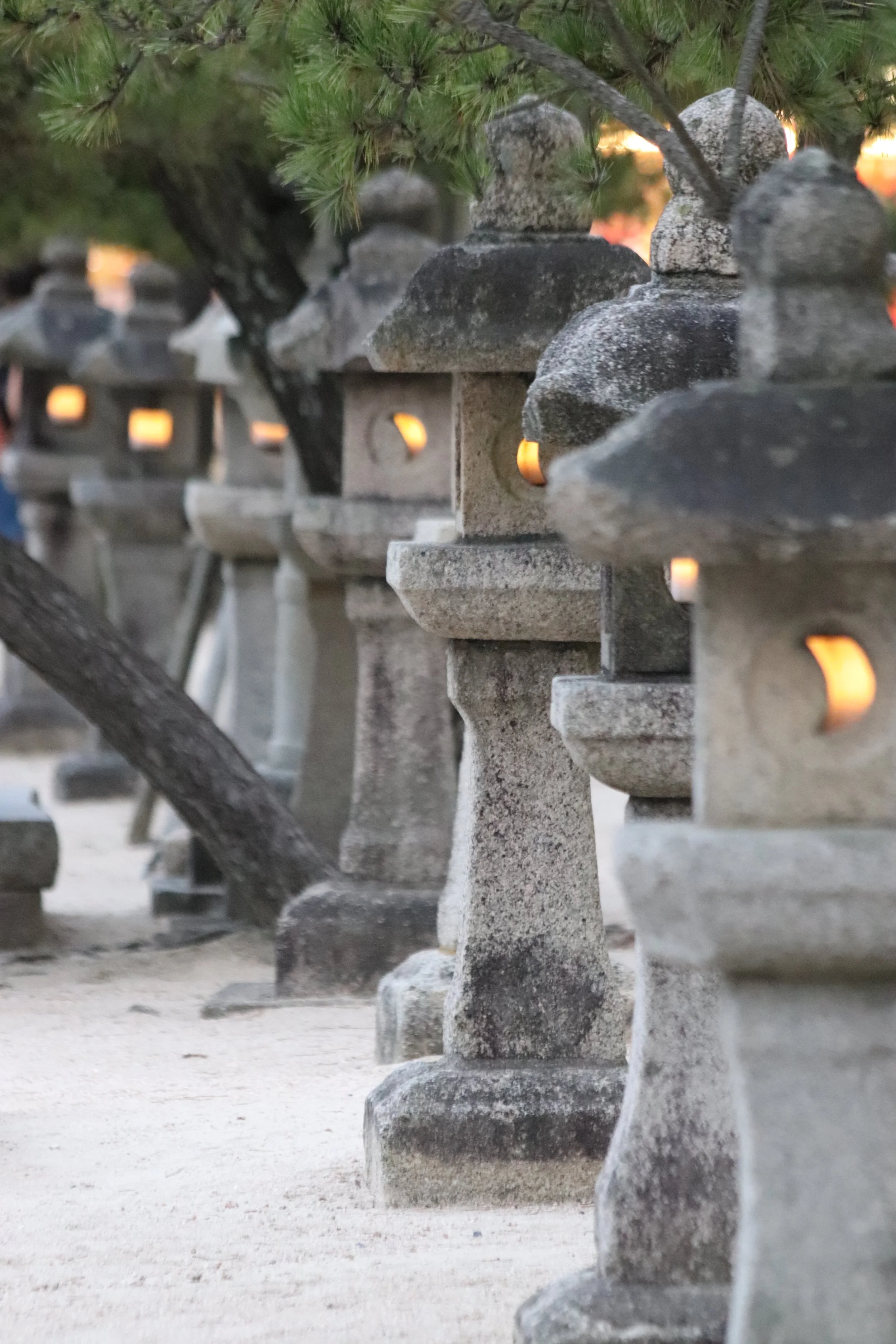
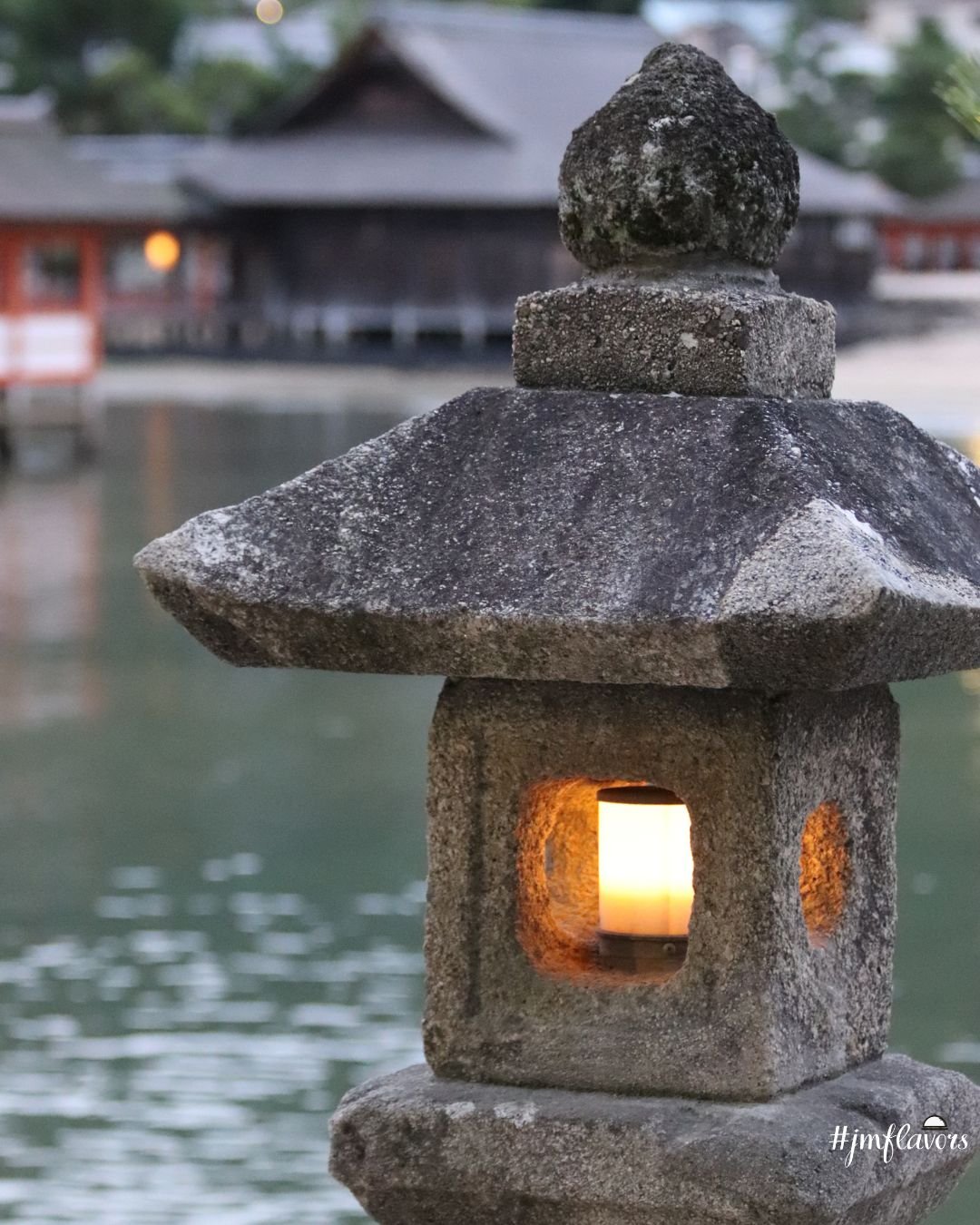
Sliding rice-paper doors separated the rooms. Floor cushions surrounded a low dining table where we enjoyed a beautifully prepared multi-course Japanese dinner. Later, we wandered lantern-lit pathways that seemed to glow softly beneath the evening sky.
It wasn’t simply accommodation.
It was an invitation to slow down.
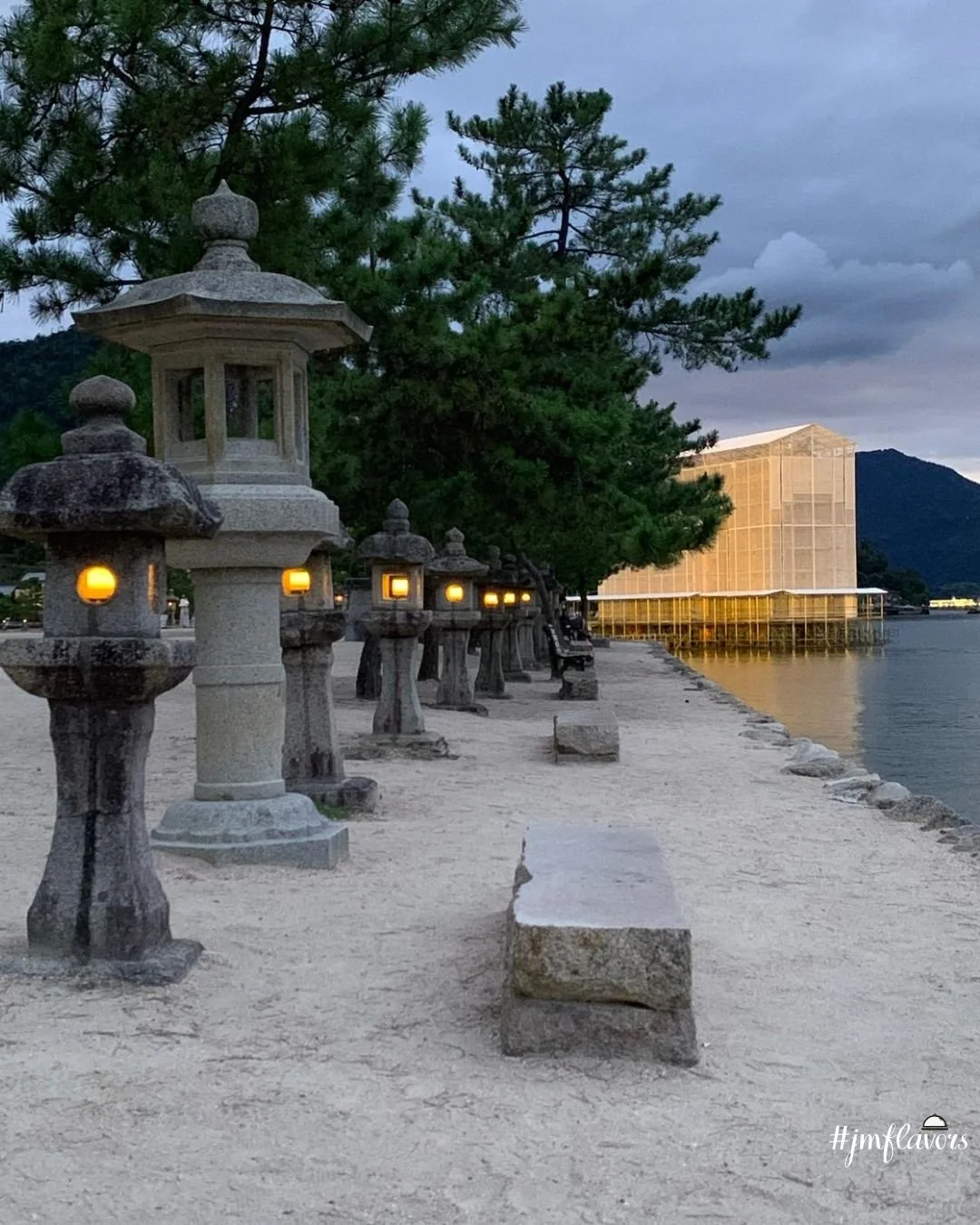
Japan has been full of firsts… and a few moments where I seriously questioned my life choices. 😂
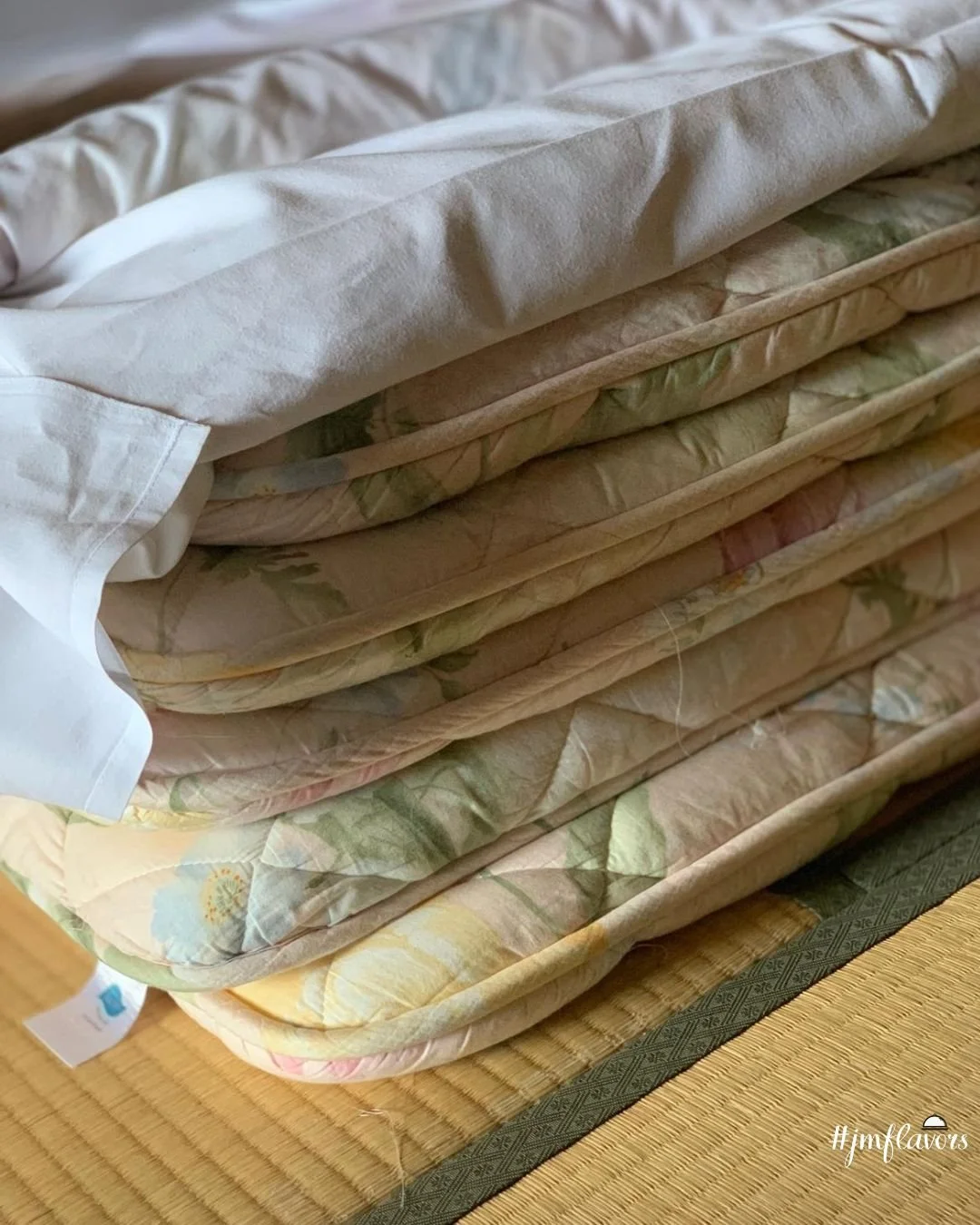
Our traditional inn was beautiful, but let’s just say the sleeping arrangements were a little firmer than I’m used to. After one look, I decided one futon wasn’t going to cut it… so I stacked SIX of them. It still wasn’t quite my pillow-top mattress back home, but at least I gave it my best shot!
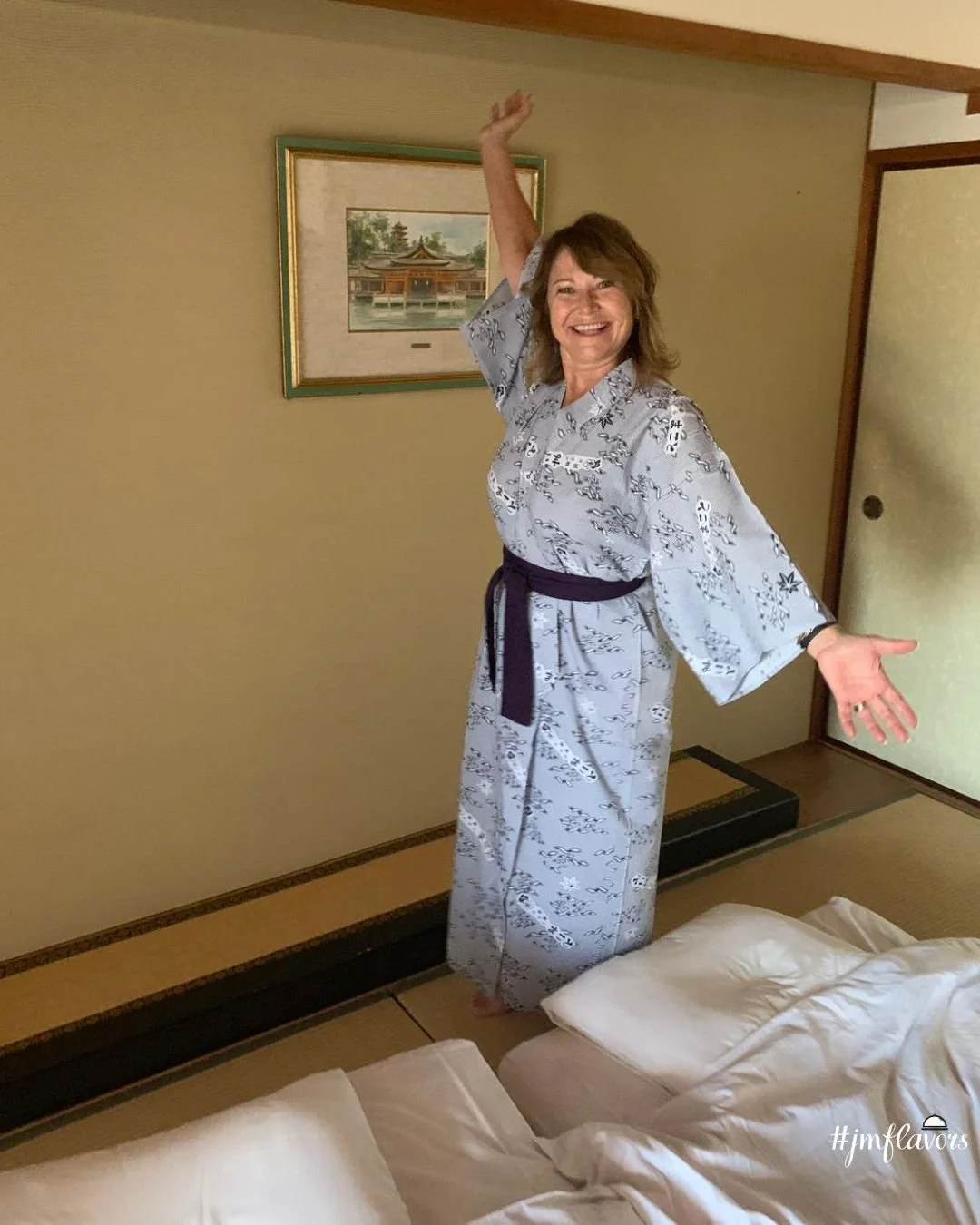
Then there was the onsen.
They even served us tea beforehand, but in hindsight… I probably needed a entire bottle of sake or whisky instead.
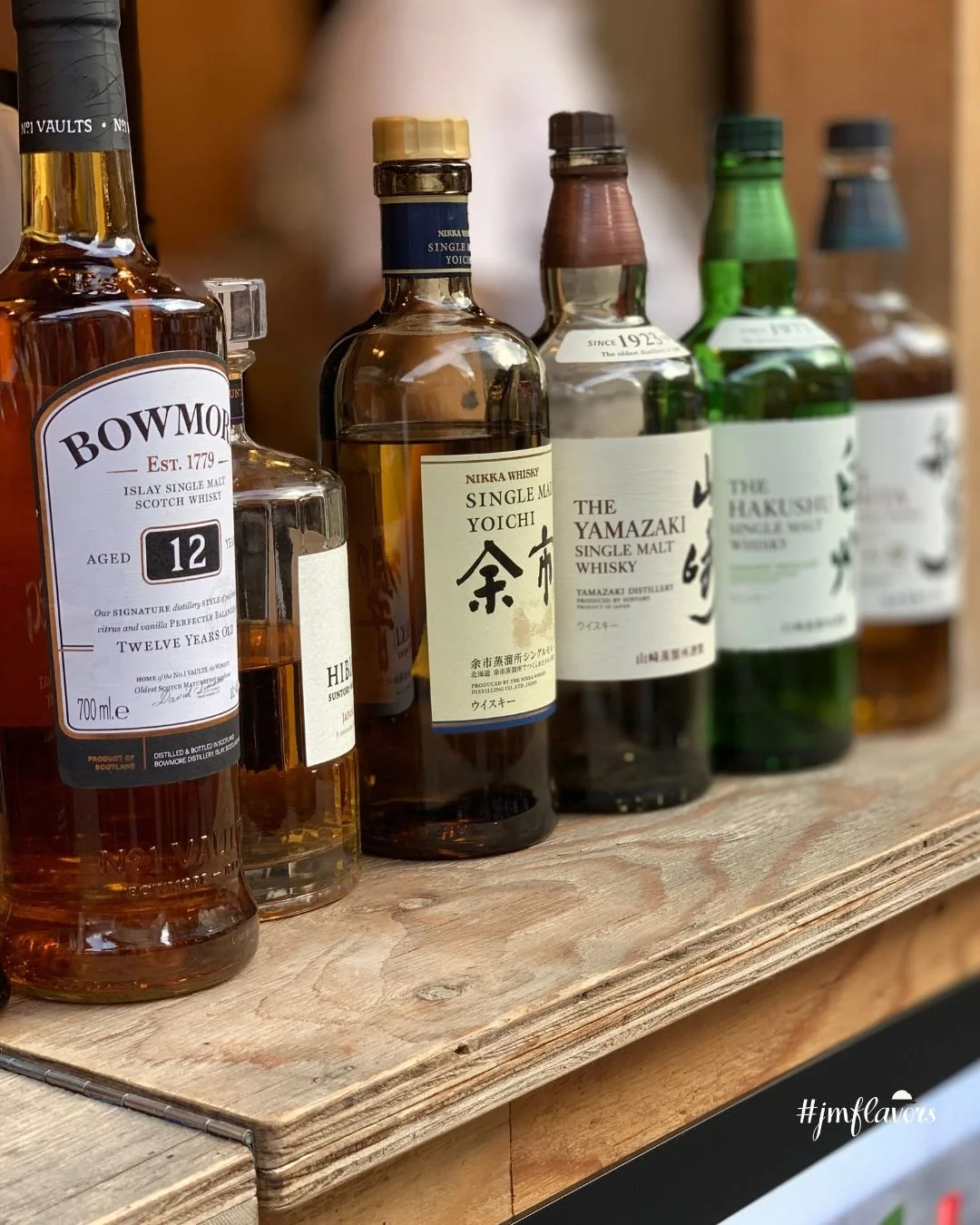
I’d somehow missed the part where you walk into the traditional bath completely naked. 😳 There was a sheet clearly explaining the process. WOW. Oh and did i mention that at this point I was still a - Go for it.
UNTIL I tucked my head around the corner… Five 20 something boys were already in. It is unisex.
I stood there thinking, “Nope… I can’t do this.”
The locals probably wouldn’t have given me a second glance, but I was so far out of my comfort zone that I bailed before I ever got in the water.
I did, however, snap a few photos, and chalk it up as another unforgettable travel story.
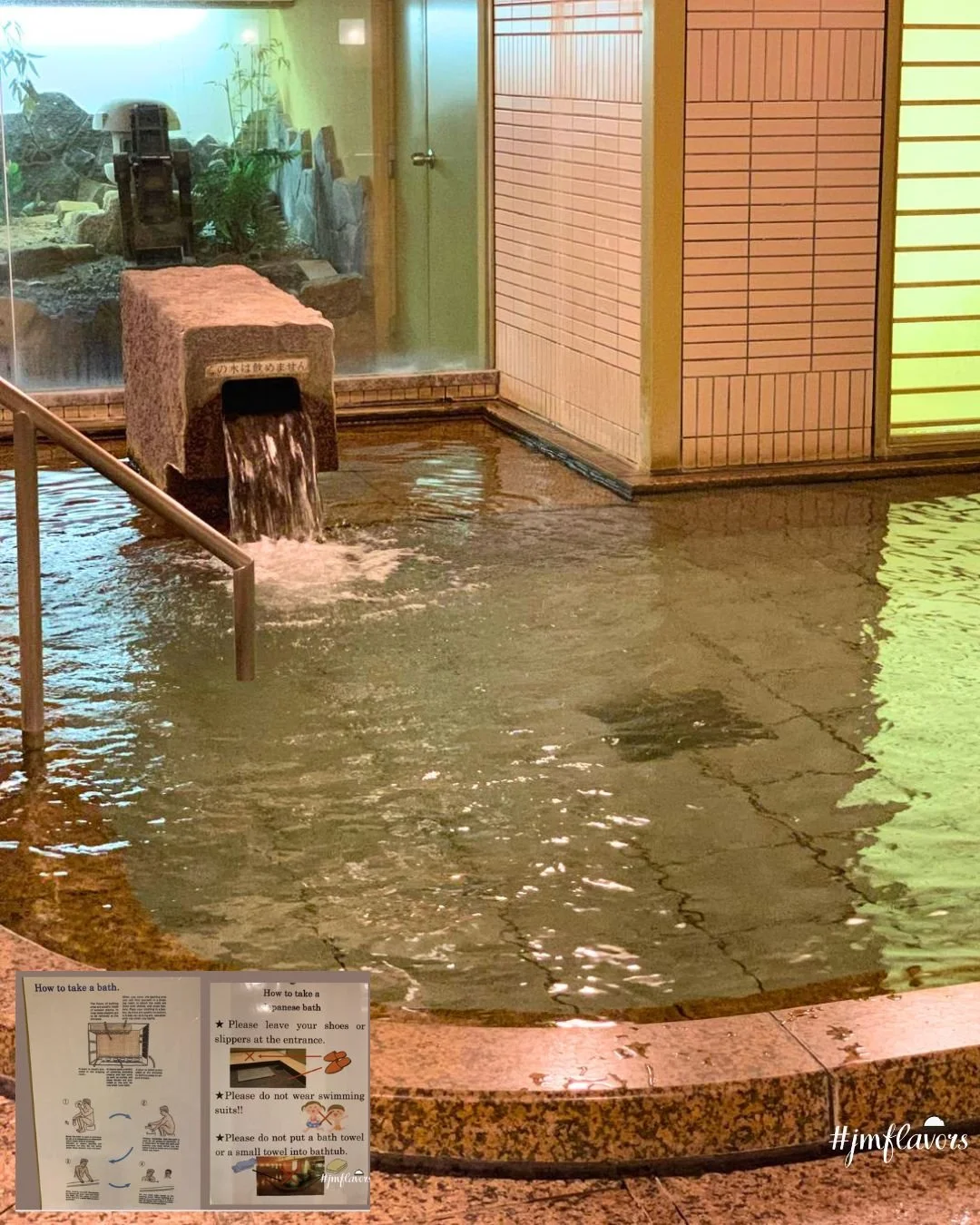
Travel isn’t just about the postcard moments. Sometimes it’s about the stories that make you laugh at yourself long after the trip is over.
Have you ever talked yourself out of trying something that everyone else made look easy?
We walked toward one of Japan’s most recognizable landmarks.
One of the most beautiful traditions I experienced in Japan wasn’t inside a shrine—it was before I even entered.
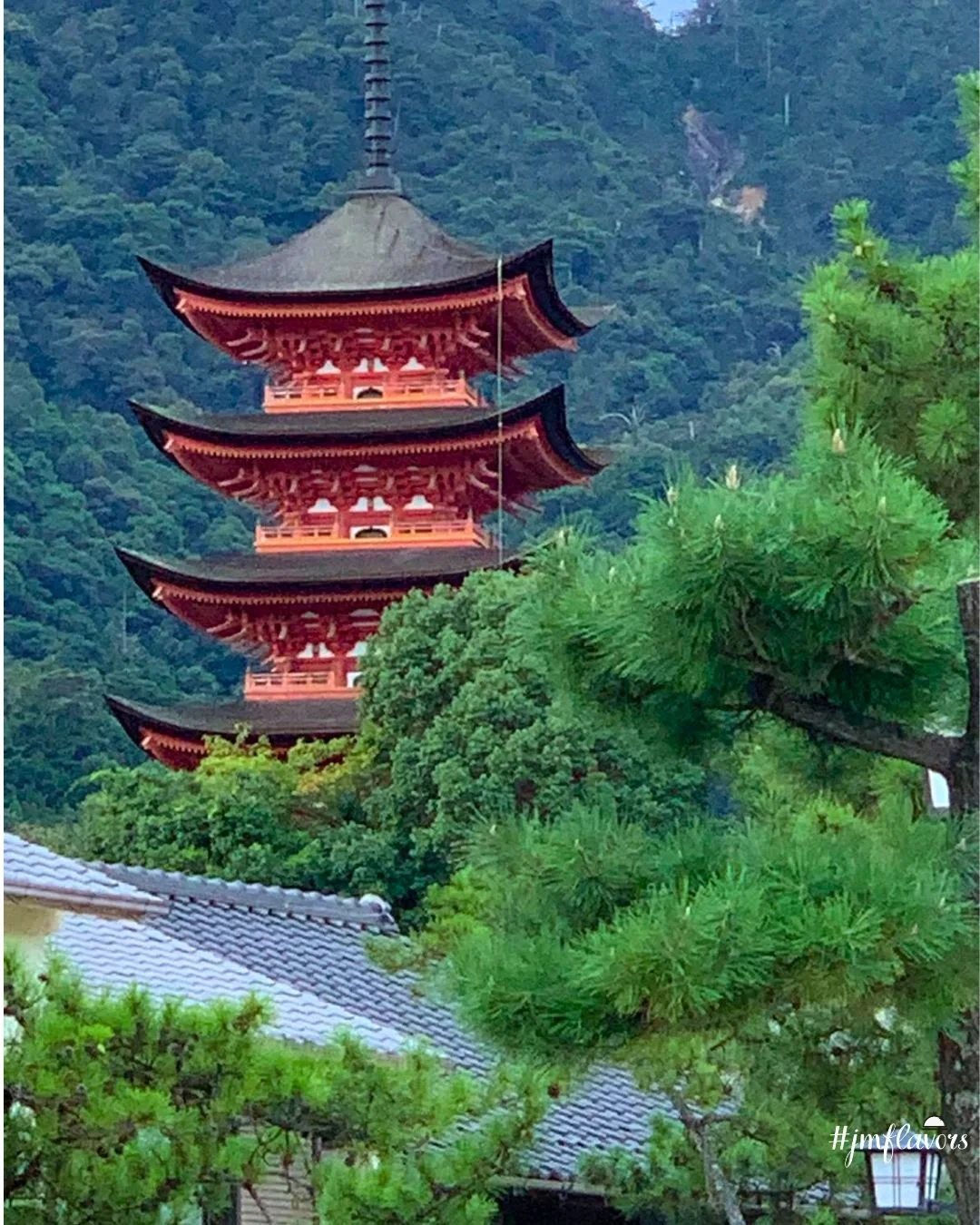
Five-Storied Pagoda built 1407
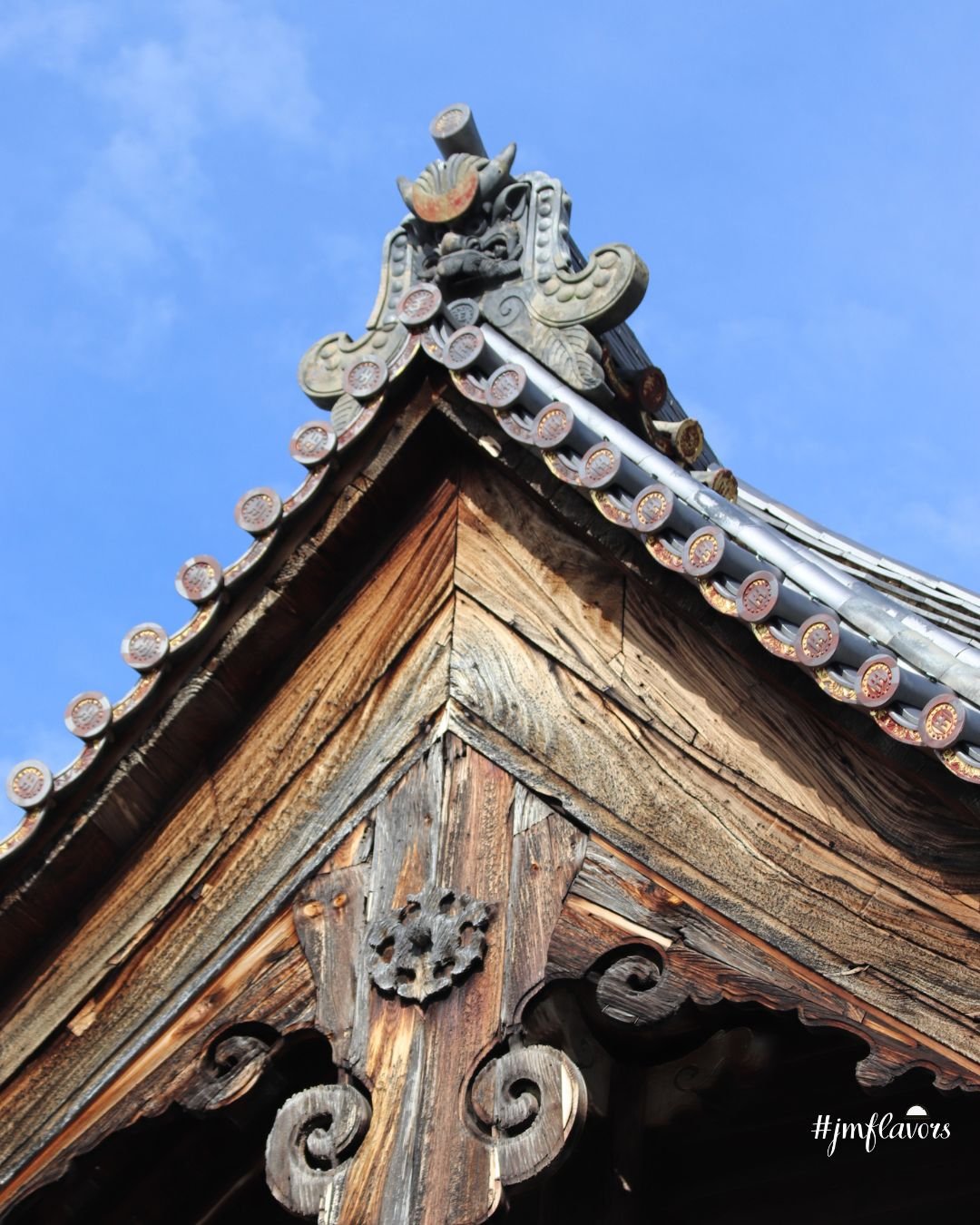
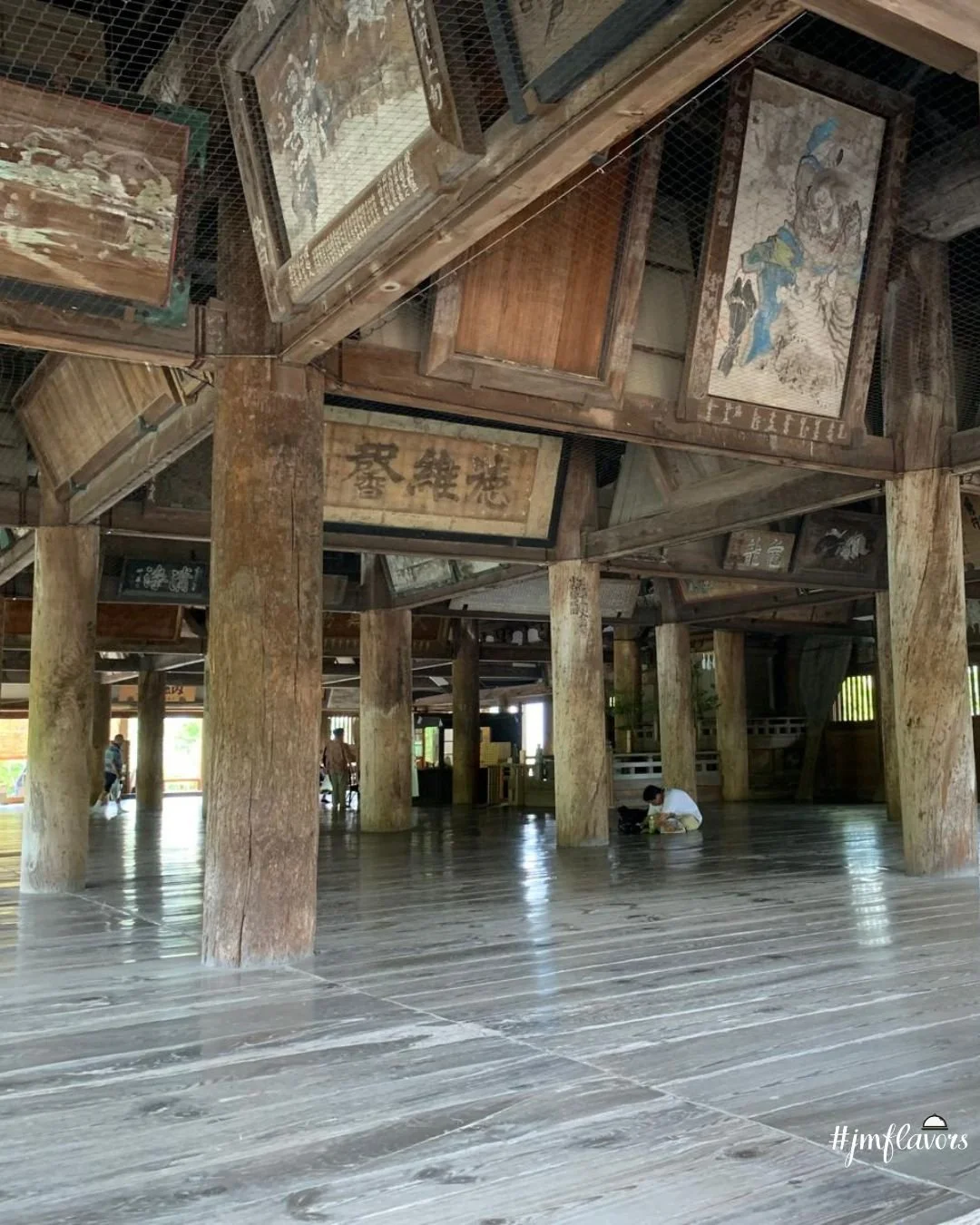
Senjōkaku (Toyokuni Shrine) The Hall of One Thousand Tatami Mats
At the entrance to a shrine , I watched people quietly move to a stone basin filled with flowing water. Using a wooden ladle, they carefully rinsed their hands and mouth in a centuries-old ritual called temizu.
At first, I thought they were simply washing up.
But I soon learned it wasn’t about getting clean.
It was about slowing down, clearing your mind, and showing respect before stepping into a sacred place.
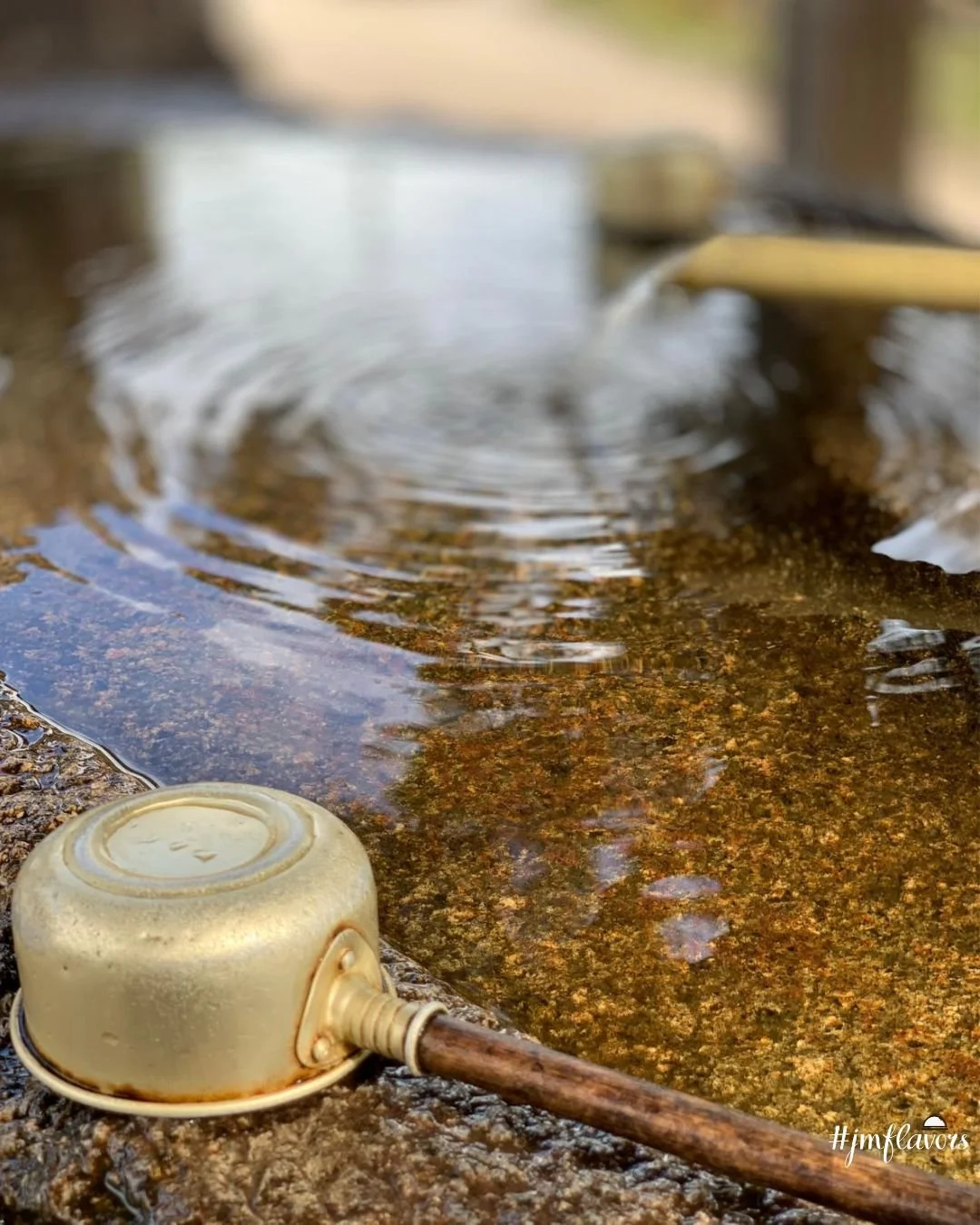
In a world where we’re always rushing, I found something incredibly peaceful about taking just a minute to be fully present.
Maybe that’s a ritual worth bringing home.
Have you ever experienced a travel tradition that made you stop and see things a little differently?
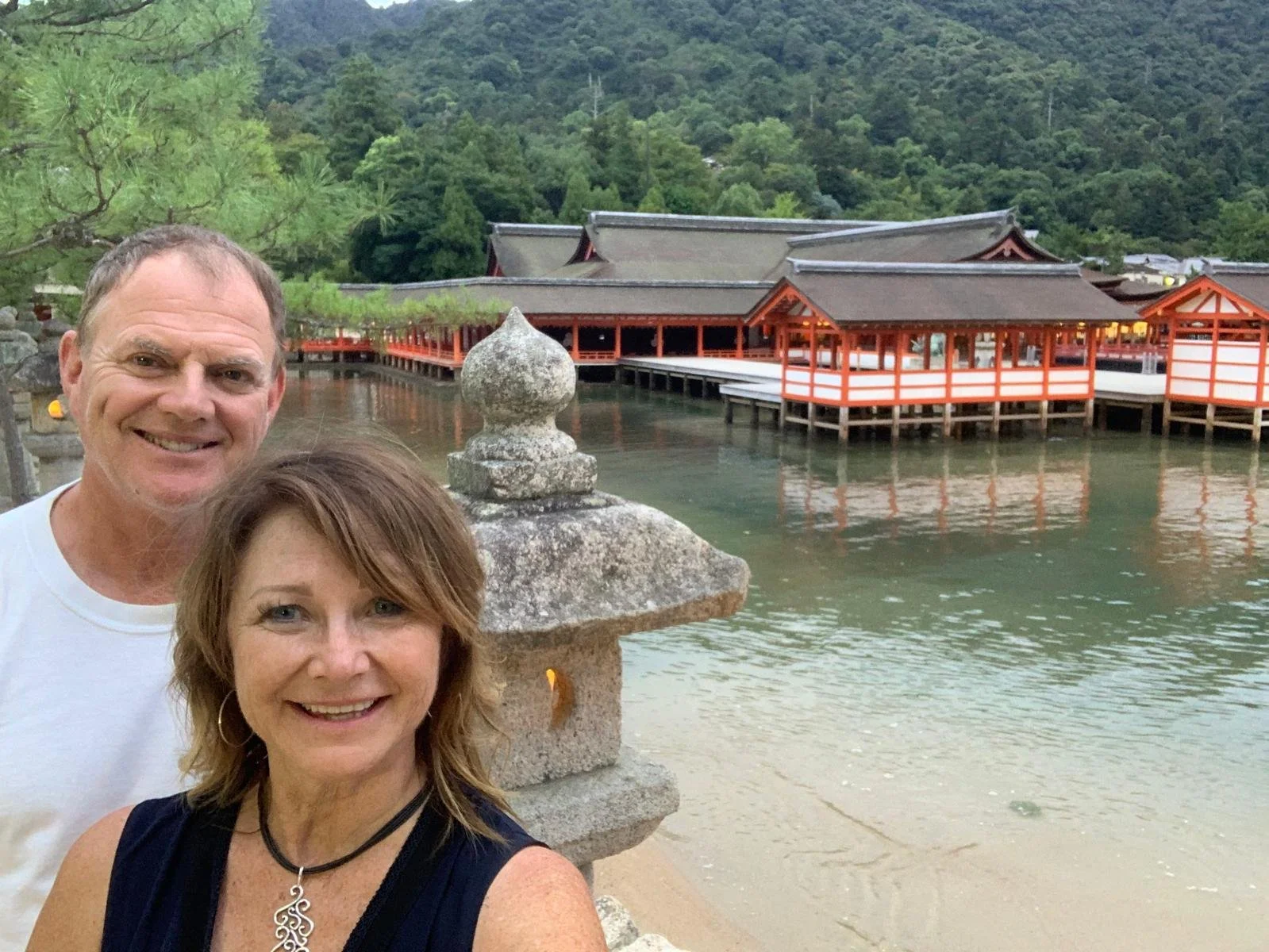
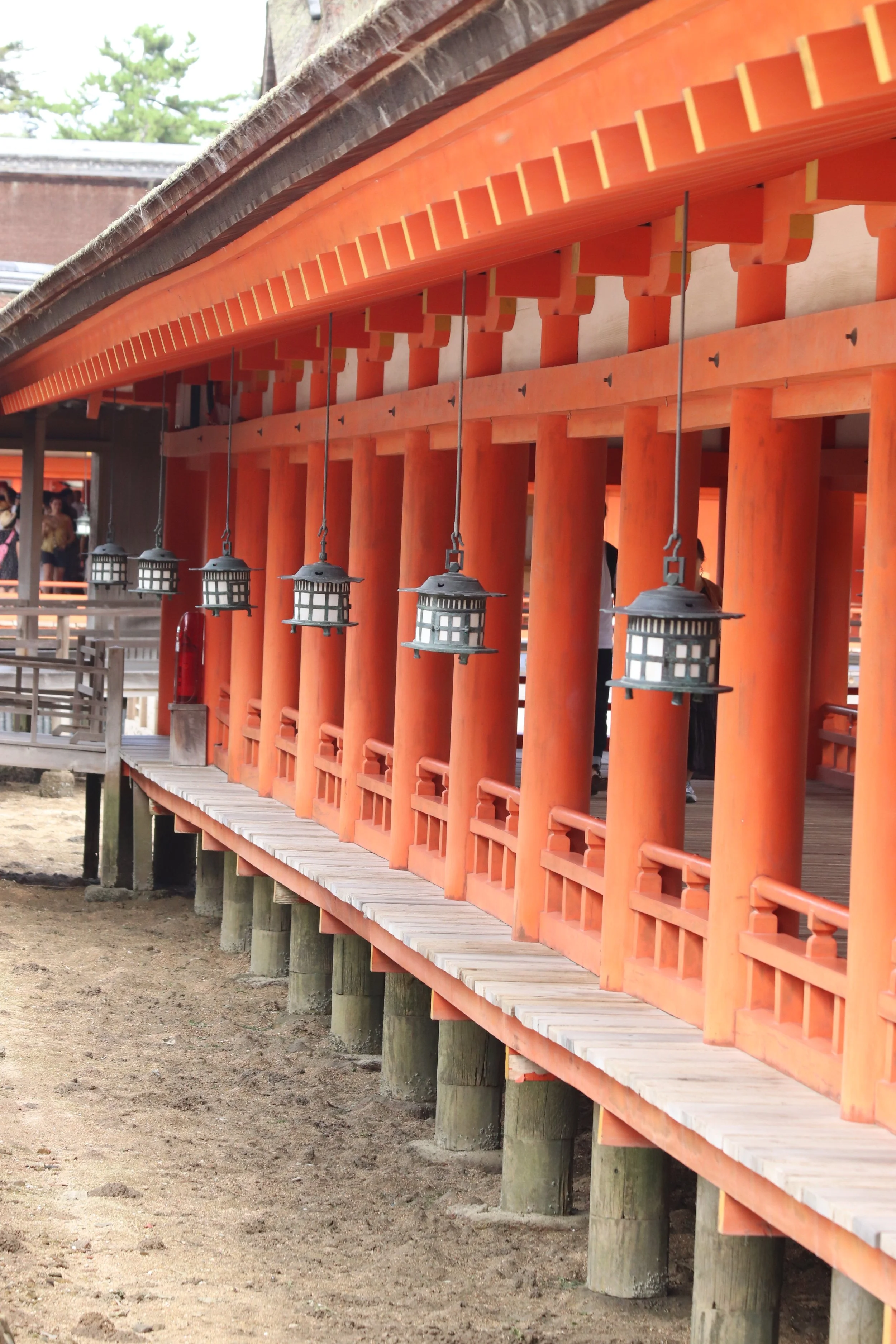
On a good day the Great Torii Gate of Itsukushima Shrine would appear to float on the sea during high tide, welcoming visitors as it has for centuries. The shrine itself dates back to the 6th century before being expanded into its iconic form in 1168 by the powerful samurai leader Taira no Kiyomori. Built over the water so worshippers could approach without setting foot on land considered sacred, the brilliant vermilion-red buildings symbolize protection, purification and good fortune.
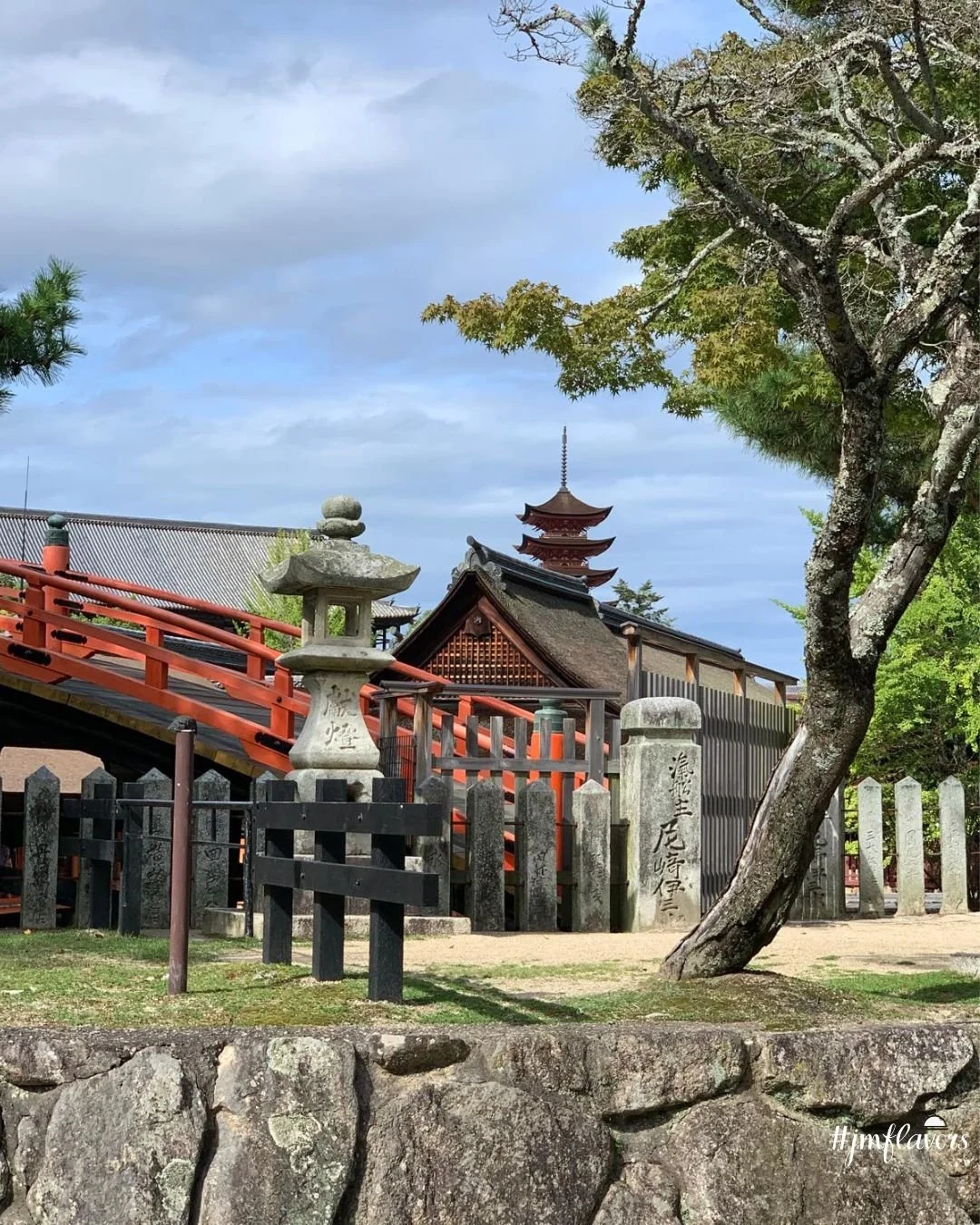
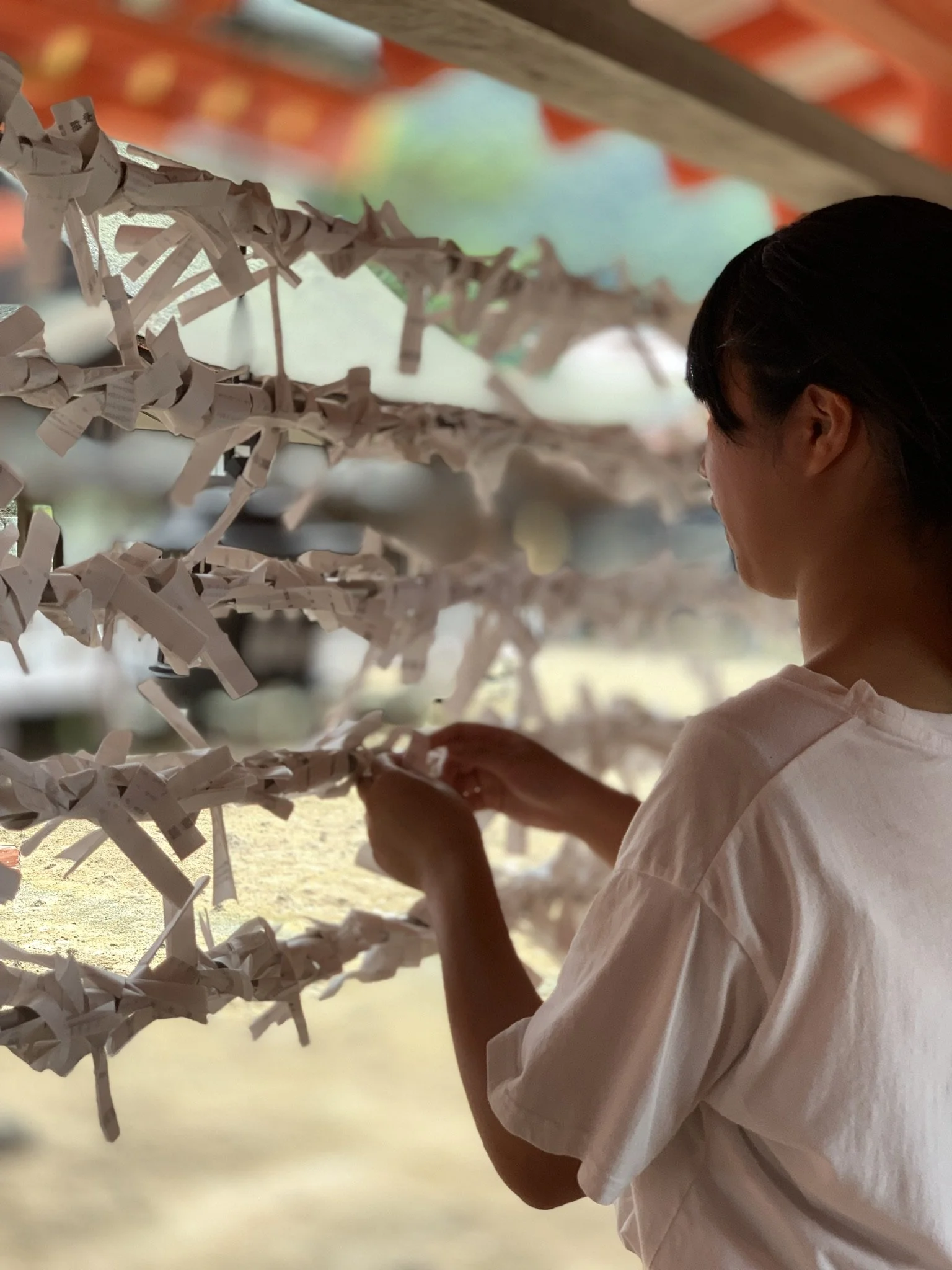
As we wandered through the shrine grounds, I noticed hundreds of tiny white papers fluttering gently in the breeze. At first, I assumed they were decorations. Instead, they turned out to be one of Japan’s most meaningful traditions. This is Daishō-in a buddhist temple
Visitors can purchase an omikuji, a paper fortune that offers guidance for the future. Some reveal great blessings, while others predict challenges ahead. If the fortune brings good news, many people tuck it safely into a wallet or keep it at home as a reminder of their blessing. But if the message isn’t so favourable, tradition encourages visitors to tie it to a designated rack or tree branch within the shrine grounds, symbolically leaving their worries behind and trusting for better days ahead.
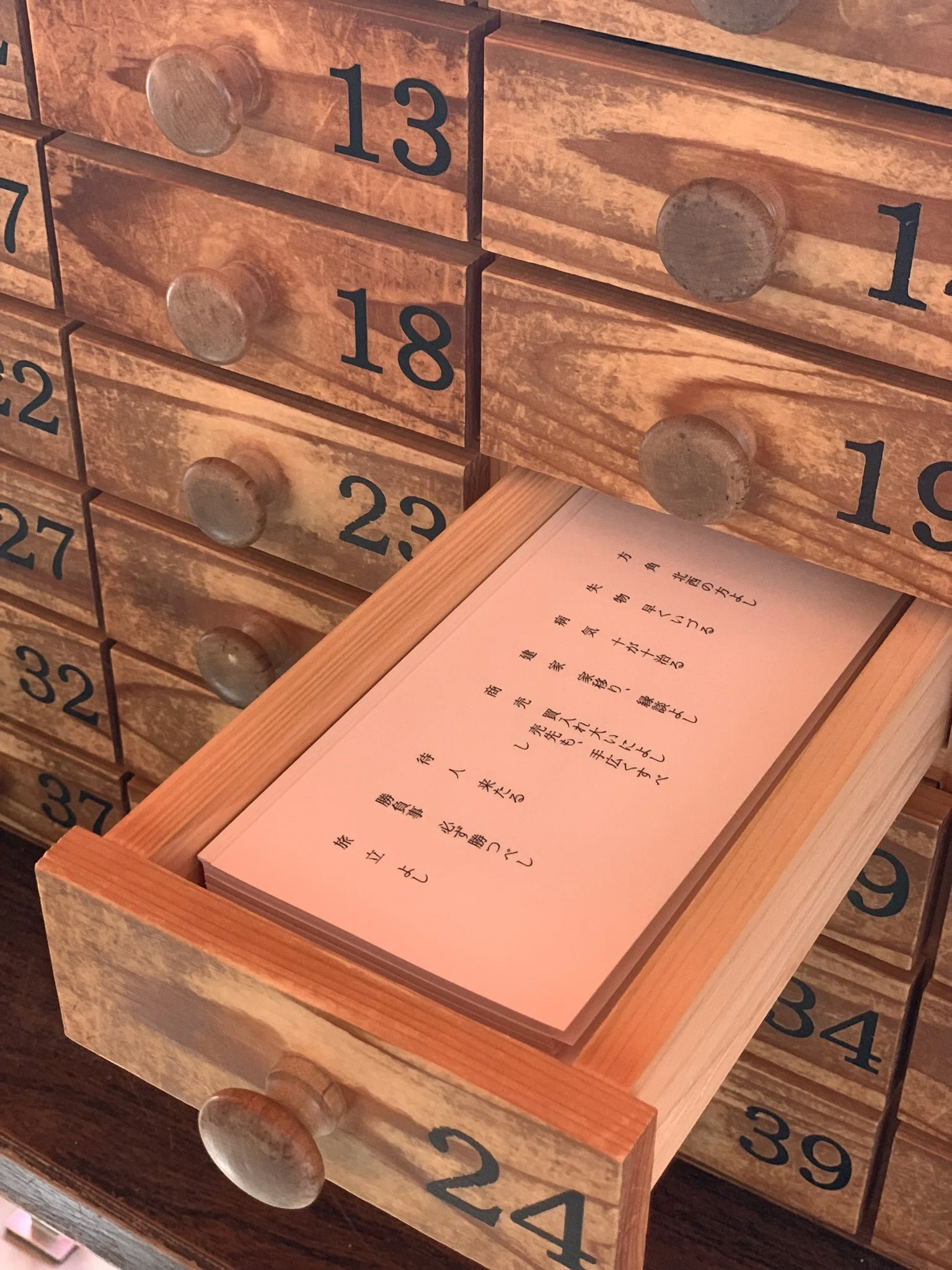
Nearby, wooden plaques called ema hung side by side, each carrying handwritten hopes from visitors around the world. Some prayed for good health, others for love, safe travels, success in school, or simply peace. Reading them, I realized that although we come from different countries and cultures, our wishes are remarkably alike.
Standing there, surrounded by thousands of prayers and fortunes gently moving in the breeze, I couldn’t help but wonder what I would write if I left one behind. Perhaps not a wish for more places to visit, but a simple hope that the peace we remembered in Hiroshima would continue to grow for generations to come.
Unfortunately, travel sometimes reminds us that perfection can’t be scheduled.
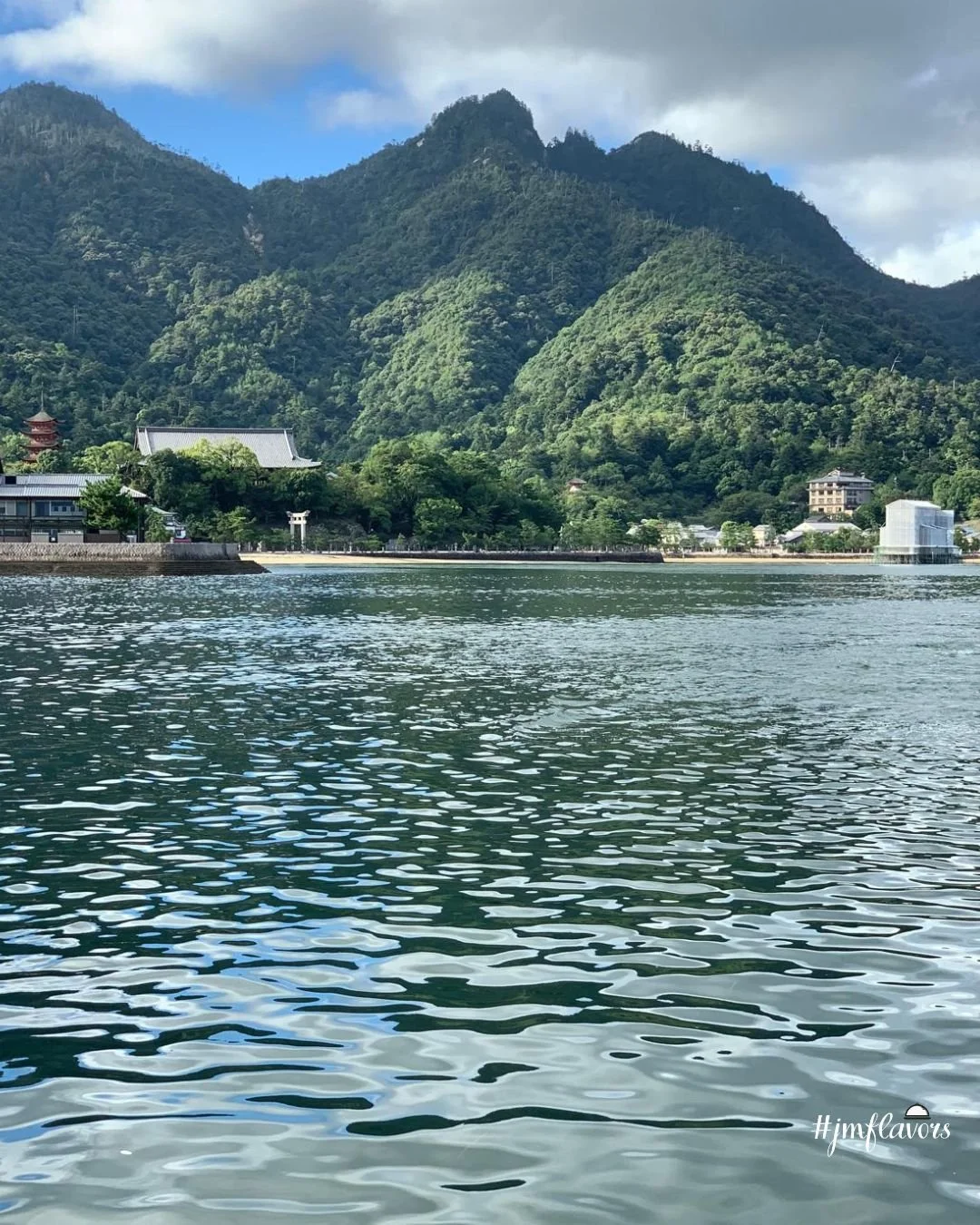
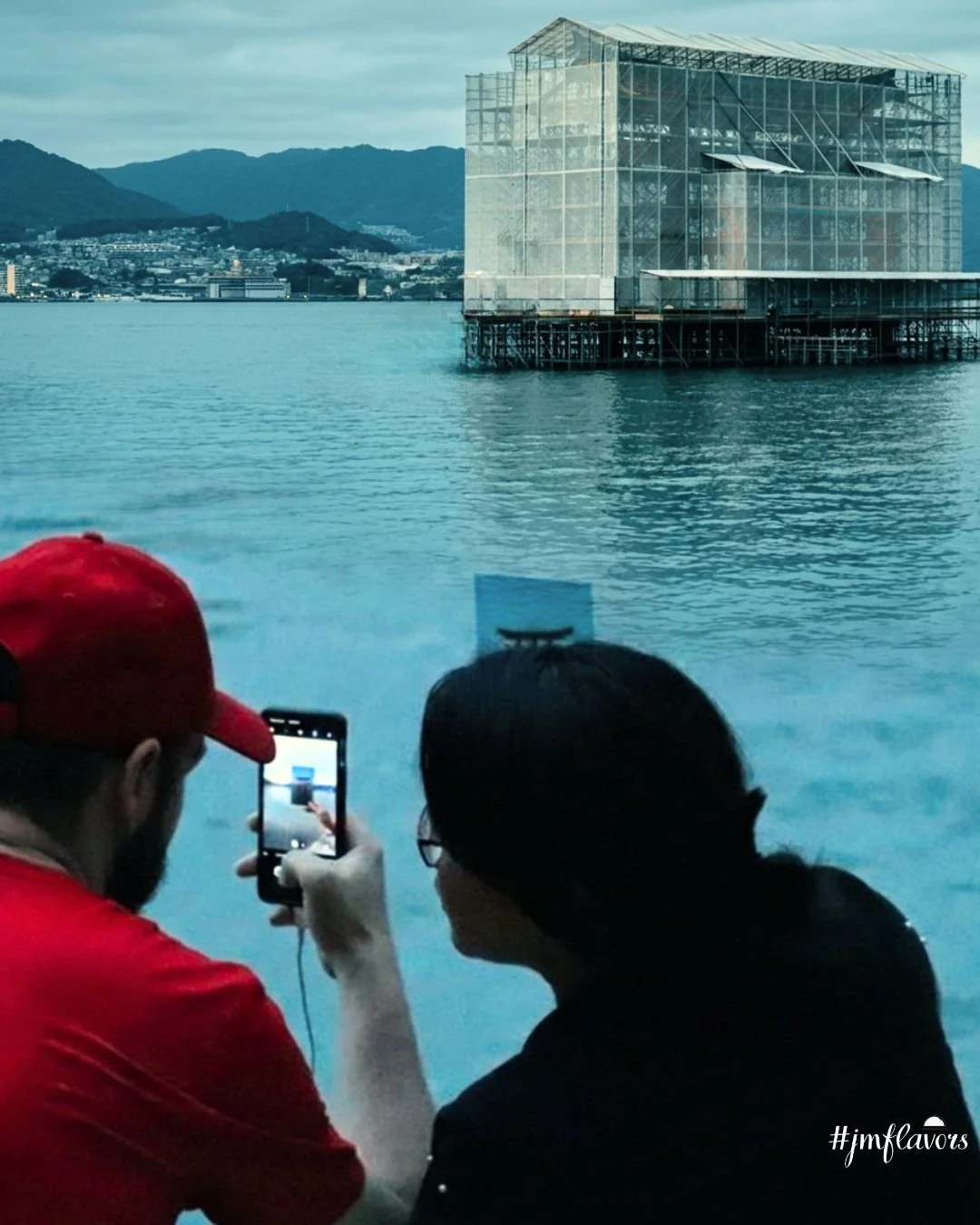
When I booked our trip, I had no idea the famous floating shrine would be wrapped in scaffolding for restoration. For a brief moment, disappointment crept in.
Then I remembered where we had spent the previous day.
Some things are far more important than photographs.
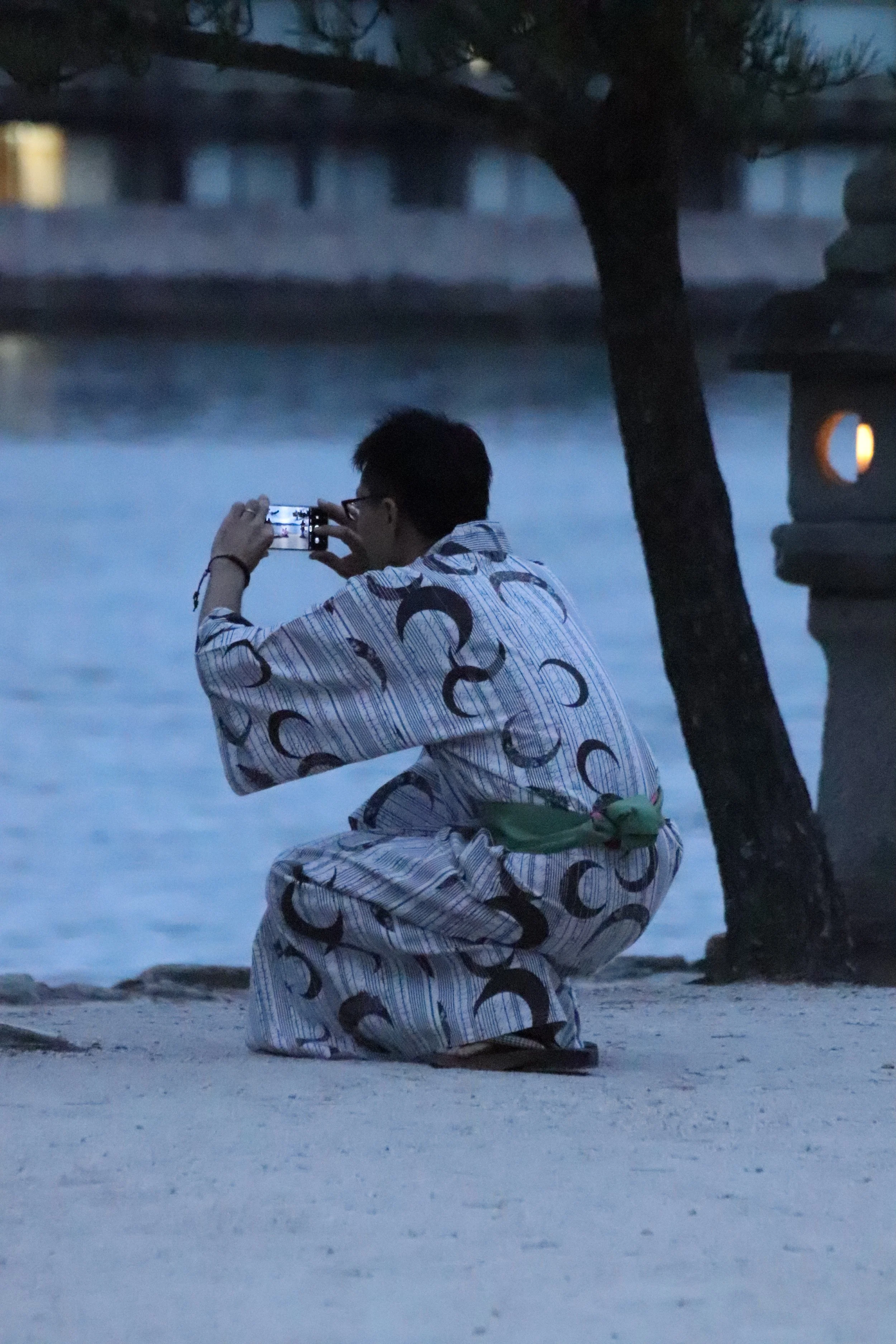
Even partially hidden, the shrine remained a place of extraordinary beauty. Watching the tide rise beneath the wooden walkways, listening to temple bells echo across the bay and seeing women gracefully dressed in traditional kimonos reminded me that Japan isn’t defined by a single postcard image. Thanks to 2 creatives I was able to imagine the image. It’s defined by its spirit.
Looking back, Hiroshima and Miyajima feel inseparable.
One tells the story of unimaginable loss.
The other reminds us what survives.
Faith. Tradition. Beauty. Hope.
Perhaps that is why these two places belong together on every itinerary. One teaches us why peace matters. The other shows us what a peaceful world can look like.
As we boarded the ferry back to the mainland, I found myself carrying the same quiet wish left behind by millions of folded paper cranes.
May we never forget.
And may future generations only know Hiroshima as a city of peace.