Kyoto: The City That Kept Its Soul
Somewhere between a rain-soaked walk beneath thousands of red torii gates and my gold-leaf ice cream, I realized Kyoto wasn’t a city stuck in the past. It was a city that had figured out how to carry its past forward.
When I arrived in Kyoto, I felt as though I had stepped into the Japan I had imagined before ever coming here.
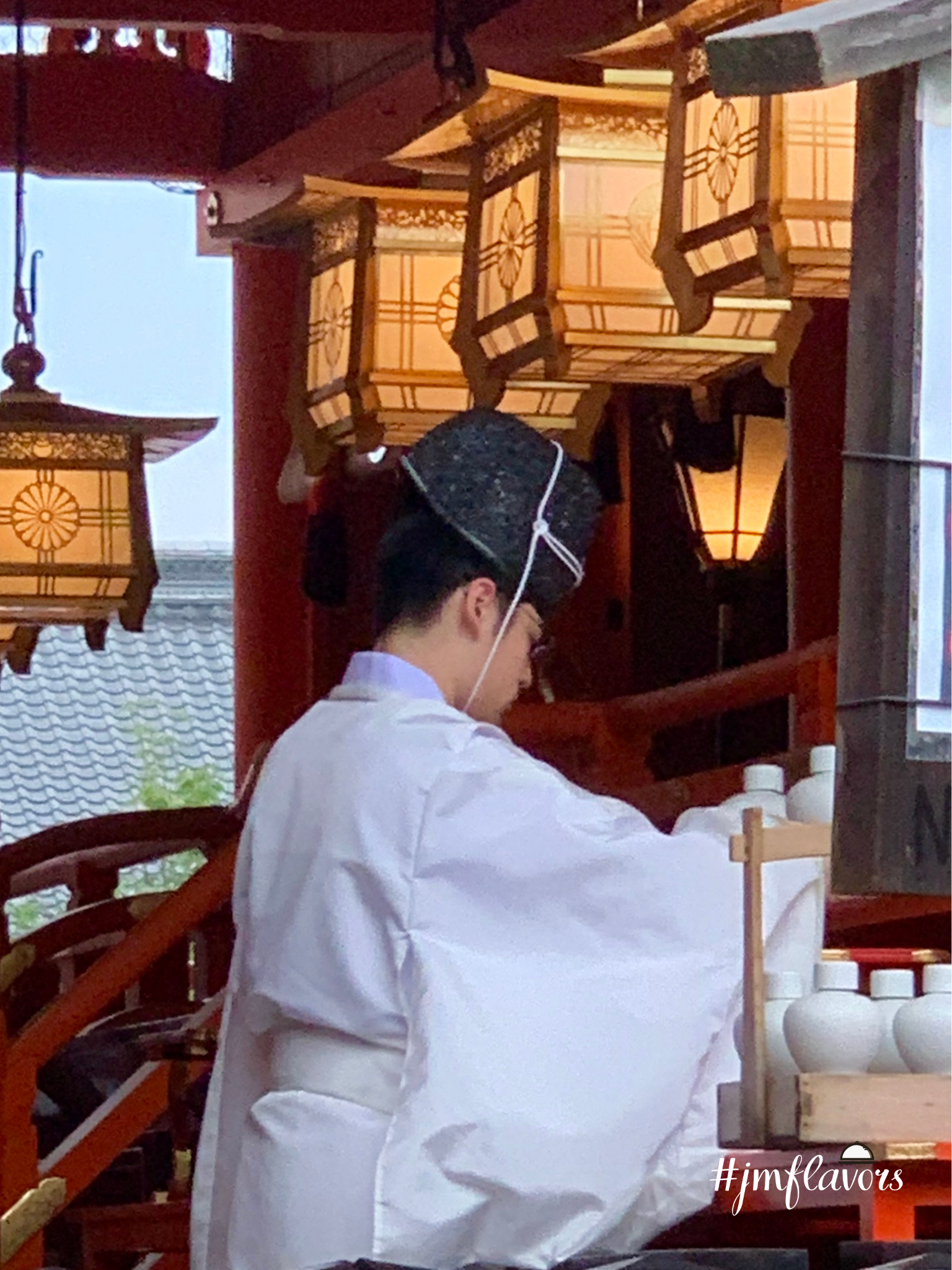
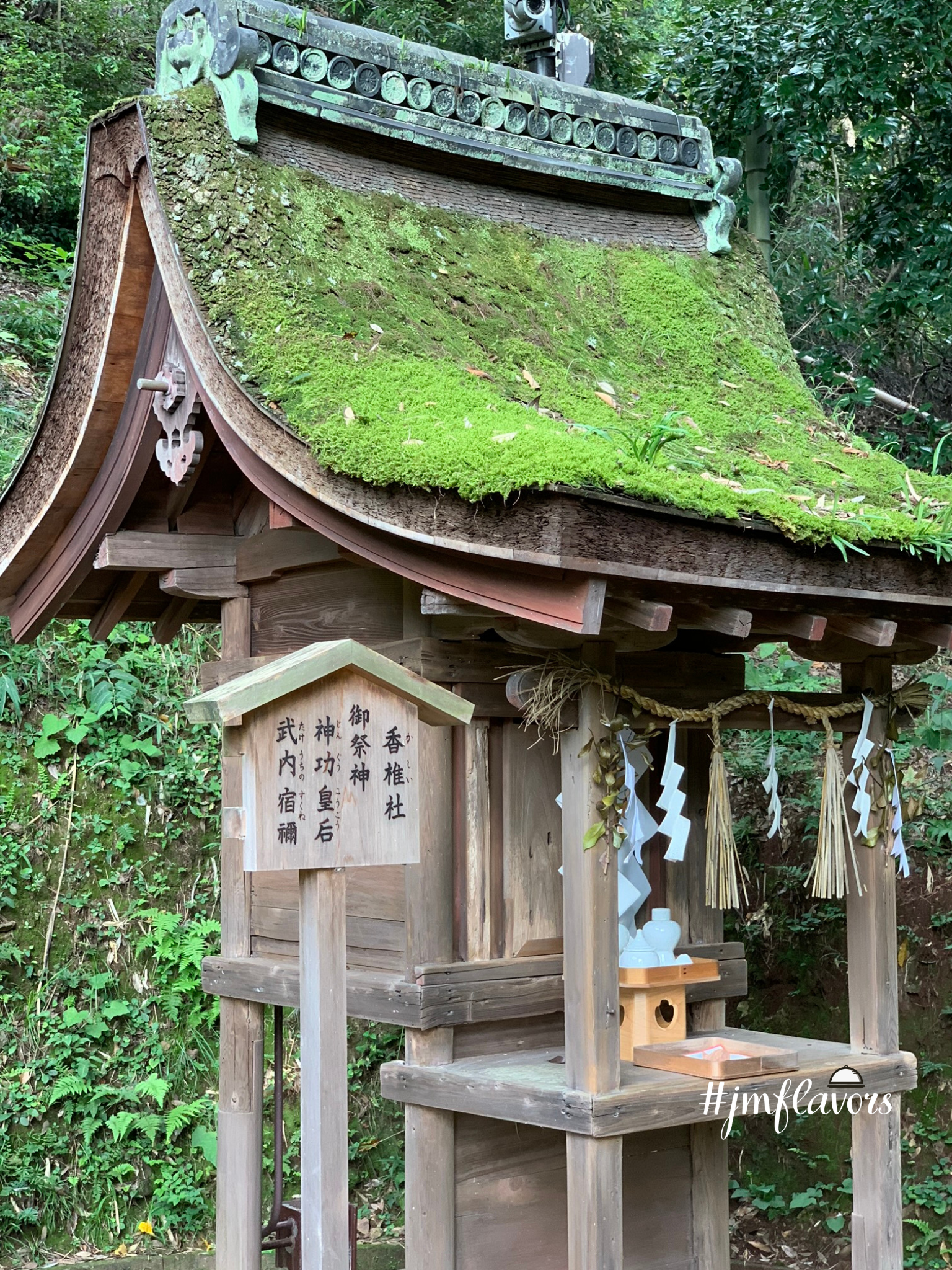
A black lacquered hat (eboshi) while preparing ritual offerings at a Japanese shrine.
Not a museum version of Japan.
Not a perfectly preserved movie set.
Something much more interesting.
An ancient city that is very much alive.
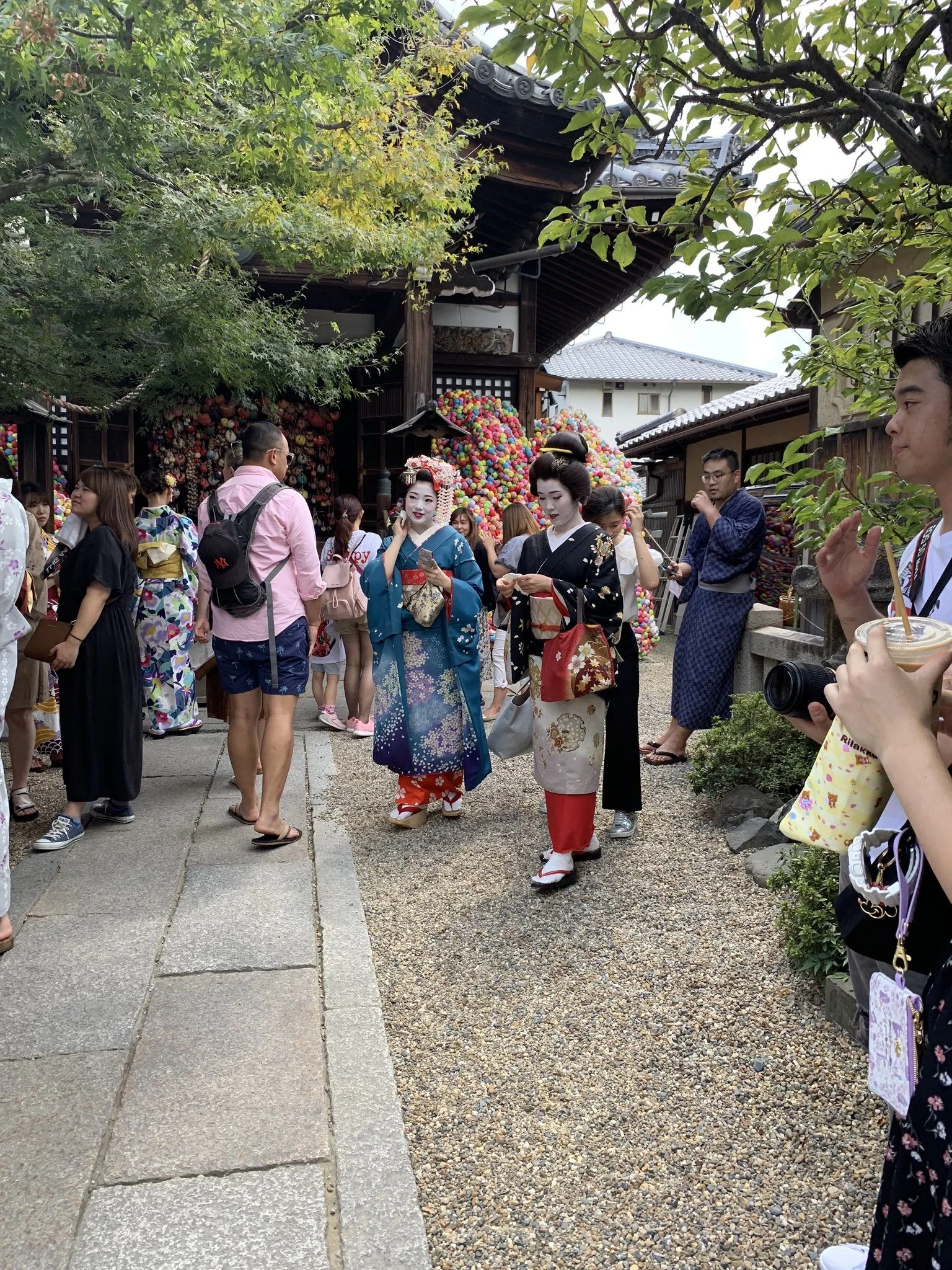
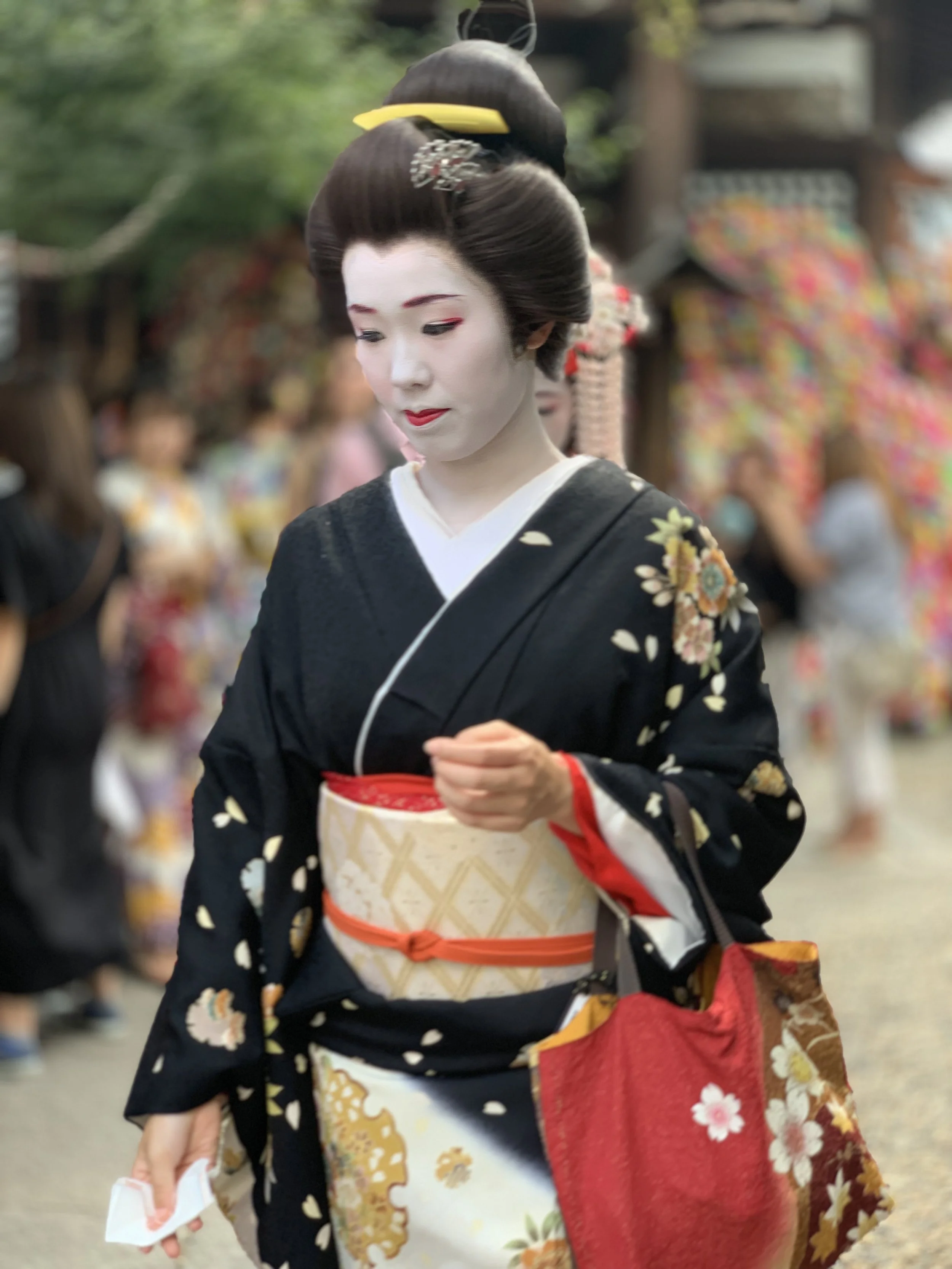
Kyoto is modern. It has hotels, restaurants, bars, breweries, busy streets and plenty of tourists. In some places, it is undeniably commercialized. You’ll see visitors paying to be transformed for an afternoon into their own version of a Japanese geisha, complete with elaborate kimono, beautifully arranged hair, makeup and a professional photographer following along to capture the perfect memory.
And yet, I couldn’t be cynical about it.
Because when I looked past the crowds, I could see what everyone had come here for.
Kyoto is beautiful.
But more than that, it has been cared for.
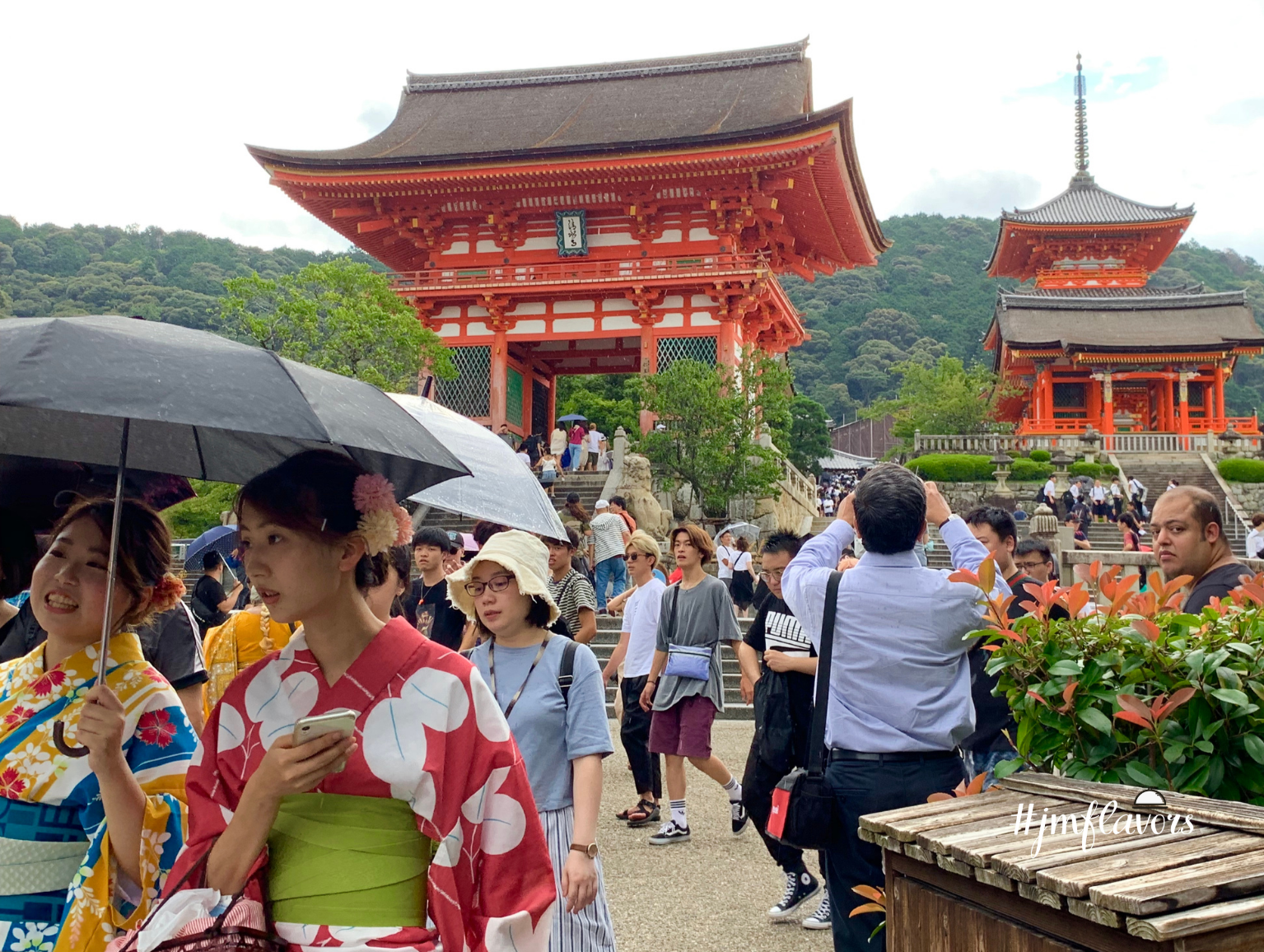
And the more I walked, the more I began to understand that preservation here isn’t simply about keeping old buildings standing. It is about keeping craftsmanship, traditions, gardens, rituals, food and stories alive.
That realization began with a garden.
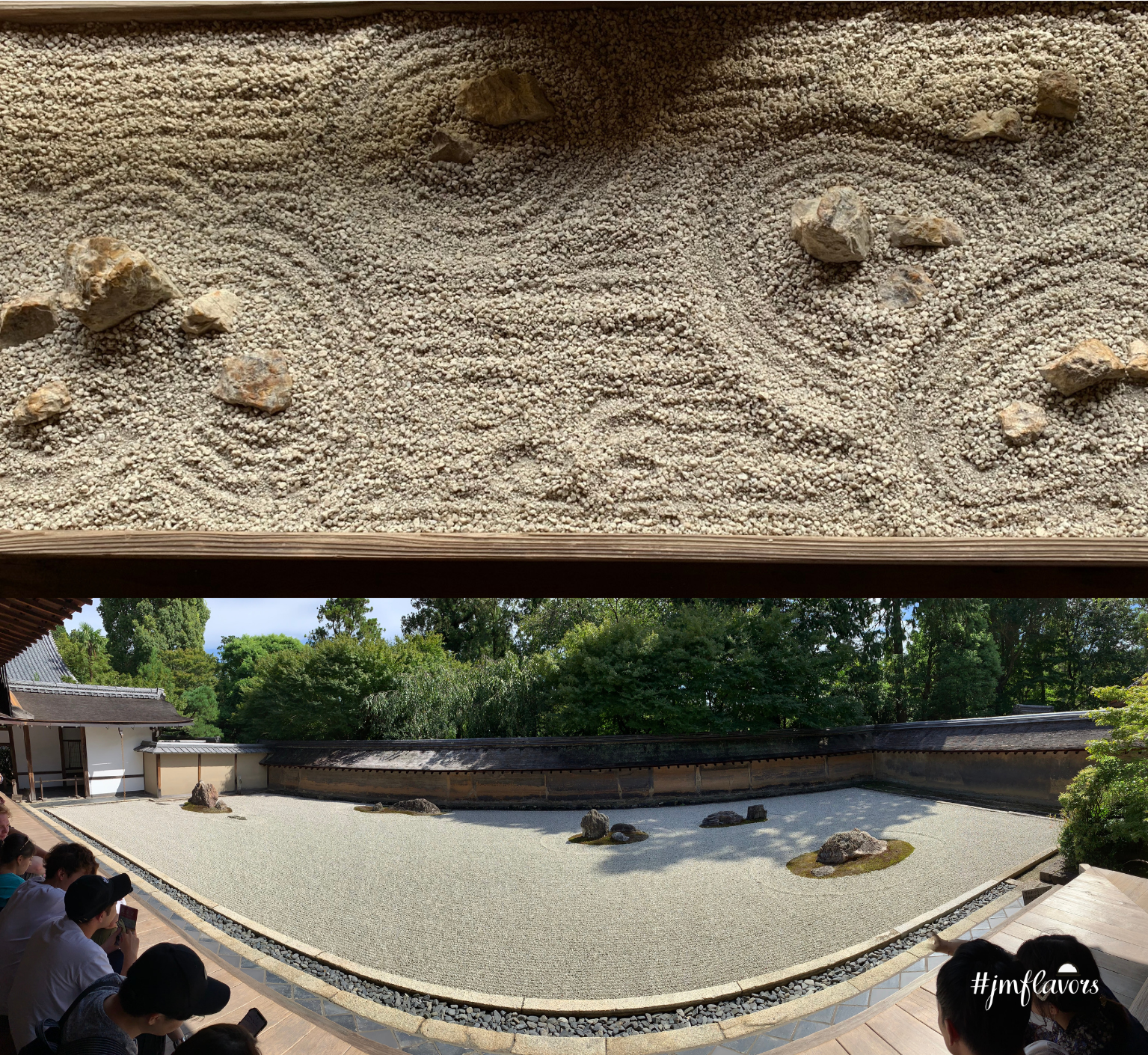
Zen rock garden at Ryōan-ji Temple
A Garden Nobody Can Quite Explain
Ryoan-ji is home to one of Japan’s most famous Zen gardens, and I remember looking at it and thinking: What exactly am I supposed to be seeing?
Fifteen rocks sit in carefully arranged groups on a bed of raked white gravel, enclosed by an earthen wall.
It is remarkably simple.
And completely mesmerizing.
The strange thing is that from the viewing platform, you cannot see all fifteen stones at the same time. No matter where you look from, one is hidden. And perhaps even more intriguing, no one knows with certainty who designed the garden, exactly when it was created or what the arrangement was intended to mean.
The larger grounds were just as beautiful, with moss, trees, water and winding pathways. The garden seemed to whisper rather than shout, and after the crowds and activity of Kyoto, that quiet felt almost like a gift.
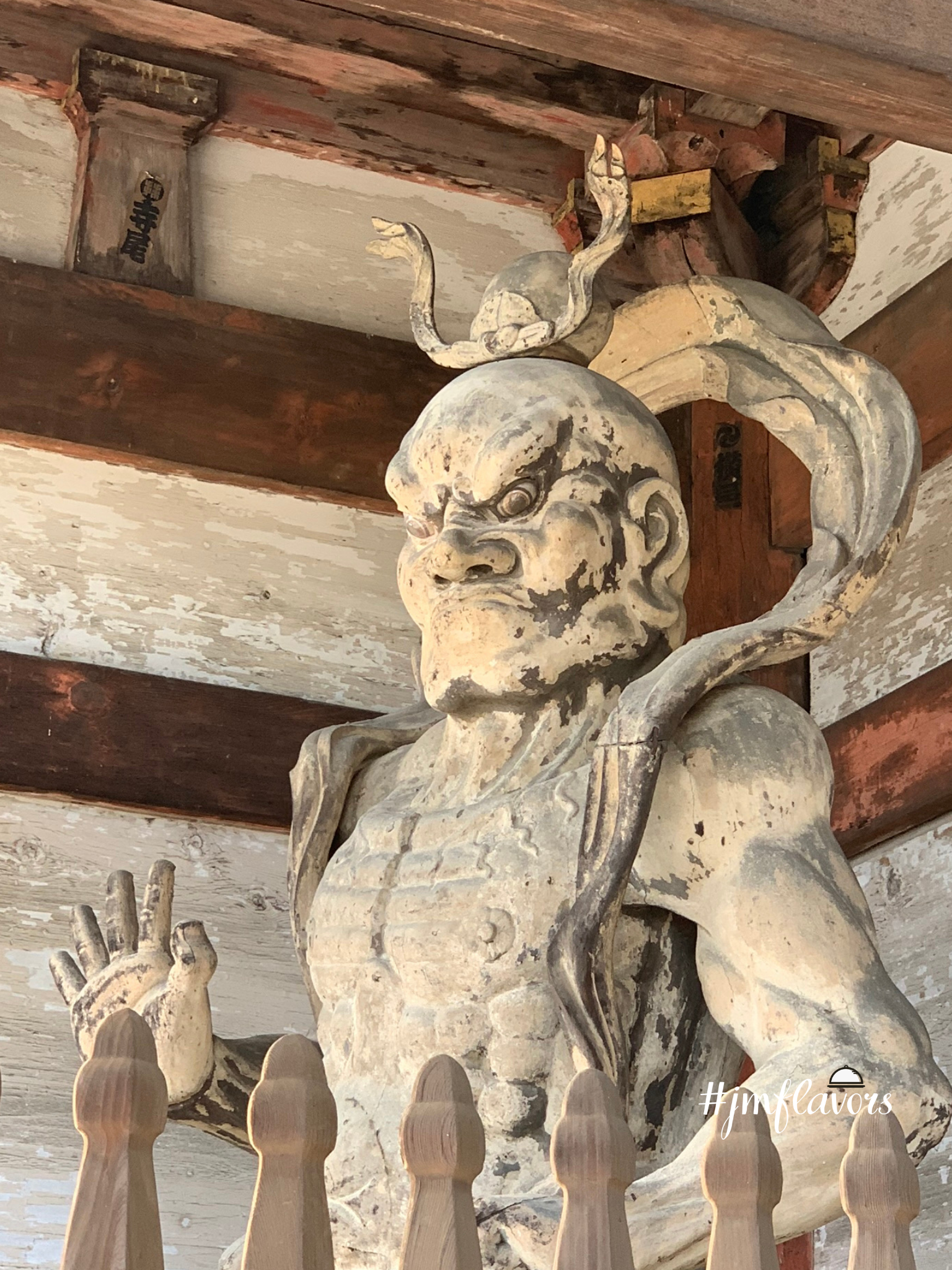
Wooden Niō guardian statue standing watch inside the Niōmon gate at Ninnaji Temple
Kyoto kept unfolding.
Leaving the Zen garden, we travelled along Kinukake-no-michi, a beautiful route running approximately 2.5 kilometres through the foothills of northwest Kyoto.
What caught my attention was its name.
The Road Draped with Silk.
It connects three World Heritage temples—Ryoan-ji, Kinkaku-ji and Ninna-ji—and the name comes from a wonderful old story. The ninth-century Emperor Uda supposedly wanted to enjoy the appearance of snow in summer, so the slopes of a nearby mountain were covered with white silk to create a snowy landscape. (Kinukake)
A road named after a mountain dressed in silk.
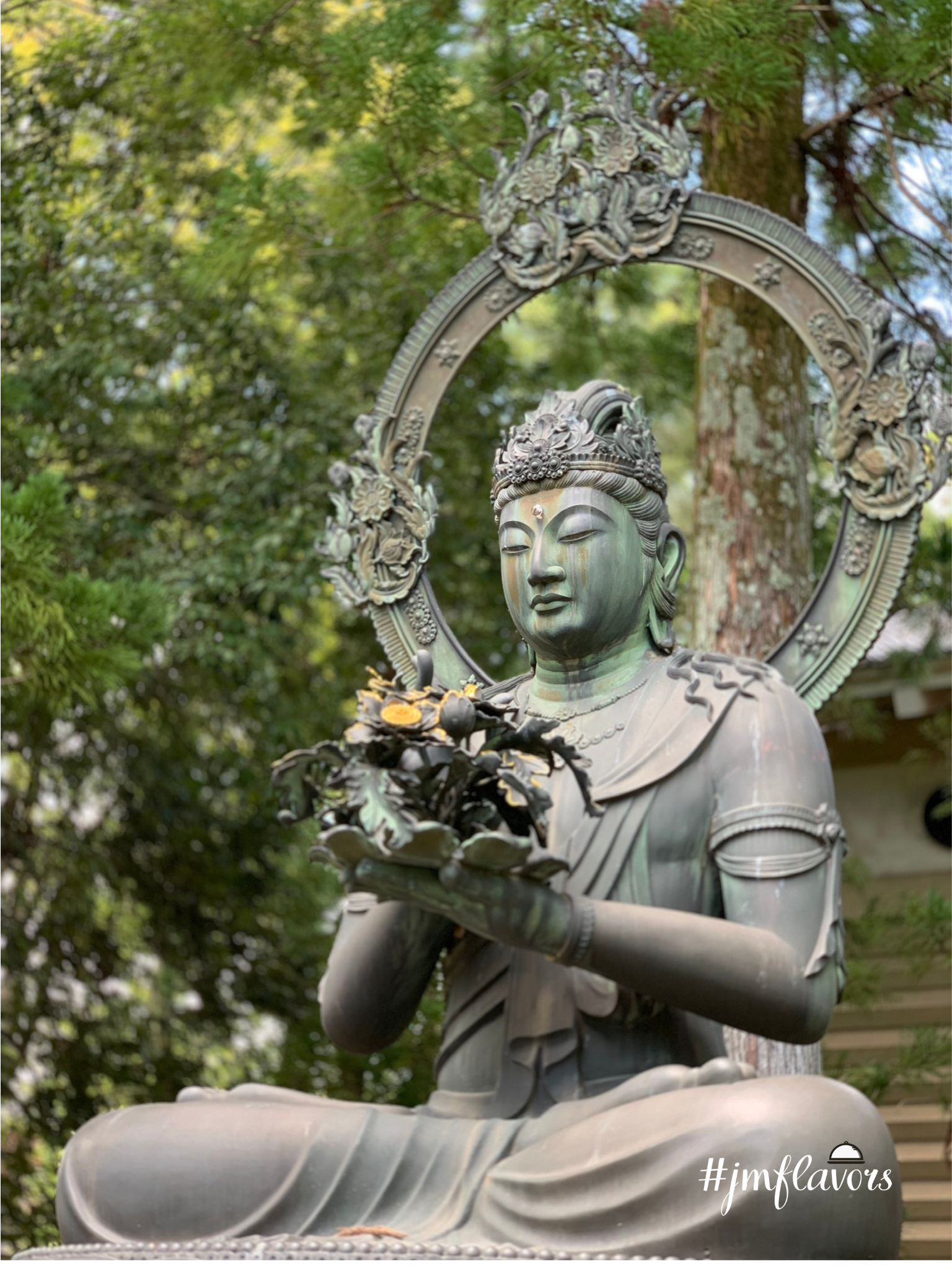
Then We Found Gold
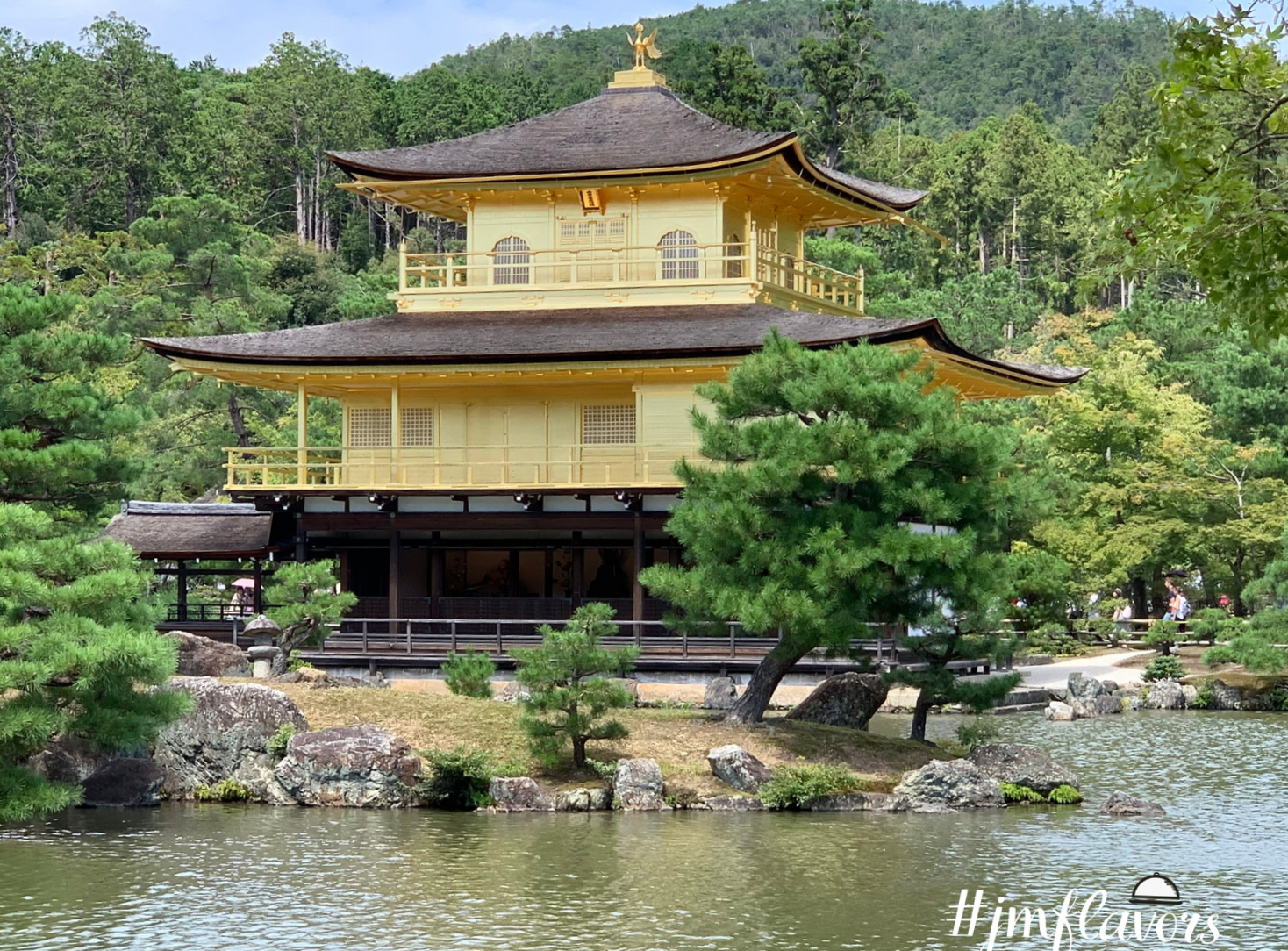
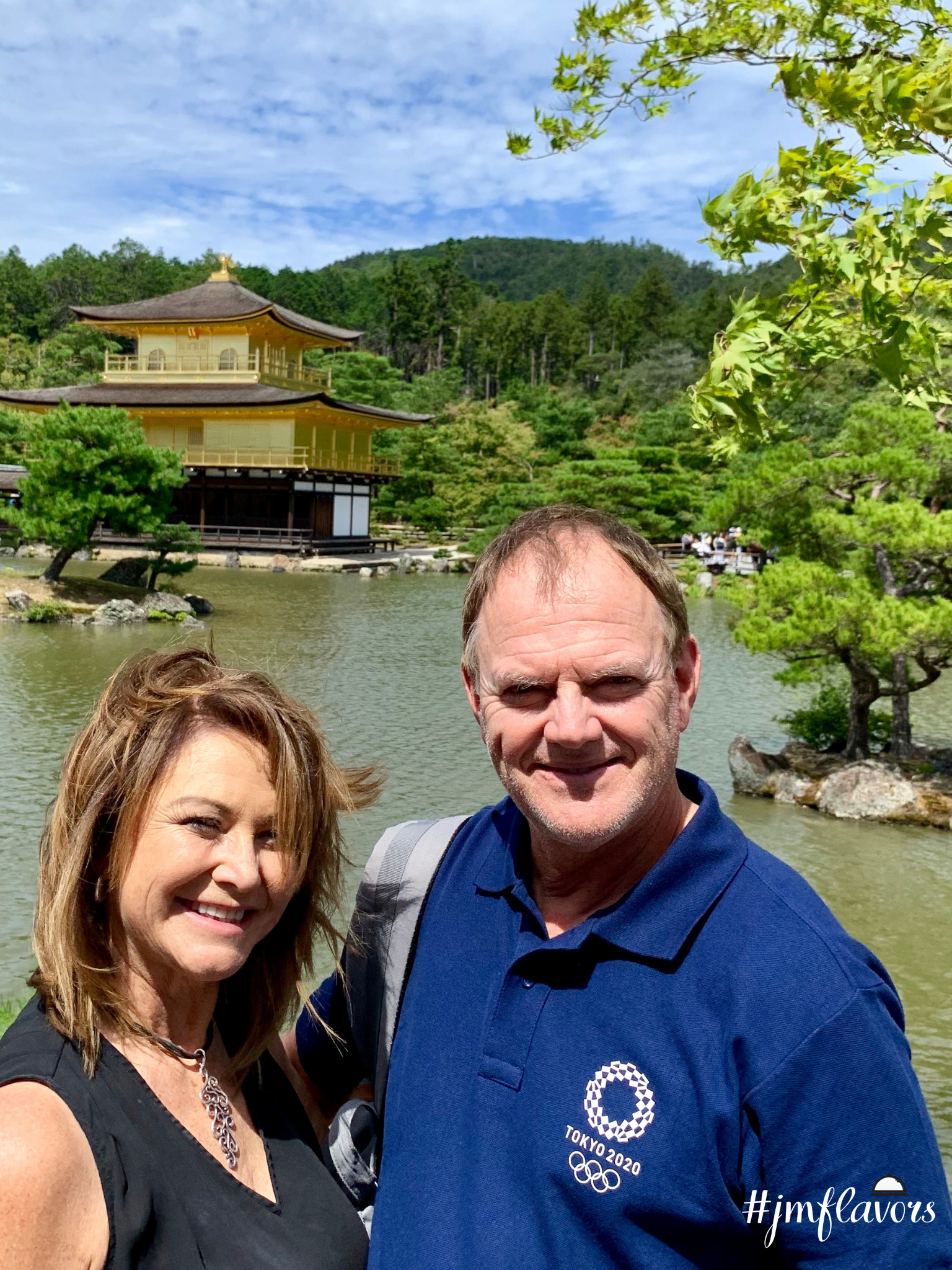
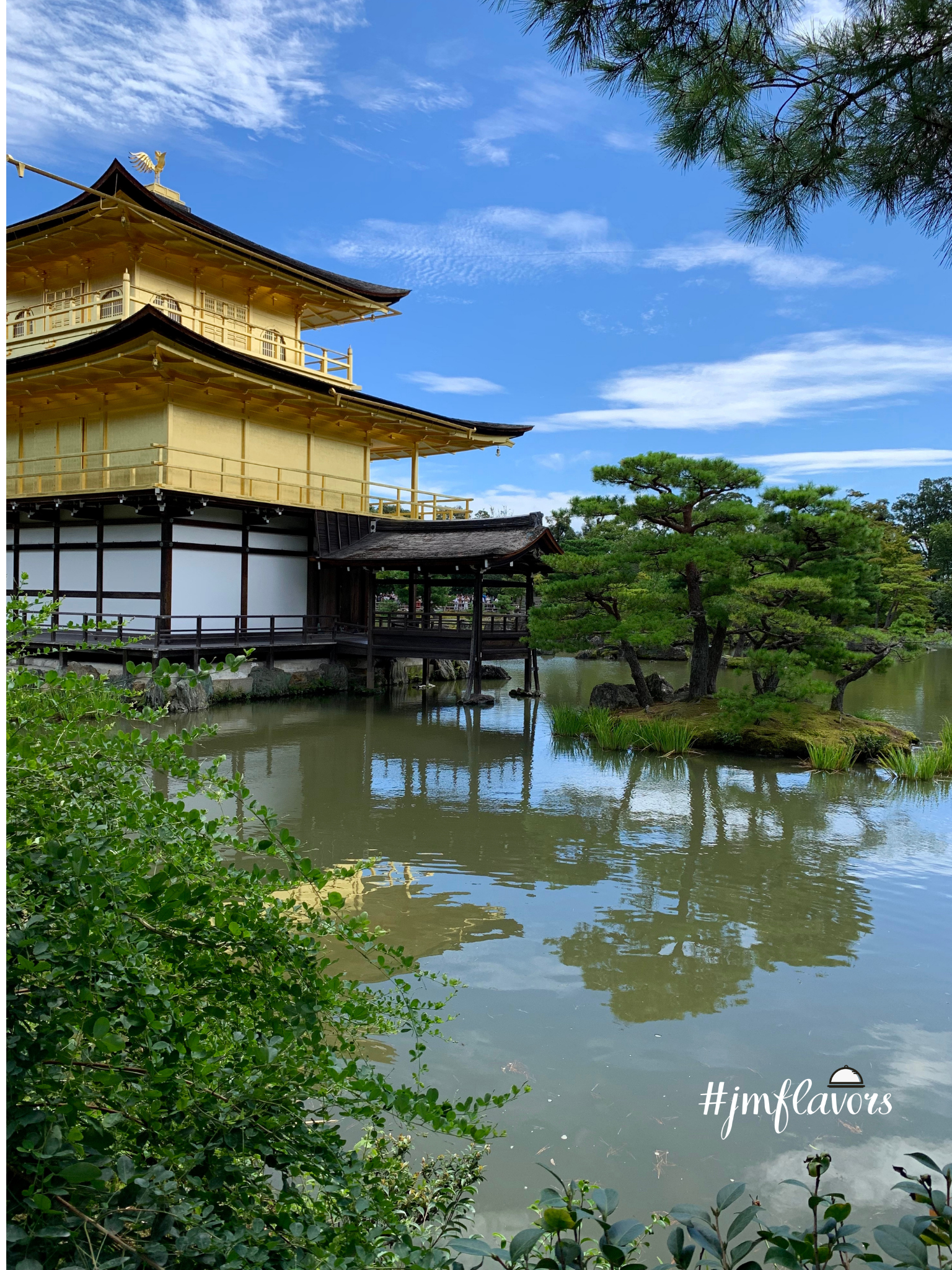
Golden Pavilion
The Golden Pavilion is one of those places you think you know because you’ve seen the photographs.
Then you stand there.
And you realize you didn’t know it at all.
Kinkaku-ji—officially Rokuon-ji—was originally part of the villa of the powerful shogun Ashikaga Yoshimitsu. Its gardens and architecture were designed to evoke a kind of paradise on earth, and the site became a centre of what is known as Kitayama culture.
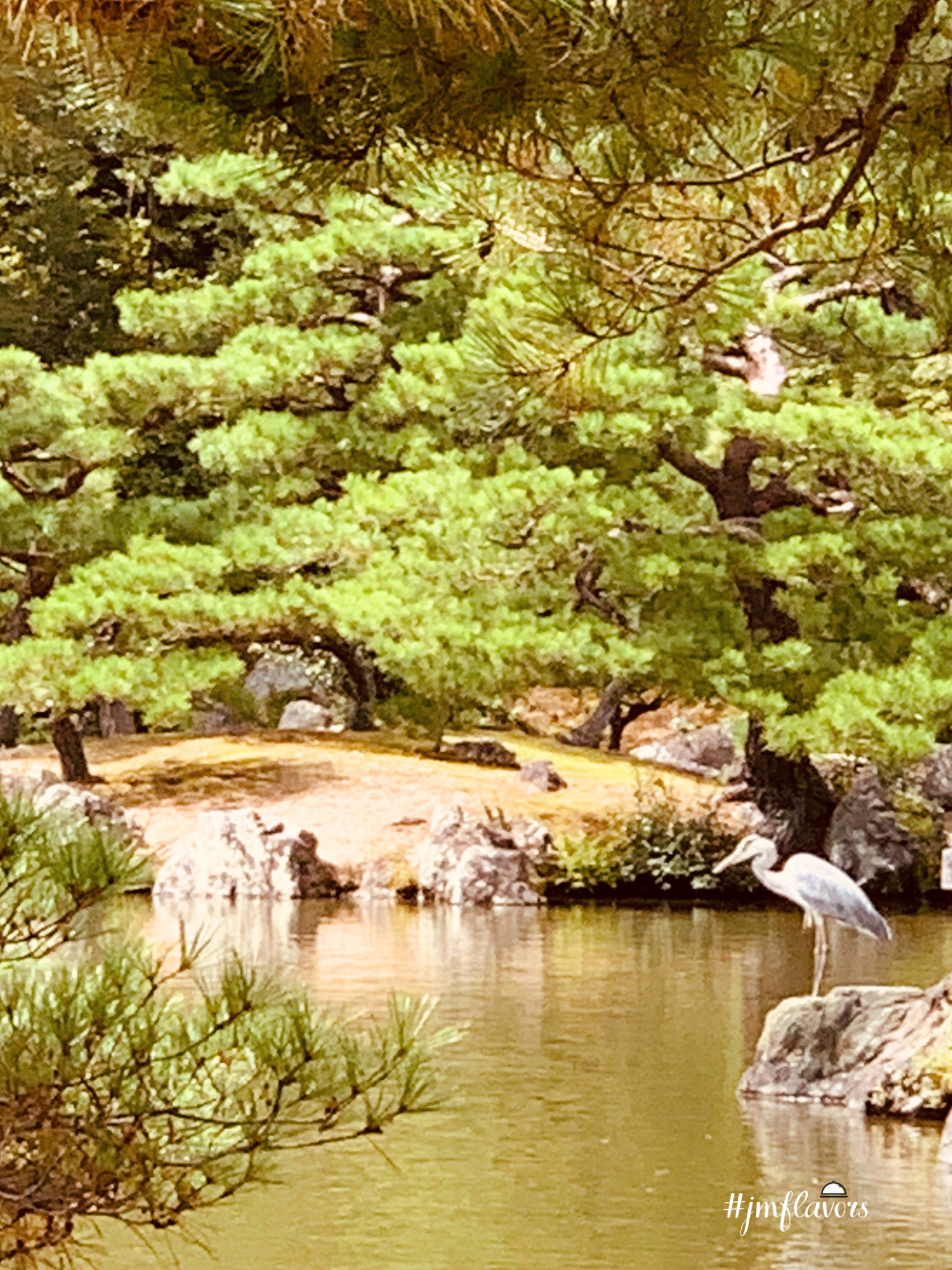
The pavilion gleams over the pond, its reflection dancing in the water.
The garden seems impossibly composed.
Rocks sit exactly where they should.
Trees frame the view.
Water reflects the gold.
I notice a crane perfectly posed for the photo - Brilliant - he got the memo.
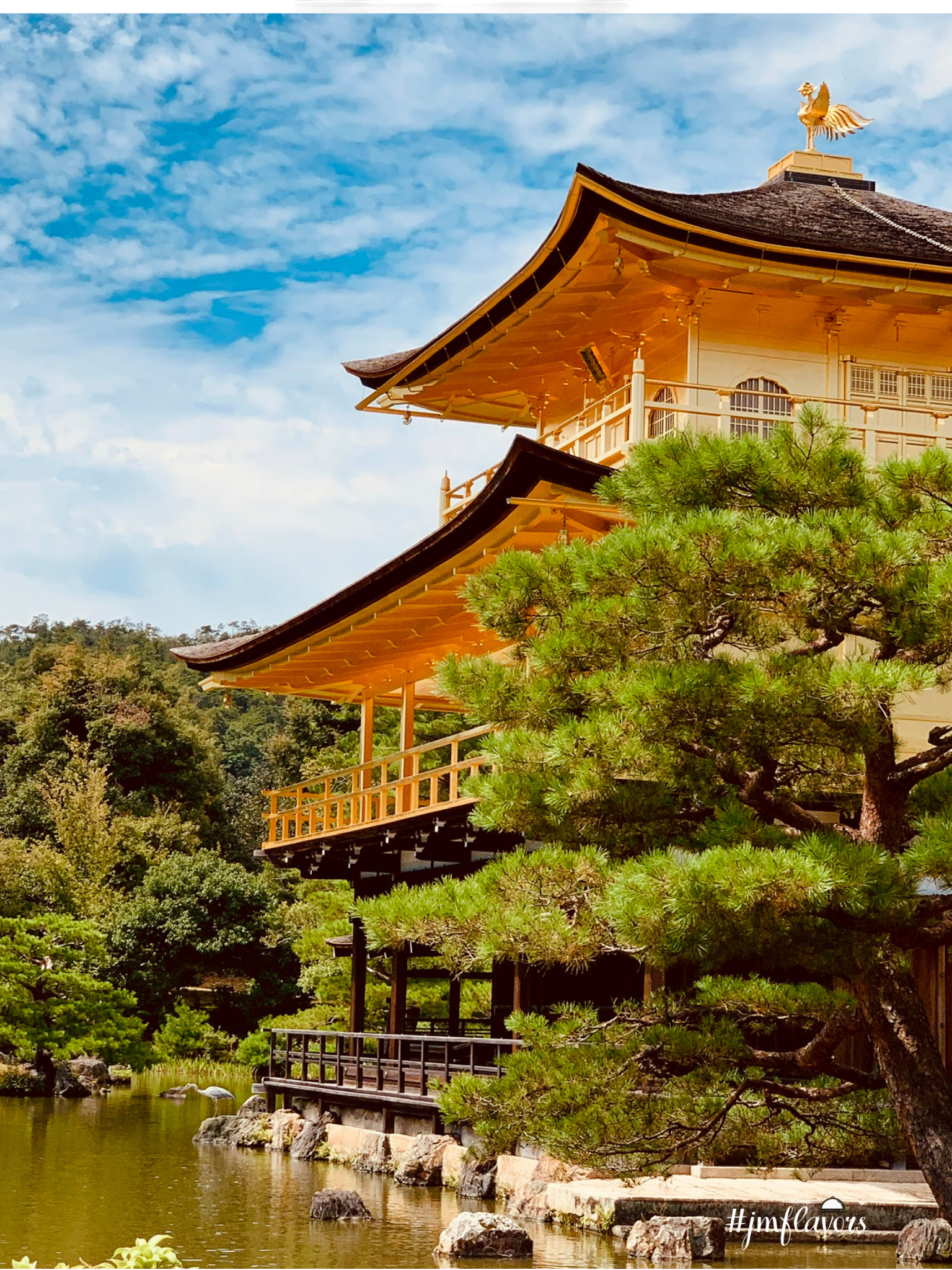
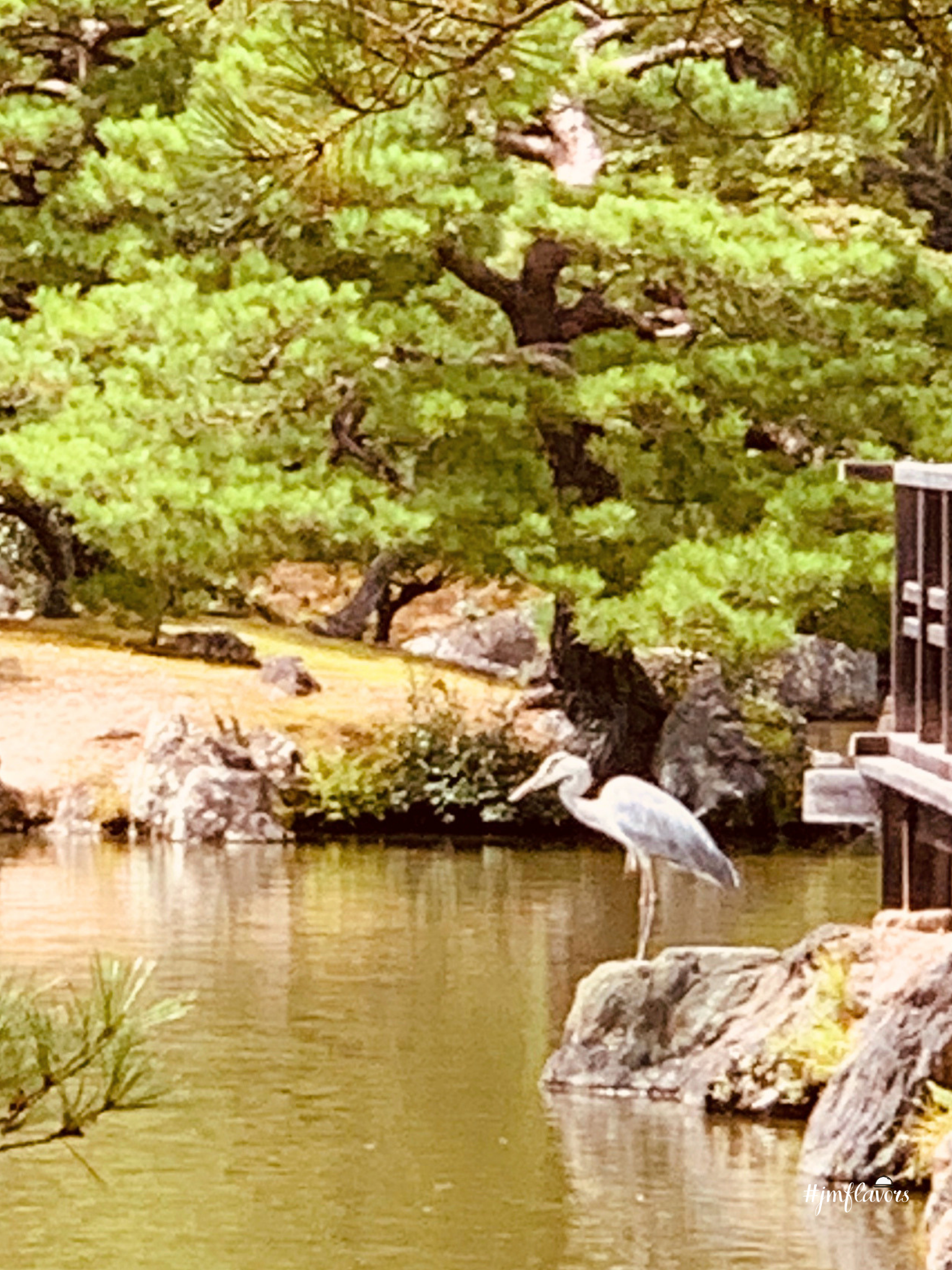
And then you look up.
There, perched on the roof, is a phoenix.
It isn’t just decoration. The official Kinkaku-ji history describes it as a Chinese phoenix, an auspicious symbol. The building itself is remarkable because each level reflects a different architectural tradition—Heian aristocratic style, samurai architecture and Chinese Zen temple style—brought together in one structure. (Shokoku-ji)
I loved that detail.
Because it seemed to say something about Kyoto itself.
Different eras.
Different influences.
Different traditions.
All existing together.

Of course, there were a lot of people there.
Kyoto in September wasn’t exactly empty.
But even surrounded by people, the Golden Pavilion managed to stop me in my tracks.
And then, because apparently admiring gold wasn’t enough, I found the closest thing I could get to taking it home: Matcha gold-leaf ice cream.


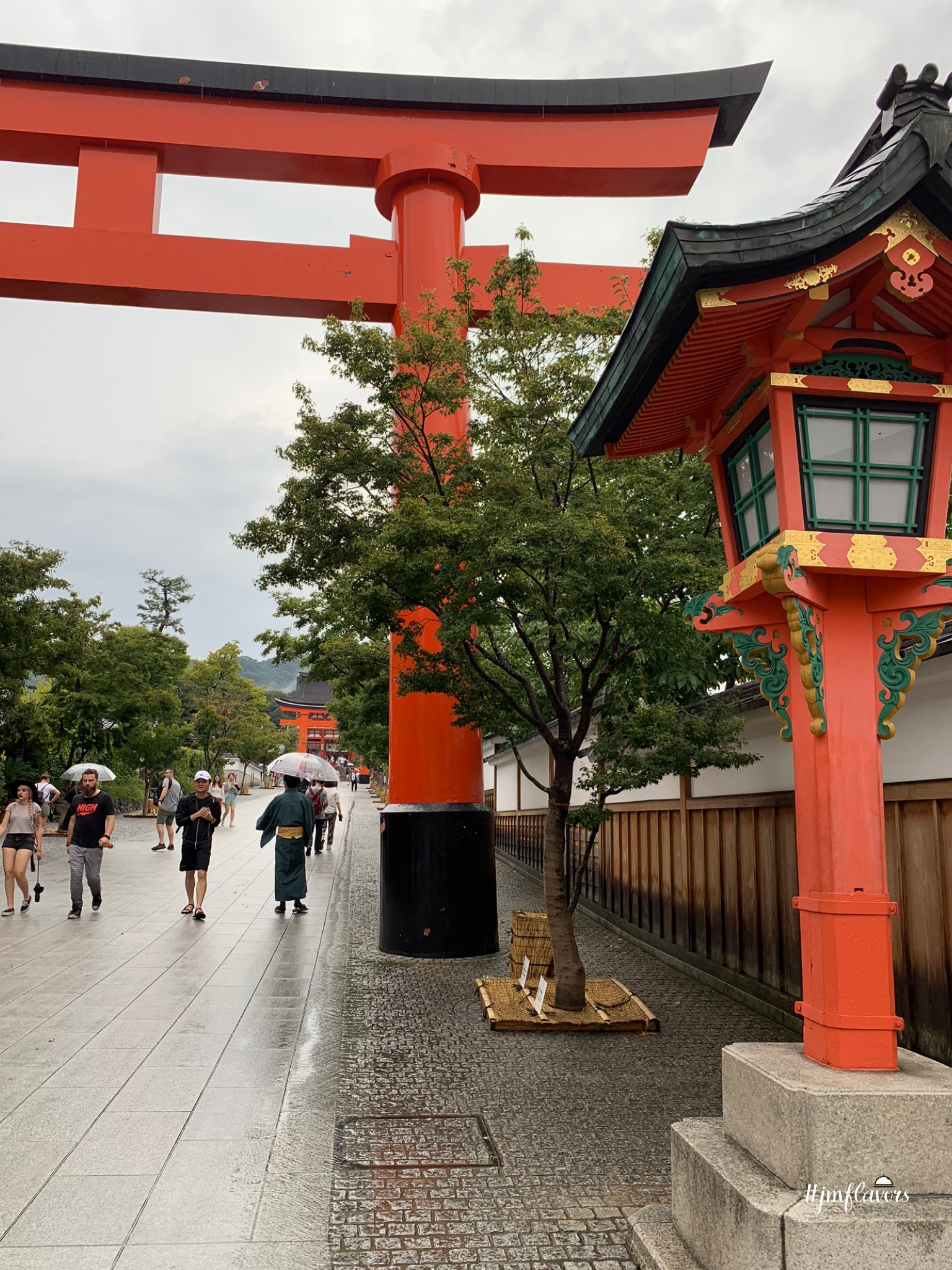
Oh My, did we hit a rain downpour. The show must go on. Dripping and soaked to the core. It was hot and humid, we continued.
We walked across bridges and along little pathways, passing temples, memorials and statues softened by moss. Jumped a train and off we went. Tori Gates - here we come.
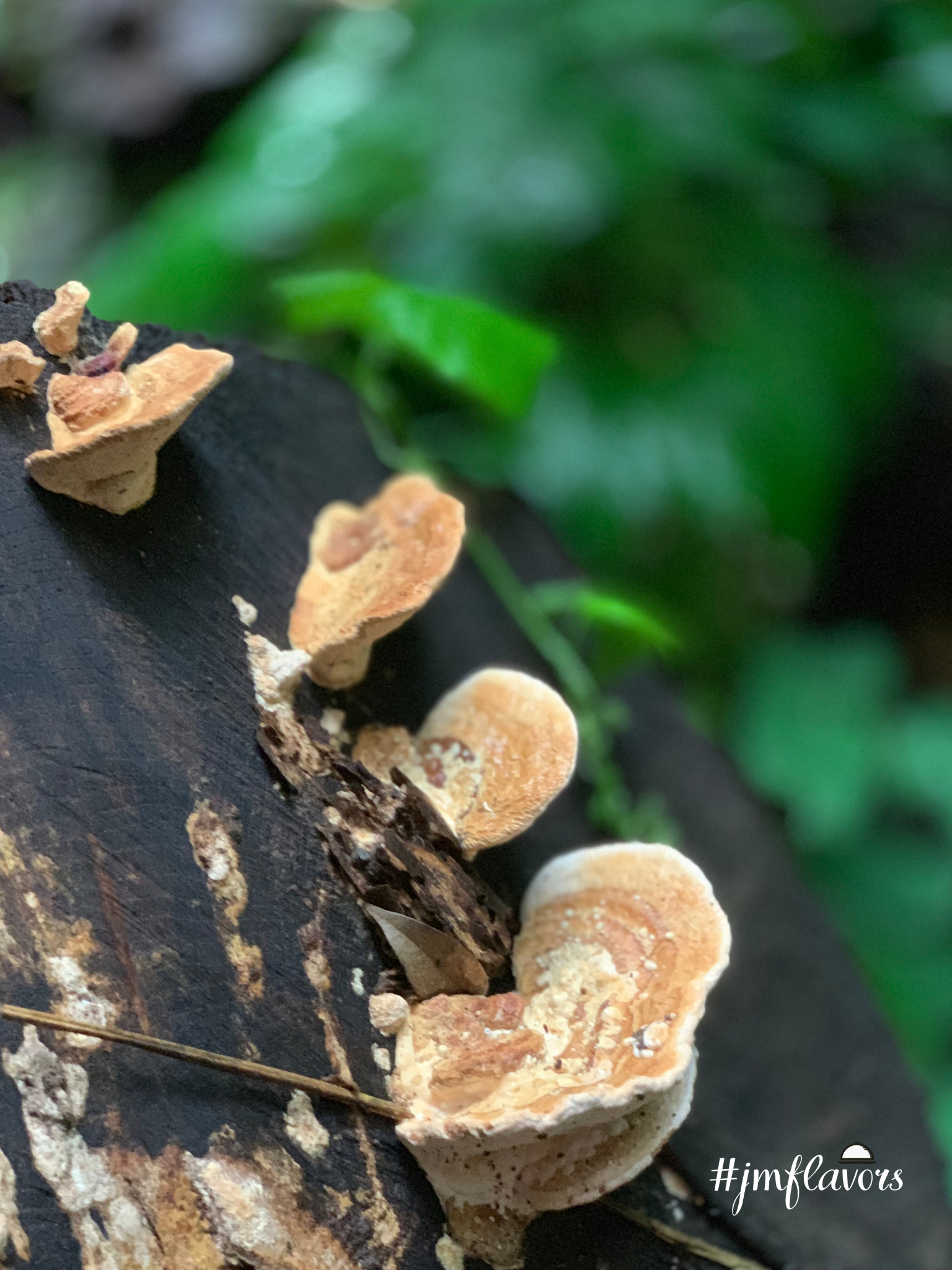
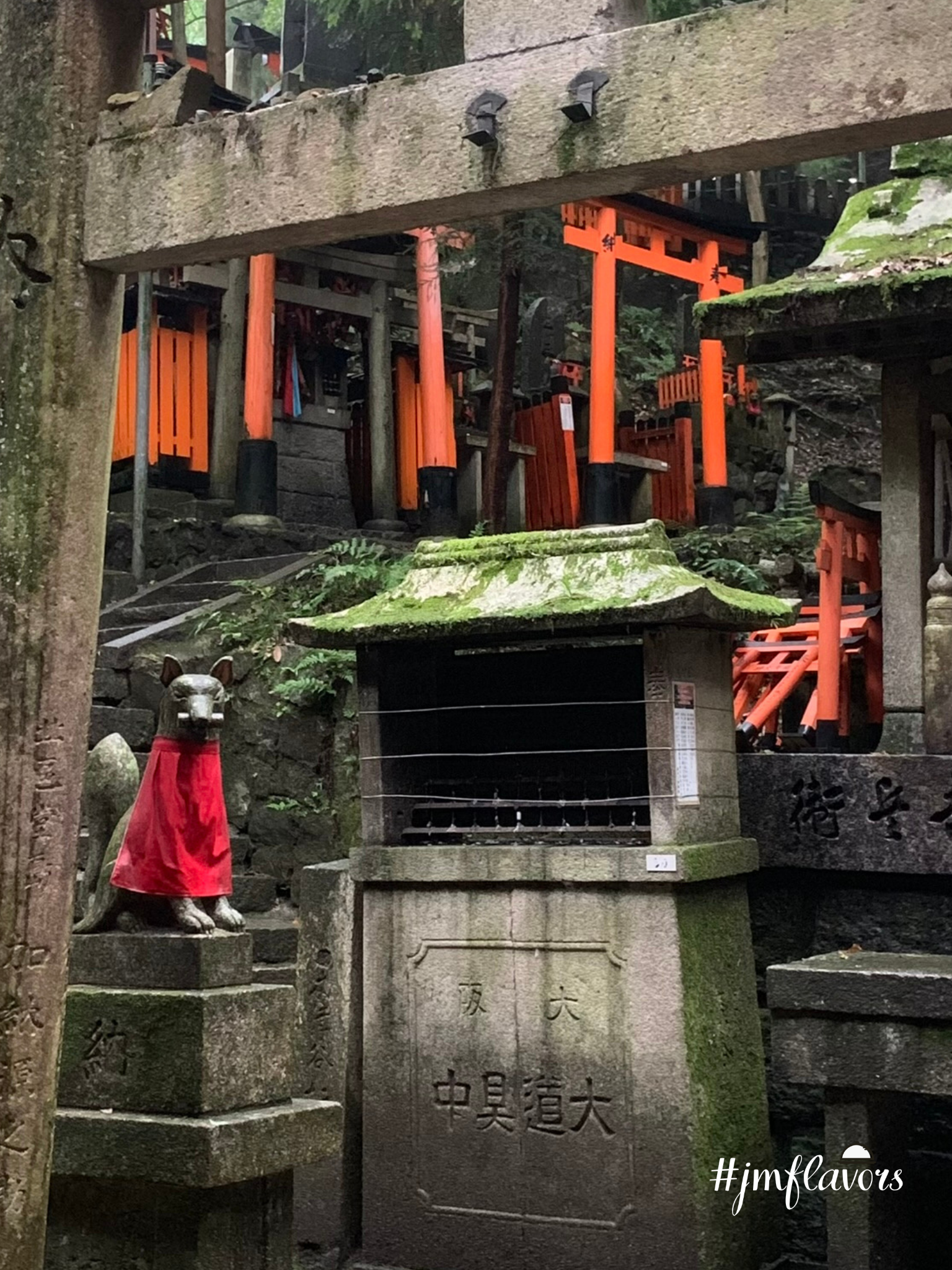
As we walked, I started noticing things I might have missed if I had been rushing from one famous sight to another.
Huge Buddhist bells tucked into temple grounds. Etched rocks on the pathways
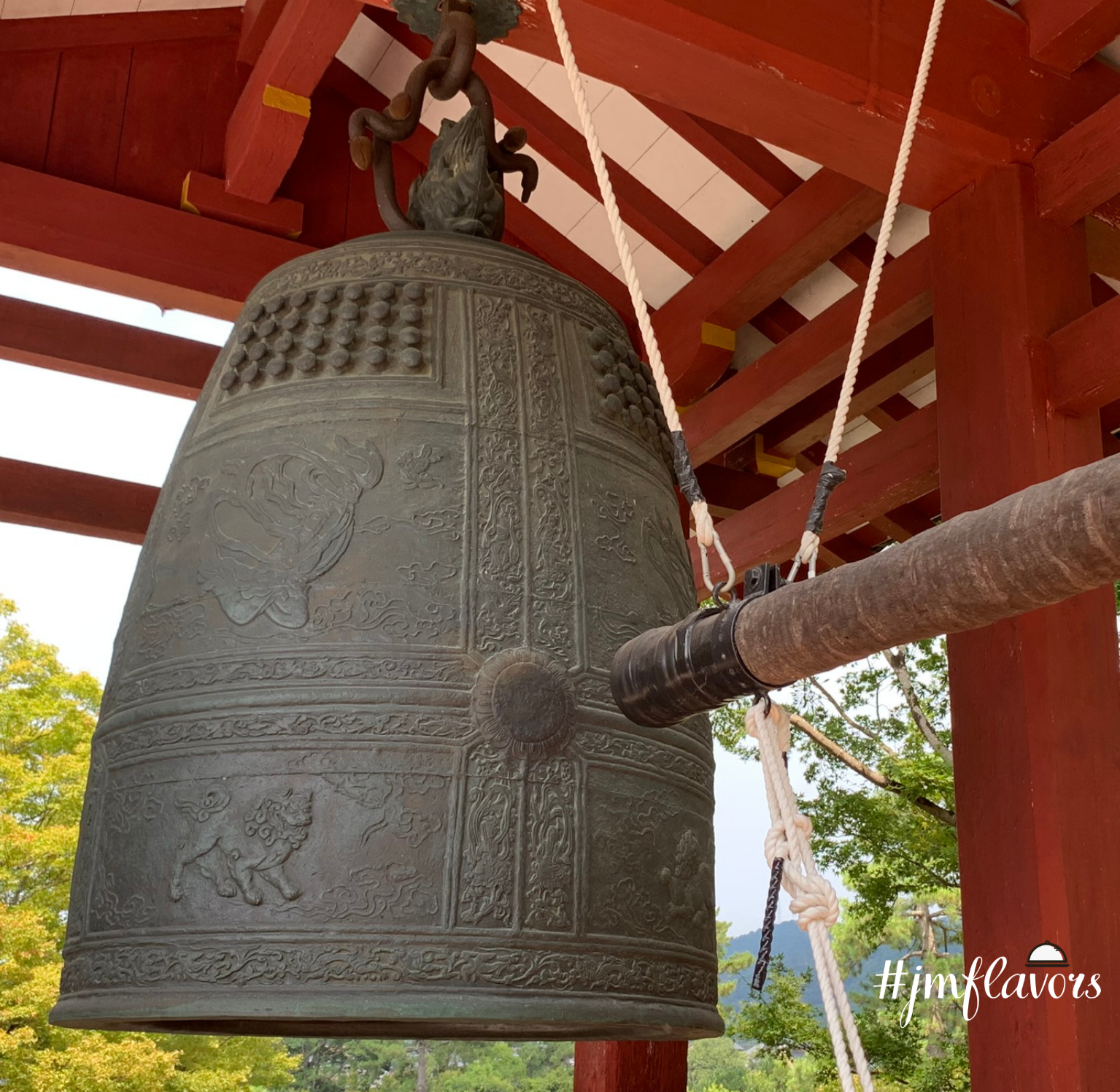
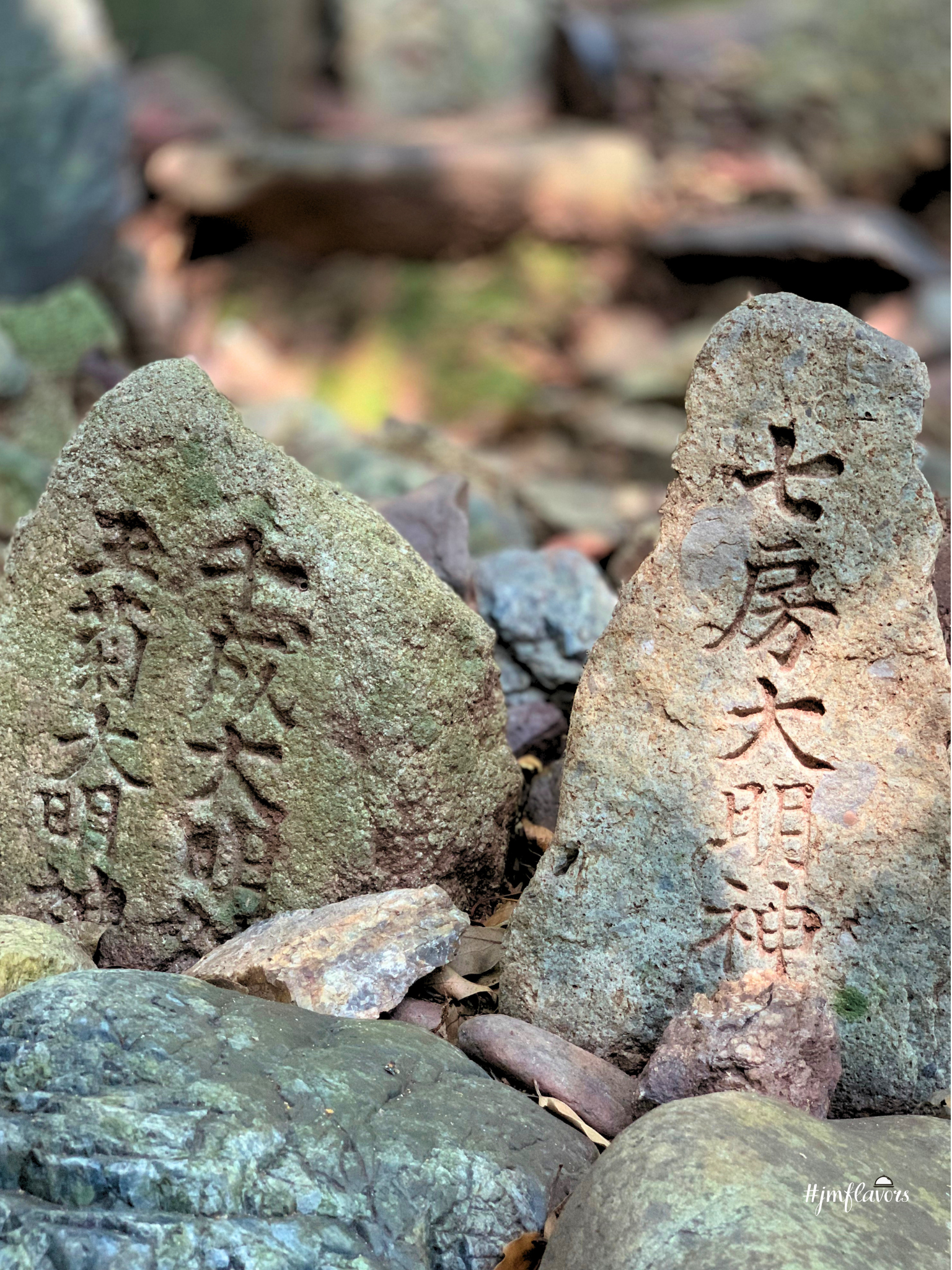
Stone monuments carved with inscriptions.
Moss creeping across statues.
Tiny pathways leading somewhere I hadn’t planned to go.
And suddenly I understood that Kyoto’s history wasn’t sitting behind glass.
It was everywhere.
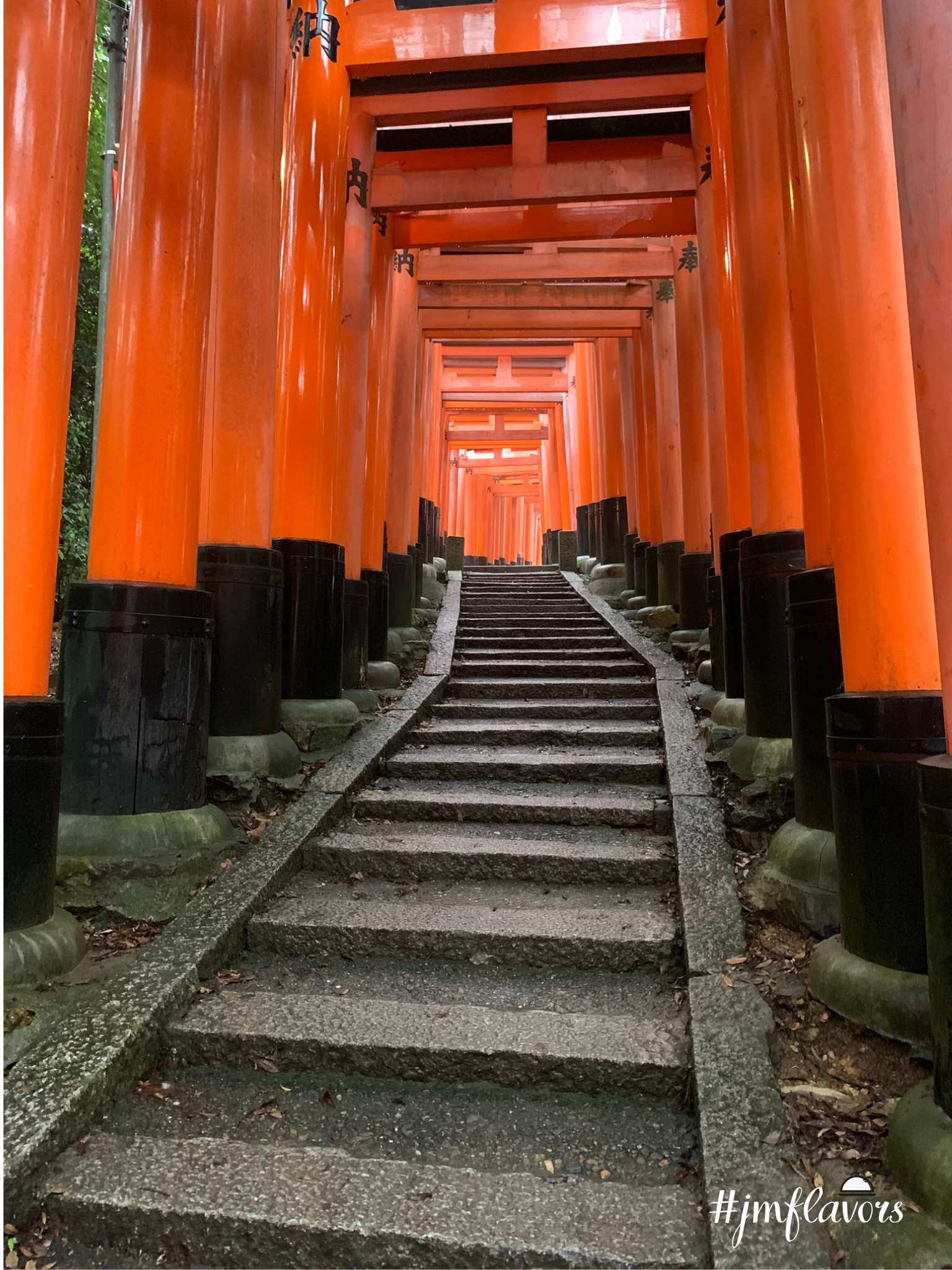
Then came one of the most unforgettable walks of the trip.
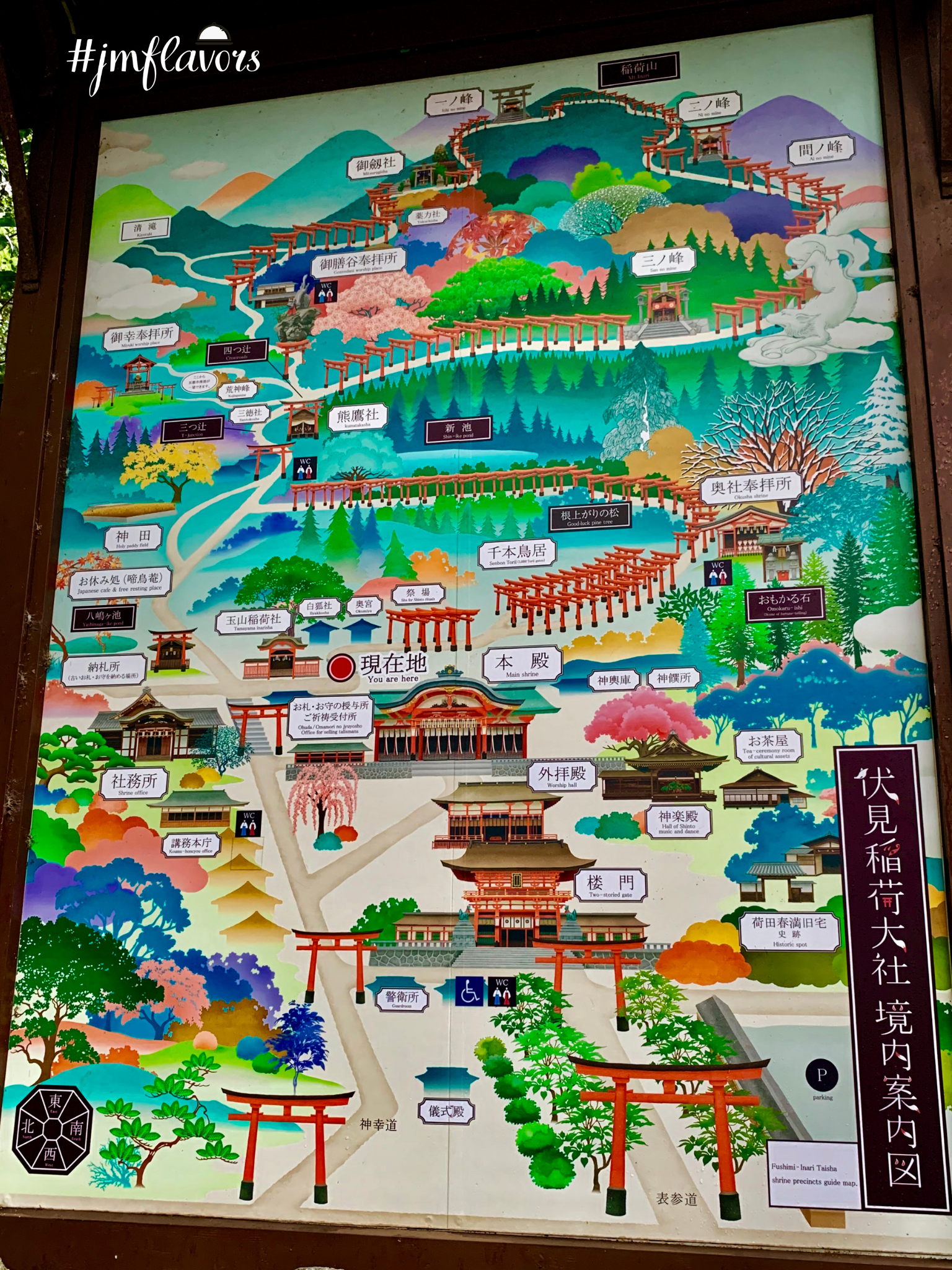
The torii gates at Fushimi Inari.
Thousands of them. Red-orange gates stretching up the mountain, one after another after another, creating a tunnel that seems almost endless.
Fushimi Inari says there are approximately 10,000 large and small torii throughout the mountain, and these gates have been donated by worshippers as offerings representing wishes and gratitude. The vermilion colour has traditionally been associated with protection and life force.
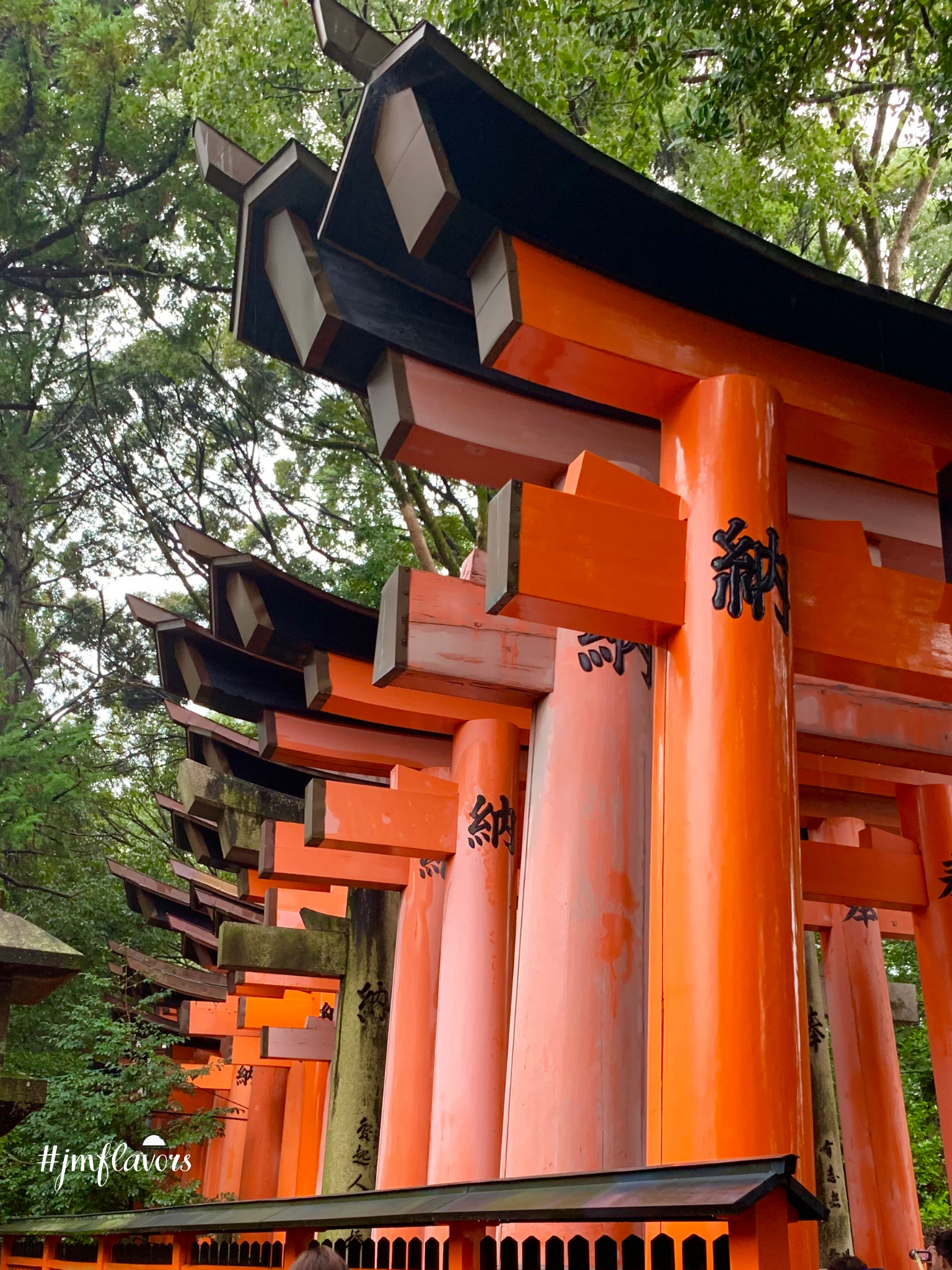
We walked beneath them for about 90 minutes up and down. And yes, it was raining.
So picture this: thousands of brilliant red gates, wet pathways, dripping trees, rain-soaked hair and that strange feeling of being somewhere that doesn’t quite look real. Vanity out, exploring in.
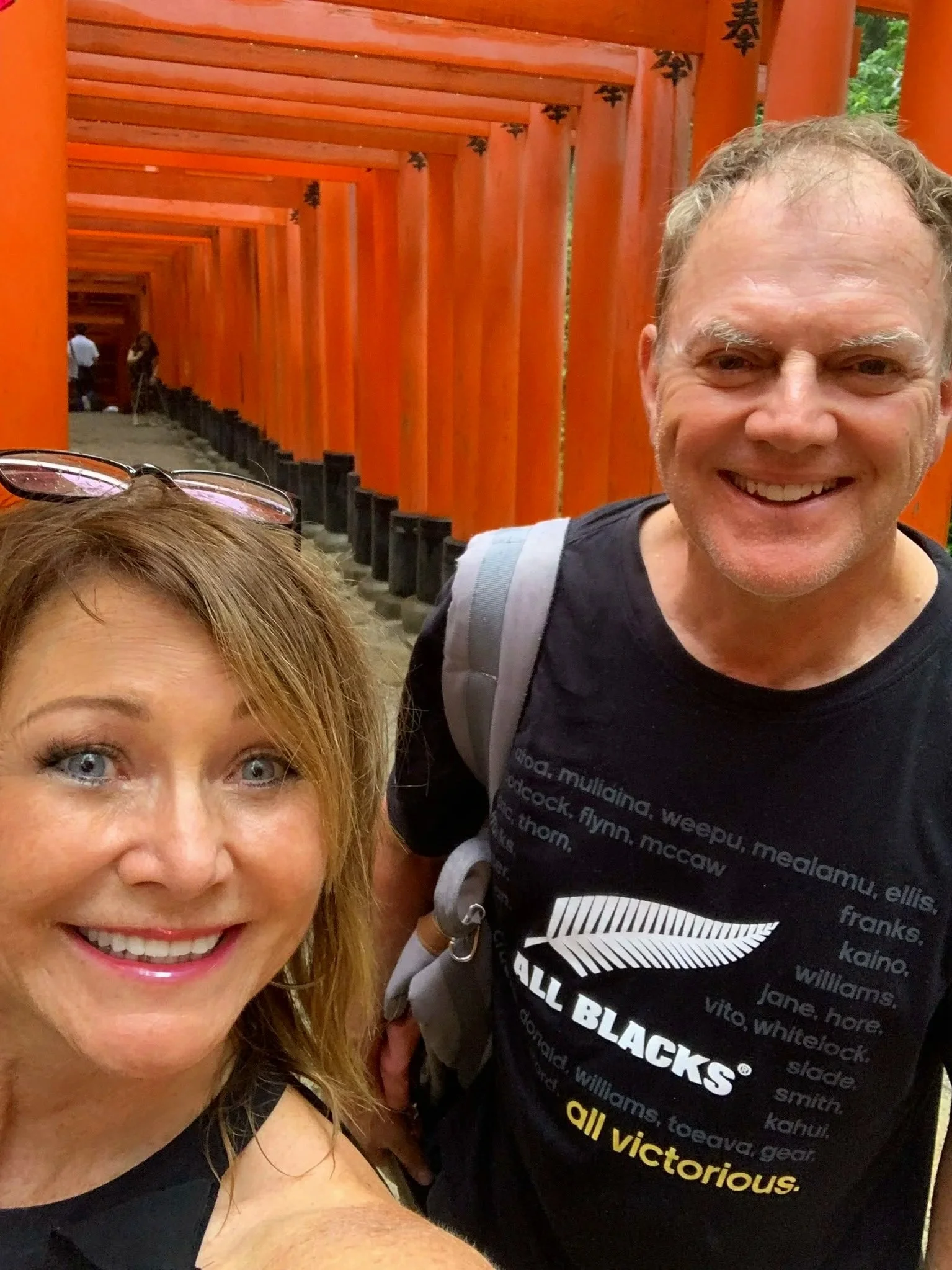
Soaking wet and totally ready for more adventures
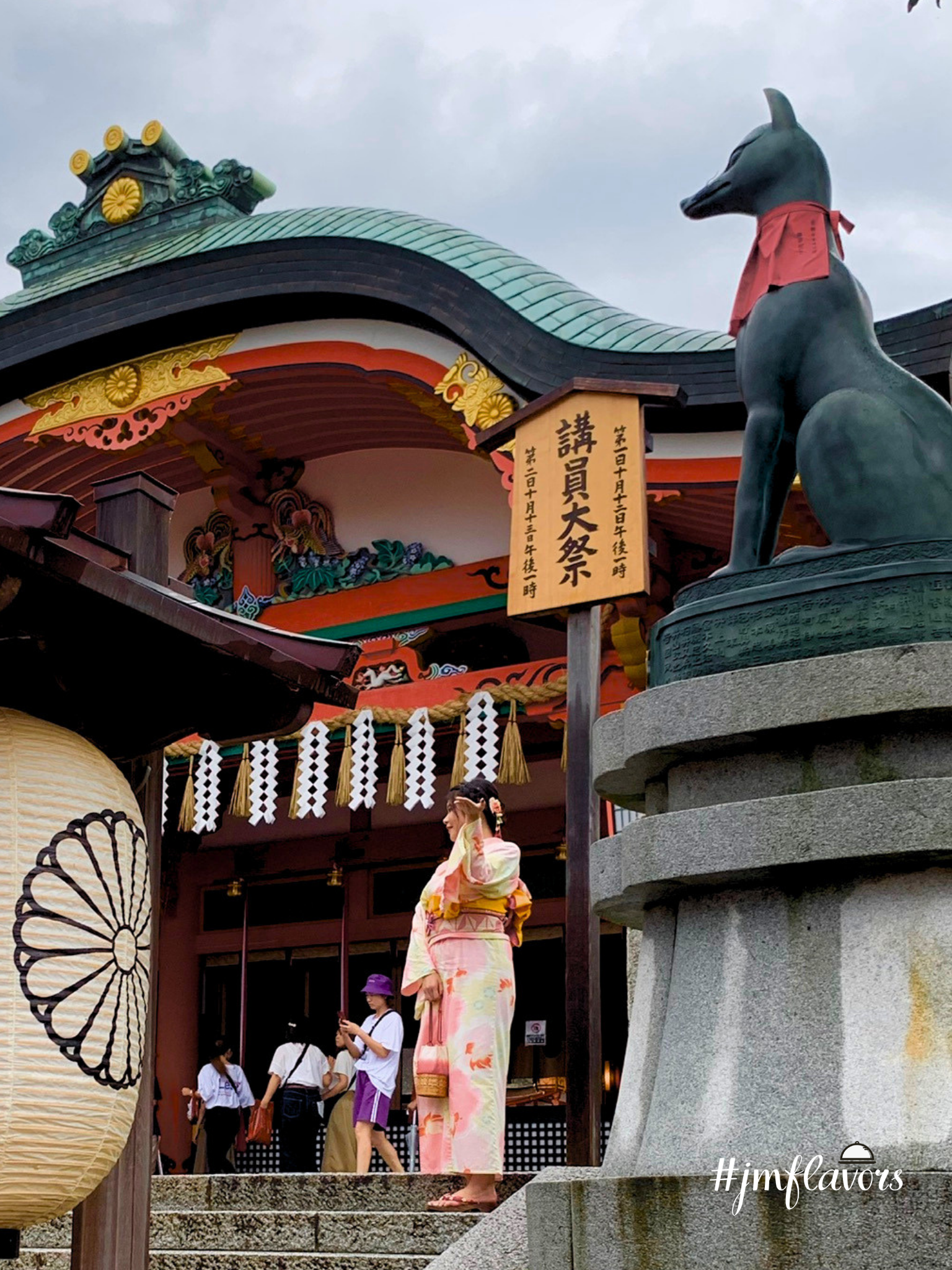
Then I started noticing the foxes, raped with a red scarf. What was this all about?
They were throughout Kyoto. It appears that they are a thing.
At first, I thought some of the statues looked like little dogs. I was wrong. They were kitsune—foxes—and they are believed to be messengers of Inari Okami. Some hold rice, some a key, some a jewel and some a scroll.
Again, I had thought I was simply looking at an interesting statue.
And again, there was a story underneath it.
That became the pattern of Kyoto.
Look closer. There’s always more.
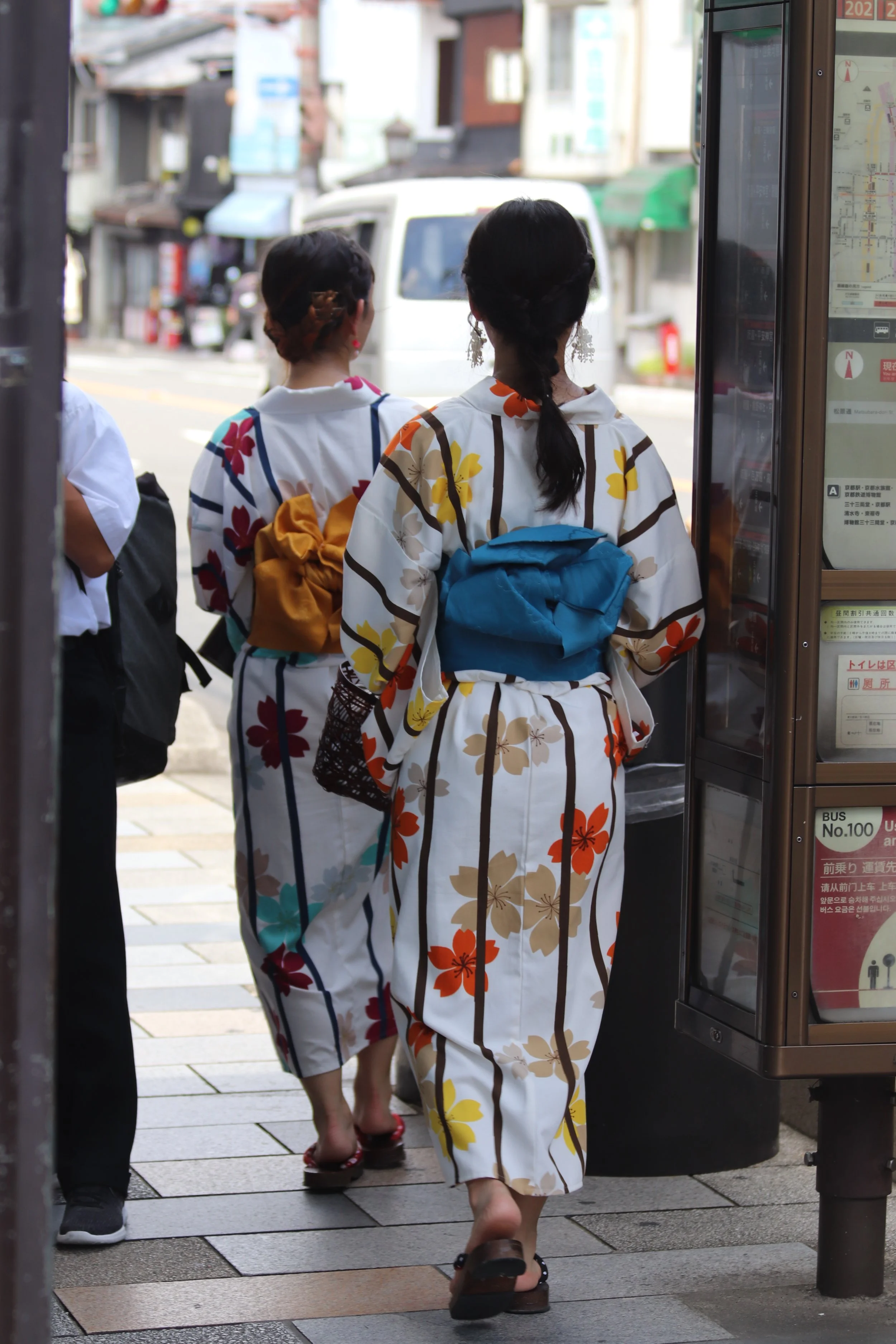
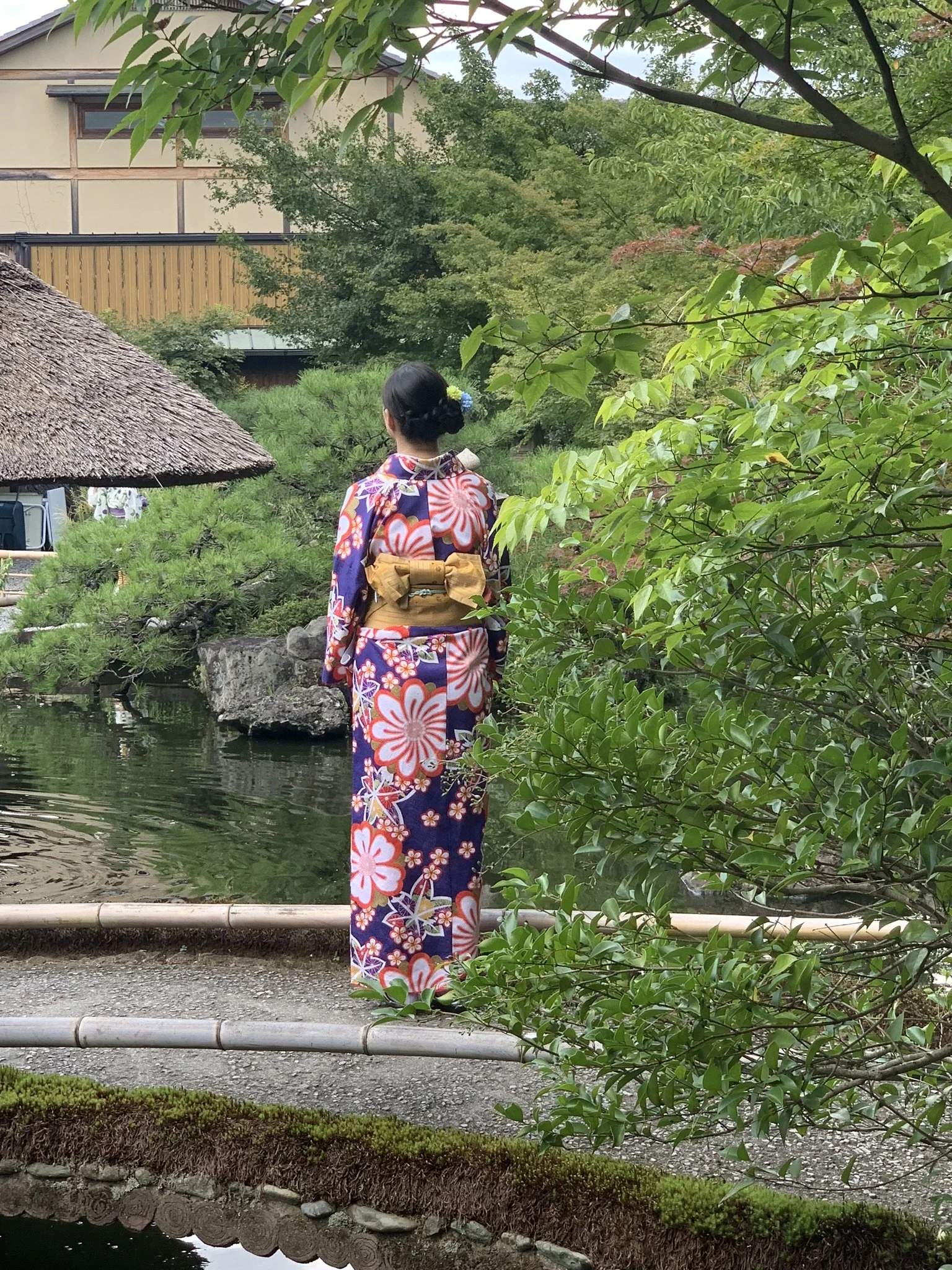
I couldn’t stop watching the women dressed in kimono.
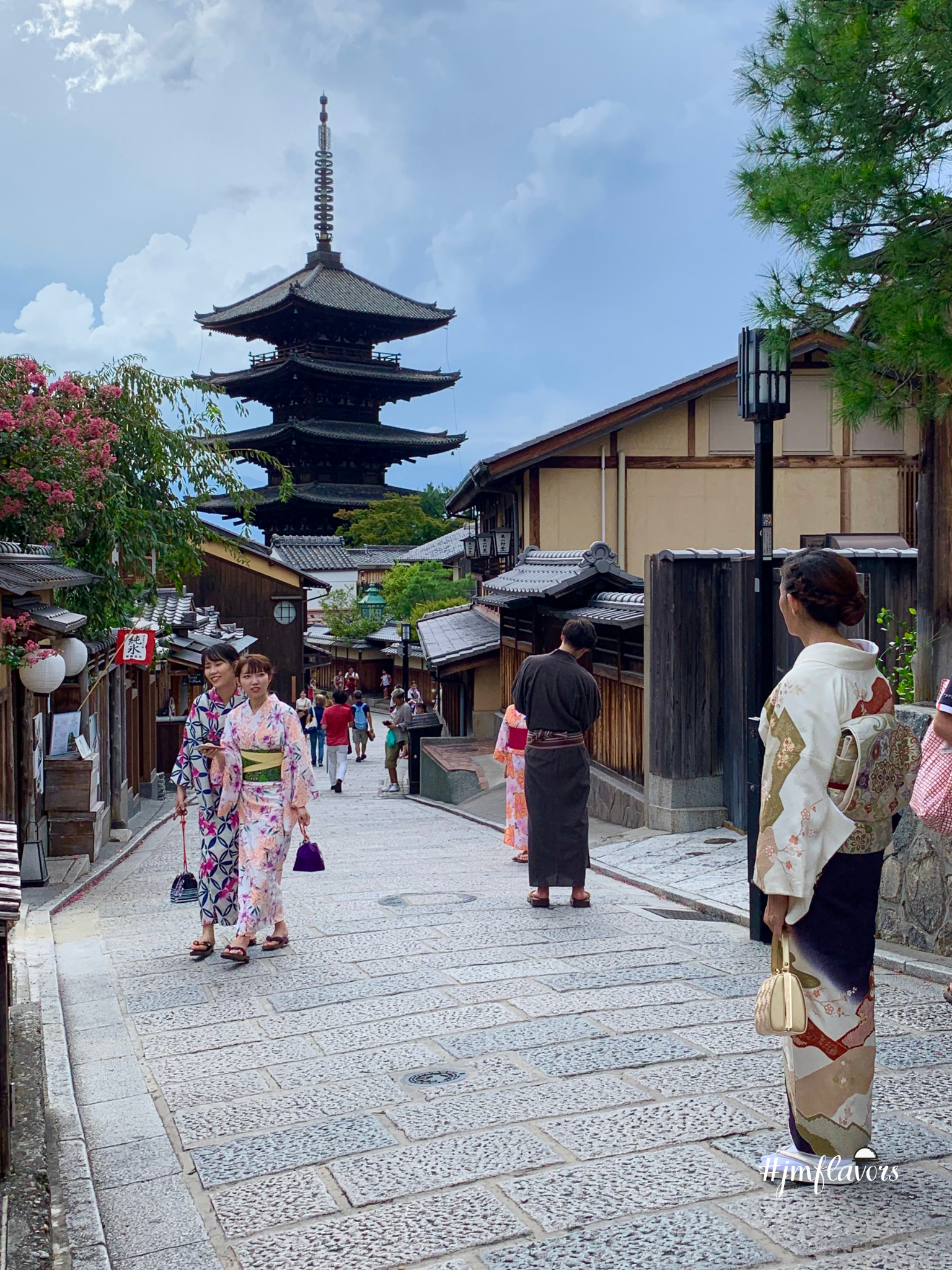
Kyoto has a funny way of making you slow down.
You can walk through a street that looks almost impossibly quiet, turn a corner and suddenly find yourself surrounded by colour, ritual, flowers, food and centuries of tradition. Nothing seems to shout for your attention. Instead, Kyoto whispers — and somehow you find yourself leaning in.
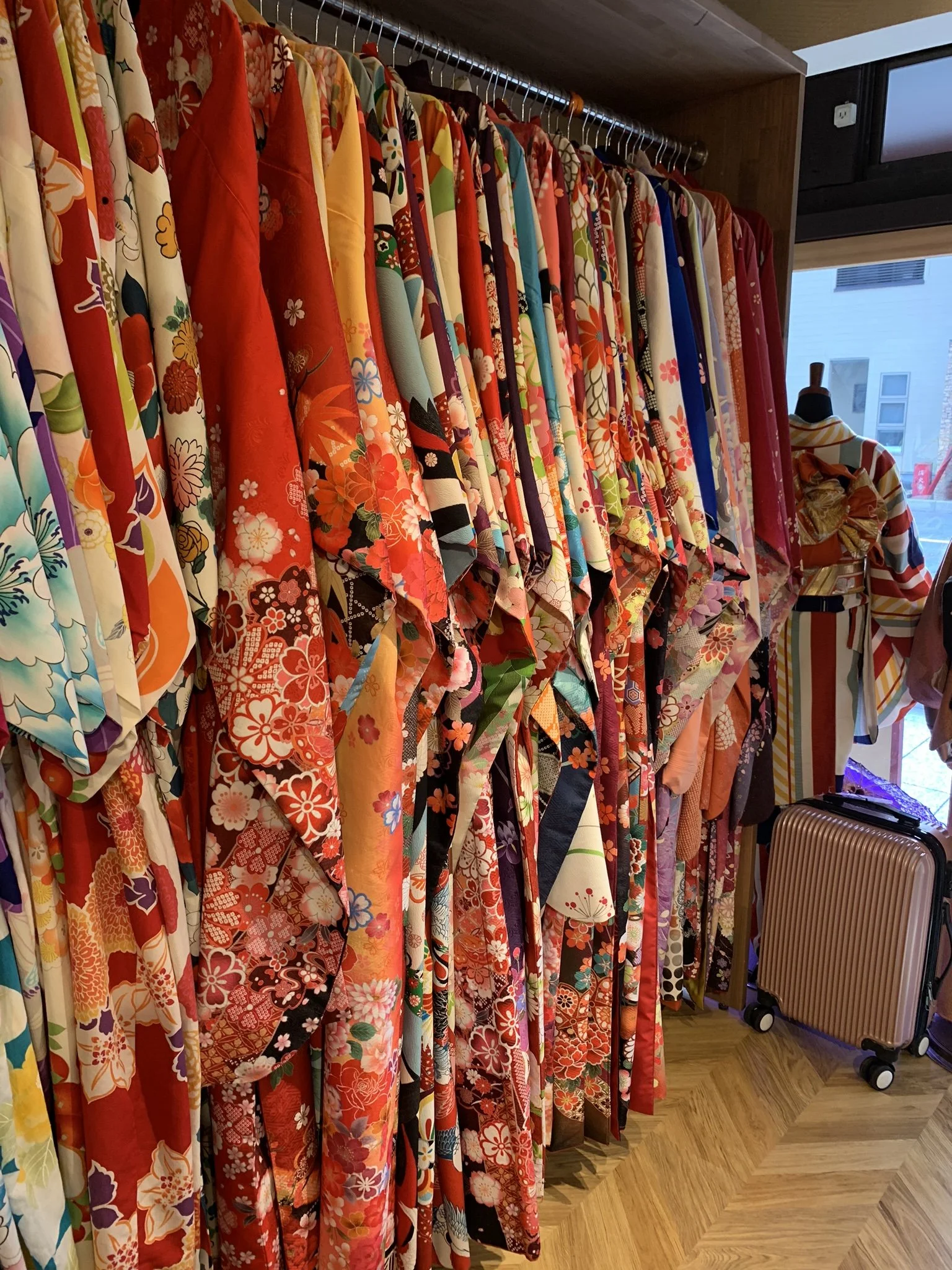
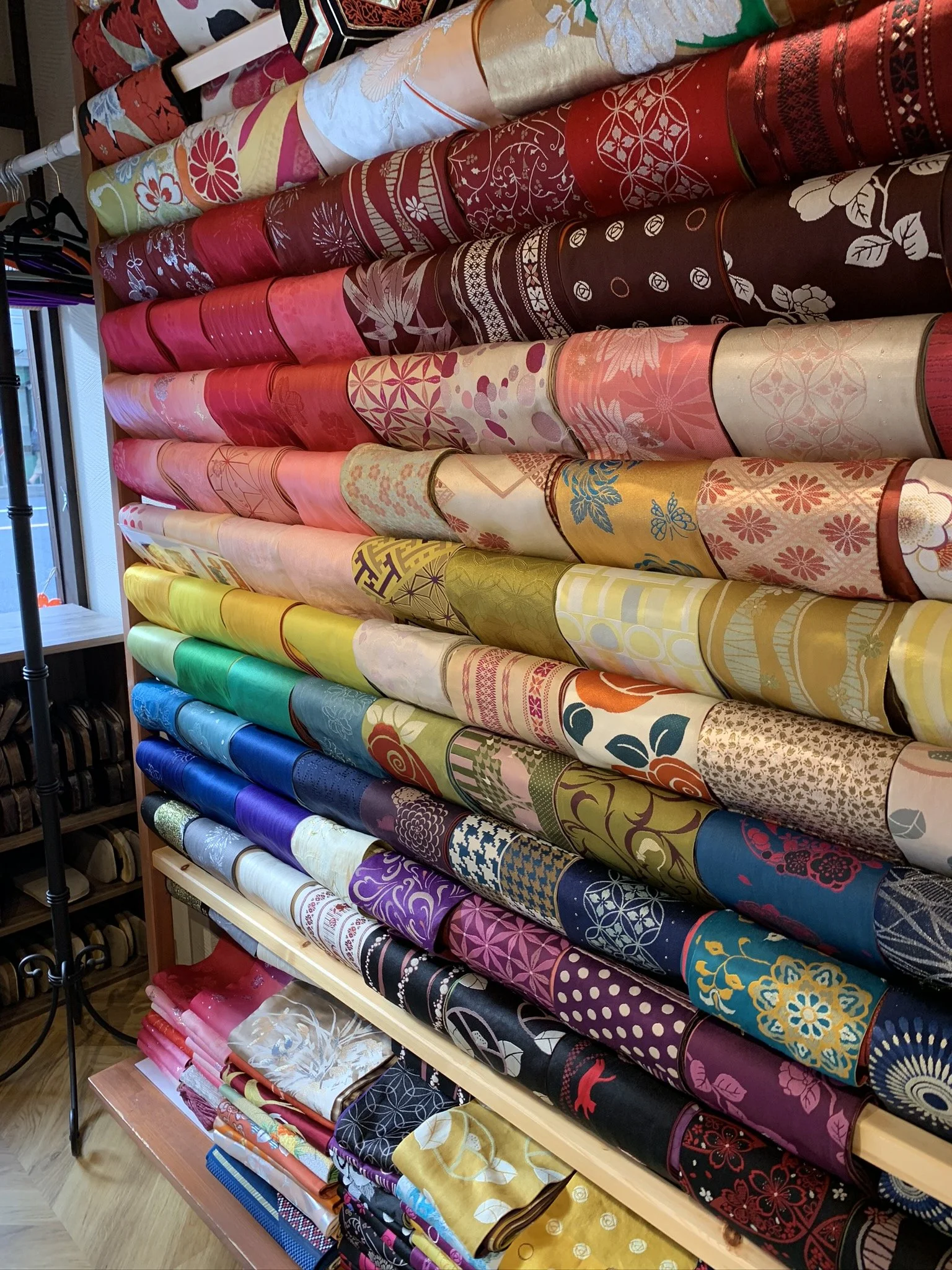
That happened to me more than once.
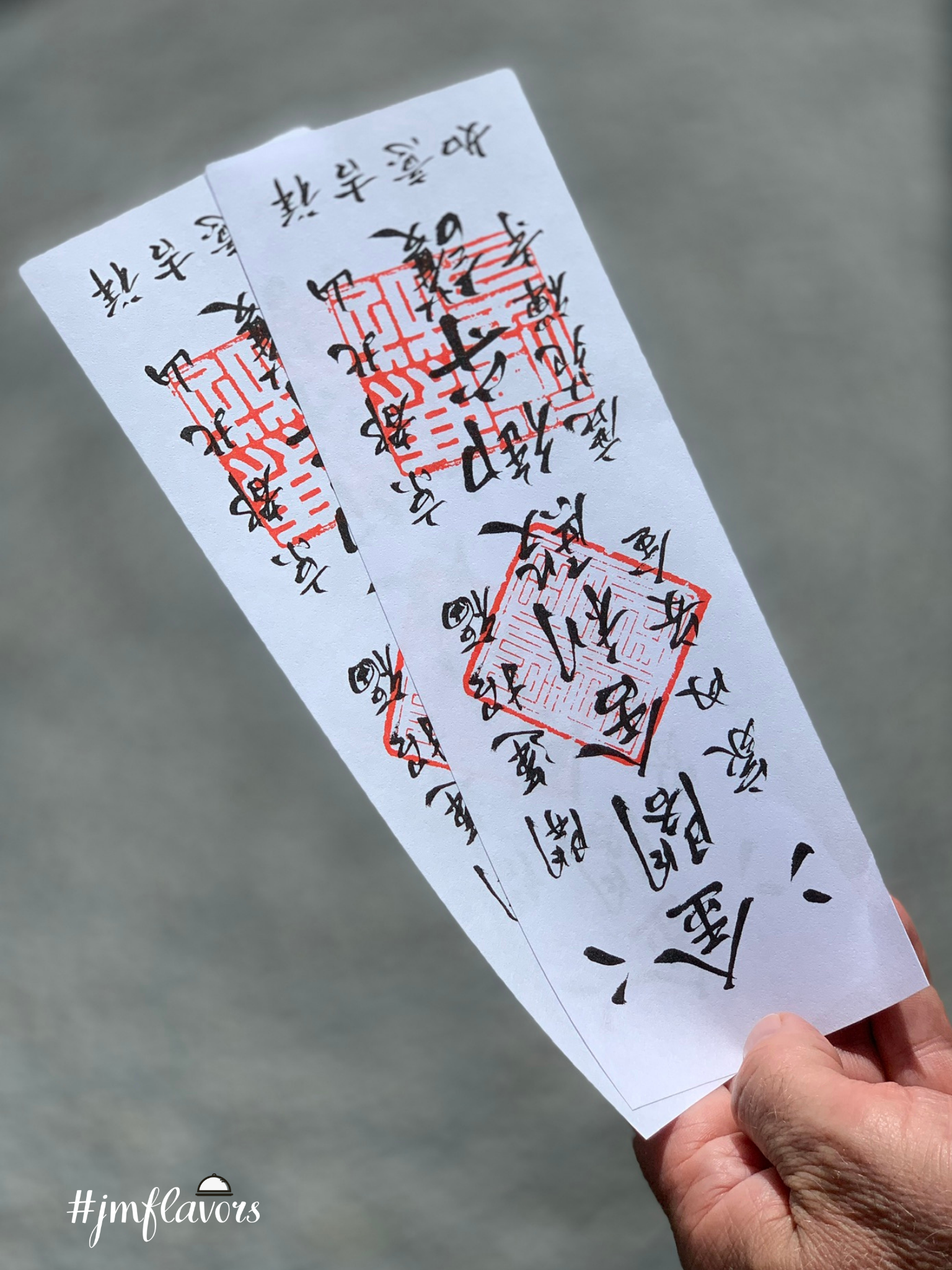
One of the little surprises of Kyoto is discovering how seriously people take their fortunes.
At shrines and temples, you can draw an omikuji — a small written fortune offering guidance about things such as love, health, work, travel and the future. The tradition became popular among ordinary people during the Edo period, although its roots reach much further back.
And then comes the wonderfully practical part.
If your fortune isn't exactly what you were hoping for, you don't necessarily have to take it home.
You can tie it up.
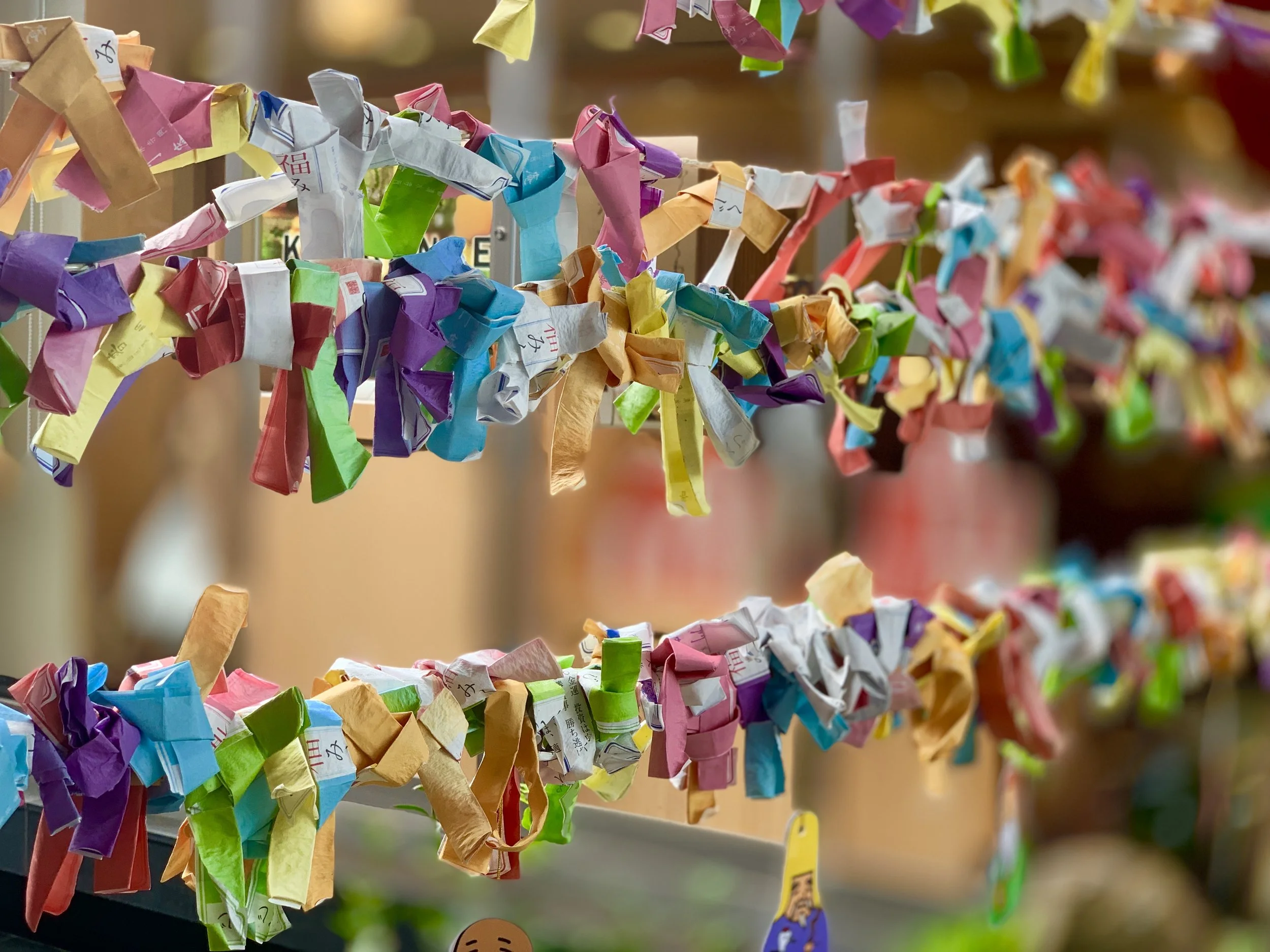
The colourful strips of paper are fortunes tied together at a shrine. Traditionally, an unfavourable fortune may be tied to a designated rack, leaving the bad luck behind rather than carrying it with you. A good fortune, on the other hand, may be kept.
I love this idea.
Imagine drawing a fortune that basically says, Hmm... things could be better.
Instead of worrying about it for the rest of the day, Kyoto gives you an option:
Tie it up. Walk away. Try again.
The shopping area was amazing I fell in love with sesame rice topping called furikake - sesame seeds and Kyoto chili oi
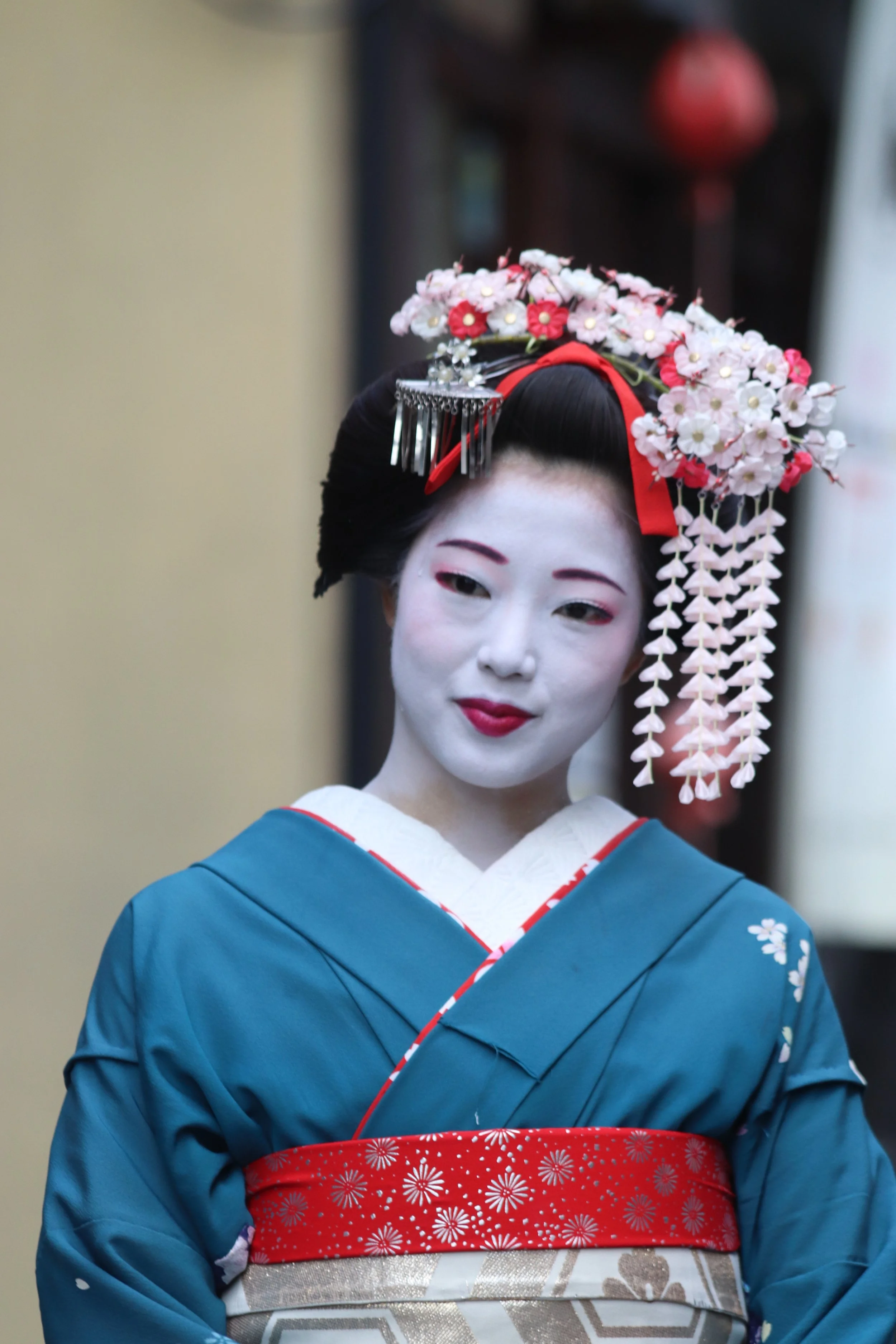
And then I saw her. Sh was being escorted through the street. WOW.
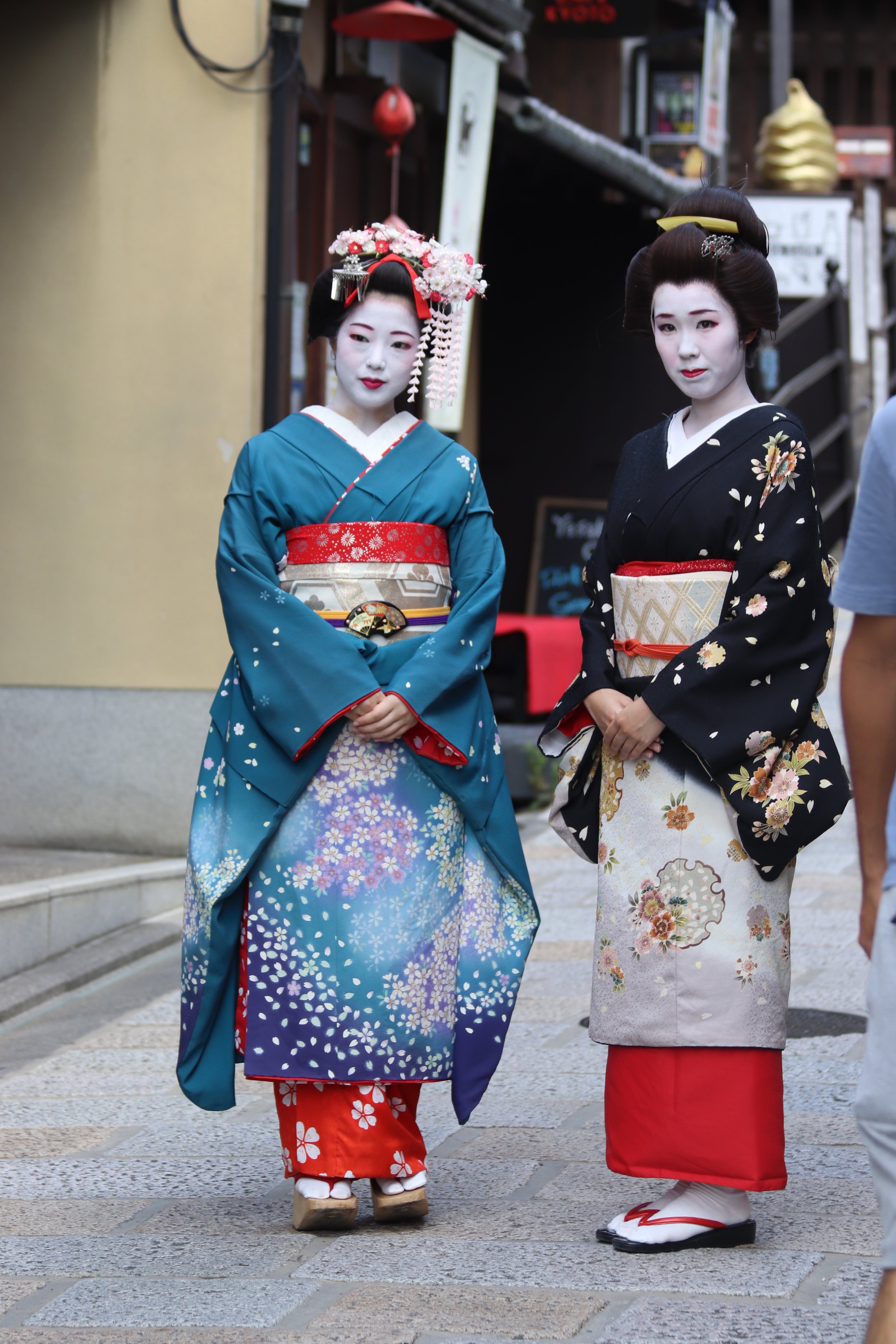
In a sea of visitors, colour and movement, she seemed almost unreal — blue kimono, brilliant red obi, porcelain-white makeup and an elaborate arrangement of flowers and ornaments in her hair.
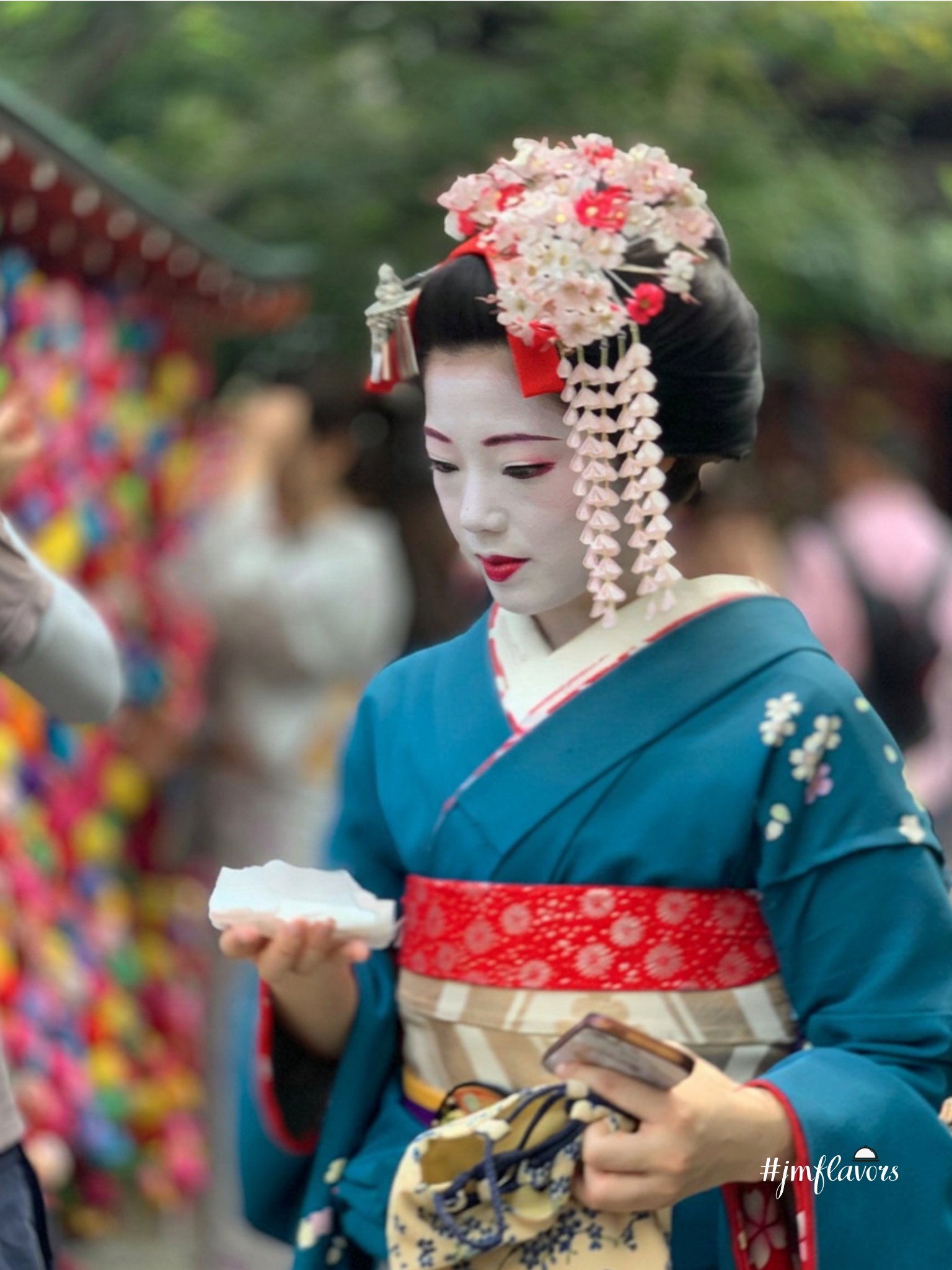
She looked like she had stepped directly out of another century. (Minus the cell phone)
But this is where Kyoto rewards a little curiosity.
What many visitors call a “geisha” may actually be a maiko, an apprentice geiko. In Kyoto, the professional artists are called geiko, while maiko are young women undergoing training in the traditional arts. Their work involves dance, music, conversation and the highly refined hospitality associated with Kyoto's traditional entertainment districts.
Kyoto has five historic kagai, or “flower town” districts, including Gion-kobu, Miyagawa-cho, Ponto-cho, Kamishichiken and Gion-higashi. These are the neighbourhoods where geiko and maiko have traditionally lived and worked.
And here's the part I find fascinating: what looks to a visitor like an elaborate costume is actually part of a working profession.
The kimono, obi, hairstyle, hair ornaments and makeup aren't simply dressing up for tourists. They are part of a carefully preserved performing tradition.
That is also why Kyoto asks visitors to be respectful. Geiko and maiko are not street attractions. The city specifically asks visitors not to stop, follow, touch or photograph them without permission. There are public performances and organized cultural experiences where visitors can see them appropriately.
I think that distinction matters.
The magic of Kyoto isn't just seeing something beautiful.
It's understanding that the beauty belongs to a living culture.
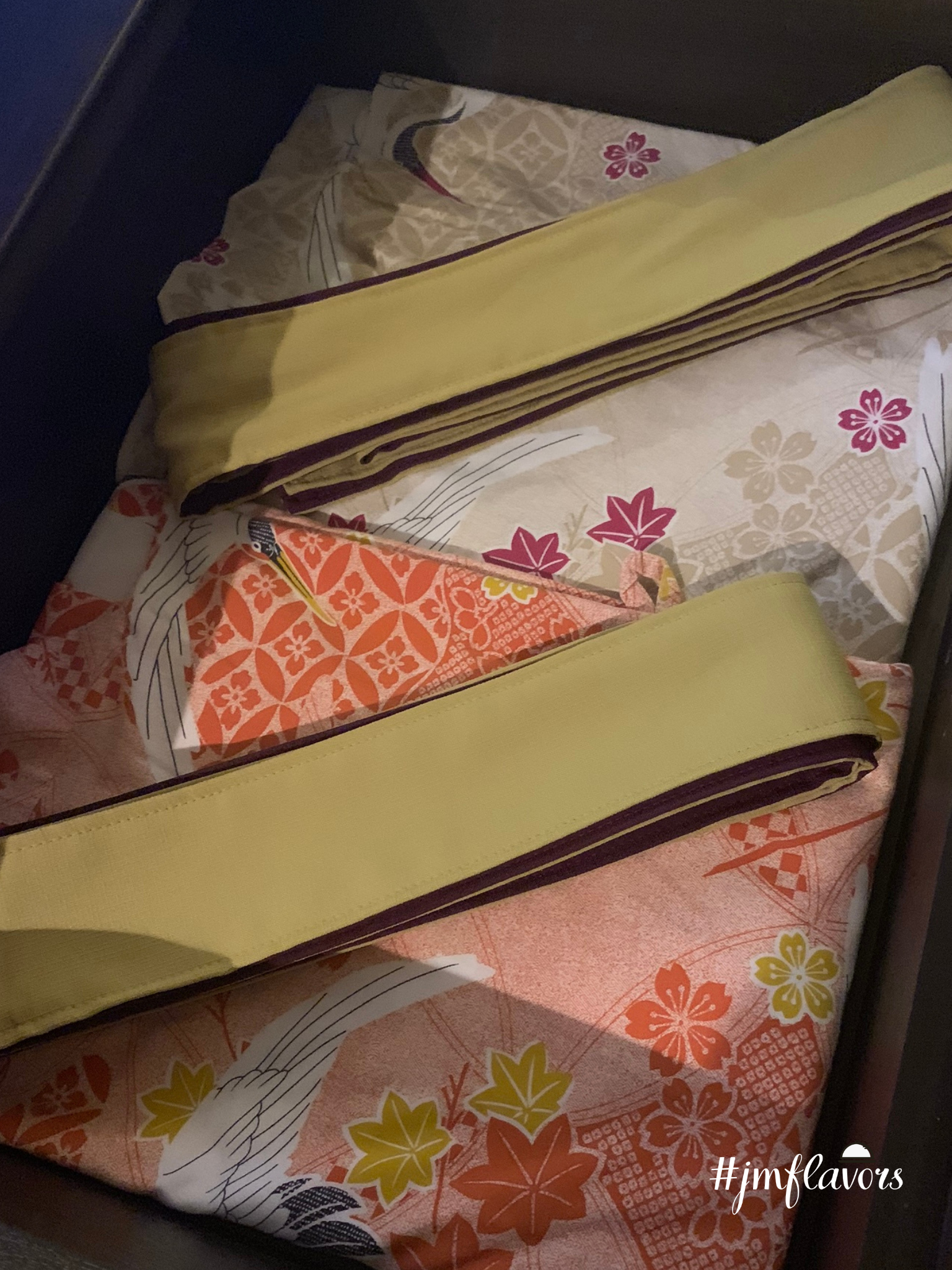
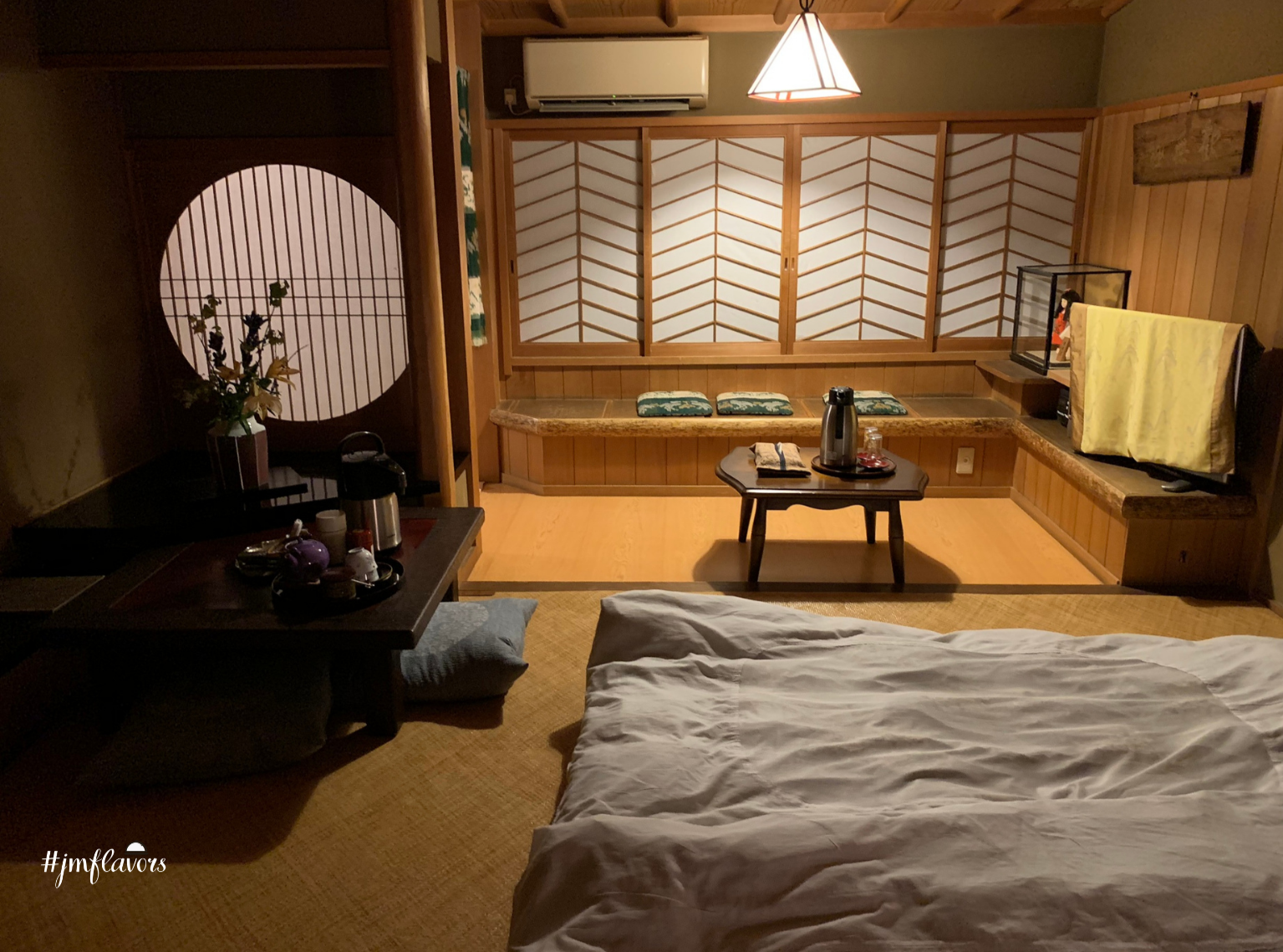
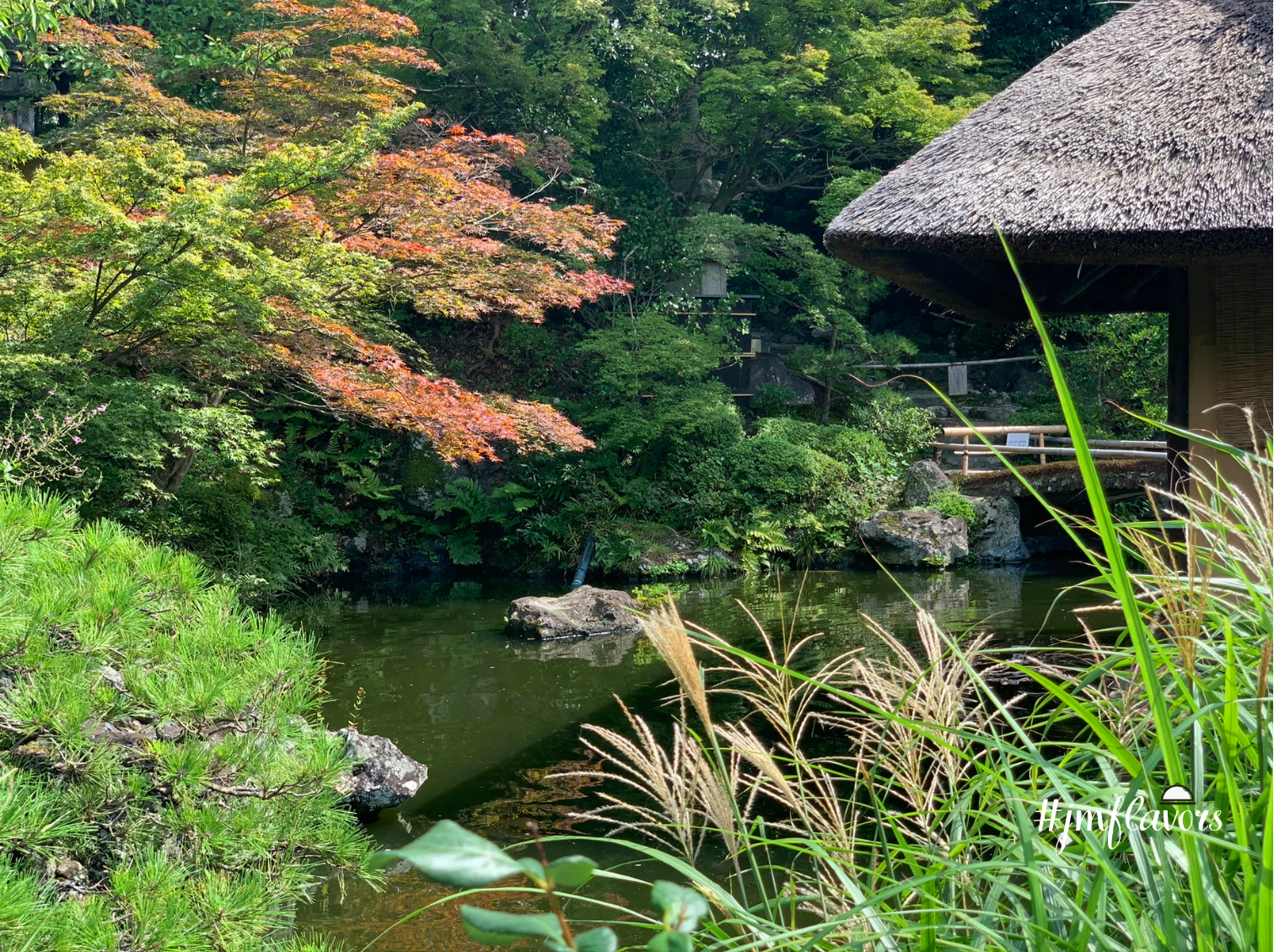
We stayed in a traditional home. - Happy that this futon was thicker. Not traditional but they asked and I said yes please.
And Then There Is Dinner...
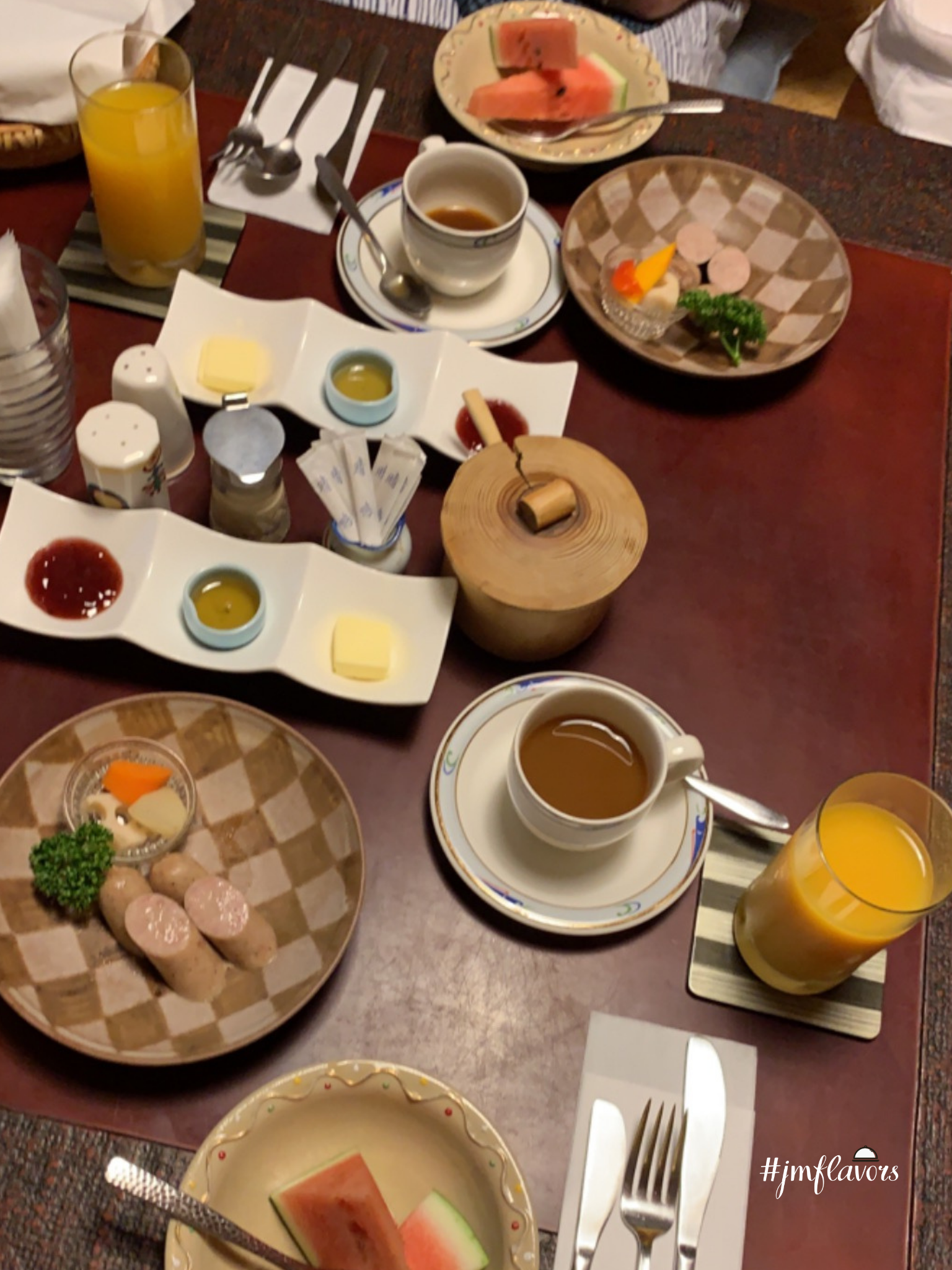
If there is one place where Kyoto's obsession with beauty becomes delicious, it is the dinner table.
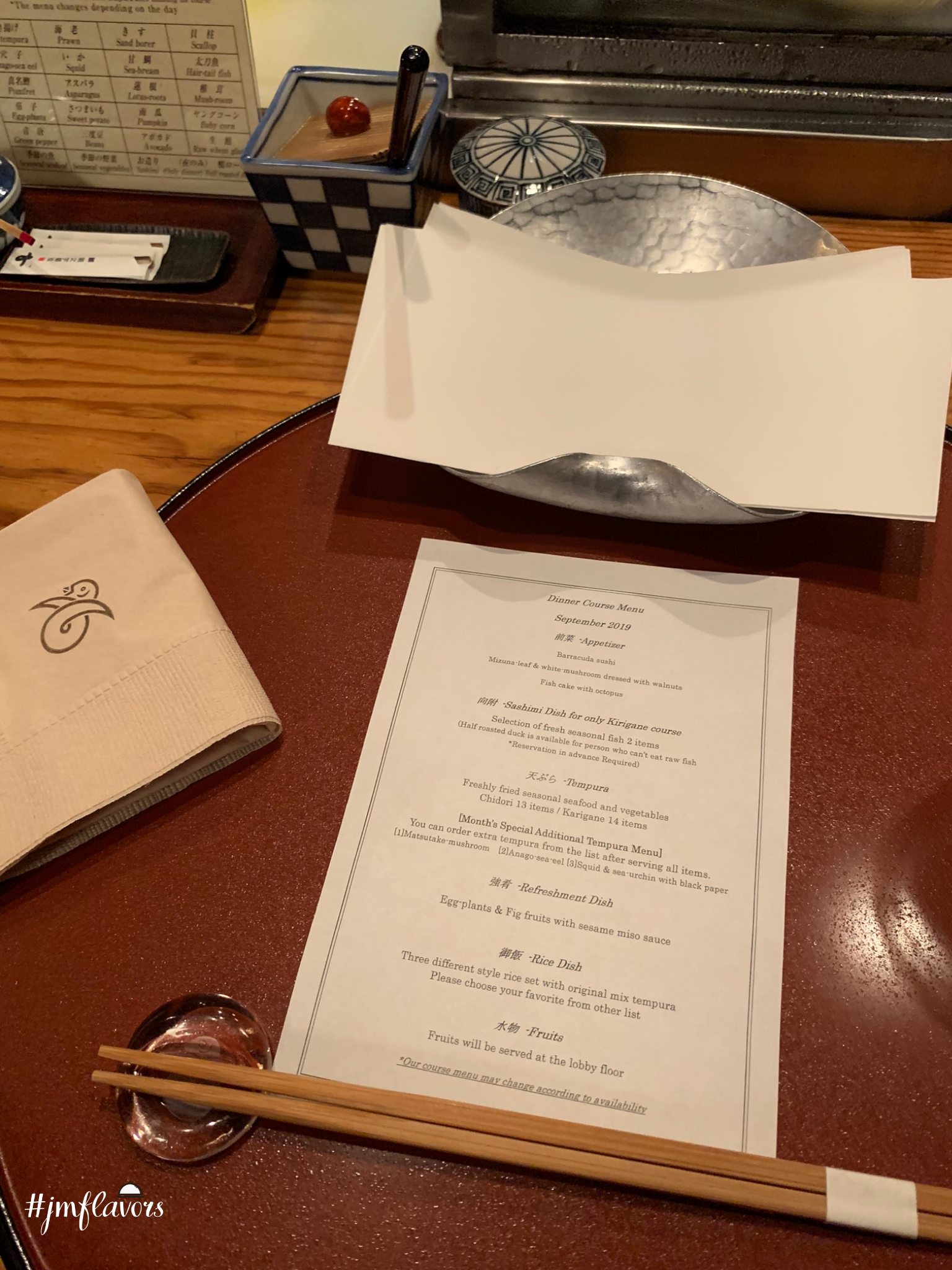
Traditional kaiseki is not simply a meal. It is almost a performance in miniature.
Seasonal ingredients take centre stage, and every course is considered for flavour, texture, colour and presentation. Even the dishes and serving pieces are part of the experience. A leaf or flower might appear beside the food because the season itself is part of the story.
This is very different from the “pile it on the plate and dig in” philosophy of eating.
In Kyoto, dinner can arrive one small course at a time.
You might look at something and wonder:
What on earth is that?
Then taste it.
And suddenly you're paying attention.
That is one of the things I loved about eating in Japan. Food wasn't simply something to get through between sightseeing stops. It was another way of understanding the place.
Kyoto's cuisine grew from more than a thousand years as Japan's imperial capital, with influences from the imperial court, Buddhism, tea culture and the seasons. Its traditional food culture includes kaiseki, Buddhist vegetarian shojin ryori and everyday obanzai cooking.
The fortune tied to a shrine.
The maiko carefully carrying centuries of tradition into the present.
The meal where a single seasonal ingredient can become the star of the plate.
Kyoto doesn't seem particularly interested in rushing.
It asks you to notice.
Notice the colour.
Notice the craftsmanship.
Notice the little piece of paper you're about to tie up and leave behind.
Kyoto is THE destination for FASHION of yesteryear.
Some women were so beautifully dressed that they seemed to have stepped directly out of another century.
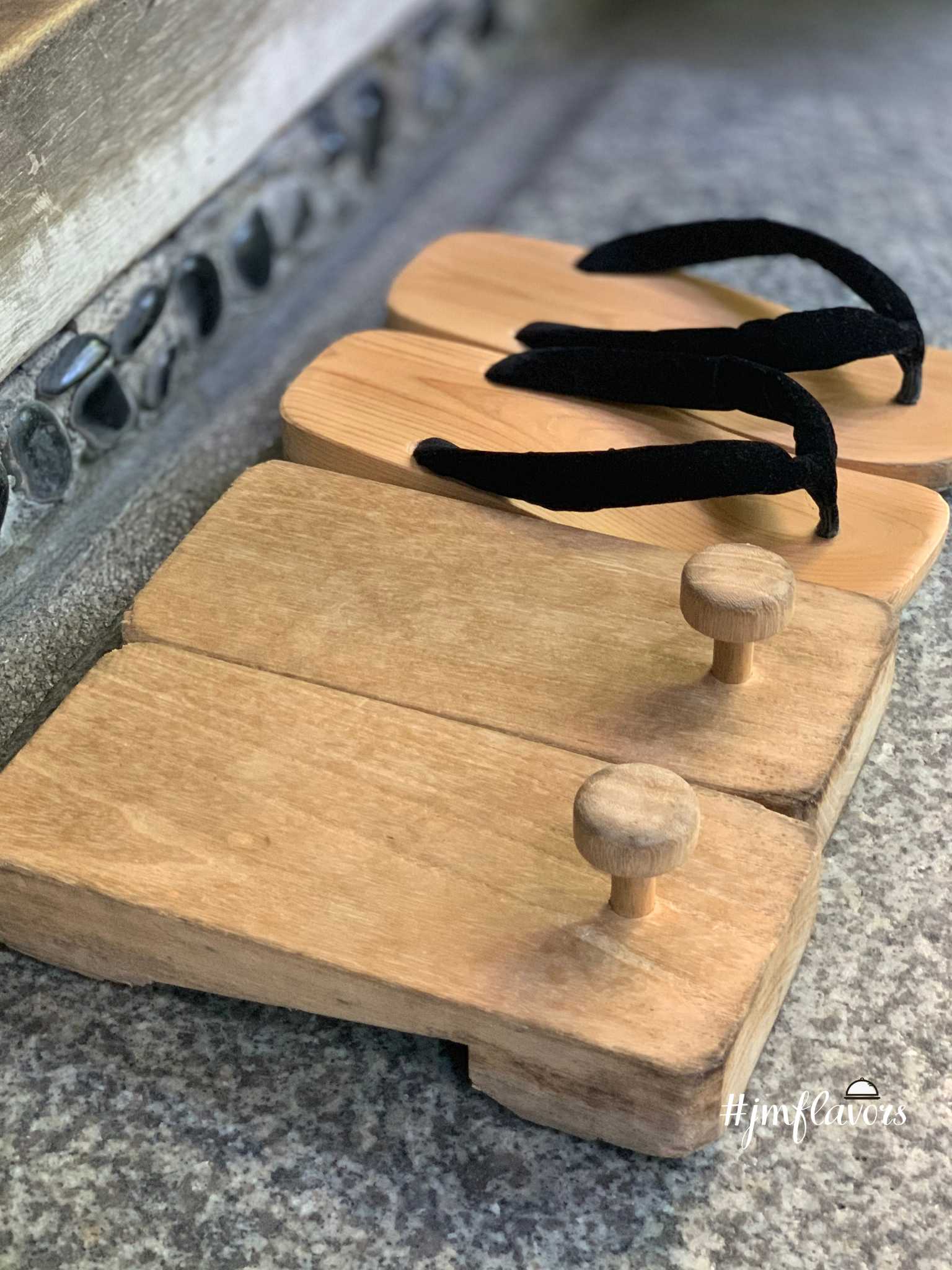
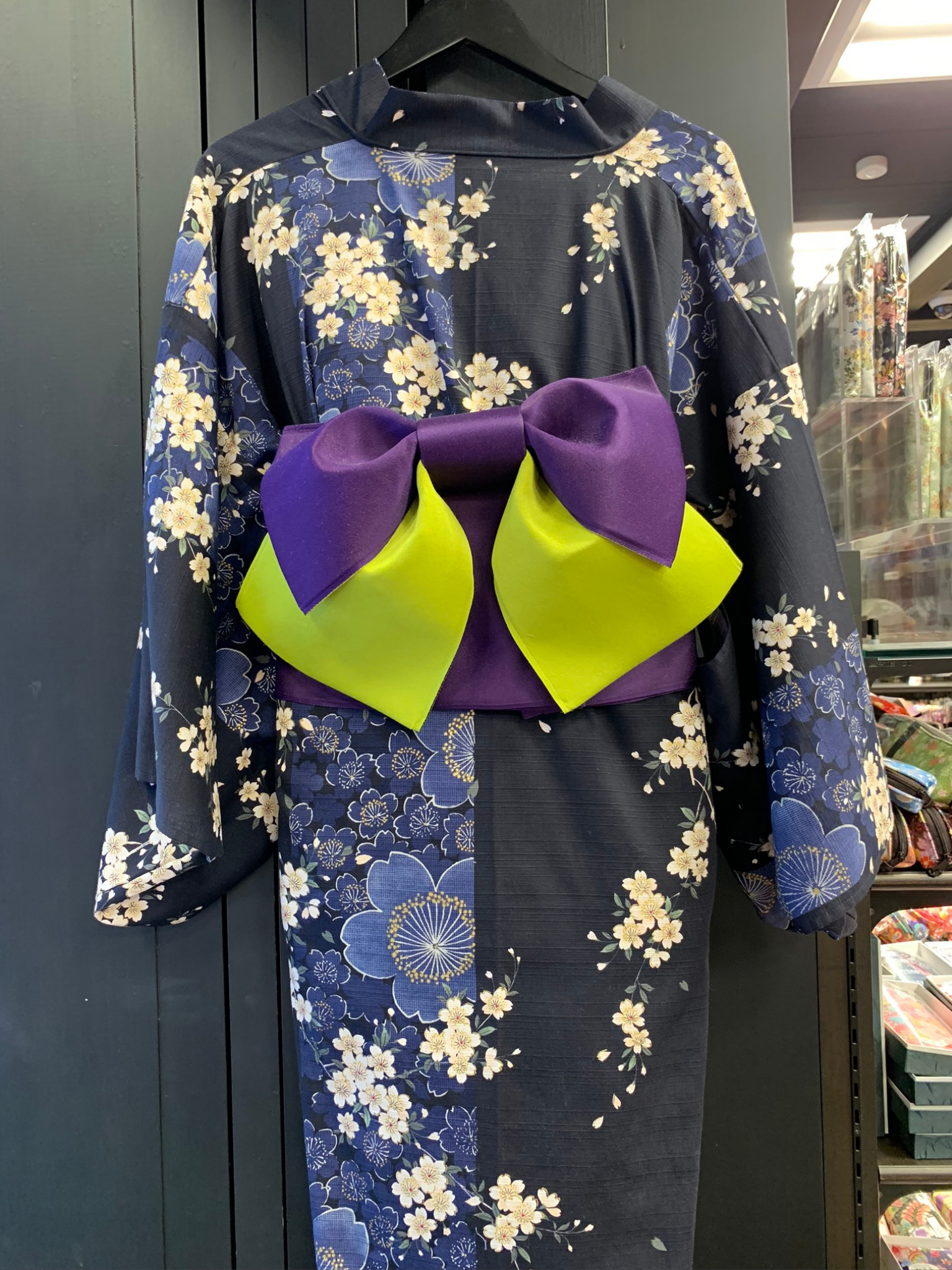
The kimono. The elaborate obi. The hair ornaments. The makeup. The shoes.
And the photographers carefully positioning them for the perfect photograph.
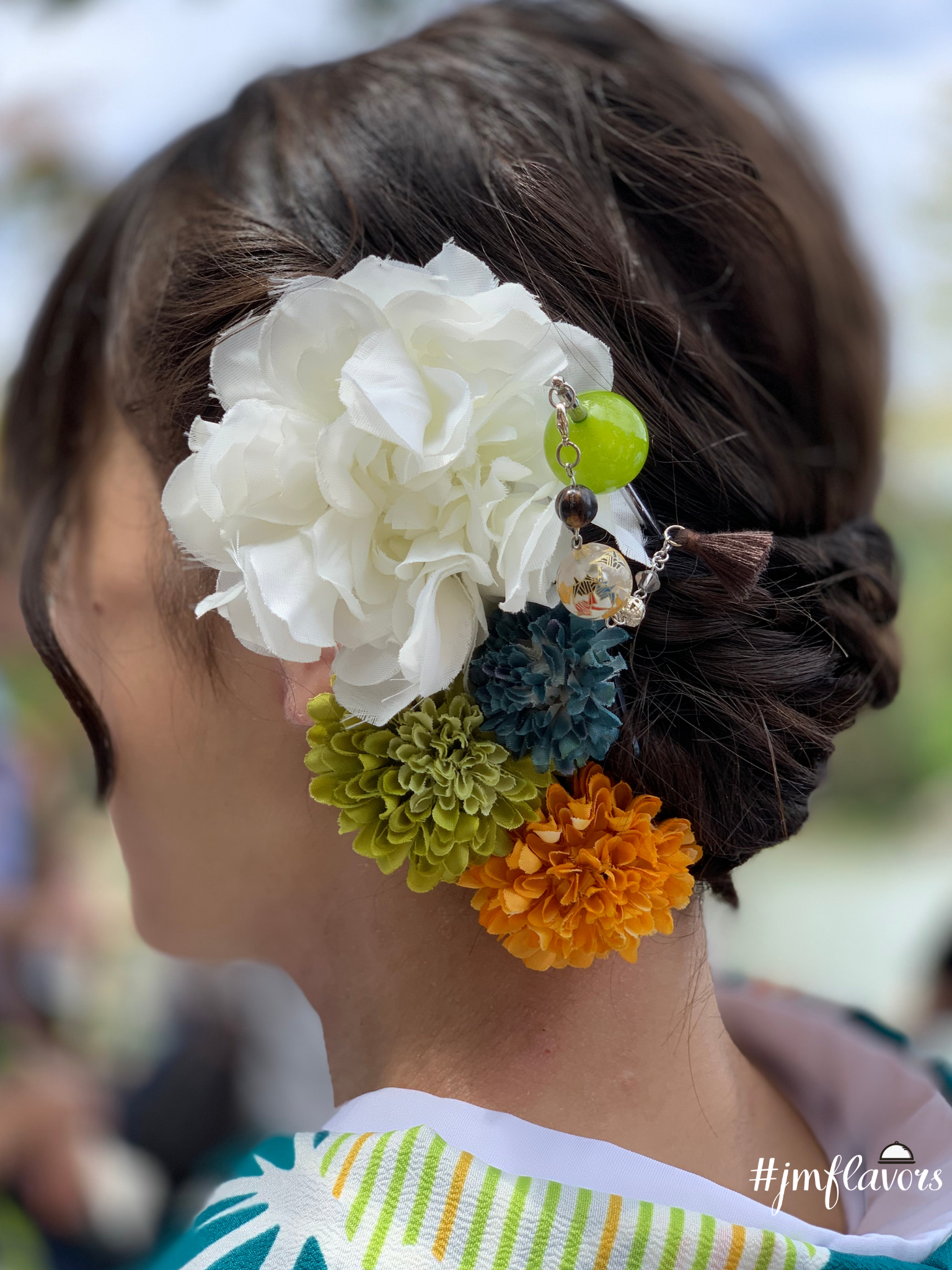
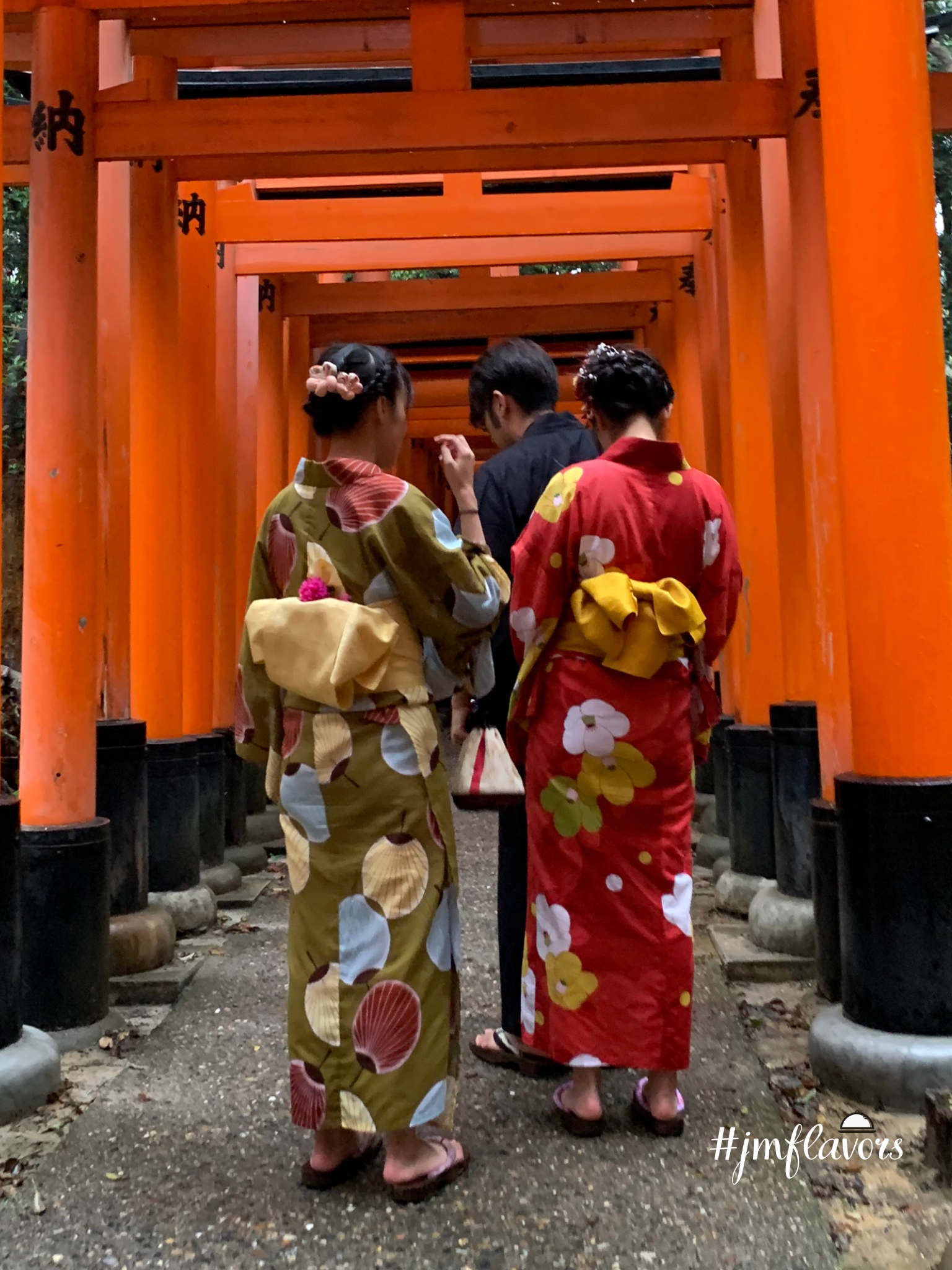
It is commercialized, certainly.
People pay for the experience. The shops have displays of their packages and people line up.
But I found myself falling in love with it rather than dismissing it. Because these women weren’t simply buying a costume.
For a few hours, they were choosing to participate in something deeply Japanese.
They were dressing up. They were having their hair done. They were creating a memory. And I began to understand why.
The craftsmanship was extraordinary.
I could not leave without buying a kimono and a hair piece. I wear it as my house coat. Memories flood back each time I wear it.
The textile workshop changed the way I looked at everything I had seen.
Before that, I had admired the finished product.
Now I was seeing how it was made.
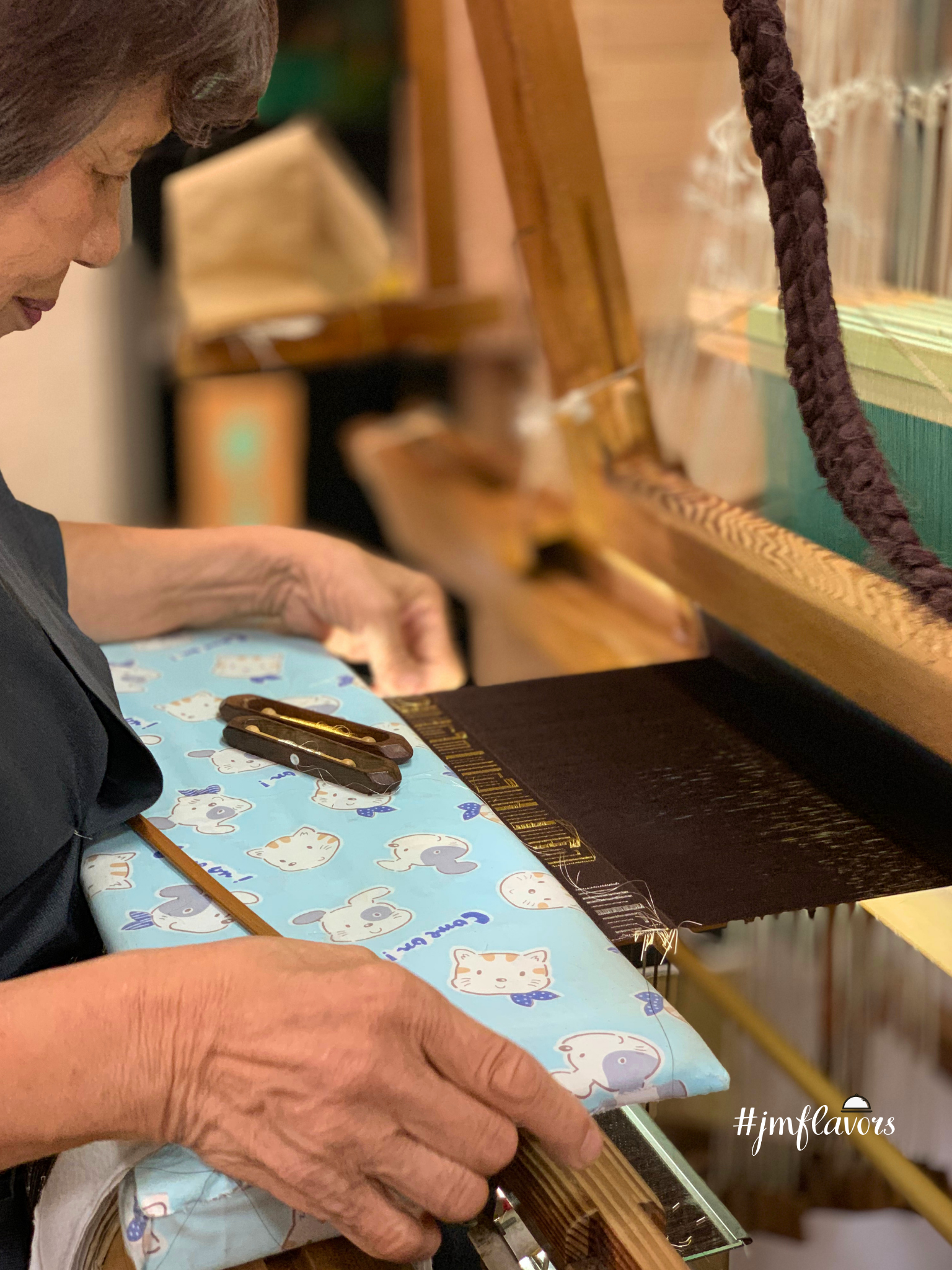
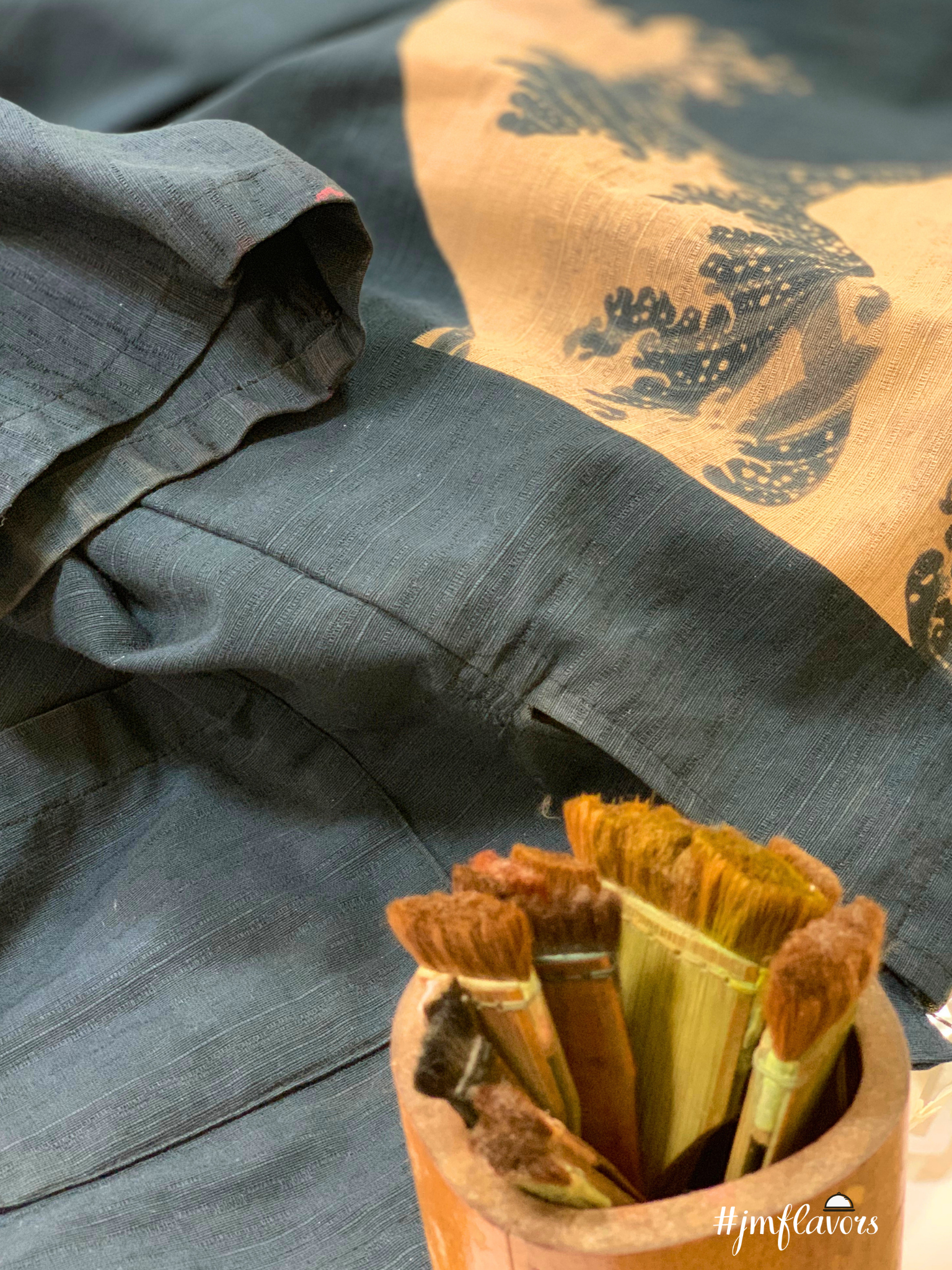
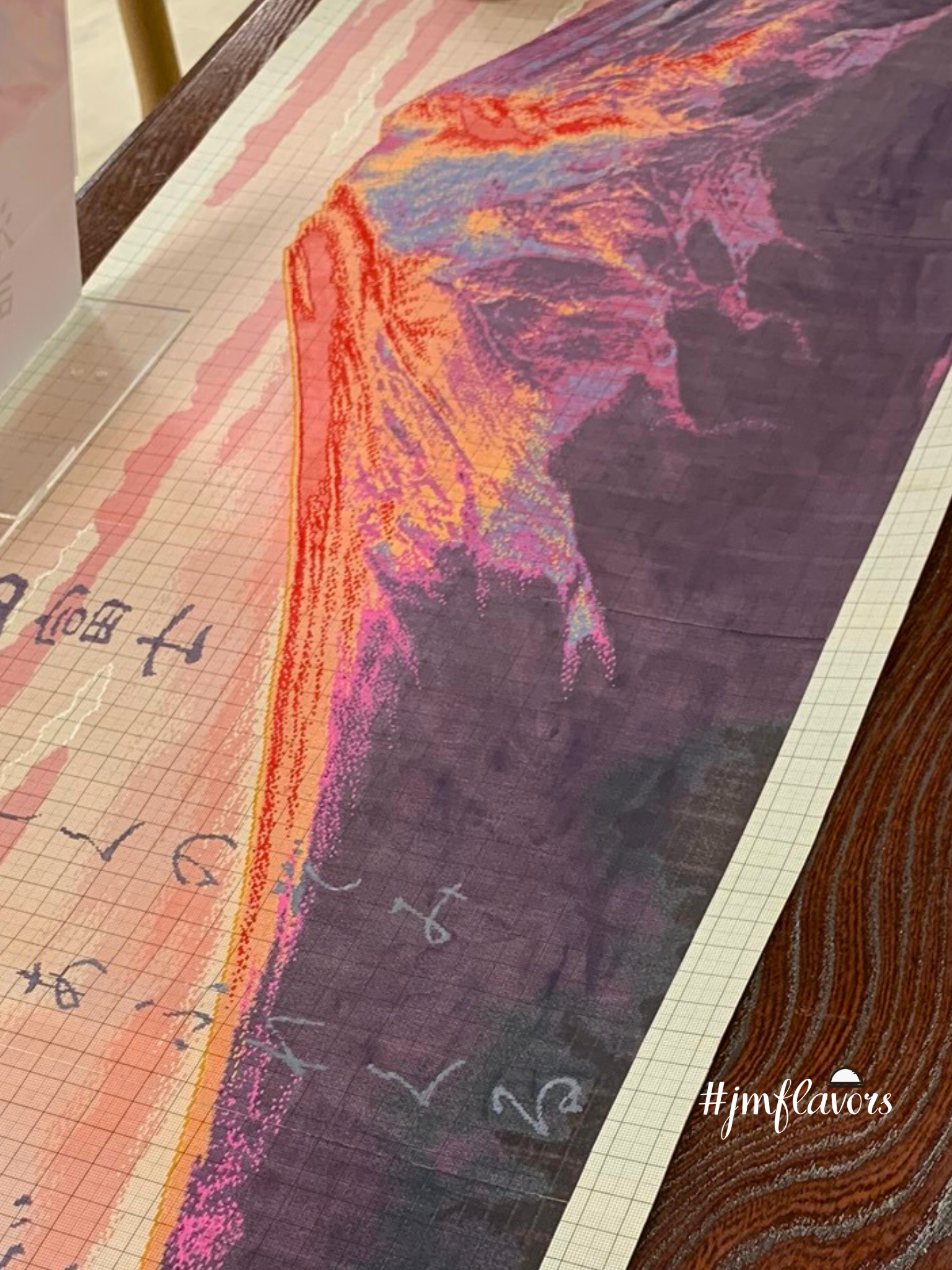
Thread after thread passes through the loom, slowly becoming something far more complex.
It was mesmerizing.
Kyoto’s Nishijin textile tradition is famous for its exquisite silk weaving, and the work is extraordinarily specialized. At workshops in the historic Nishijin district, different artisans may be responsible for different stages—from preparing the thread to looping silk through the loom and creating the finished obi. Some of the elaborate pieces can take weeks to complete.
It was time. Skill. Patience. Art. And human hands.
But Kyoto Isn’t Only Ancient This is what surprised me most.
Kyoto can make you feel as though you’ve travelled centuries backward—and then, almost without warning, remind you that this is a living city.
Along the riverbank, we found people strolling, artists painting, musicians playing unusual instruments and people simply sitting and enjoying the day.
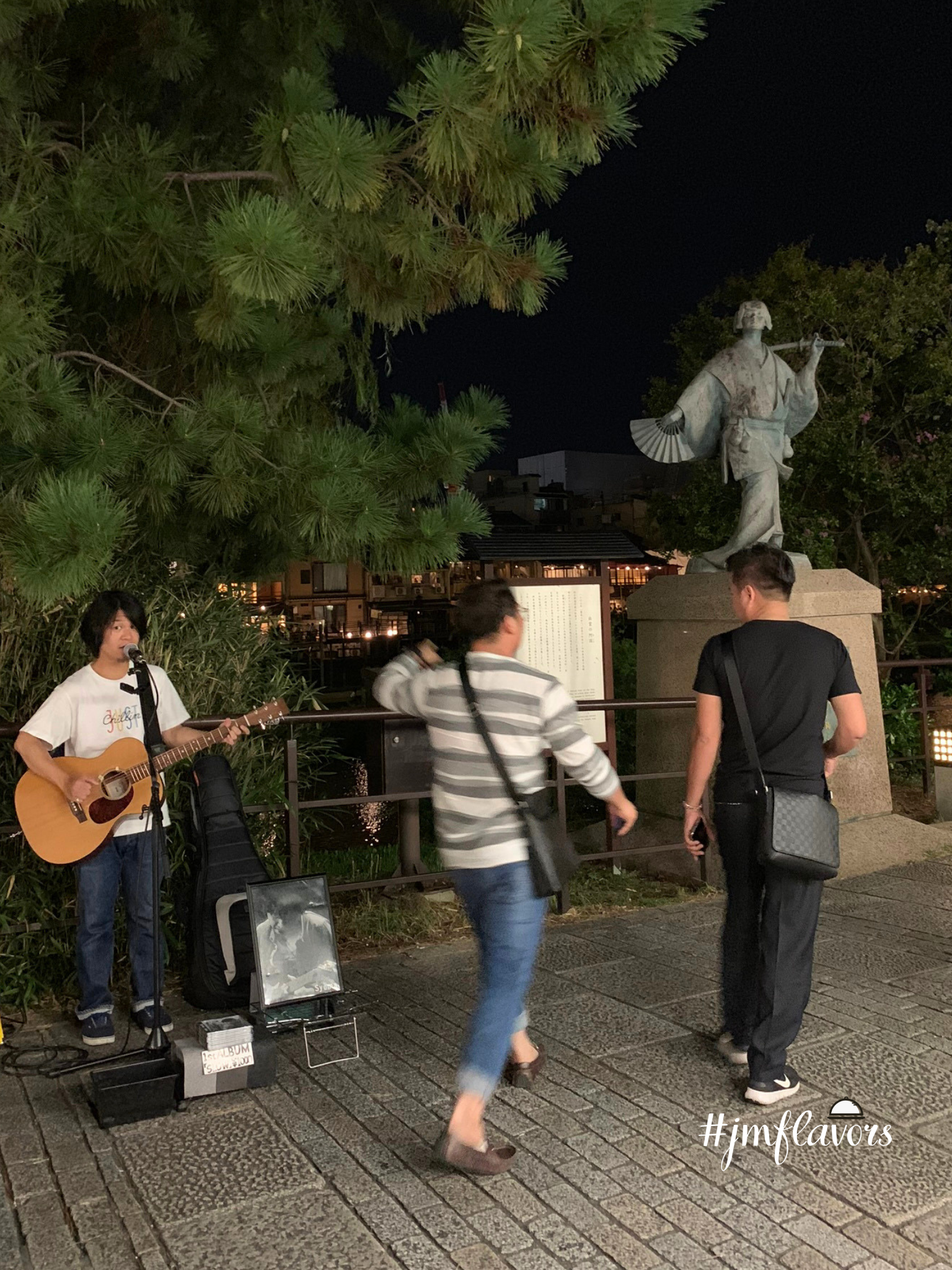
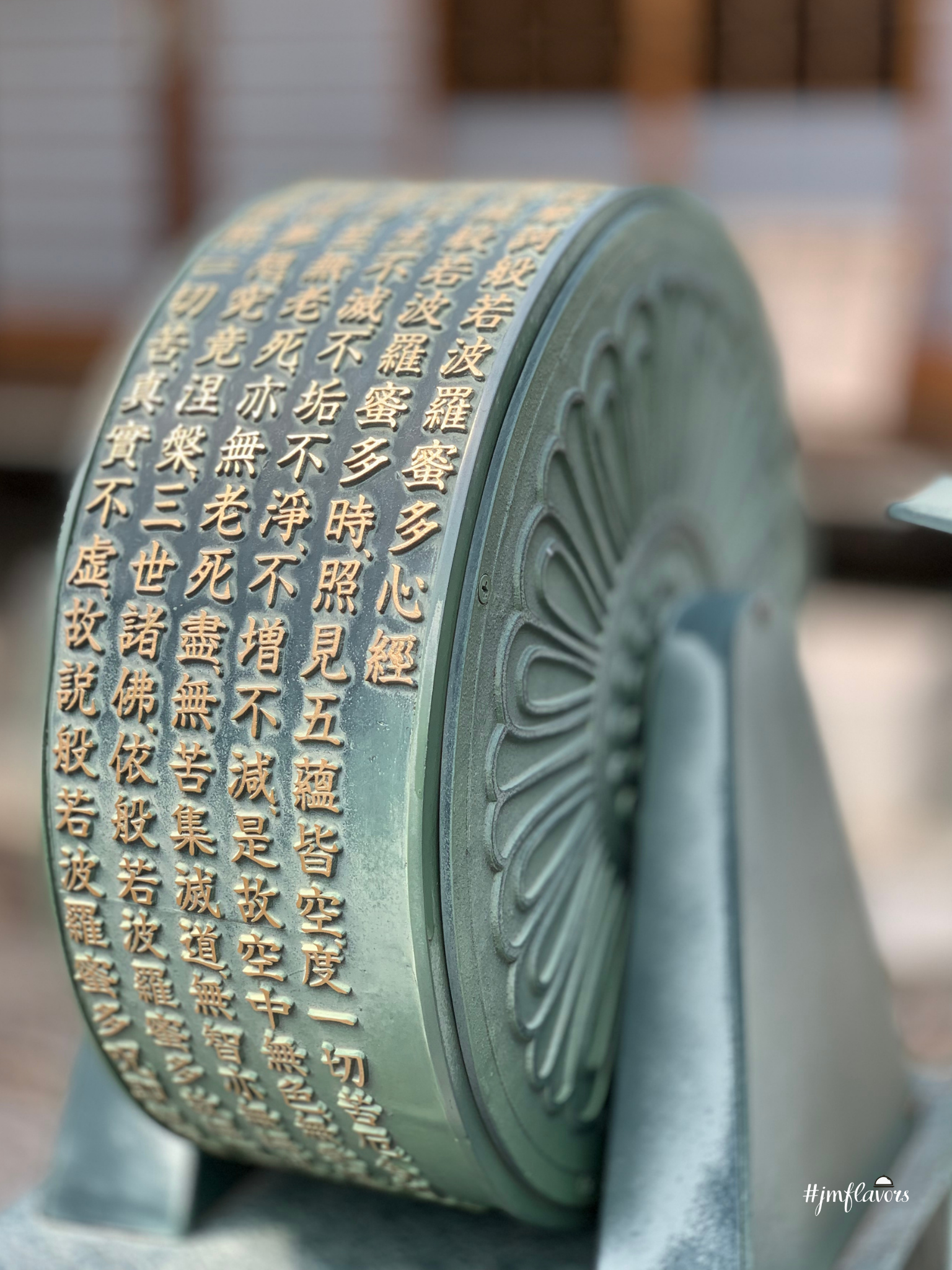
Buddhist Mani wheel (or prayer wheel)
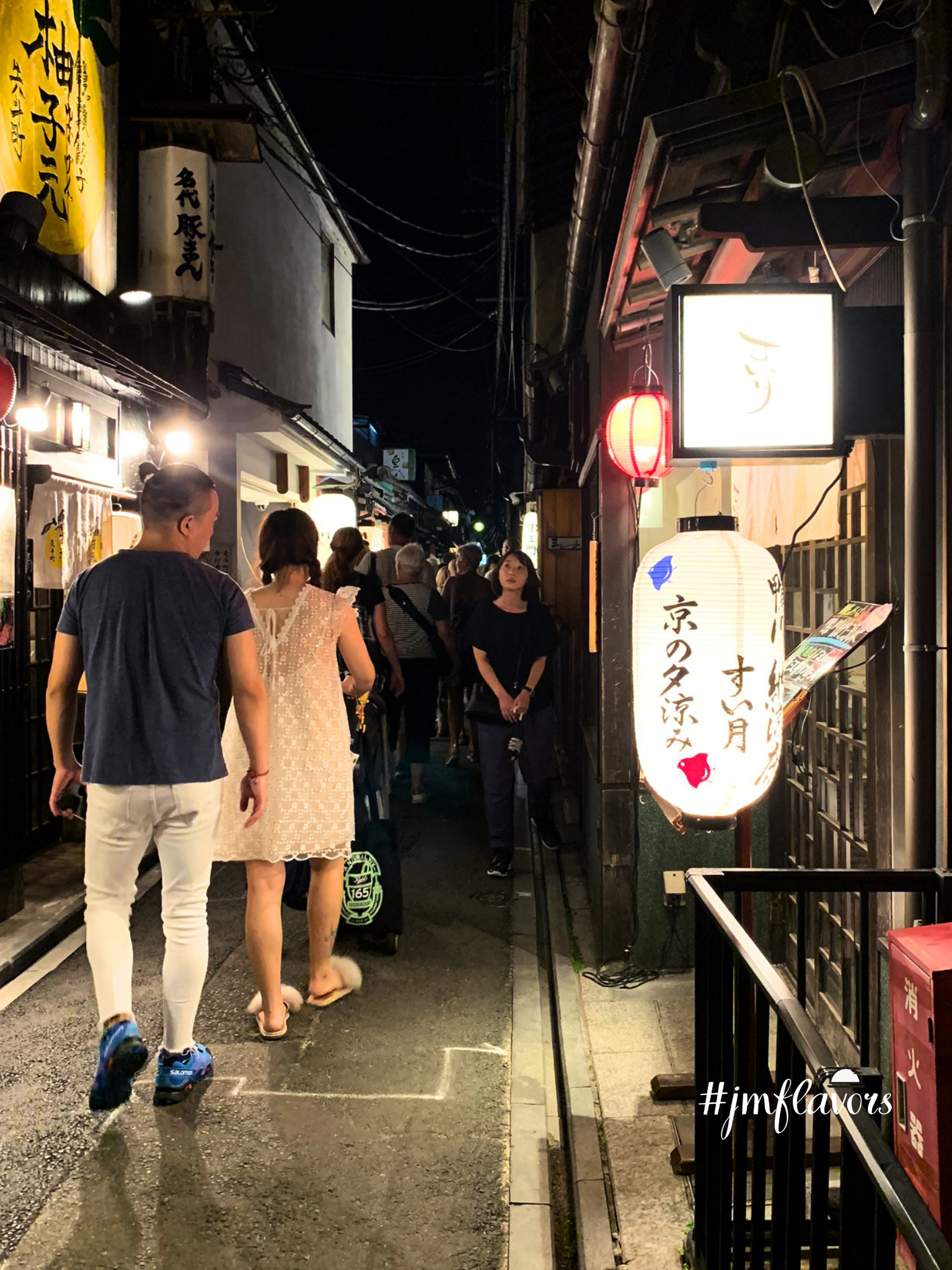
There were tea houses. Little restaurants tucked into narrow alleys.
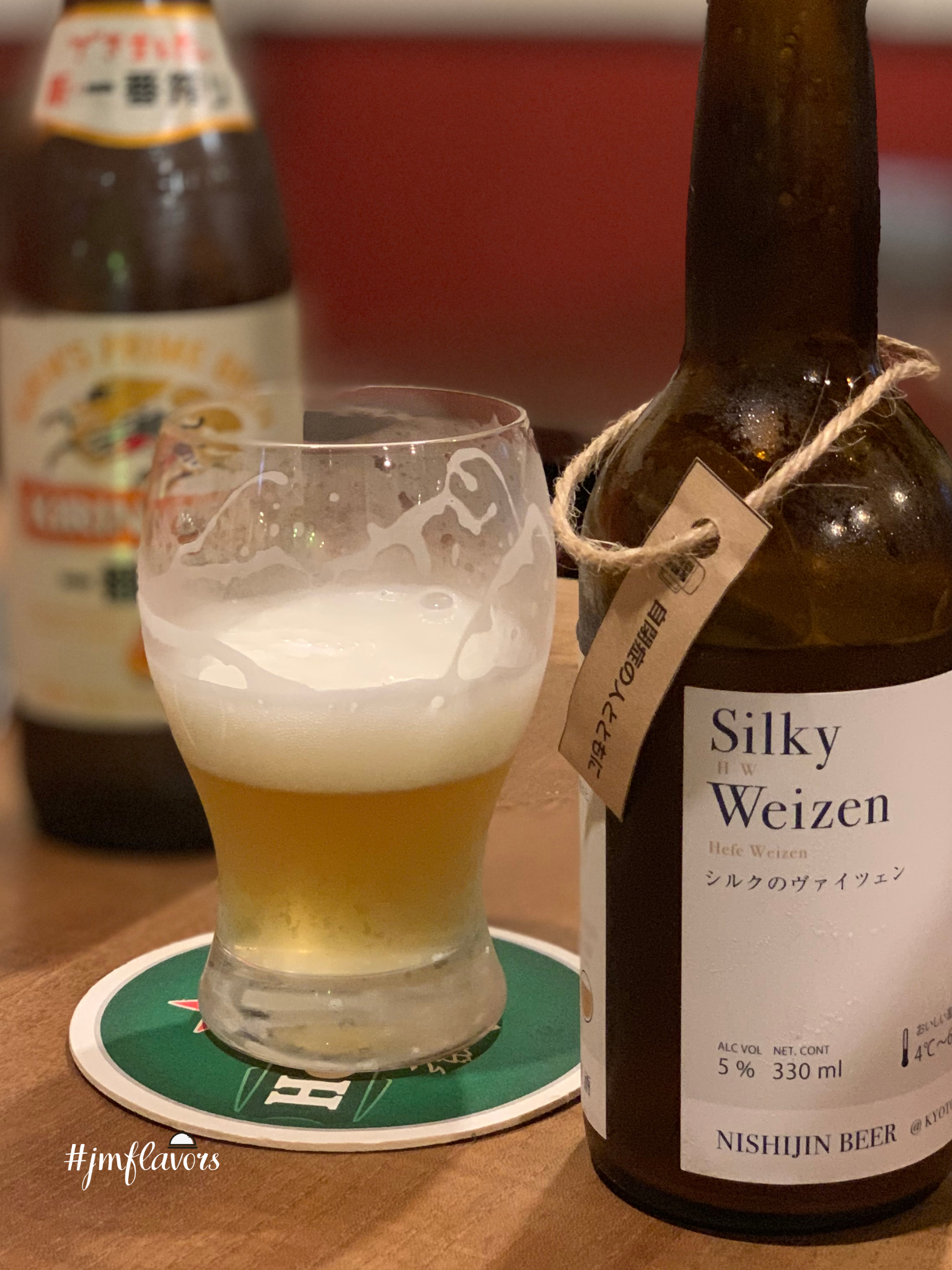
Food everywhere. Sake. And beer.
Yes, eventually we had to stop for one, a perfect little interruption after a day of temples, gardens and history.
I loved the tiny details of the city.
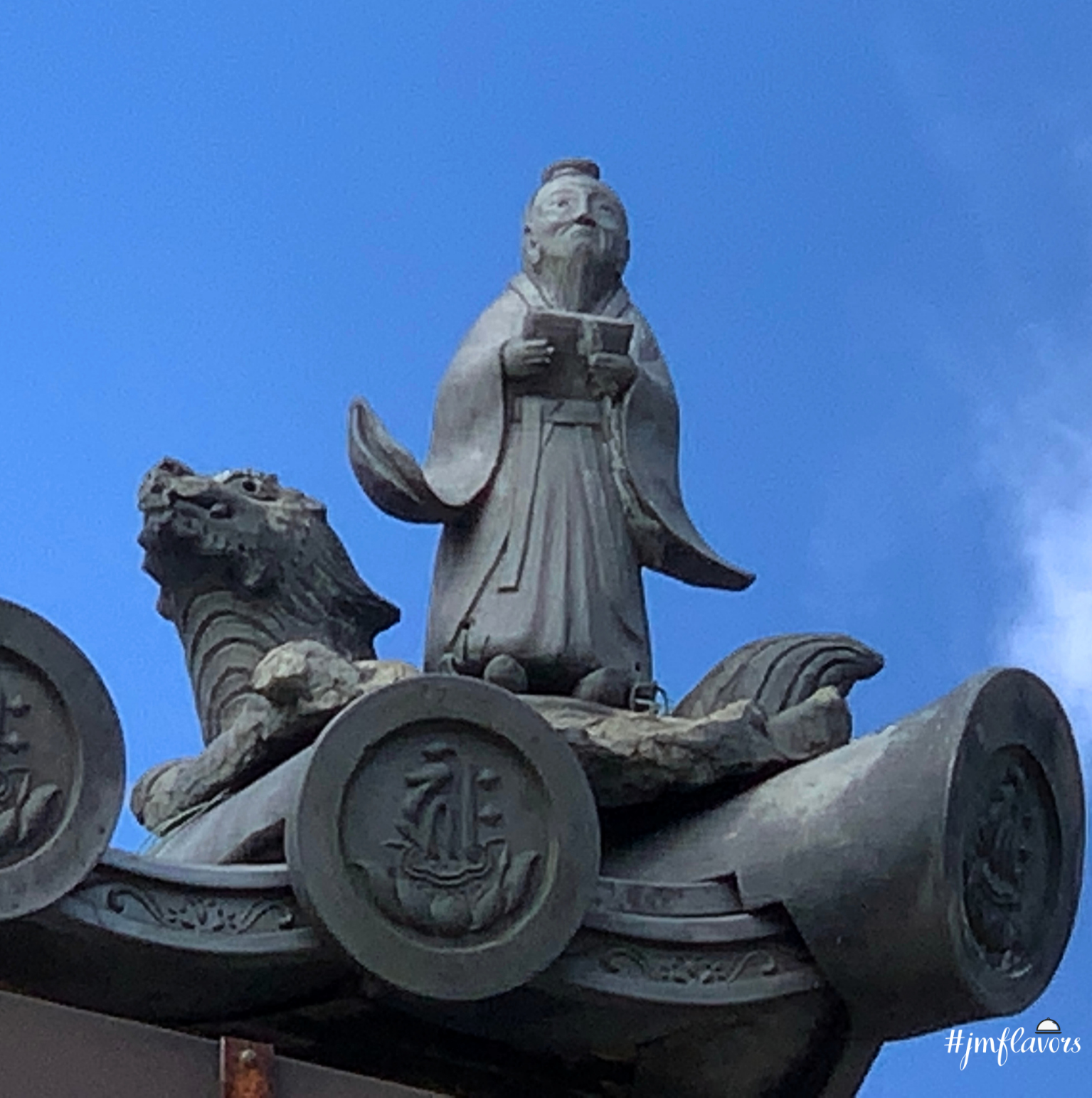
Look Up
At some point, you realize that Kyoto rewards you for looking up.
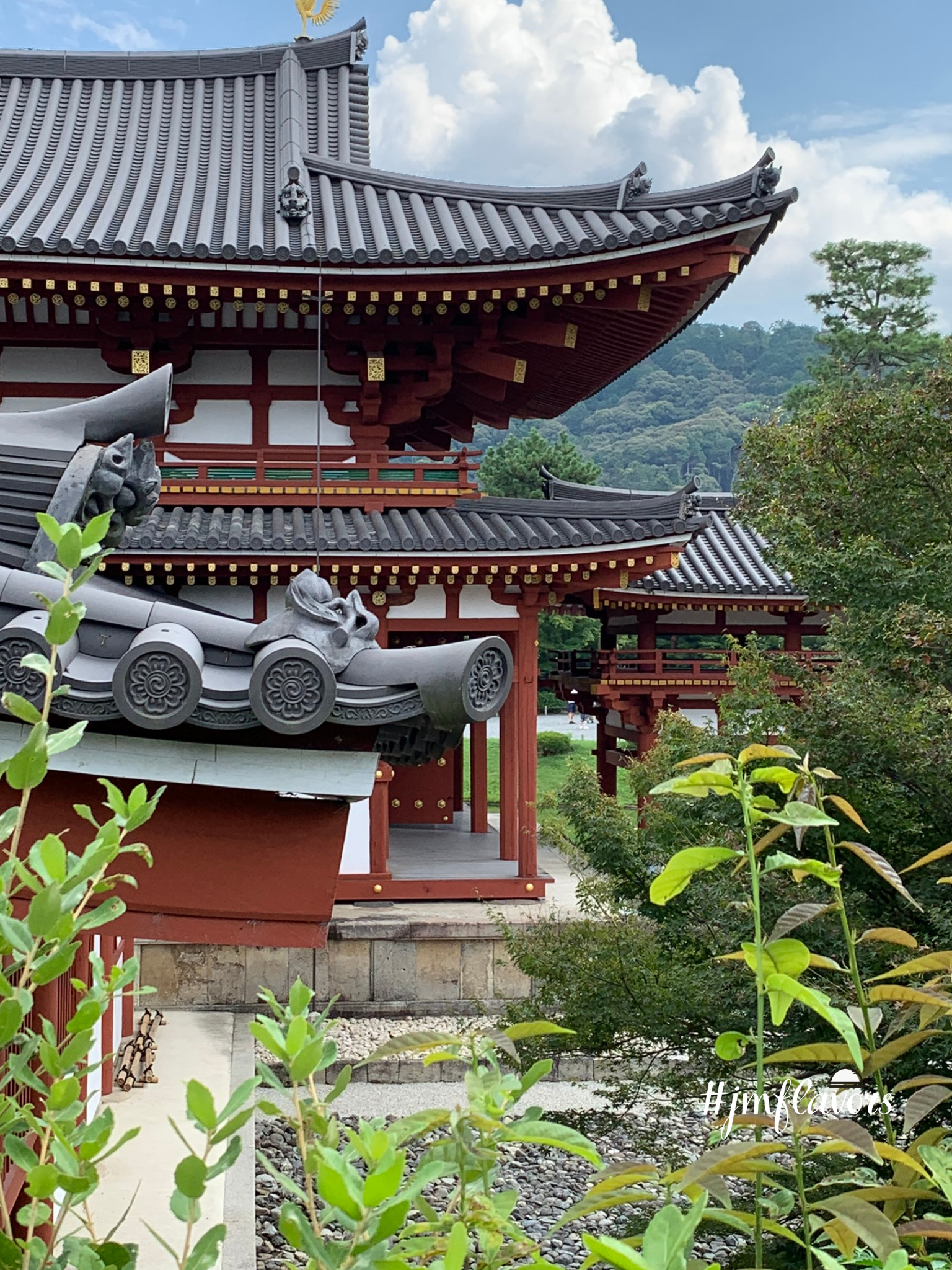
That’s when you notice the details on the roofs.
The ornate corners.
Dragons.
Mythical creatures.
Figures that seem almost like Japan’s answer to the gargoyles of old European buildings.
And then there was the five-storey pagoda at To-ji.
Standing approximately 55 metres high, it is Japan’s tallest traditional wooden building. Its origins go back to 883, but the current structure is the fifth reconstruction and was completed in 1644
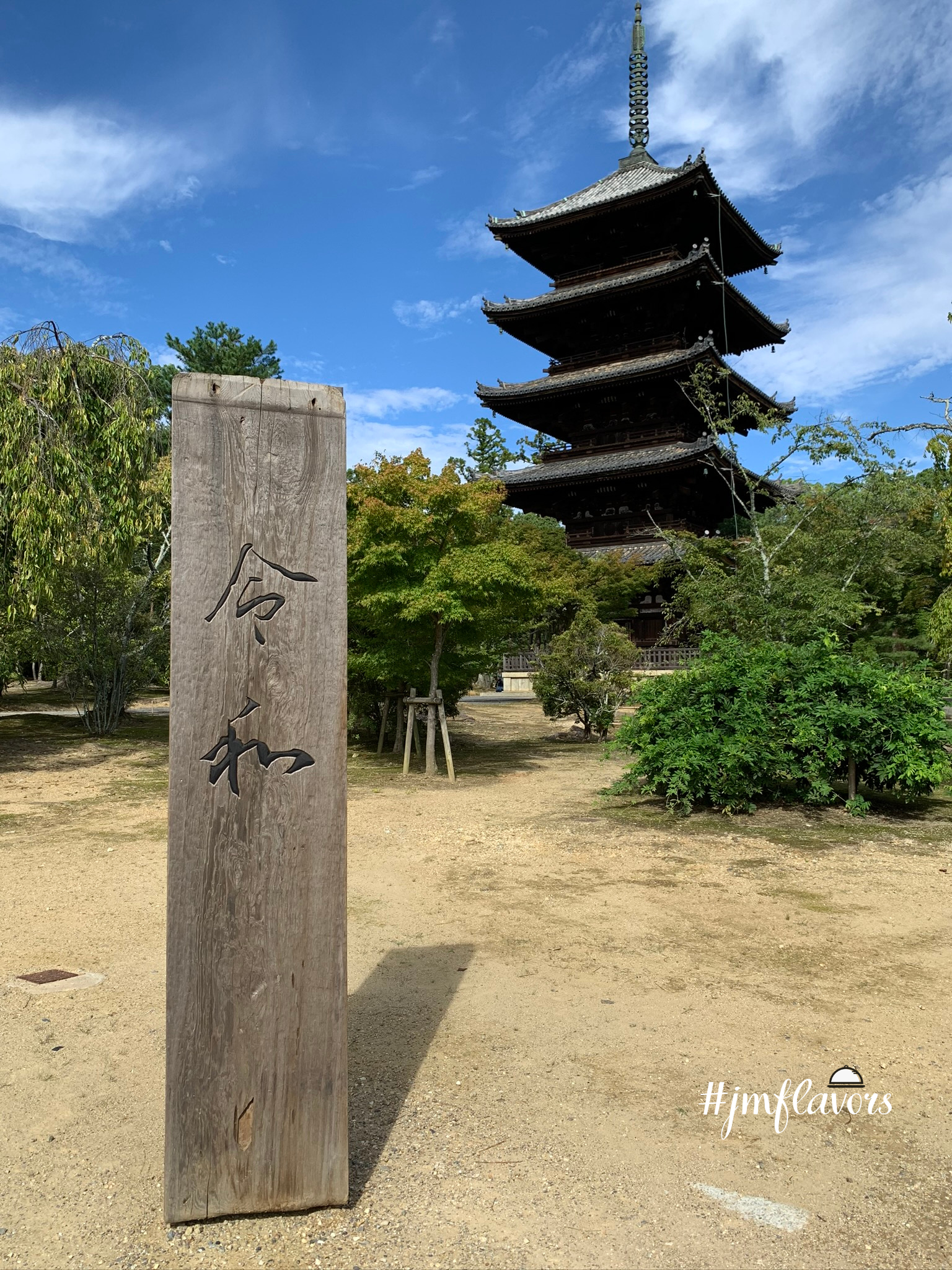
Imagine standing there looking up at something whose history reaches back more than a thousand years.
Not a replica.
Not a reconstruction made for tourists.
A structure that has survived fire, rebuilding, changing governments and generations of people.
That is when the word preservation begins to mean something different.
By the time we left Kyoto, I understood why people are drawn here.
Yes, it is crowded.
Yes, parts of it are commercialized.
But underneath the crowds is something remarkable.
A city that has managed to preserve its gardens, temples, architecture, craftsmanship and traditions while continuing to function as a modern city.
And perhaps the most remarkable part isn’t the age of these things.
It is the care.
Someone is still weaving the silk.
Someone is still tending the garden.
Someone is still ringing the bell.
Someone is still placing offerings at the shrine.
Someone is still making the food.
Someone is still playing music beside the river.
Someone is still painting.
Someone is still tying the obi.
And someone is still walking beneath those thousands of red torii gates, carrying their own hopes and gratitude with them.
That is Kyoto.
It isn’t simply ancient Japan.
It is Japan remembering who it is while continuing to live.
And that’s what stayed with me.
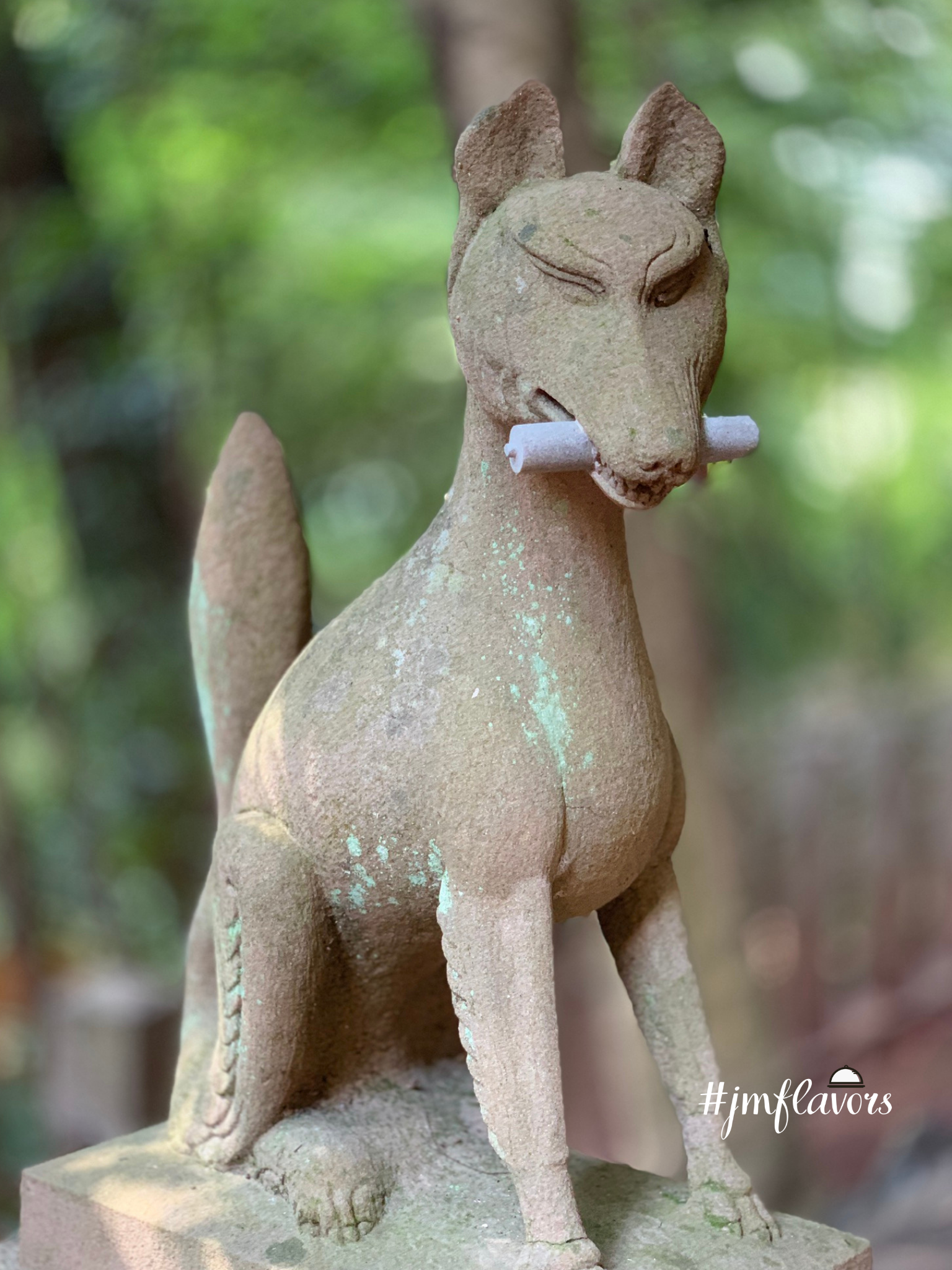
Kkitsune possess a dual nature. The wink perfectly captures this playful, dual-natured personality