Mount Fuji: Where Beauty Becomes Sacred
There are some travel days that you plan carefully, and then there are the days that seem to unfold like a gift.
Our time around Mount Fuji was definitely one of those.
Fortunately, I have a brother-in-law who lives in Tokyo, so we were lucky enough to have him drive us toward Mount Fuji. And let me tell you, the drive alone was worth it. There are beautiful viewpoints along the way, and every time Fuji appeared between the trees or above the landscape, I found myself reaching for my camera.
Mount Fuji is one of those places that photographs beautifully—but somehow feels even more impressive when you’re actually standing in front of it.
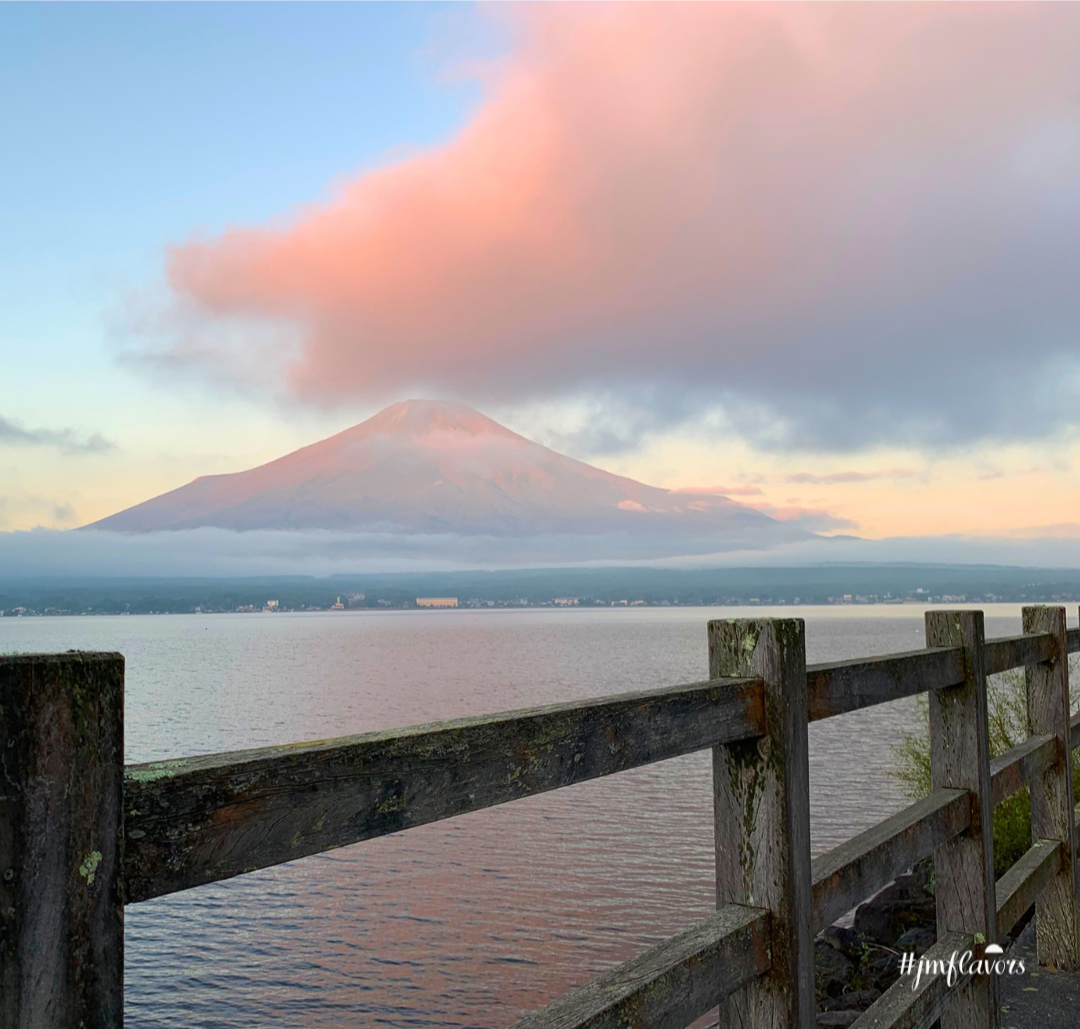
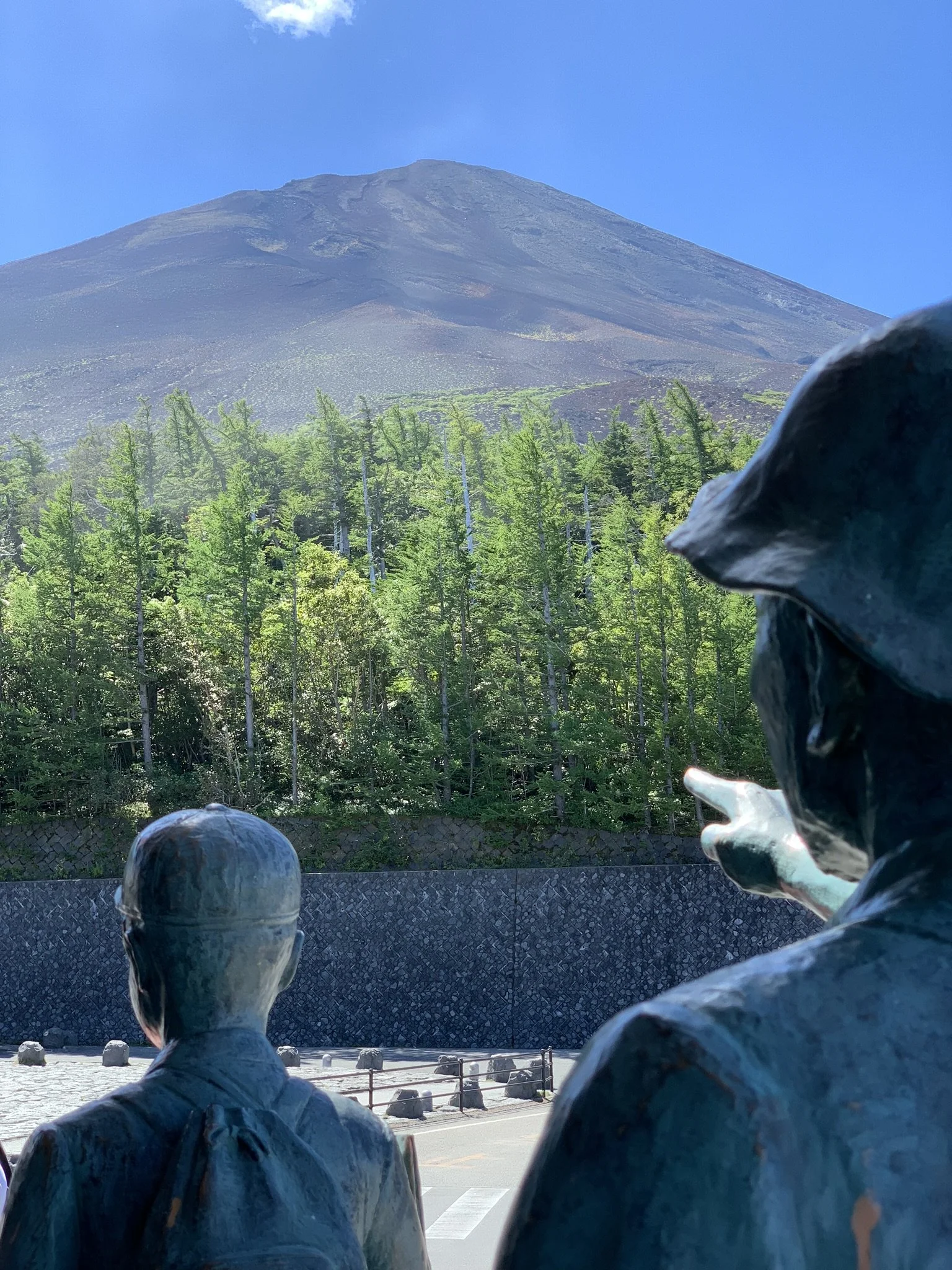
Hello, Mount Fuji!
Mount Fuji rises to 3,776 metres (12,389 feet) and is Japan’s highest mountain. But there is much more to Fuji than its spectacular size.
In 2013, Mount Fuji was designated a UNESCO World Heritage Site under the rather beautiful title “Fujisan, Sacred Place and Source of Artistic Inspiration.” And interestingly, UNESCO recognizes Fuji as a cultural World Heritage Site, not simply a natural one.
That’s because Mount Fuji has been far more than a mountain to the Japanese people.
For centuries it has been a sacred place of pilgrimage and worship, and its almost perfectly symmetrical cone has inspired artists, poets and writers. The UNESCO designation actually includes 25 sites connected to Fuji’s spiritual and artistic history—shrines, pilgrimage routes, lakes, springs, waterfalls and other sacred places around the mountain. (UNESCO World Heritage Centre)
So when you think you’re simply going to “see Mount Fuji,” you’re really stepping into thousands of years of Japanese culture.
And we were about to discover just how true that was.
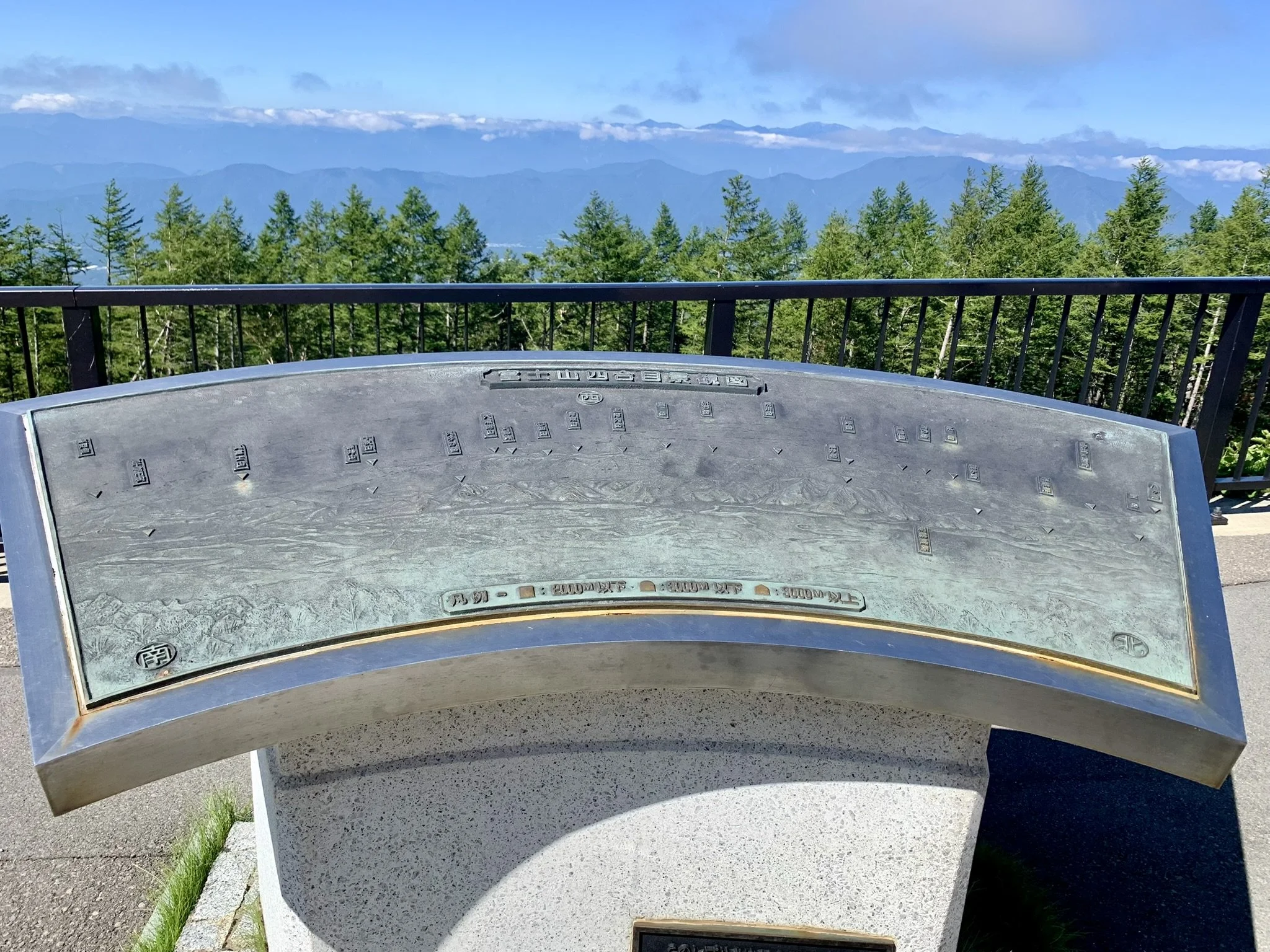
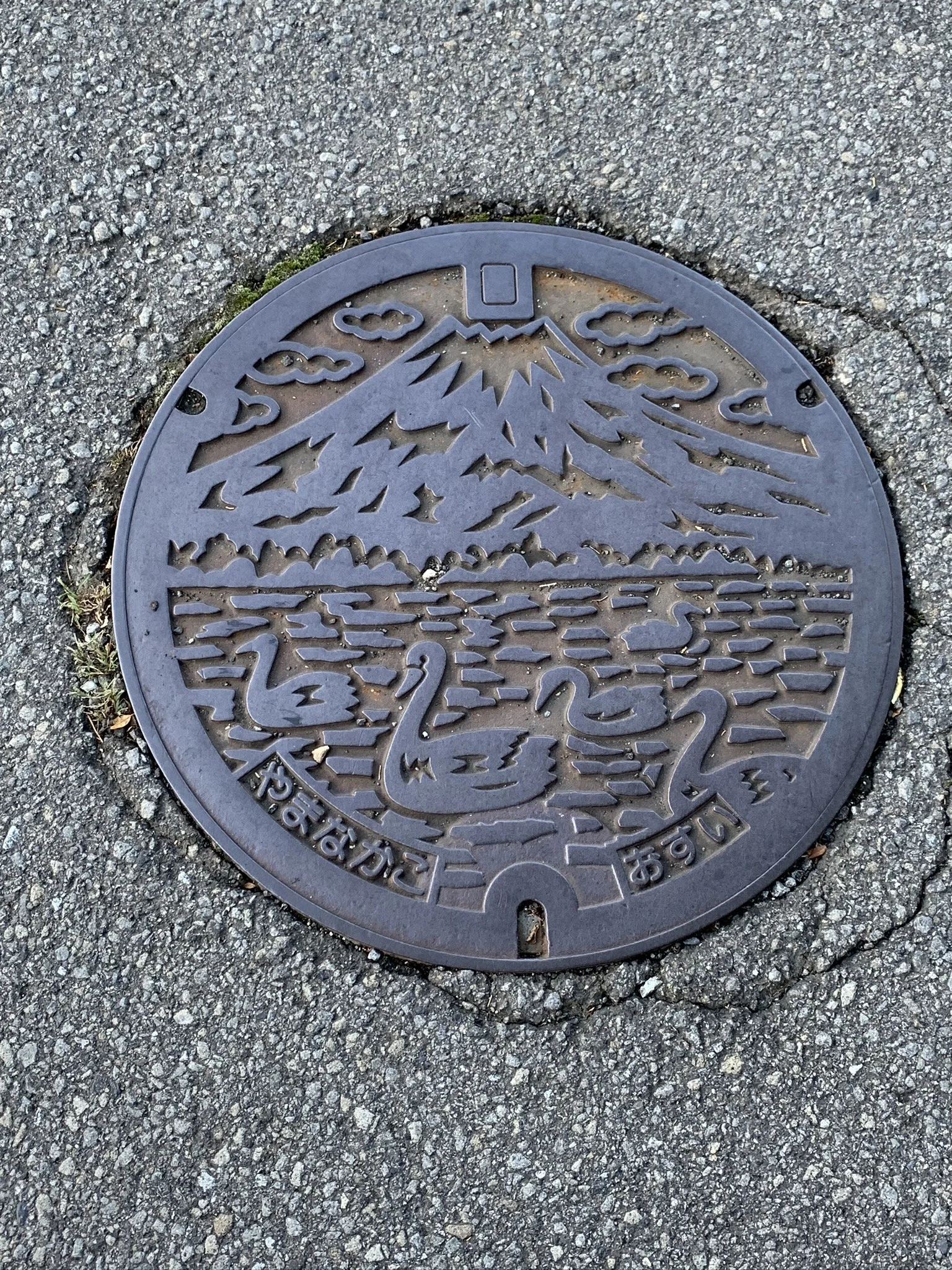
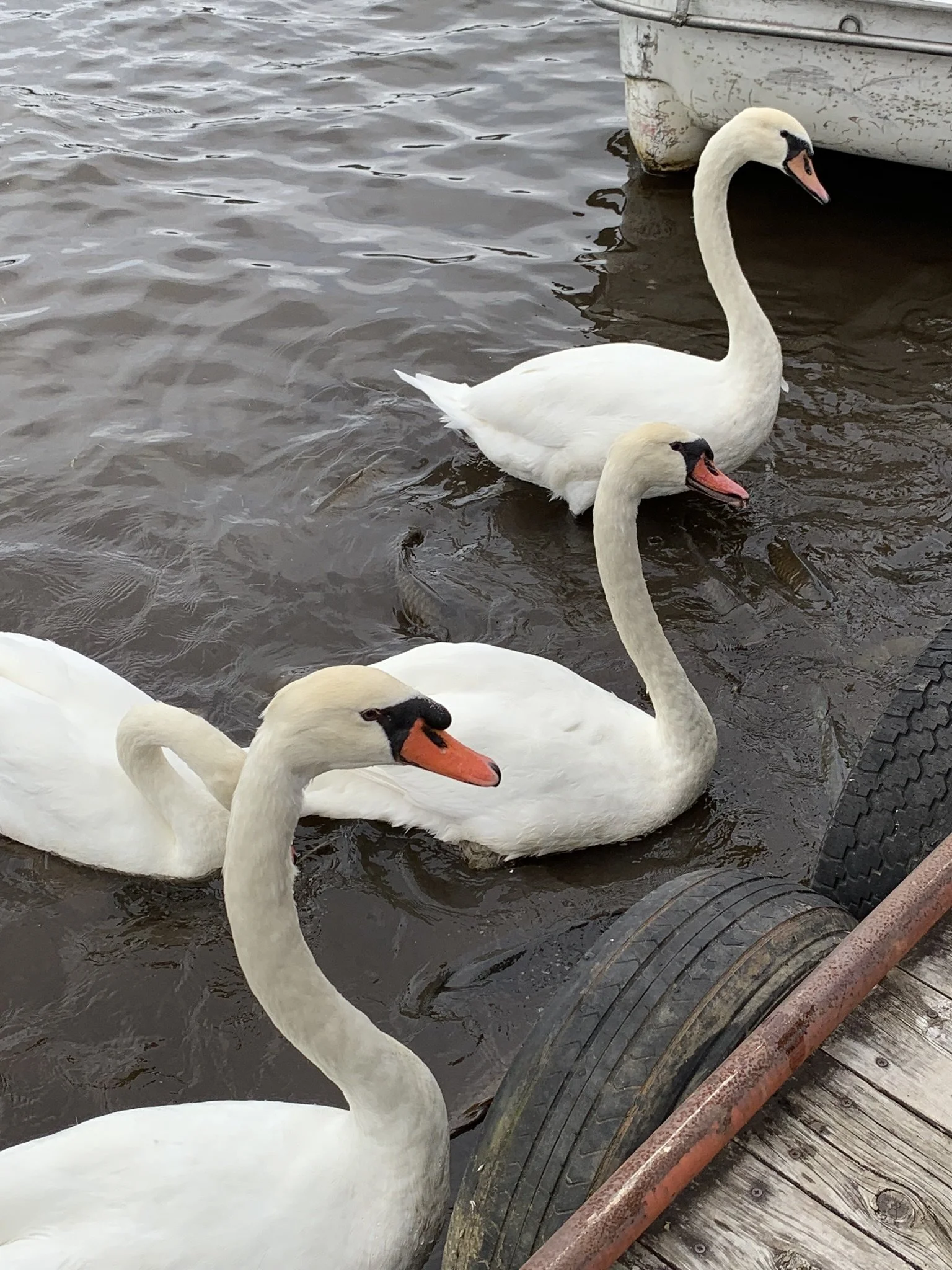
When we reached the base area, we spent some time exploring the statues, monuments and information about climbing Fuji.
Yes, you can climb Mount Fuji. In fact, people have been making spiritual pilgrimages up the mountain for centuries.
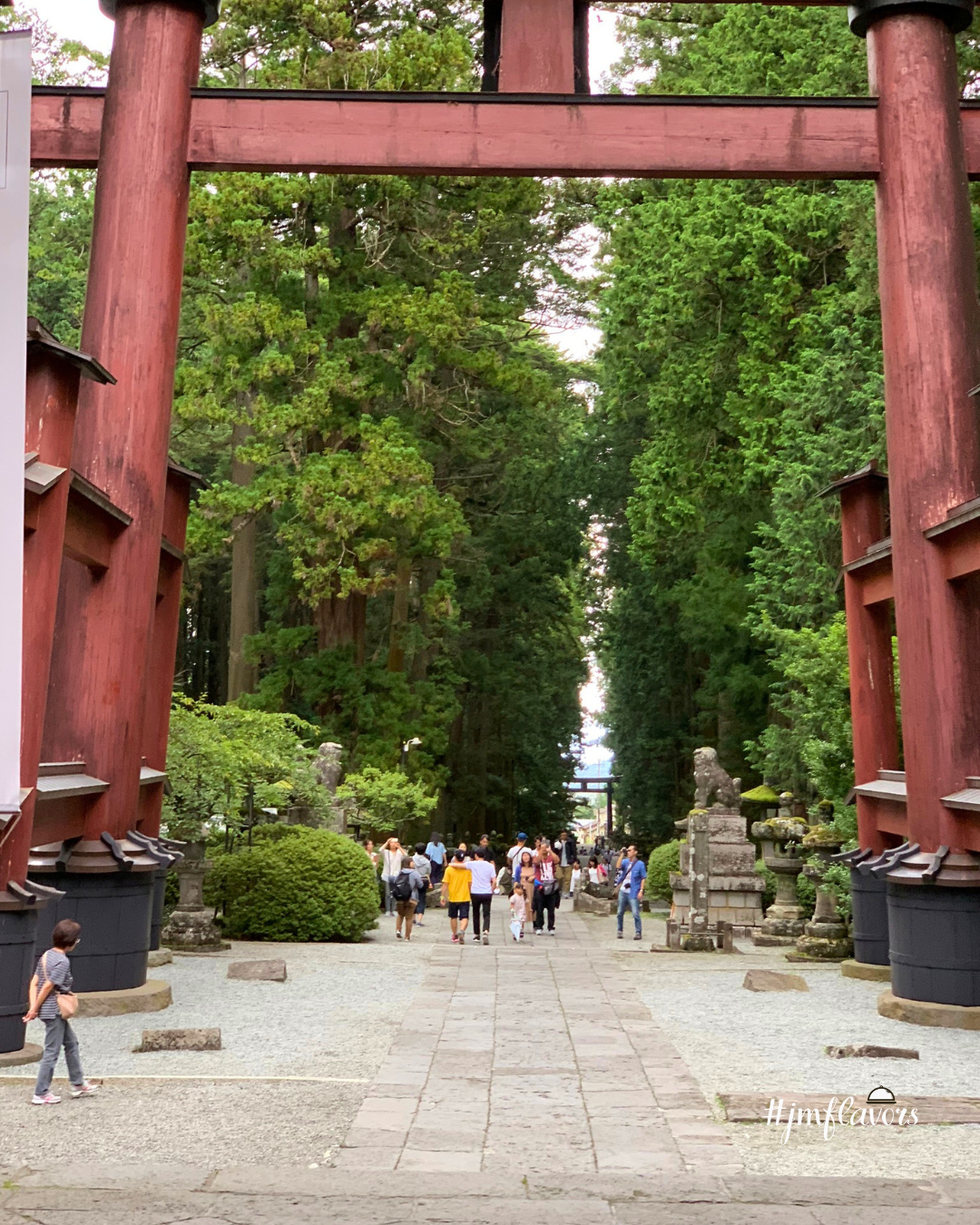
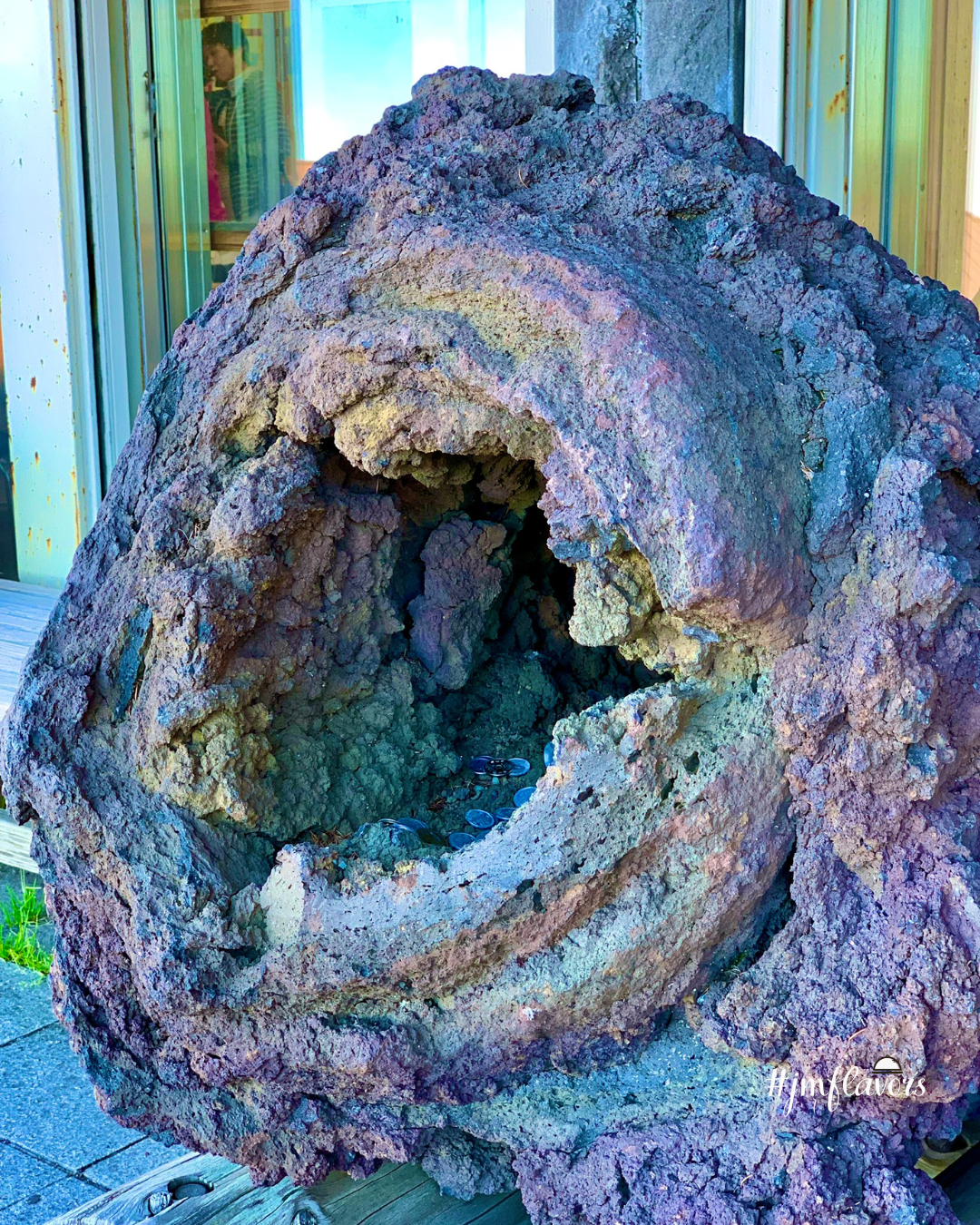
We were travelling in the shoulder season, however, when many of the usual climbing services and patrols were no longer operating. That meant that anyone choosing to climb was doing so at their own risk.
Let’s just say that my Mount Fuji adventure was going to remain considerably more comfortable.
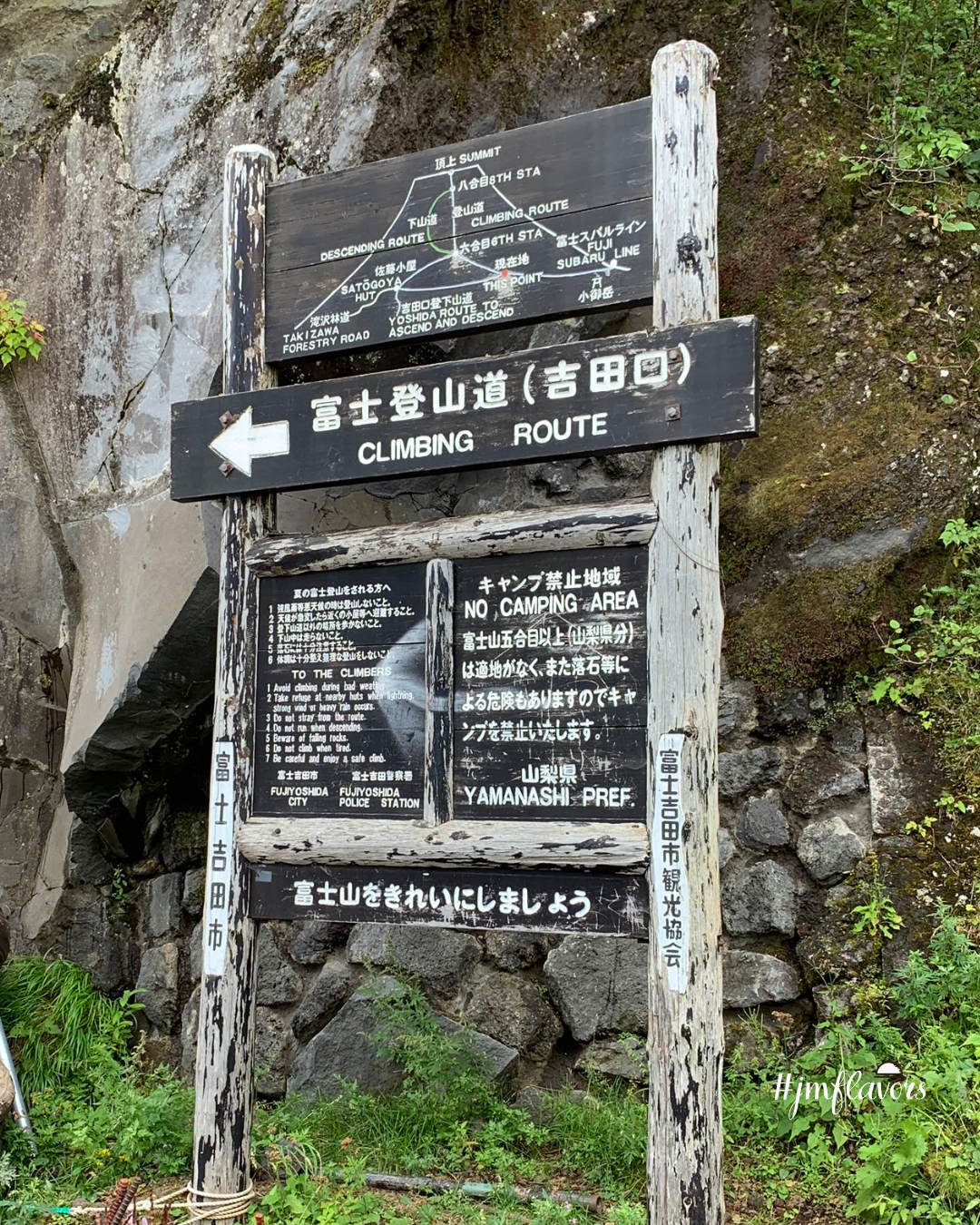
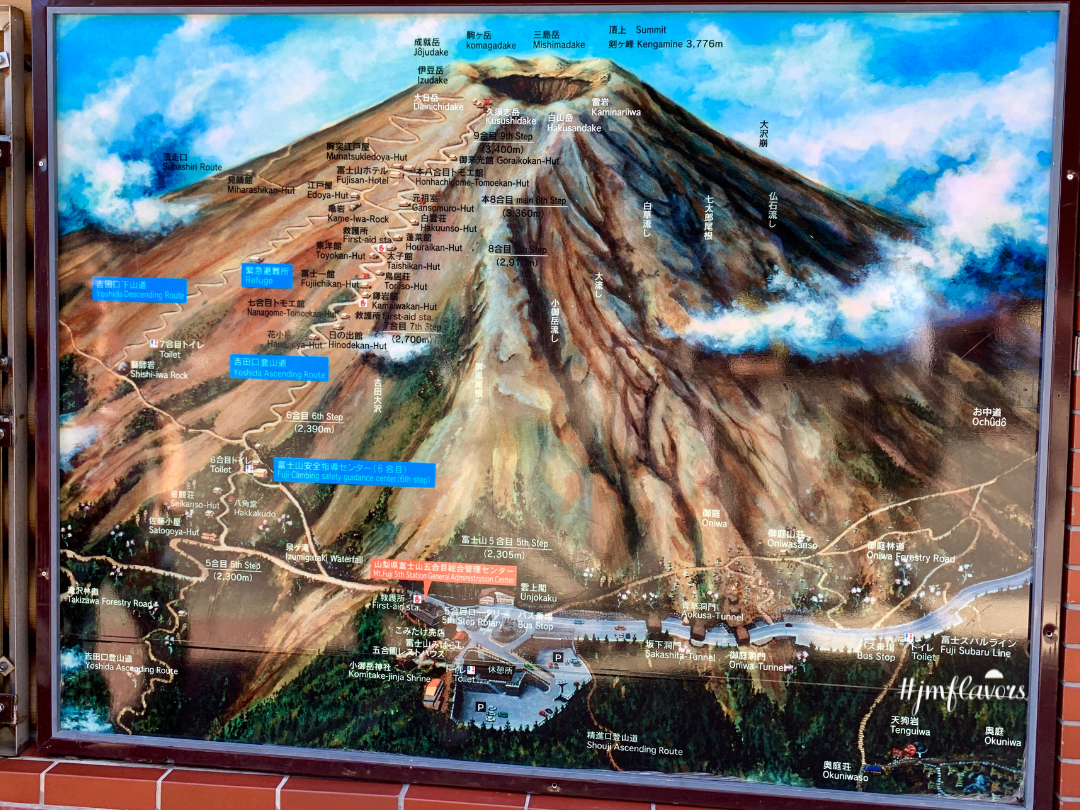
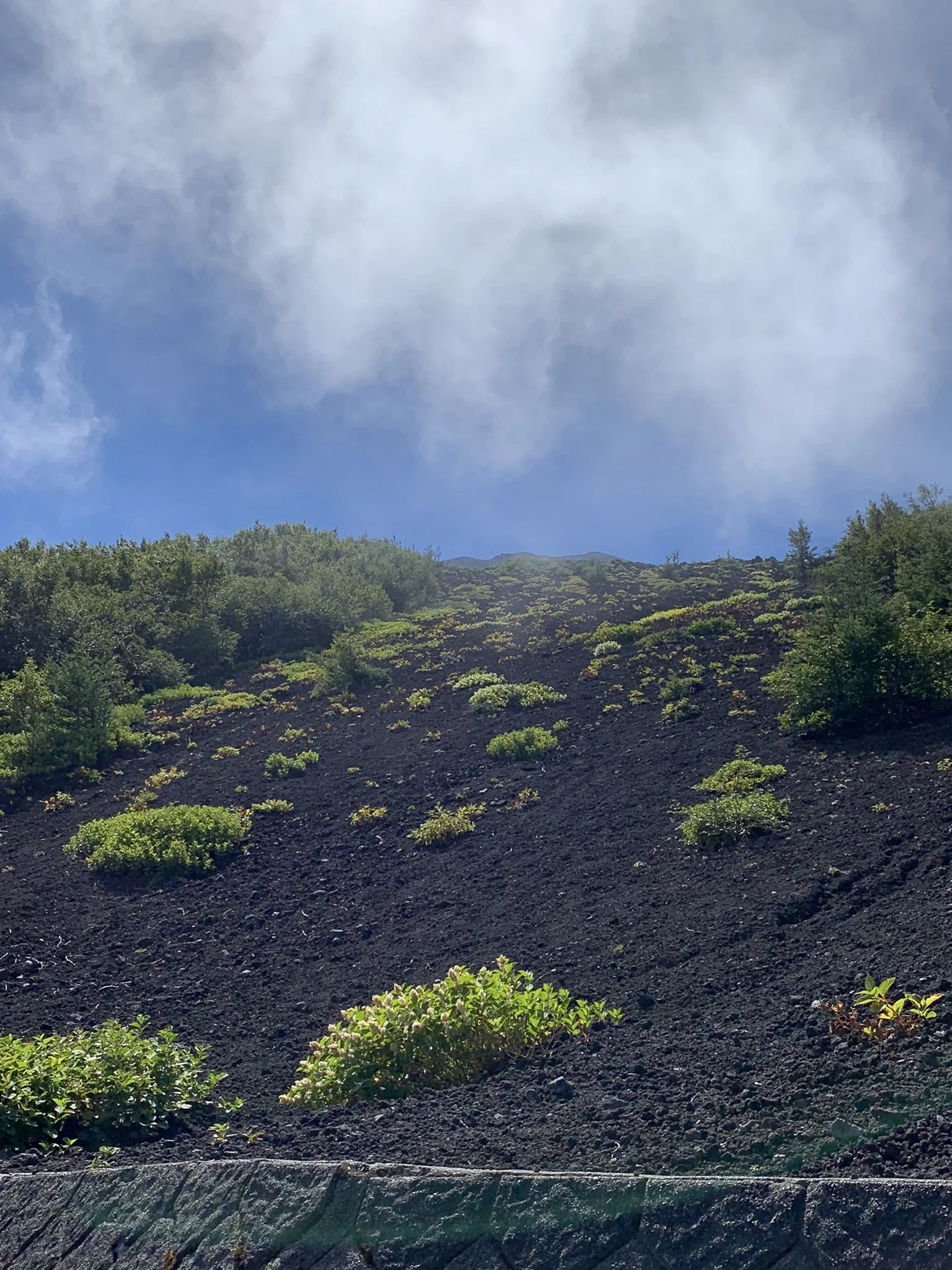
My closest encounter with climbing Fuji?
Eating one.
And yes, apparently you can do that.
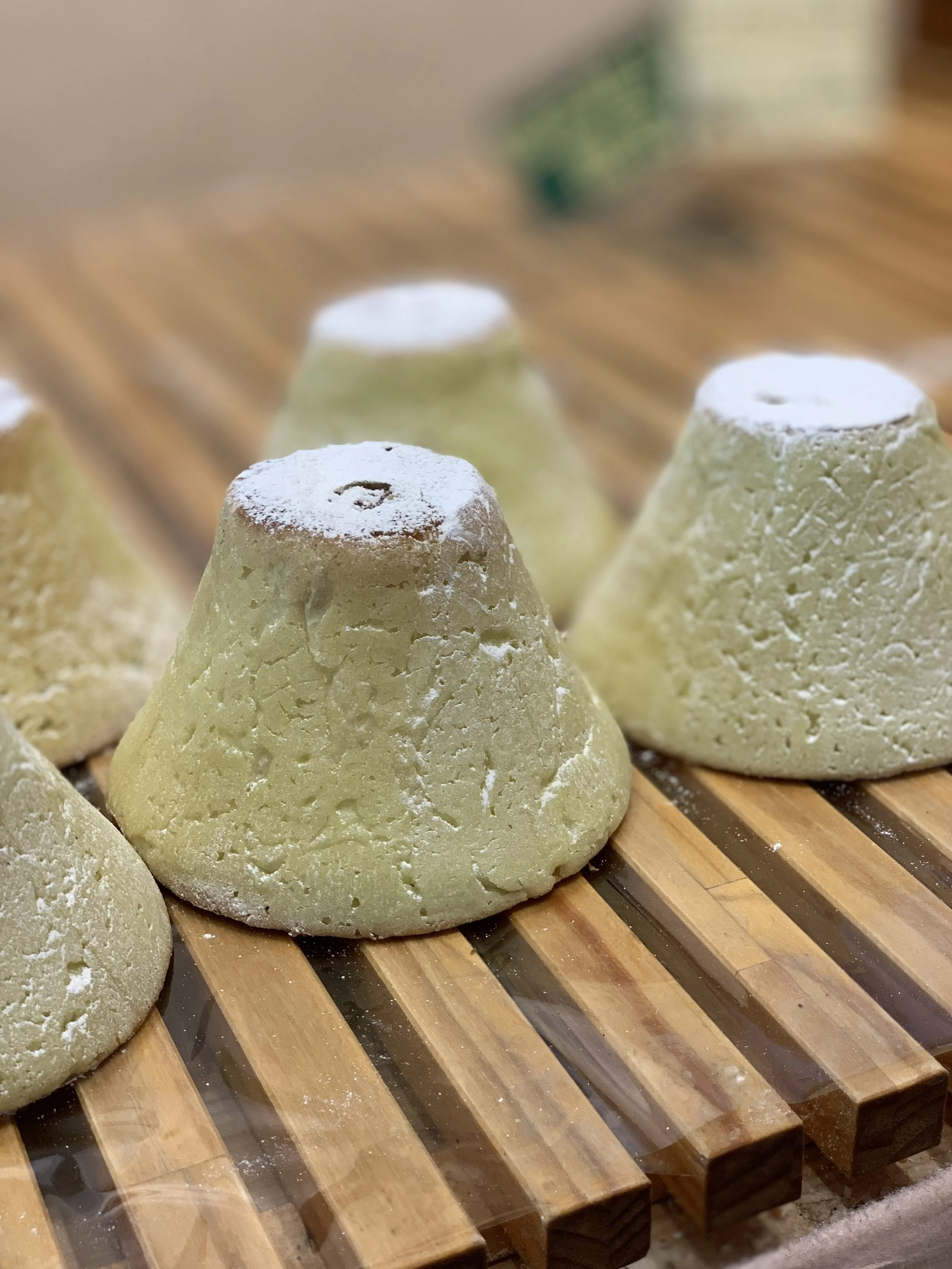
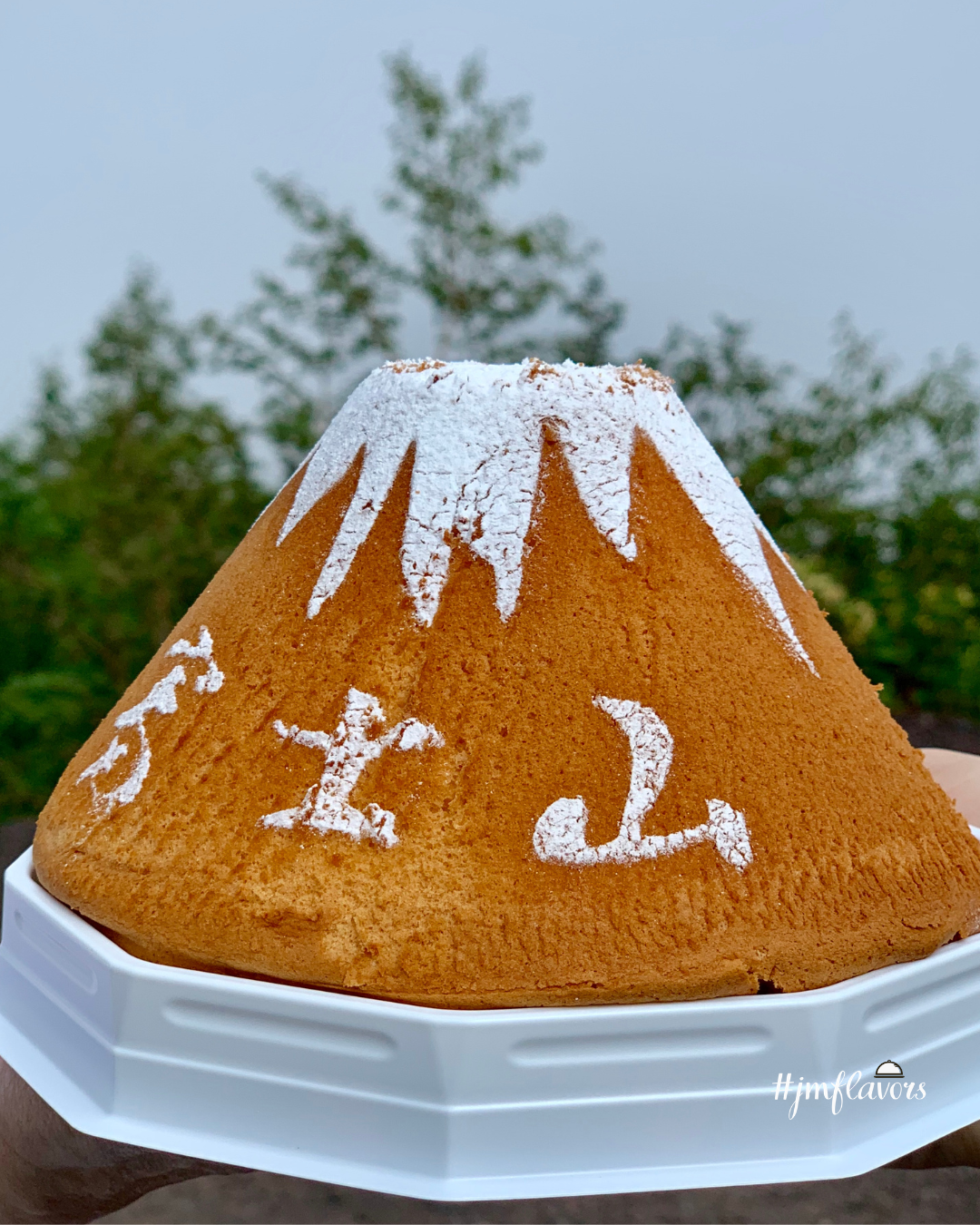
Everything around Mount Fuji seems to celebrate the mountain—and I mean EVERYTHING. Mount Fuji-shaped sweets, cookies, cakes and every imaginable souvenir are everywhere.
I became particularly enamoured with the Mount Fuji cake.
Apparently these cakes sell quickly and you need to order ahead or arrive early if you want one.
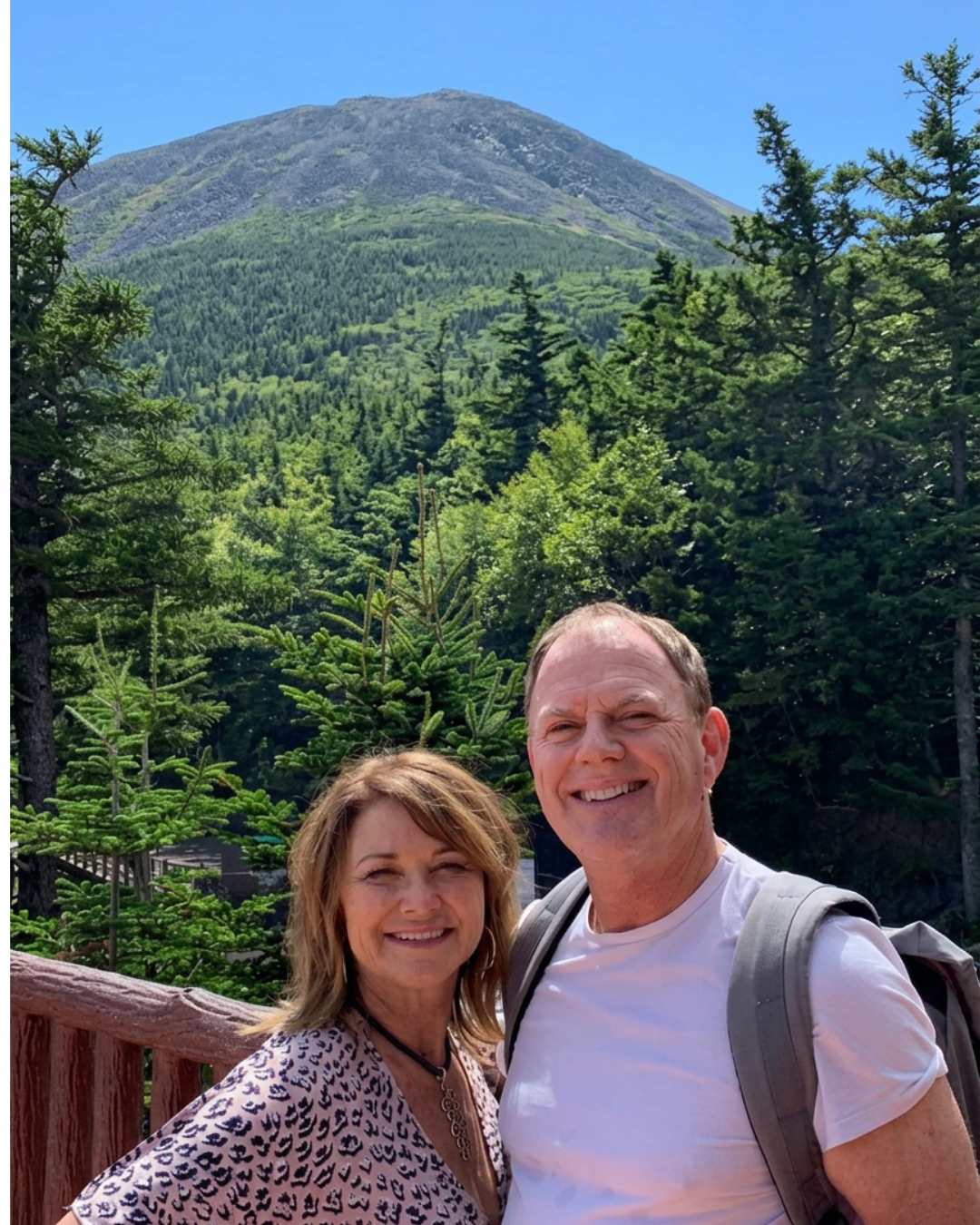
From the mountain we headed down to Kitaguchi Hongu Fuji Sengen Shrine, and this is where the day took a turn I could never have planned.
There, completely unexpectedly, I saw something incredibly special:
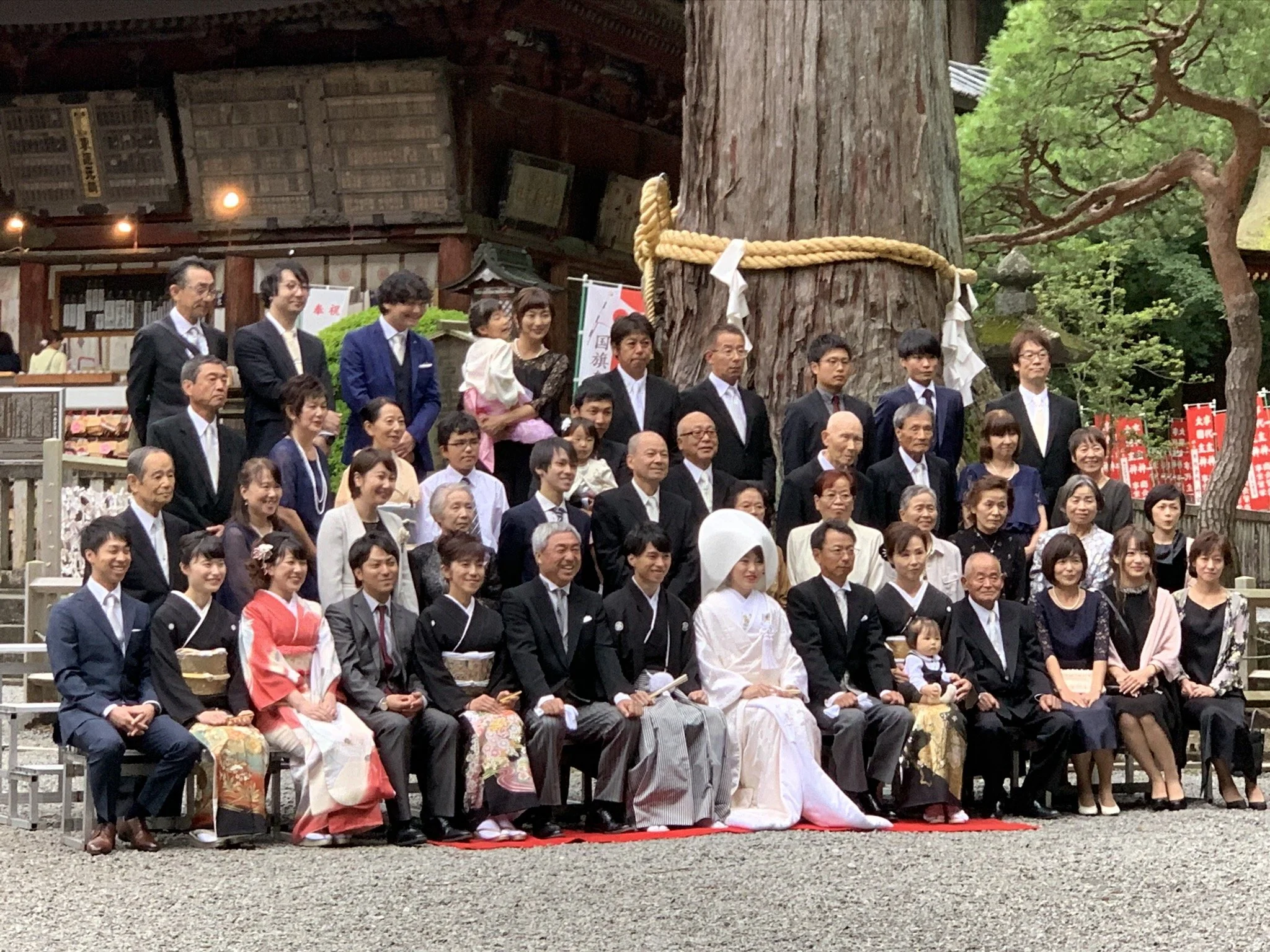
A traditional Japanese wedding.
Oh my gosh.
I went crazy with my camera.
I was so mesmerized by what I was seeing that I just couldn’t stop taking photographs. Everything was so beautifully formal and ceremonial. And the bride!
Her traditional white wataboshi hood was one of the most striking thing I had seen on our entire trip.
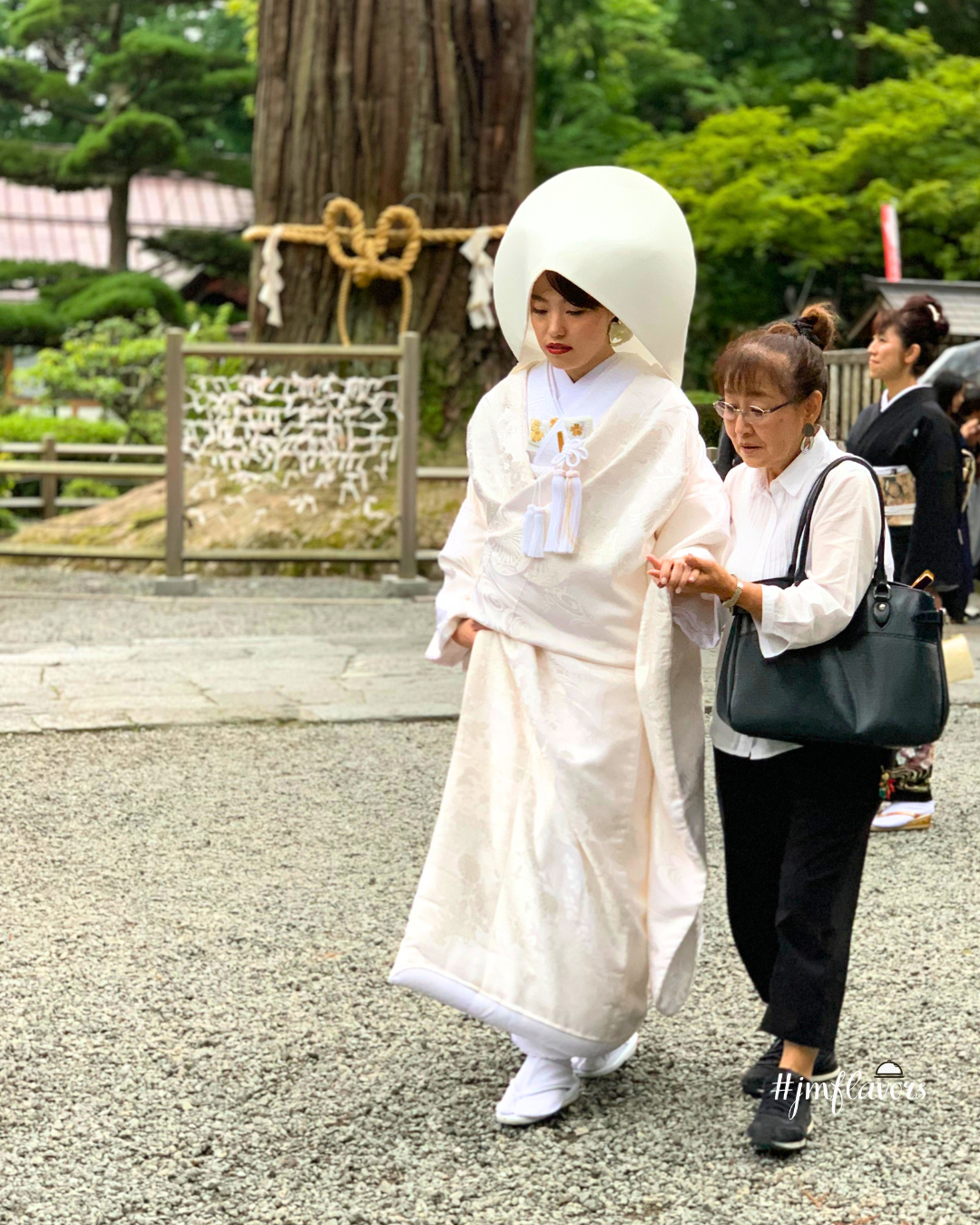
The wataboshi is a large, white, hood-like bridal covering traditionally worn with the shiromuku, the formal white wedding kimono. Like a Western veil, it creates a sense of modesty and mystery by partially concealing the bride’s face. (Wasou Wedding Japan)
It was so crisp and sculptural that it almost looked like a perfectly formed white cone surrounding her face.
I had heard about the idea of “horns” underneath a Japanese bride’s headpiece, but that story actually belongs to a different traditional head covering called the tsunokakushi, whose name is often translated as “horn hider.” The wataboshi is the beautiful white hood I was actually seeing.
The bride’s entire ensemble was so unique to what I was familiar with.
Kitaguchi Hongu Fuji Sengen Shrine is one of the important sacred sites associated with Mount Fuji and is itself part of the UNESCO World Heritage property.
The shrine has traditionally been a focal point for Mount Fuji worship and is associated with the historic Yoshida pilgrimage route, where pilgrims once began their spiritual journey toward the summit.
The shrine’s principal deity is Konohanasakuya-hime, the goddess associated with Mount Fuji and volcanoes. She is also traditionally associated with beauty, childbirth and protection. The shrine continues to be used for weddings, as well as other important ceremonies and celebrations.
So here I was, watching a bride begin a new chapter of her life in a shrine deeply connected to the sacred mountain.
I couldn’t have planned a better travel experience.
Once we started walking through the shrine grounds, I understood why this place is so revered.
The approach is lined with moss-covered stone lanterns, towering cedar trees and enormous wooden structures. The forest is dense and quiet, and the further you walk, the more removed you feel from the modern world.
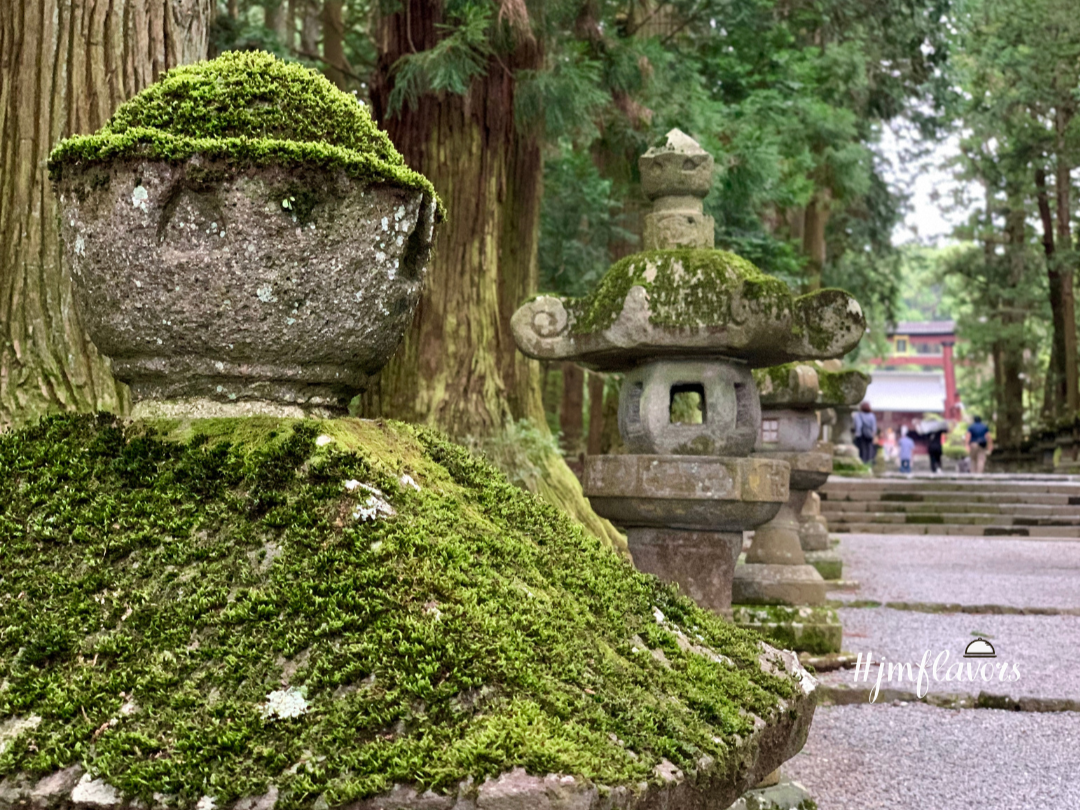
Some of the sacred cedar trees are believed to be more than 1,000 years old.
Think about that.
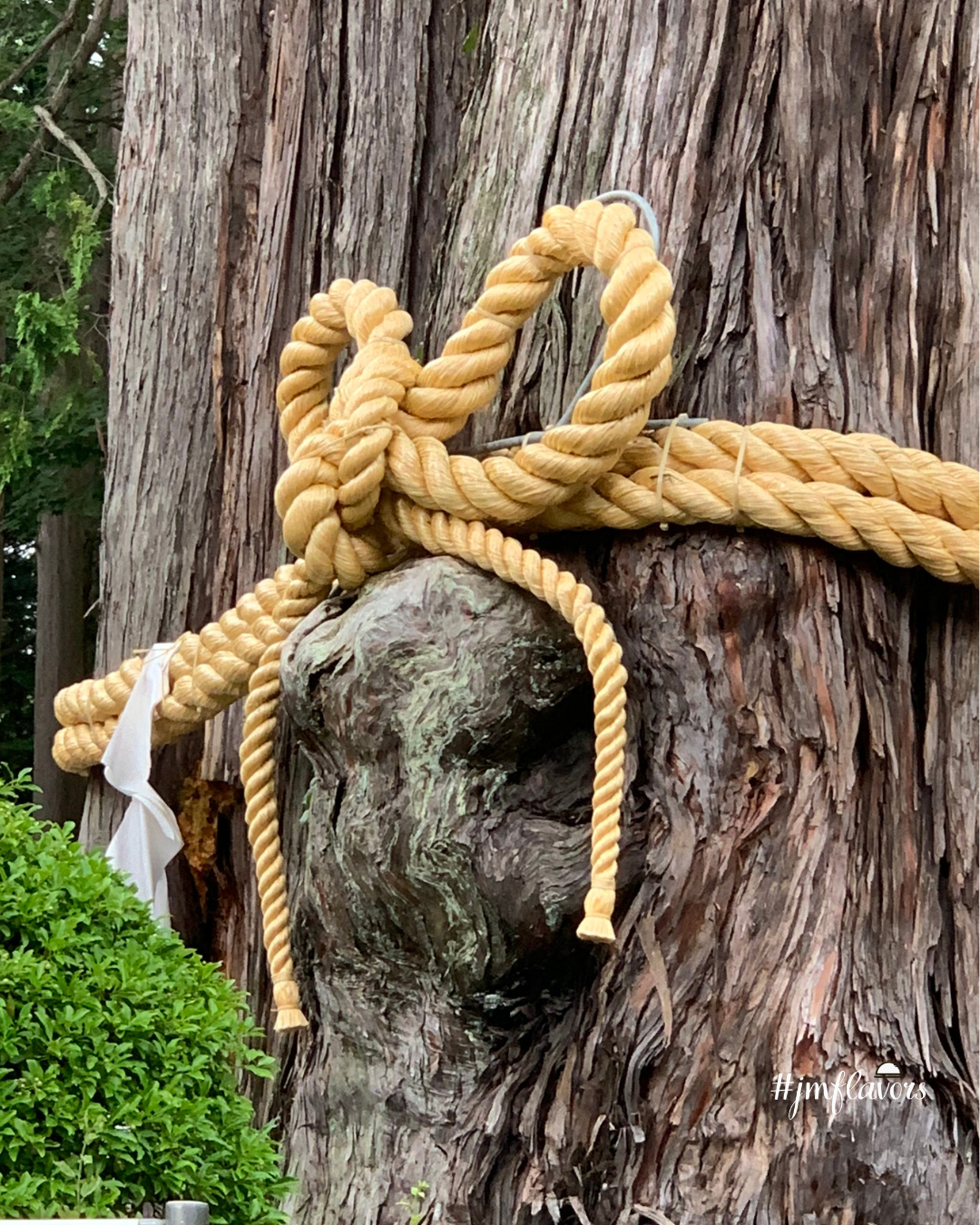
A tree that was already growing centuries before modern Japan existed.
I was fascinated by the thick ropes wrapped around some of the enormous trees.
These are shimenawa, sacred ropes used in Shinto to mark something as sacred or to distinguish sacred space from the ordinary world.
And suddenly those ancient trees made even more sense.
They weren’t simply beautiful old trees.
They were part of the sacred landscape.
Standing beneath those giant cedars, surrounded by moss-covered lanterns and centuries of history, I found myself thinking about how differently we experience nature in different parts of the world.
Here, a tree could be beautiful, ancient—and sacred all at once.
The shrine grounds cover approximately 99,000 square metres, creating one of the largest forested shrine environments in the region.
Everywhere I looked there was something to photograph.
The ancient trees.
The moss-covered lanterns.
The enormous ropes tied around sacred trees.
The wooden structures.
And the masks.
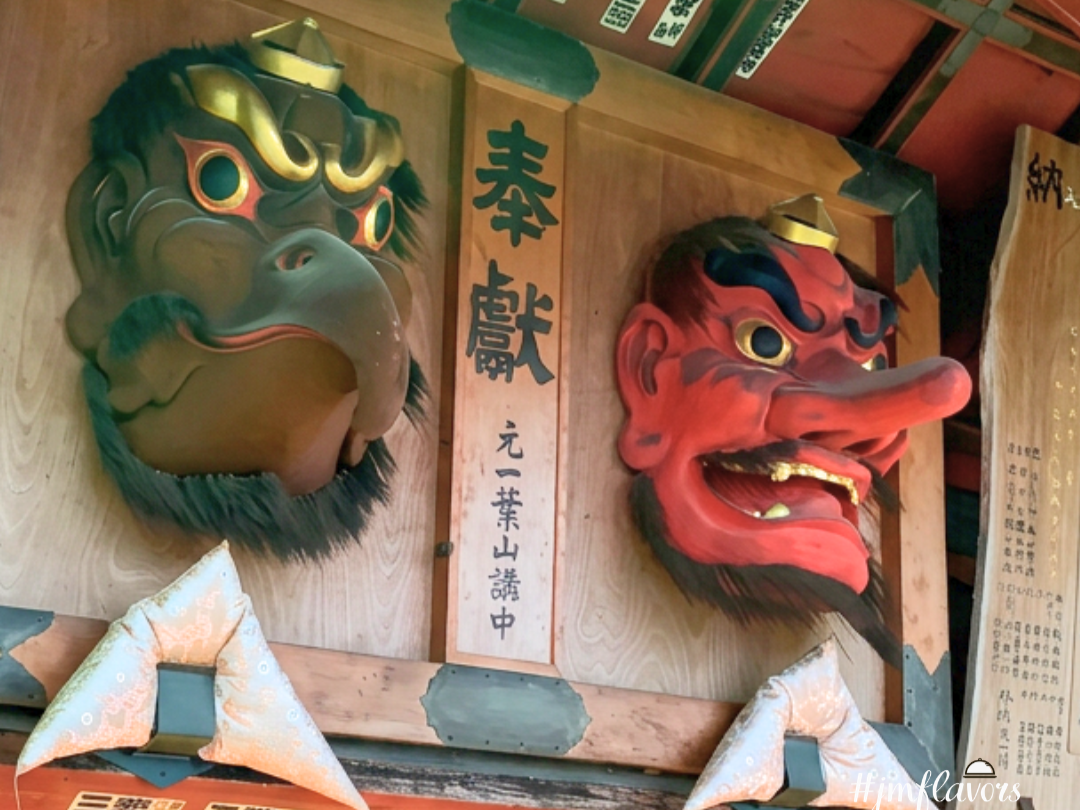
Those masks caught my attention because they were so different from anything we would normally see around a Canadian church or ceremonial space. Similar but different from our west coast Indigenous cultures. In Japan, masks have a long connection with religious traditions, theatre and folklore, and they added yet another layer of mystery to the shrine.
Then there were the details.
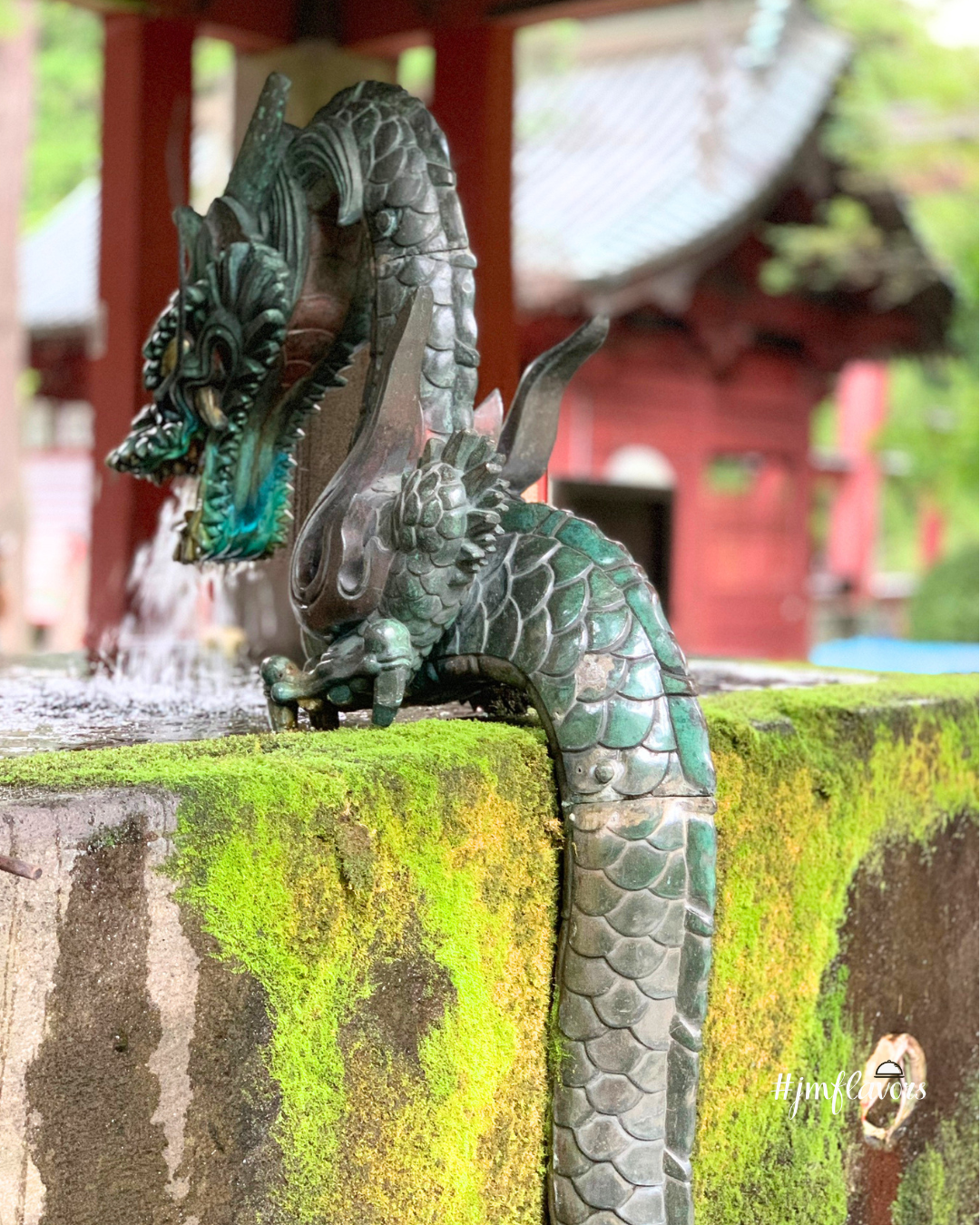
One of my favourite was the dragon at the water basin. Rather than simply being perched on top, the dragon seemed to crawl alongside the structure, almost as if it were emerging from the stone.
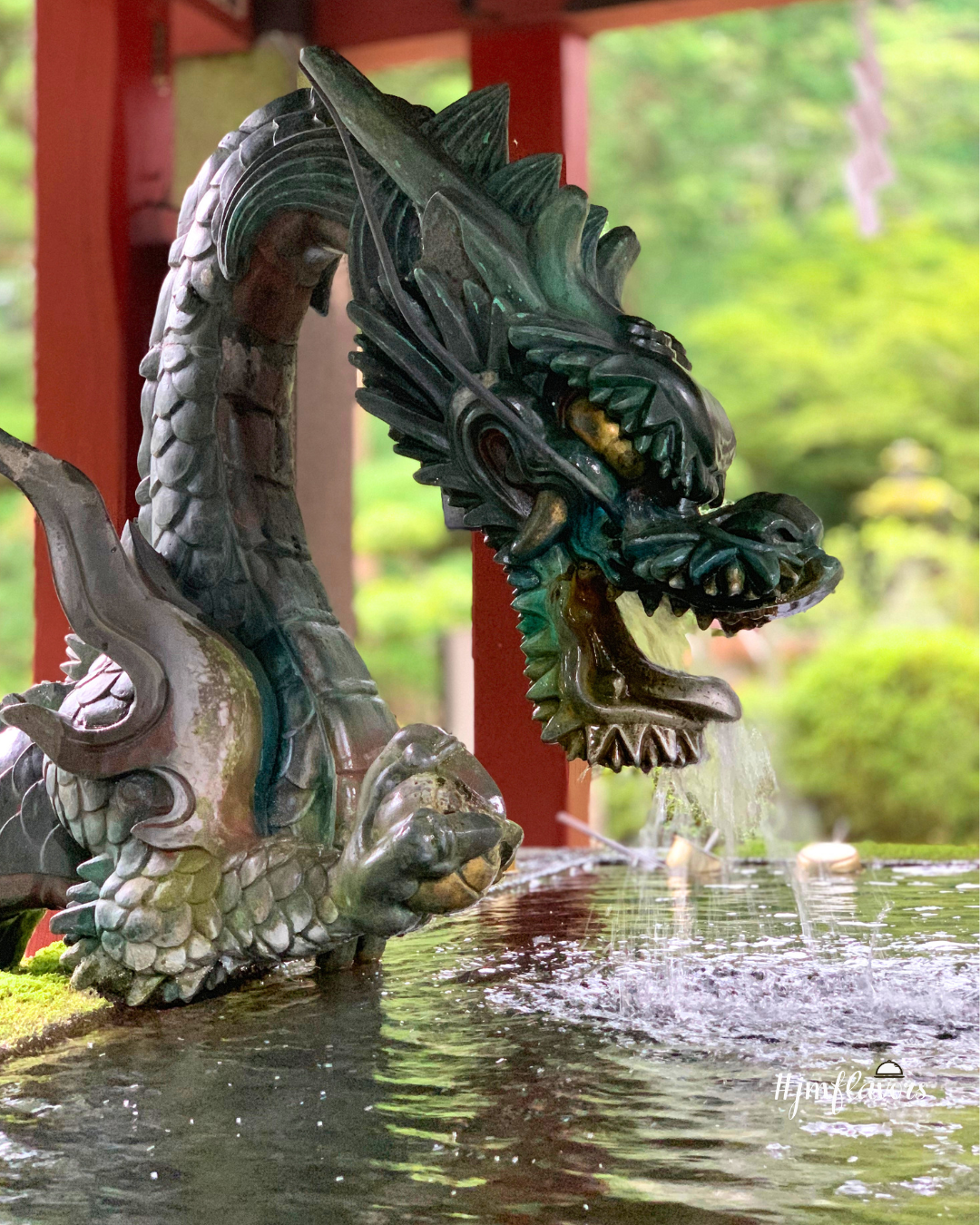
It was such a small detail, but that is what I loved about Japan.
You could look at something for five seconds and then realize there was another story hidden inside it.
Three Thousand Seven Hundred and Seventy-Six Metres of History
The more I learned about Mount Fuji, the more I understood why it has such a powerful hold on the imagination.
For centuries, pilgrims climbed the mountain as an act of religious devotion. UNESCO describes Fuji as a place where Shinto and Buddhist traditions became intertwined, with the ascent itself carrying ideas of spiritual transformation and even symbolic death and rebirth. (UNESCO World Heritage Centre)
And then there is the art.
Mount Fuji has appeared in Japanese art for centuries, but its image became internationally famous through the woodblock prints of artists such as Katsushika Hokusai and Utagawa Hiroshige. I personally liked it on the Sake tubs. More on that in sake tasting tour in Toyoko
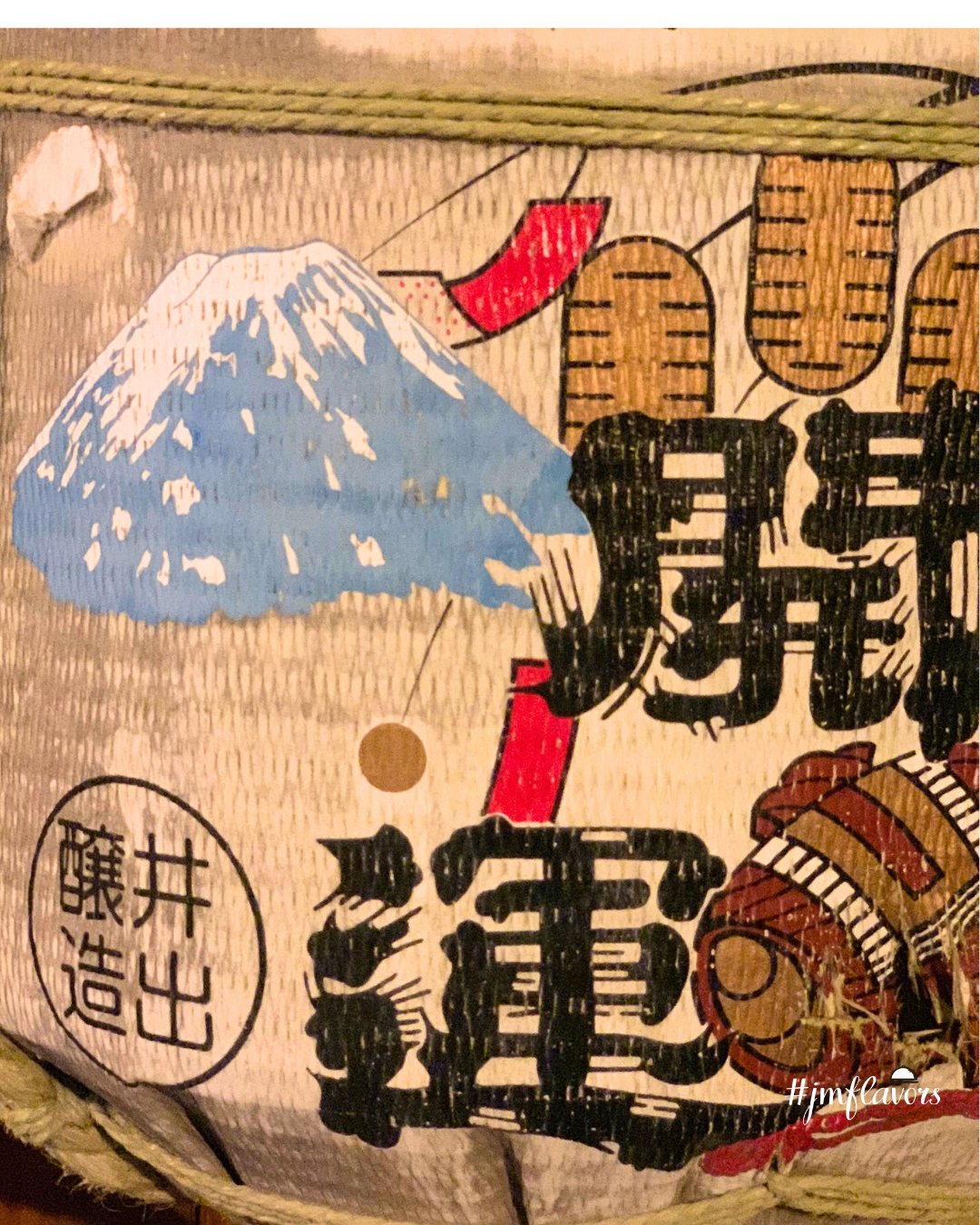
Those images eventually travelled around the world and had a profound influence on Western artists.
Suddenly, I understood why every glimpse of Fuji felt like looking at a painting.
The mountain almost seems designed for one
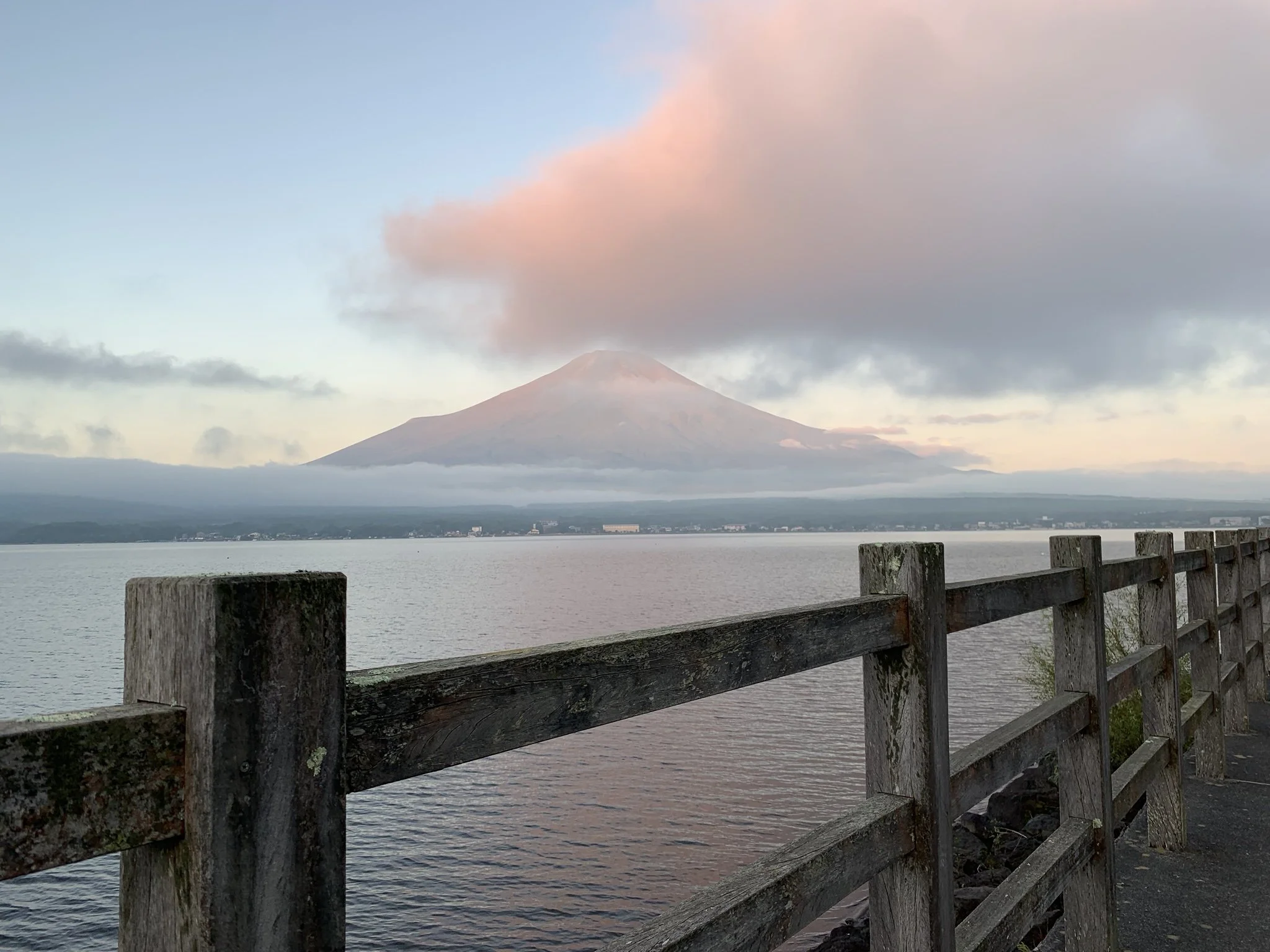
So the next morning, I got up very early and headed out to see if Fuji would make an appearance.
And this is where Mount Fuji teaches you a little lesson in patience.
You can travel all the way there, plan the perfect viewpoint and still not see the mountain clearly. Clouds, haze and weather can hide it completely.
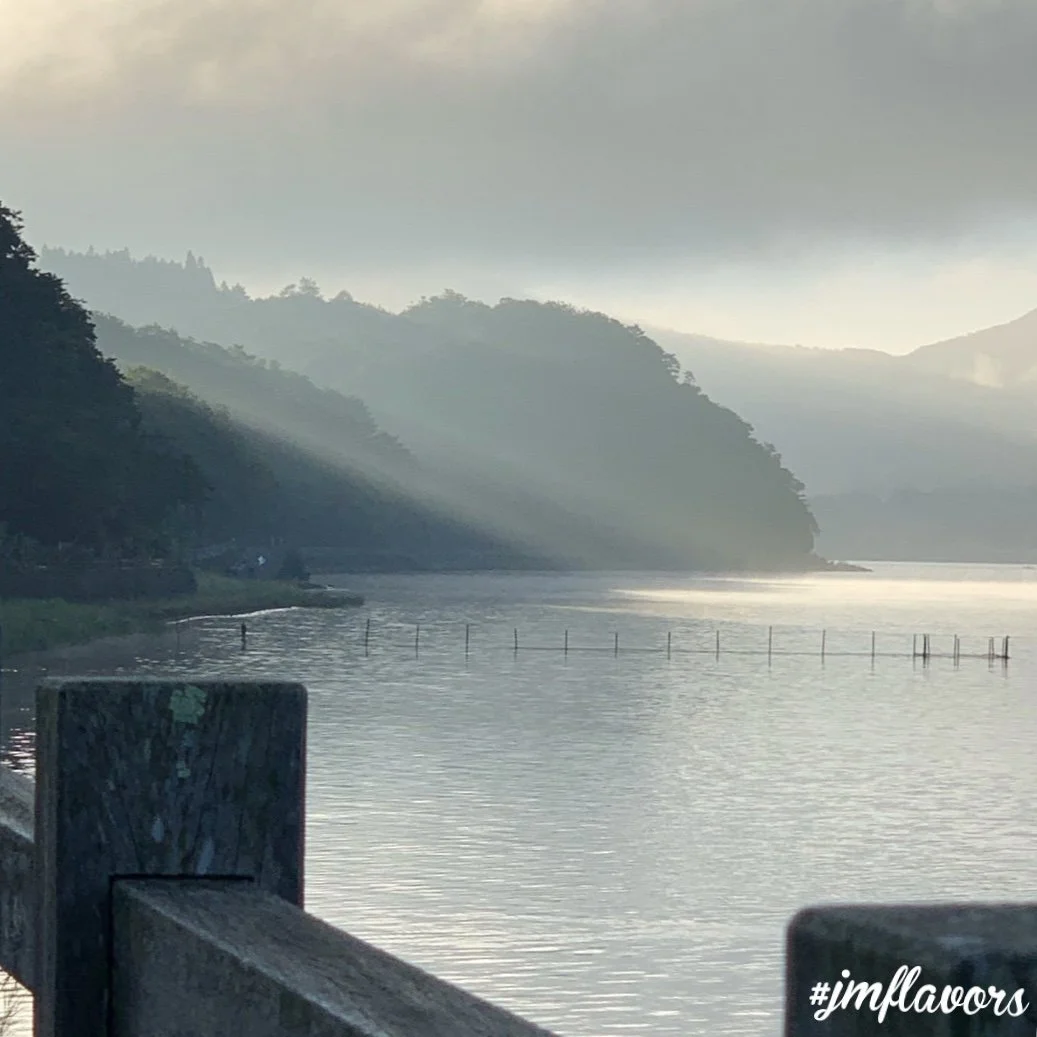
So when I looked out and saw Fuji reflected across a peaceful lake, with the first light of morning beginning to glow around it, I knew I was incredibly lucky.
And then I noticed a fisherman.
Just one person out on the quiet water.
The scene was almost completely still.
Mount Fuji in the distance.
The fisherman in the foreground.
The soft morning light.
No crowds.
No noise.
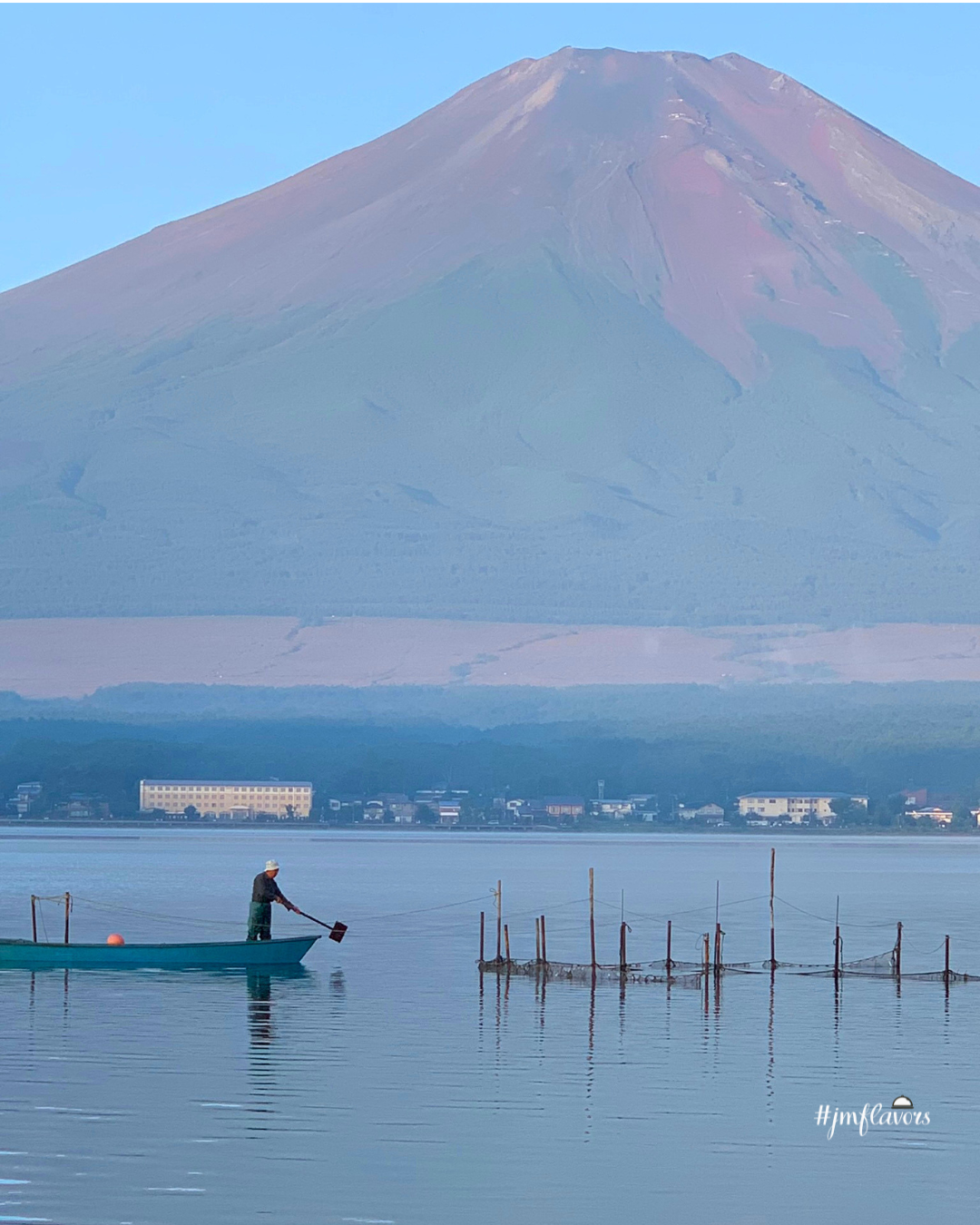
Just this enormous, sacred mountain rising quietly above the lake.
After three days around Mount Fuji, it was time to head back toward Tokyo.
I had to have one last look at Mount Fuji.
After all the history, the shrines, the wedding, the ancient trees, the moss-covered lanterns, the statues and that beautiful sunrise, I felt like I had finally seen several different sides of this extraordinary mountain.
Mount Fuji the volcano.
Mount Fuji the sacred place.
Mount Fuji the artist’s muse.
And, of course…
Mount Fuji the cake.
I didn’t climb it.
But I ate it.
And somehow, that feels like a pretty good way to say goodbye as I leave the rural landscape.