Osaka: Best To NOT Ask What You’re Eating
Welcome to Japan’s Kitchen, where the food is loud, the neon is brighter, and sometimes it’s better not to ask what you’re eating.
There are cities you visit for the architecture.
Cities you visit for the history.
Cities you visit because somebody told you that you absolutely must see a particular temple, castle or museum.
And then there is Osaka.
Osaka is a city you eat.
In fact, Osaka has been nicknamed “Japan’s Kitchen” for centuries, thanks in part to its history as a commercial centre and its deep-rooted food culture. The local attitude toward eating is summed up perfectly by the word kuidaore—roughly translated as eat until you drop, or perhaps more dramatically, eat yourself into ruin.
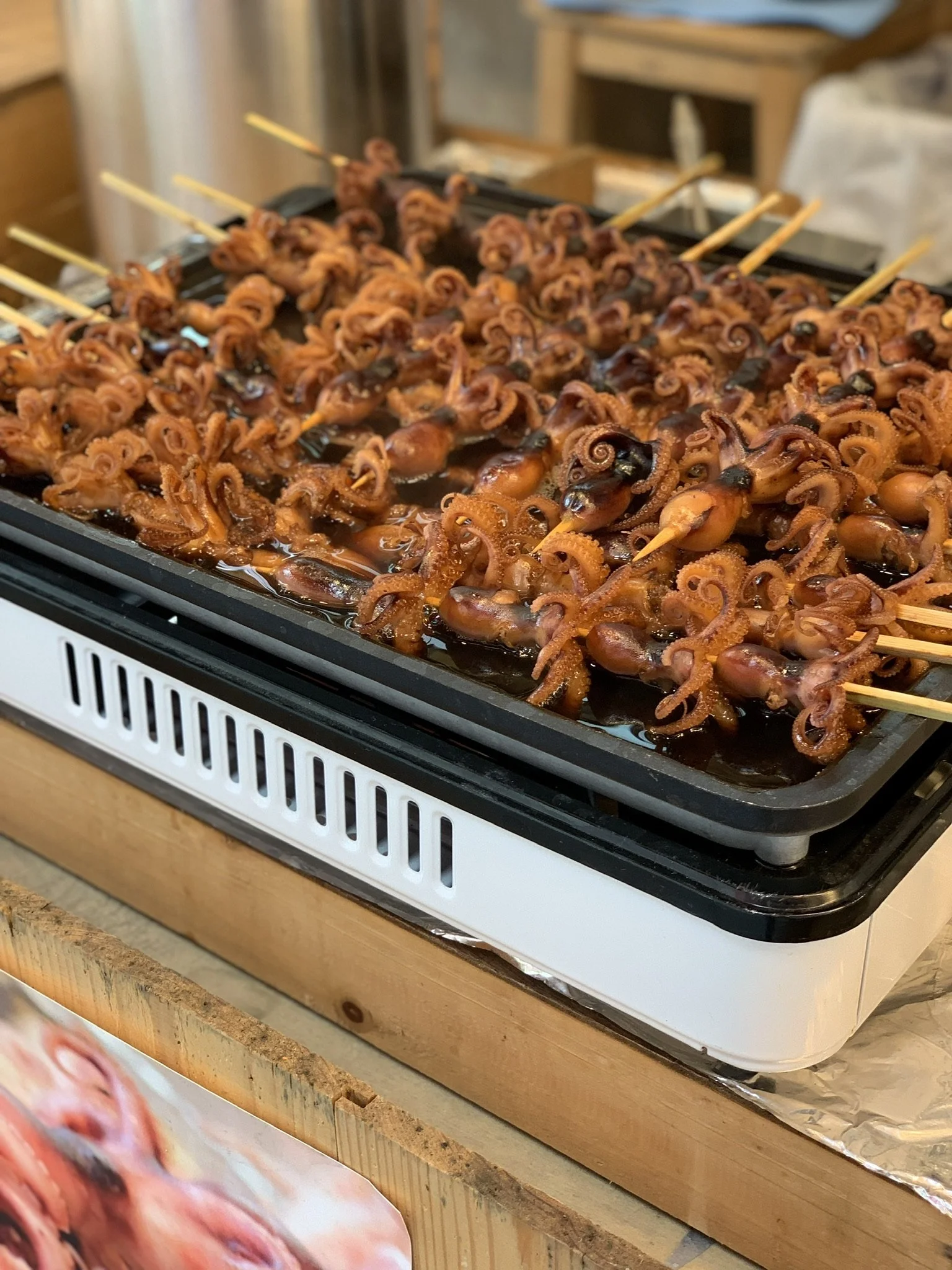
After spending time there, I can confirm this is not merely a slogan.
It is a way of life.
Osaka doesn’t quietly serve you dinner. It waves it in your face, puts it under neon lights, gives it a three-dimensional sign the size of a small house and then dares you not to eat it.
And I, as a foodie, was completely willing to accept the challenge.
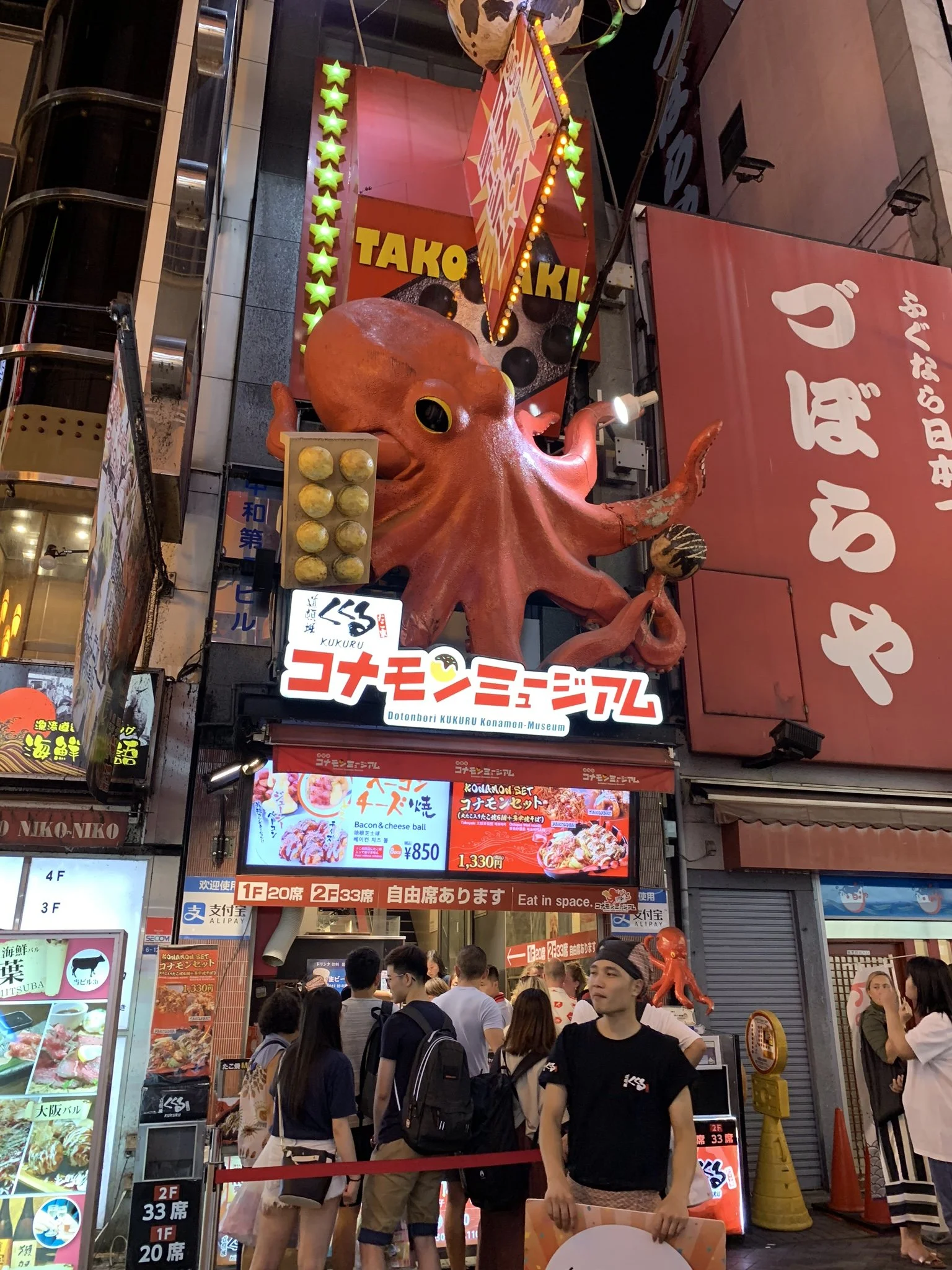
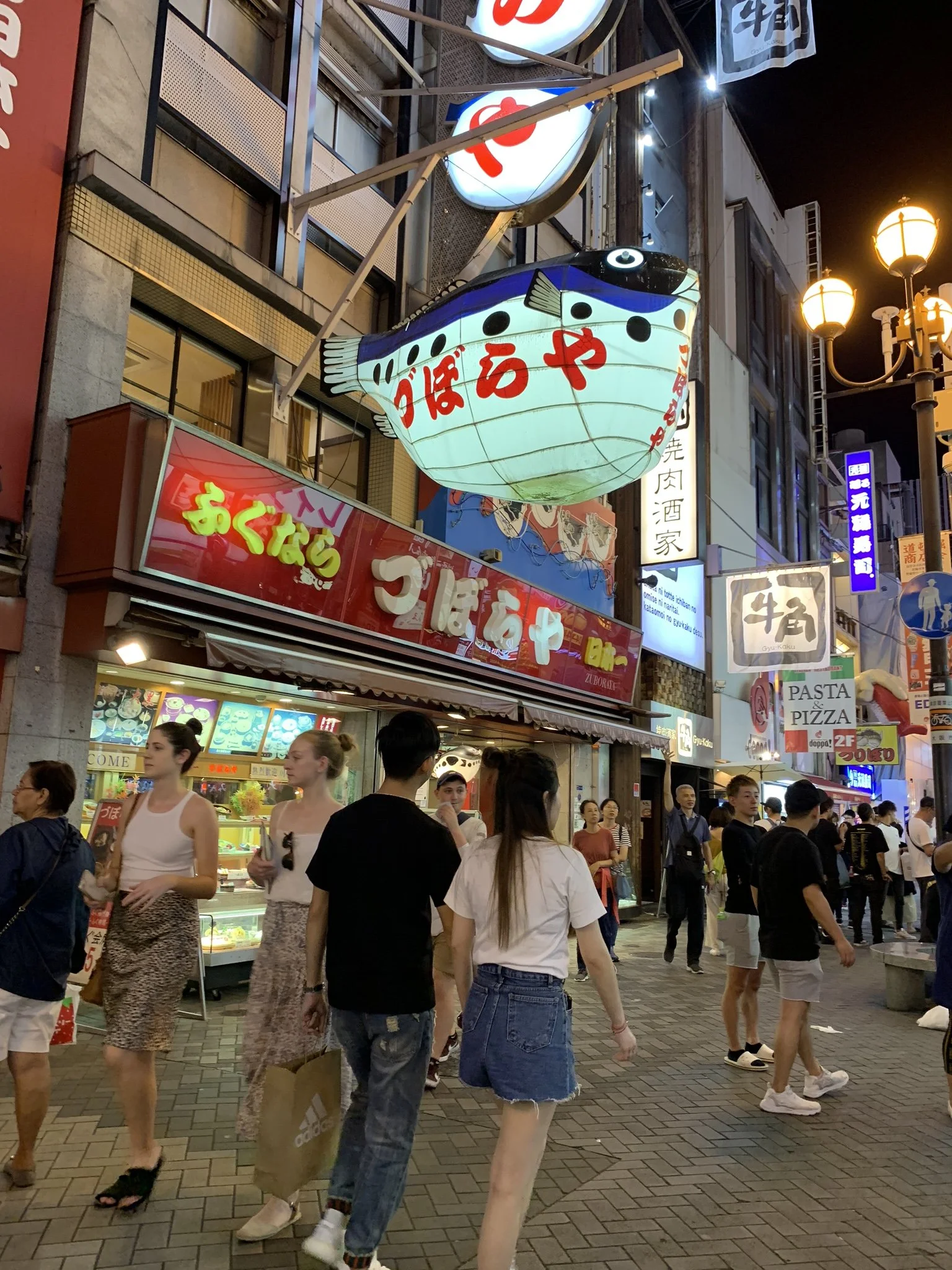
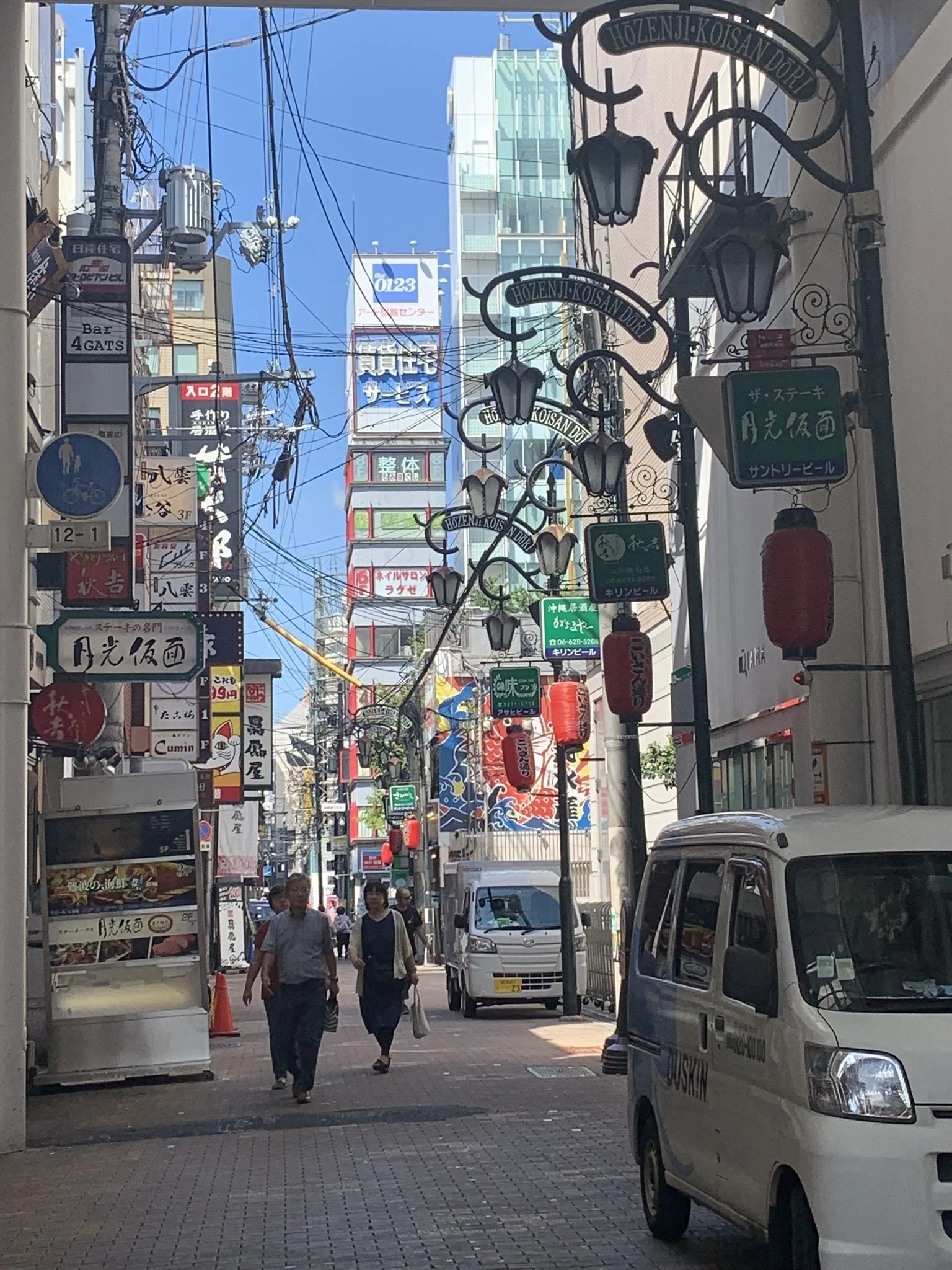
One of my favourite things about Osaka was simply walking around and looking up.
The city is a wonderful collision of old and new—traditional architecture, temples and gardens sharing the landscape with skyscrapers, glass, neon and an almost surreal obsession with larger-than-life food displays.
Why have a picture of food when you can have a giant, three-dimensional version of the food sticking out of the building?
Crabs crawl from walls. Octopus appear to be climbing storefronts. Giant food sculptures compete for your attention. Neon flashes everywhere.
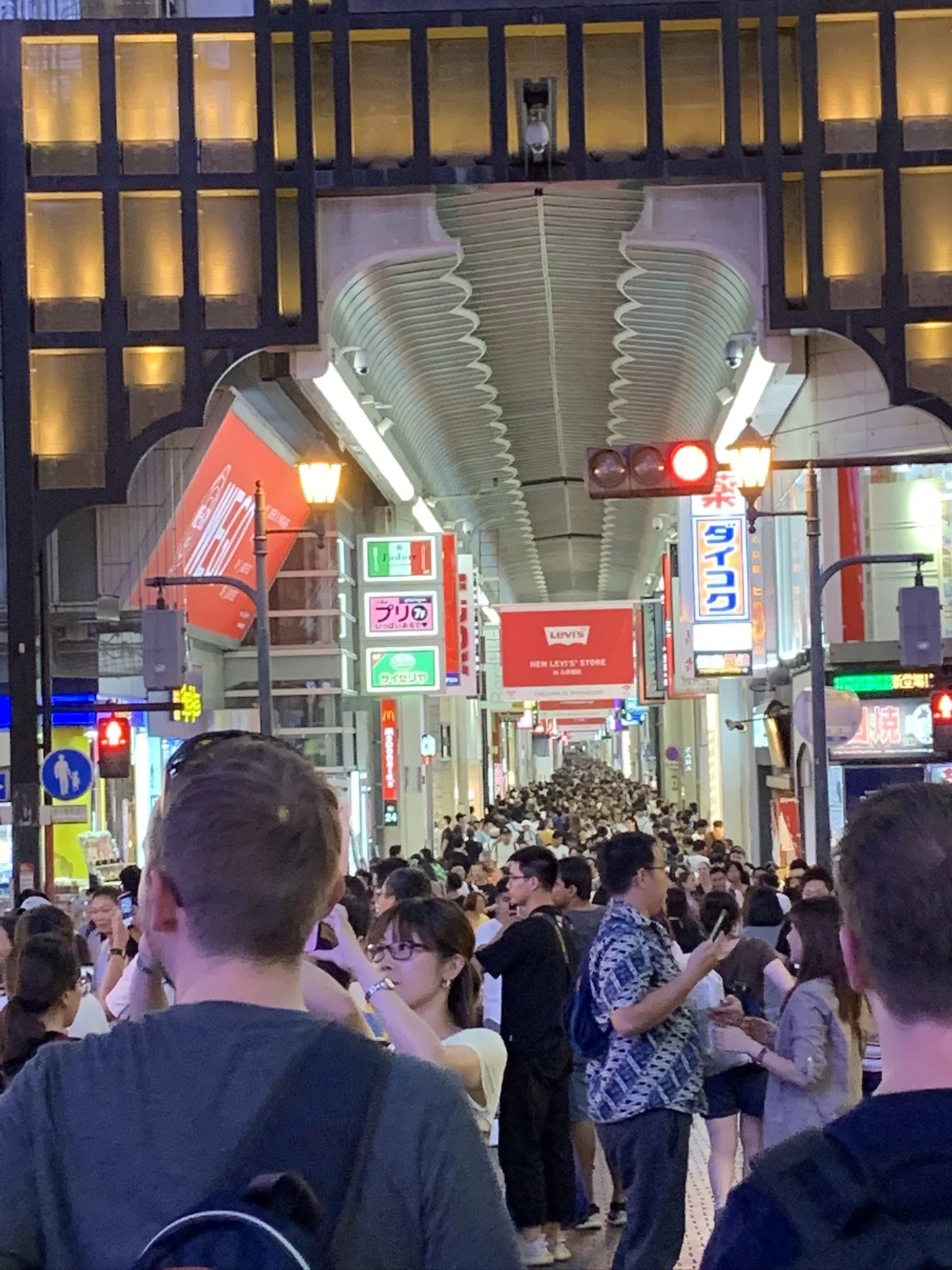
And then there is Dotonbori.
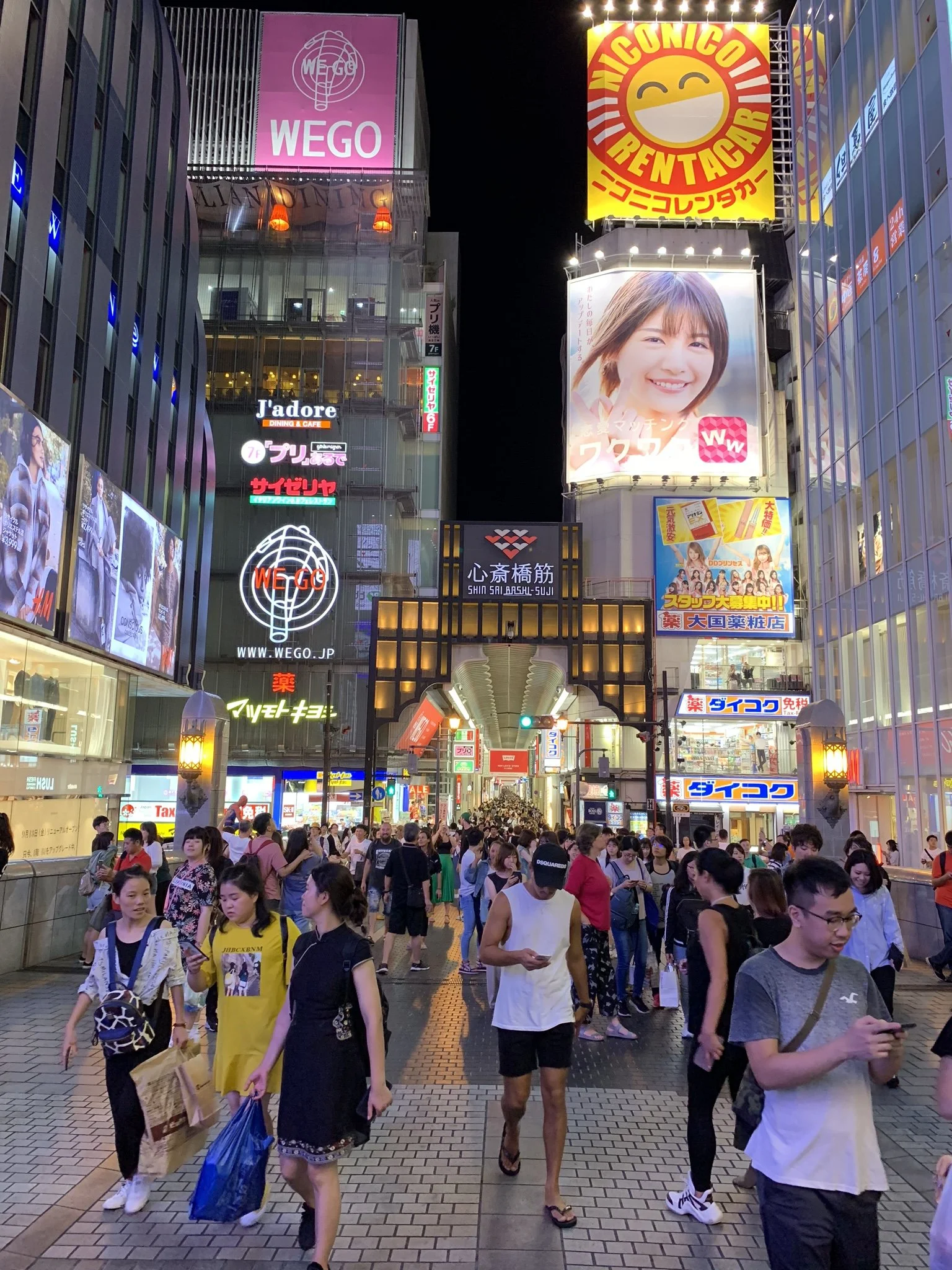
The Dotonbori canal dates back to the early 1600s, and the area developed into an entertainment district filled with theatres, teahouses and restaurants. Four hundred years later, the entertainment has simply become considerably brighter.
Walking through Dotonbori feels less like entering a restaurant district and more like walking onto a gigantic theatrical set.

You may come across a Billiken and for happiness and good fortune - remember to rub the feet.
In 1908 this mysterious rotund figure appeared to Missouri art teacher, Florence Pretz, in a dream. She drew the character and named it the Billiken. Apparently the name comes from the 1896 poem, “Mr. Moon: A Song of the Little People” by the Canadian poet, Bliss Carmen.
By 1909 the figurine travelled to Japan where the impish grin statue has become an Osaka mascot.
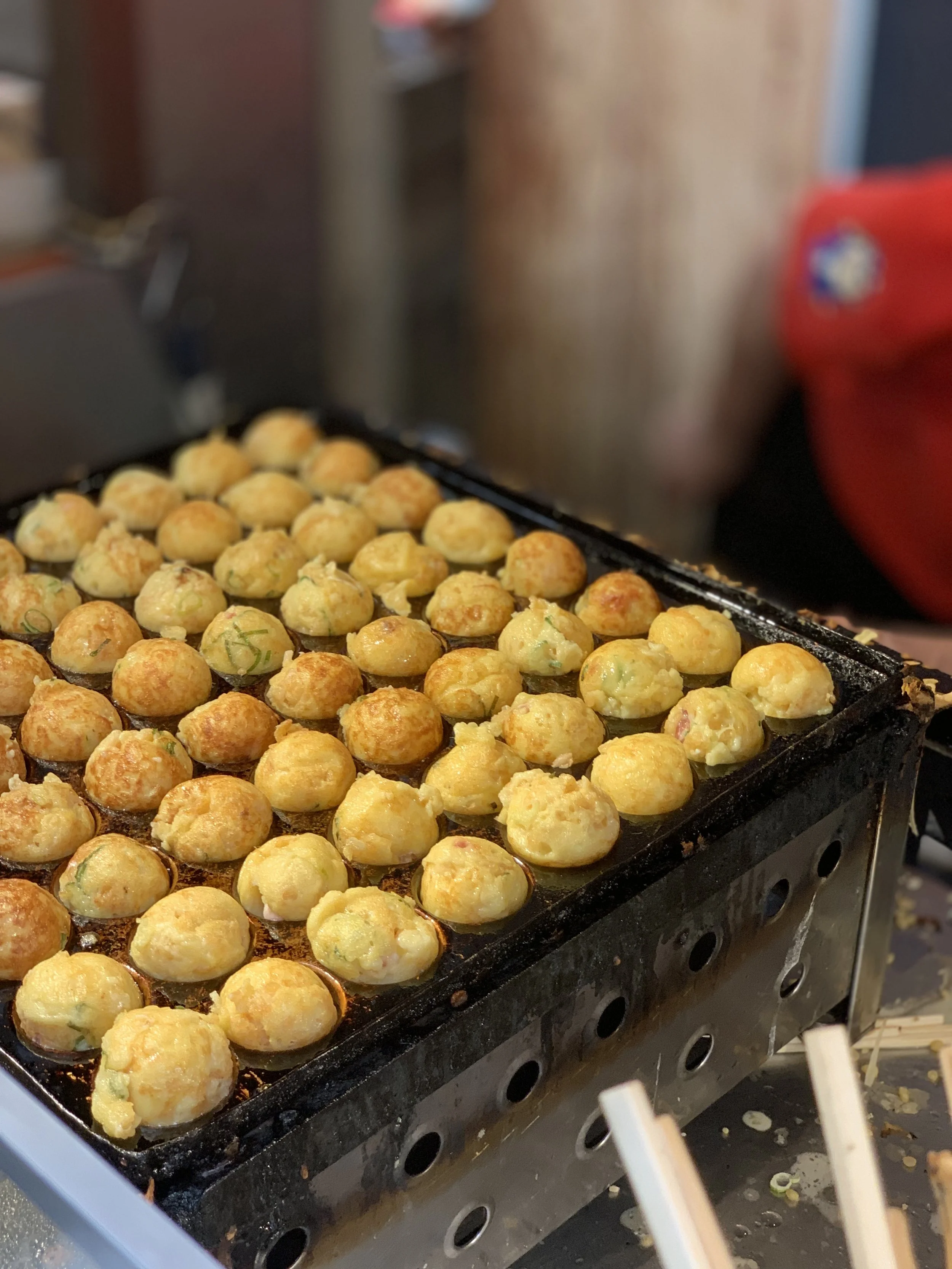
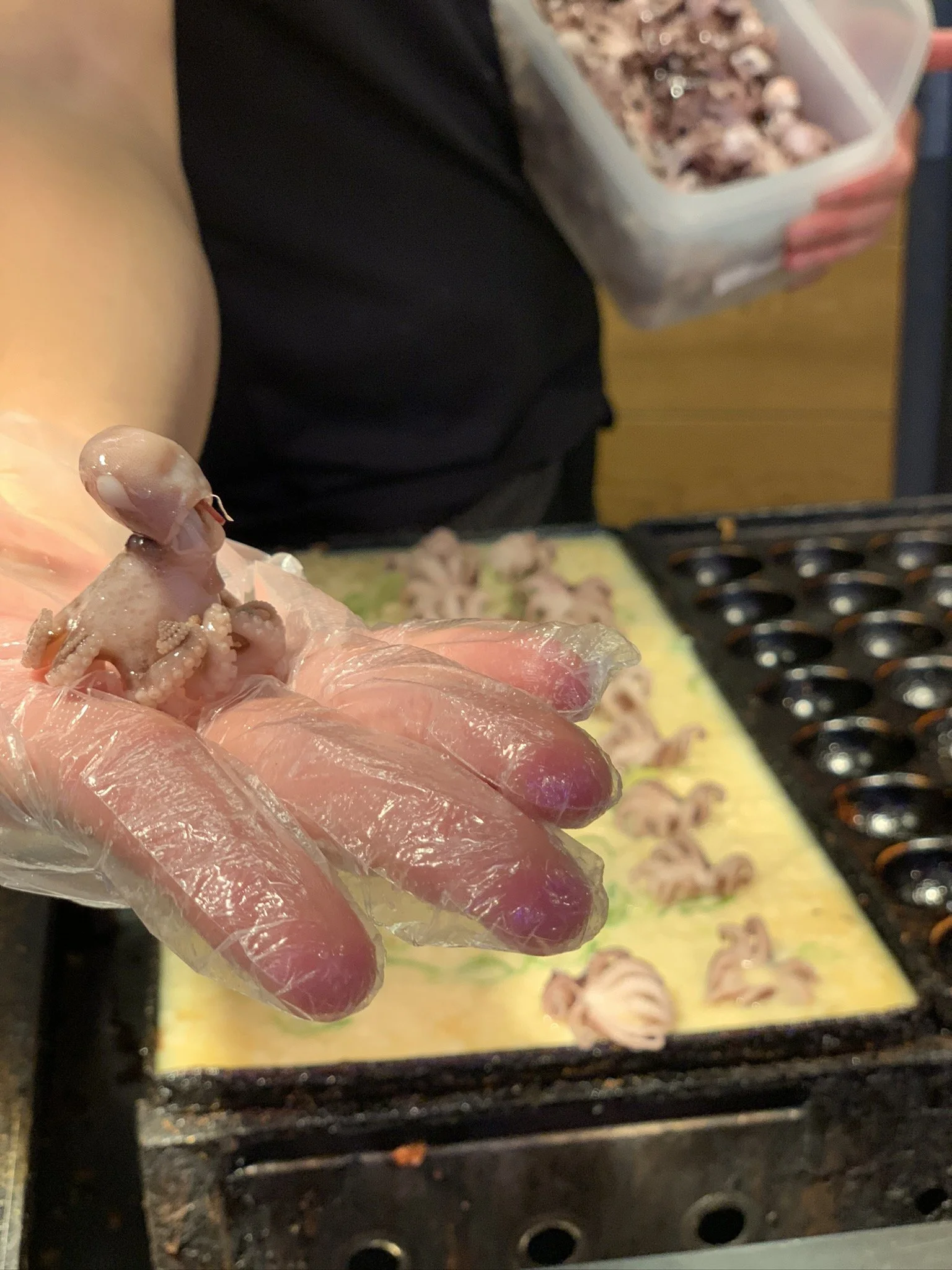
If there is one food that seemed to be everywhere, it was takoyaki. Those perfectly round little balls look innocent enough.
They are not.
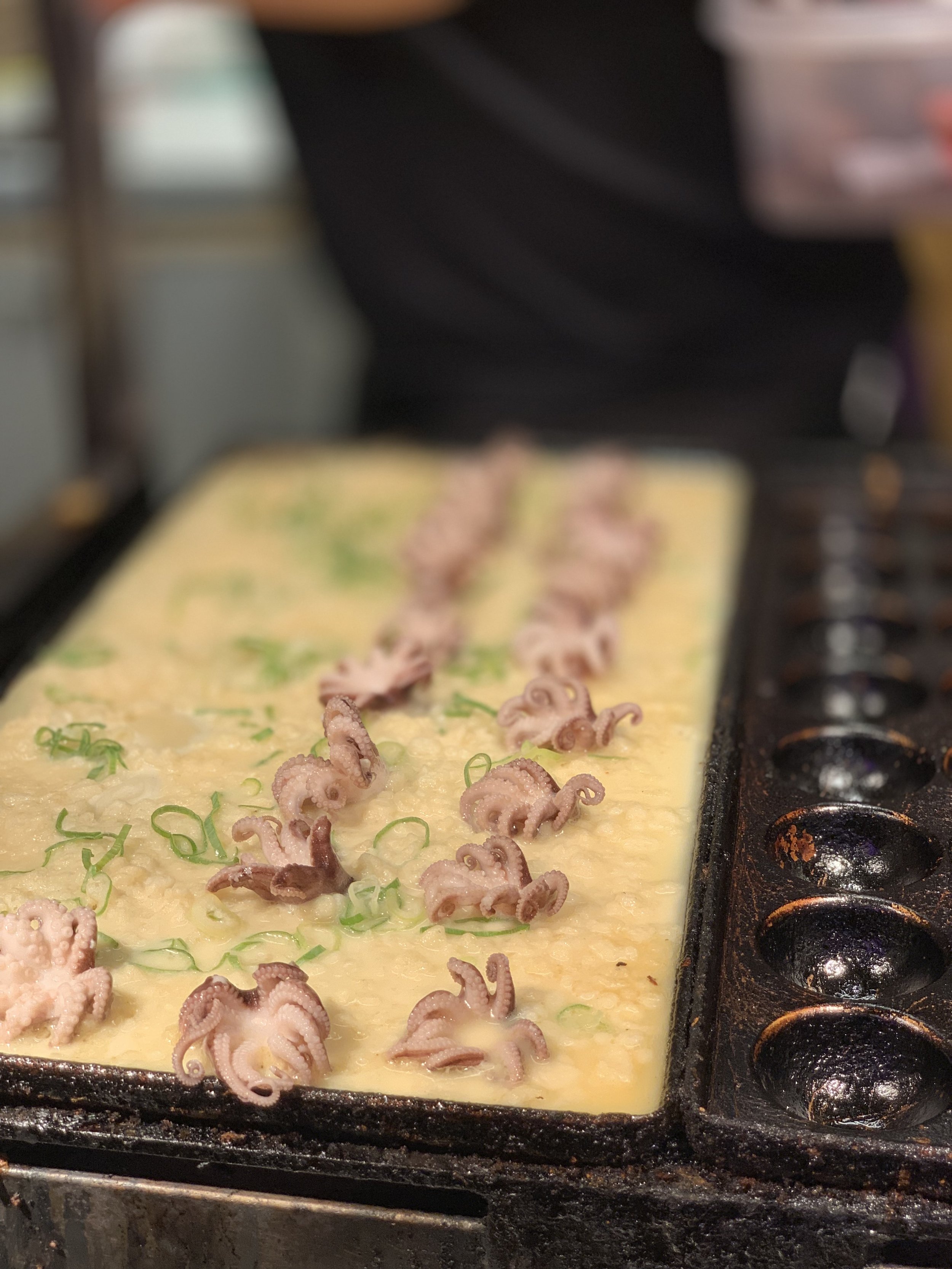
Takoyaki is made in a special pan with rows of little round moulds. Batter goes in, then pieces of octopus and other ingredients, and the cook begins the mesmerizing process of turning them over and over with tiny picks.
Round. Flip. Round. Flip.
Somehow, in the hands of an experienced cook, a messy puddle of batter becomes a tray of perfectly formed golden spheres.
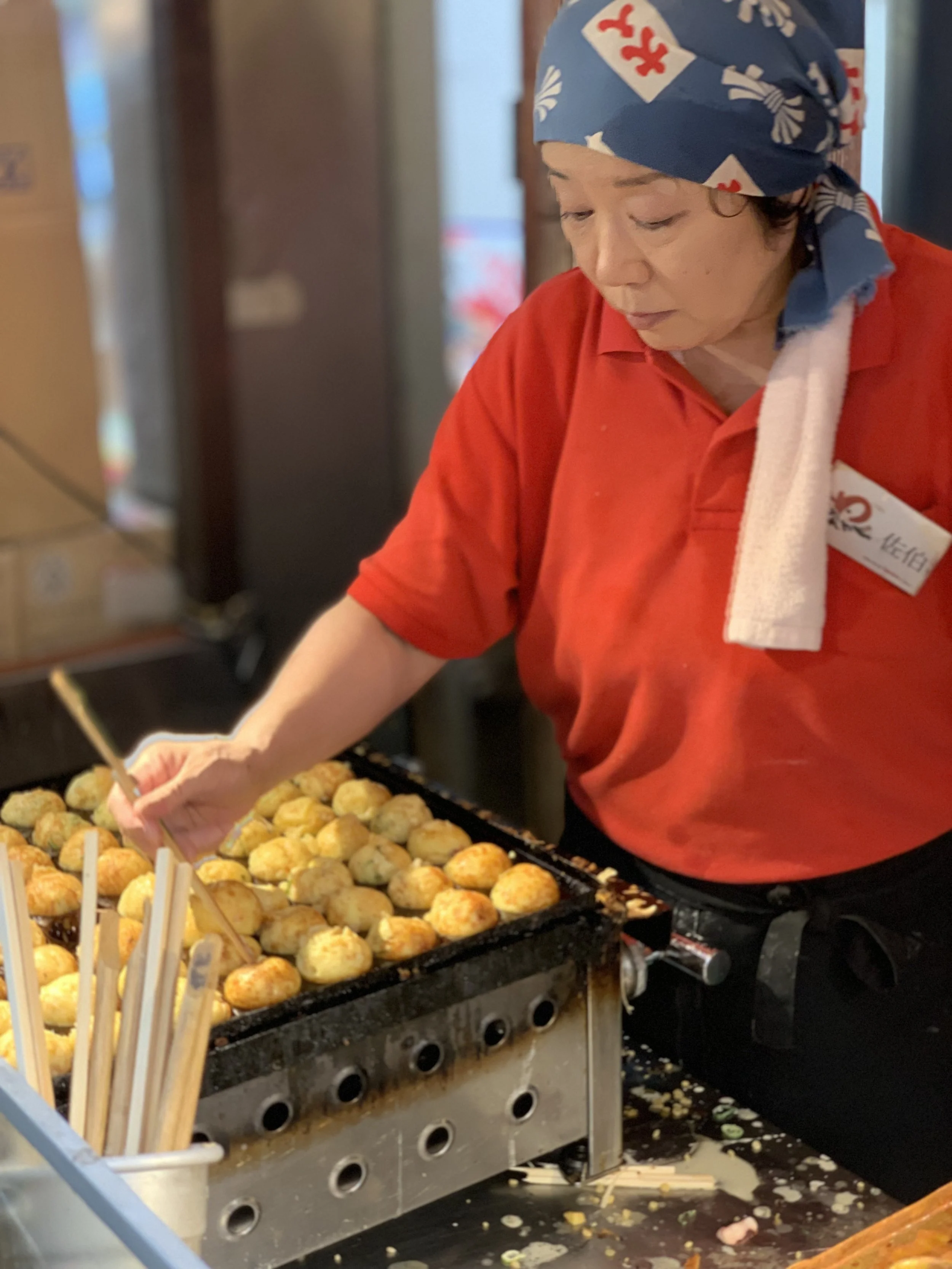
And then comes the important warning:
They are HOT.
Not warm.
Not “take a little bite” hot.
Molten-lava-in-the-middle hot. CAUTION!!!!
I learned very quickly that patience is a virtue when eating takoyaki.
Once dressed with sauce, mayonnaise, aonori—green seaweed—and dancing bonito flakes, they become one of Osaka’s quintessential fast foods. Their modern history is surprisingly recent, with the dish emerging in Osaka in the early 20th century and becoming established as a street-food favourite in the postwar era.
Watching them being made is almost as entertaining as eating them. Almost.
Then there was okonomiyaki.
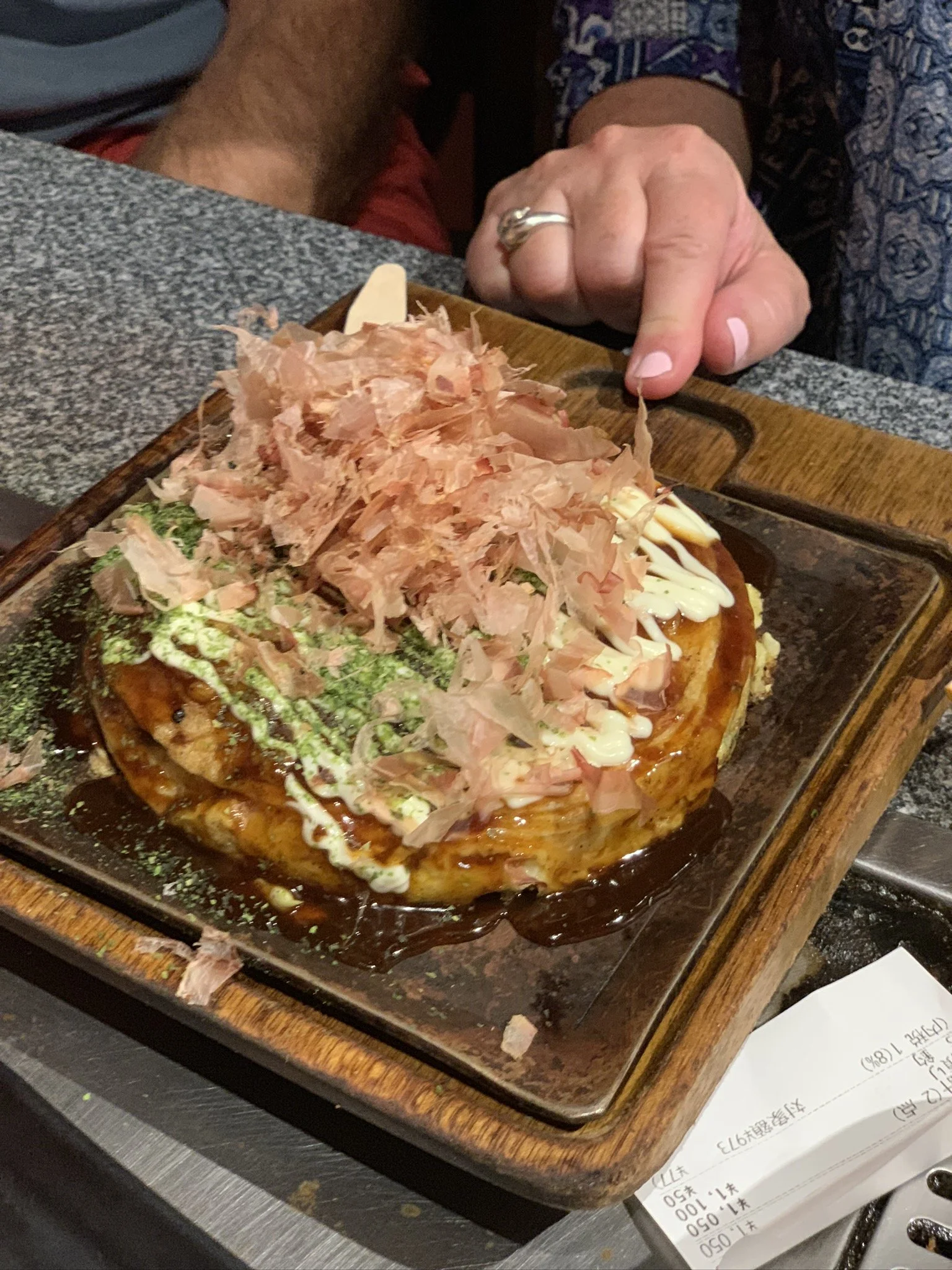
If takoyaki is Osaka’s little ball of joy, okonomiyaki is its big, sizzling cousin.
The name essentially means something along the lines of “what you like, grilled.”
And that philosophy suits Osaka perfectly.
At its heart is cabbage and a dashi-based batter, but then the possibilities open up: pork, seafood, vegetables and whatever else happens to make the combination delicious.
Once cooked, it is covered with savoury sauce, mayonnaise, green laver and bonito flakes.
And in some restaurants, you don’t just order it.
You cook it yourself.
There is something wonderfully democratic about okonomiyaki. There is no preciousness about it. It is hearty, social and meant to be enjoyed.
Osaka’s version became especially popular after the Second World War, and today it is considered one of the city’s defining soul foods.
My kind of food philosophy:
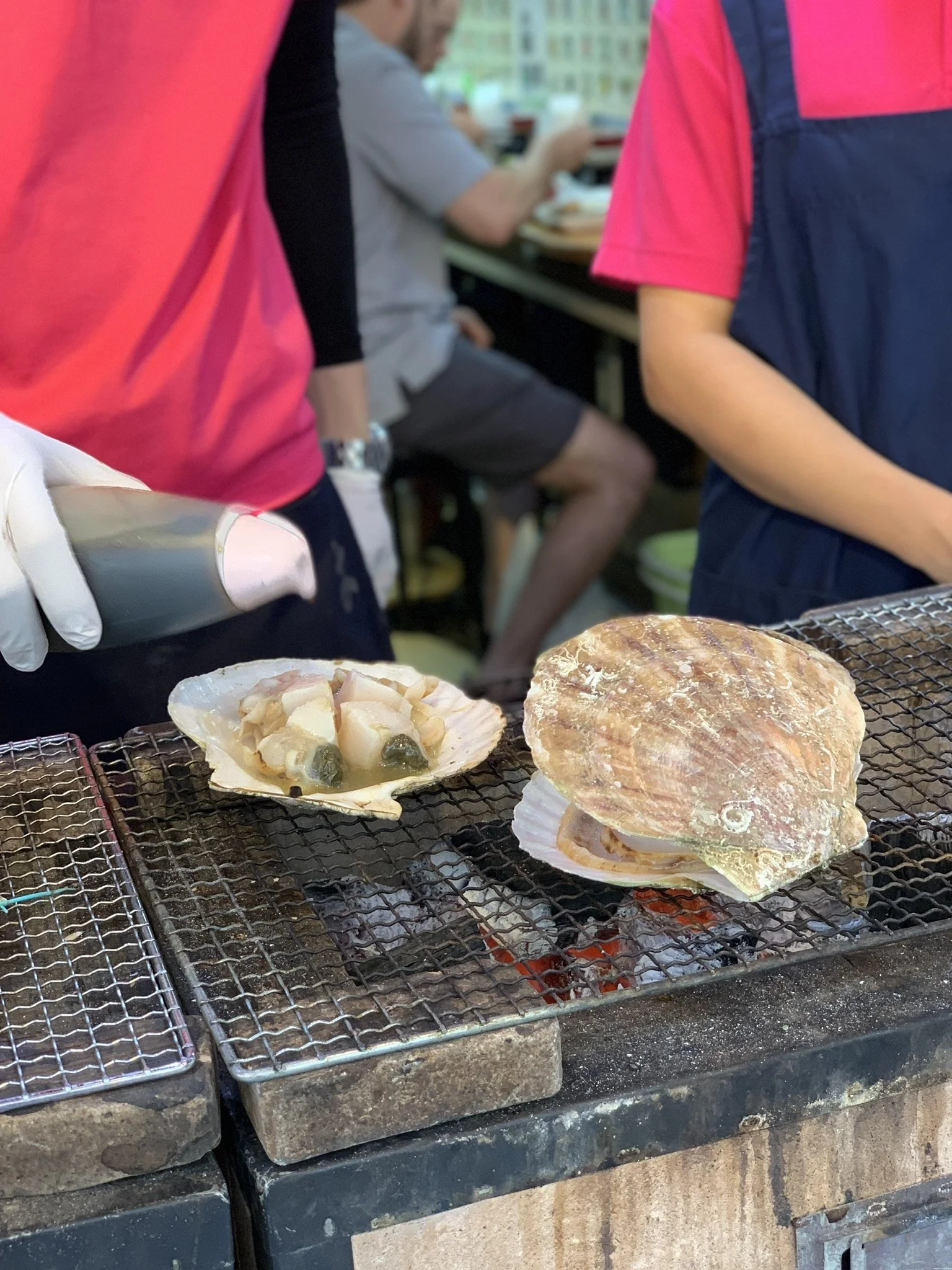
Put it on a hot grill and make it delicious.
THE NIGHT ACTUALLY PAID TO EAT… WHAT??? OMG
Now we get to one of my favourite Osaka stories.
And perhaps the best argument I can make for not always asking too many questions before dinner.
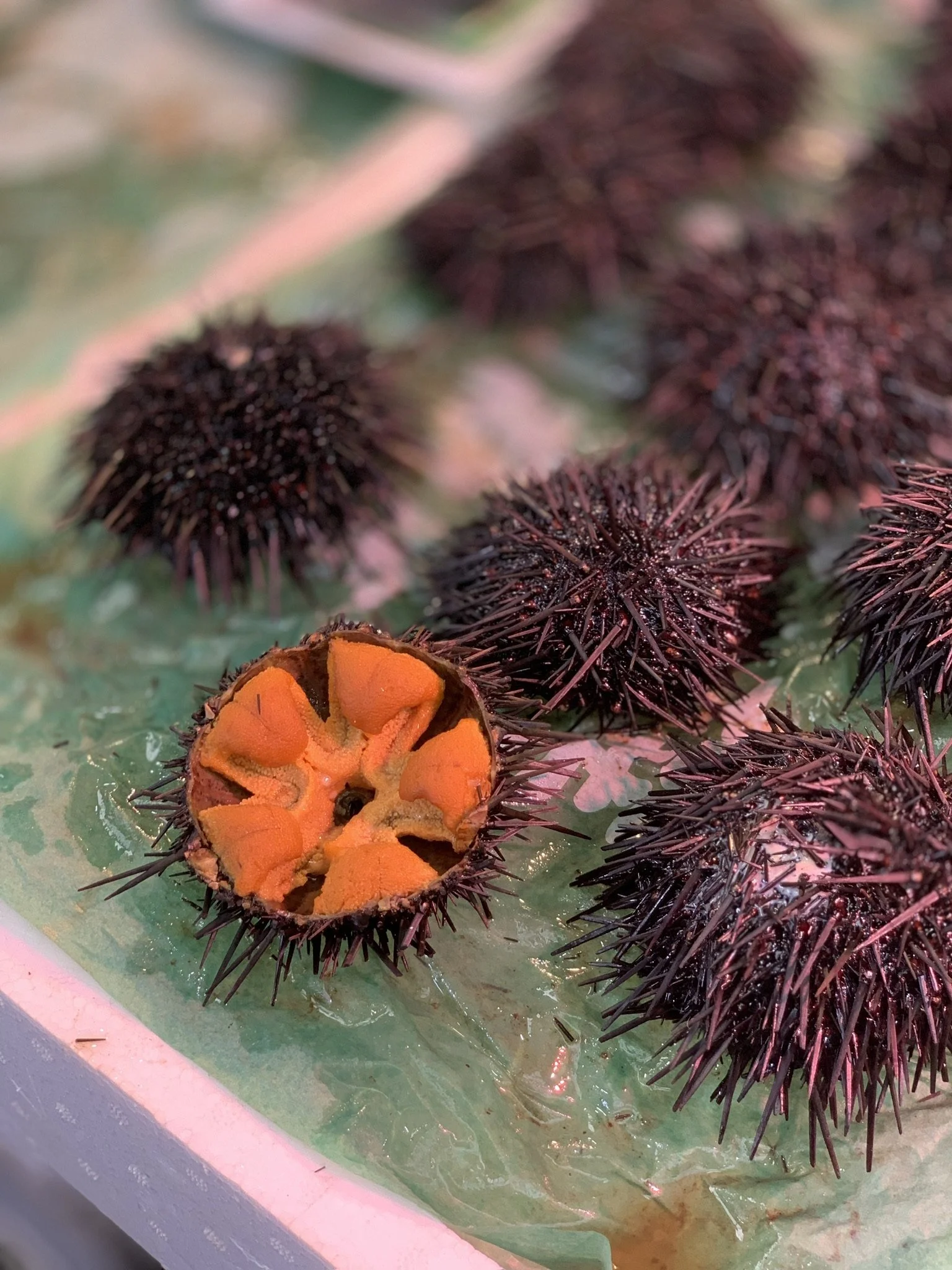
Becky, a Canadian friend of mine lives in Osaka and teaches English. She took us to a restaurant and, thankfully, took charge of ordering. I could not even read the menu.
There were many courses. Beautifully presented. Completely unfamiliar.
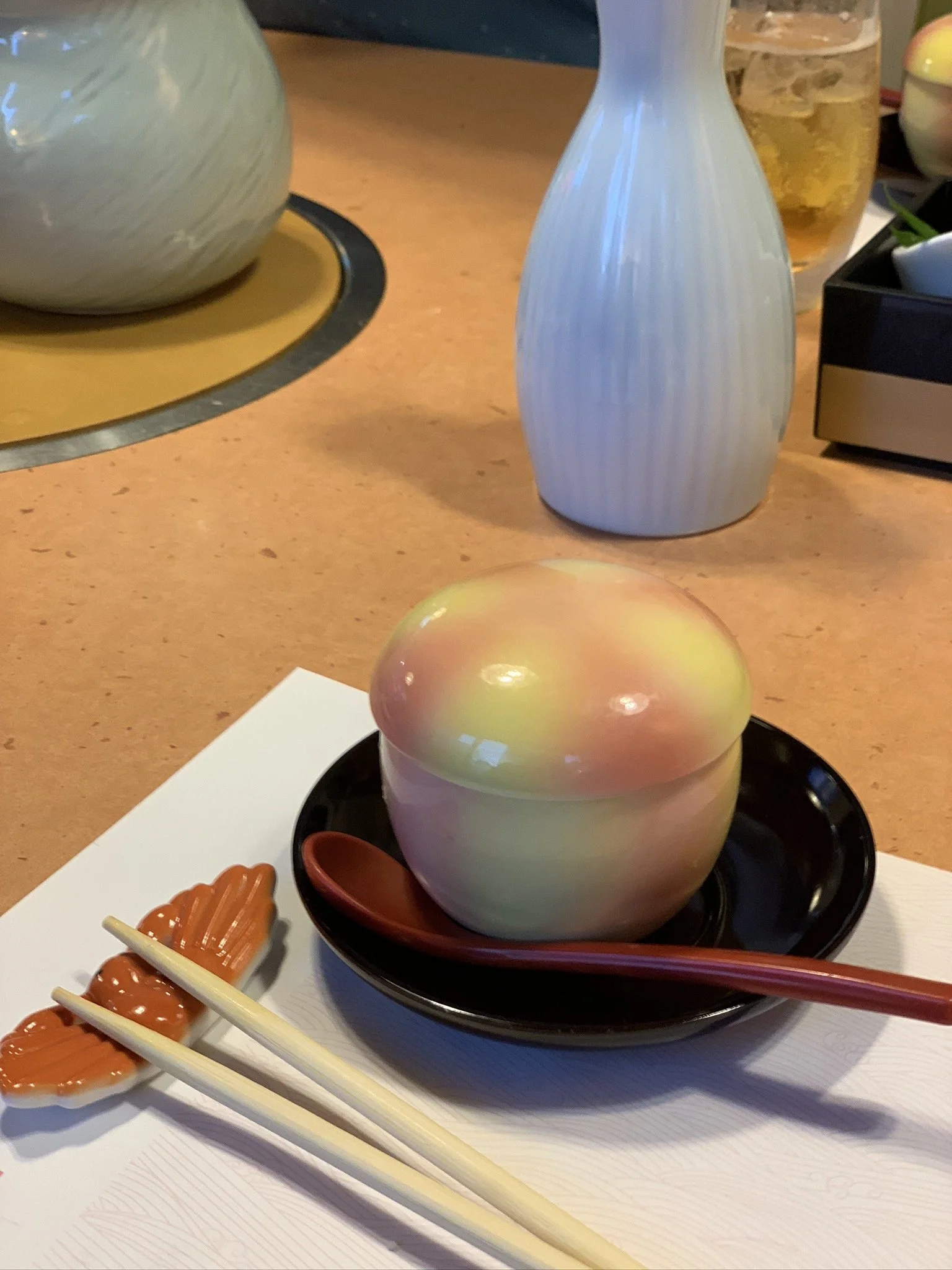
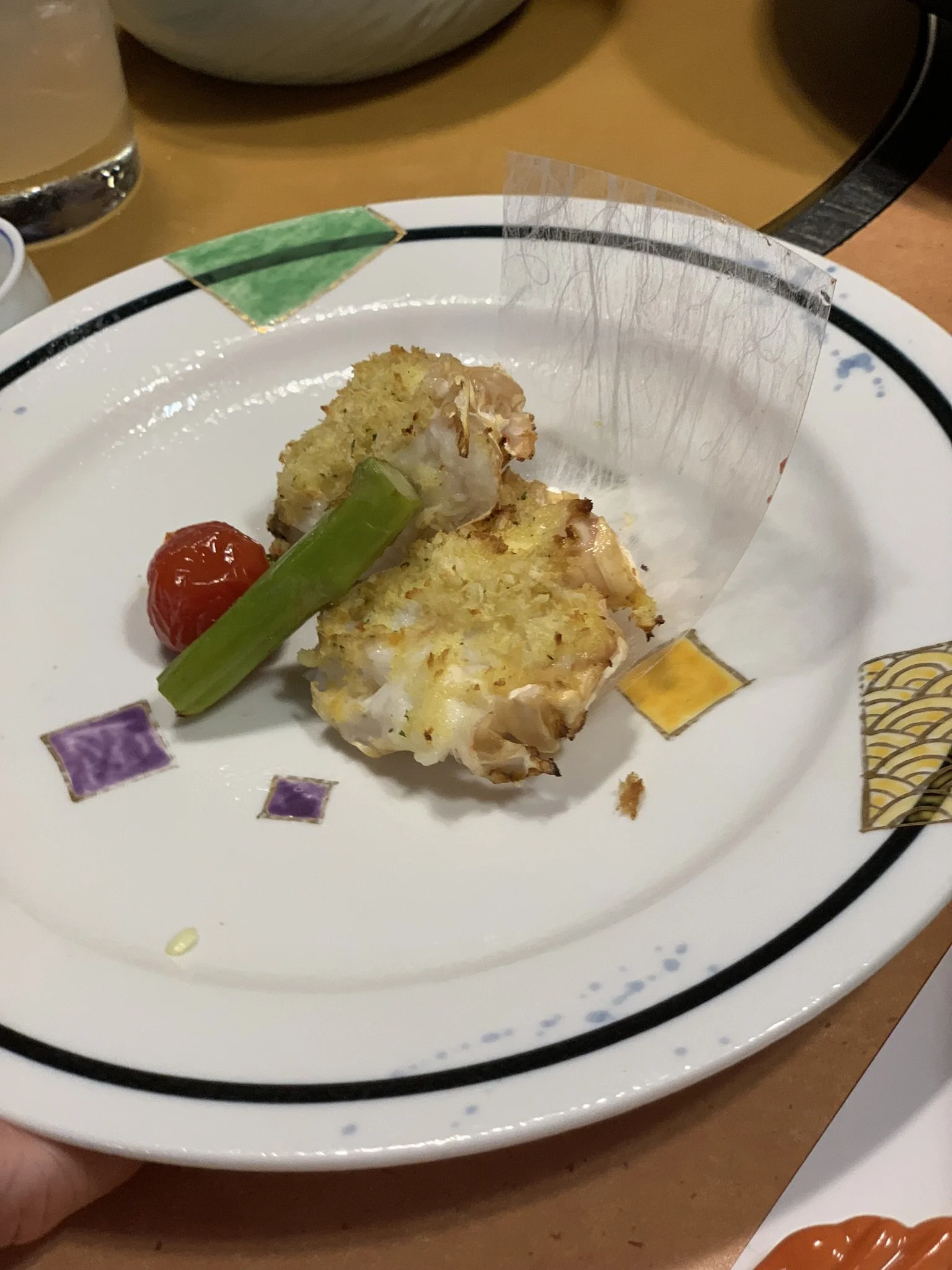
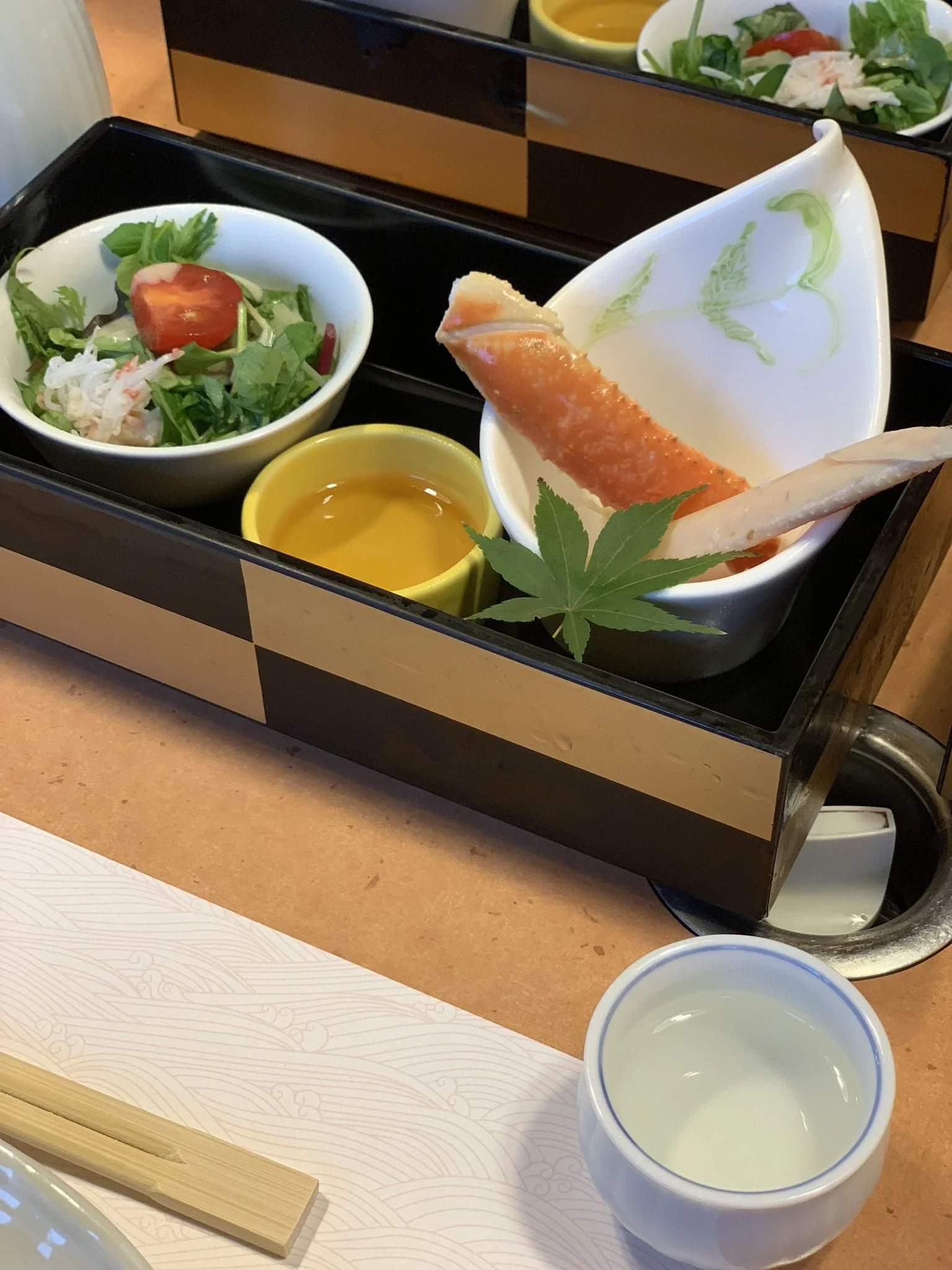
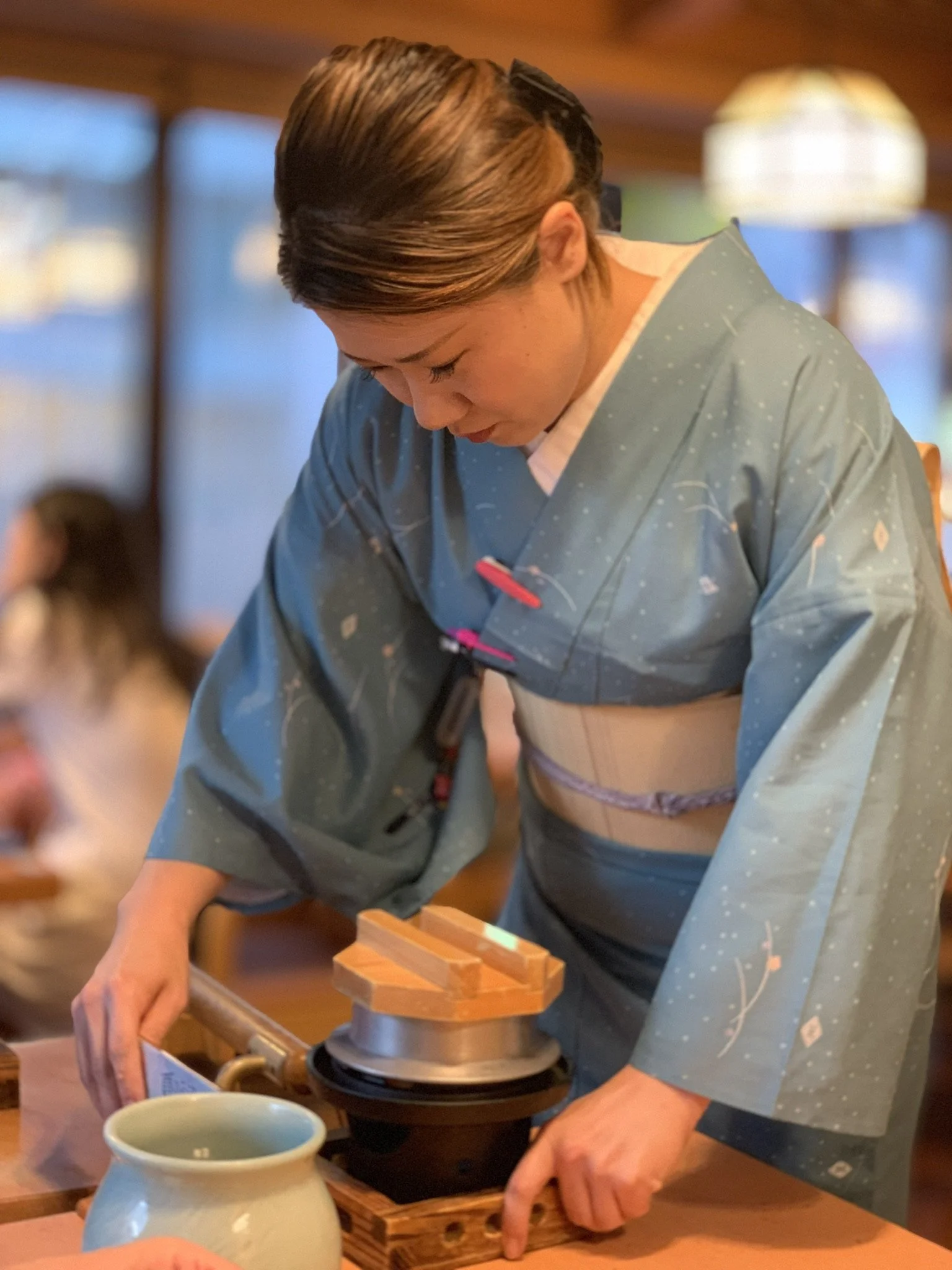
And because she knew what she was doing, she simply ordered. We ate.
Some things were wonderful. Some things were… less wonderful.
And then there was the one thing.
I took a taste, Immediatly I knew I wasn’t a fan.
I turned to Becky. “What is this?”
She wouldn’t tell me.
Instead, she said she would tell me after we left the restaurant.
At the time, I thought this was slightly suspicious. Now I realize it was probably very considerate. Because after dinner, Becky revealed what I had just eaten.
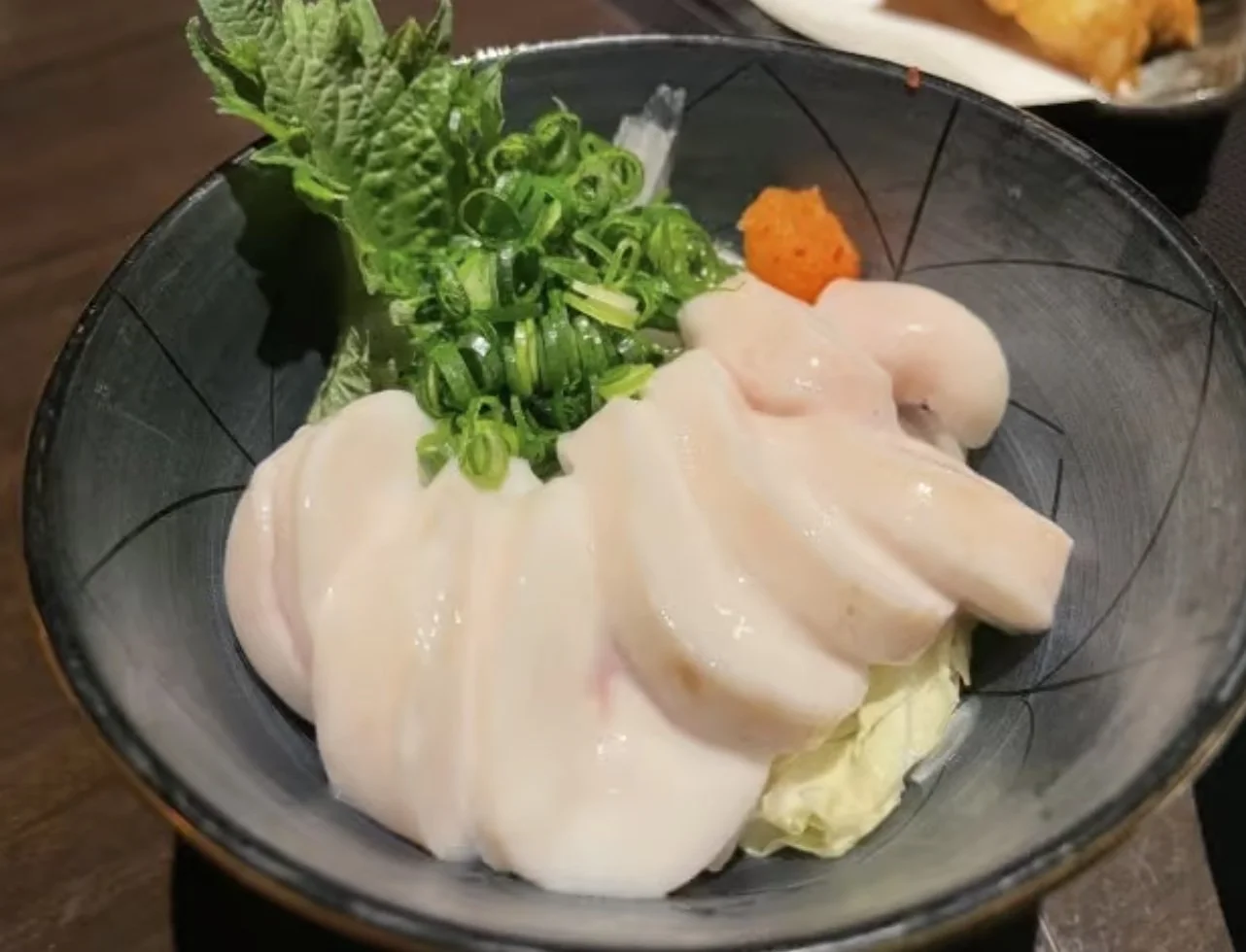
It was Shirako, or fish semen, A Japanese delicacy (they can keep it lol)
Described as creamy, soft, and slightly fishy, with a texture similar to a rich custard or warm cream.
Yuck. There are some foods where ignorance truly is bliss.
Had I known beforehand, I am quite certain I would have approached that particular course with considerably less enthusiasm.
Perhaps that is one of the great lessons of travel:
Sometimes you have to be brave enough to try something you’ve never heard of.
And sometimes you should be very grateful your friend didn’t tell you what it was until afterwards.
The entire multi-course meal cost us roughly $70, and thankfully, we ended on a much safer note: Matcha ice cream. Now that I could get behind.
Osaka isn’t just about inexpensive street food.
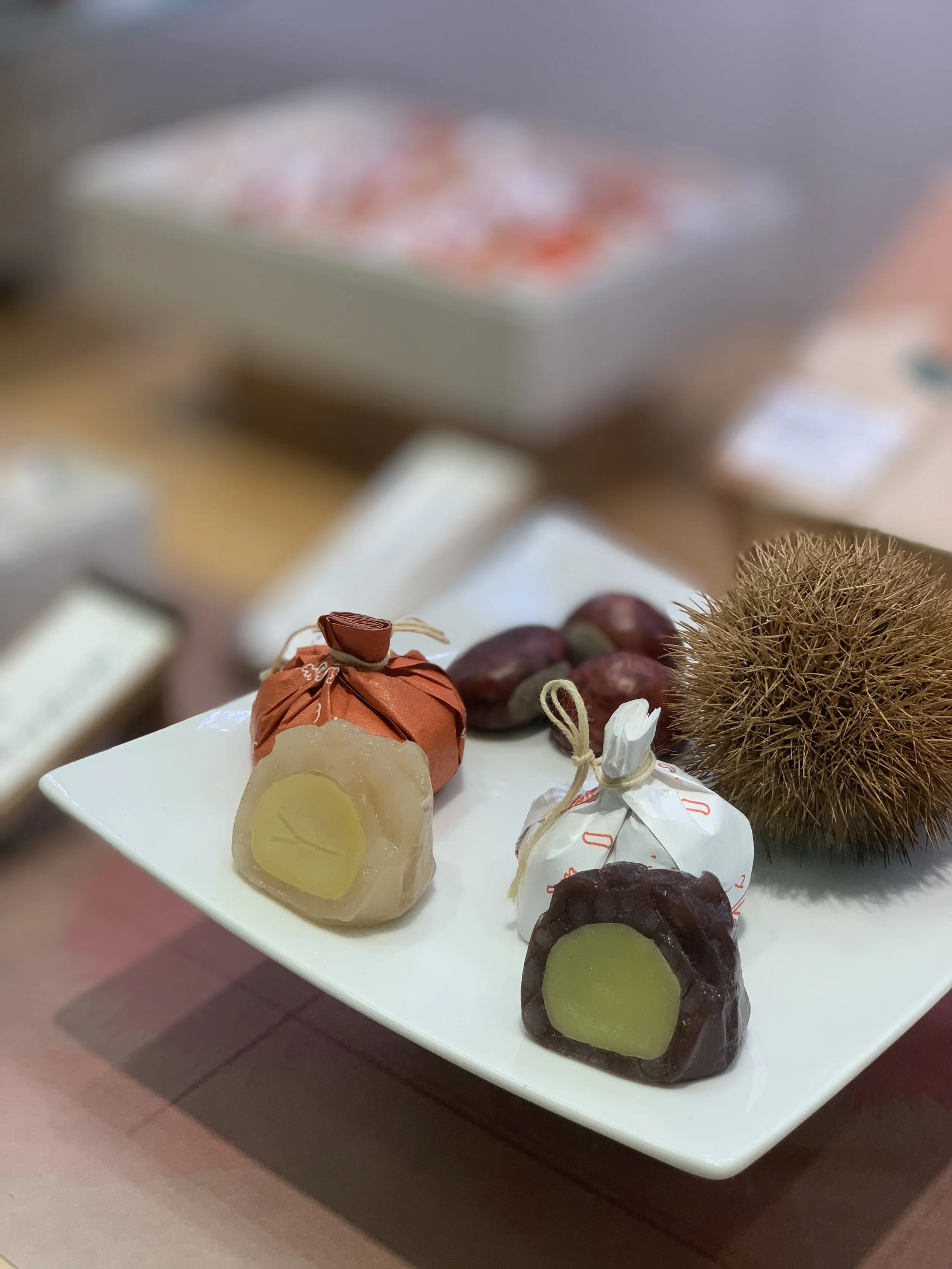
Japan’s obsession with beautiful food extends to ingredients that can make your jaw drop when you see the price tag.
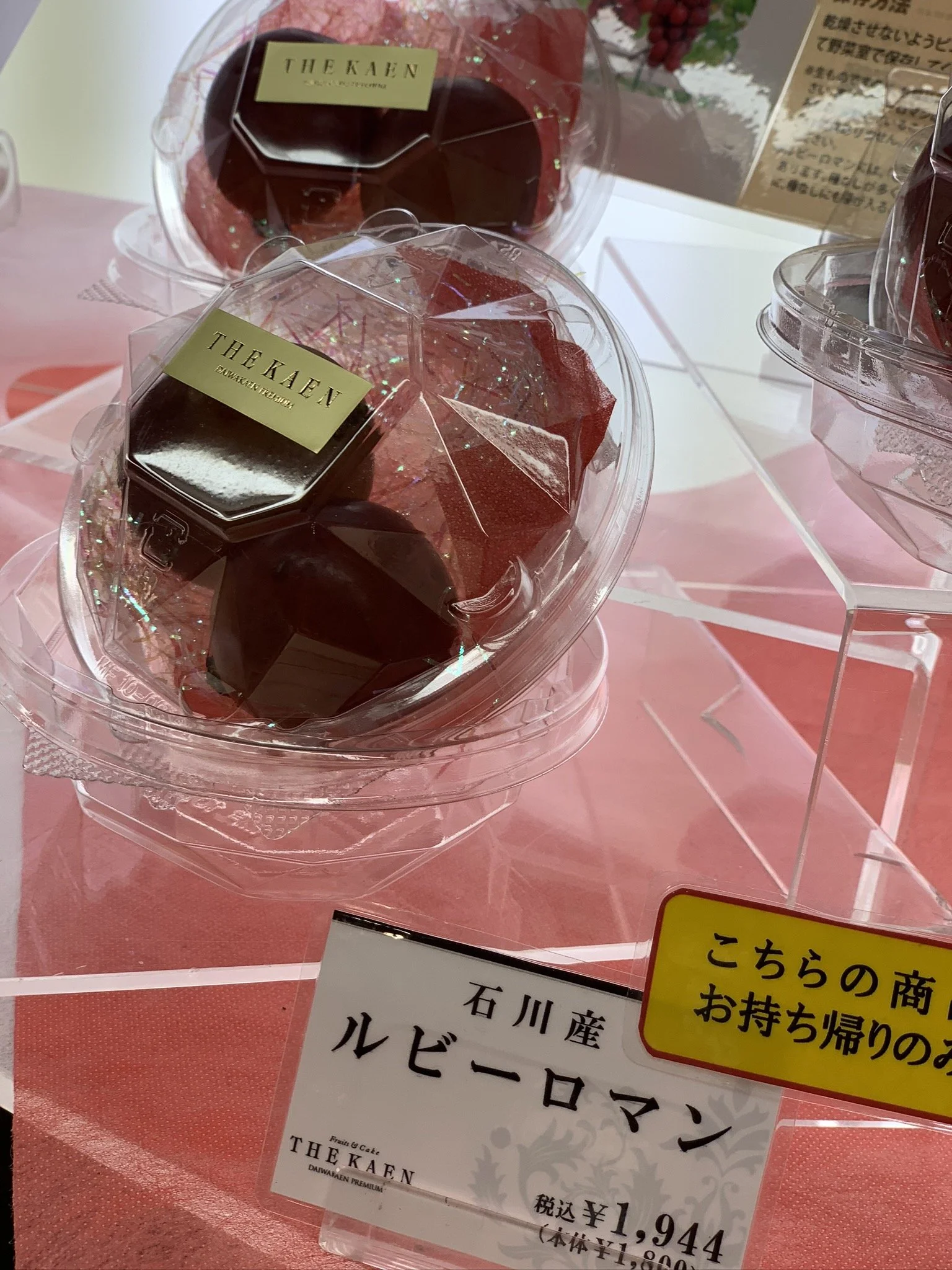
Fruit in Japan can be presented almost like jewellery.
Perfect apples. Perfect oranges. Perfect grapes.
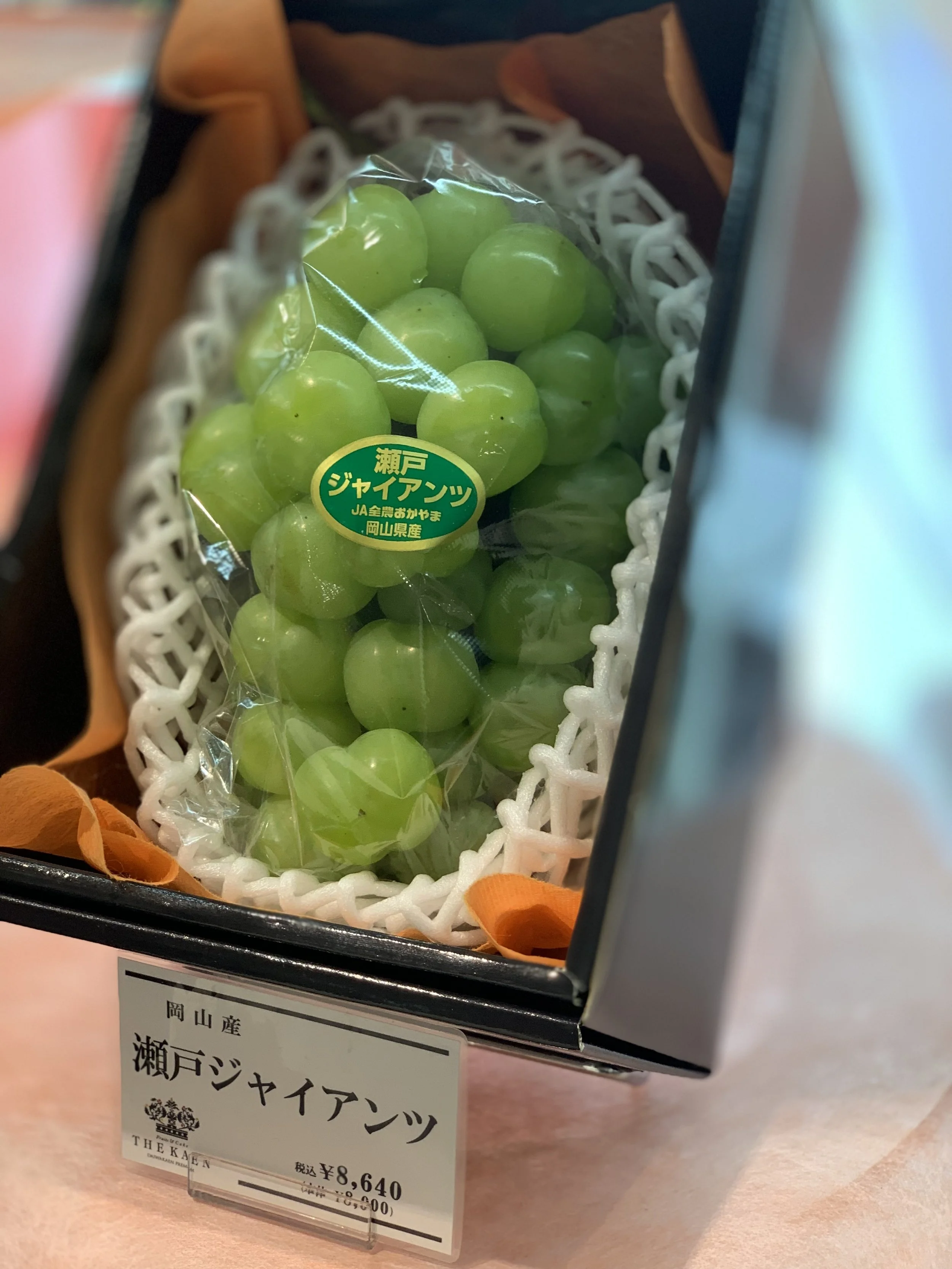
Approx. $72 Canadian
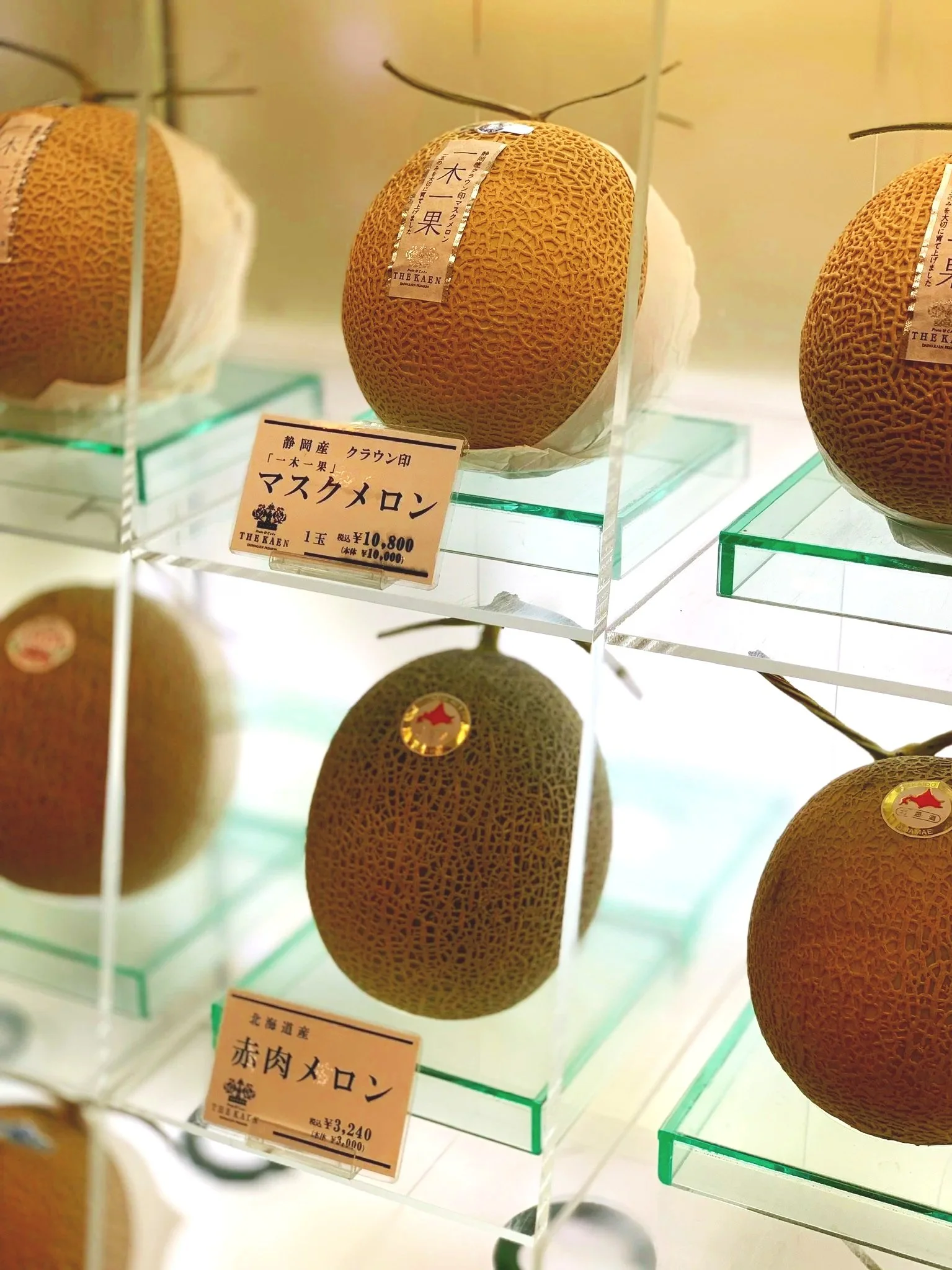
Up to $92 Canadian for a melon
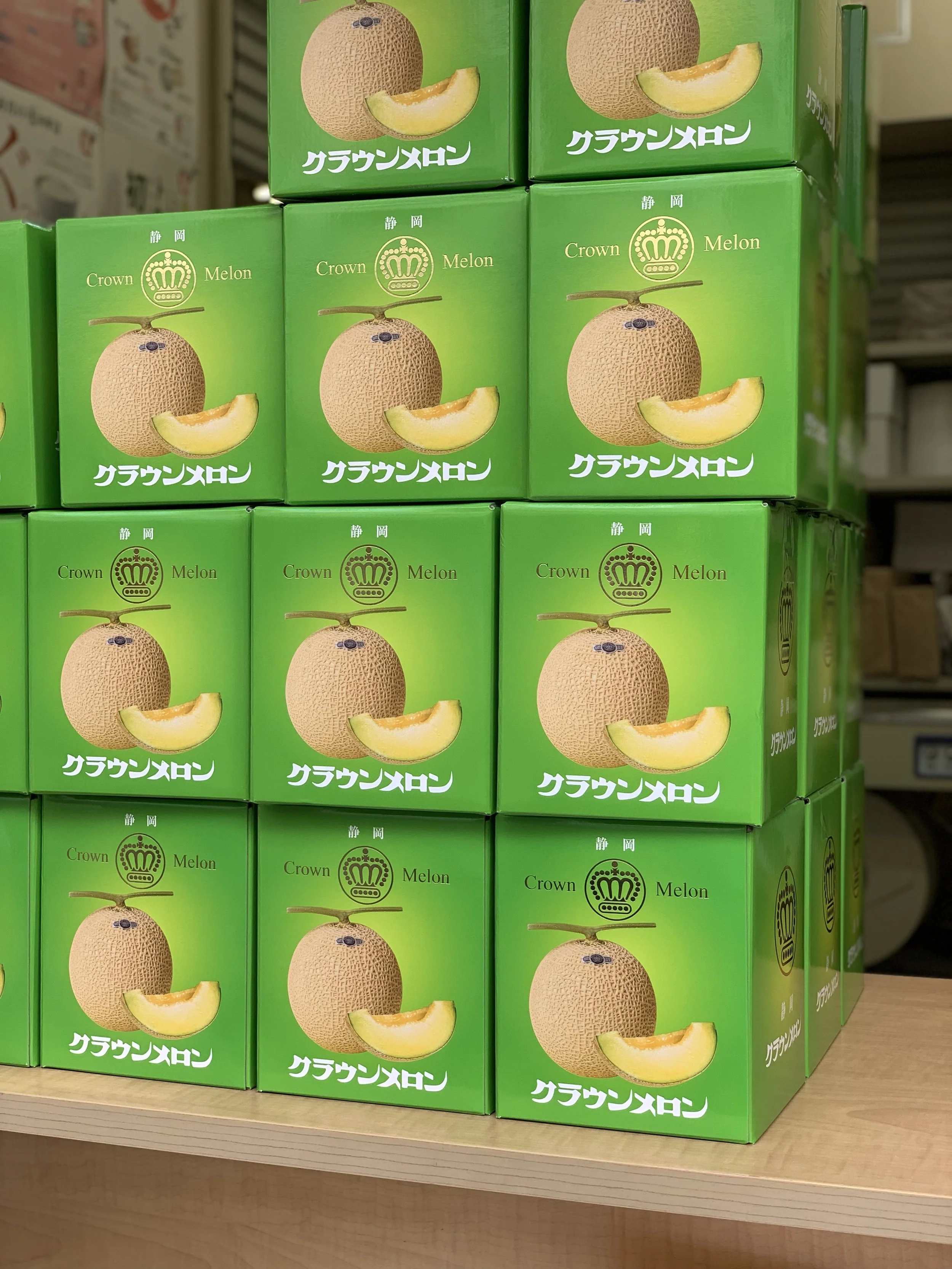
And melons so beautifully packaged and presented that you begin to wonder whether you’re buying fruit or a luxury handbag.
Sometimes even the stem of a melon is deliberately left attached, emphasizing its presentation and quality.
And the prices?
Sticker shock.
These aren’t necessarily the kinds of fruit you buy for Tuesday’s lunch.
This is the “Luxury Gift Fruit” culture.
Meticulous hand-crafted such as placing reflective sheets under tree to prevent sunburn fruit and uniform colouring. They are beautiful, carefully selected produce intended to communicate thoughtfulness and generosity.
After seeing some of the prices, I now understood that living in the Okanagan with all the fruit is truly a luxury.
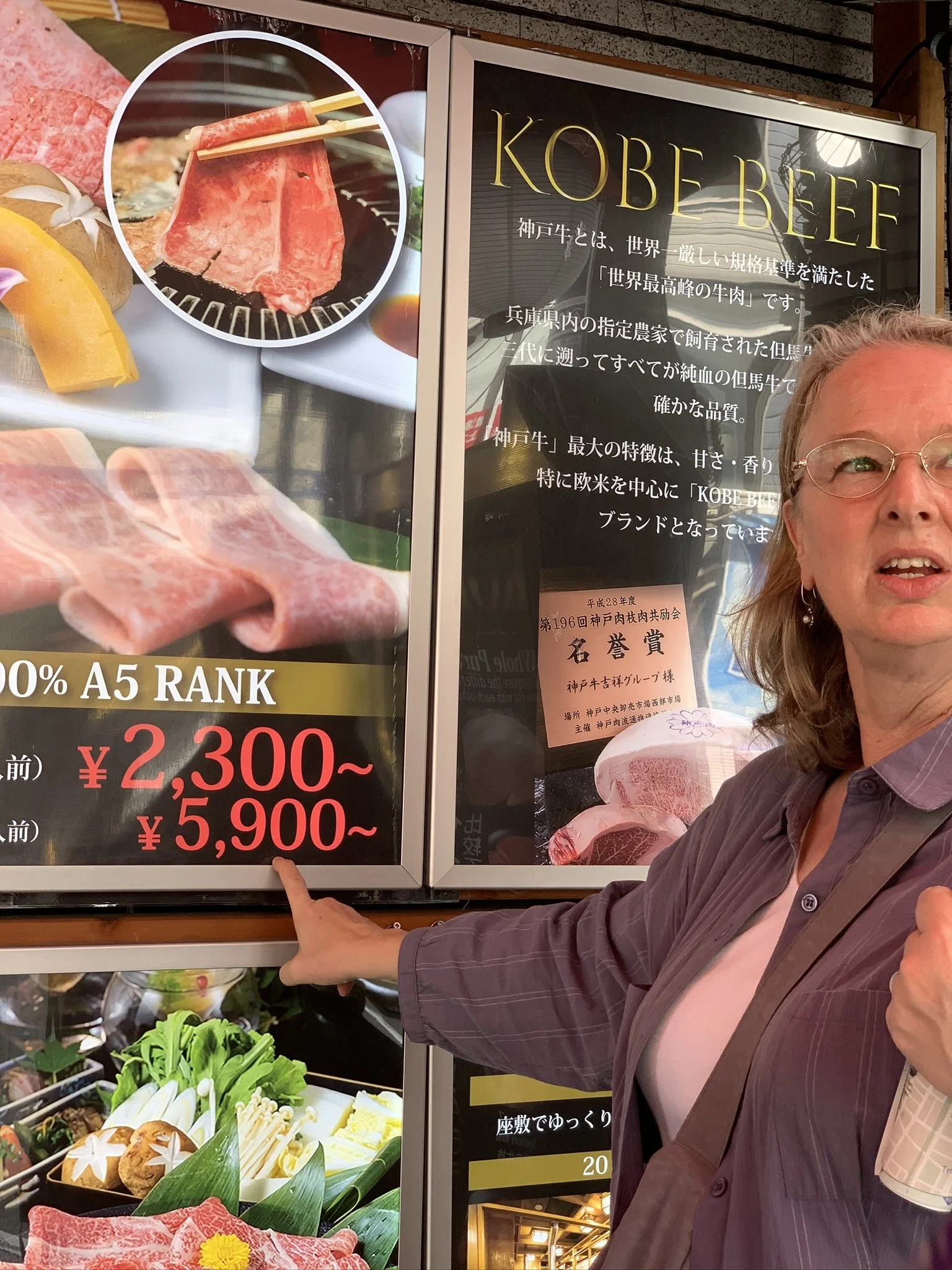
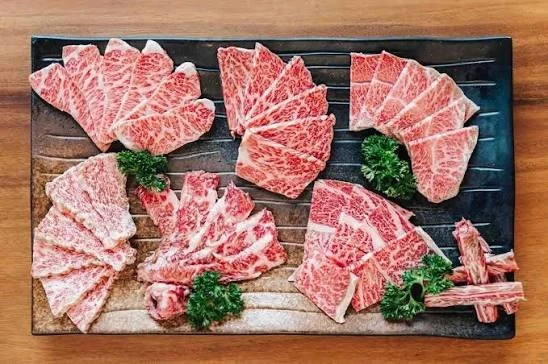
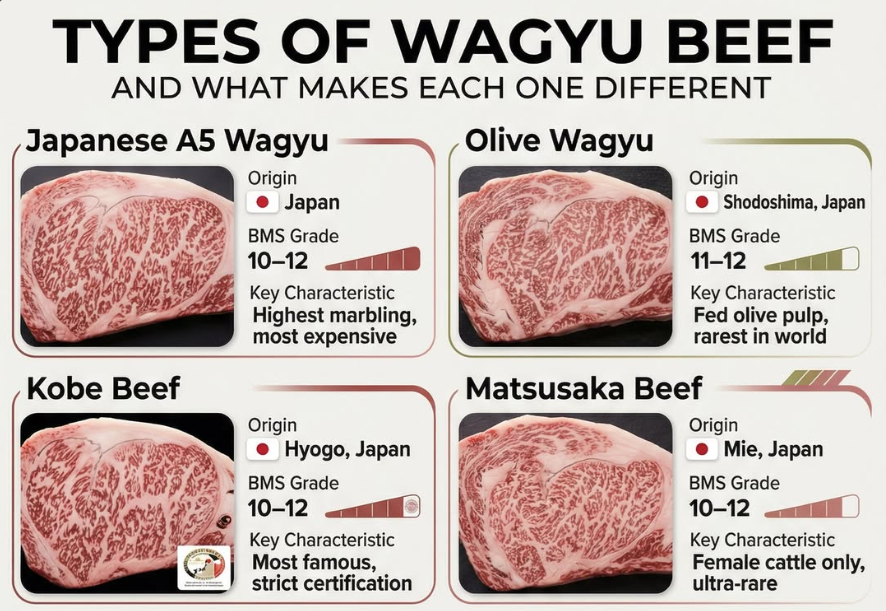
Then there was the Wagyu and Kobe Beef and there is a difference!
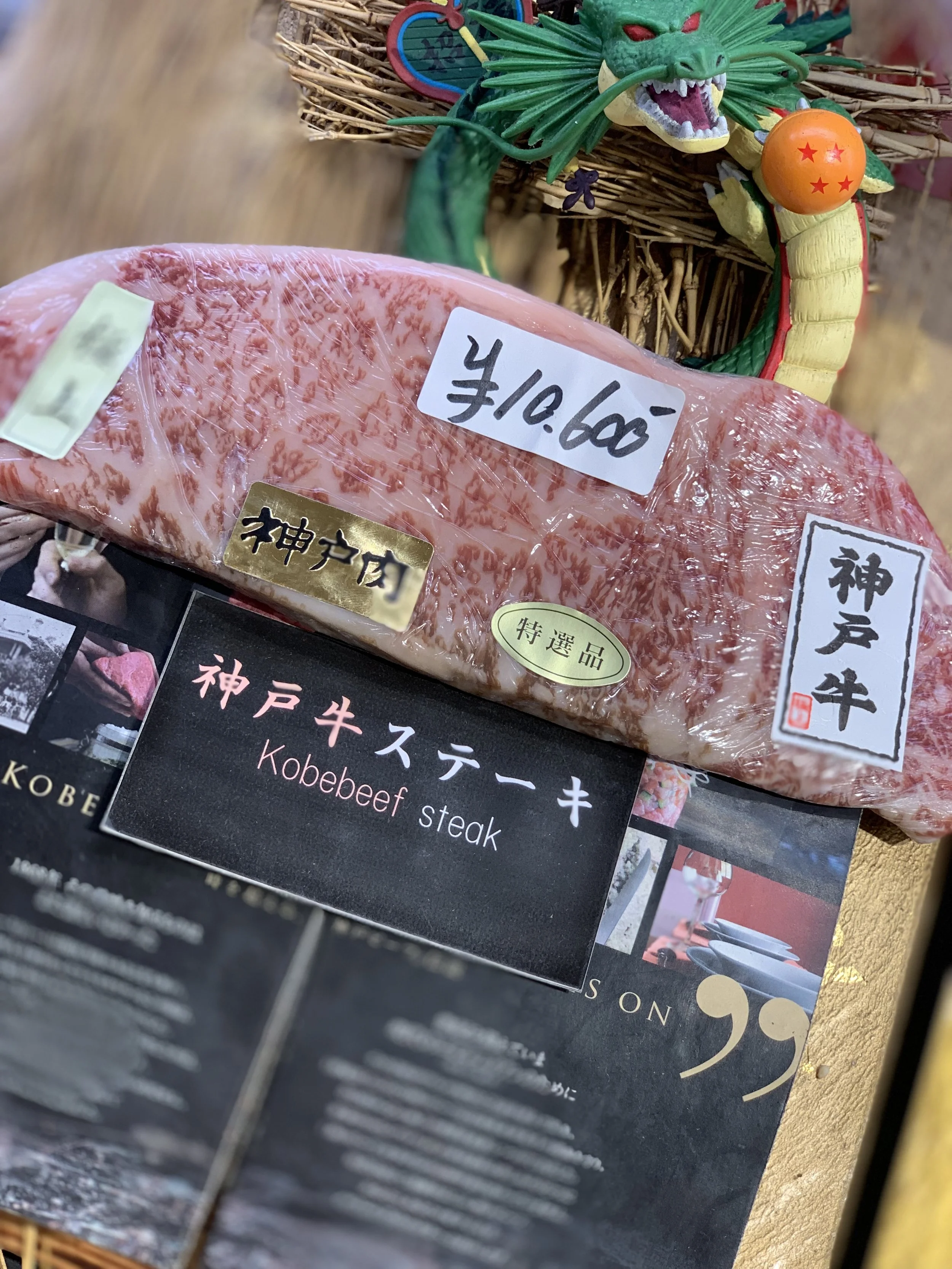
about $93 Canadian
Think of Wagyu as a family name. Kobe beef is Wagyu, but not all Wagyu is Kobe.
We walked past shops displaying beautifully marbled cuts of beef, and I have never seen so much fat trying so hard to convince me it was luxury.
The pink meat was almost hidden beneath the marbling.
And the price?
Let’s just say my wallet was not hungry enough to participate.
But that’s part of what makes Osaka so fascinating for a foodie.
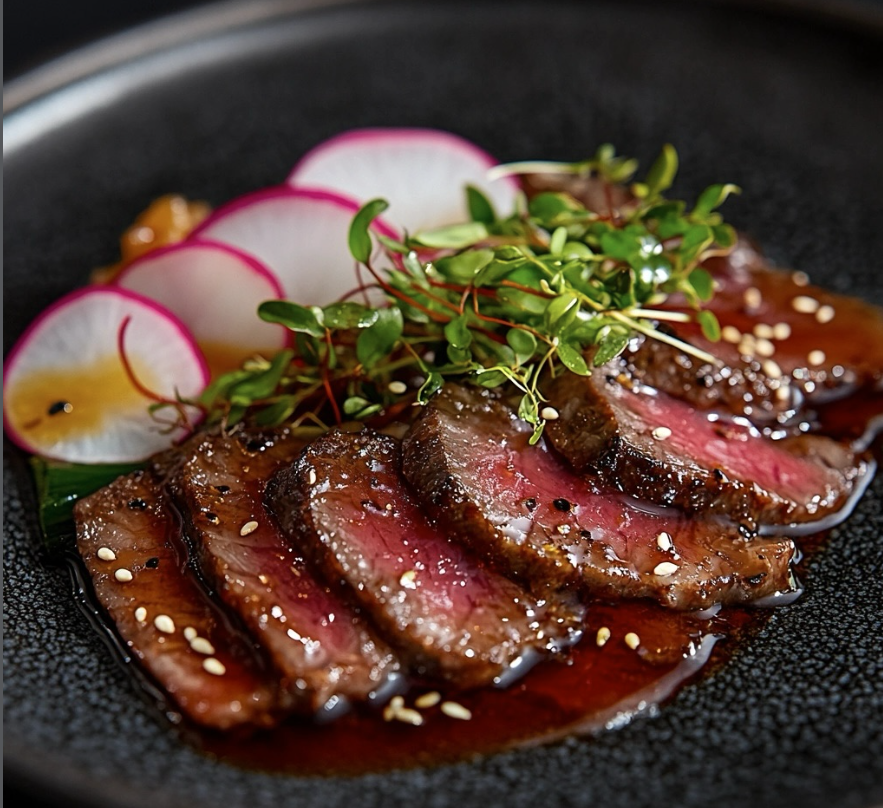
You can eat incredibly well from a street cart for a few dollars, then turn a corner and find a piece of Wagyu priced like it needs its own mortgage. The end result is a very tender, buttery, melt in your mouth with incredible flavour.
For someone who loves food, Osaka is almost overwhelming.
There is always another smell.
Another sizzling grill.
Another little cart.
Another dish you’ve never seen before.
Another reason to say:
“Okay… I’ll try it.”
Osaka had turned food preparation into street theatre.
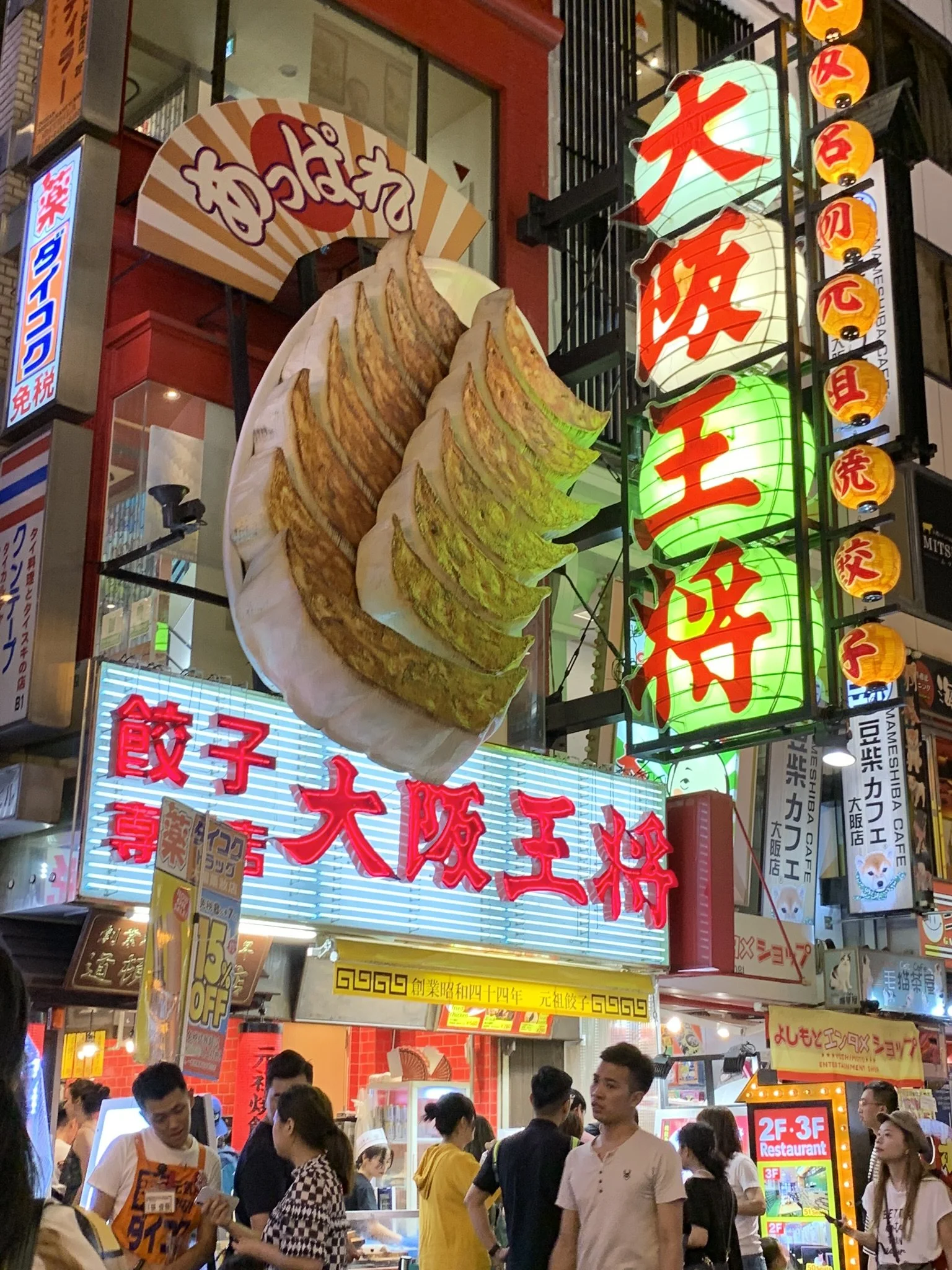
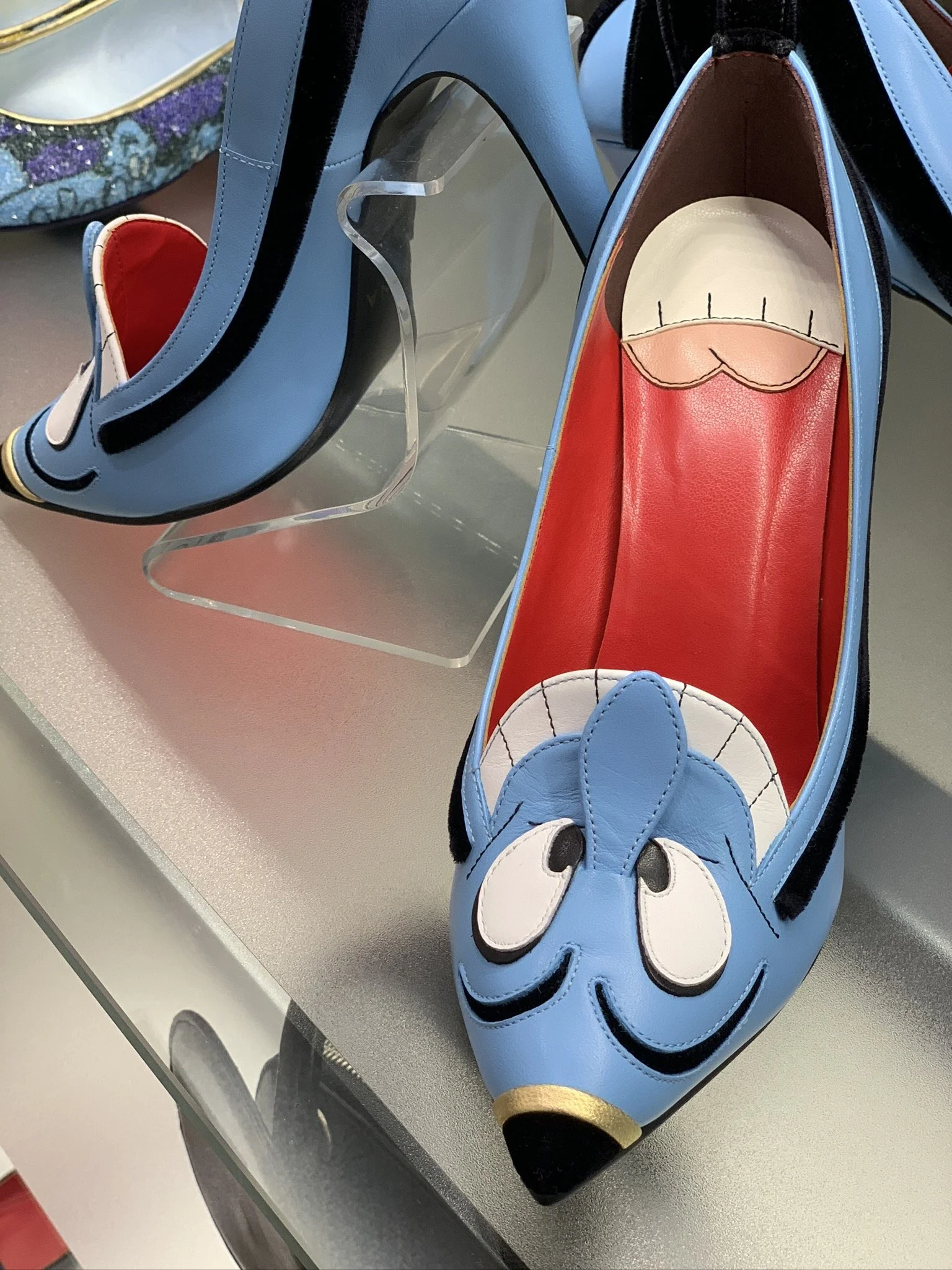
Osaka loves neon. It loves anime. It loves colour.
And it seems to have absolutely no problem with making things bigger, brighter and more ridiculous.
I loved that. Check out the hat.
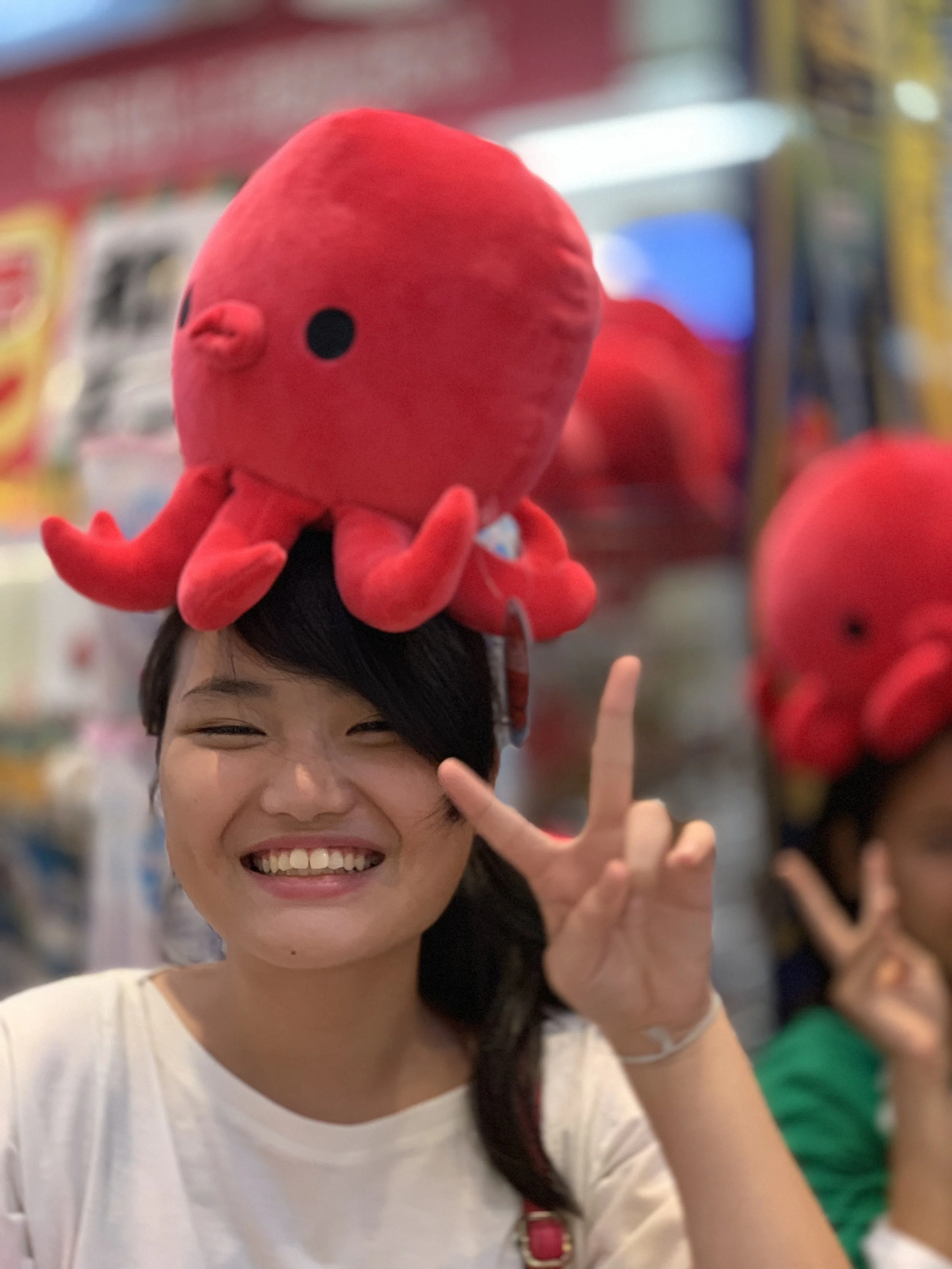
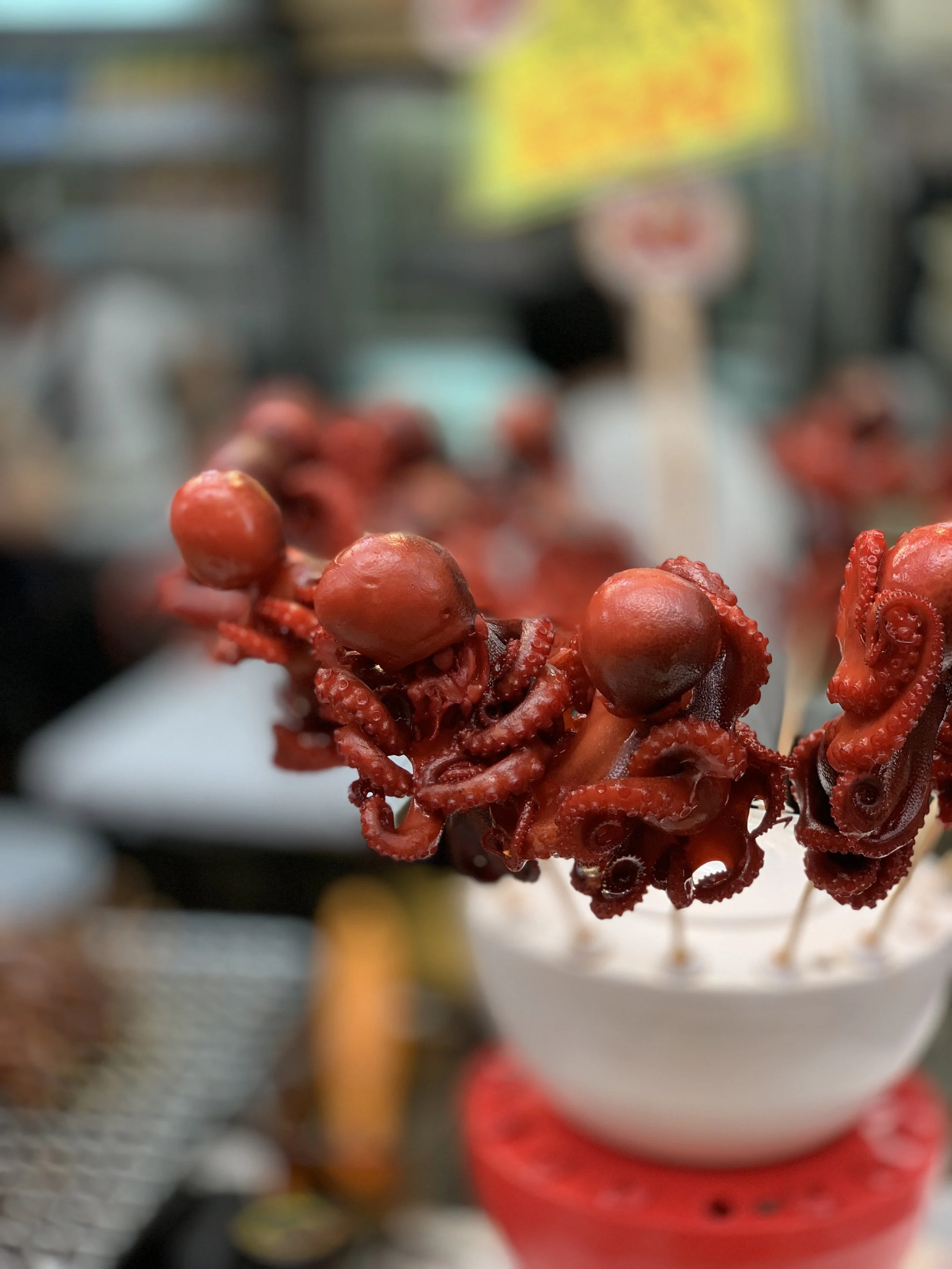
There is a playful quality to the city that feels very different from the quieter, more restrained side of Japan.
Here, food isn’t simply nourishment.
It’s entertainment.
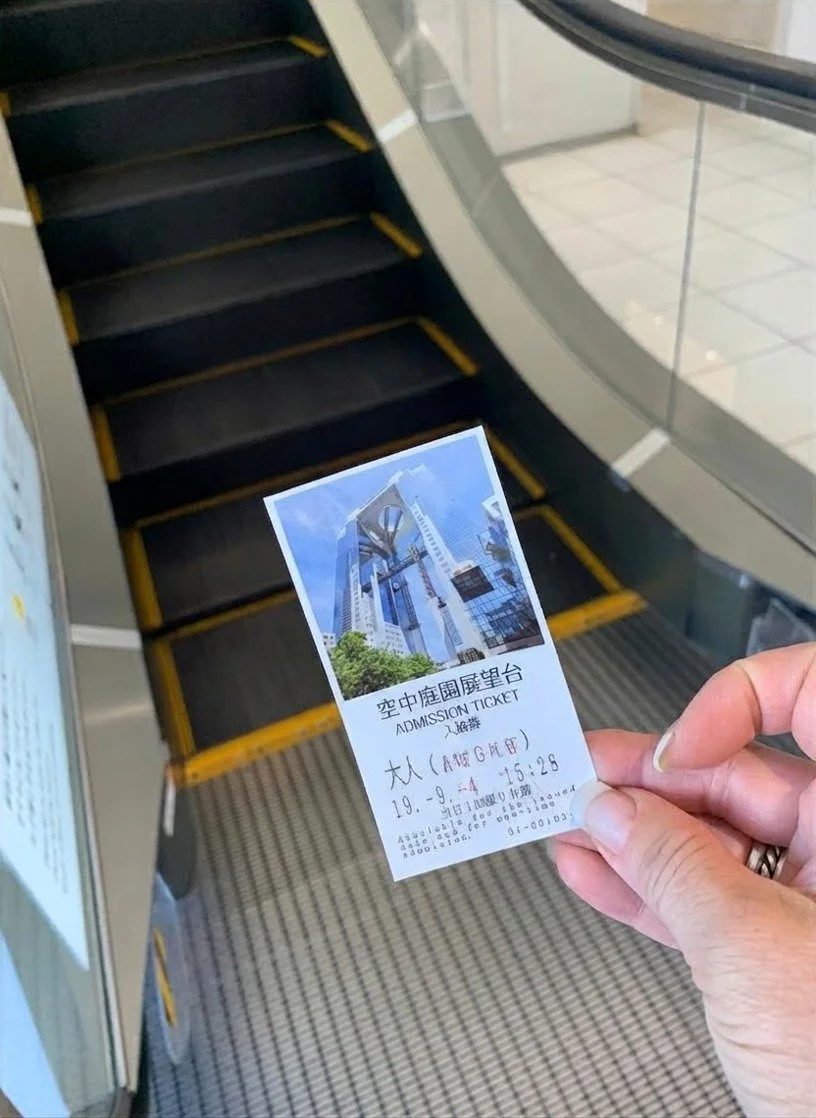
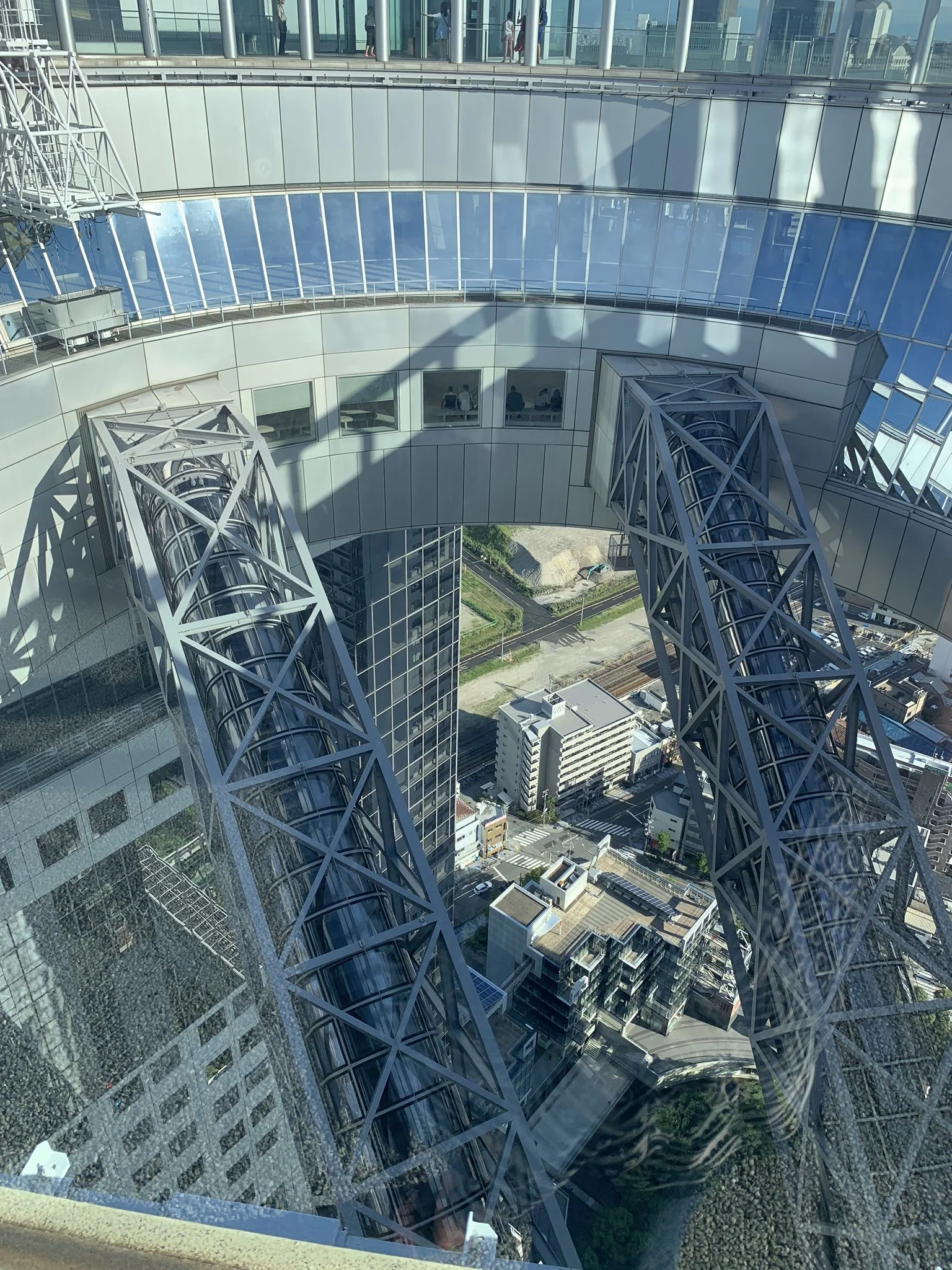
Architecture in Osaka isn’t simply functional.
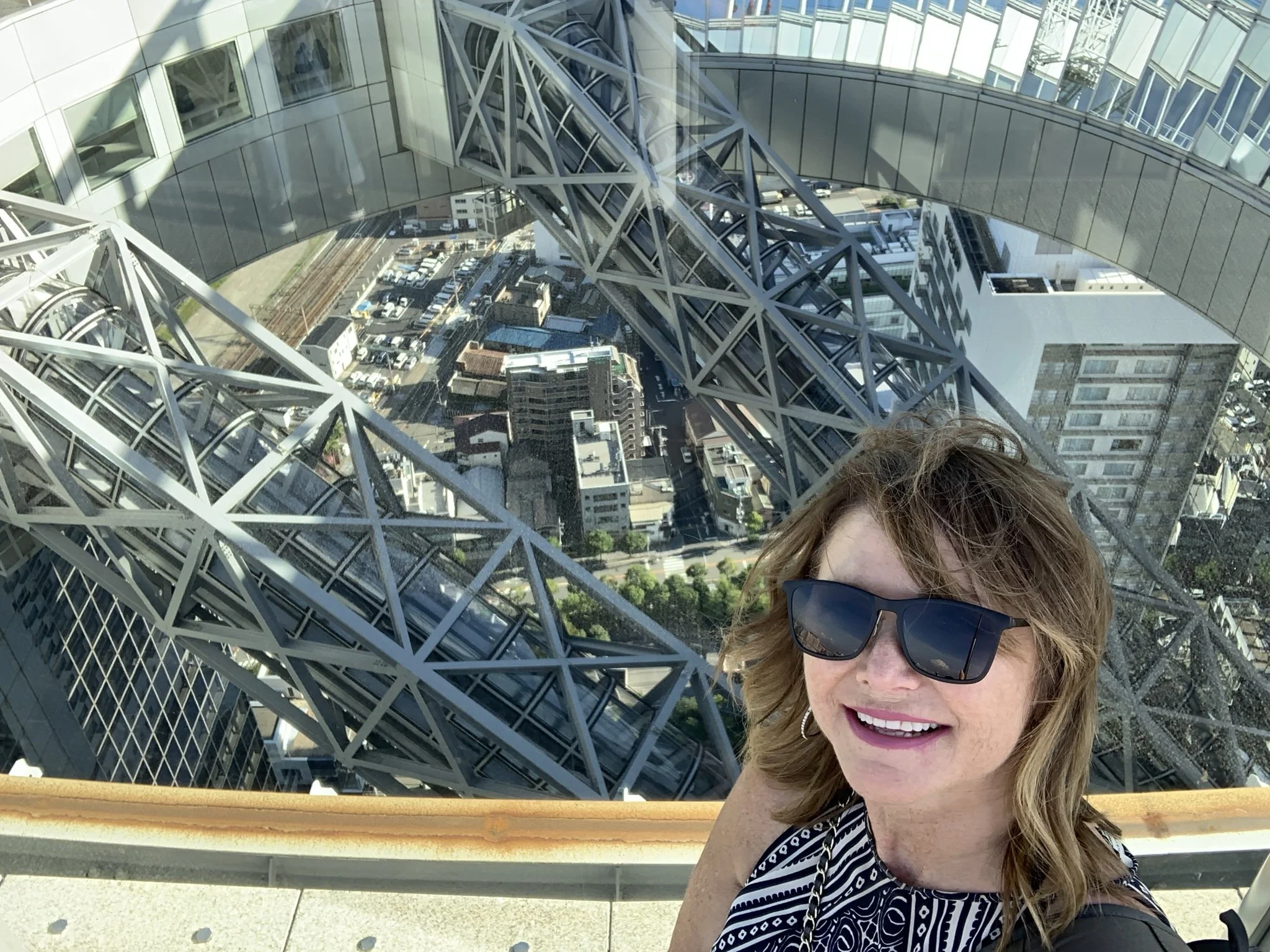
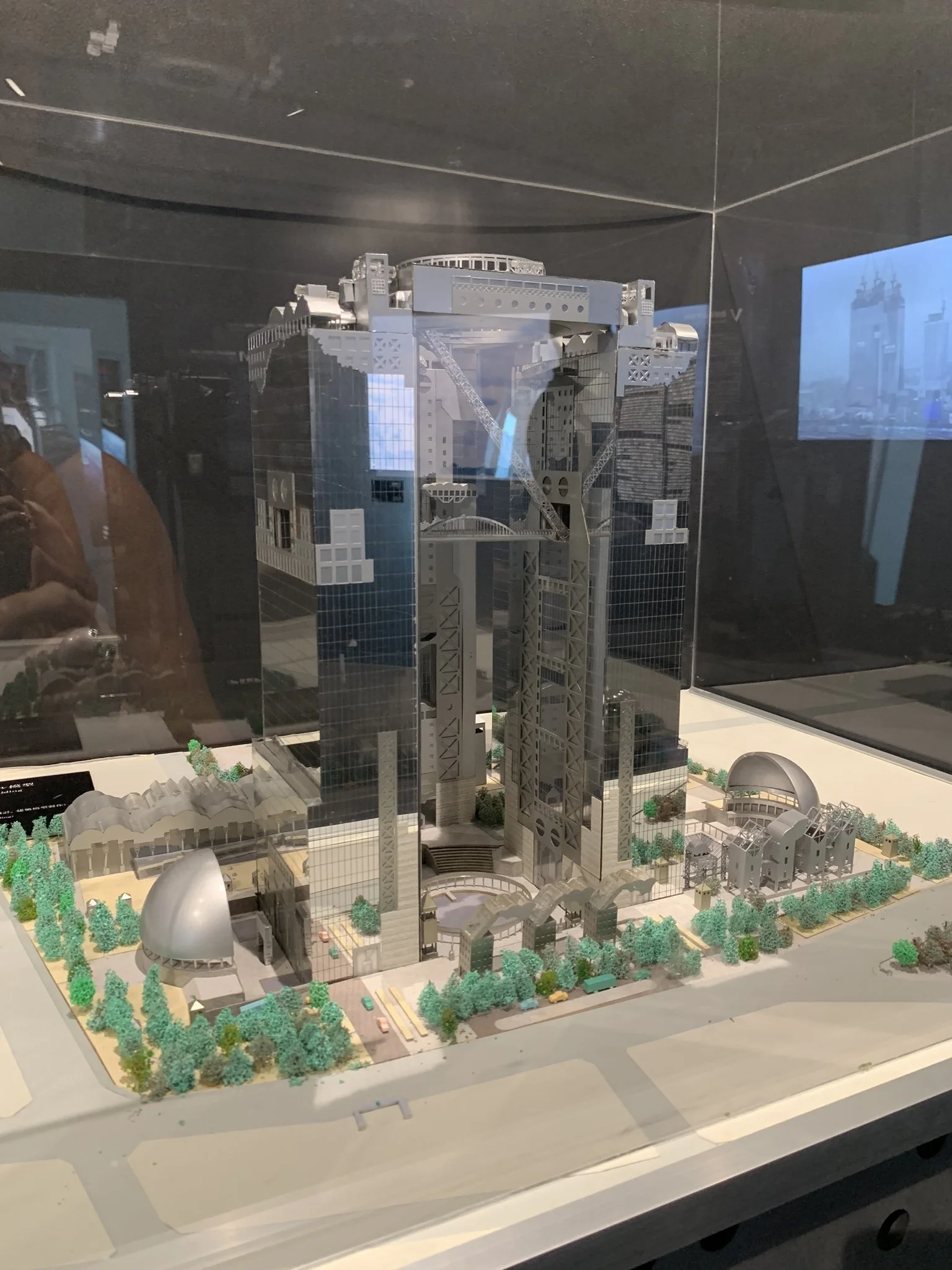
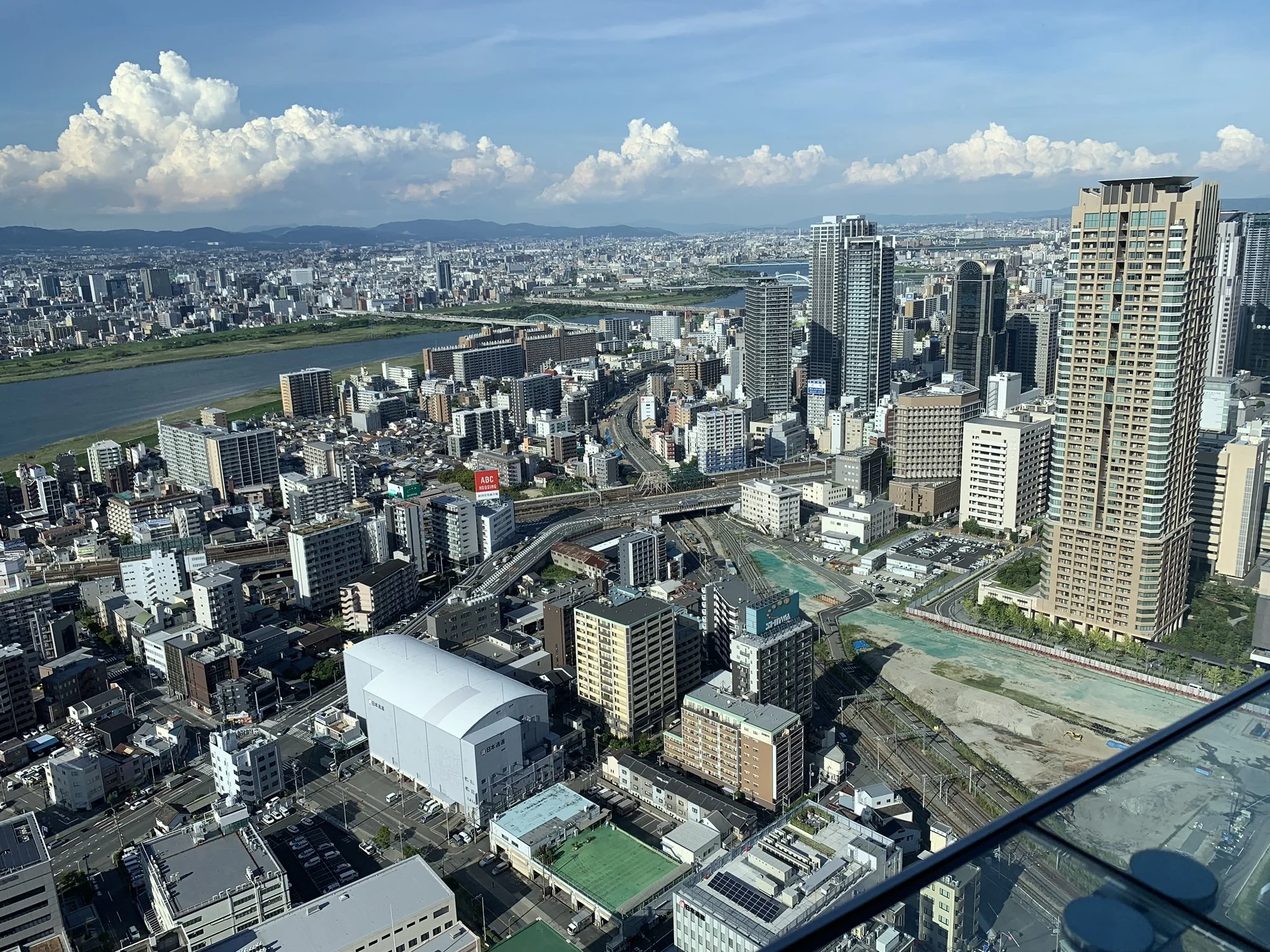
The building that completely captivated me was the Umeda Sky Building.
And if you’ve seen the photographs, you’ll understand why.
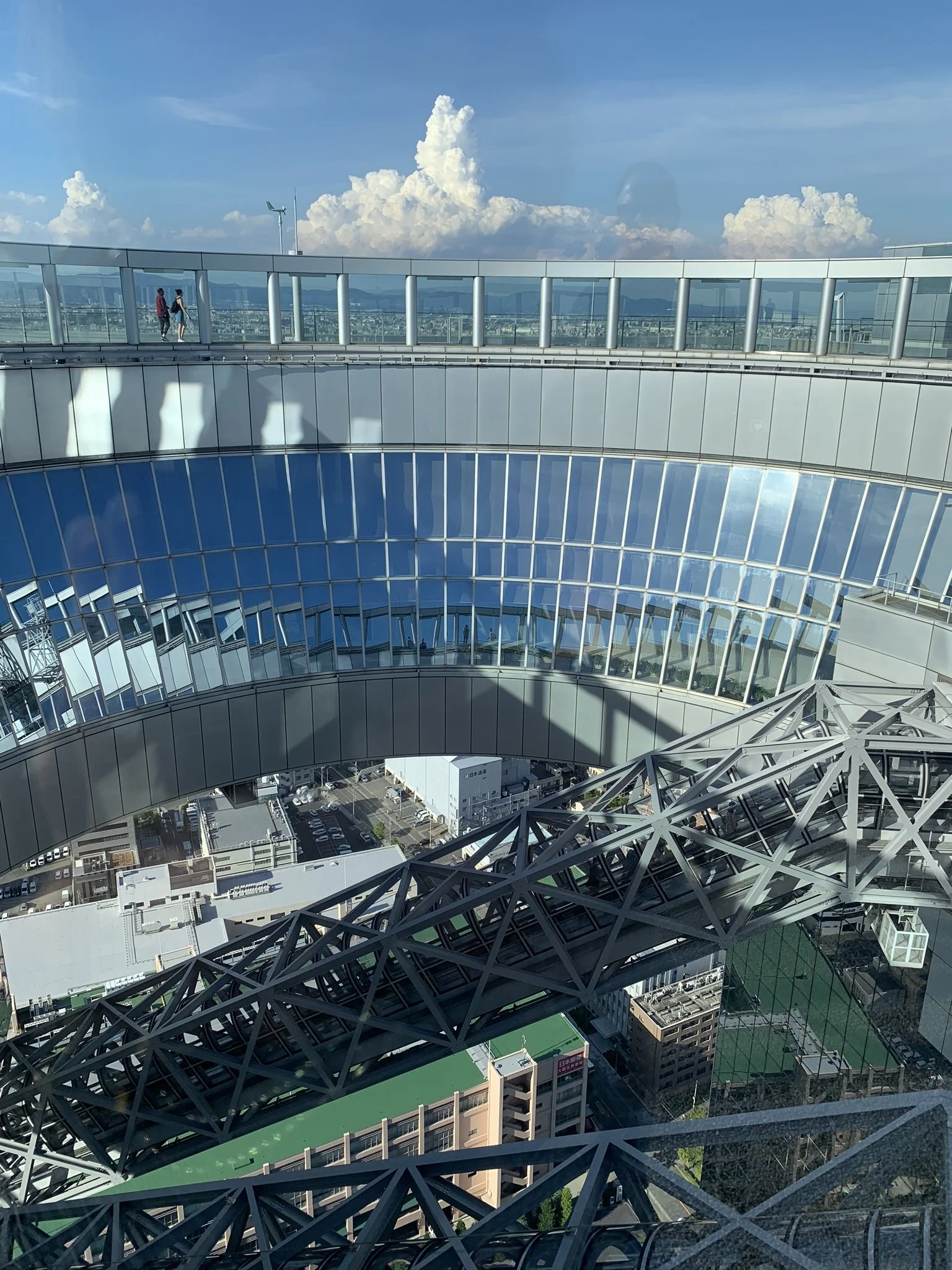
Designed by architect Hiroshi Hara and completed in 1993, the building rises about 173 metres and consists of two towers joined near the top by the extraordinary Kuchu Teien, or Floating Garden Observatory.
But the building isn’t simply tall.
It’s weird. Wonderful. Futuristic.
And completely unforgettable.
The two towers are connected by a series of glass structures, including an escalator that crosses the open space between them.
Imagine riding an escalator through a glass tube high above Osaka, suspended and spanning the two towers. and yes, they get earthquakes. But don’t think about that - this is a must do!
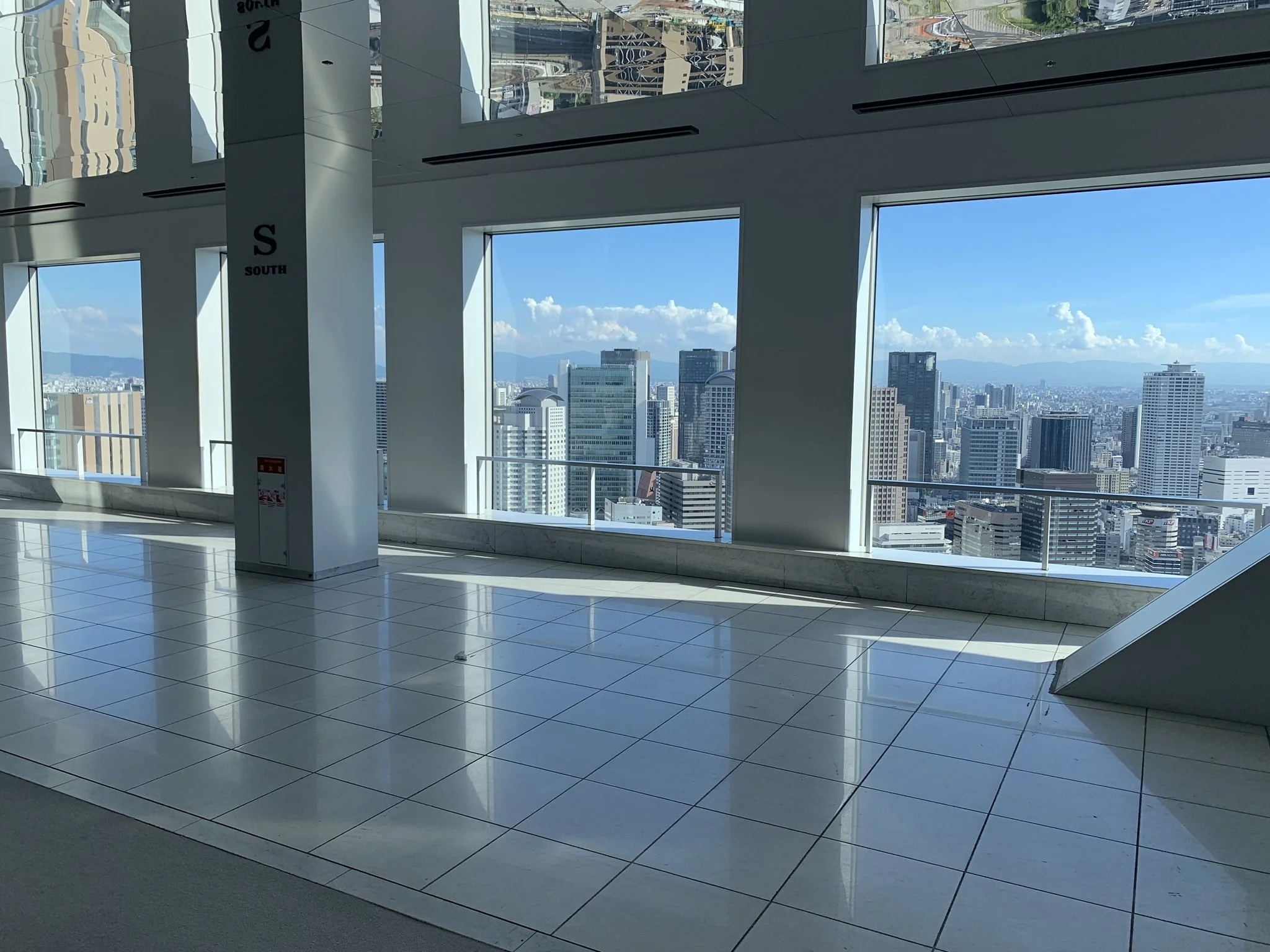
At the top, a circular walkway gives you a 360-degree view across Osaka and beyond. On a clear day, the view stretches far into the surrounding landscape.
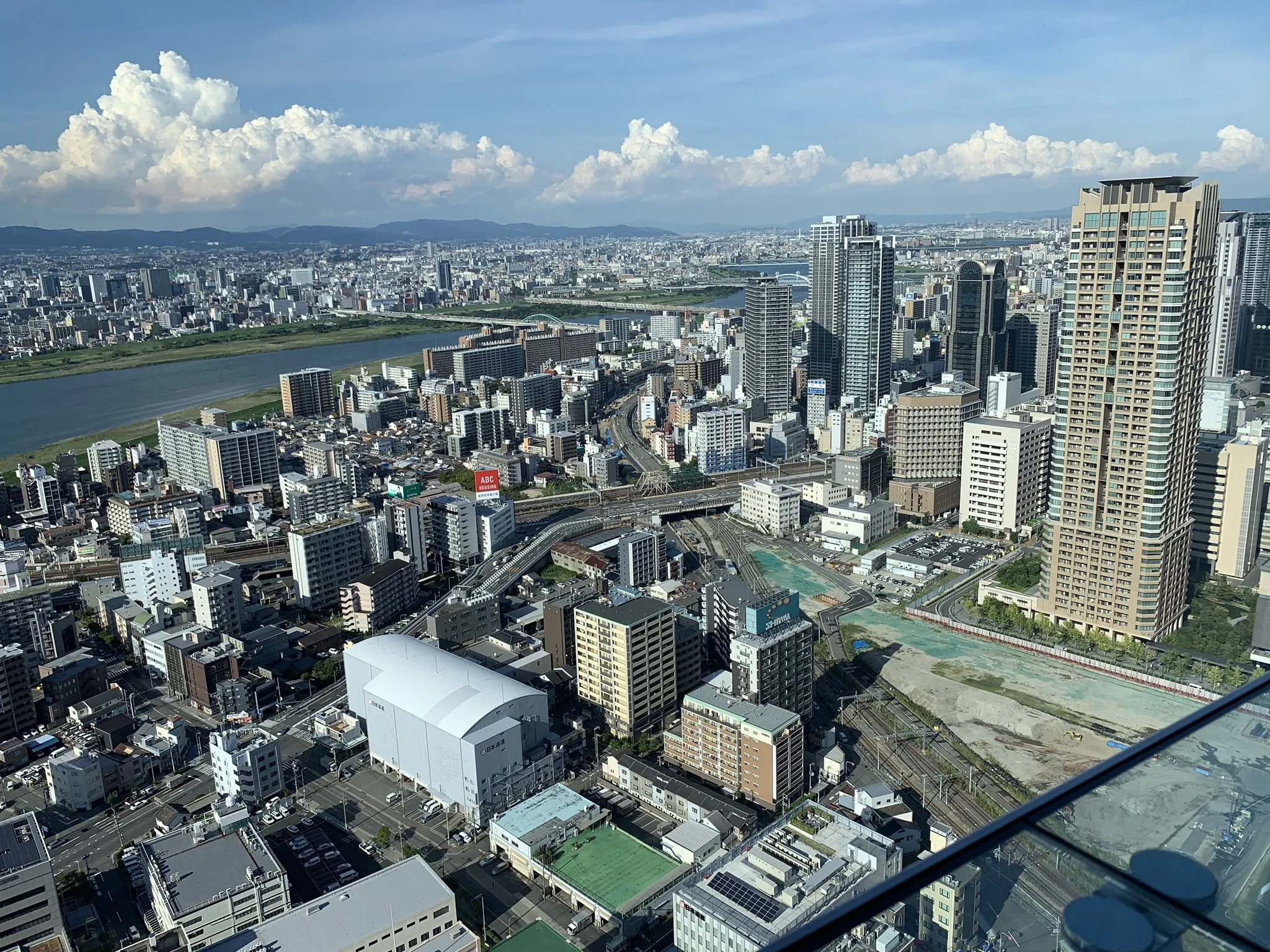
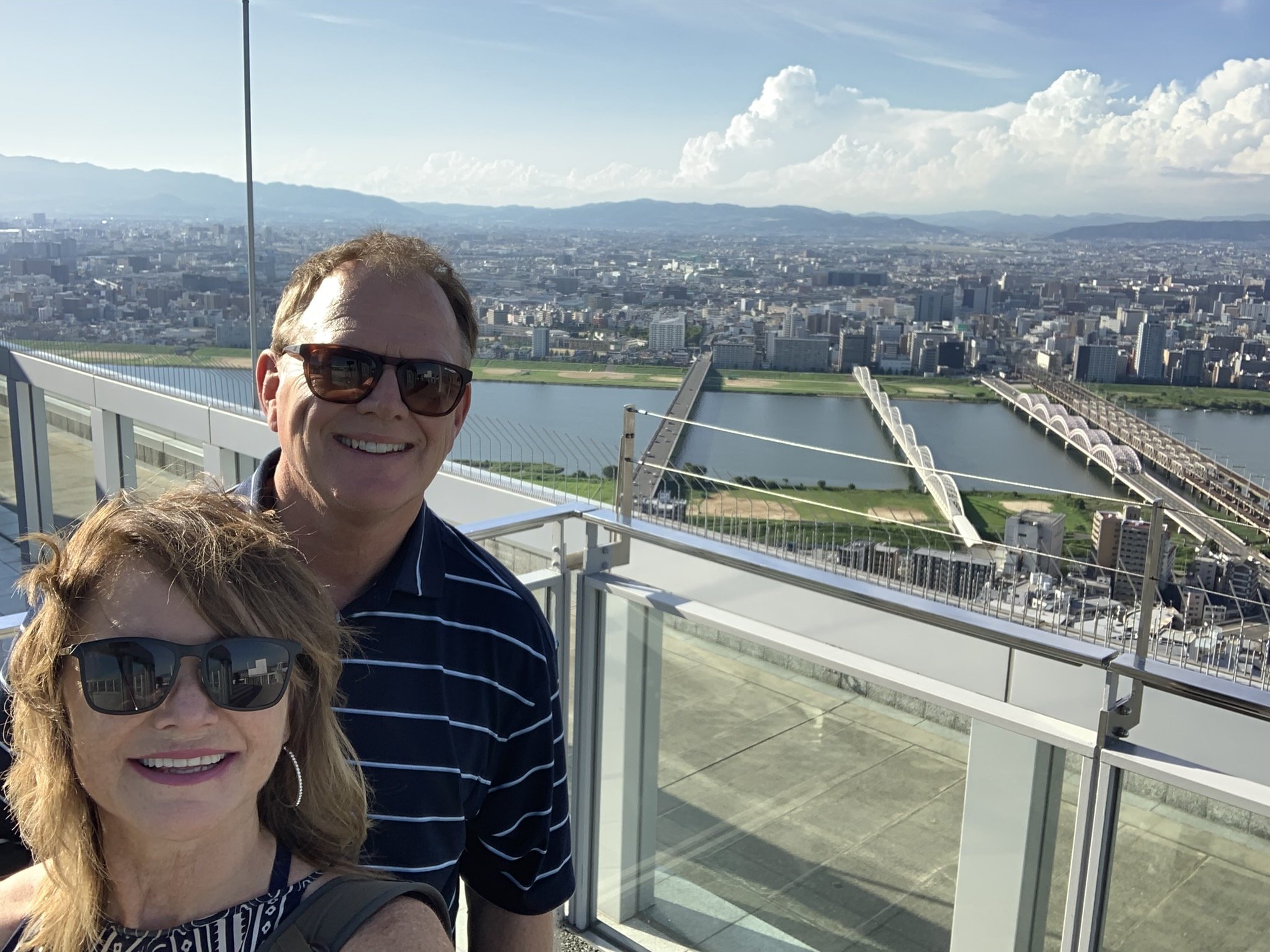
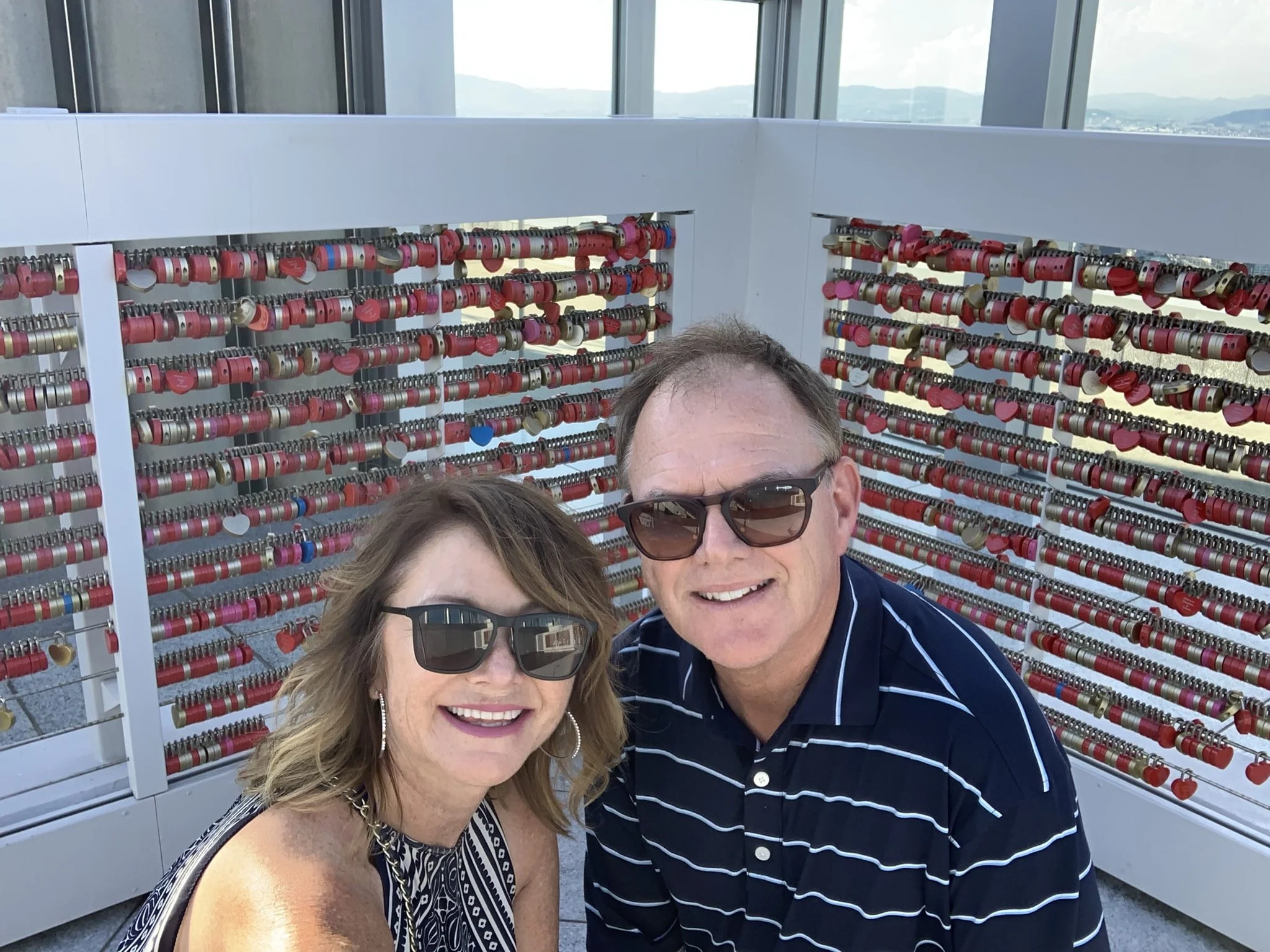
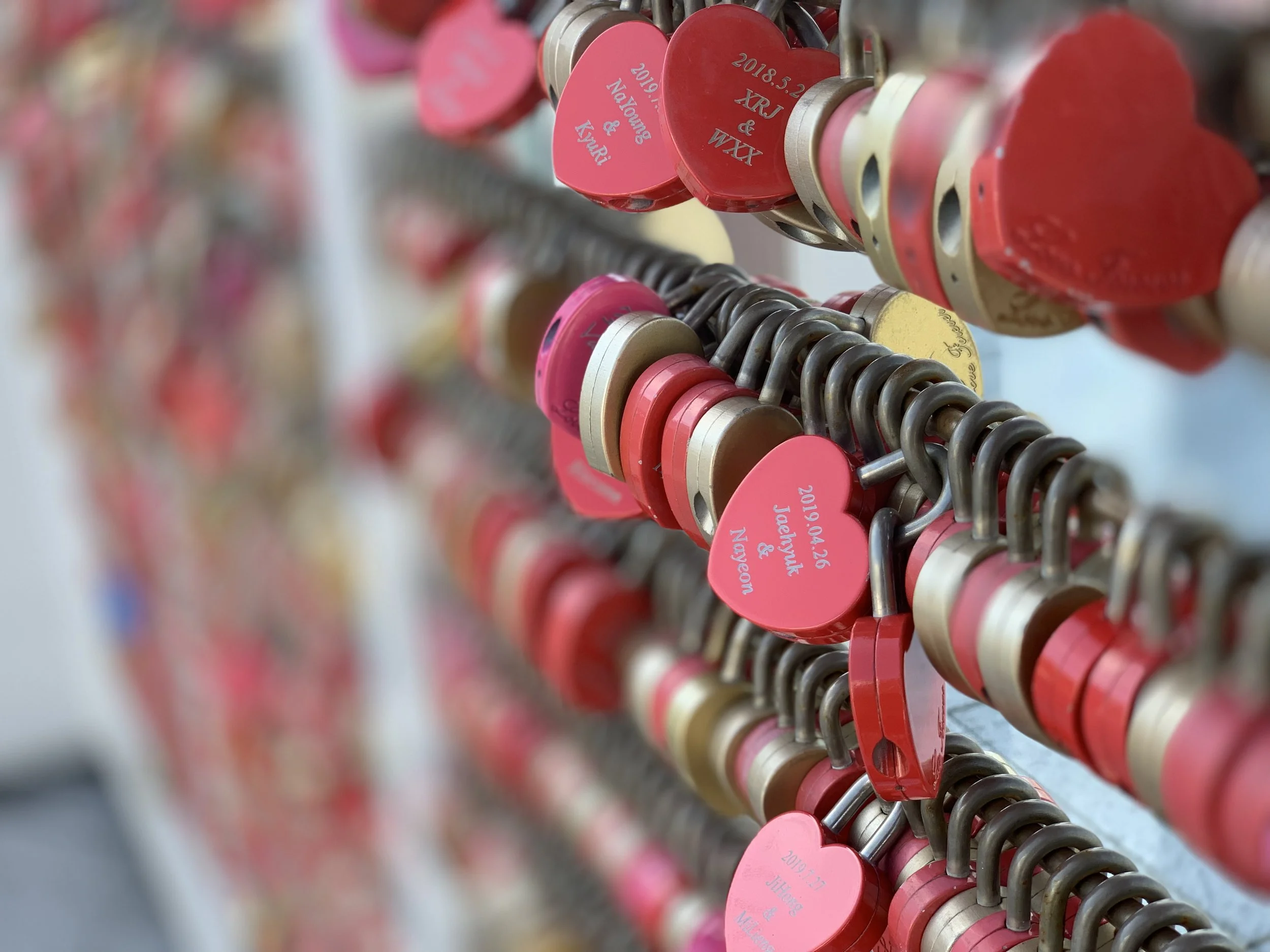
At the top, couples can leave heart-shaped locks and make symbolic promises to one another.
It seemed wonderfully fitting.
Above the city, couples leave the chaos and quietly attach locks and take photographs together.
A little romance tucked into all that steel and glass.
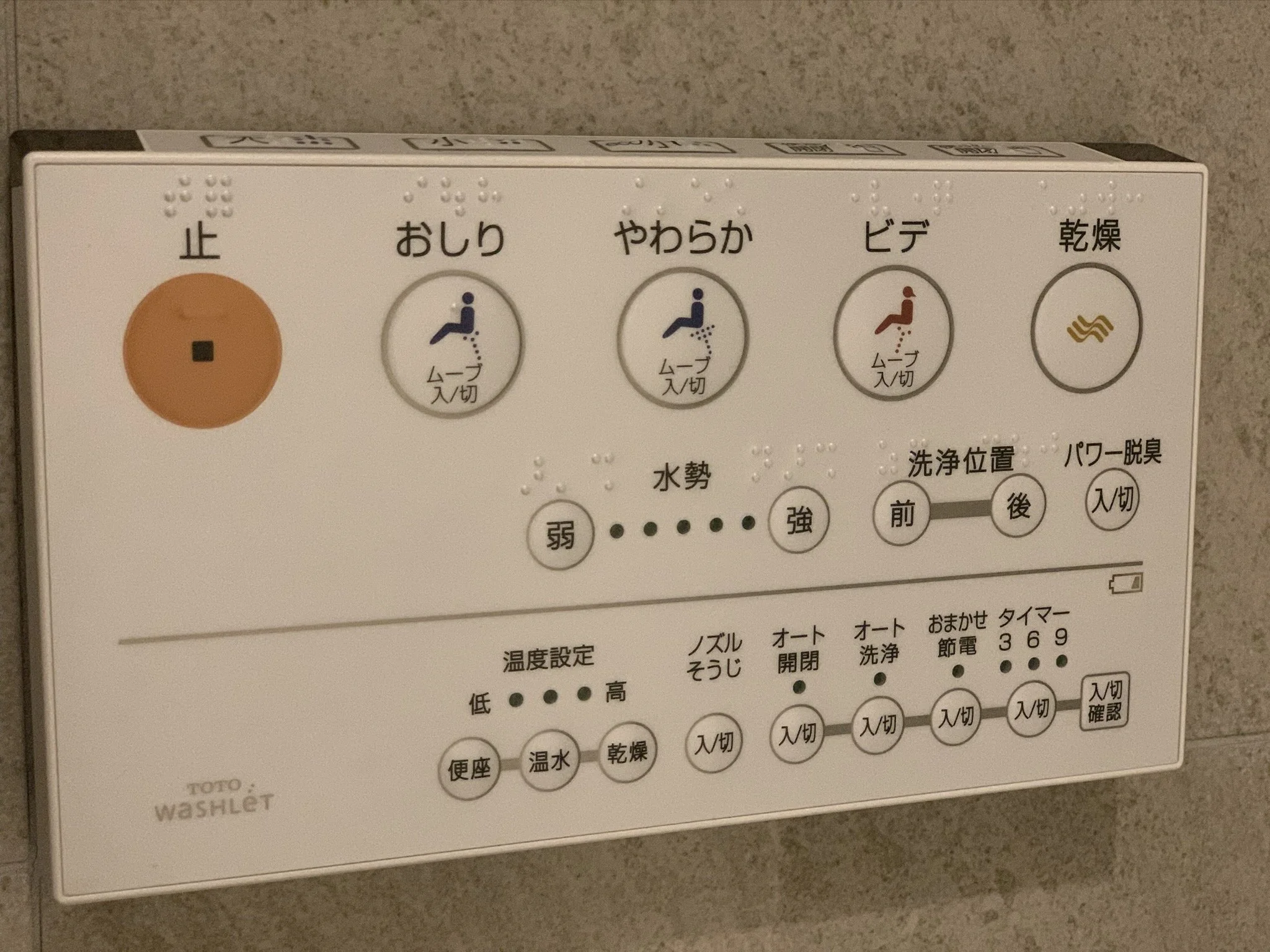
No trip to Japan would be complete without discussing the toilets.
Because apparently Japan looked at the humble toilet and said:
“We can do better.” Much better.
I encountered high-tech toilet controls in public stalls everywhere and pristine and clean. Many time they offer more options than our hotel rooms.
Heated seats. Water controls. Various buttons whose meaning I could not possibly understand.
And then there was me.
Unable to read Japanese.
At some point I simply decided:
“Well… let’s see what this one does.”
Thankfully, I survived the experience.
And I came away with a new appreciation for the Japanese approach to technology:
Why should something ordinary remain ordinary when you can make it extraordinary?
Even the humble bathroom apparently deserves an upgrade.
People are everywhere.
One minute we were watching a traditional wedding procession, with beautifully dressed bride in traditional Japanese attire, and the next we were surrounded by modern buildings, neon lights and anime.
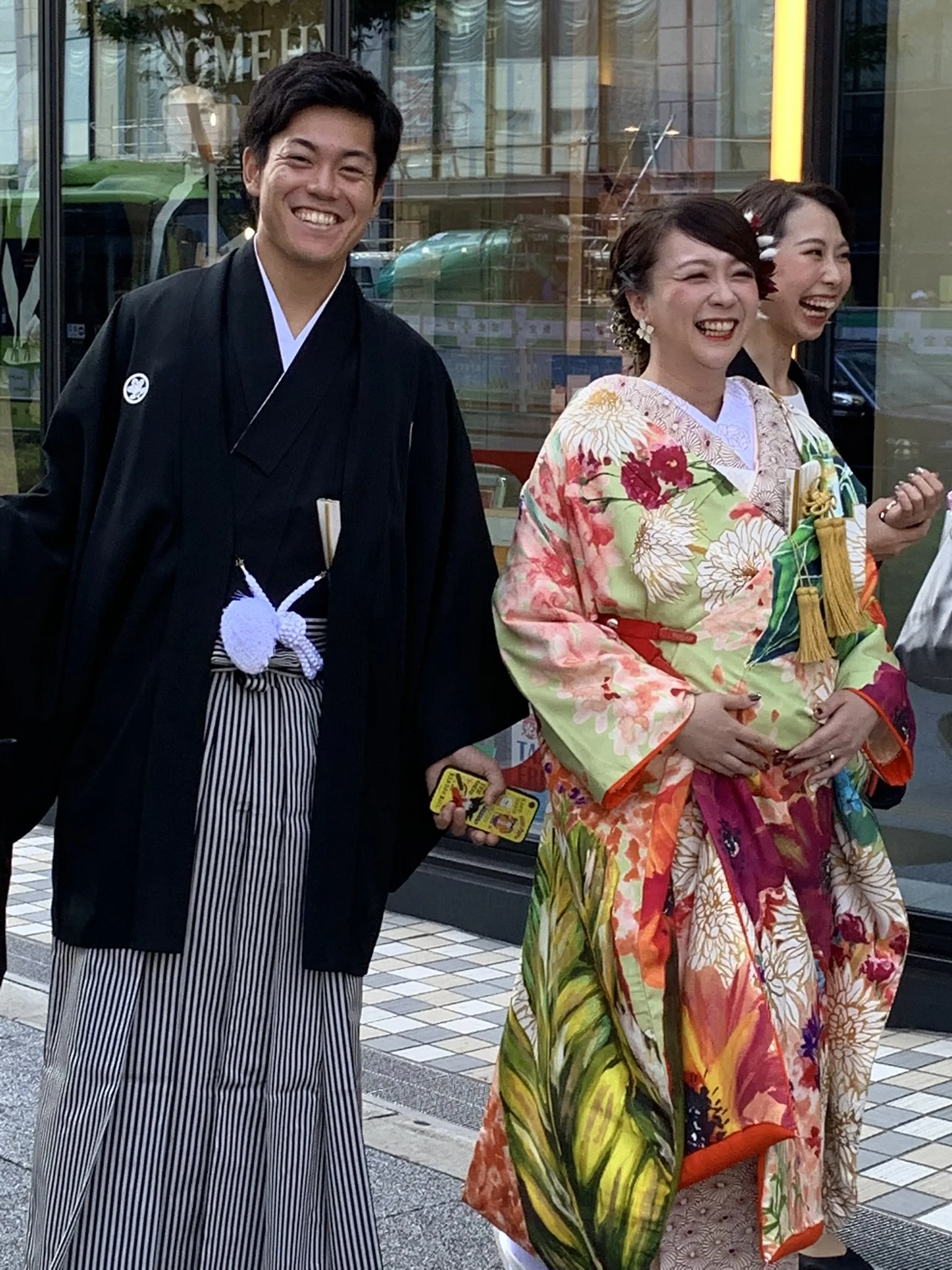
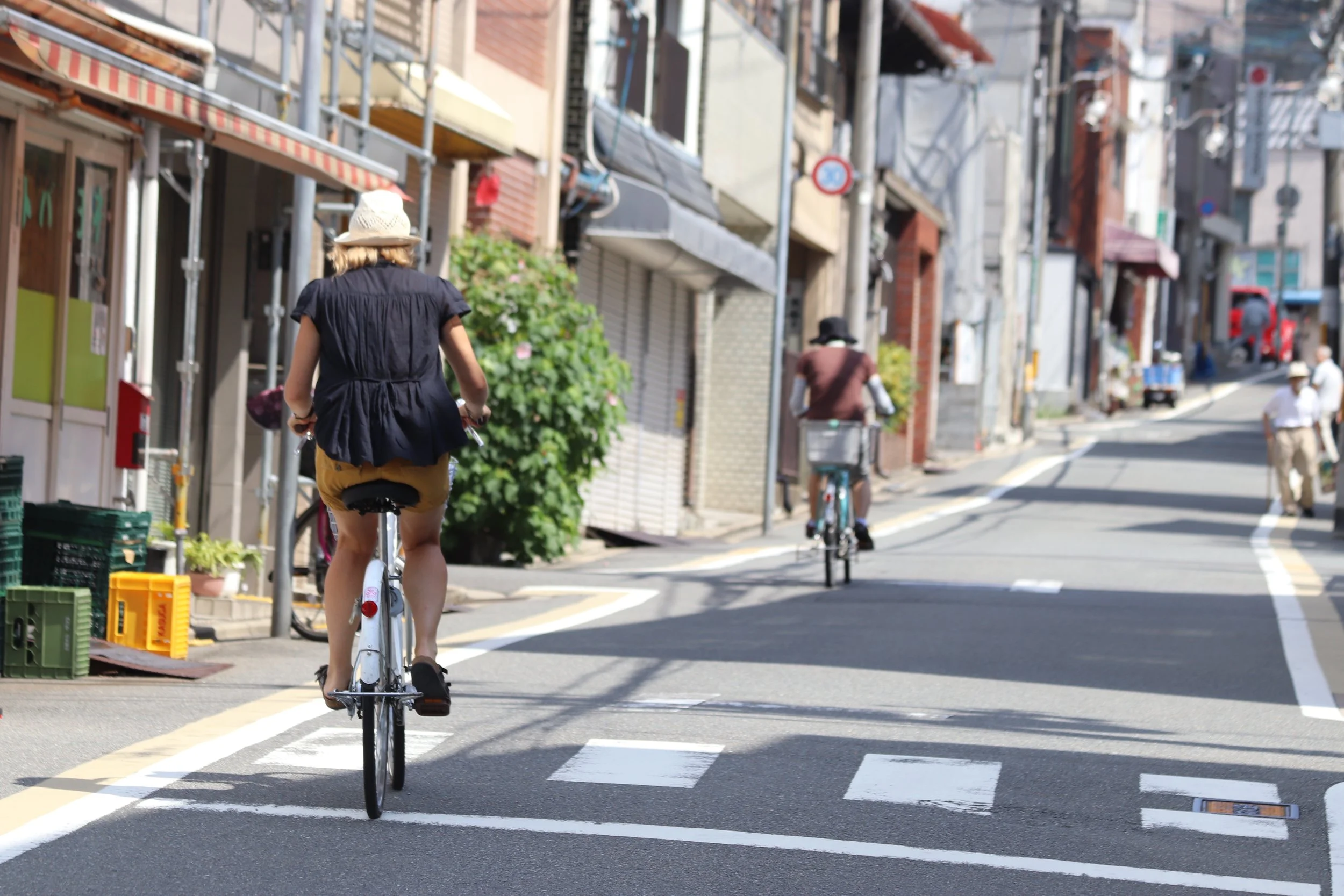
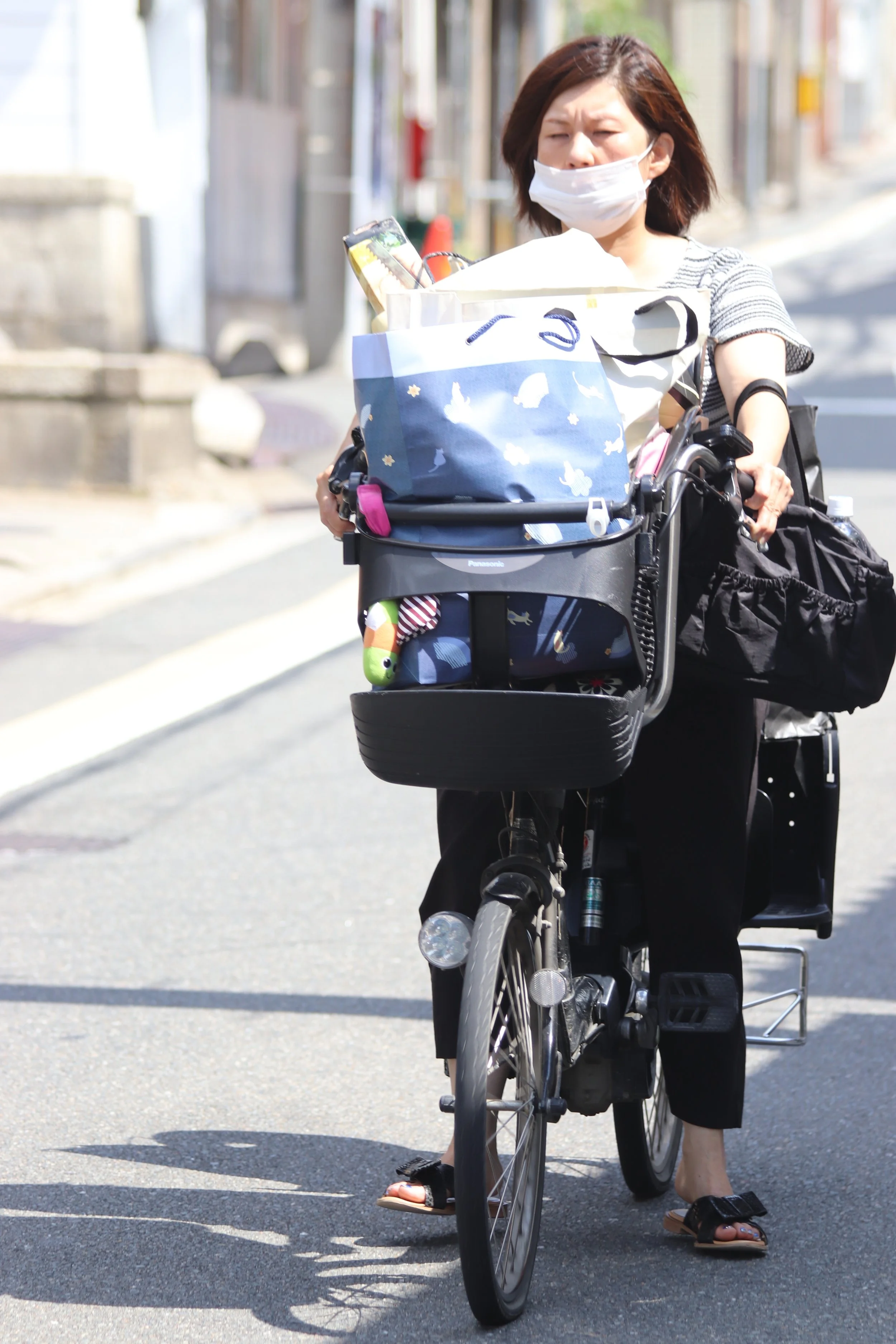
Osaka doesn’t ask you to choose between old and new.
It gives you both.
After visiting Osaka, I think I finally understand.
It isn’t simply because the city has great food.
It’s because food seems woven into the city’s personality.
Osaka is friendly.
Unpretentious.
Playful.
A little outrageous.
And very serious about having a good time.
The official Osaka tourism guide describes the city as a place where traditional nostalgia and newness continually collide—and nowhere is that more obvious than in its food culture.
“I’ve never seen anything quite like this.”
Perhaps most appropriately way to remember this city is in one delicious little word:
Kuidaore. Eat until you drop.