The Night the Hippos Shook My Bed
For our final safari, I wanted a different experience.
Over the course of our African adventure, I'd stayed in a 5-star lodge, a 4-star camp, and now it was time to experience a 3-star safari camp. I wasn't chasing thread counts or fancy amenities. I wanted to discover what really matters on safari. I wanted to hear the animals at night
For me, it came down to two things: location and the guide.
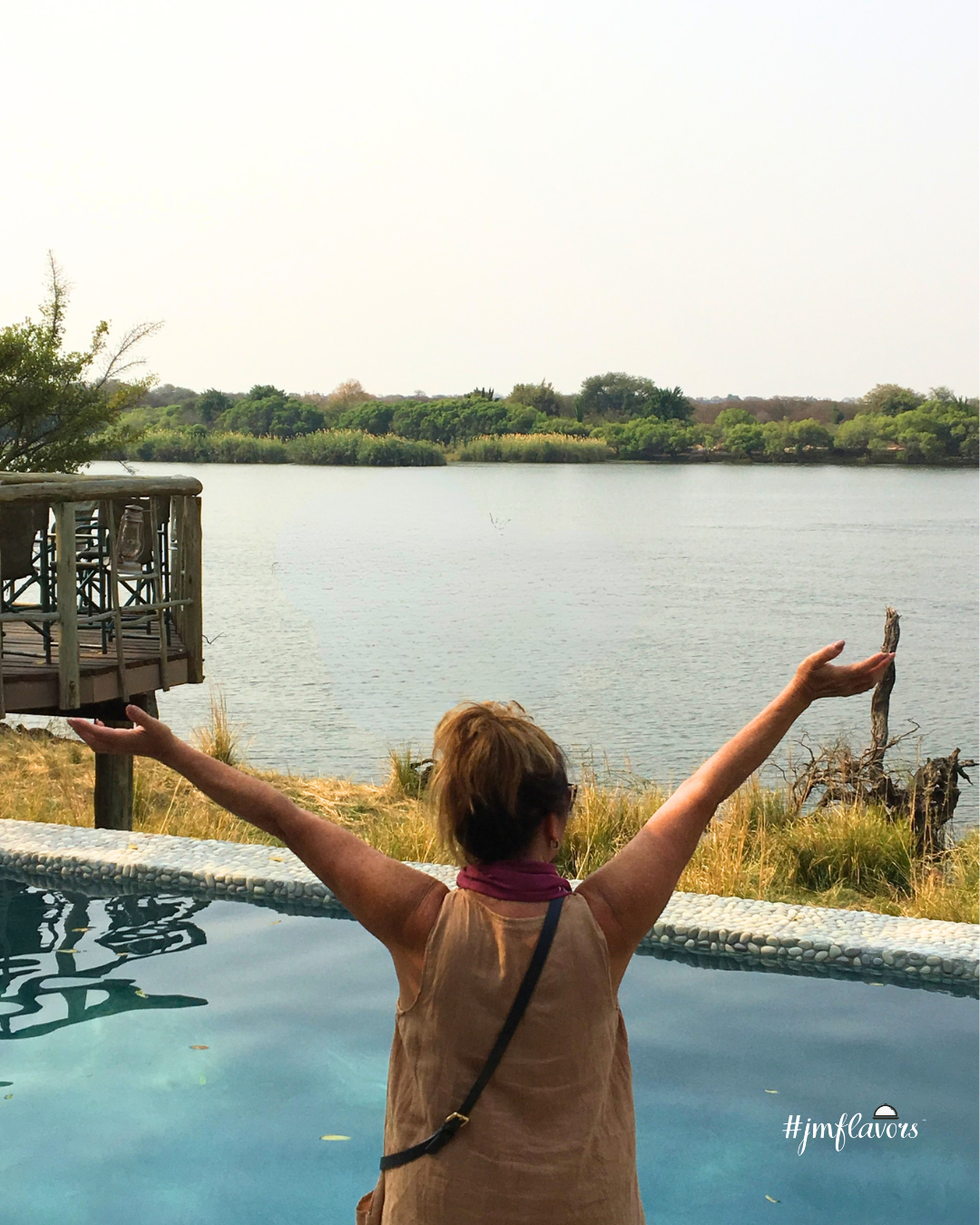
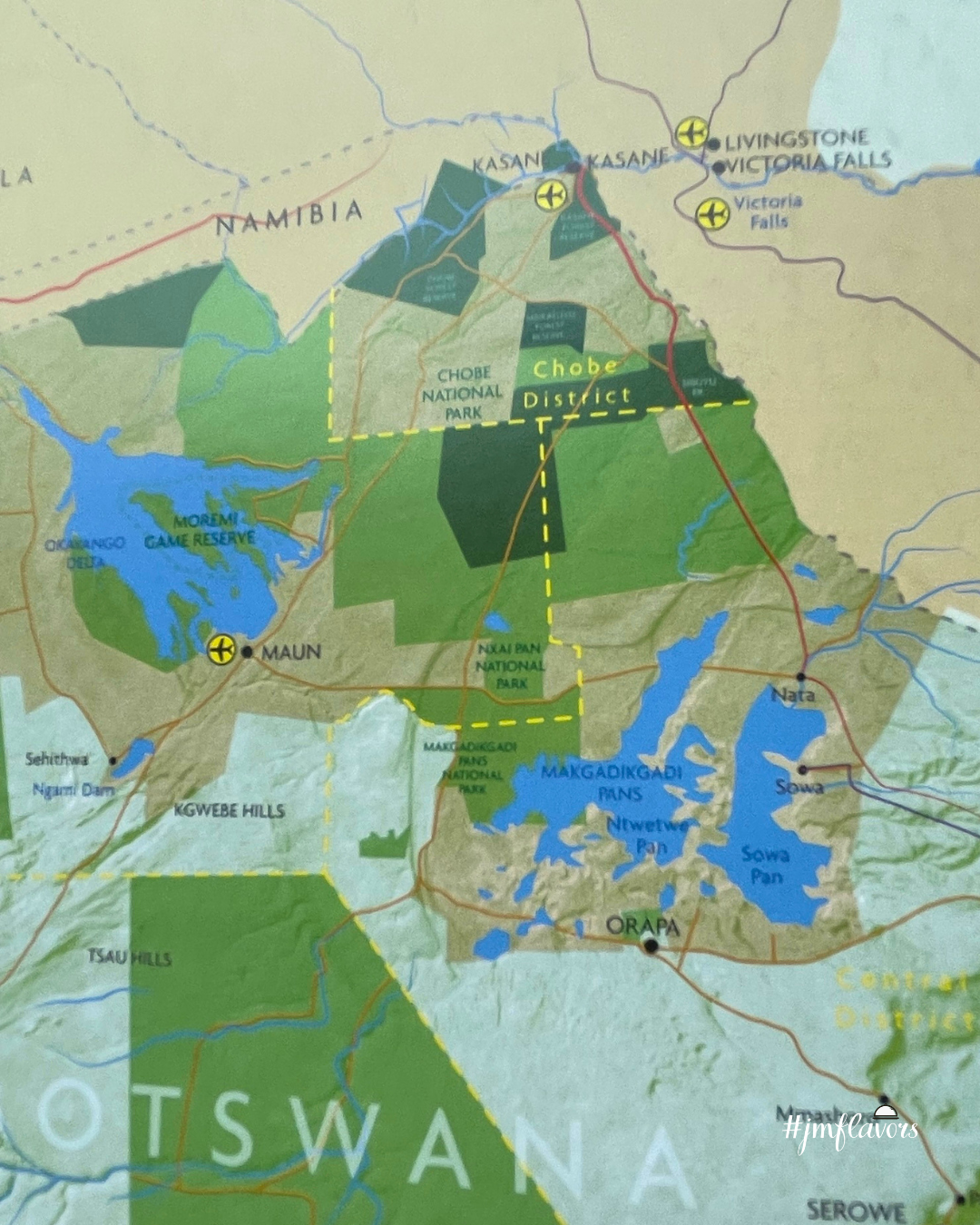
Our camp sat on stilts along the Chobe River, but to get there was a flight into Zambia (think Victoria Falls)
We flew into Harry Mwaanga Nkumbula International Airport in Zambia. (Please don’t ask me to pronounce it. 😂)
From there, we travelled toward one of the most fascinating border crossings in the world—the Kazungula Bridge.
If you need to brush up on your geography, this is a good one.
The area is where Botswana, Zambia, Zimbabwe and Namibia all come incredibly close together, known as the Kazungula Quadripoint. The bridge itself connects Zambia and Botswana, but this tiny corner of Africa brings four countries together in a way you won’t find anywhere else.
Crossing into Botswana was not as simple as driving across a bridge.
Our first vehicle stopped before entering the country. We had to go through a vehicle disinfecting area, step out and clean our shoes, complete immigration, and then meet our Botswana driver on the other side.
And just like that, we entered a country where wildlife is not just something to see. It is something to protect.
Botswana has built much of its tourism model around conservation, limiting mass tourism and focusing on protecting the incredible wildlife that brings visitors from around the world.
The animals are not just the attraction. They are the reason the system exists.
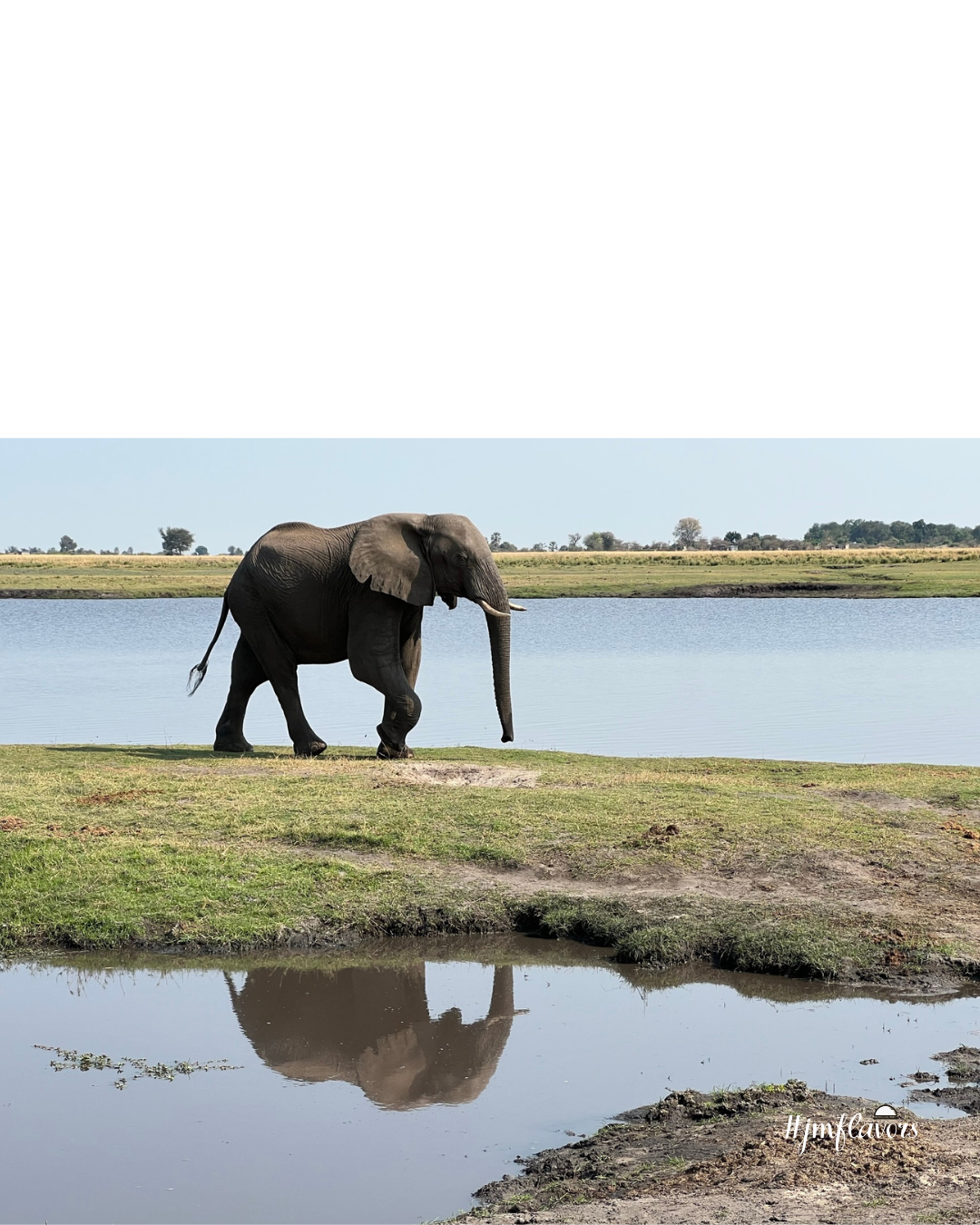
Ahead of us lay Chobe National Park, famous for its elephants, the mighty Chobe River, and a safari experience unlike any we'd had before, putting us right where the wildlife comes to drink.
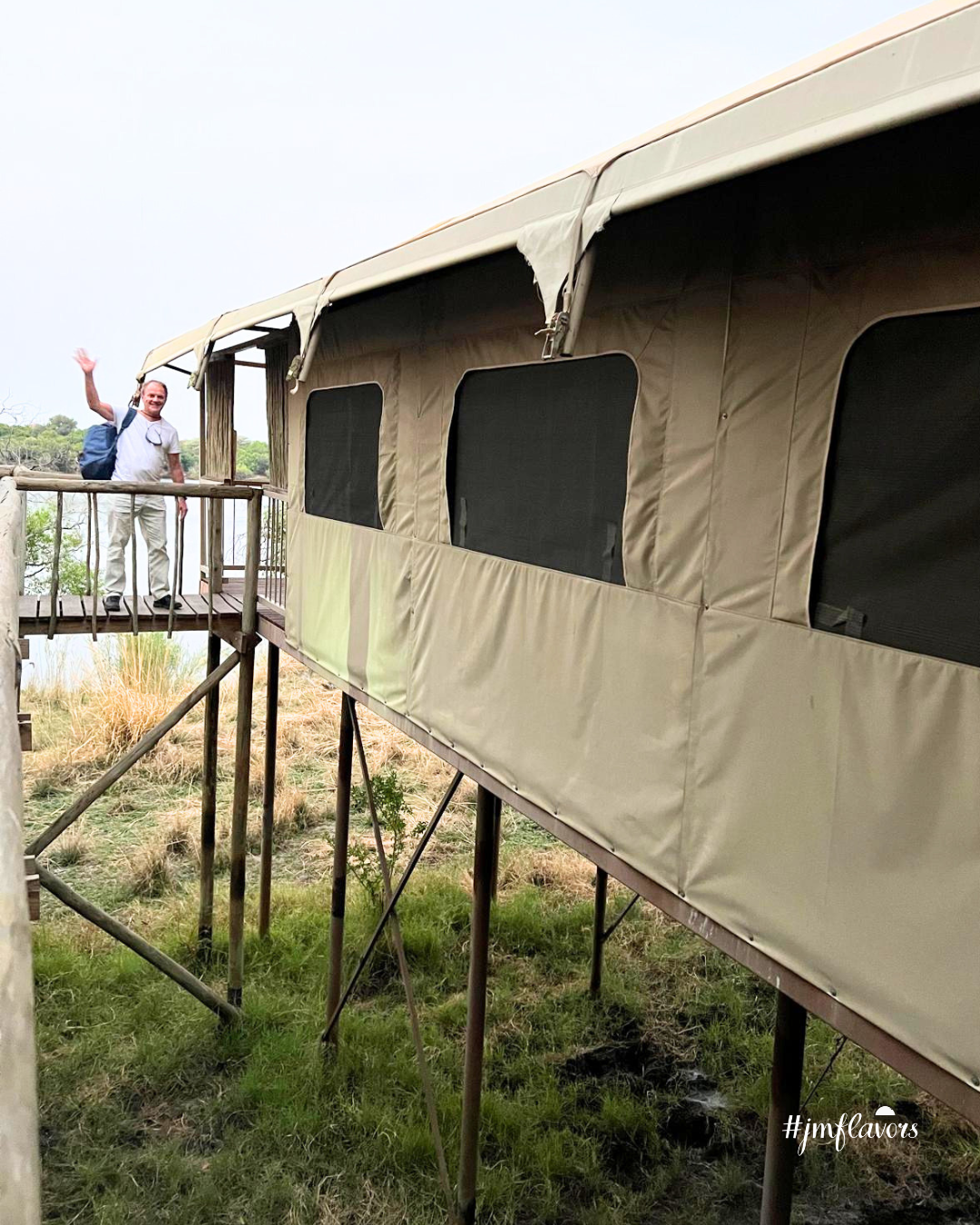
Our tent
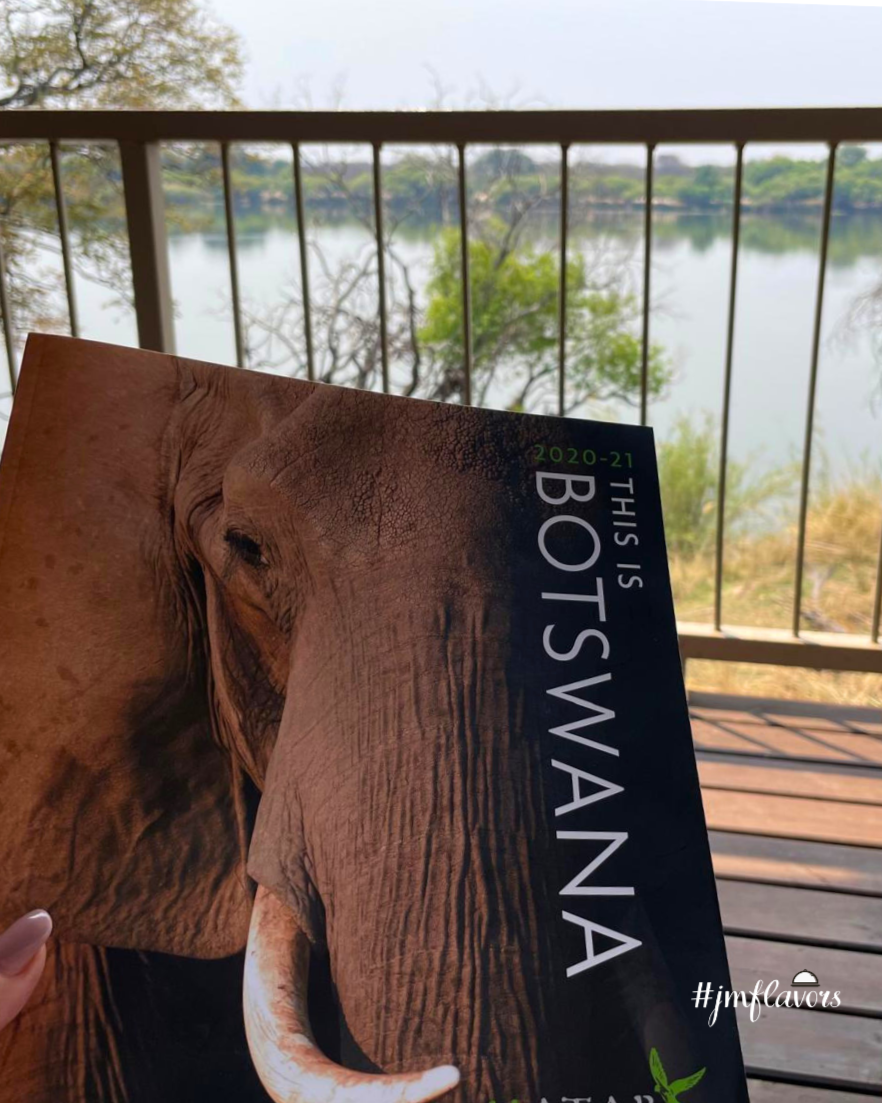
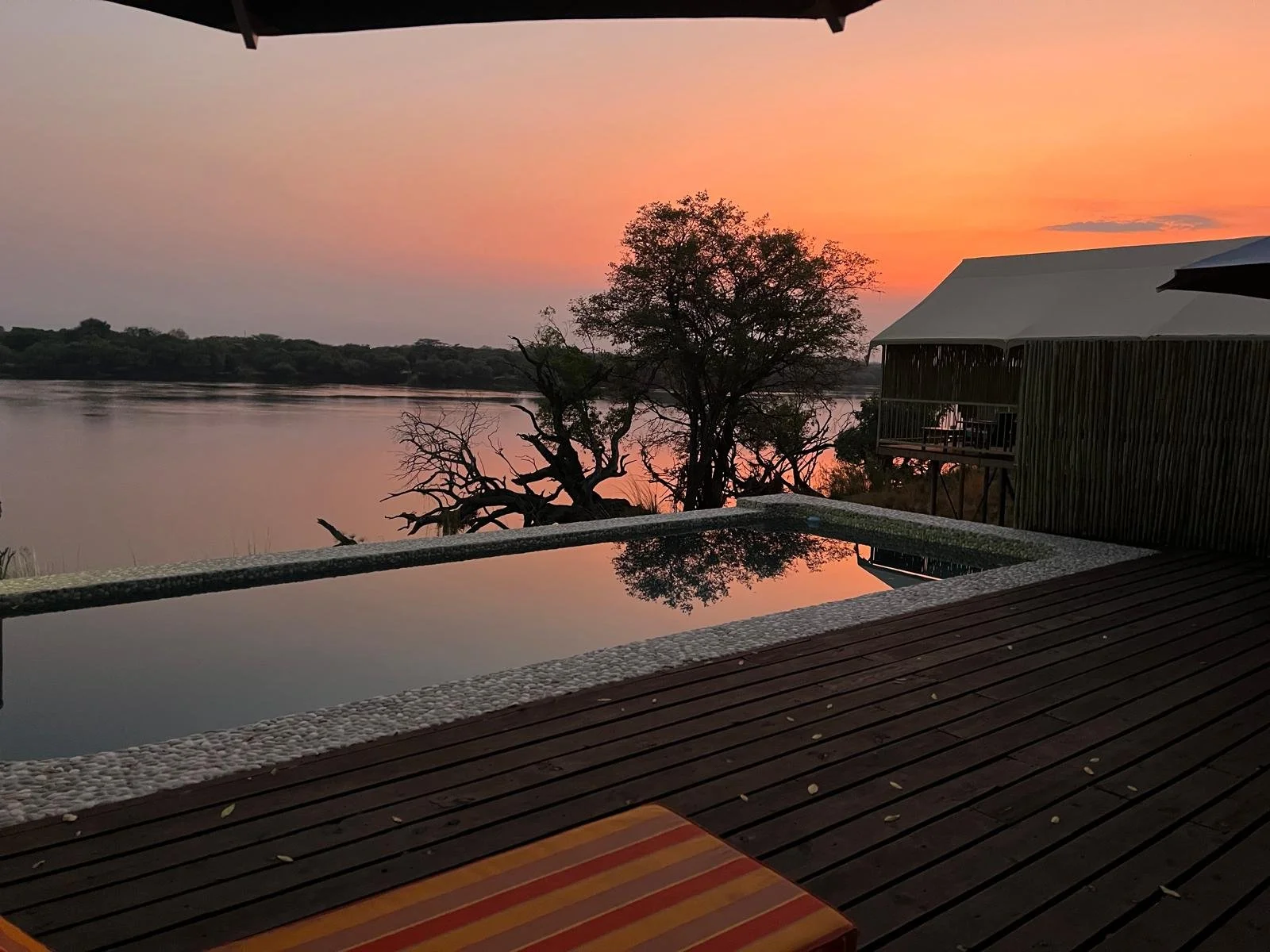
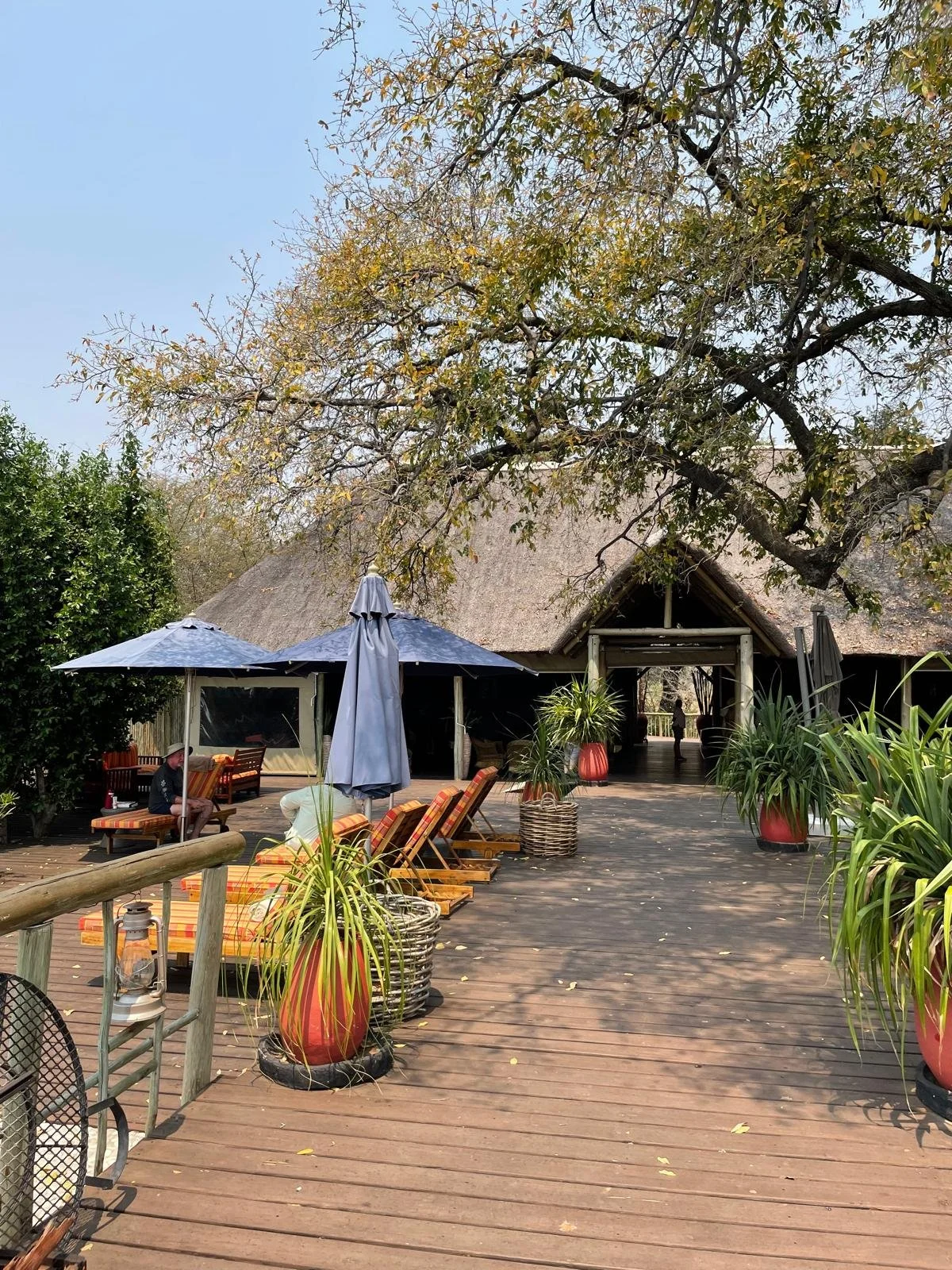
The canvas tent was large, simple but comfortable, complete with a clawfoot tub and a deck overlooking the river. It had everything we needed because the real luxury wasn't inside the tent—it was outside. I loved it.
As darkness settled over the river and the sounds of Africa replaced the silence of the day, we climbed into bed excited for what tomorrow would bring.
Then...
Our tent moved.
Not a gentle sway. A definite jolt.
A few moments later, it happened again.
Lying there in the dark, we looked at each other wondering, "What on earth is happening?" We could hear heavy movement outside and unfamiliar sounds echoing through the night. As safari rookies, we had no idea what was out there. More importantly... was the platform beneath us going to survive whatever was rubbing against it?
Morning brought the answer.
A family of hippos had spent part of the night scratching themselves against the wooden stilts supporting our tent.
Welcome to Chobe River. Welcome to Botswana.
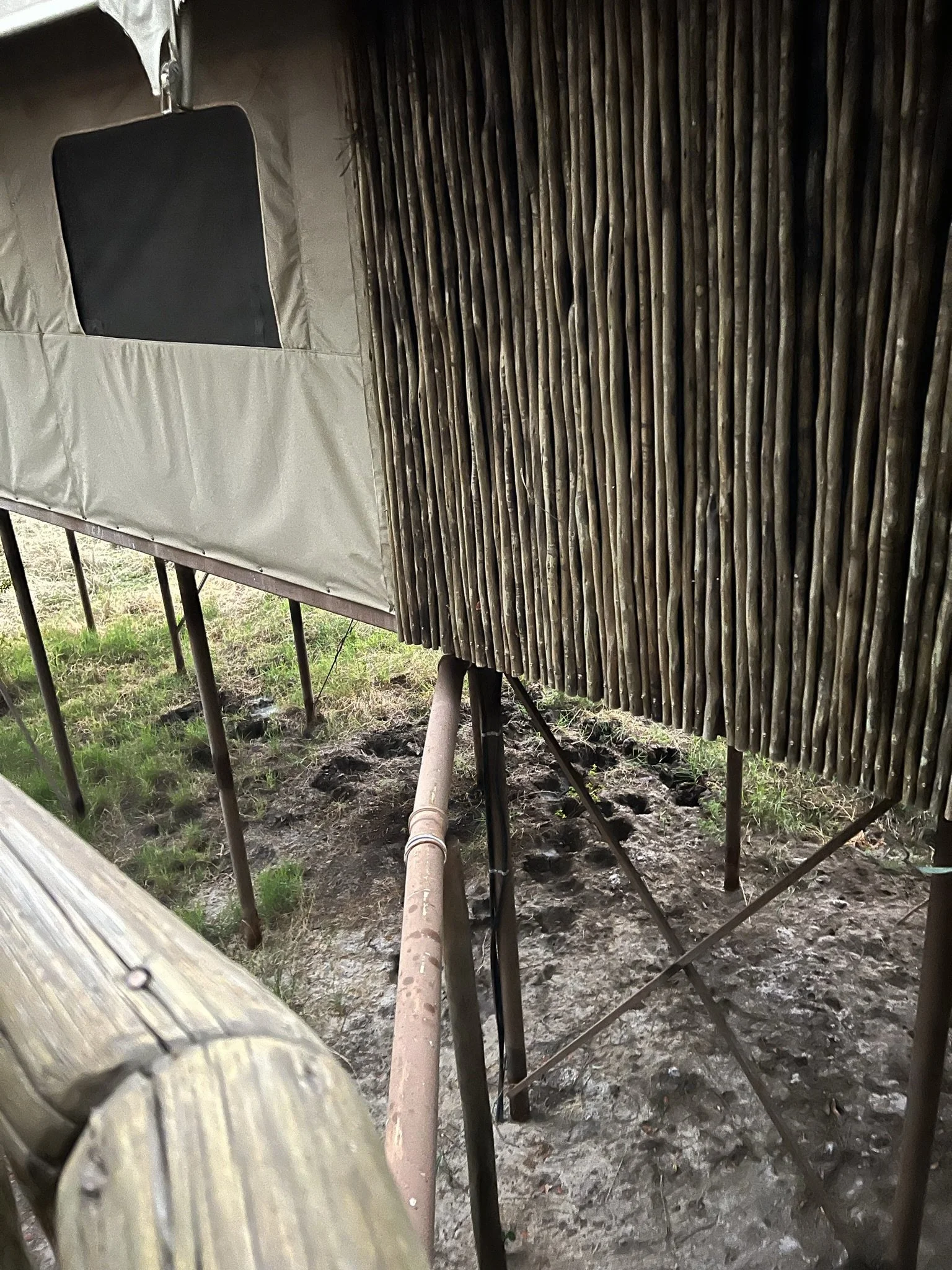
Hippo Calling Card
The funny thing about hippos is that they look almost harmless. They are round. They are slow-moving. They spend much of their day lounging in the water. But they deserve enormous respect.
Hippos are powerful, territorial animals and are considered one of Africa’s most dangerous large mammals.
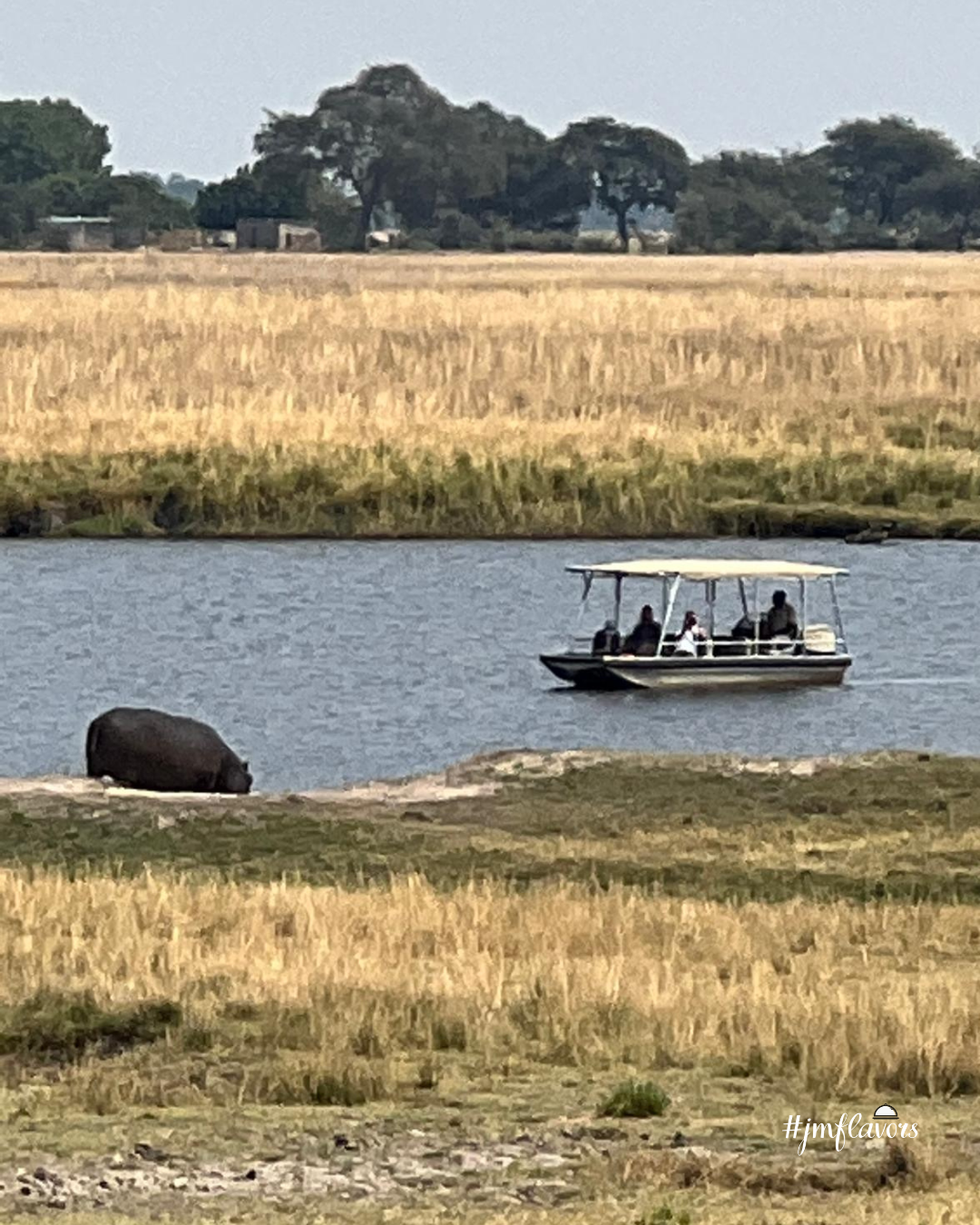
What fascinated me most was how many hippos lived along the Chobe River.
Coming from Sabi Sands, where we had incredible leopard and lion sightings, Botswana felt completely different.
The river was alive.
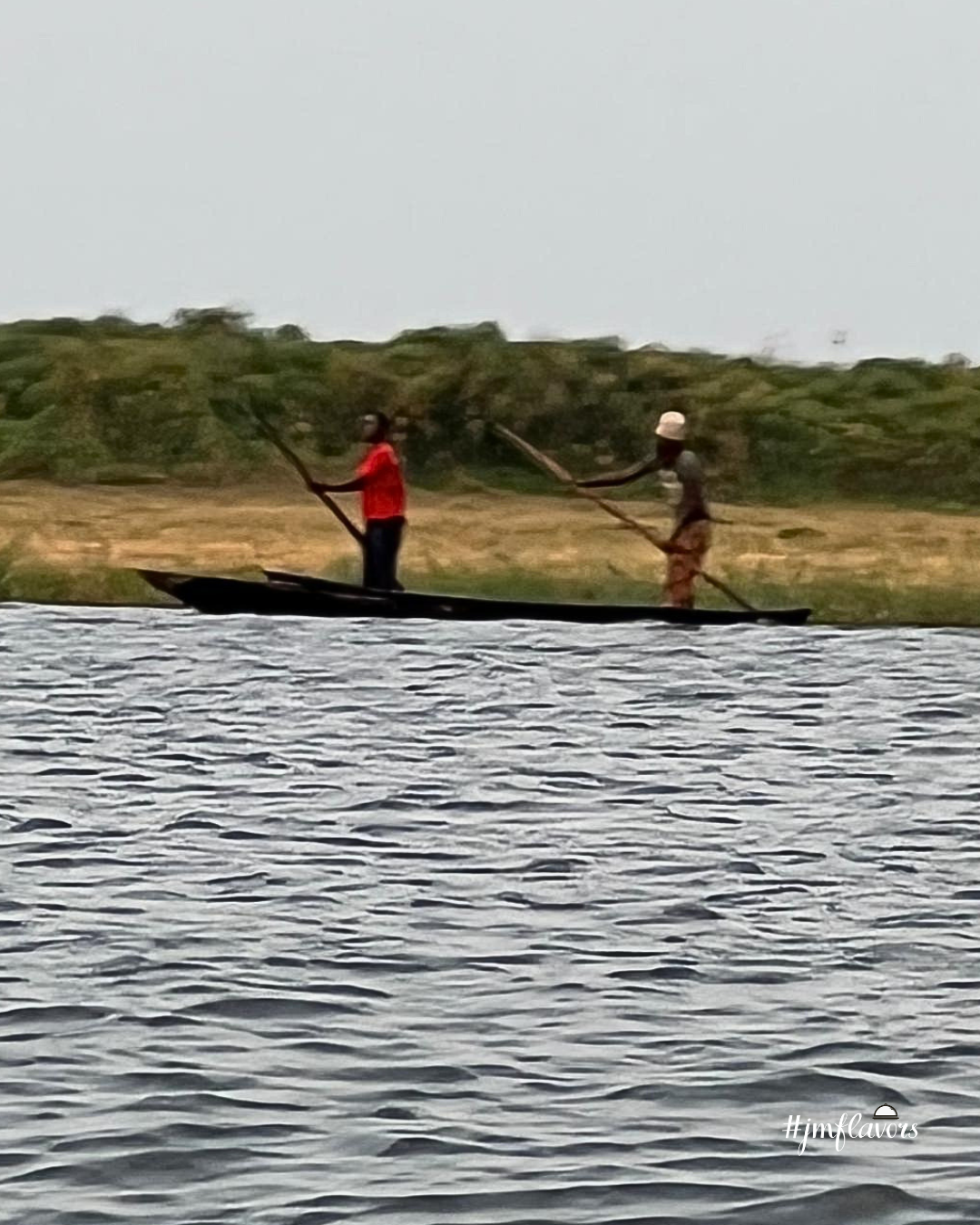
One of the highlights of our stay was our private Chobe River boat safari.
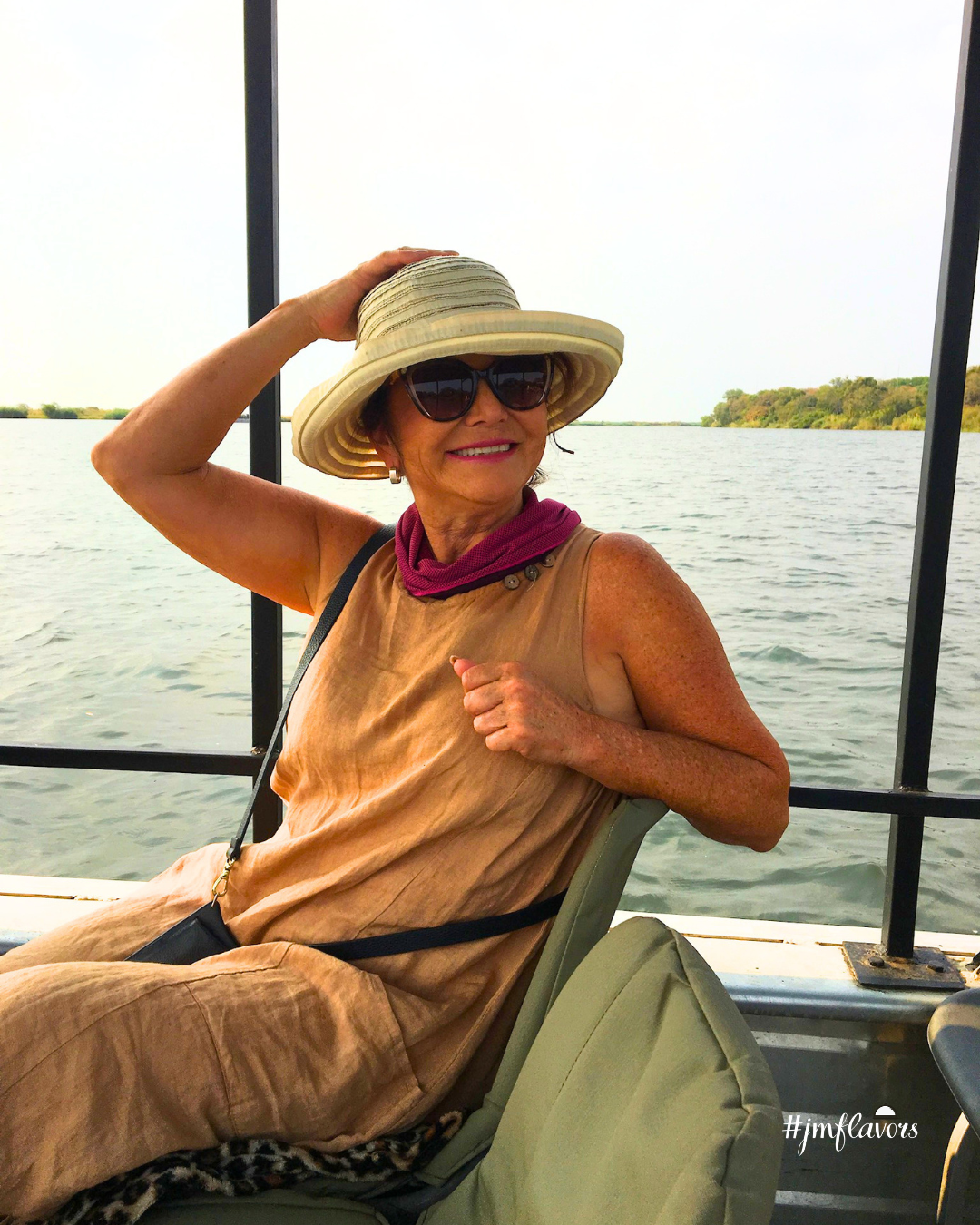
Being on the water gives you a completely different perspective. The river was filled with life.
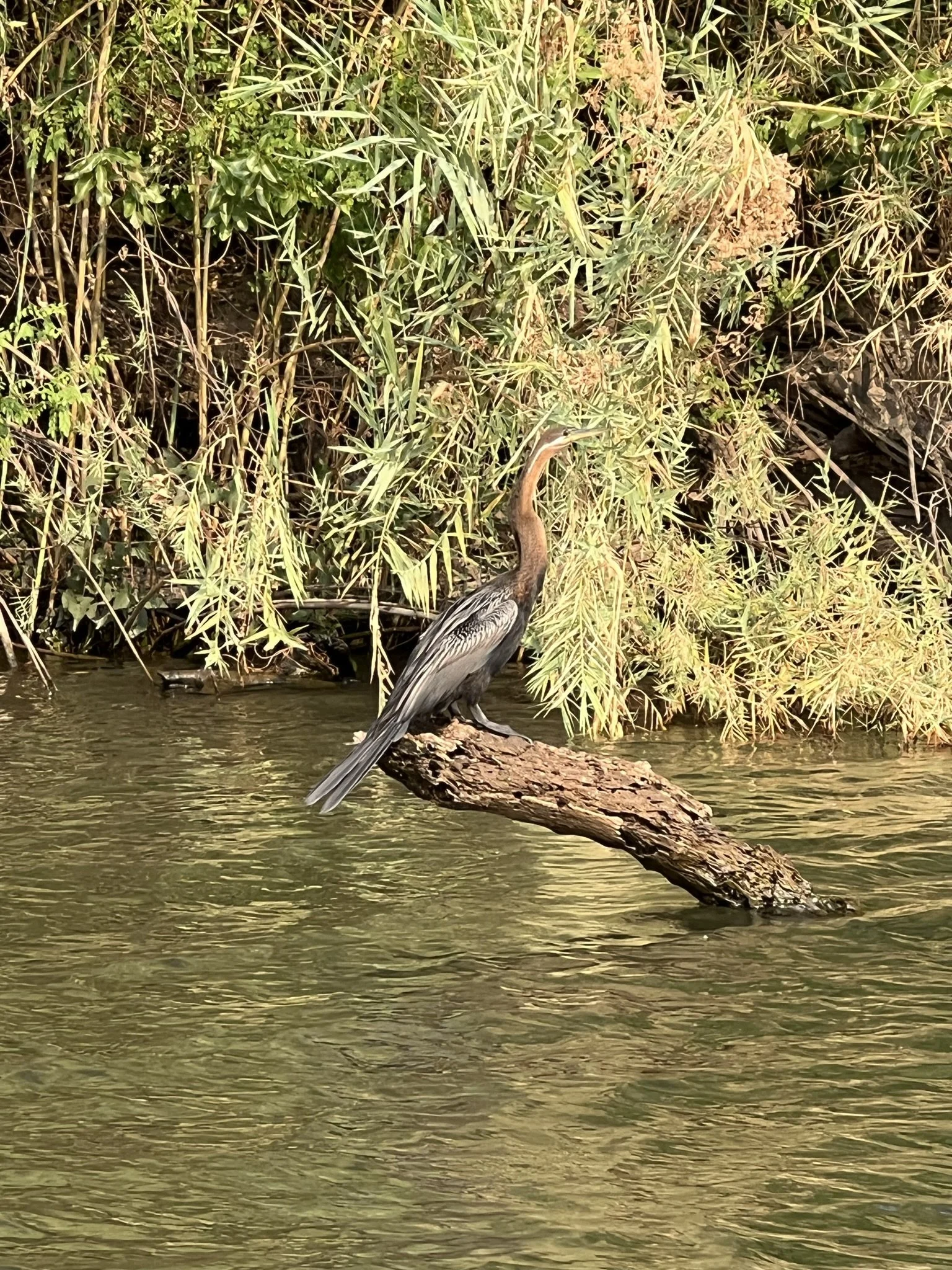
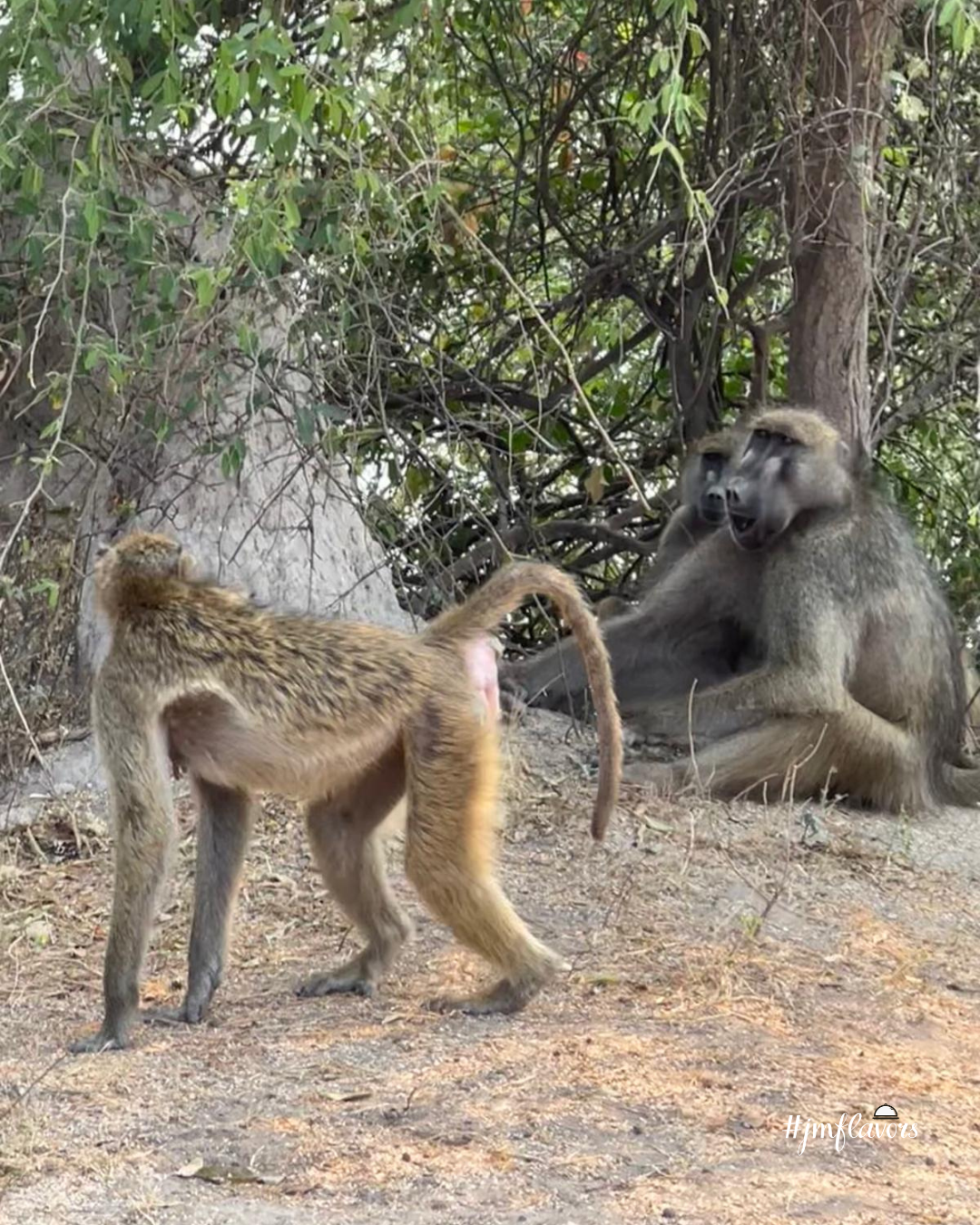
Birds calling from the trees. Monkeys moving through the branches. Hippos appearing and disappearing beneath the surface.
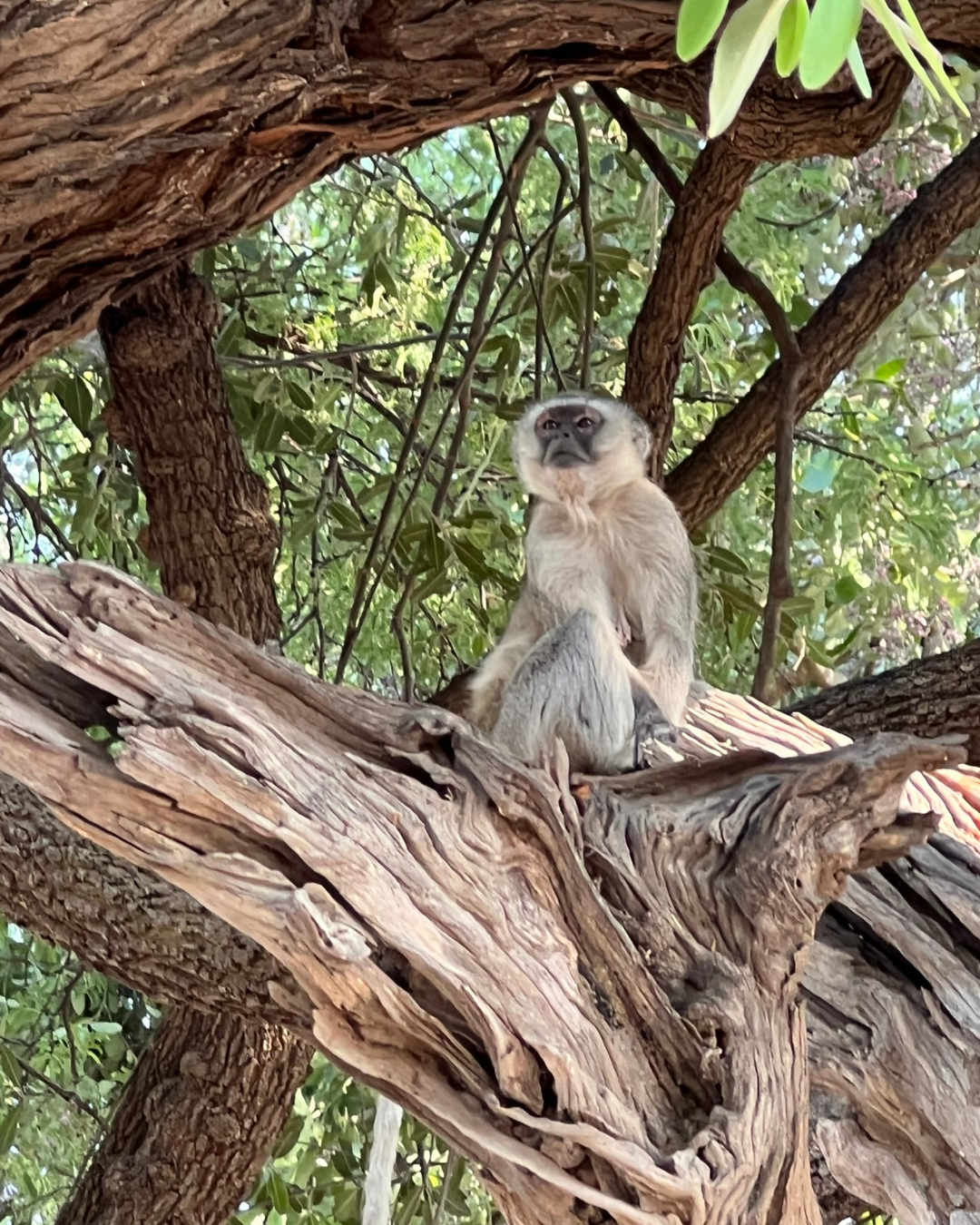
VerVet Monkey
And then there was the crocodile.
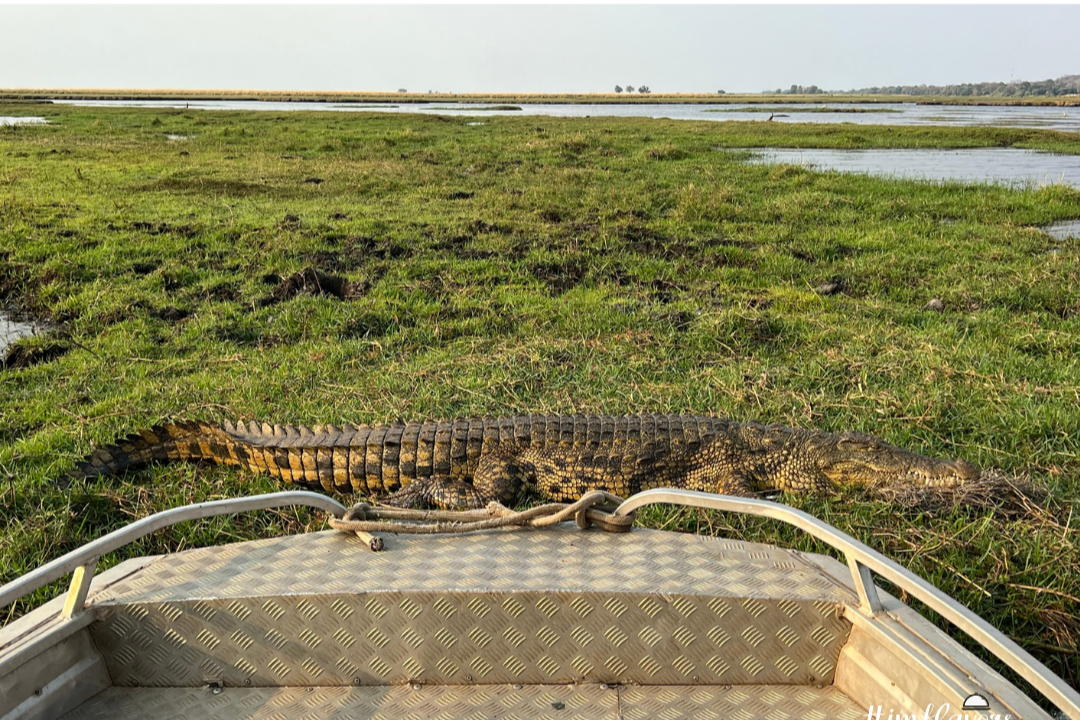
Crocodile
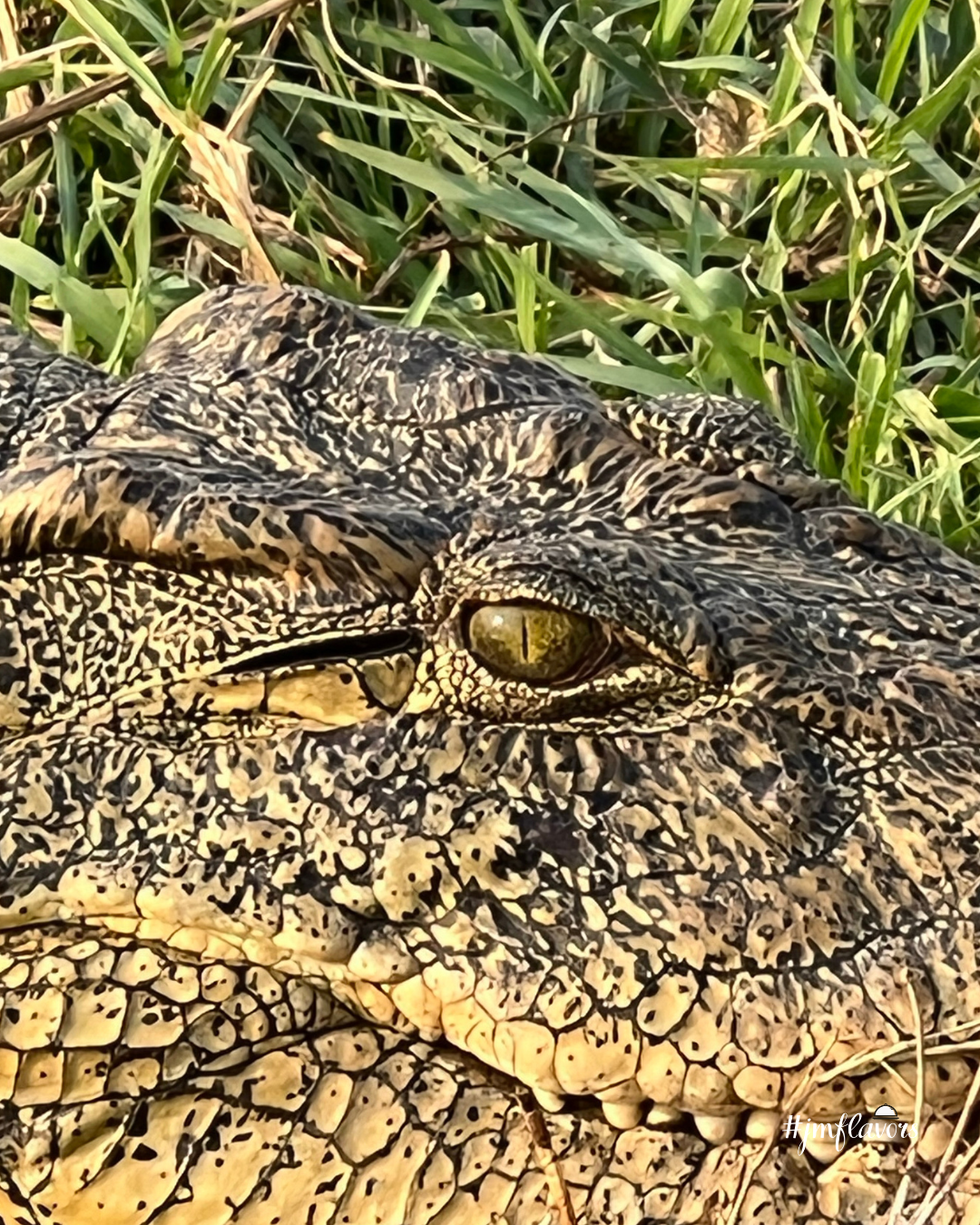
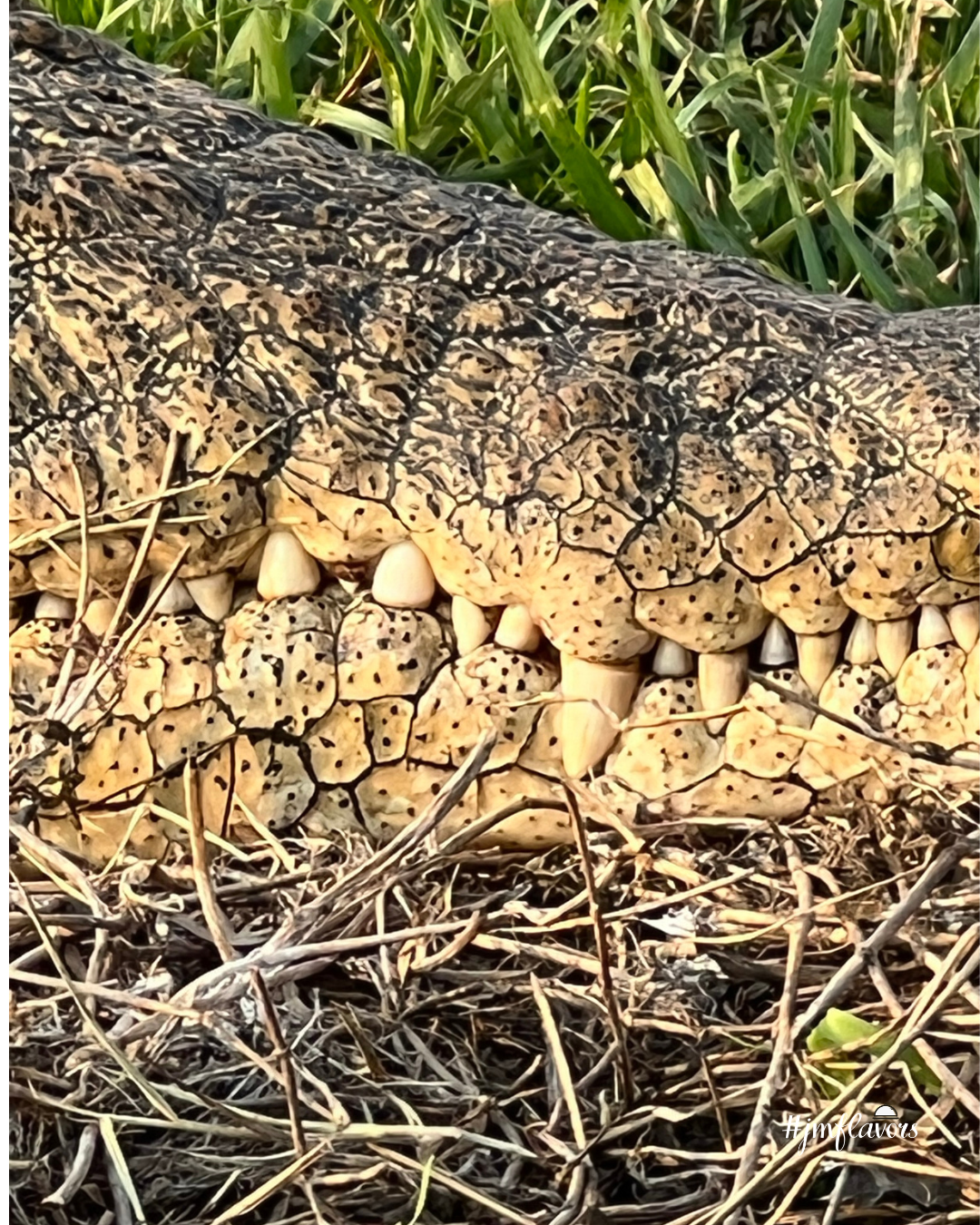
We drifted incredibly close to a massive crocodile. Close enough that my husband was definitely less relaxed than I was.
My thought process… “Can a crocodile actually jump into the boat?”
Apparently, I was comfortable enough with my own logic to enjoy the moment. My husband may have had a different opinion. 😂 (here is my up close and personal shots)
The river also taught us how deceptive wildlife can be.
A hippo can disappear completely beneath the surface. One minute, there is nothing but water. The next minute, a pod of giant heads appear.
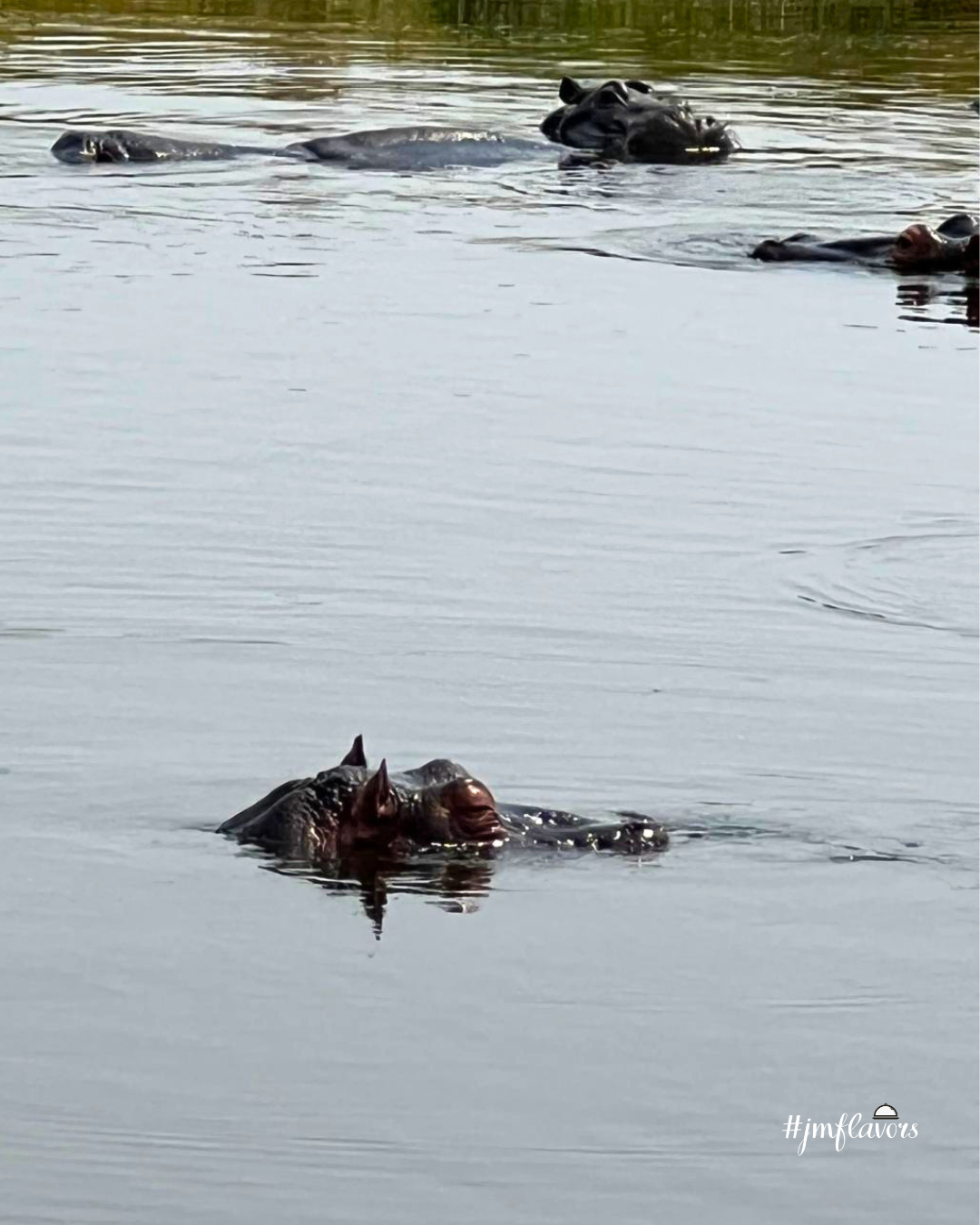
They are enormous animals that somehow become invisible as the walk on the bottom.
Our guide Toby quickly became one of the highlights of Botswana.
He had the patience of a teacher and the instincts of someone who understood the river and the animals.
One morning, radio chatter from other guides gave him information about where the wildlife action was happening.
The night before a huge thunderstorm rolled in and lite the sky. This would change everything.
Animals will be on the move.
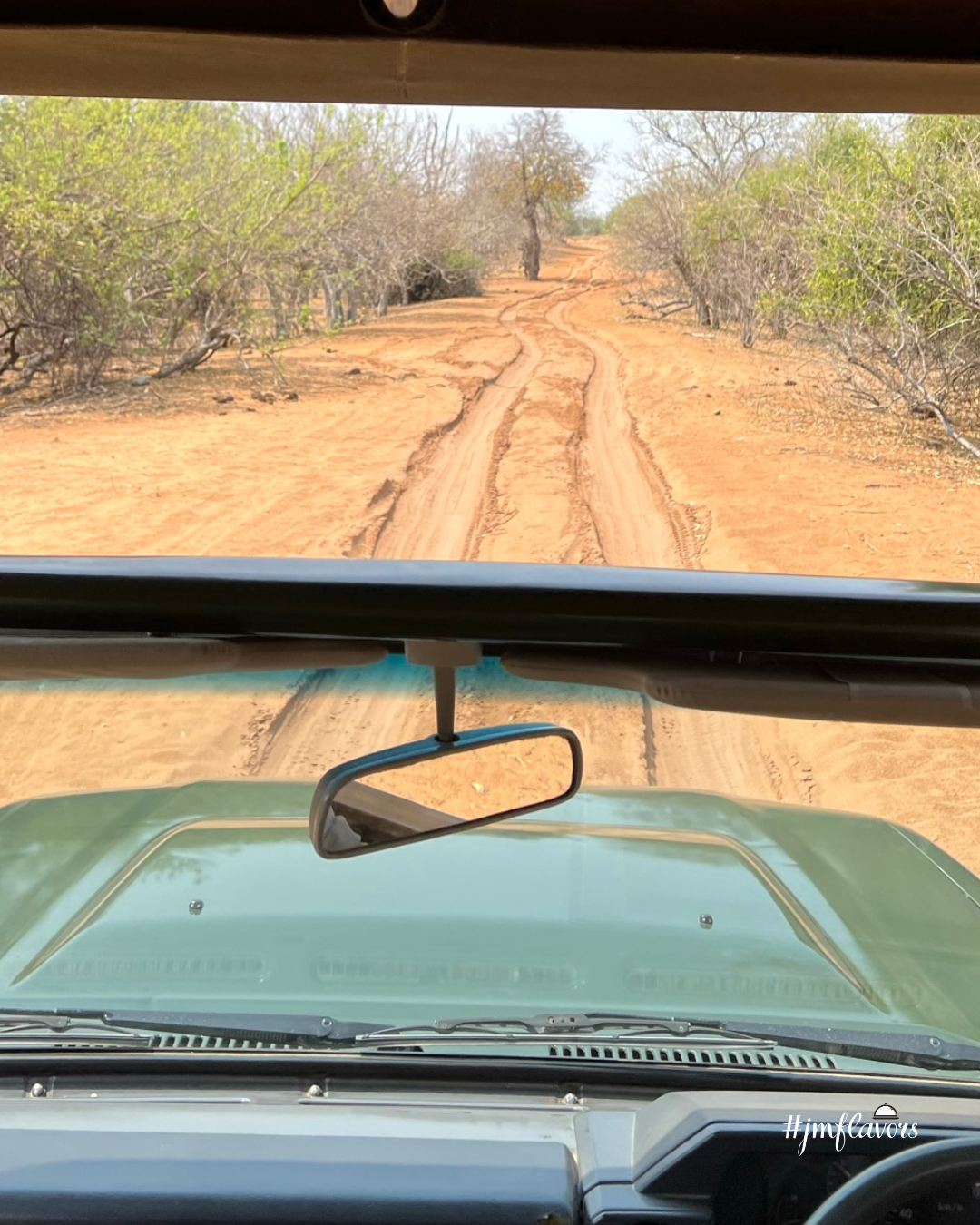
Instead of spending an hour travelling through the park roads, Toby made a decision to take the highway and close the distance.
What started as a shortcut became another safari adventure.
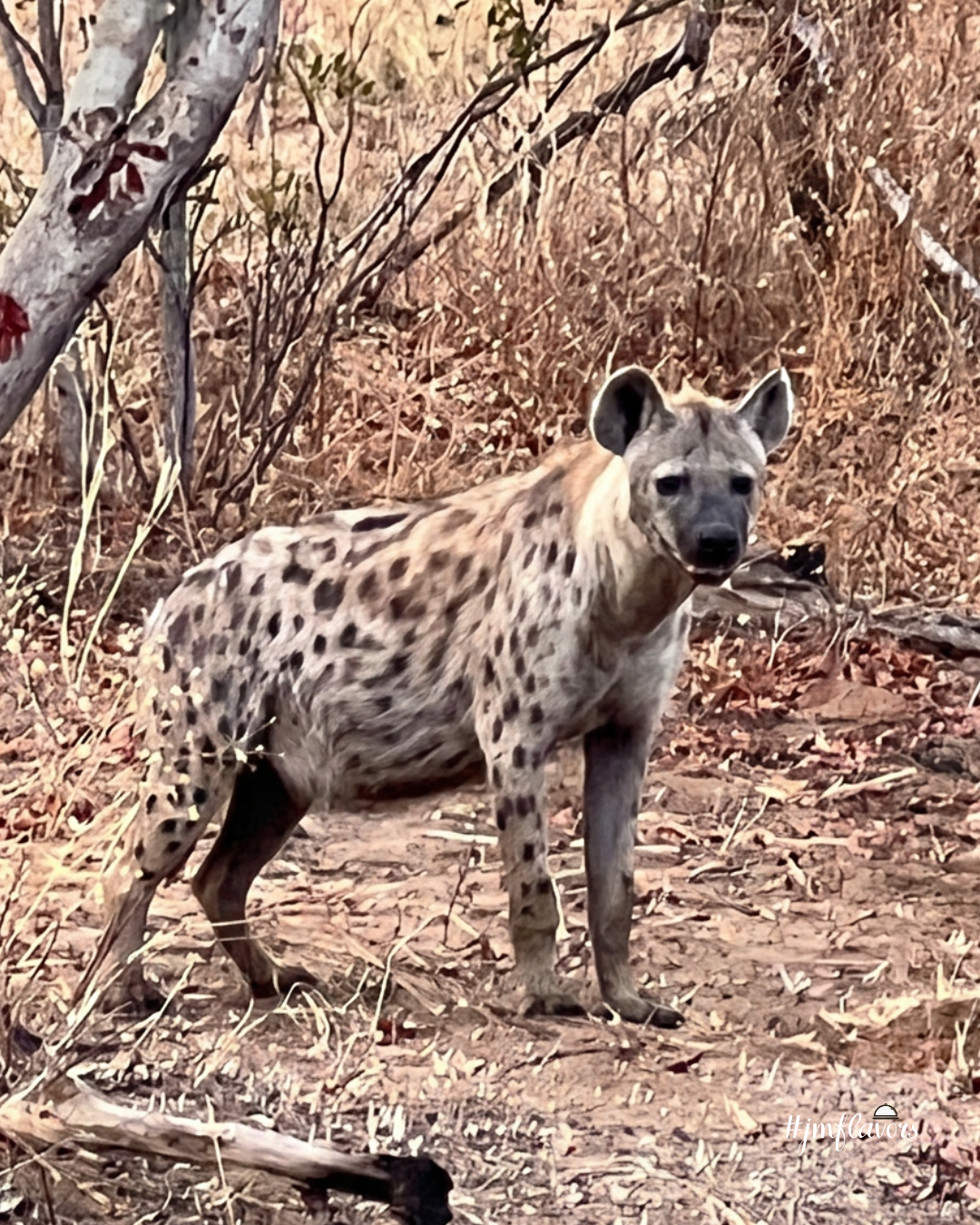
Along the way, we spotted a pregnant hyena chewing on a bone at the side of the road. Completely relaxed. Completely unconcerned about us watching. (Wait till you hear the video)
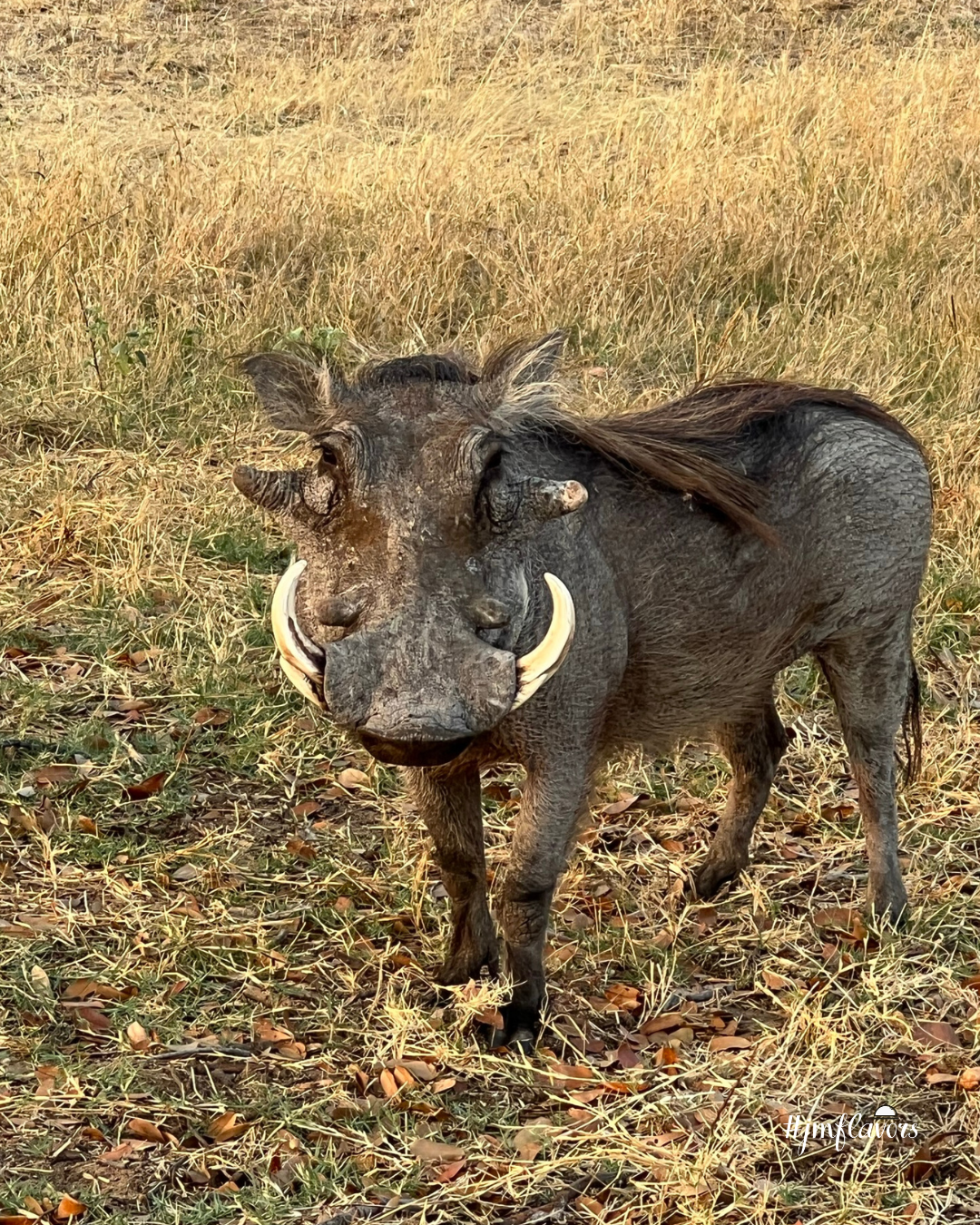
Then came our warthog encounter. Obviously he was waiting for his close-up - staring directly into the camera.
Let’s just say…
Warthogs are not winning any beauty contests. In fact hyena and warthogs are 2 of the UGLY 5 group.
Can you guess the other 3 in this grouping?
Beauty really is in the eye of the beholder.
We also spotted a bat-eared fox—an animal I had never heard about or seen before. Darting around like a rabbit.
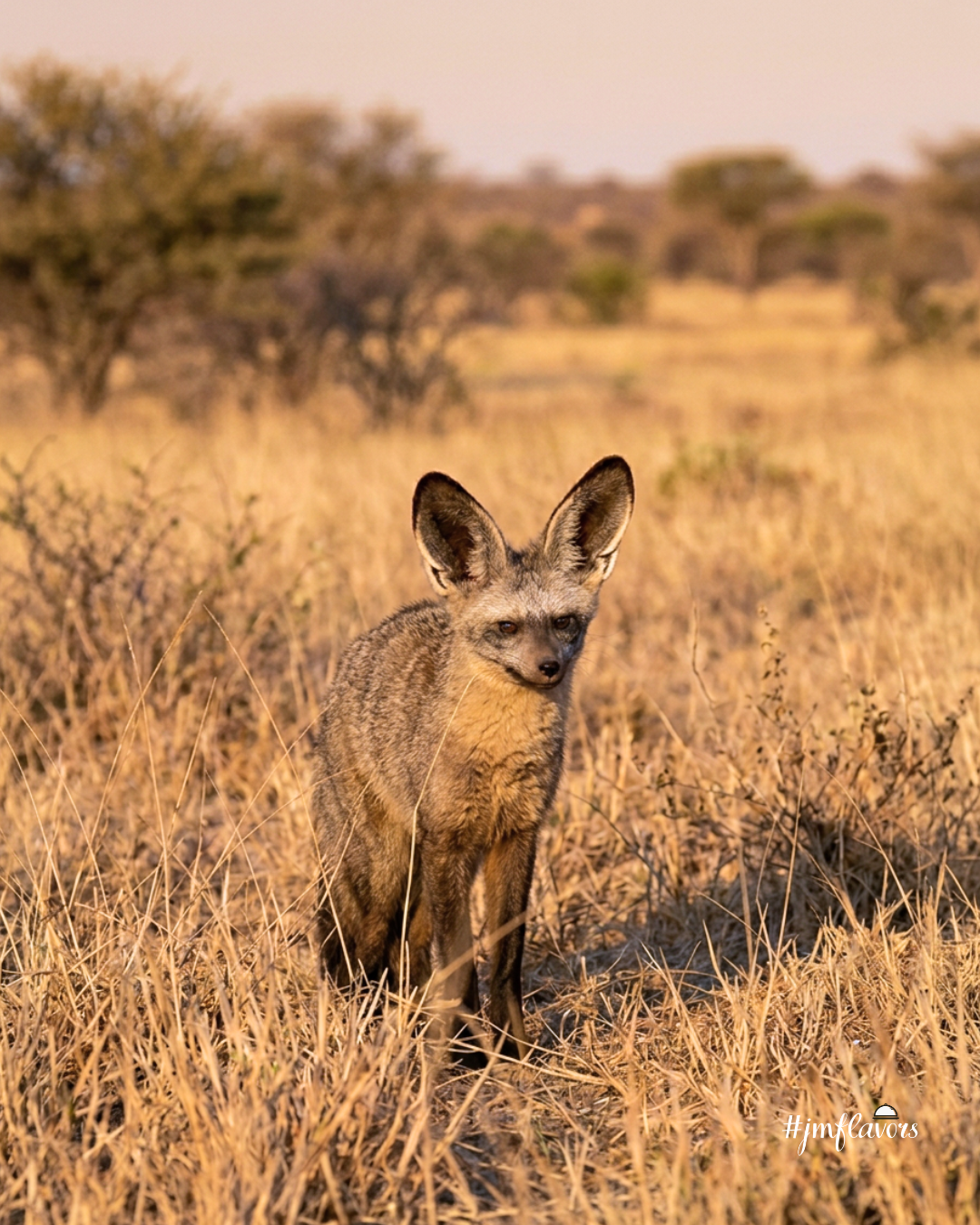
Bat Eared Fox
Those ears are not just for looks. They help locate insects underground and dung beetles, plus they release heat in the African sun.
Nature really does know what it is doing.
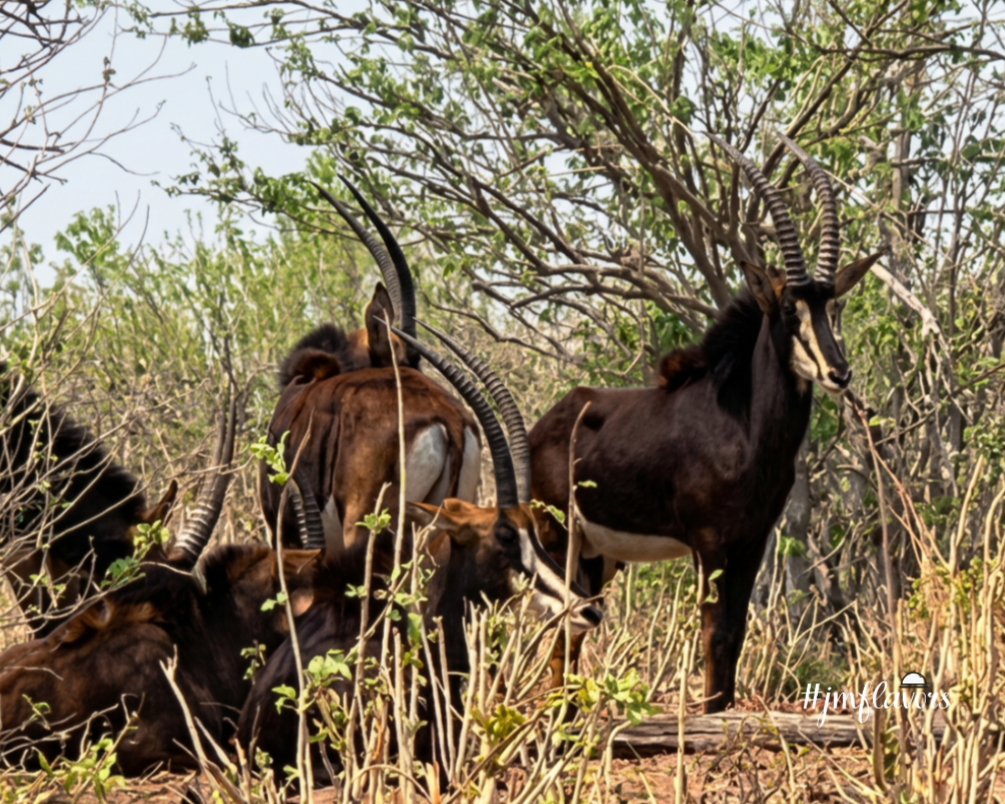
Sable antelope
Chobe National Park is different from a private reserve.
This is a true national park. Vehicles stay on designated roads. No off-roading.
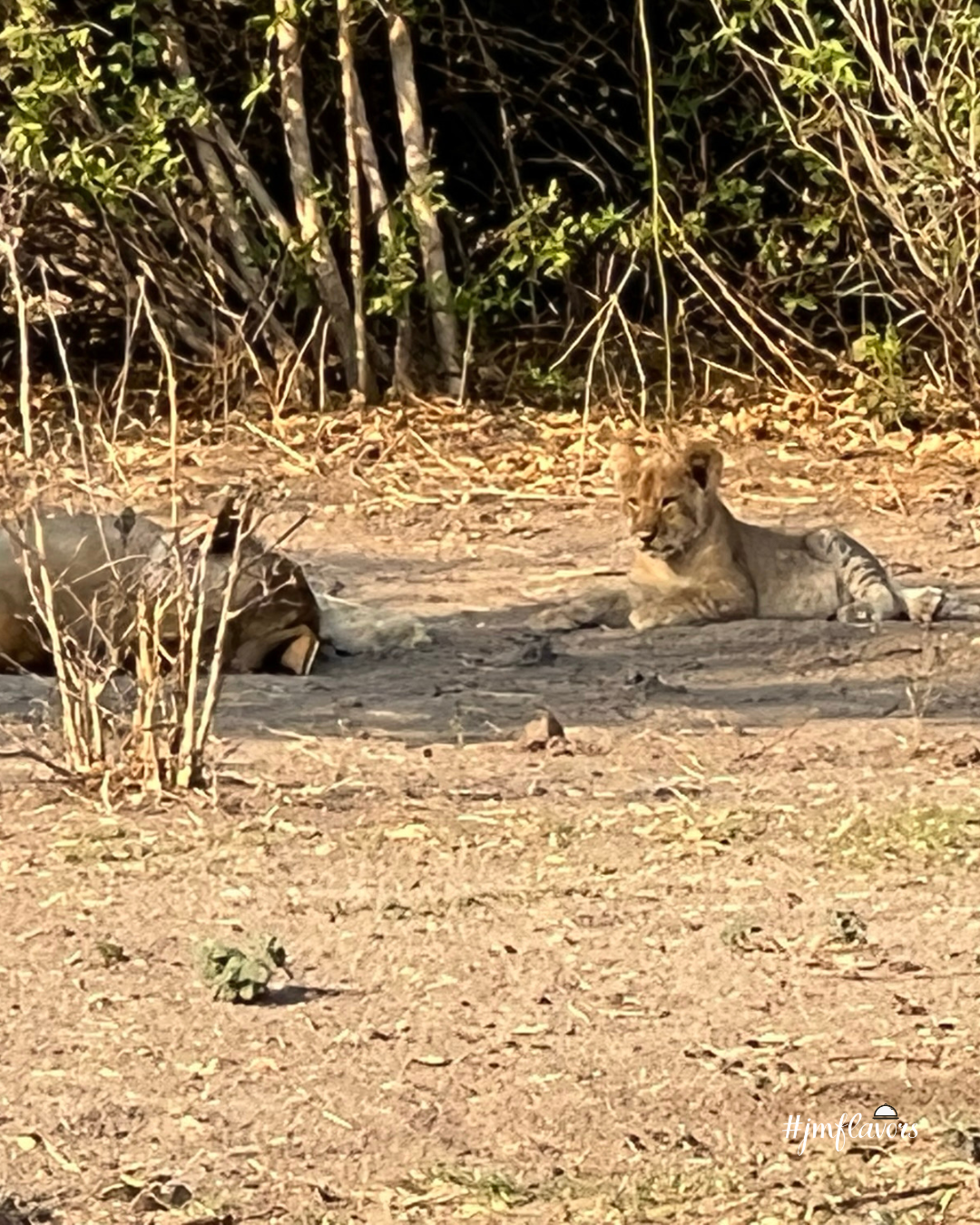
During one drive, we came across a pride of lions with several safari vehicles gathered nearby. While moving around, one vehicle got stuck. Not a little stuck. Deep in the sand.
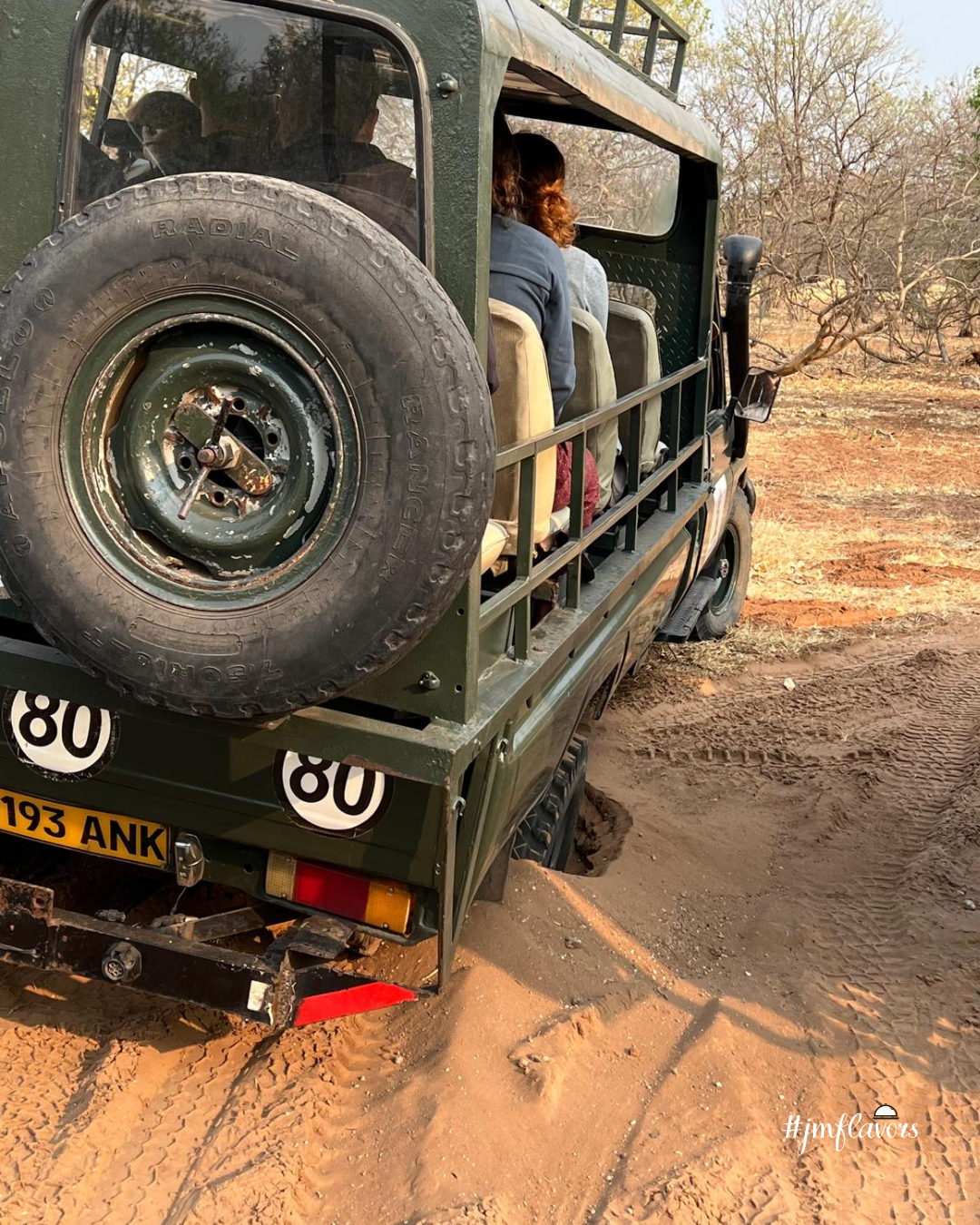
This tactical error meant suddenly, everyone had a problem.
You cannot simply jump out and push a vehicle when lions are nearby.
Nobody panicked. Nobody left. Nobody rushed.
The guides calmly worked together. Vehicles positioned themselves carefully.
A barrier was created. A winch was attached. Slowly, patiently our incredible guide Toby managed to pulled the vehicle free. About an hour later we were off again to explore.
The entire experience was a reminder that safari is not a zoo. These animals are wild and danger is clearly present each venture out.
We saw a tree filled with vultures and nearby evidence of a recent kill. Mostly hide and bones remained.
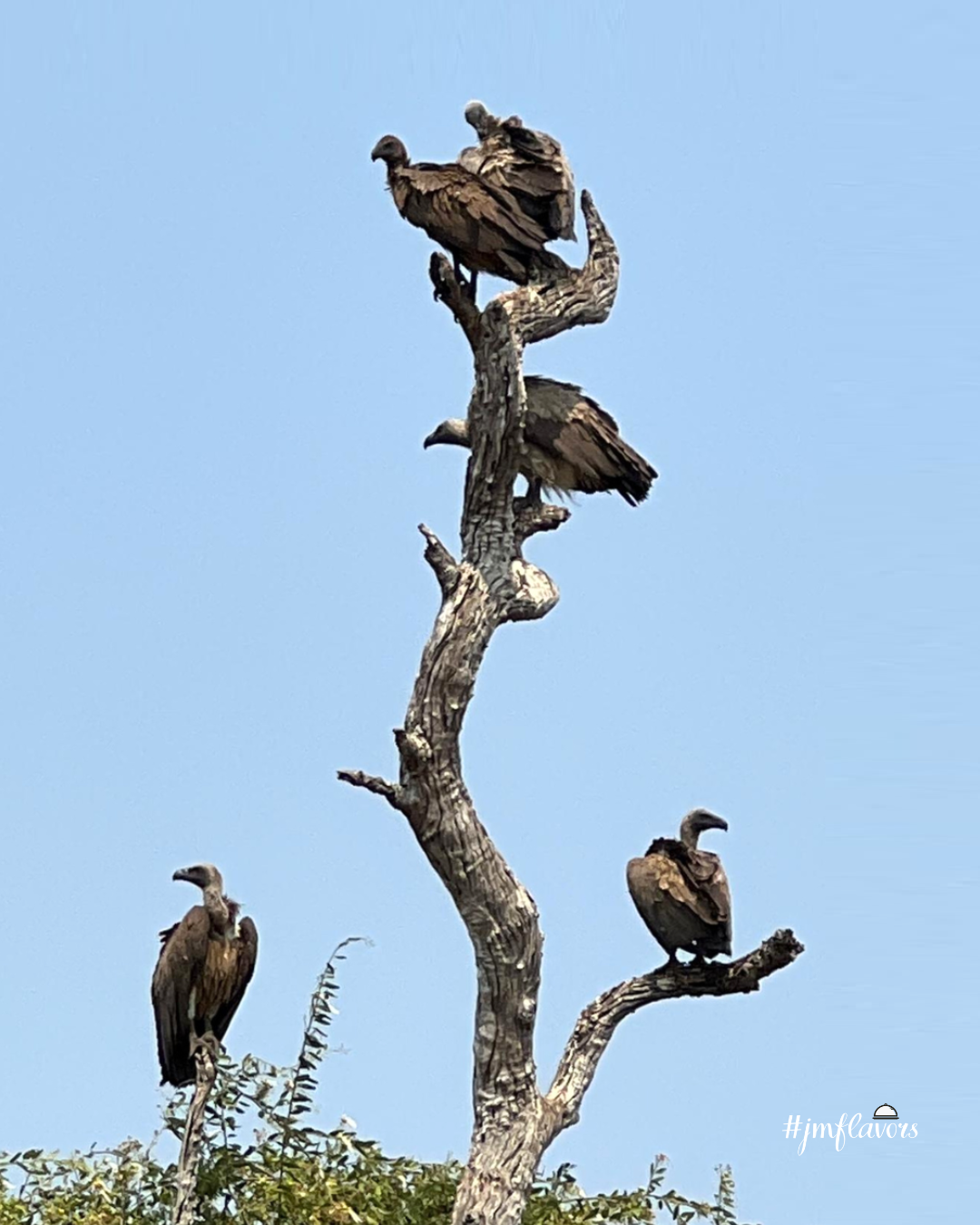
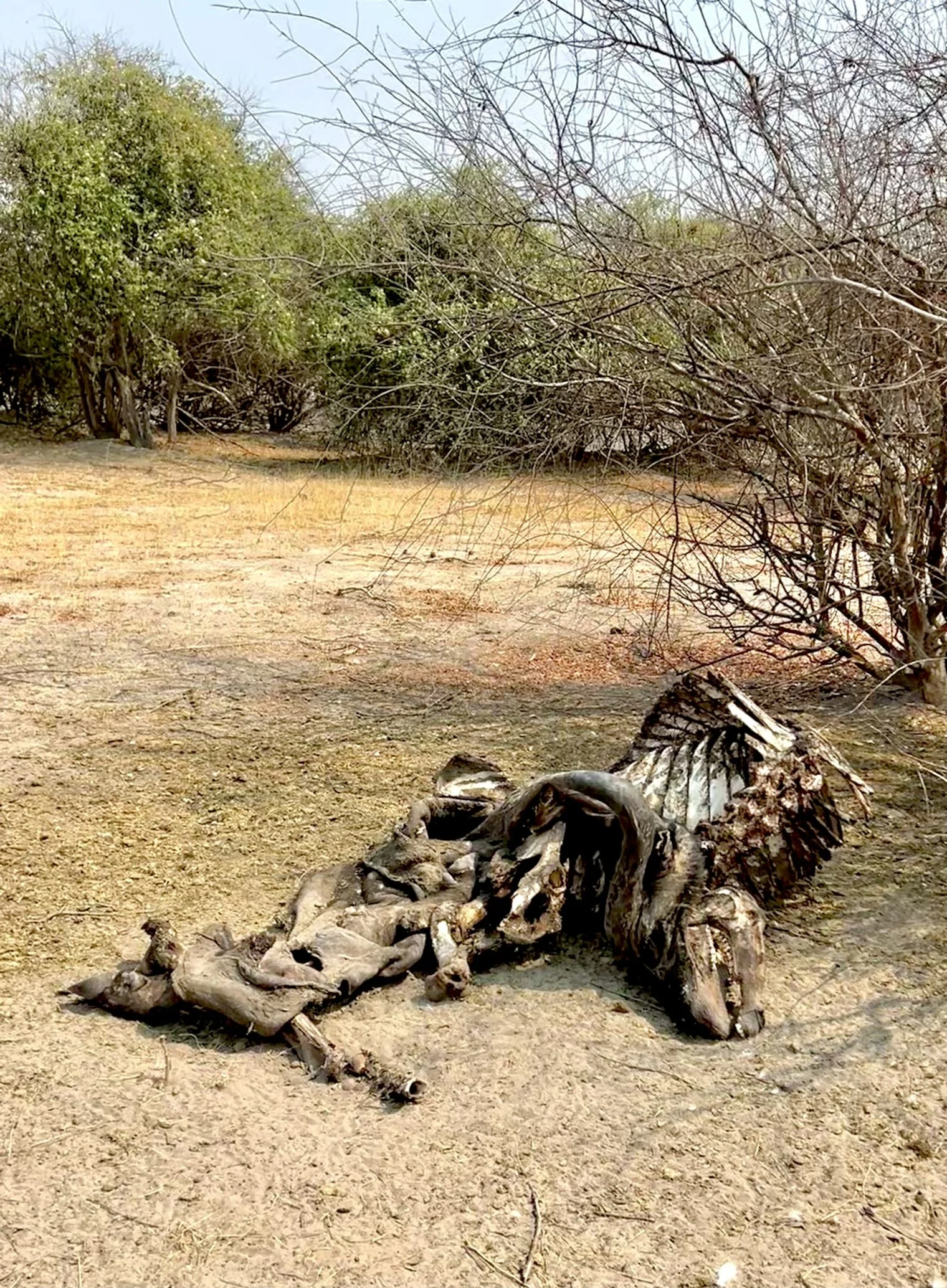
To some people, this might look like the sad side of nature. But it is actually nature working perfectly. The vultures clean what they can.
The hyenas arrive with powerful jaws capable of using what others leave behind. Even their droppings tell a story—they can appear white because of the calcium from the bones they consume. Yes,.. there is White Shit.
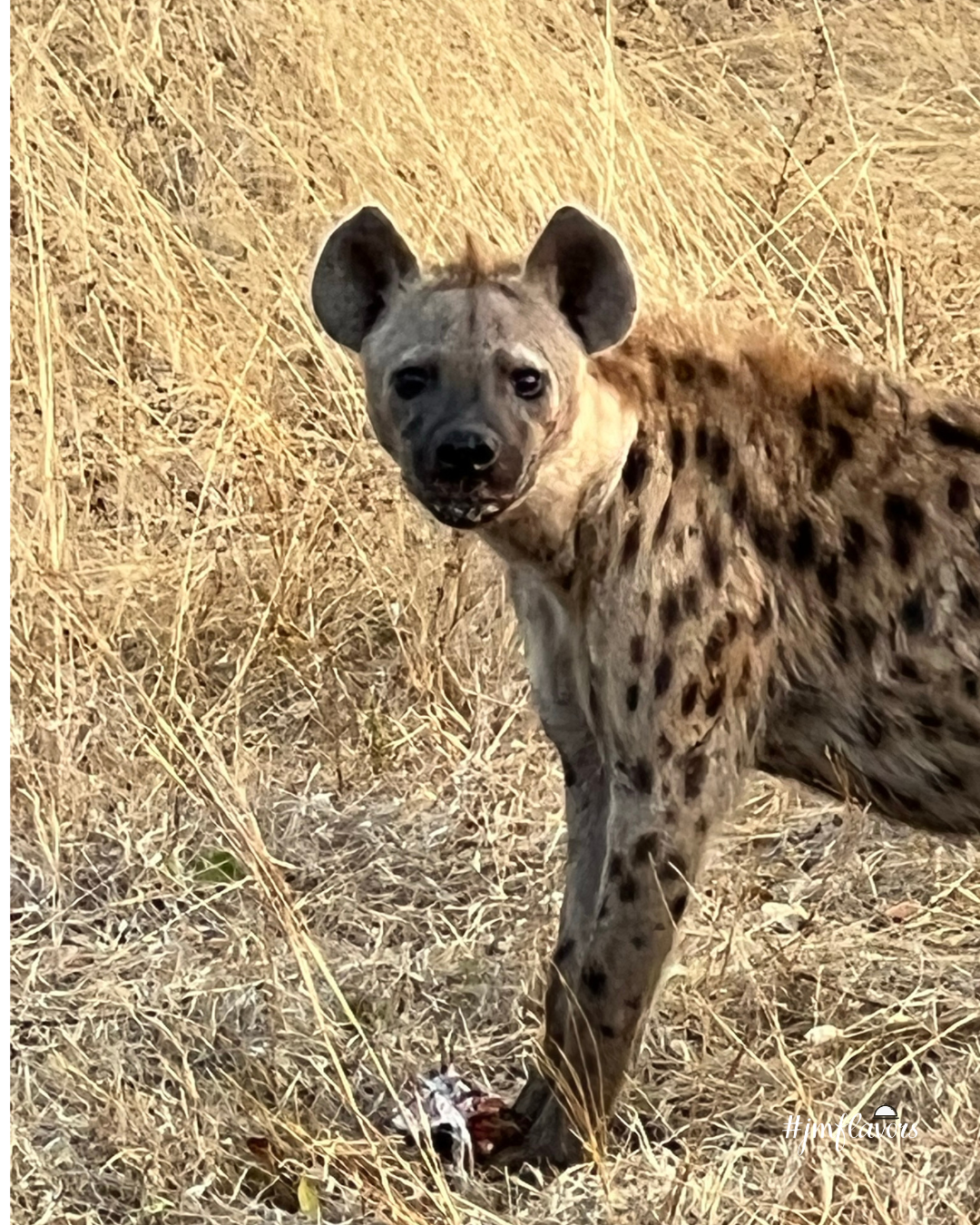
The bush gives you clues.
See vultures? Something happened.
See hyenas? The cleanup crew is arriving.
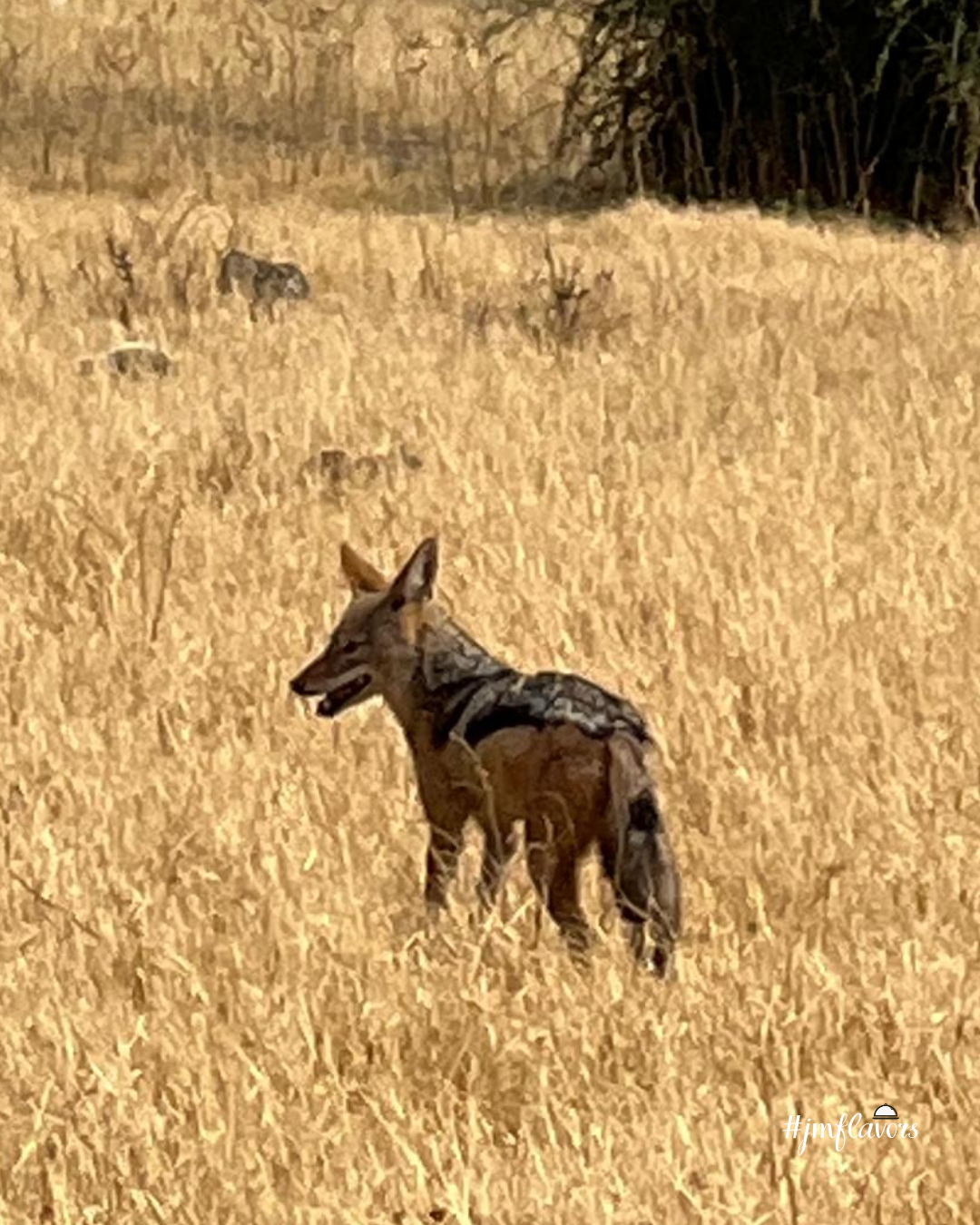
See a jackal? Pay attention. Predators may be nearby.
Nothing is random.
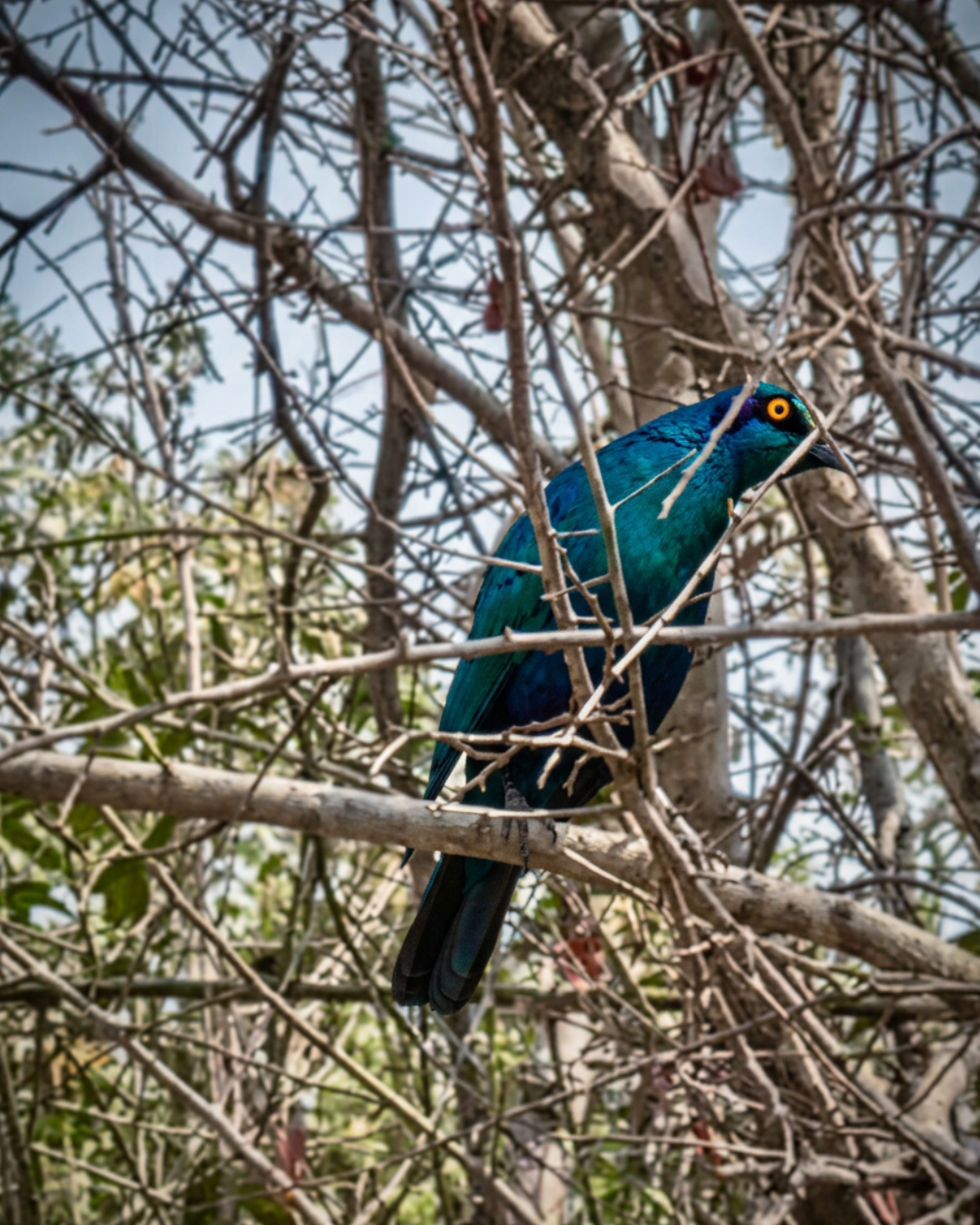
The Go-away bird. Yes, that is really its nickname. The grey go-away bird has a call that sounds remarkably like it is saying: “Go away!”
I couldn’t help but laugh. Imagine having an entire personality built around telling everyone to leave you alone.
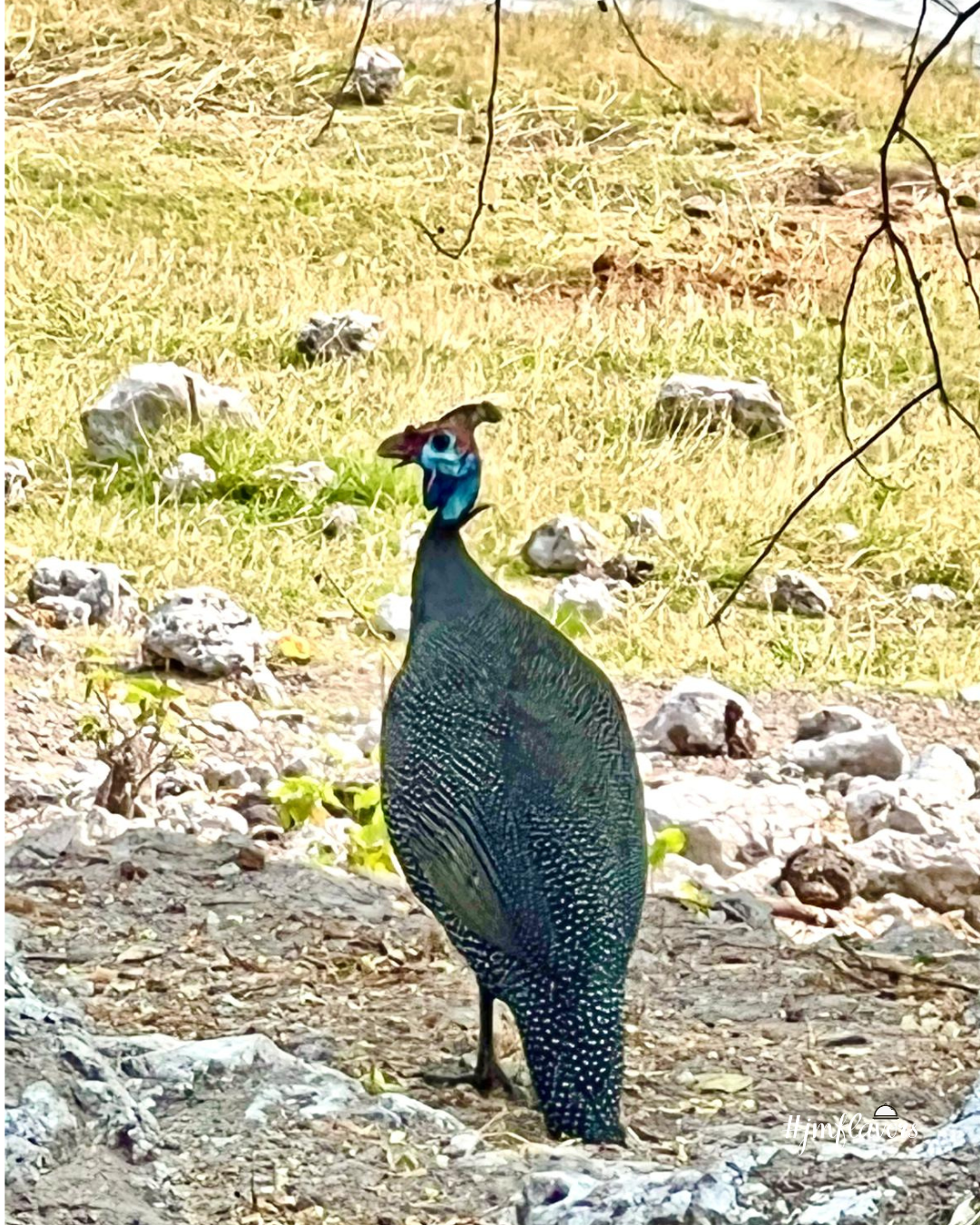
Guinea Bird
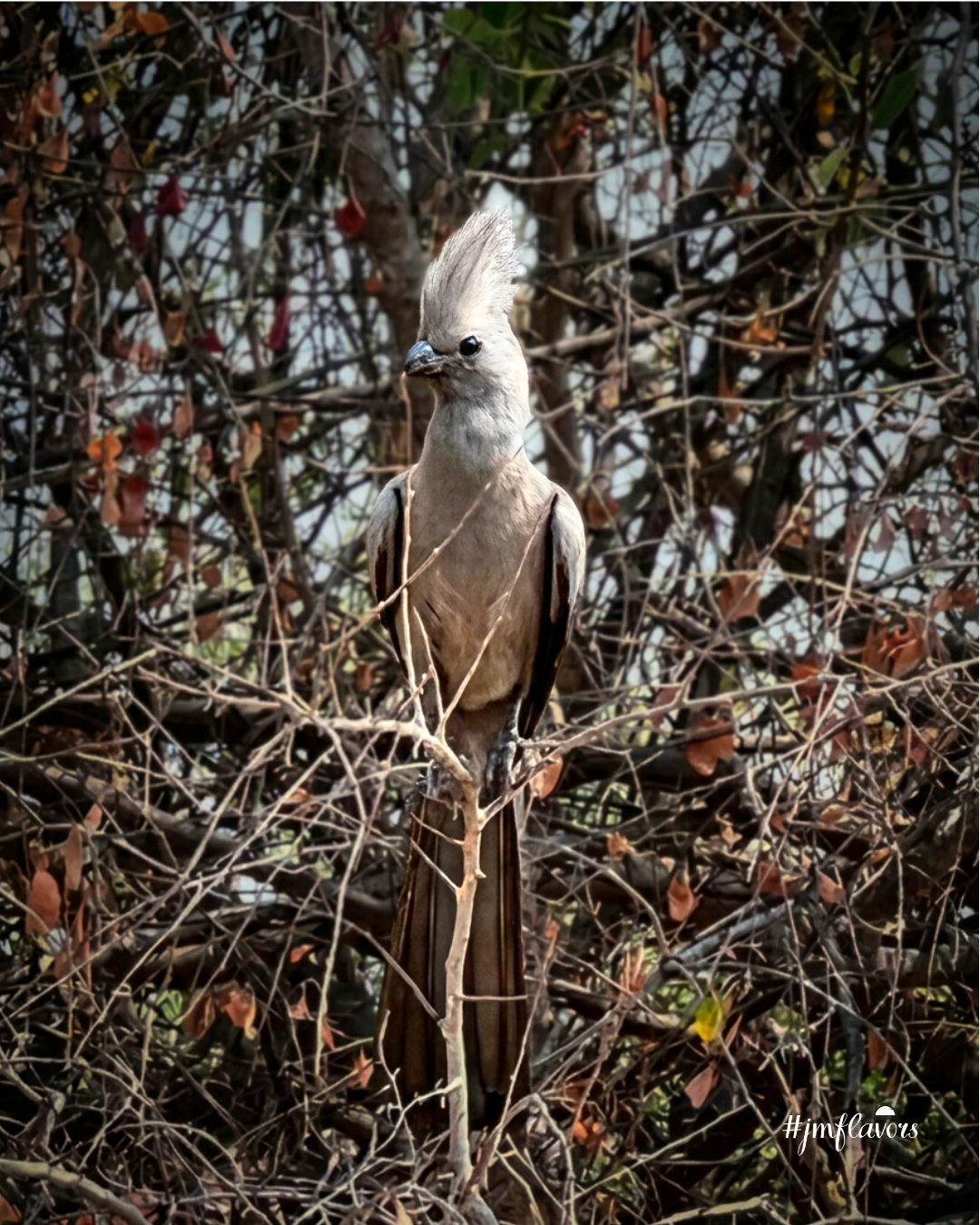
Grey Go Away Bird
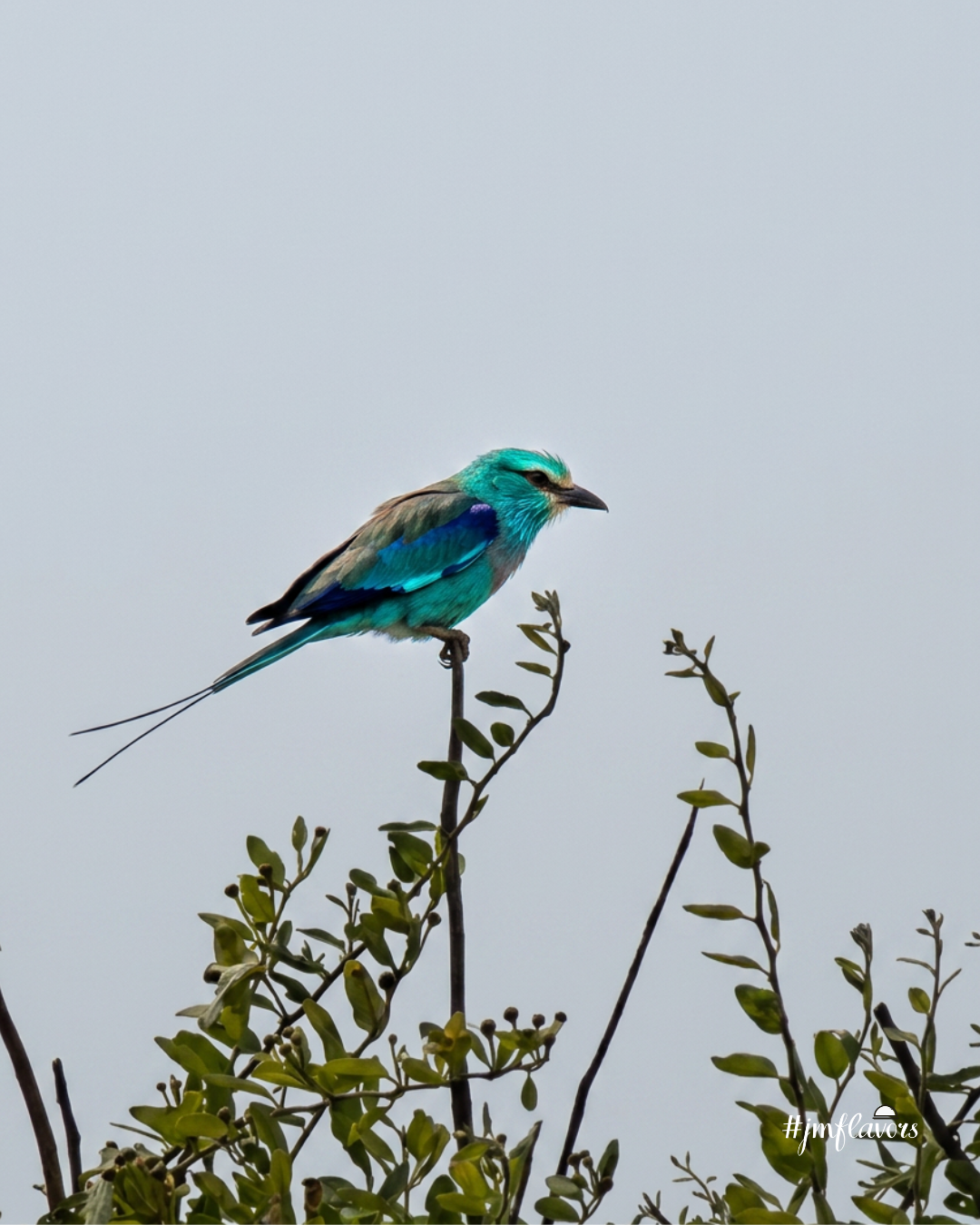
Lilac-Breasted Roller
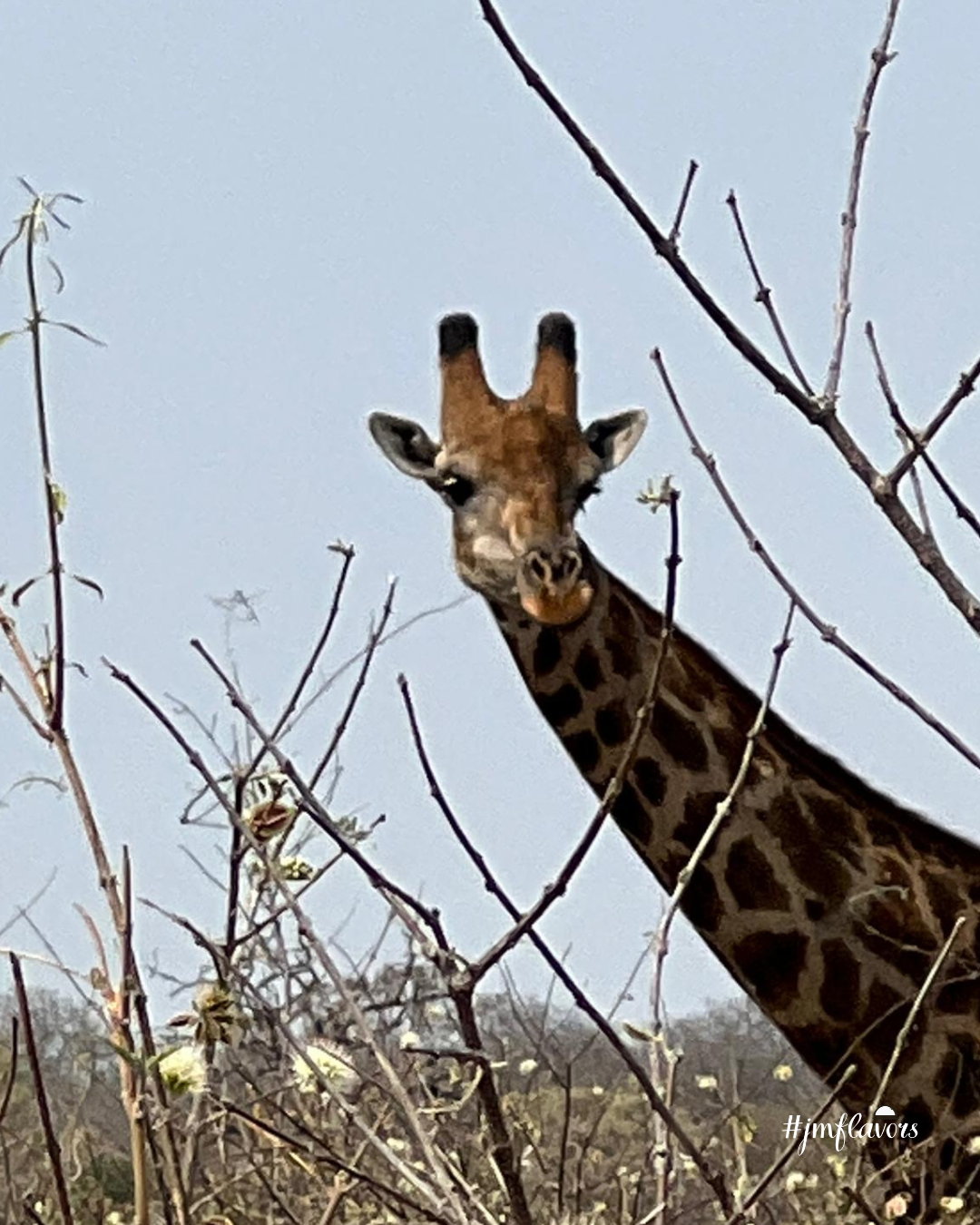
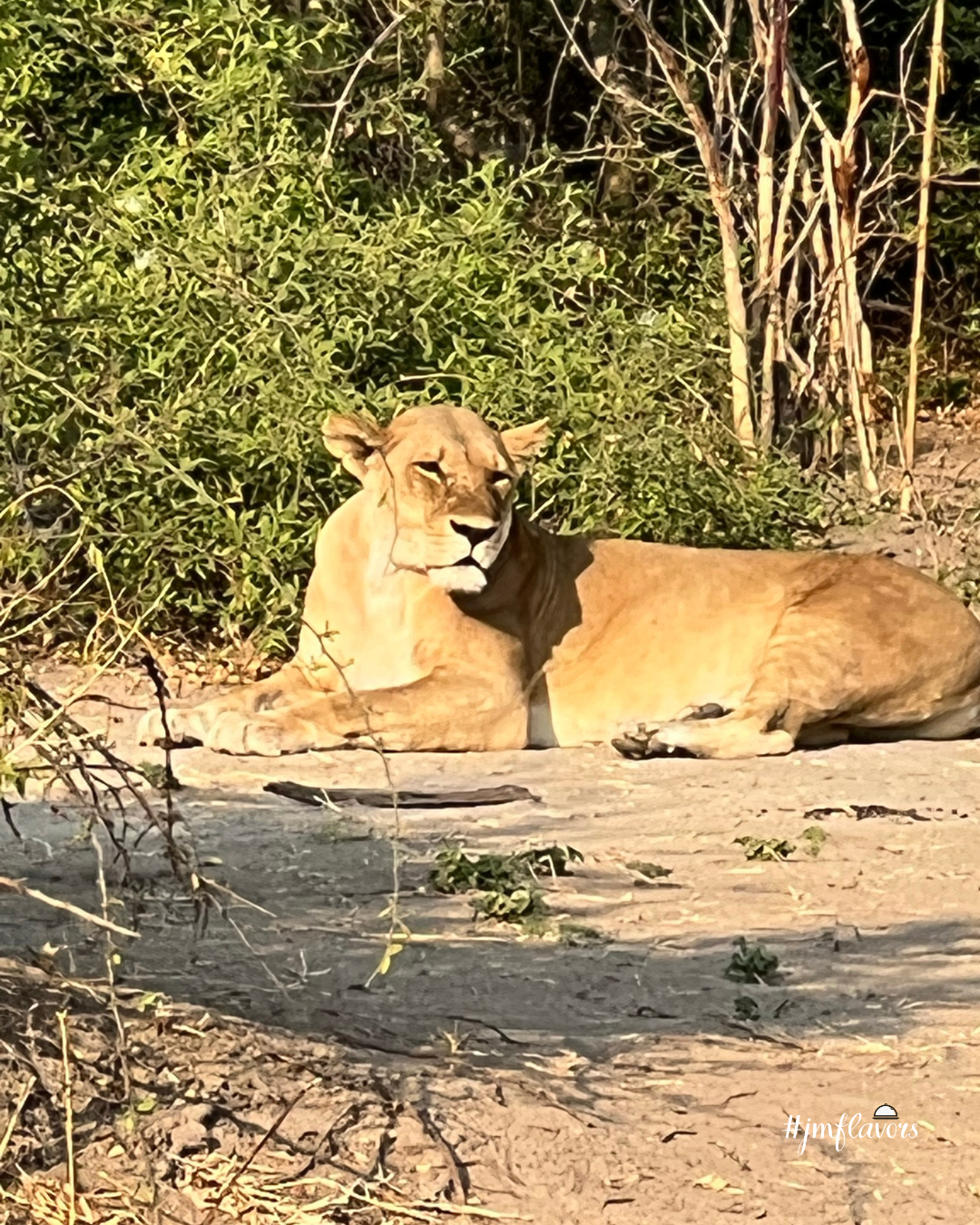
One of my favourite photos from Botswana shows elephants nearby with lionesses resting in the foreground. Giraffe in the background. Three completely different worlds sharing the same landscape. The animals head for the bush for night.
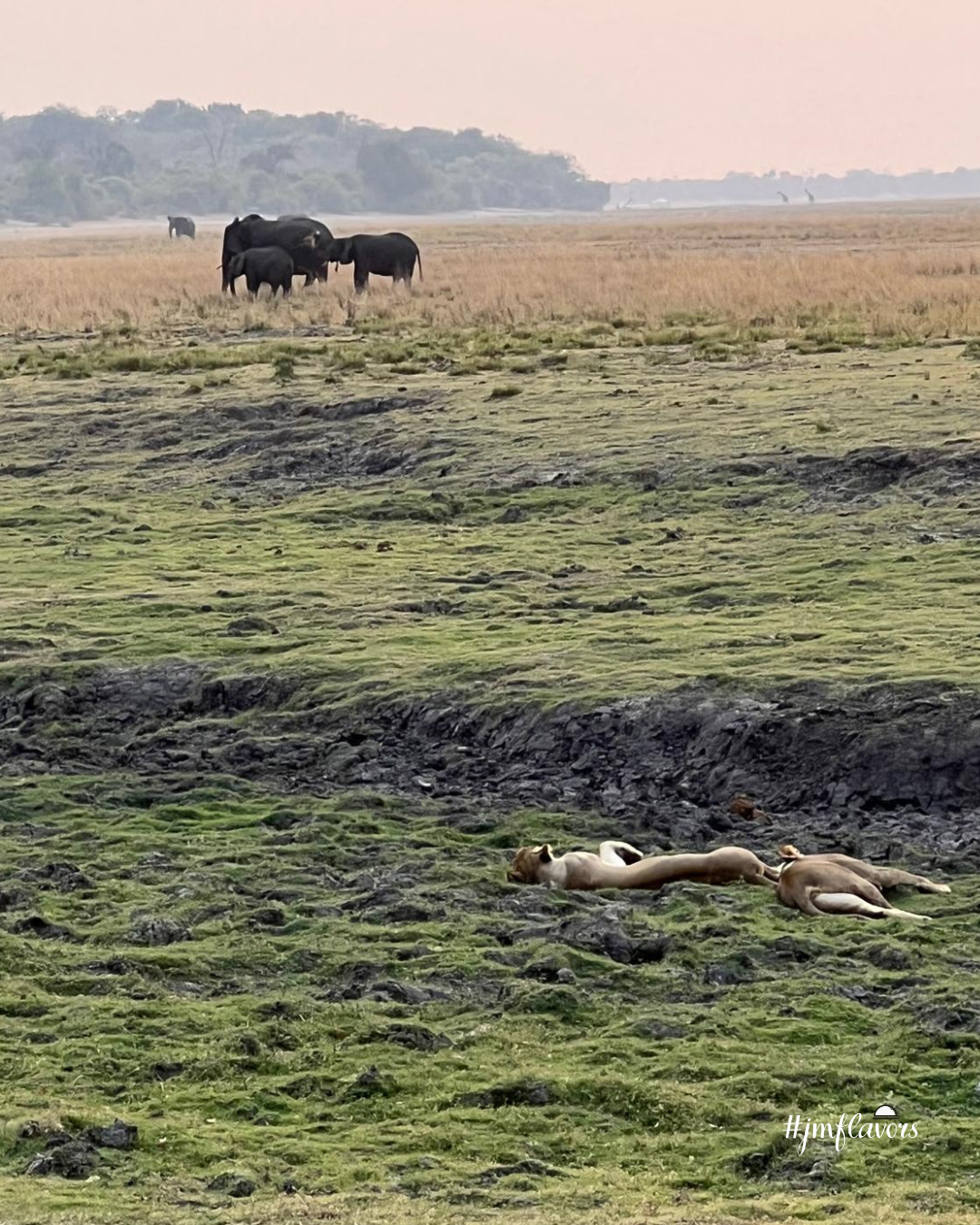
No fear. No drama. Just animals existing exactly as they are meant to. Incredible!
Slowing down to watch nature unfold.
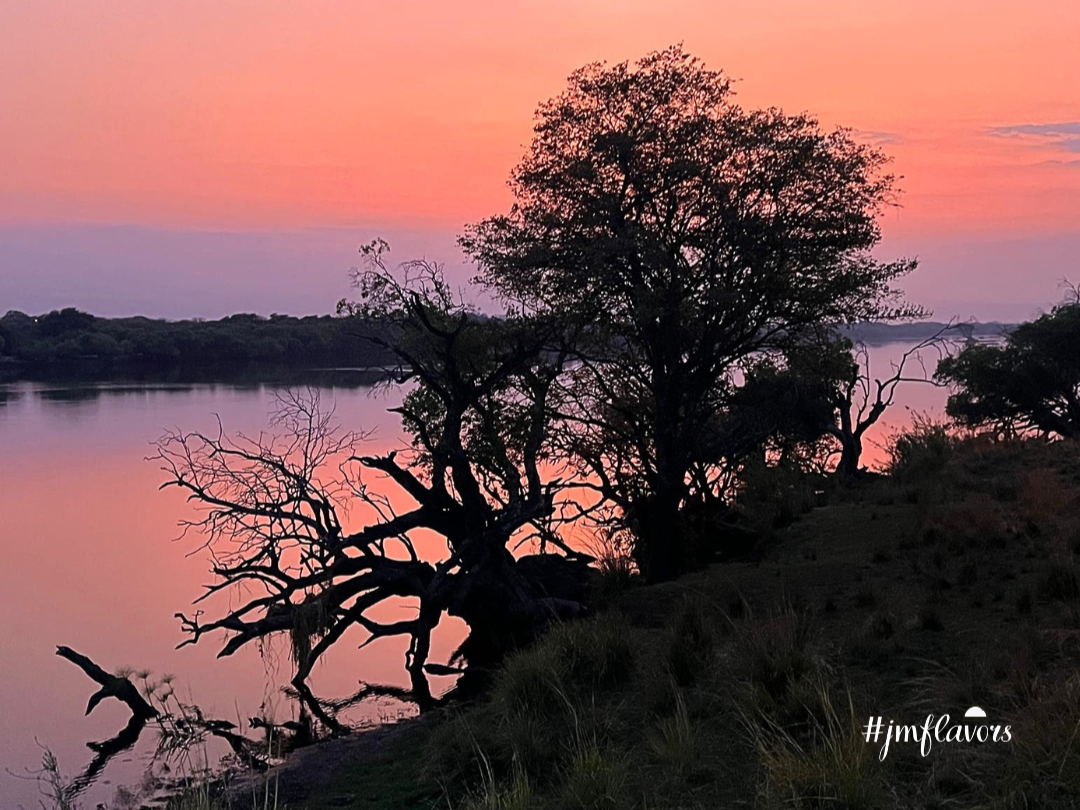
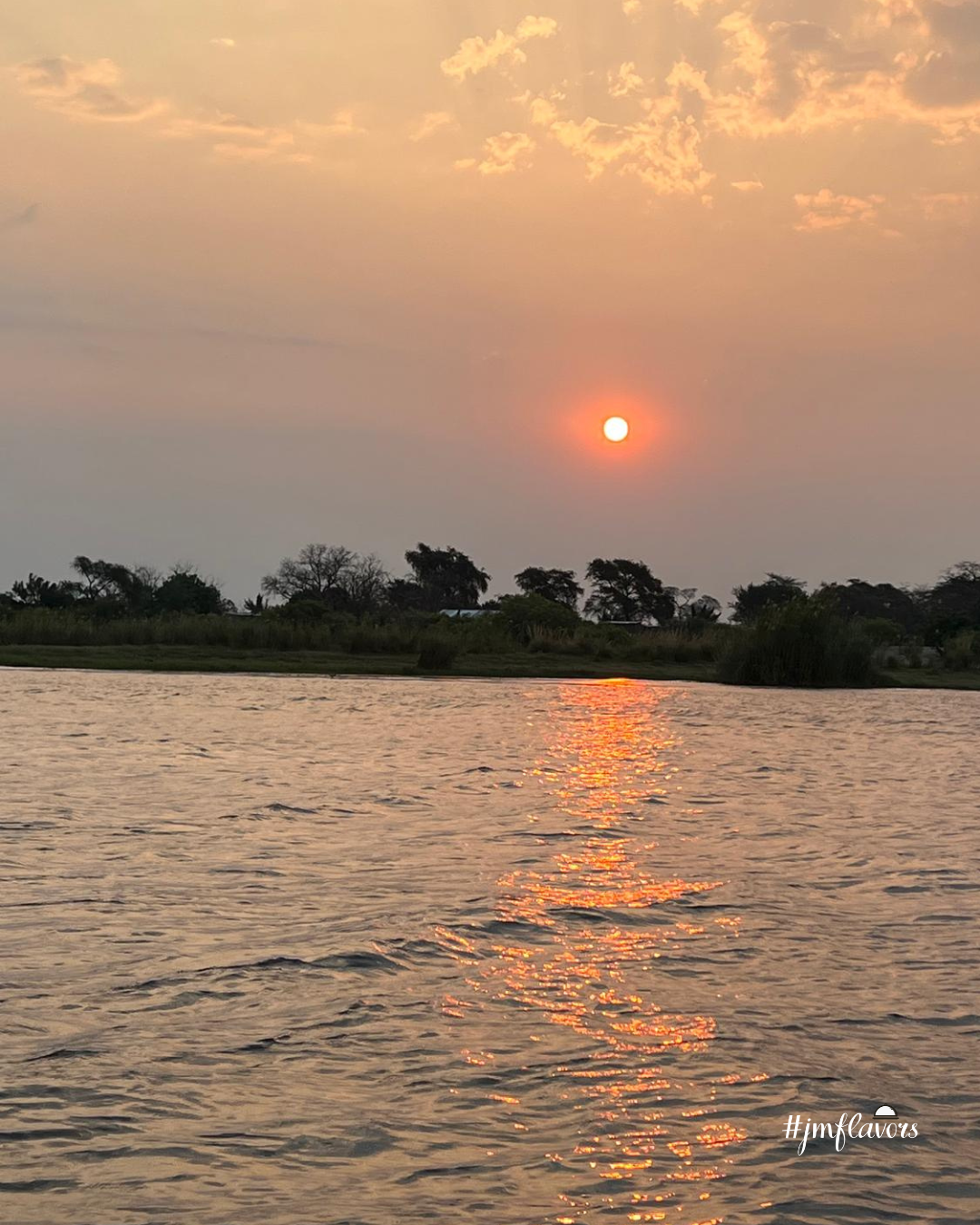
Sunrise from our Veranda
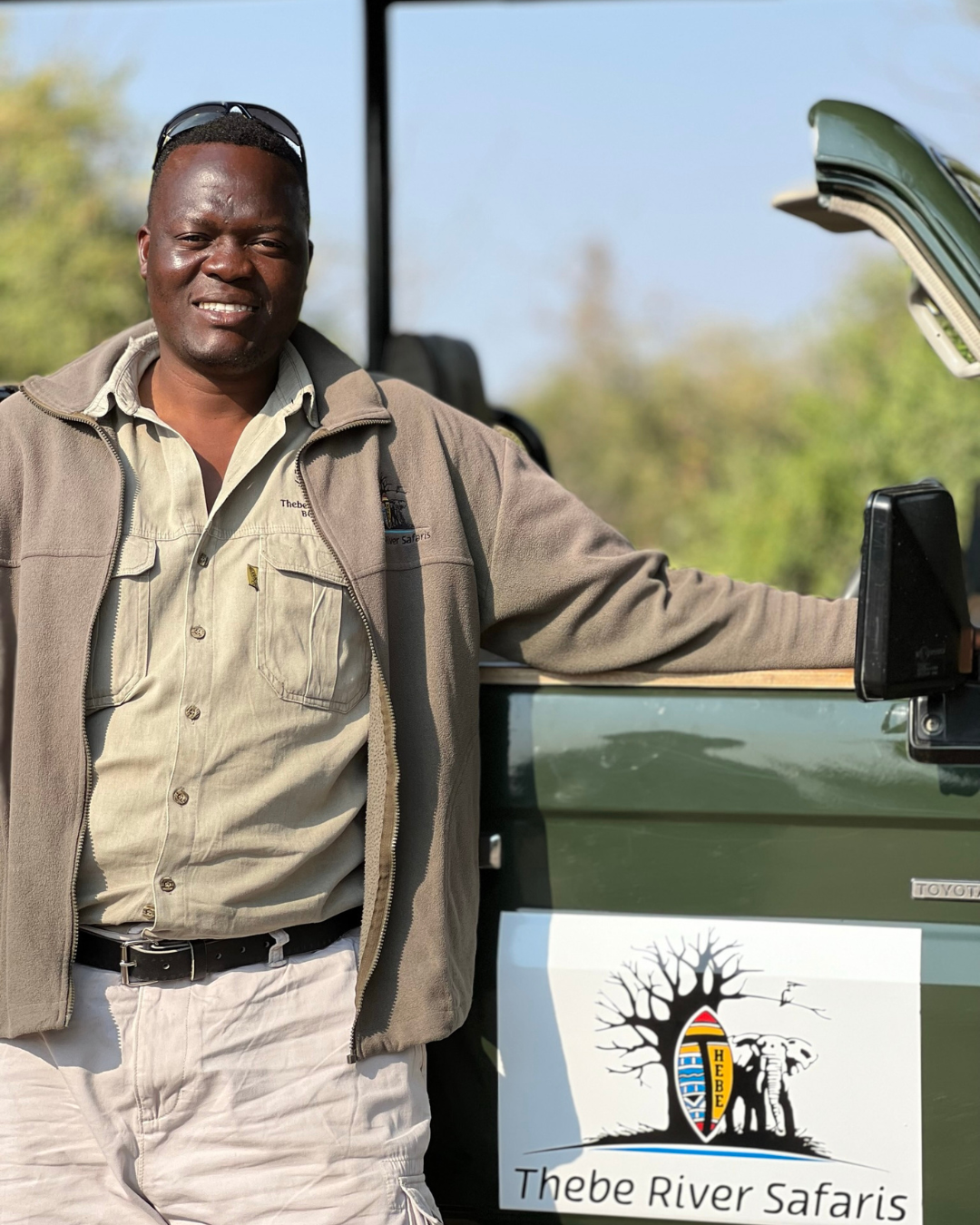
Toby
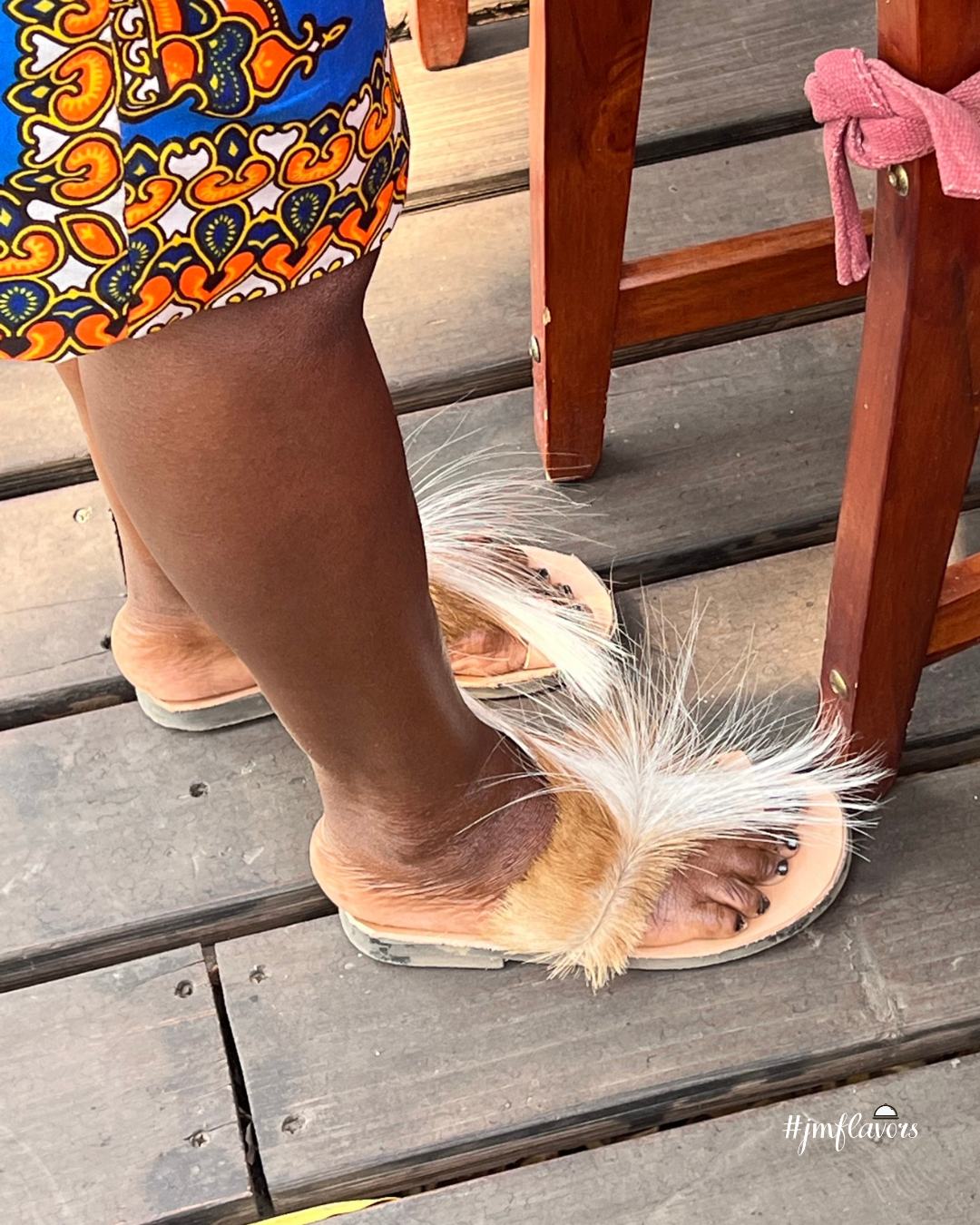
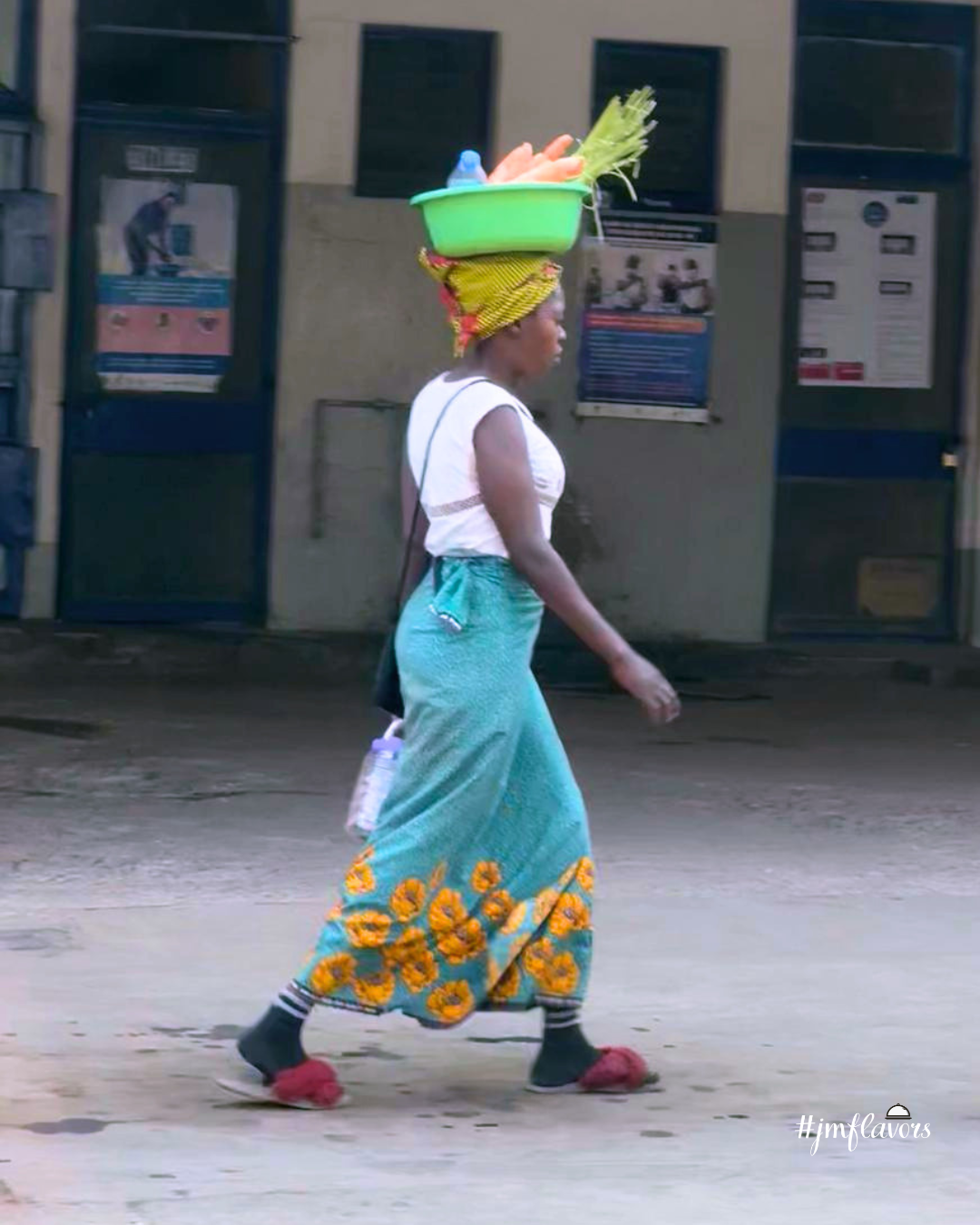
Fancy Footwear
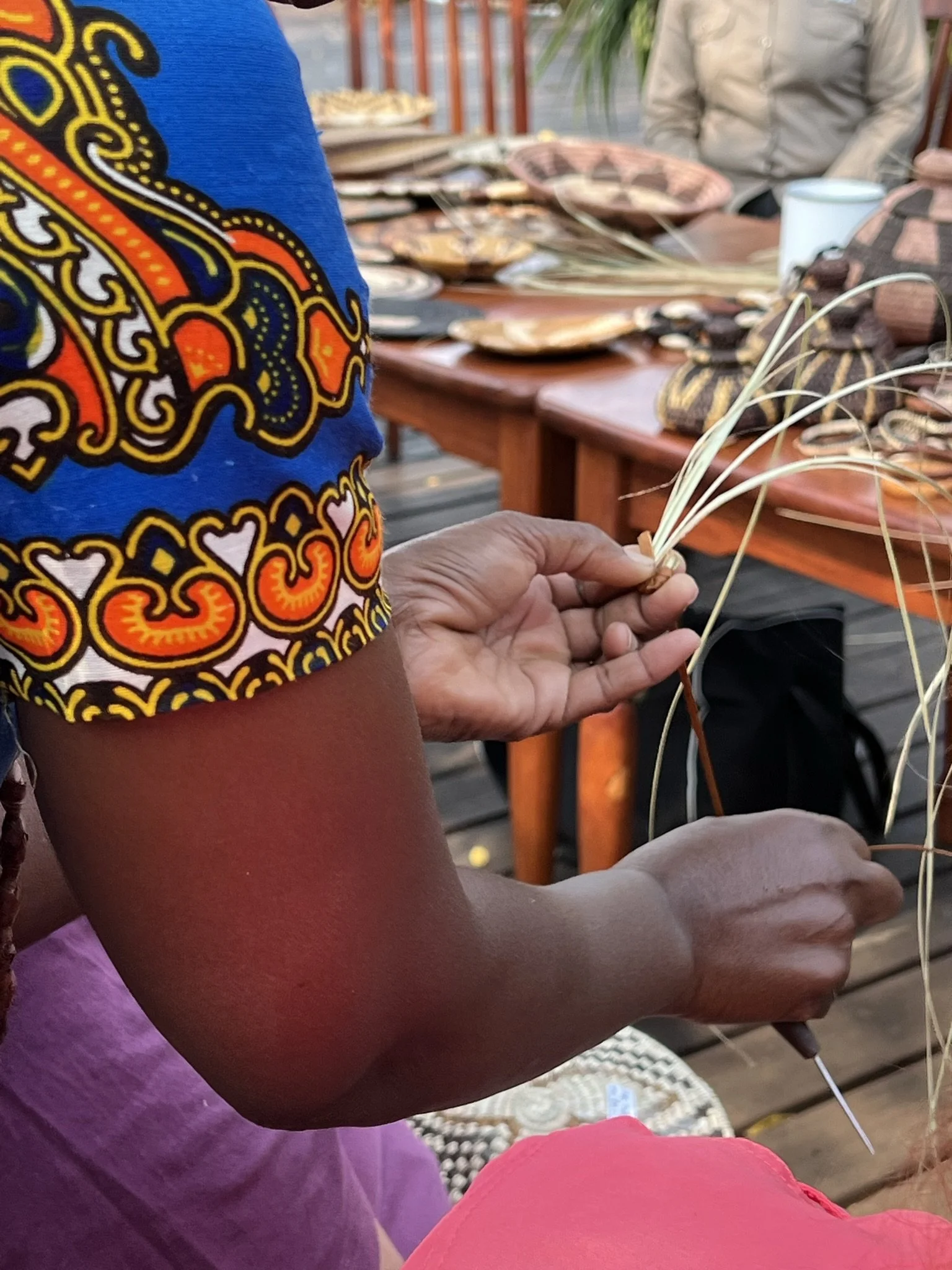
Basket Weaving
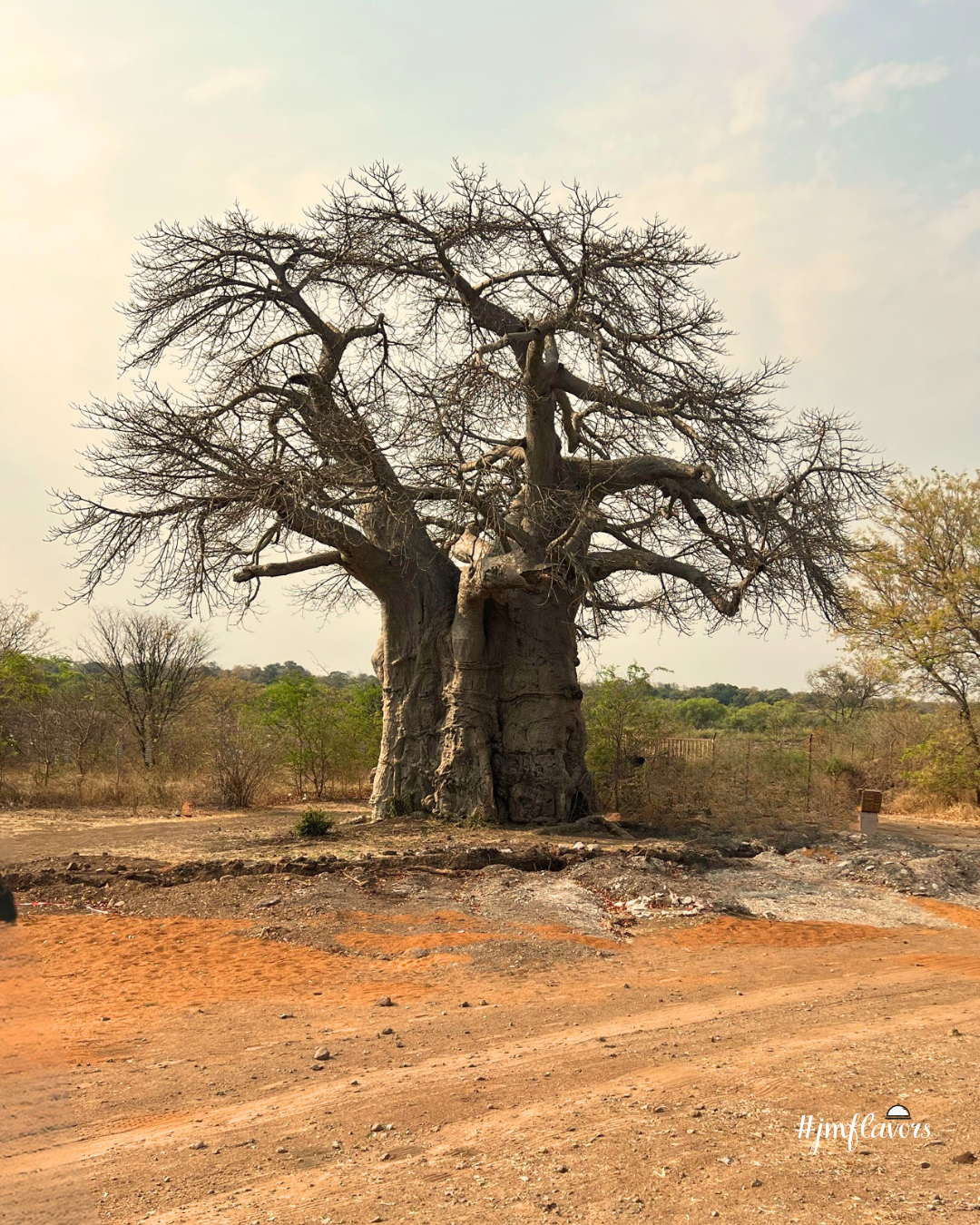
Baobab Tree
We had an amazing time - a fantastic way to end our 3 safaris. Thank you Toby for our unforgettable time and for sharing your country with us. ❤️
Before crossing the border, we stopped beside one last African icon—a towering baobab tree. Its massive trunk looked as though it had been carved by time itself. It is a living landmark that stores water, shelters wildlife and tells a story of Africa’s dry landscape.
Our guide smiled and called it the Tree of Life.
After everything we'd witnessed—hippos beneath our tent, lions on the hunt, elephants by the river, crocodiles, hyenas, and a thunderstorm that transformed the bush—it seemed like the perfect place to pause.
The baobab reminded me that nature measures time differently than we do.
It has stood here for centuries, quietly watching countless sunrises, seasons, and safaris come and go.
We were simply lucky enough to be part of its story for a little while.
Good Bye Africa.