The Journey to Machu Picchu
After exploring the beautiful white city of Arequipa, taking that incredible train journey across the Andes to Lake Titicaca, visiting the floating islands of Uros, and soaking up the history and energy of fabulous Cusco, and Sacred valley, we were off again.
And this time, we were getting closer to one of the places I’d dreamed of seeing for years: Machu Picchu.
One of the New Seven Wonders of the World, a UNESCO World Heritage site, and an extraordinary achievement of the Inca civilization, built high in the mountains during the 15th century.
I was beyond excited. This trip just kept delivering one amazing civilization after another. Every stop seemed to reveal another layer of history, culture and ingenuity. And now, finally, we were on our way to see the one that had been calling us.
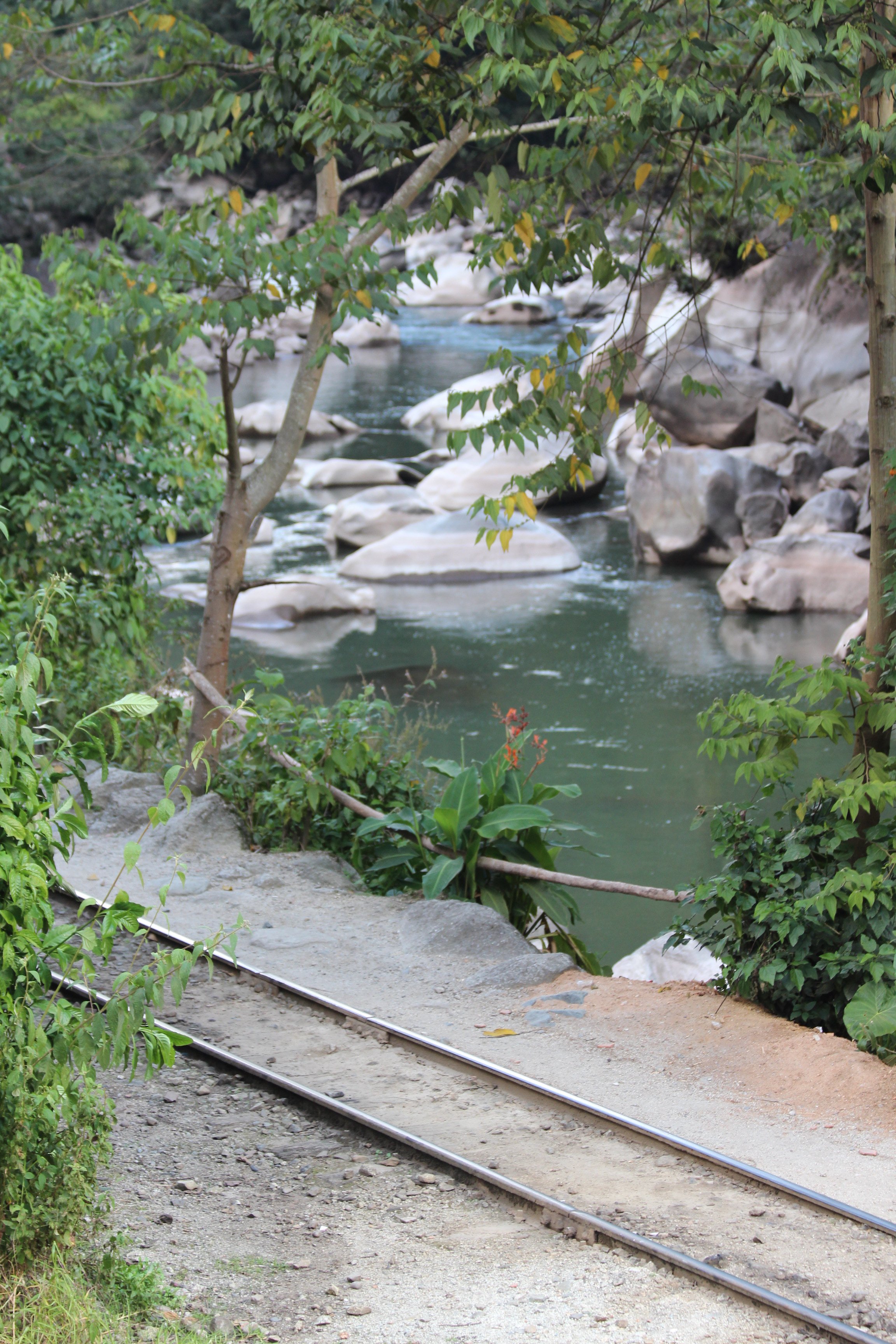
Our train journey took us from Ollantaytambo towards Aguas Calientes, the little mountain town tucked into a narrow valley at the base of Machu Picchu.
After travelling aboard the luxurious Belmond Andean Explorer, our next train ride was a different experience. It didn’t have quite the same elegance or luxury we’d enjoyed crossing the Andes, but the scenery was still something to take in. The railway follows the river, winding through increasingly green, steep-sided mountains. The landscape closes in around you, and you begin to feel just how remote this place is.
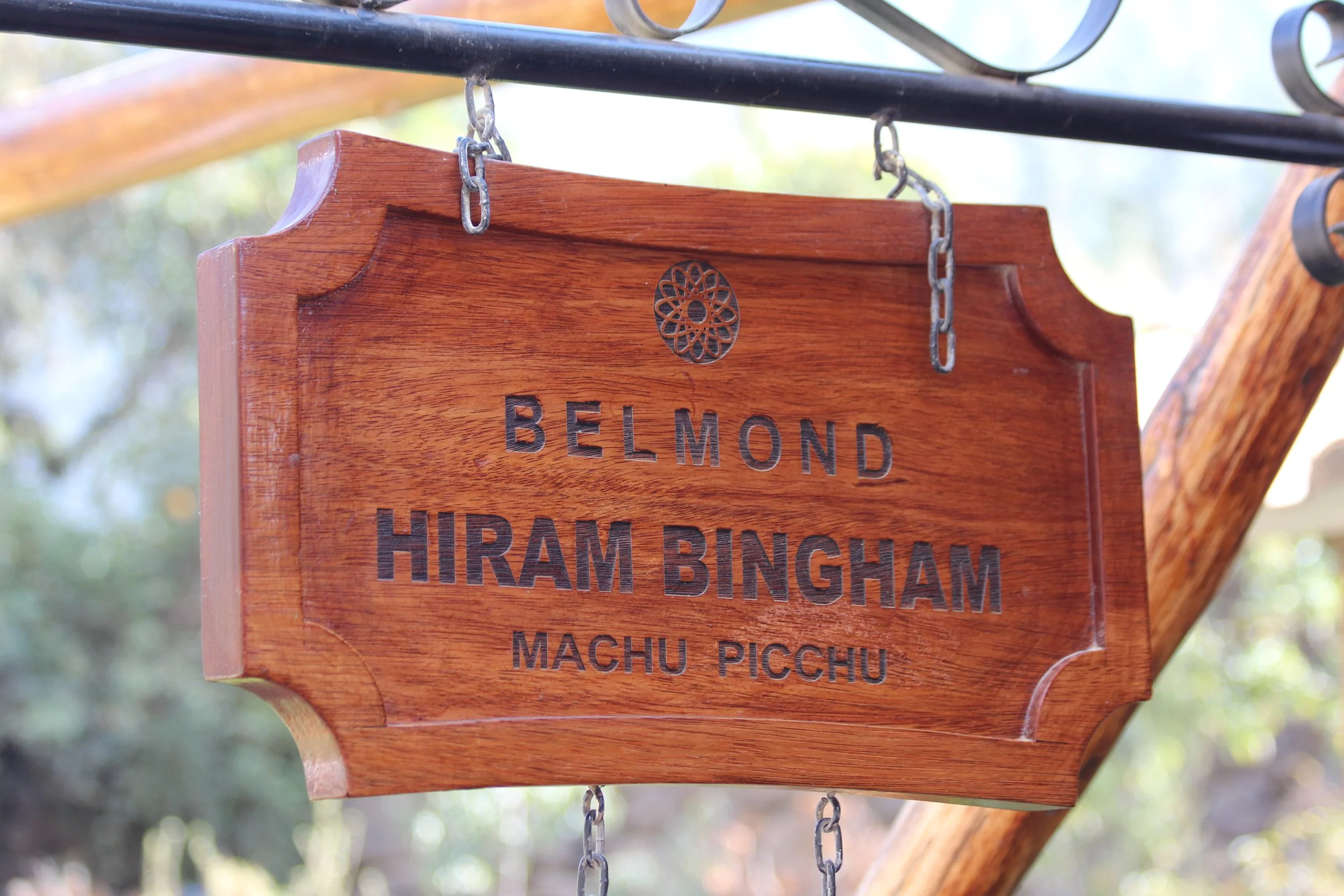
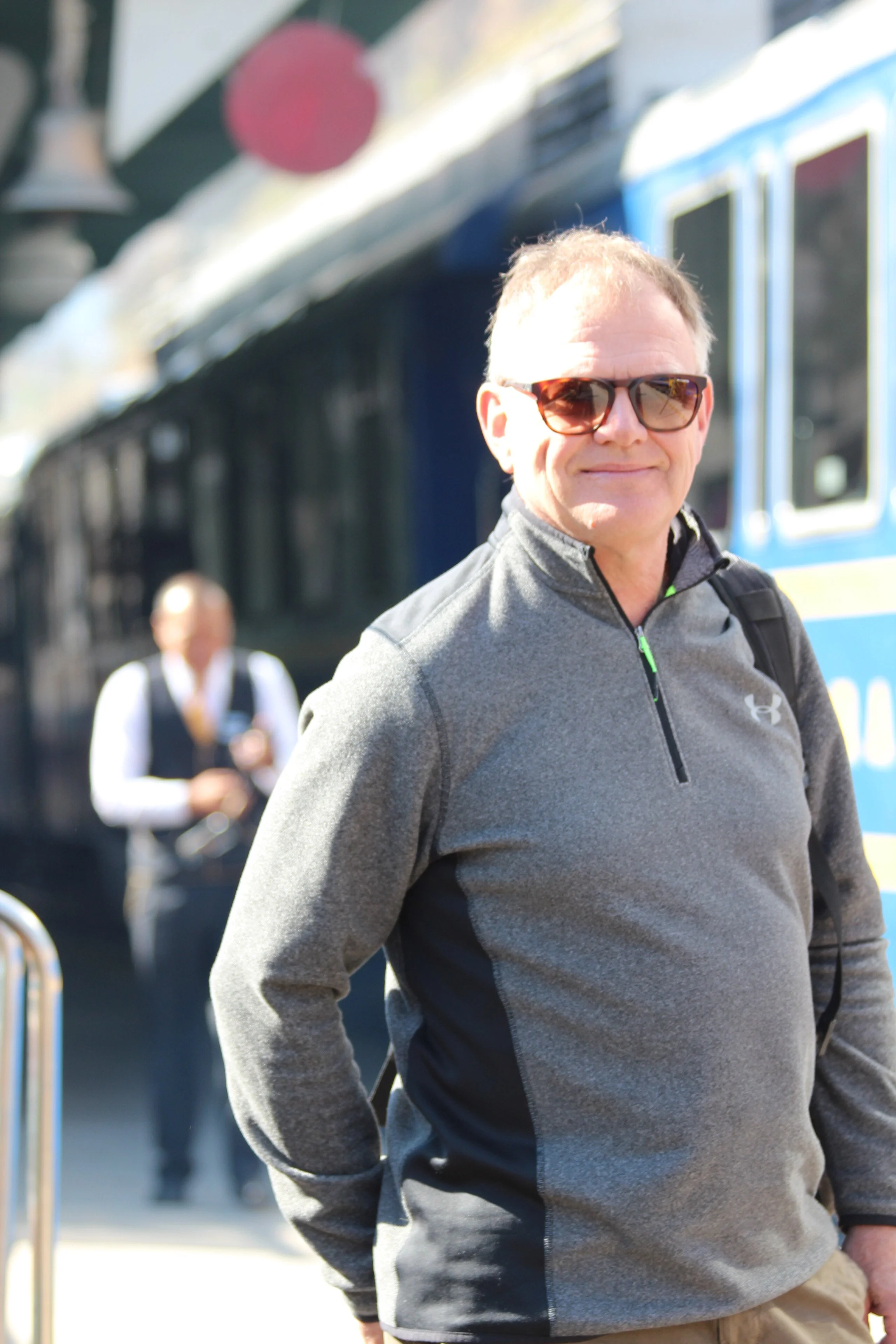
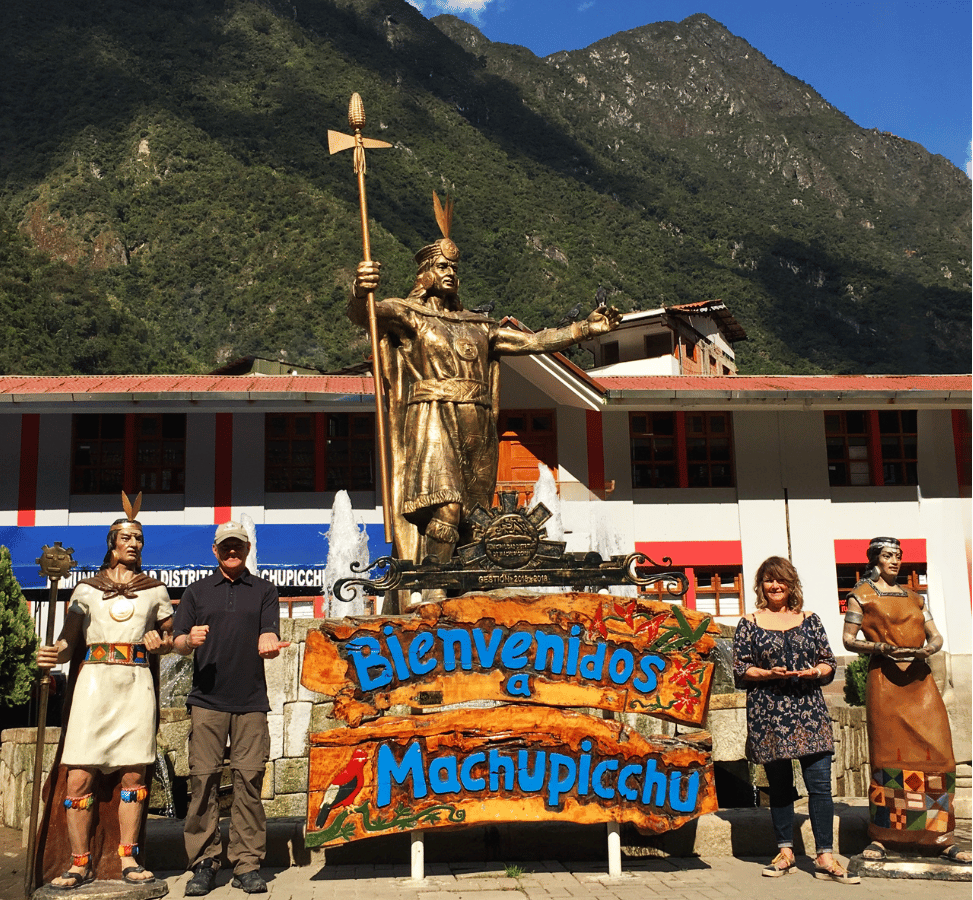
We weren’t going to rush this part of the adventure. We made a conscious decision to spend two nights in Aguas Calientes. I wanted time to explore the town, enjoy the setting and, most importantly, not feel as though we were racing through one of the world’s most remarkable places.
Aguas Calientes: More Than a Place to Catch the Bus
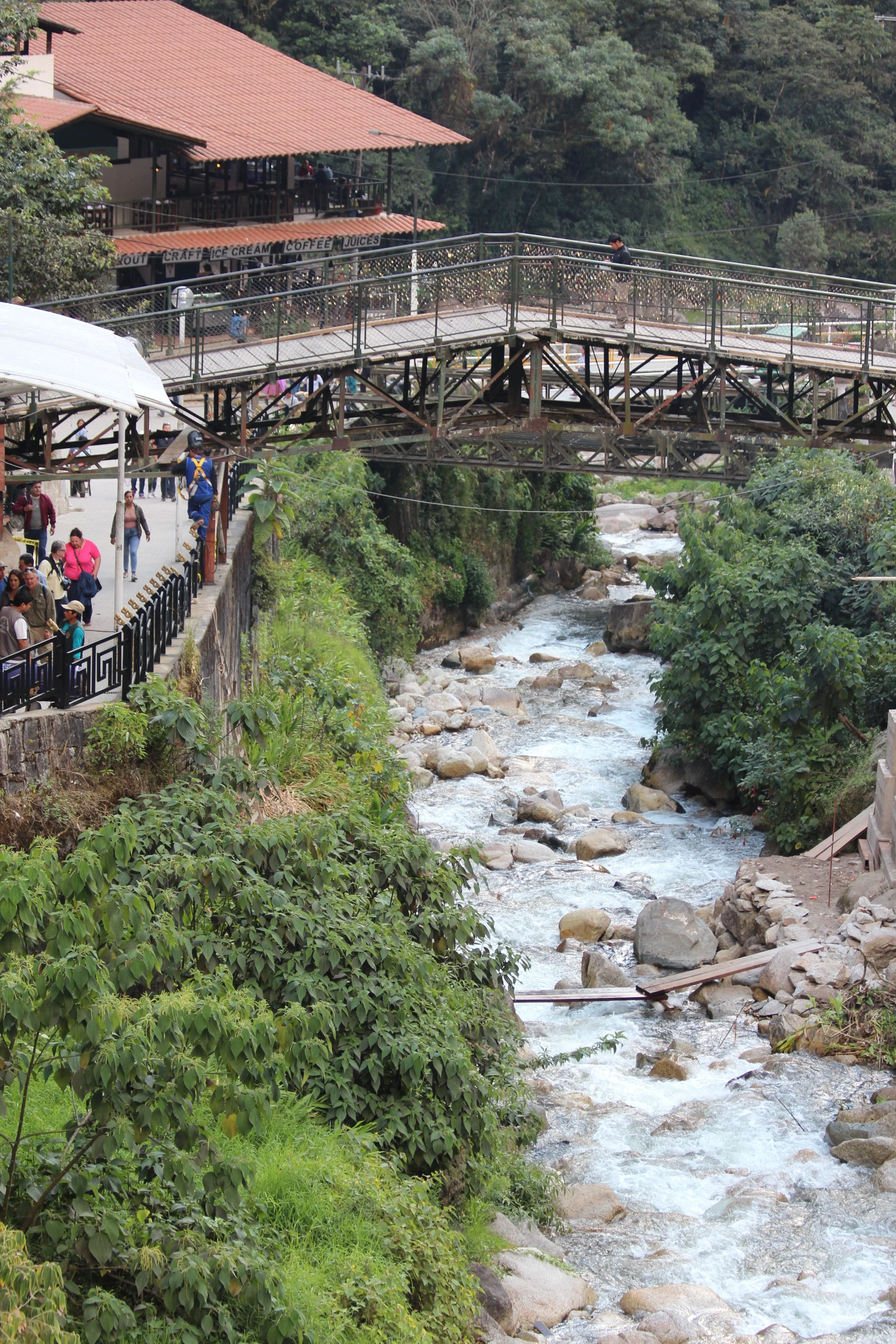
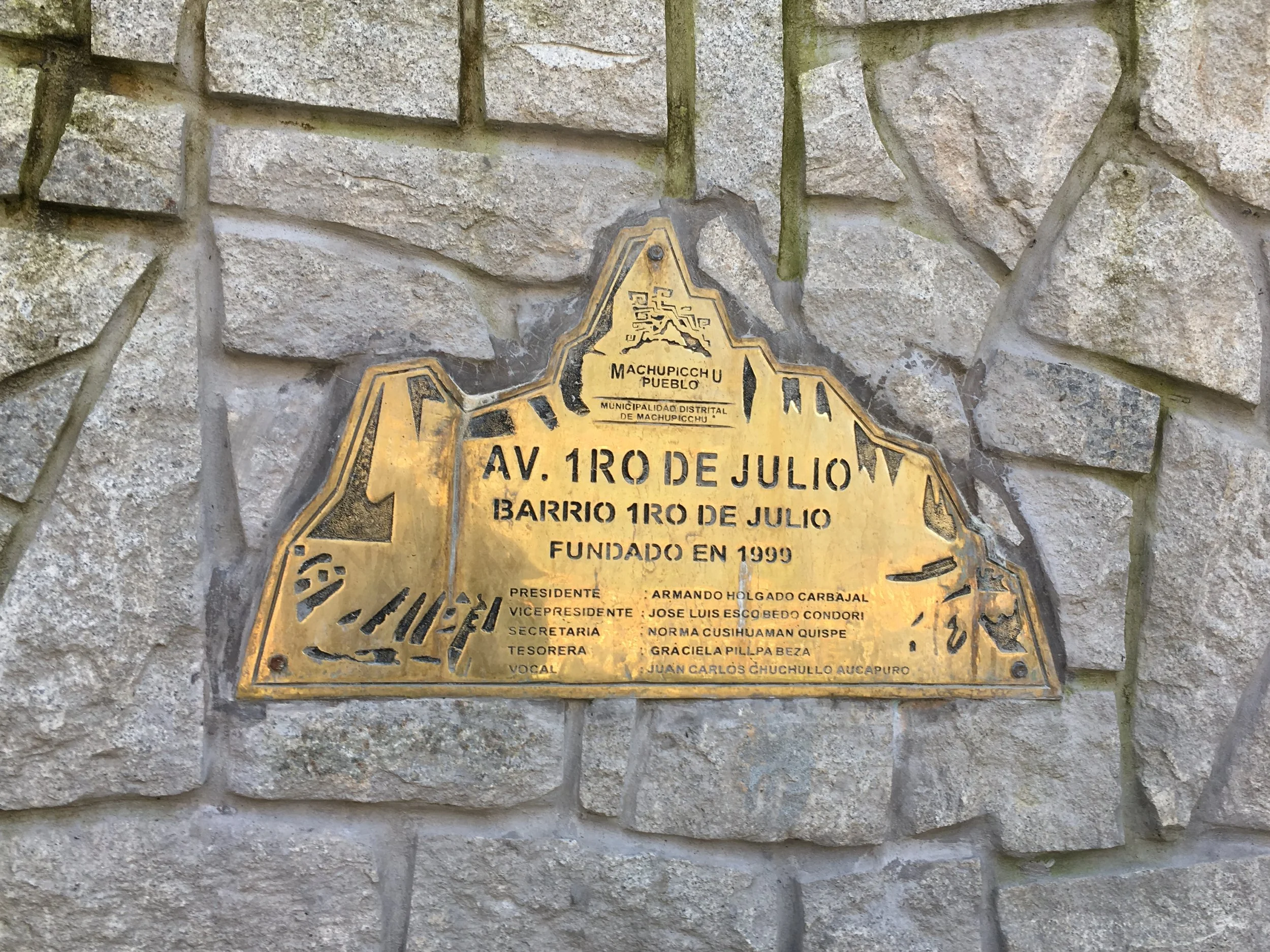
Aguas Calientes, whose name means hot waters, is also known as Machu Picchu Pueblo. It sits beside the Urubamba River, surrounded by steep, forest-covered mountains. The town grew around the railway and its workers; it isn’t an ancient Inca village, although its setting makes it feel as though it has been tucked into the mountains forever.
It’s easy to think of Aguas Calientes as simply the place you sleep before visiting Machu Picchu. But we had two nights, and I was determined to have a look around.
So, off we went. No map, no real plan. Just wandering and seeing what we could discover. I’m always curious about what’s around the next corner, especially when you leave the obvious route behind.
We followed the pedestrian walkway heading up towards the thermal hot springs. And then we started noticing them: beautiful stone carvings set into the rocks along the way.
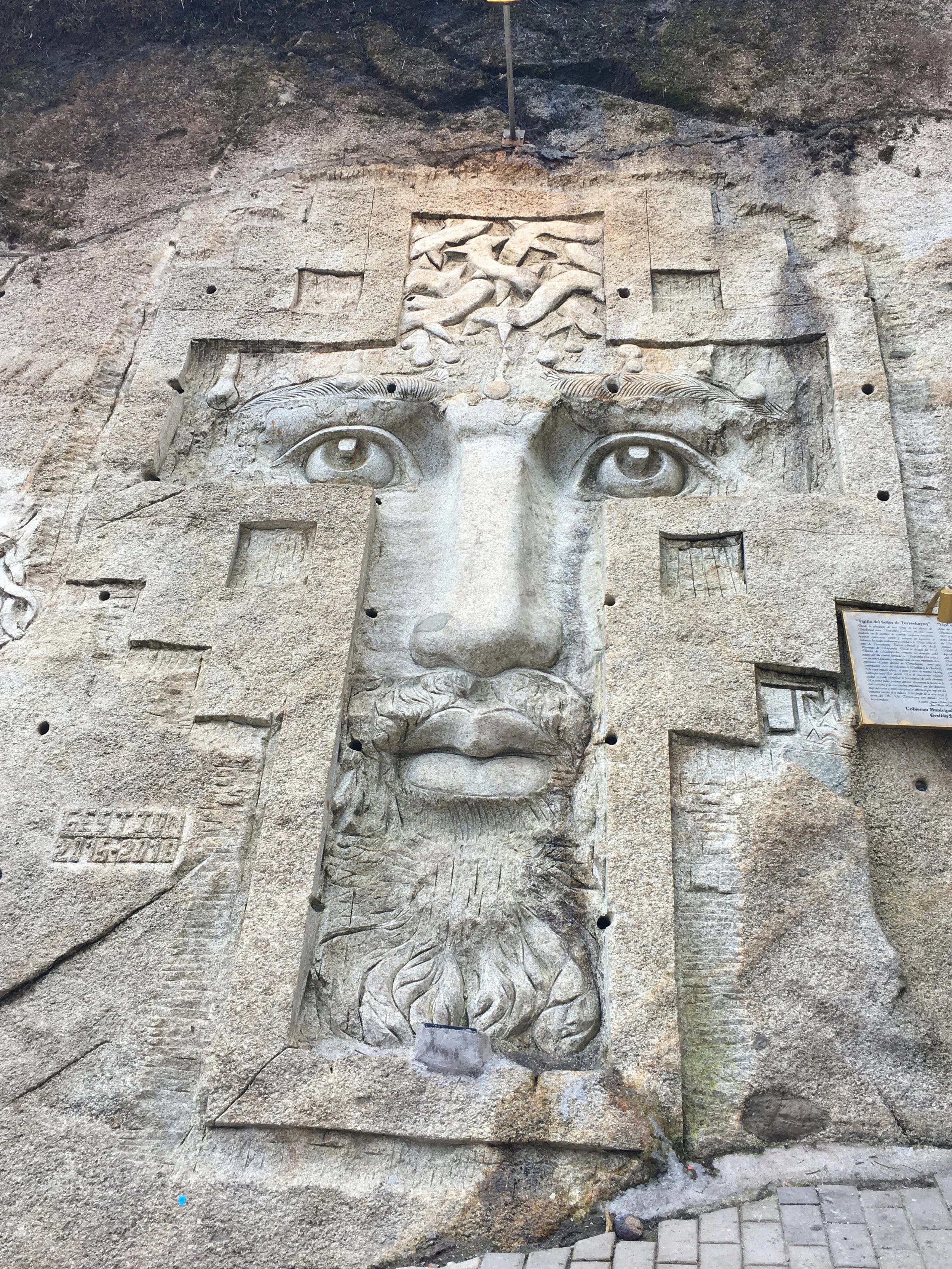
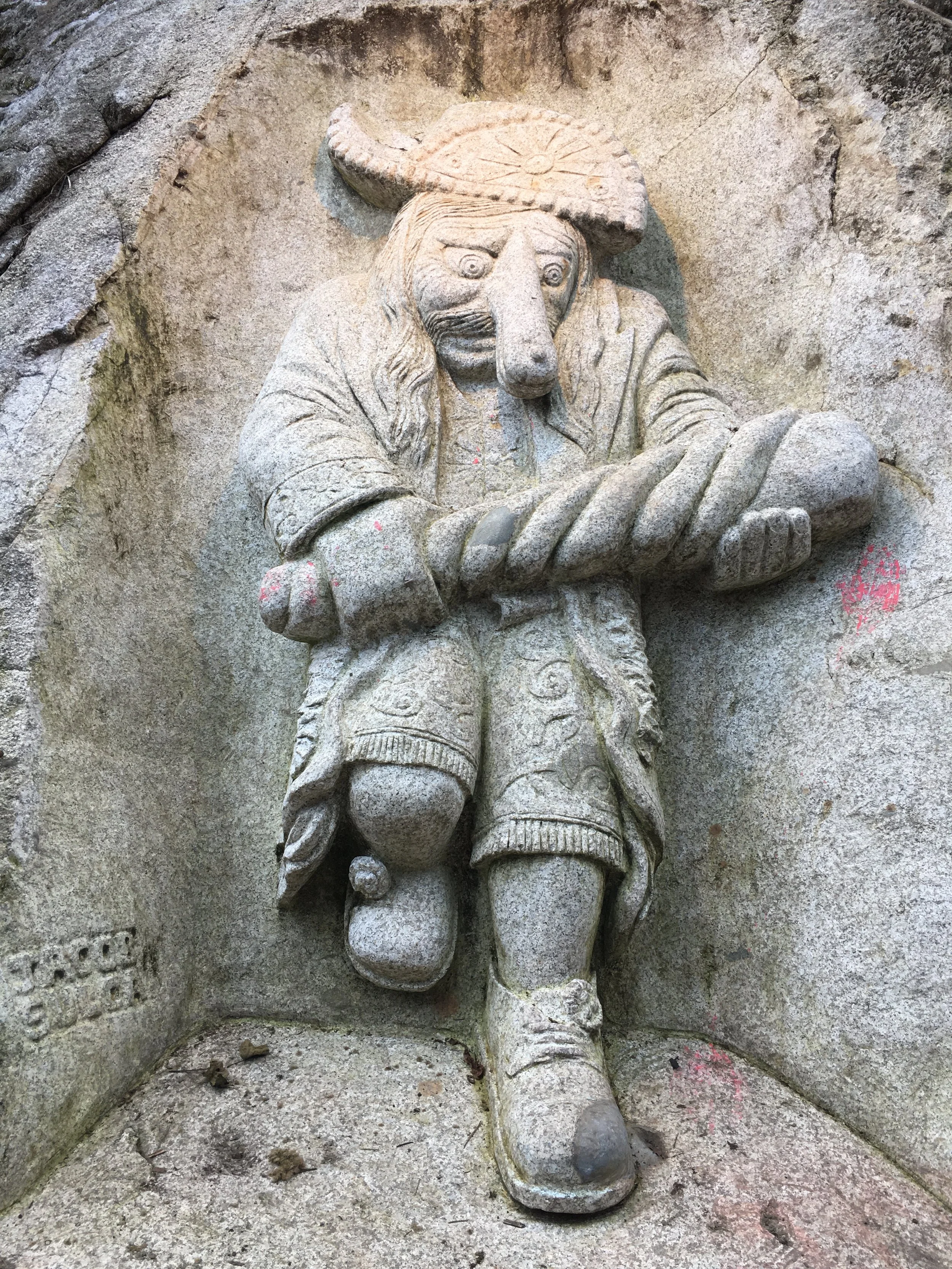
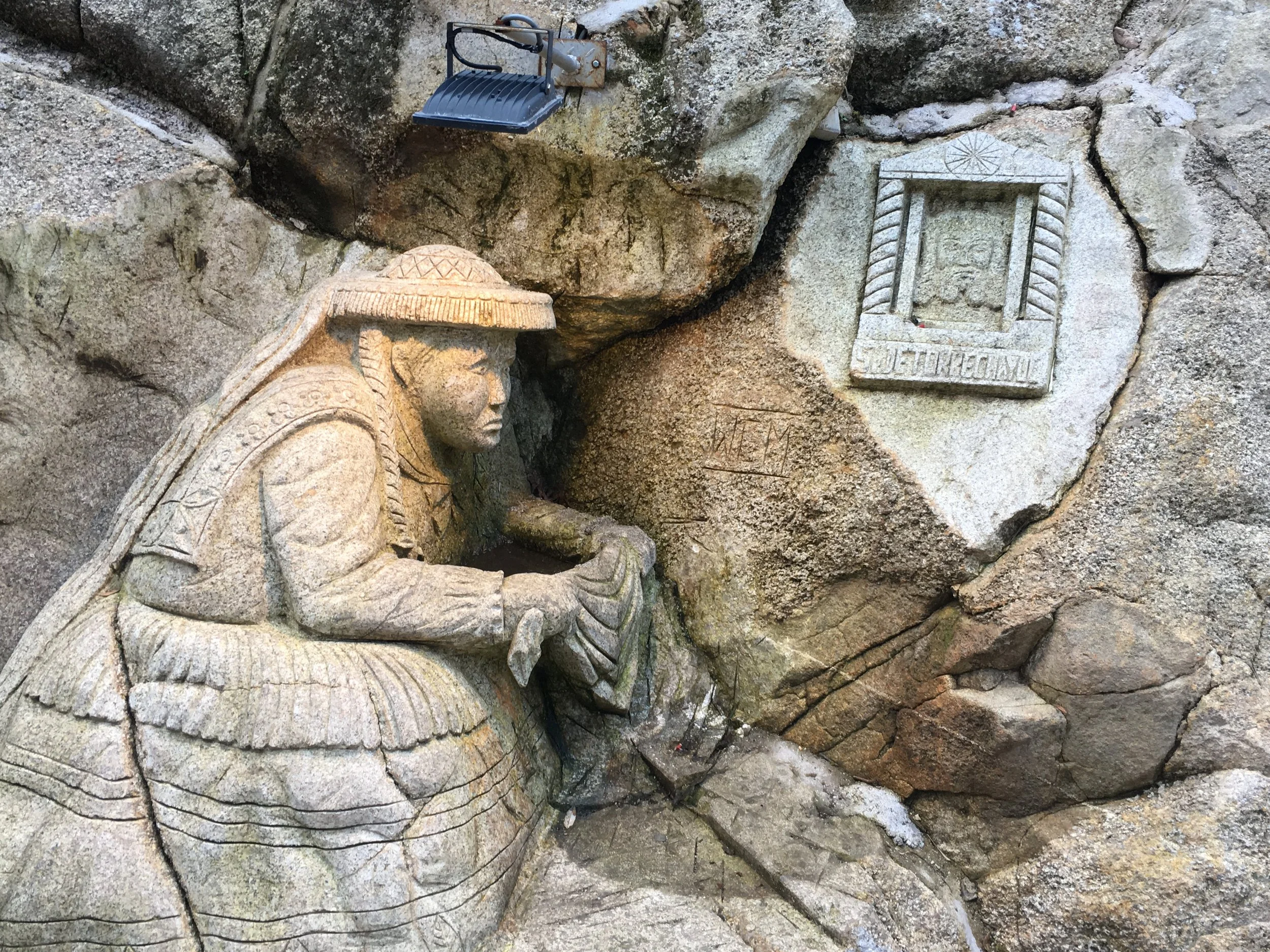
What a find!
The sculptures are part of an outdoor collection known as Crónicas de Piedra, or Chronicles in Stone. They’re contemporary carvings inspired by Andean mythology, Inca traditions, local folklore and nature. Rather than standing in a conventional gallery, these works are carved into the natural granite rocks around the town.
I loved that. You could be walking along, looking at the river and the mountains, and suddenly there was another sculpture to stop and admire.
Some were human figures; others had striking masks and dancing figures that brought to mind traditional Andean celebrations. I remember seeing several along the walkway and more as we continued towards the hot springs. Each one had its own character.
It felt like discovering an unexpected outdoor art gallery, with the mountains as its backdrop. No admission ticket, no schedule, no guide telling us where to look. Just a lovely little discovery that made me glad we’d given ourselves time to explore.
And that’s one of the things I love about travelling: sometimes the places you remember most aren’t the ones you planned to see.
Keep following that walkway uphill and you’ll reach the thermal springs that gave Aguas Calientes its name.
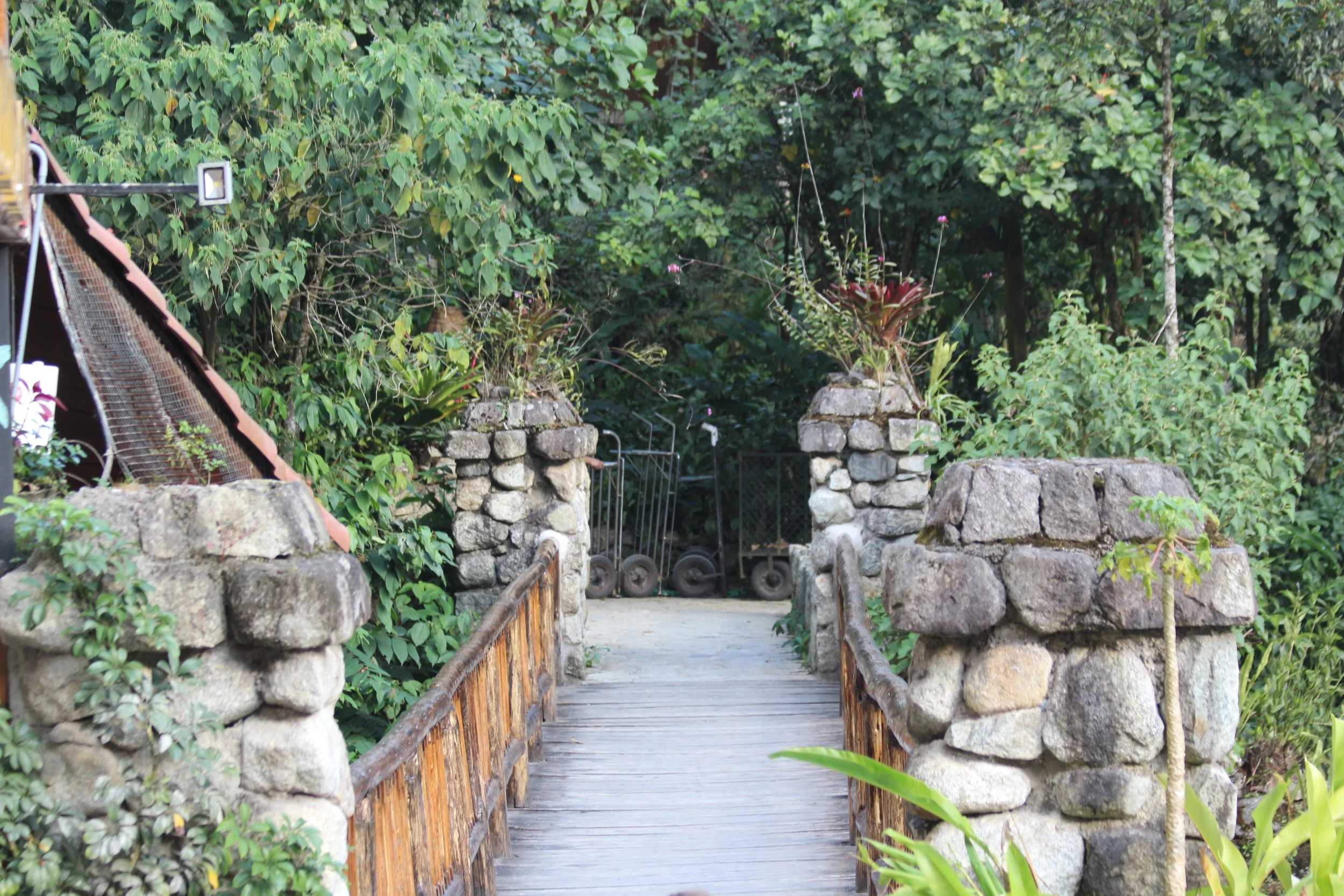
After a long day of walking, or a challenging hike up one of the surrounding mountains, I can see why these pools are a highlight for visitors. It’s a chance to give those aching legs a break and enjoy the warm water while surrounded by the mountains.
And if you’re planning to climb Huayna Picchu, you may appreciate a little muscle recovery!
For us, staying two nights meant we didn’t have to squeeze everything into a few hours. We could enjoy the town at our own pace and get ourselves organized for the big day ahead.
A Little Planning Goes a Long Way
Now, here’s where I become the practical traveller. When you’ve gone all that way to visit somewhere as special as Machu Picchu, I don’t want to spend precious time standing in lines or trying to sort out tickets at the last minute.
As soon as we’d decided this was happening, months prior I bought our Machu Picchu admission tickets directly through the Peruvian government’s official ticketing system. I didn’t want to take a chance with a third-party seller, especially when I knew I wanted to climb Huayna Picchu as well.
That meant paying attention to the entry times and making sure our Machu Picchu visit and mountain entry worked together.
The day before we bought our bus tickets from Aguas Calientes up to the entrance. That’s one less thing to organize in the morning.
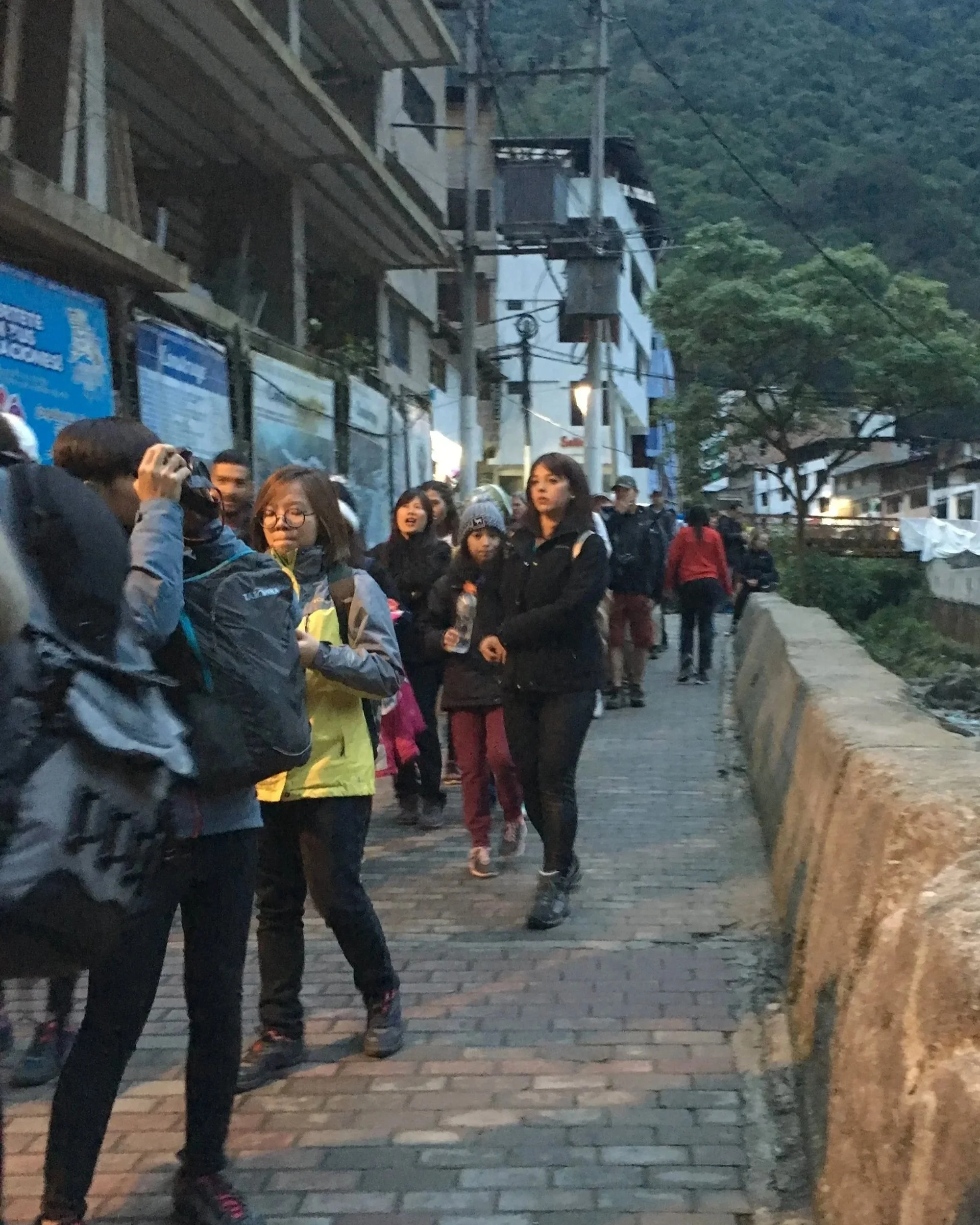
And trust me, even with a bus ticket in hand, you still have to join the queue. It was a long, long line! The buses keep coming, so the line moves, but don’t expect to walk straight onto one just because you’ve already bought your ticket.
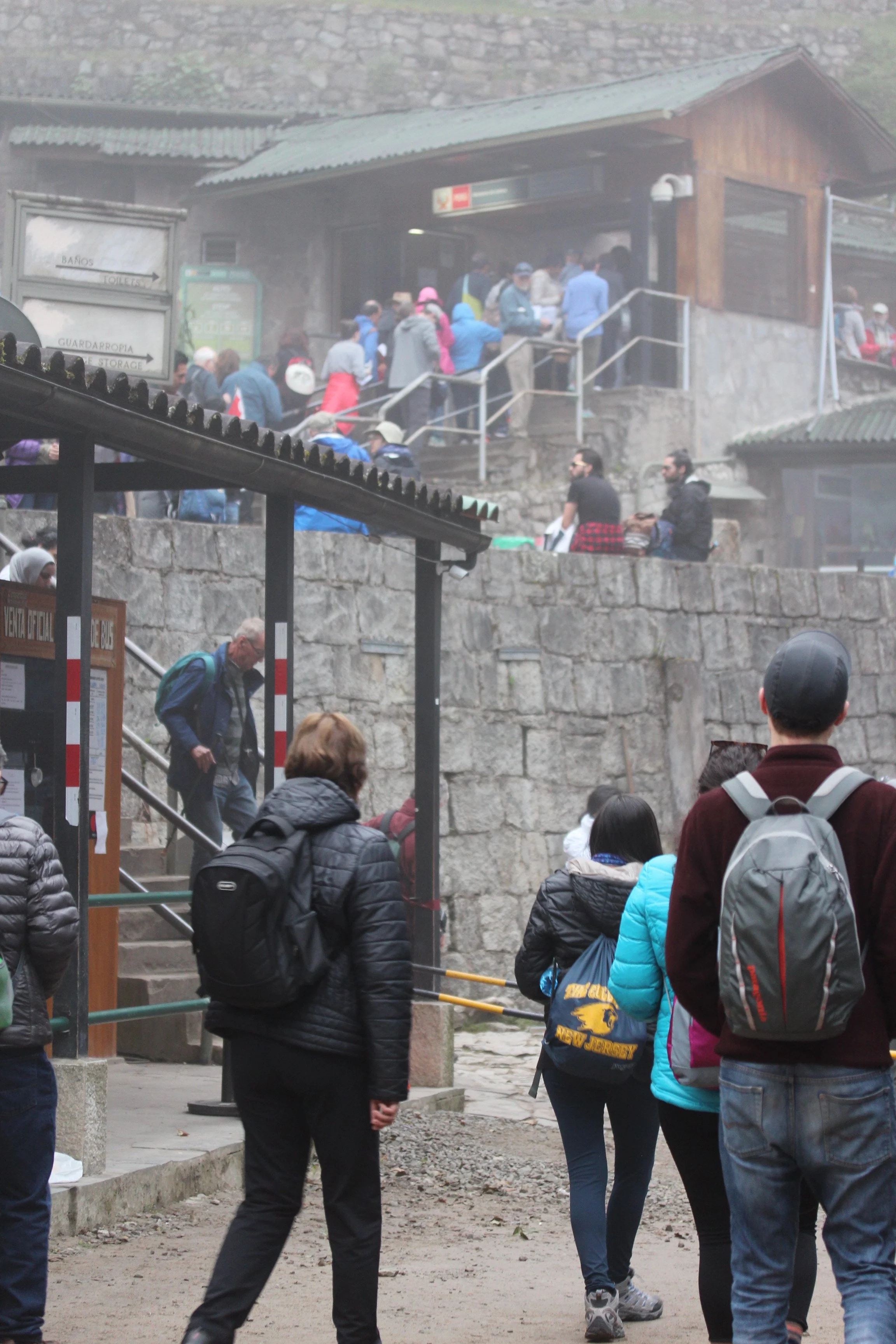
We watched other visitors arriving by train that morning, then having to sort out their bus tickets and join the queues. We’d taken care of those details the night before, and I was very happy we had.
The bus winds its way up the mountain to the entrance. You can walk up, but we wanted to save our legs for what was waiting for us above.
My advice? If you’re staying overnight in Aguas Calientes, buy your bus ticket ahead of time. Your bus ticket and your Machu Picchu admission are separate purchases, so don’t assume one covers the other.
I also wanted a guide. Not just someone to point out a few buildings, but someone who could bring the history and stories to life.
I wandered around listening to the guides speaking with visitors. My Spanish is not great, and I wanted to find someone whose accent and way of speaking I could follow. What’s the point of hiring a guide if you’re going to spend the whole tour trying to work out what they’re saying?
Eventually, I found someone I felt comfortable approaching. I asked what he would cover during the tour and explained that I had a timed entry for Huayna Picchu at 10 a.m. I wanted to make sure the tour would work around that.
It was a small decision, but an important one. I wanted to understand what I was looking at, not simply take photographs and move on. When we went the rules were much more relaxed so please check new rules.
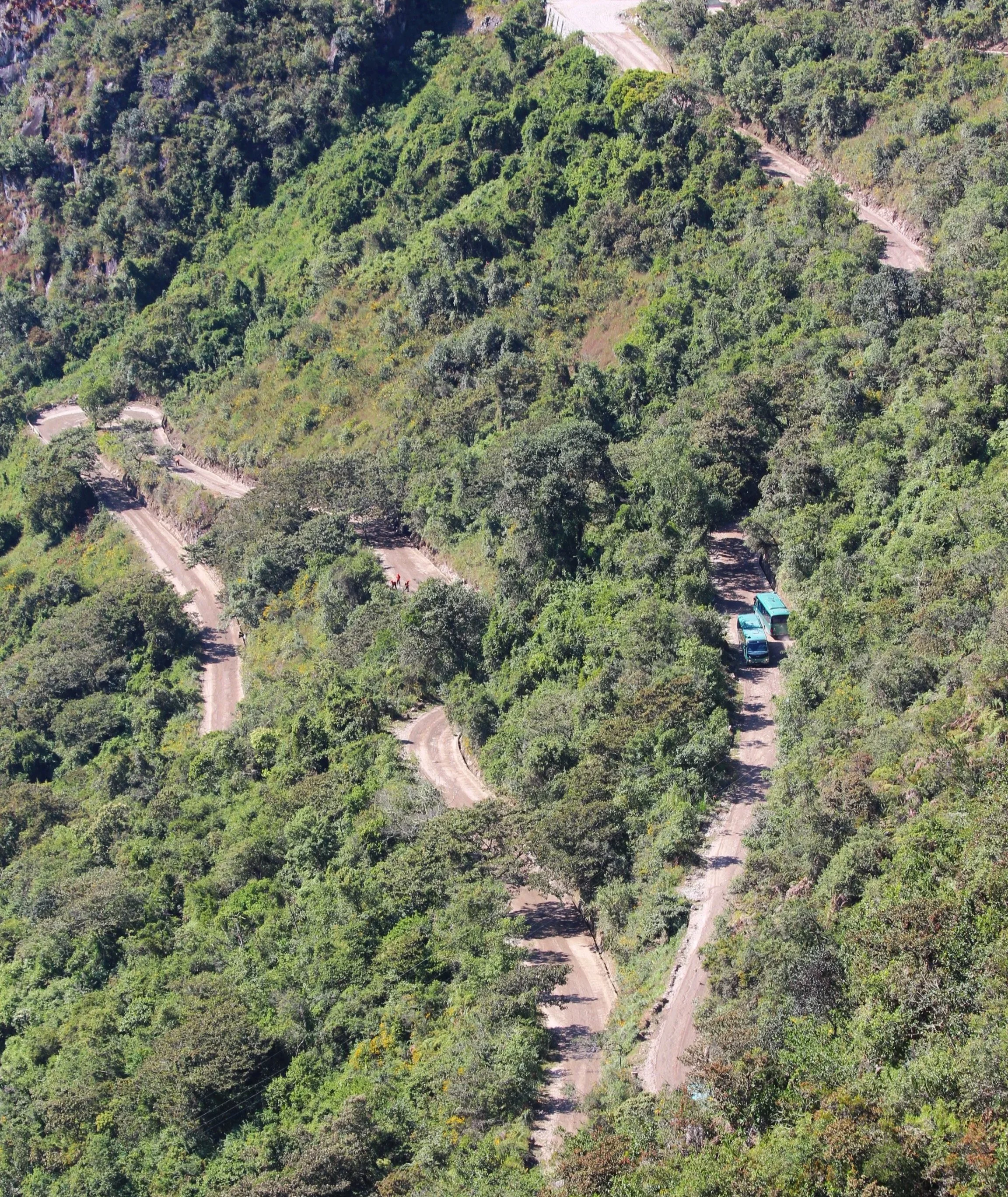
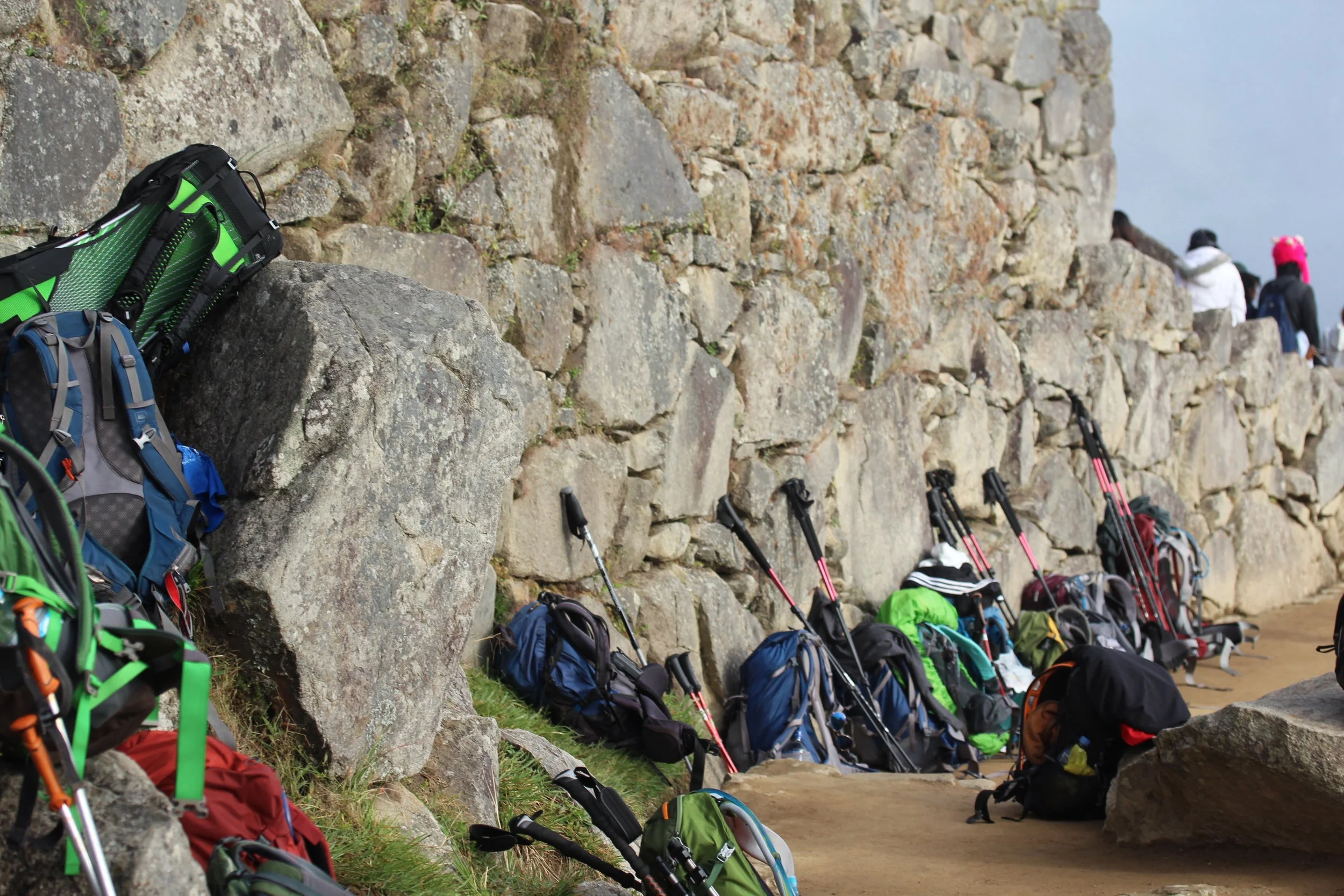
I packed a small, soft backpack with water and the essentials. I wanted my hands free, particularly with the mountain climb ahead. We had our tickets and passports ready, and I was feeling pretty organized.
Well, as organized as one can be when the next day involves climbing a mountain!
The morning had arrived. This was it!
We had our admission tickets, our bus tickets and our plan. Even so, there was no avoiding the queue. There were plenty of people with the same idea, all waiting for the buses that would carry us 30 minutes up the winding mountain road.
As the bus climbed higher, the anticipation grew. The mountains seemed to rise around us, and I kept thinking about the people who had built this extraordinary place centuries ago. How did they choose this location? How did they move those enormous stones? What would it have looked like when it was a living, working community?
And then we were there.
Machu Picchu.
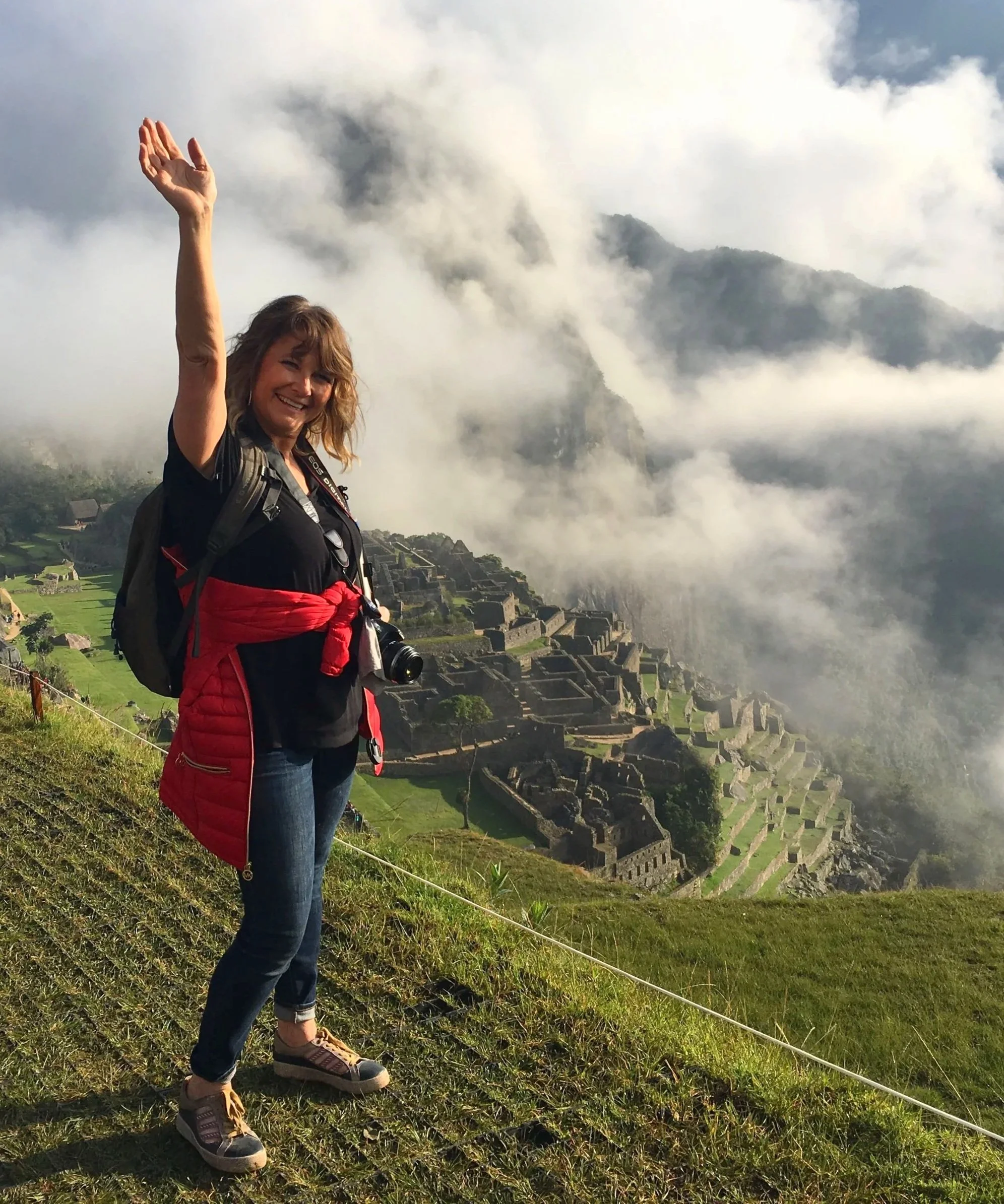
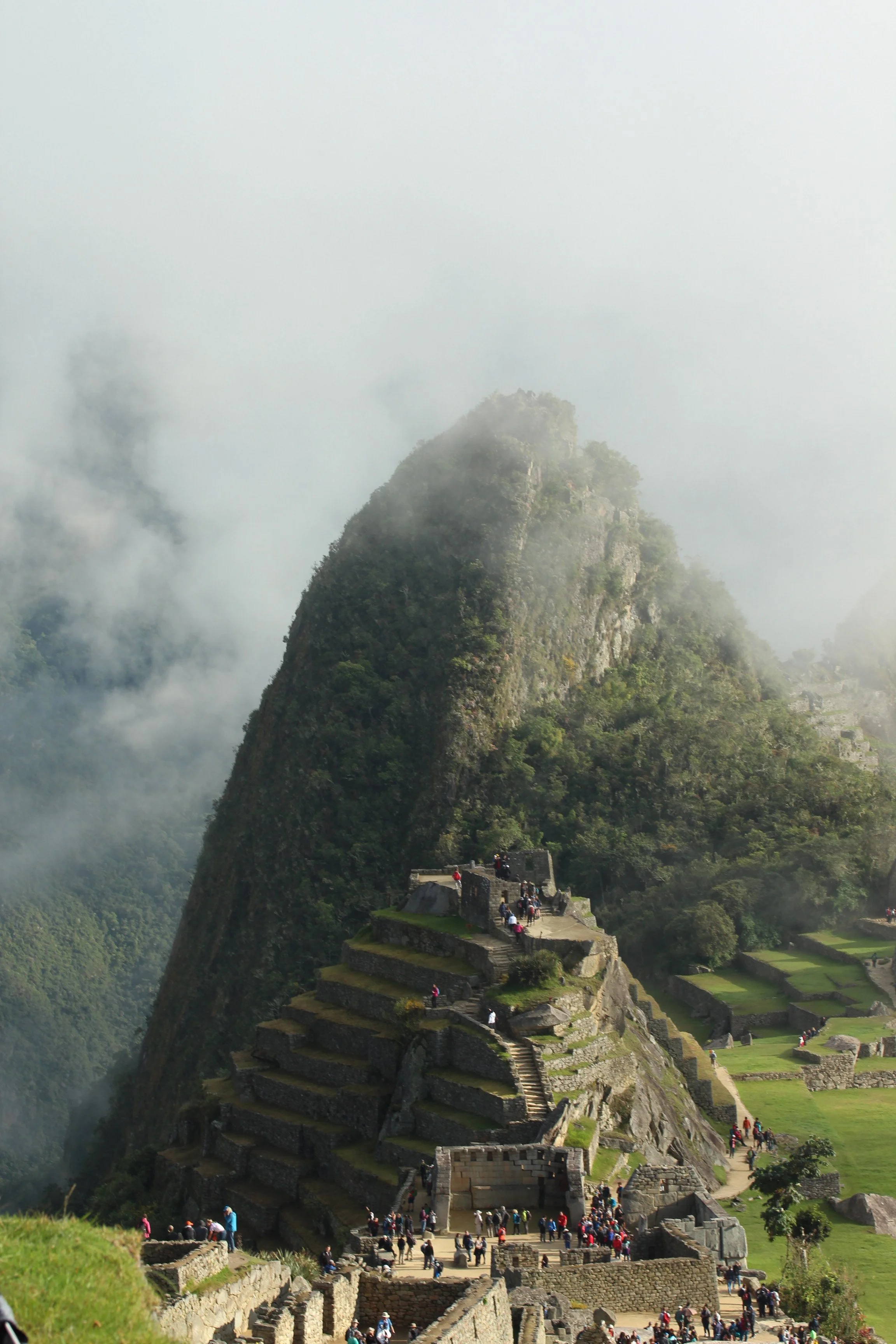
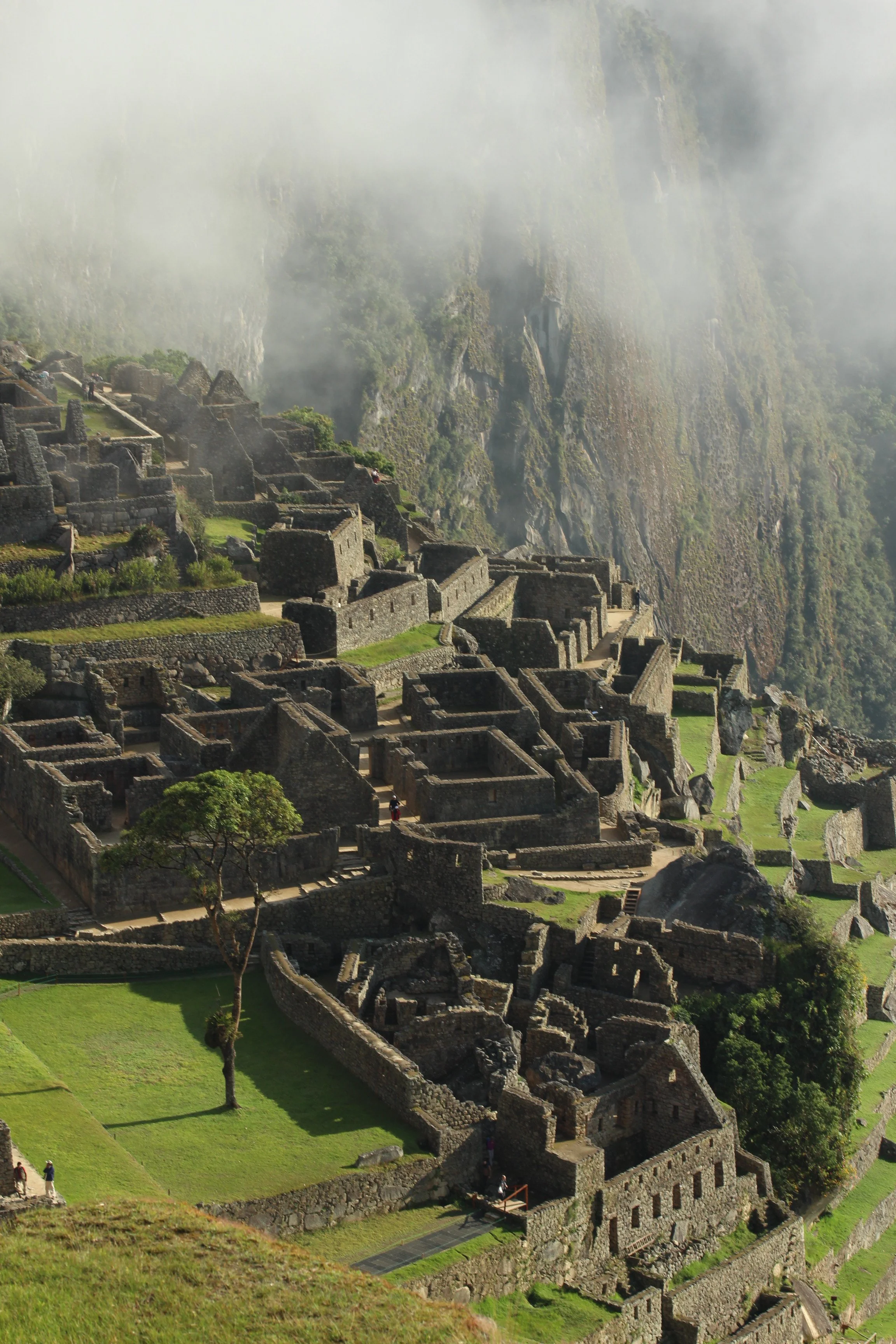
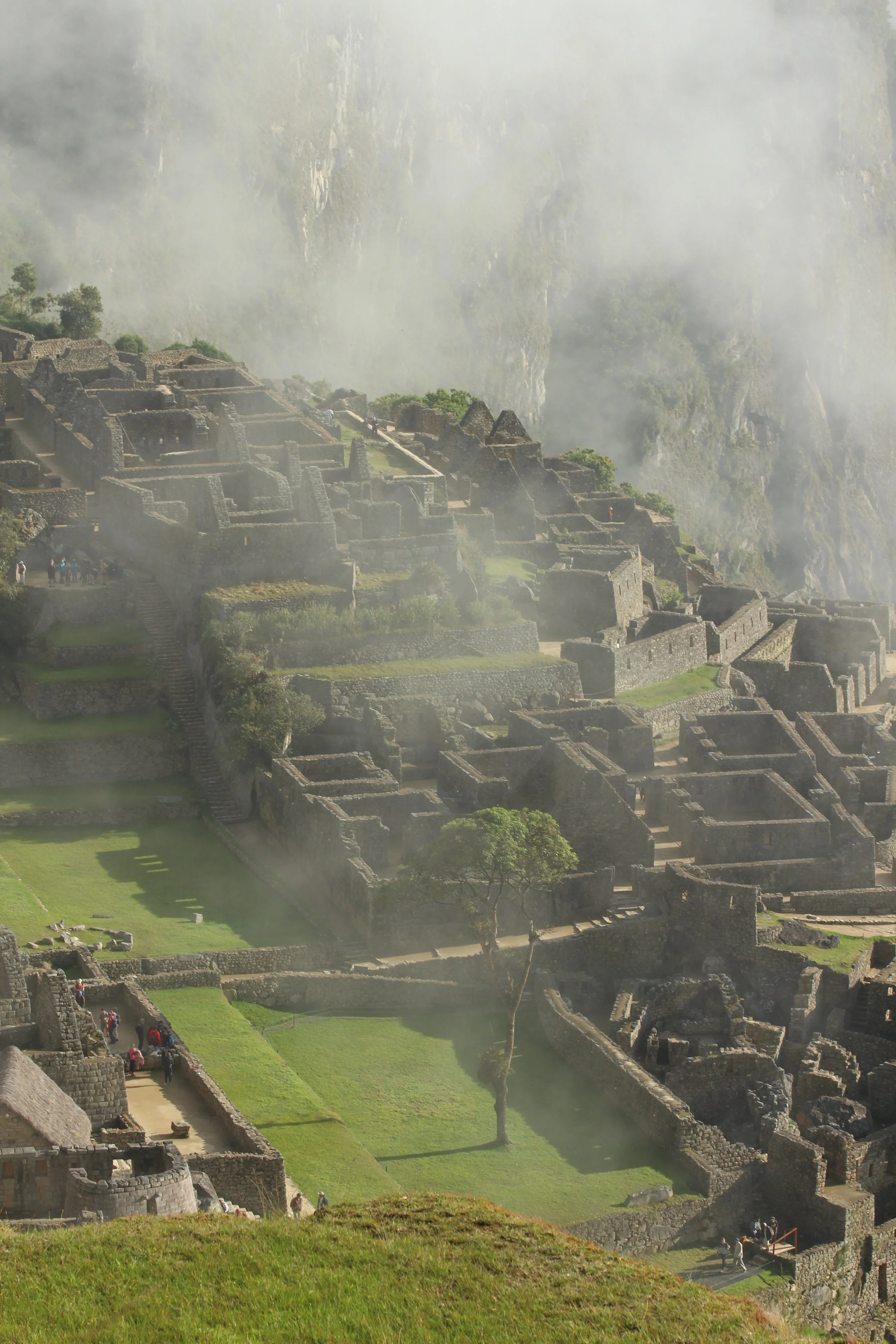
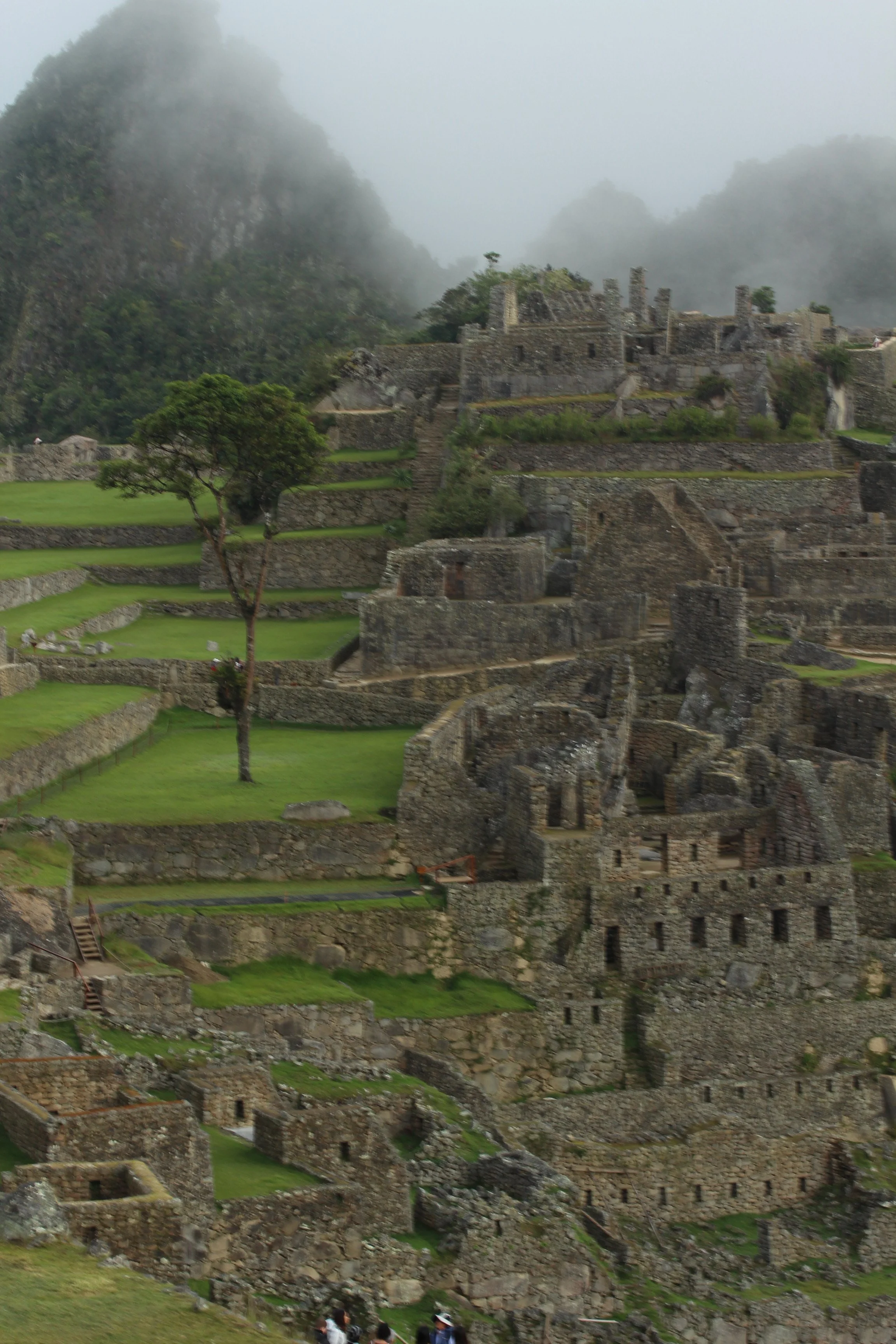
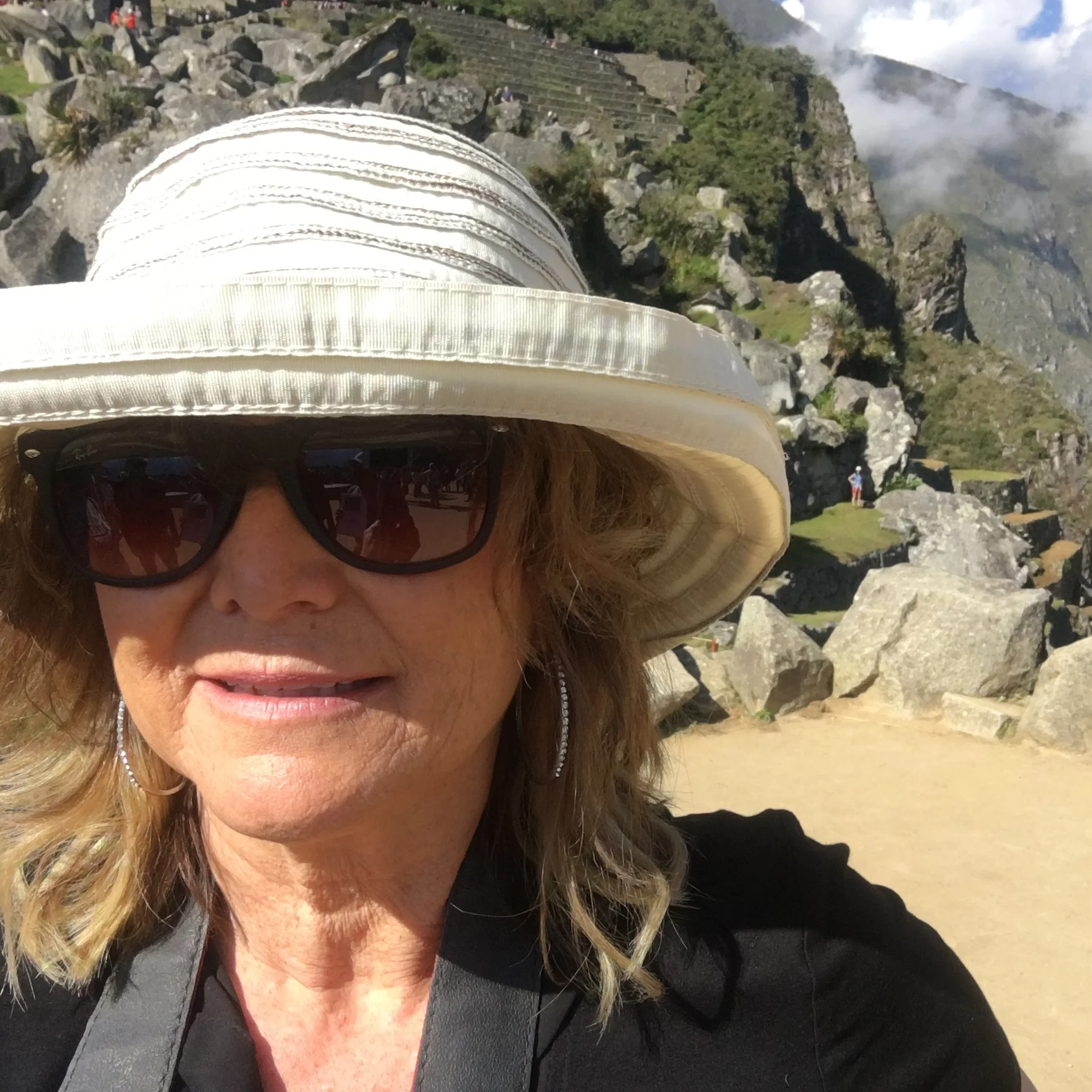
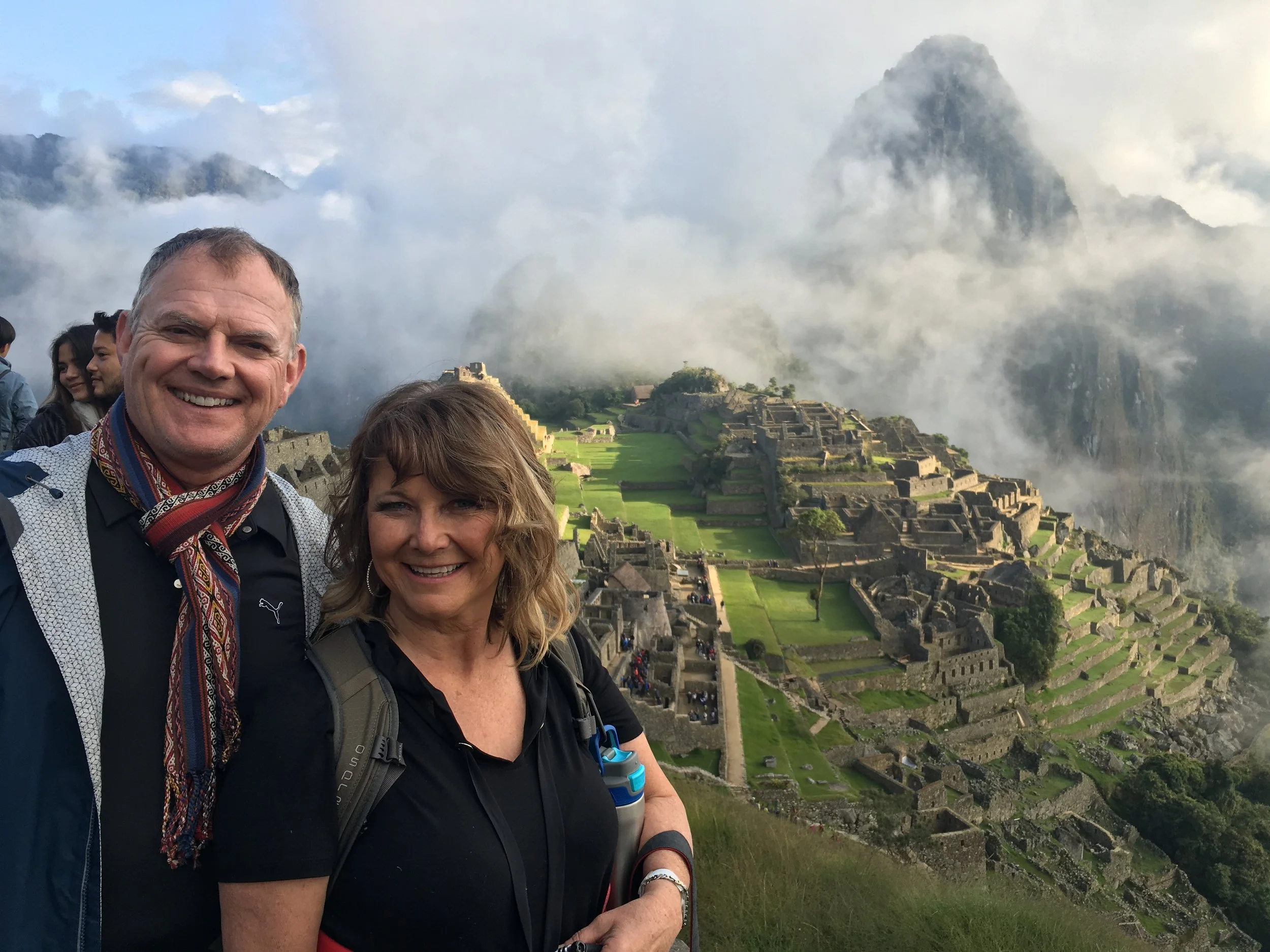
I am here and even with fog to start - it is perfect!
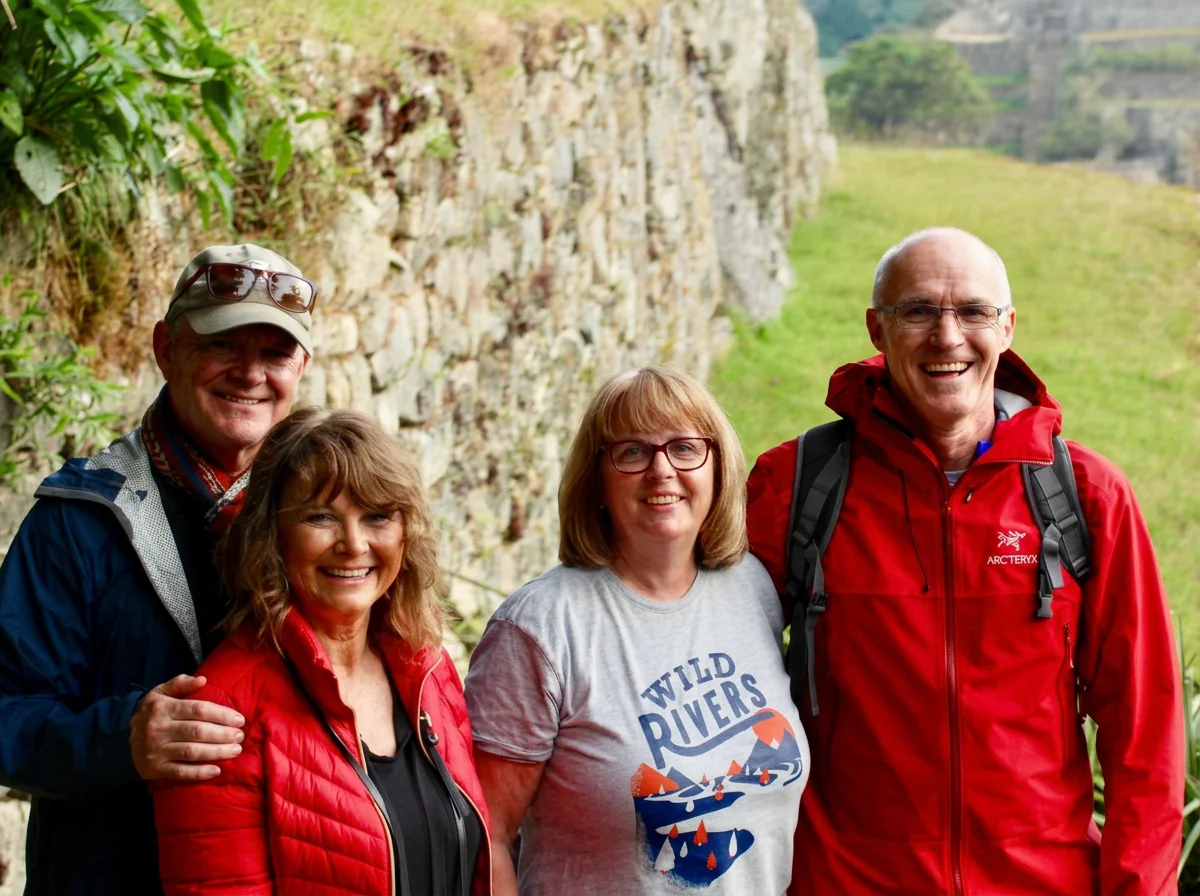
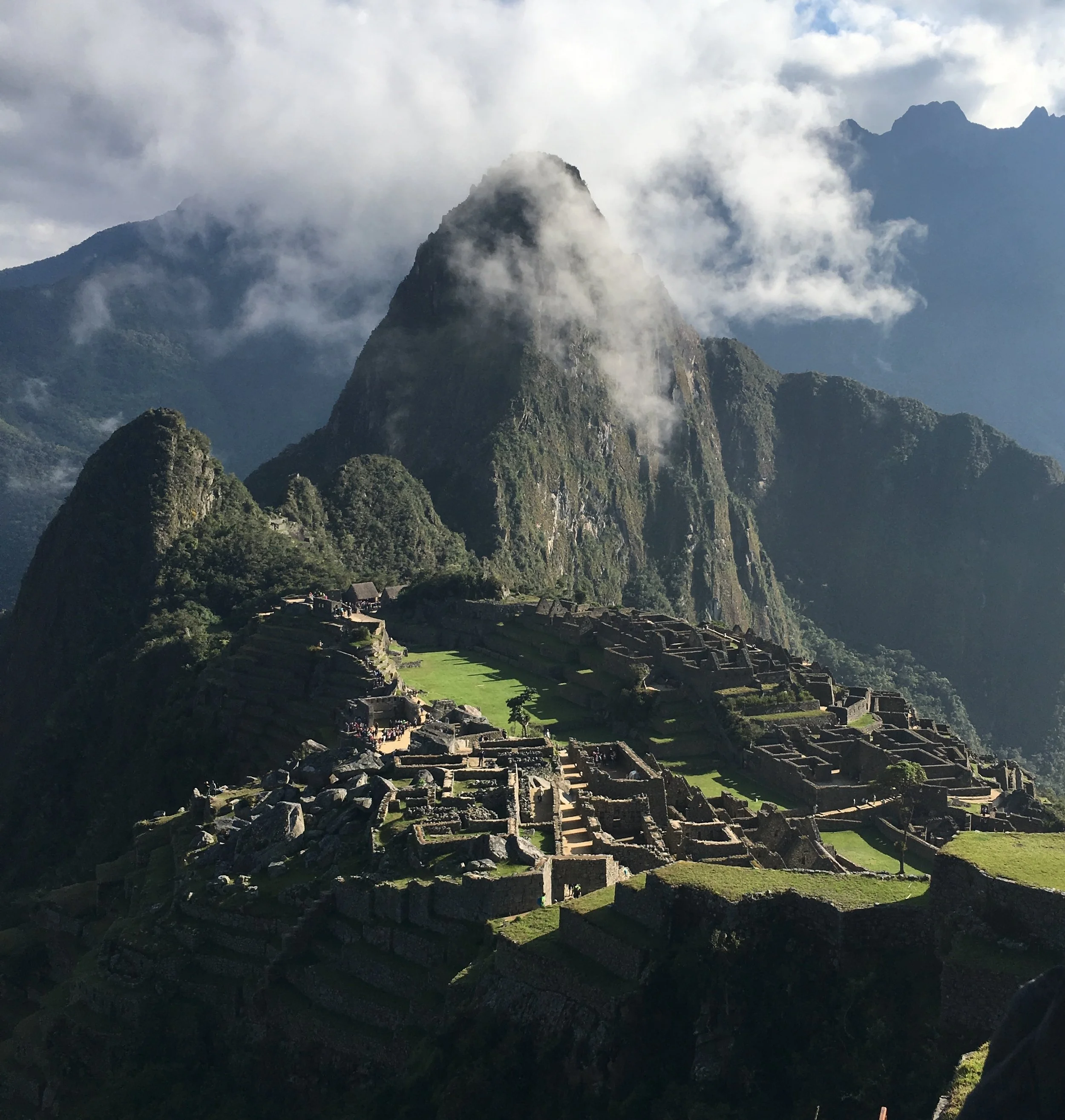
It’s difficult to describe the feeling of finally standing in a place you’ve read about, seen in photographs and imagined for so long. The setting is every bit as dramatic as you’d expect, but photographs simply can’t prepare you for the scale of the mountains or the way the stone city sits within the landscape.
The Incas built this remarkable place in the 15th century, high on a ridge in the eastern Andes. UNESCO recognizes the Historic Sanctuary of Machu Picchu not only for its cultural significance, but also for its extraordinary natural environment. It’s a place where human achievement and nature are inseparable.
And once you start looking closely, there is so much more to see than the famous postcard view.
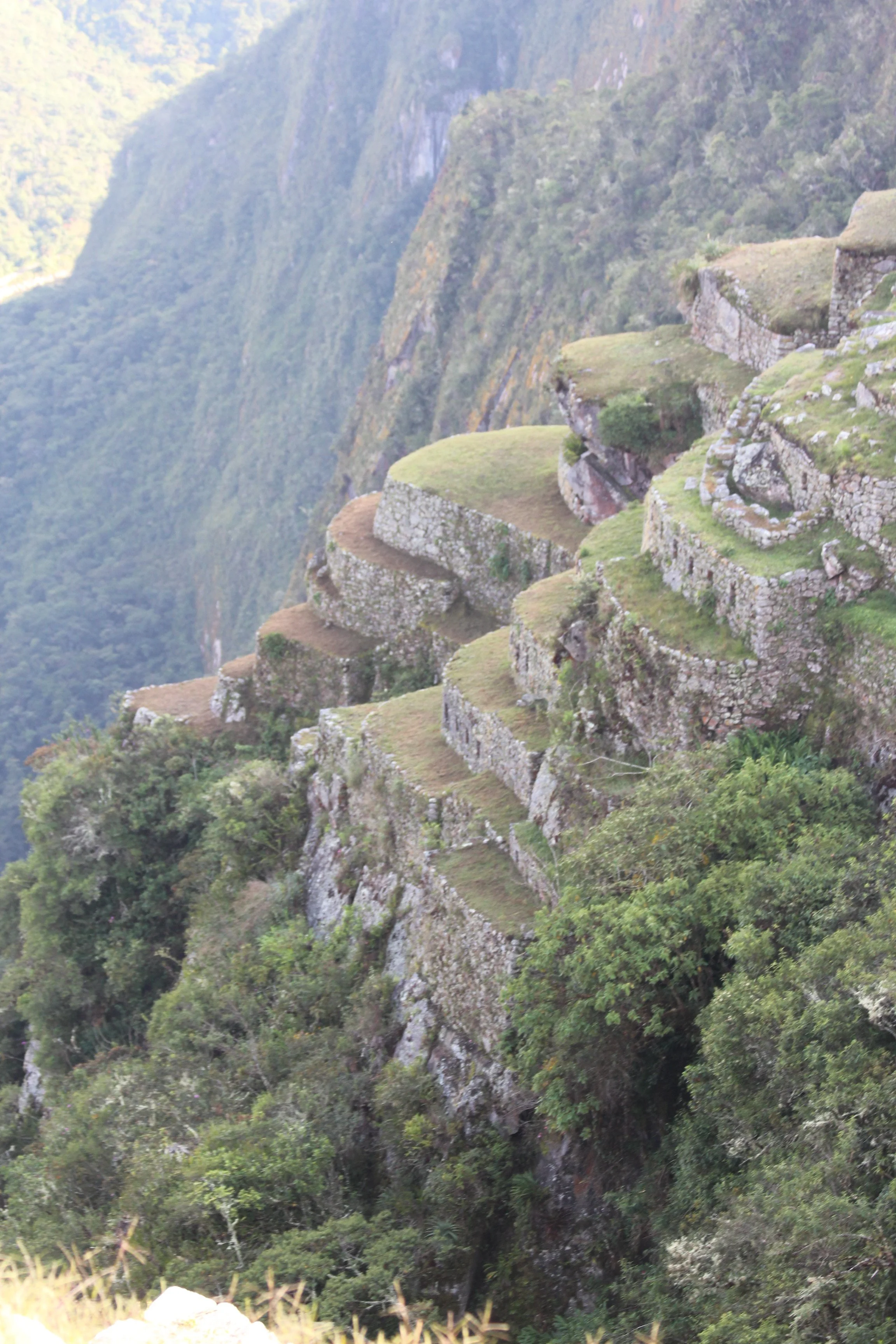
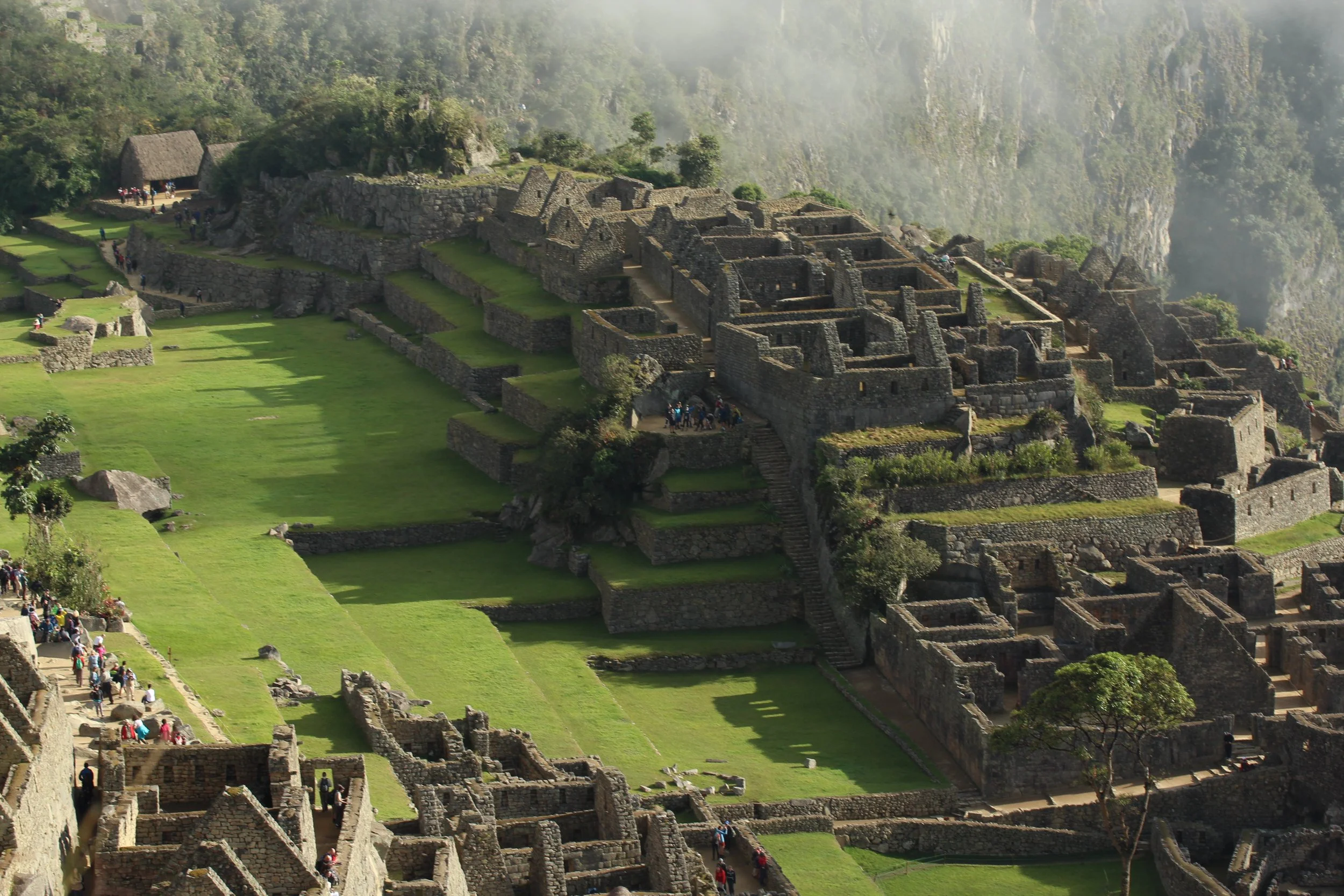
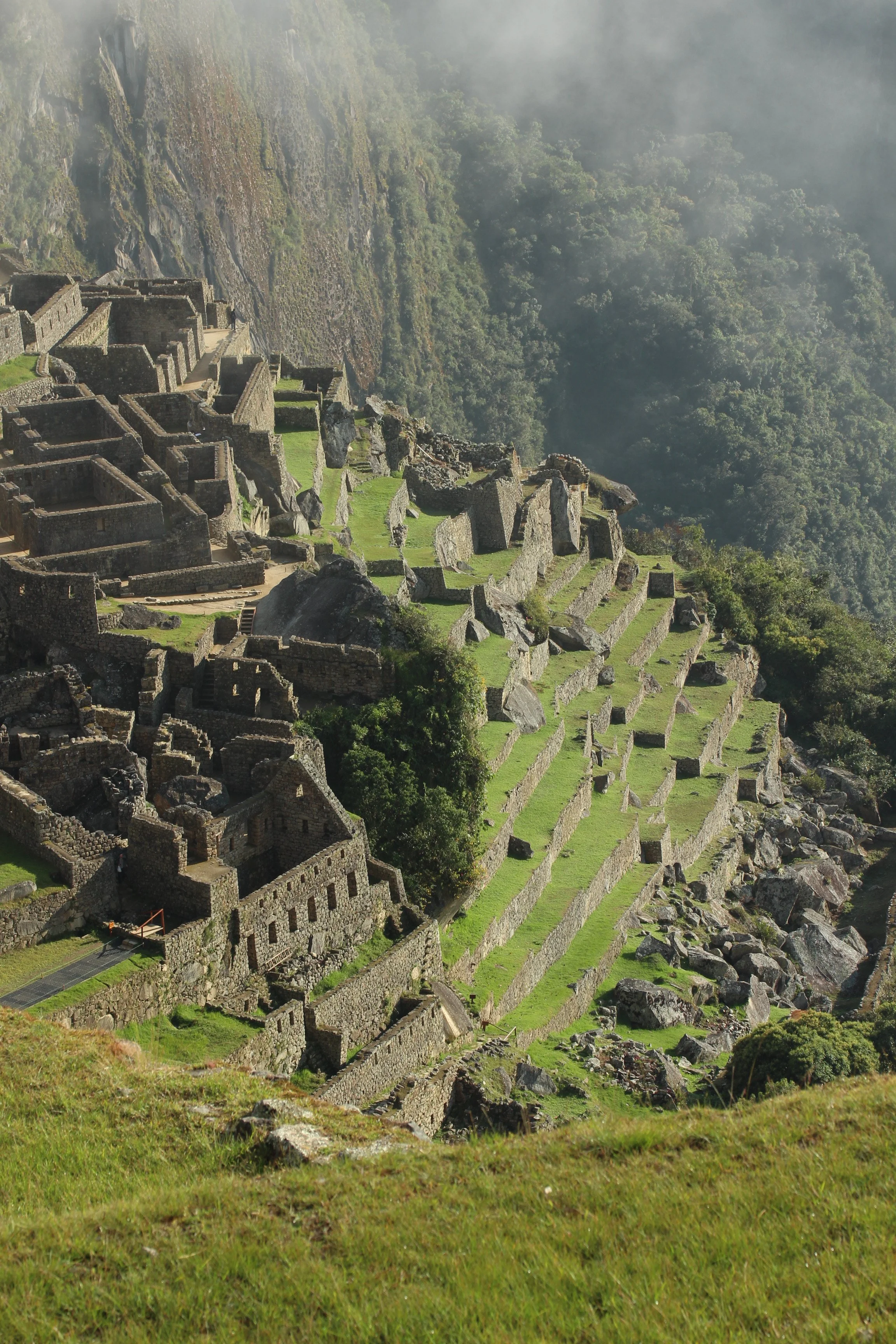
The stonework, the terraces, the water channels, the buildings fitted into the mountainside — it is all part of a carefully designed place. I found myself looking at the details as much as the grand views.
Three features that particularly caught my attention were the Sacred Rock, the Intihuatana, Temple of the Sun
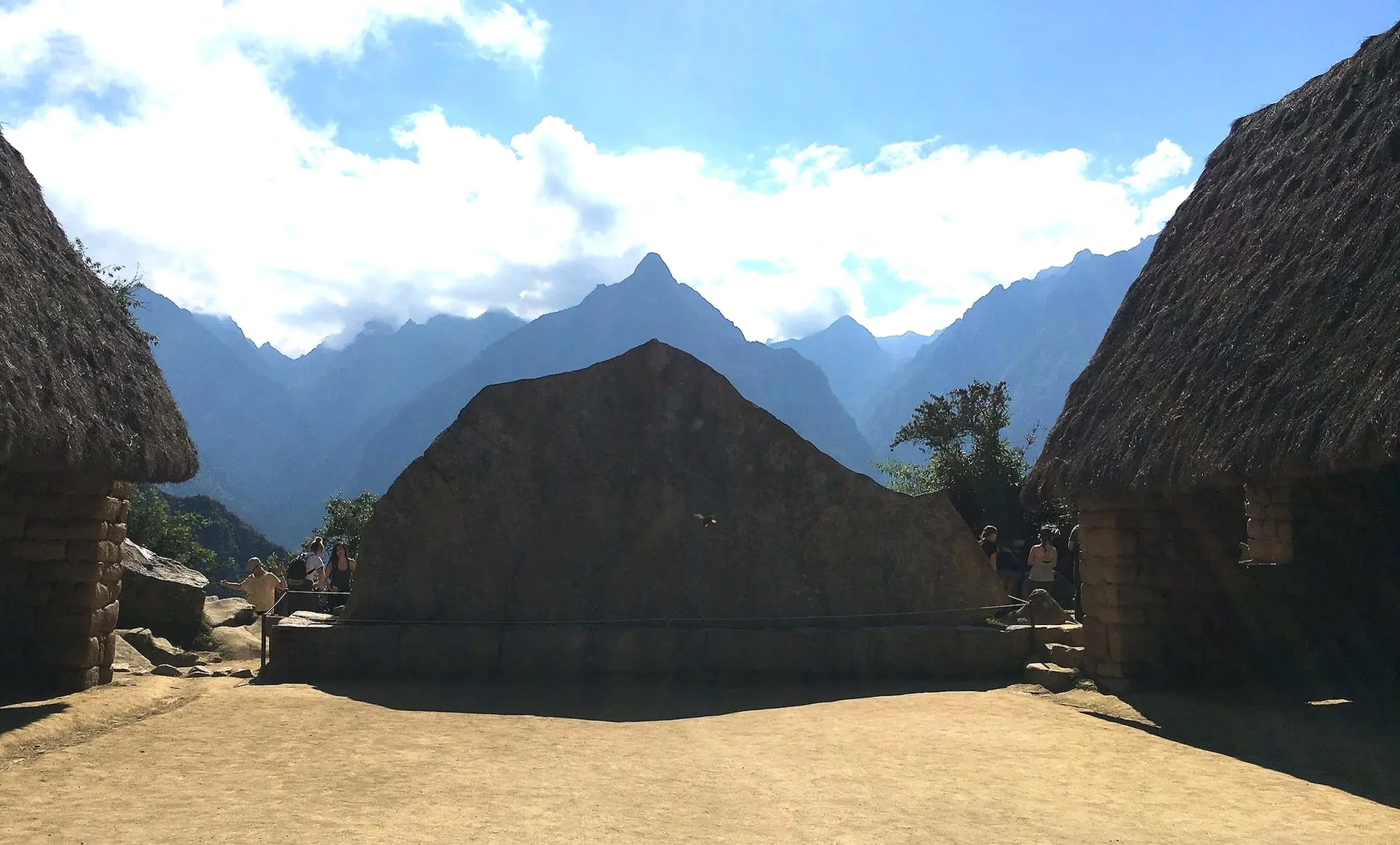
Sacred Rock
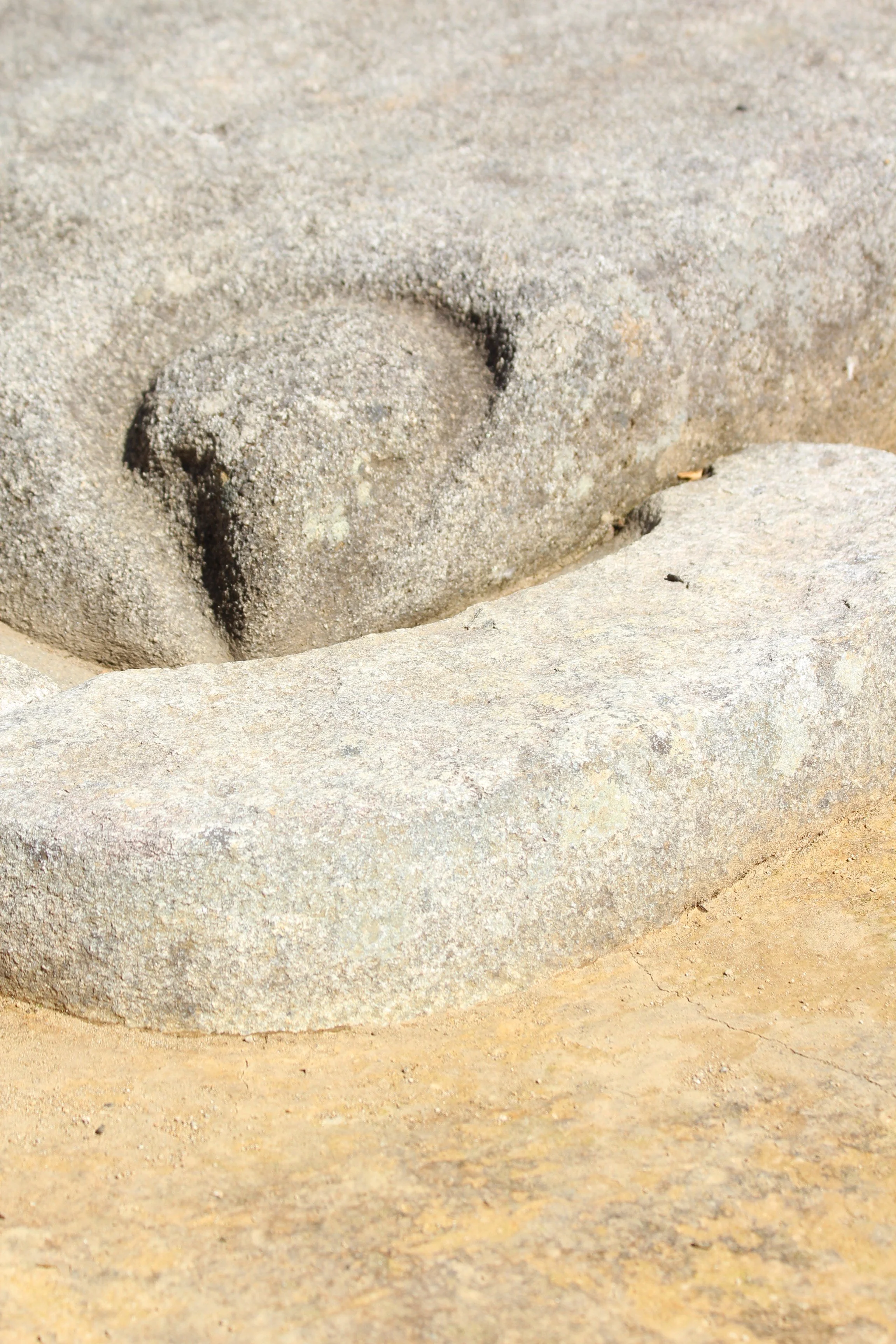
The Sacred Rock is an enormous natural granite formation in the ceremonial area. It is framed by two small open-sided structures, and its shape is often said to echo the mountain behind it. Whether that resemblance was intentional is open to interpretation, but there is no doubt that this was a significant sacred feature within the site.
Then there is the Intihuatana, the carved stone often translated as the hitching post of the sun. Its exact purpose is still debated. It may have had an astronomical or ceremonial role, but there is no single confirmed explanation. I love that even after all these years of research, Machu Picchu still leaves room for questions. Our guide used his phone compass to verify how tru the hitching post was. I am in awe.
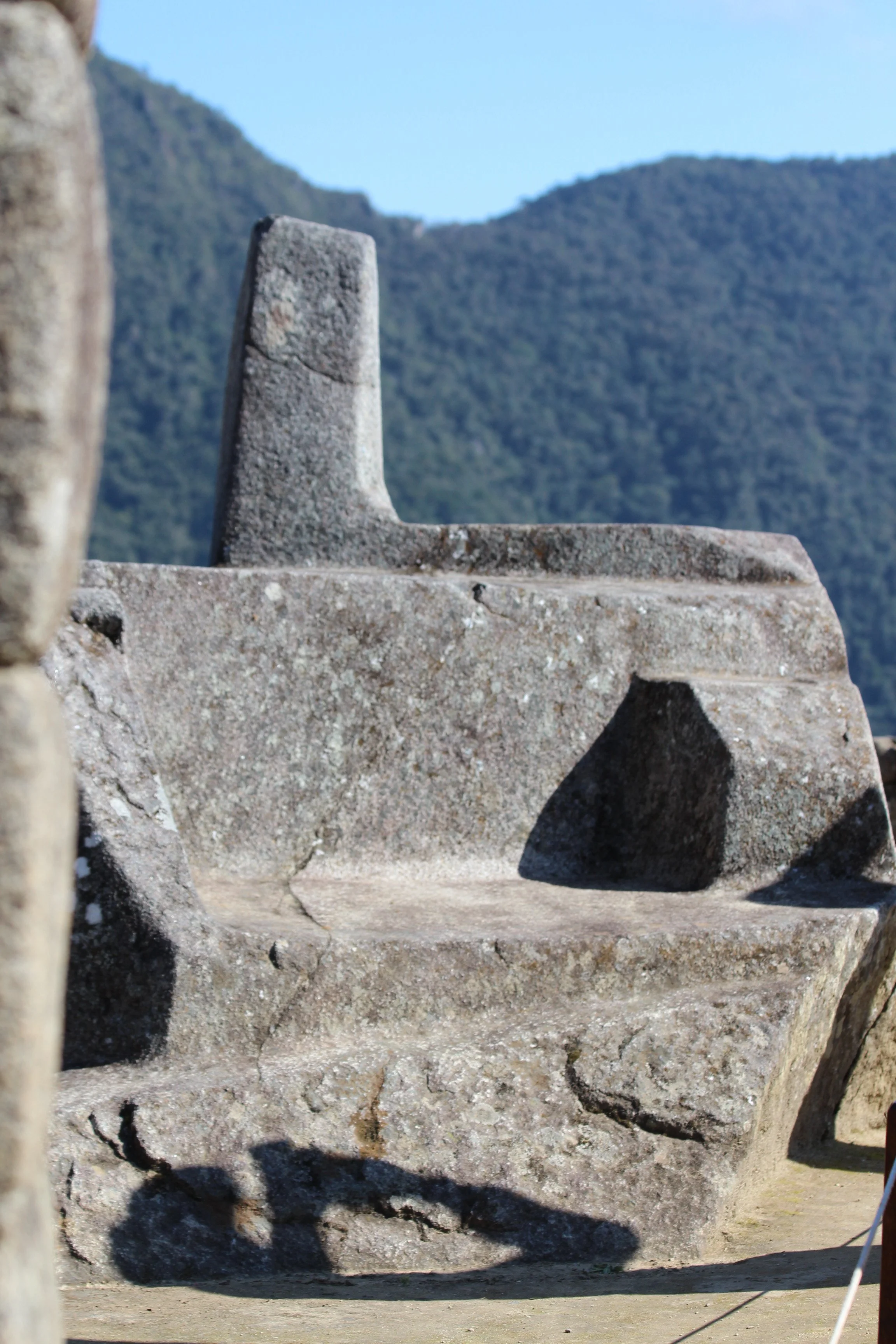
Intihuatana,
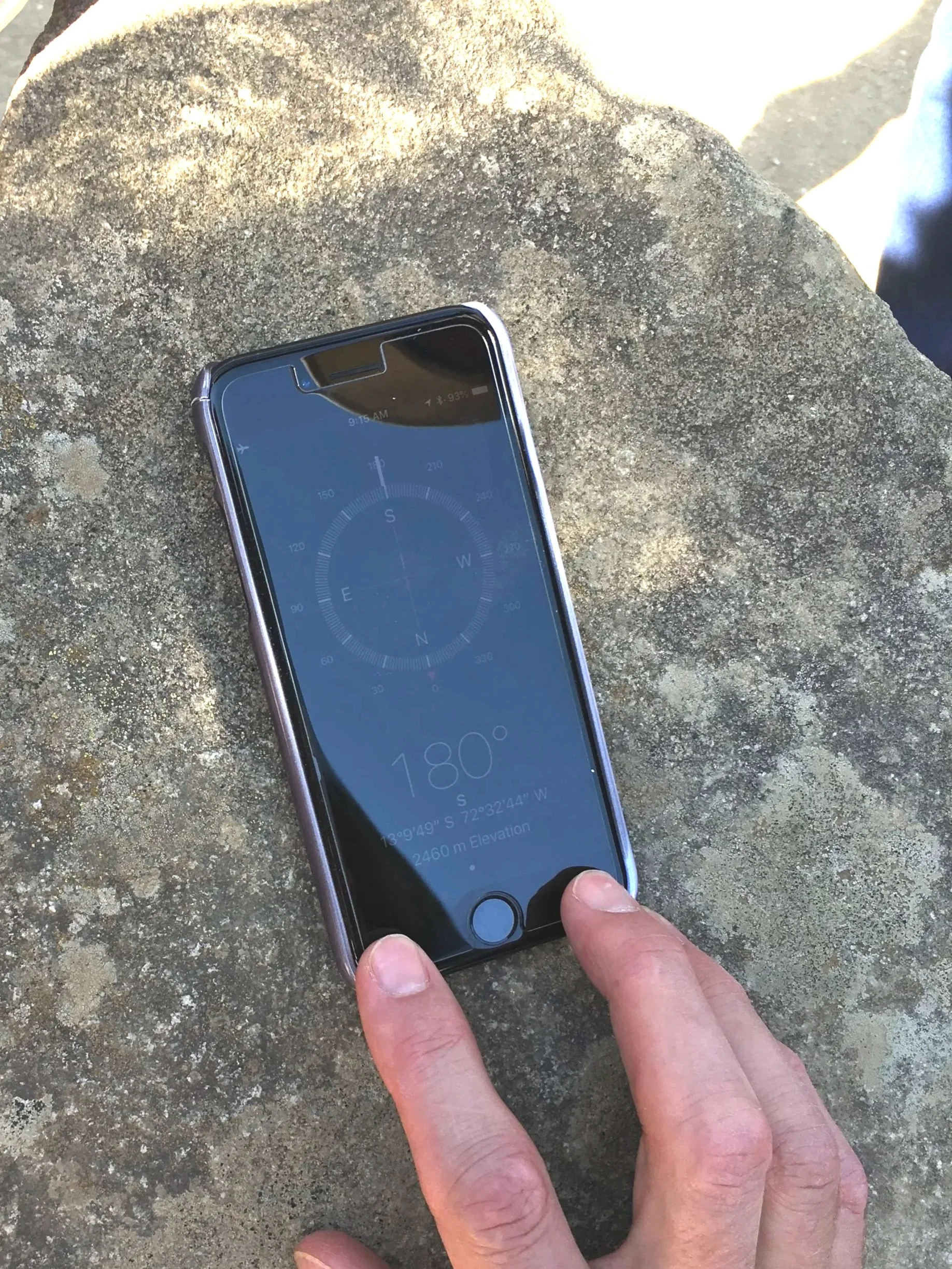
Accurate 100% true NSEW
And the other was The Temple of the Sun & Royal Tomb known as El Torreón. Its graceful, semicircular granite walls curve around the natural mountain rock, fitted together with astonishing precision. Look beneath the temple, however, and another mystery unfolds. The so-called Royal Tomb is a natural cave transformed by the Incas into a sacred space, complete with carved stonework, niches and a ceremonial staircase. Was it a resting place for Inca royalty, or a site for rituals we can only imagine today? Above, the temple’s carefully positioned windows captured the sun’s movements, with the June winter solstice illuminating the natural rock altar. Together, these remarkable spaces reveal how the Incas wove architecture, astronomy and spirituality into the very fabric of the mountain. And that brings me to another thing I noticed: the work never really stops.
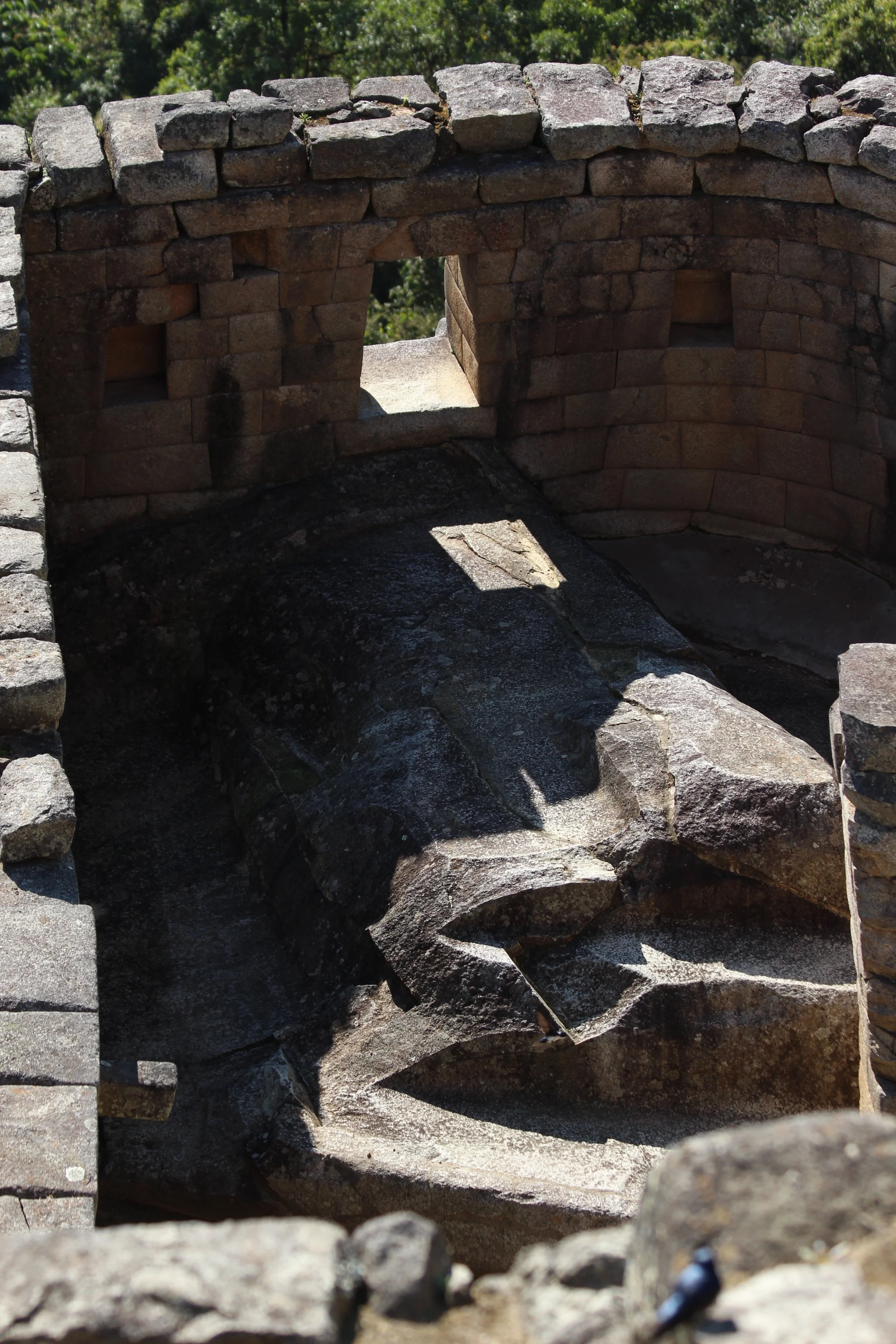
Temple of the Sun and Royal Tomb
As we walked around, I spotted people carefully examining the stonework. One worker appeared to be documenting the walls, while another was using a long tool to check gaps between stones. I couldn’t tell exactly what measurements they were taking, but it made me think about the care required to preserve a place like this.
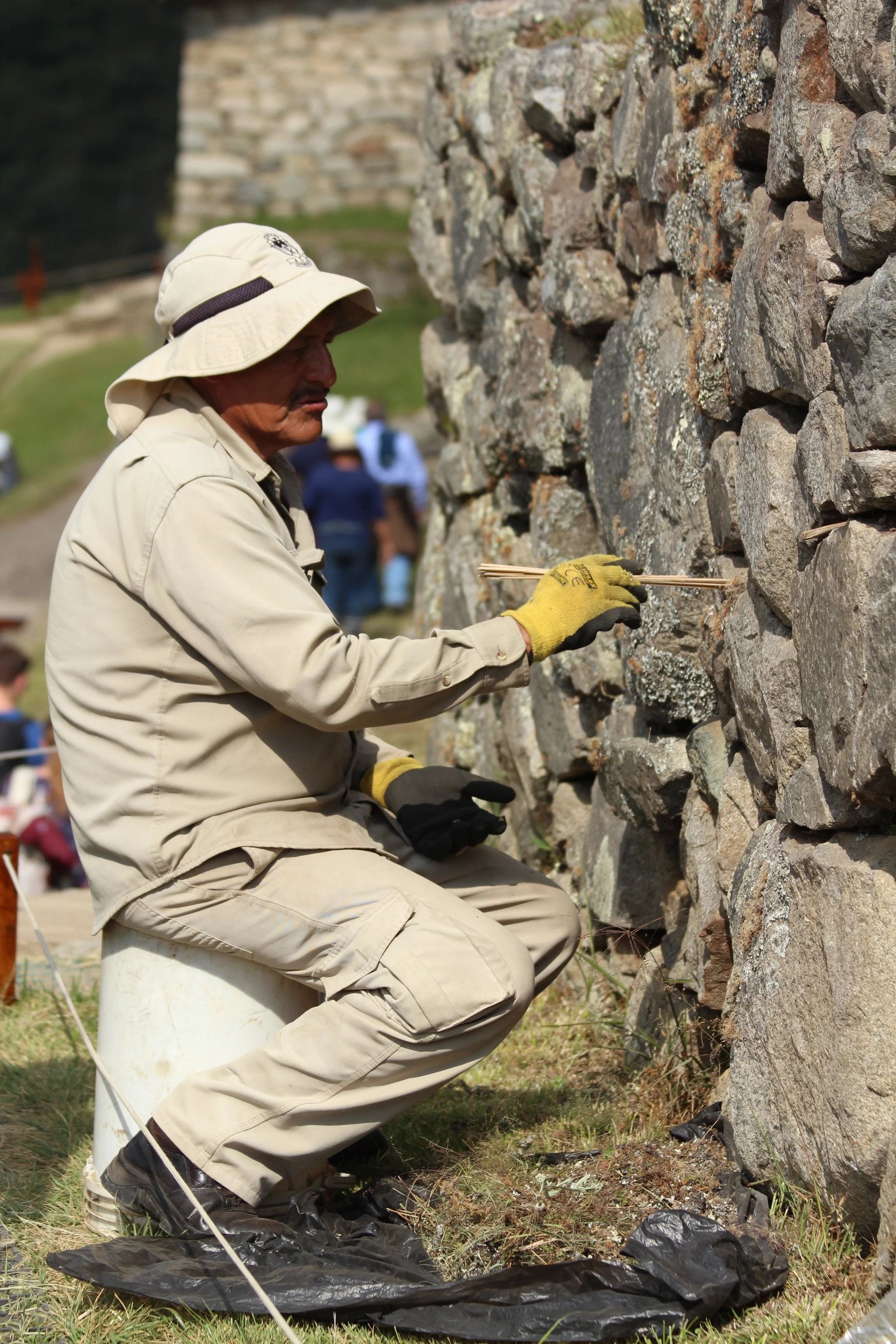
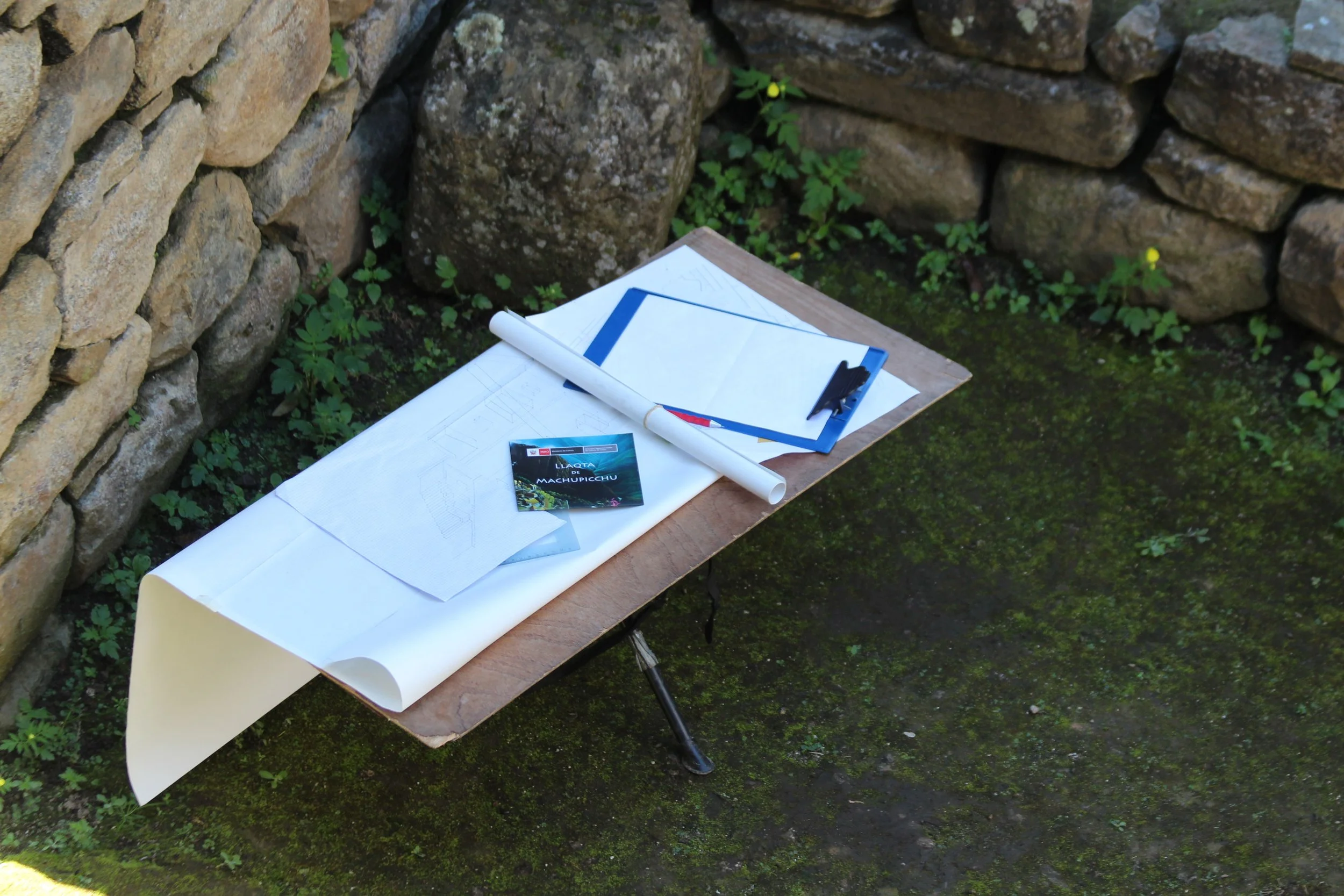
These aren’t just old stones. They’re an irreplaceable piece of history, standing in a mountain environment that is constantly exposed to weather, moisture and the movement of the landscape and people. Hence why rules are changing on visits to area.
I also saw someone carefully brushing dust from the stones. It was a reminder that keeping Machu Picchu standing for future generations takes ongoing attention and skilled conservation work.
And Then There Was Huayna Picchu…
If Machu Picchu itself wasn’t enough of an adventure, I’d also booked us onto Huayna Picchu.
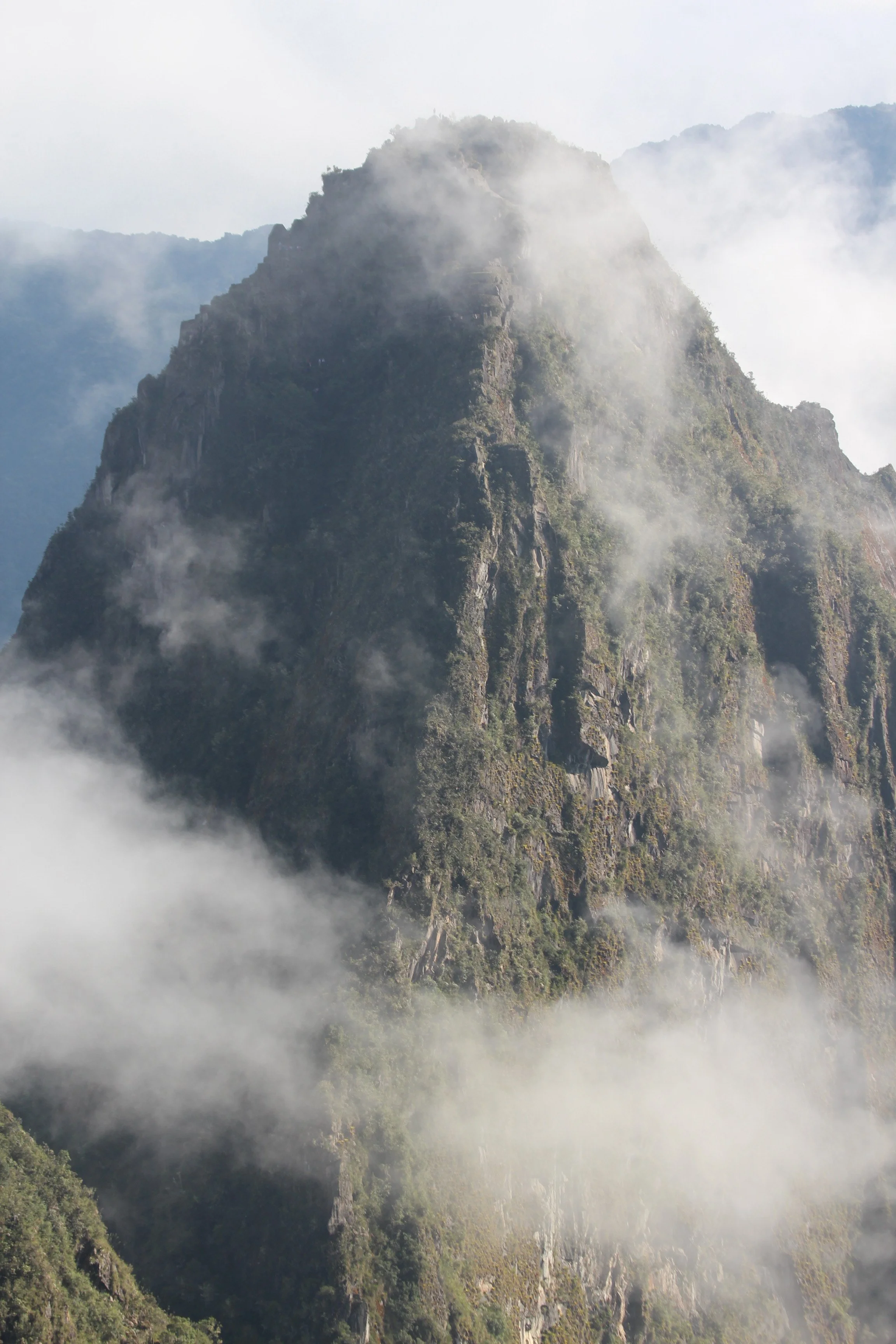
You know that famous mountain that rises behind the ruins in just about every photograph? That’s Huayna Picchu — often translated as Young Mountain. Machu Picchu means Old Mountain.
I had decided I wanted to climb it. The views from above promised to be spectacular, and how often do you get the chance to climb that mountain?
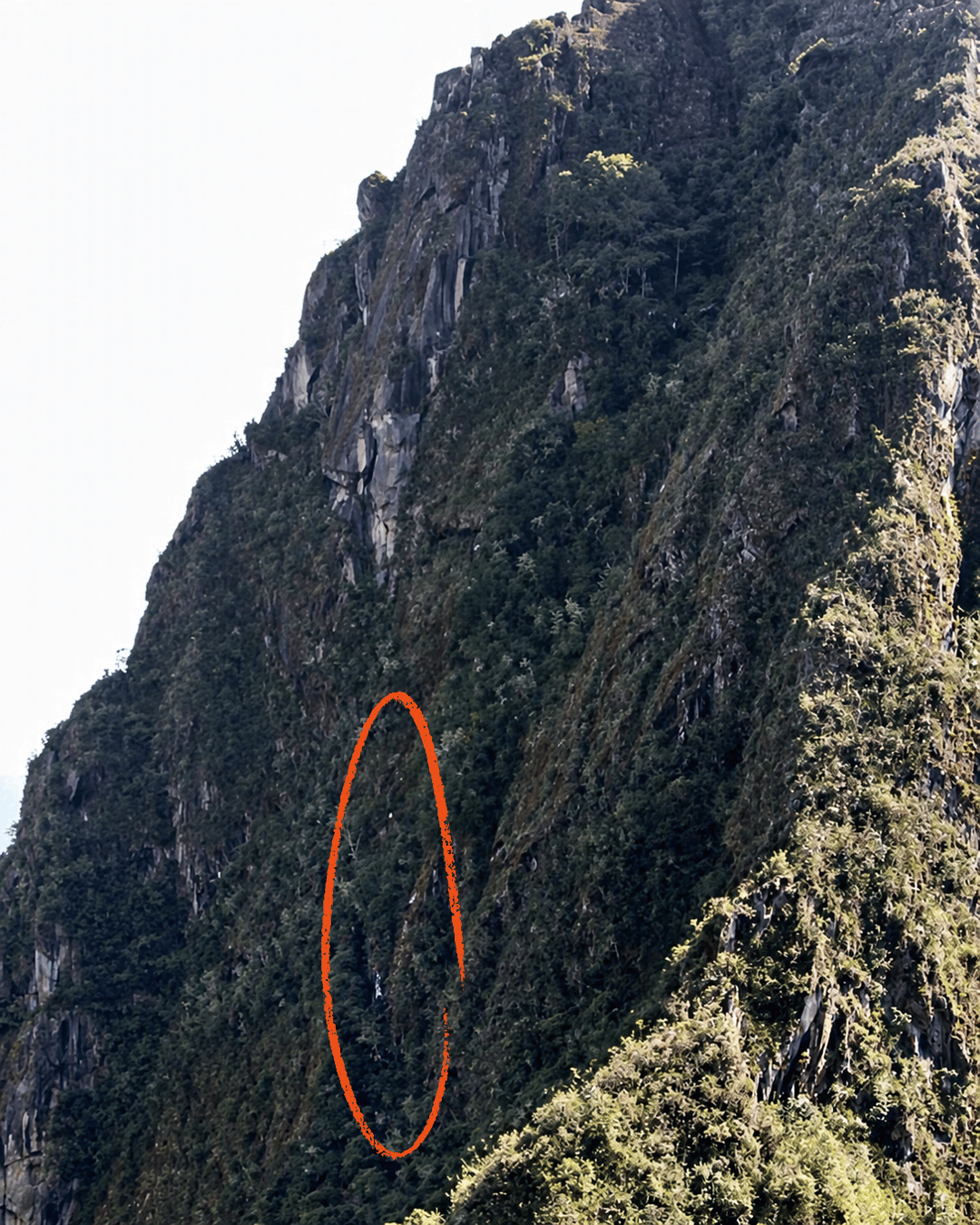
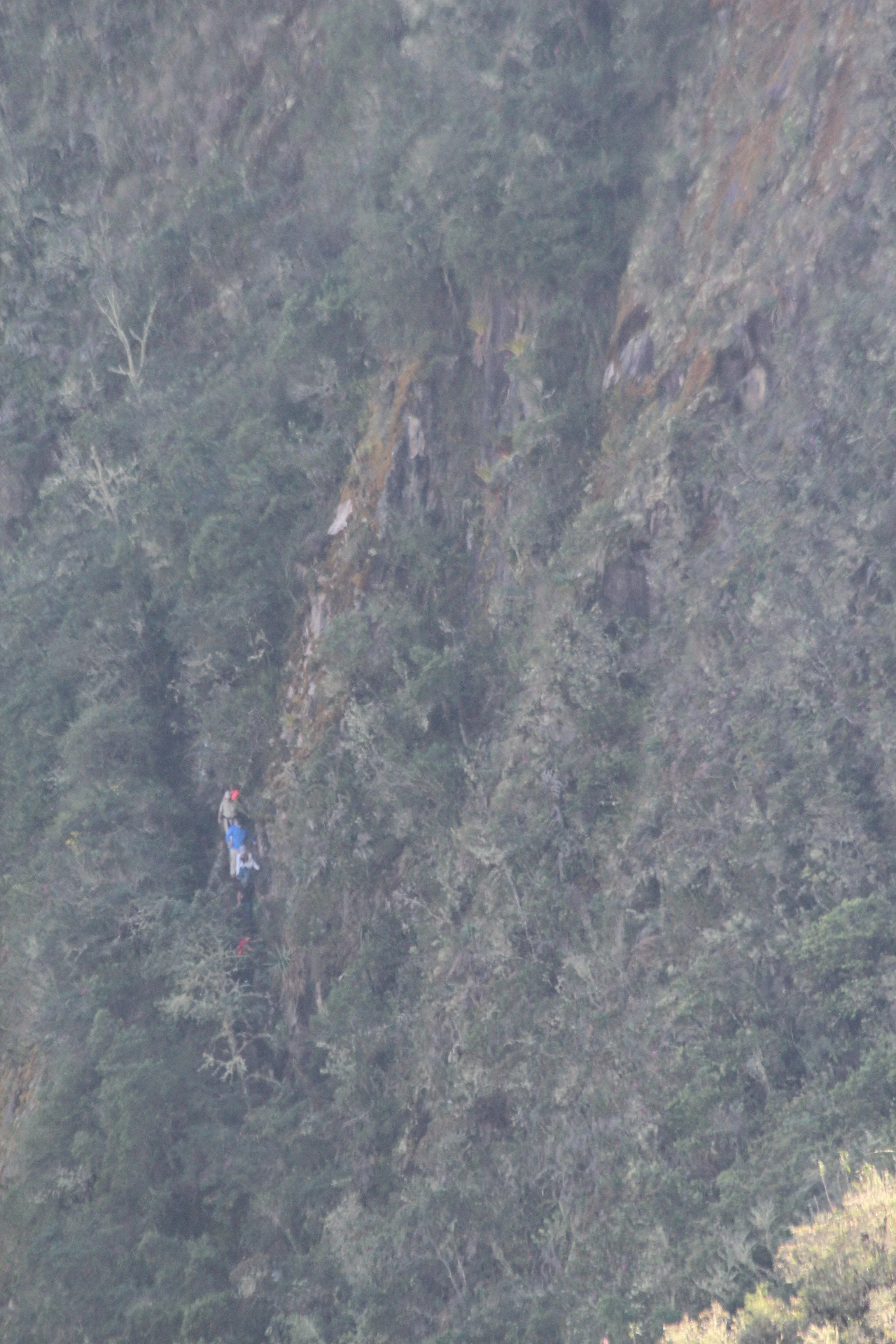
A couple hikers
I snapped a photo where I could see hikers on mountain. A little unnerving but you only live once, right?
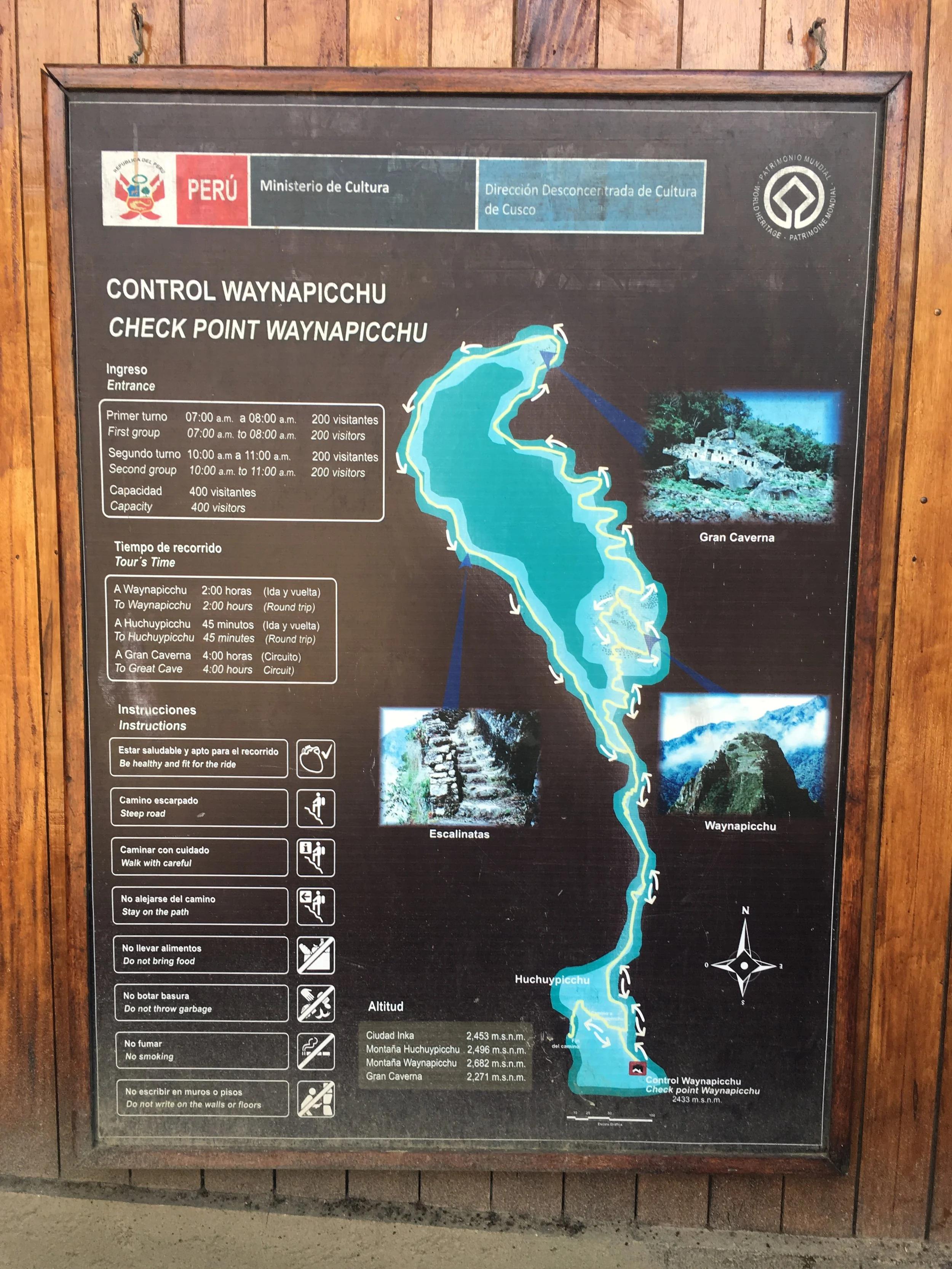
Our entry was in the second time slot, between 10 and 11 a.m. In 2019, access was controlled and visitor numbers were limited. You sign your life away when you check in. Eeek!
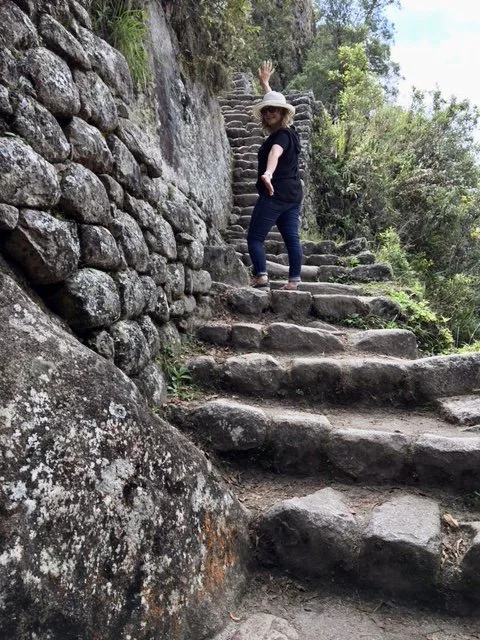
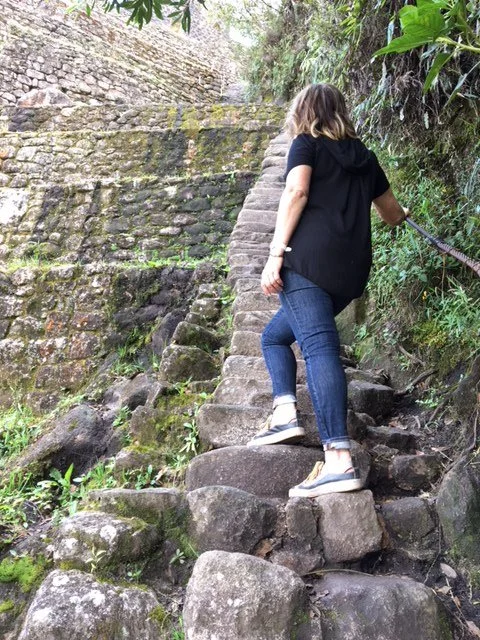
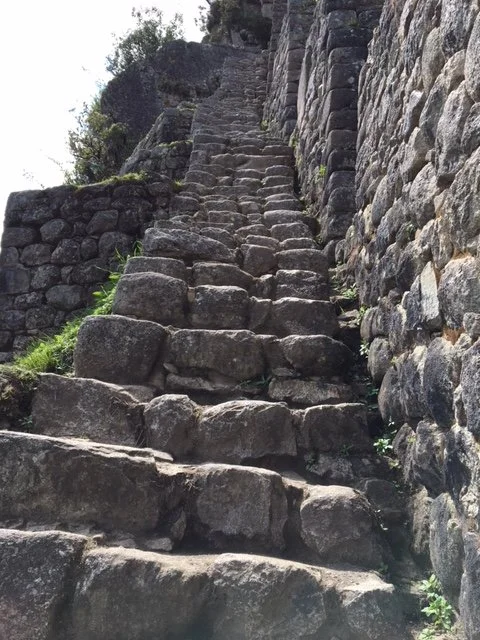
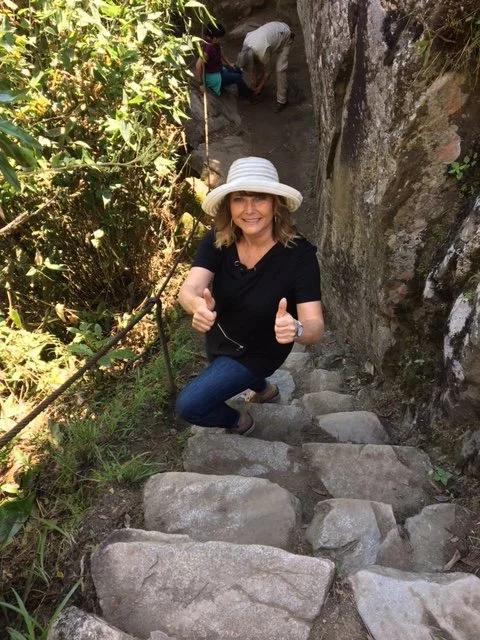
The trail was not what I’d call a leisurely stroll. Within minutes we met people who had turned around. Oh boy…
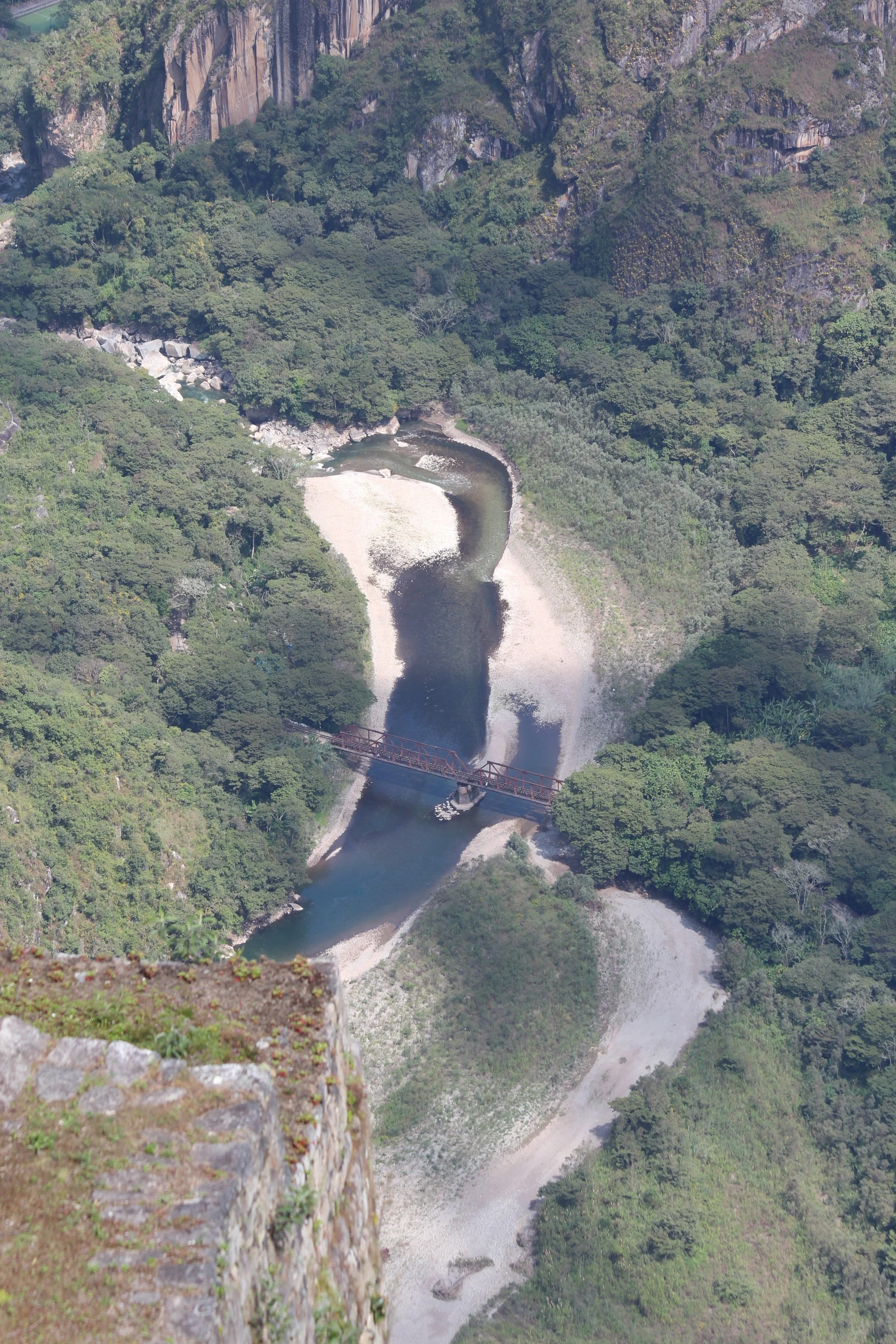
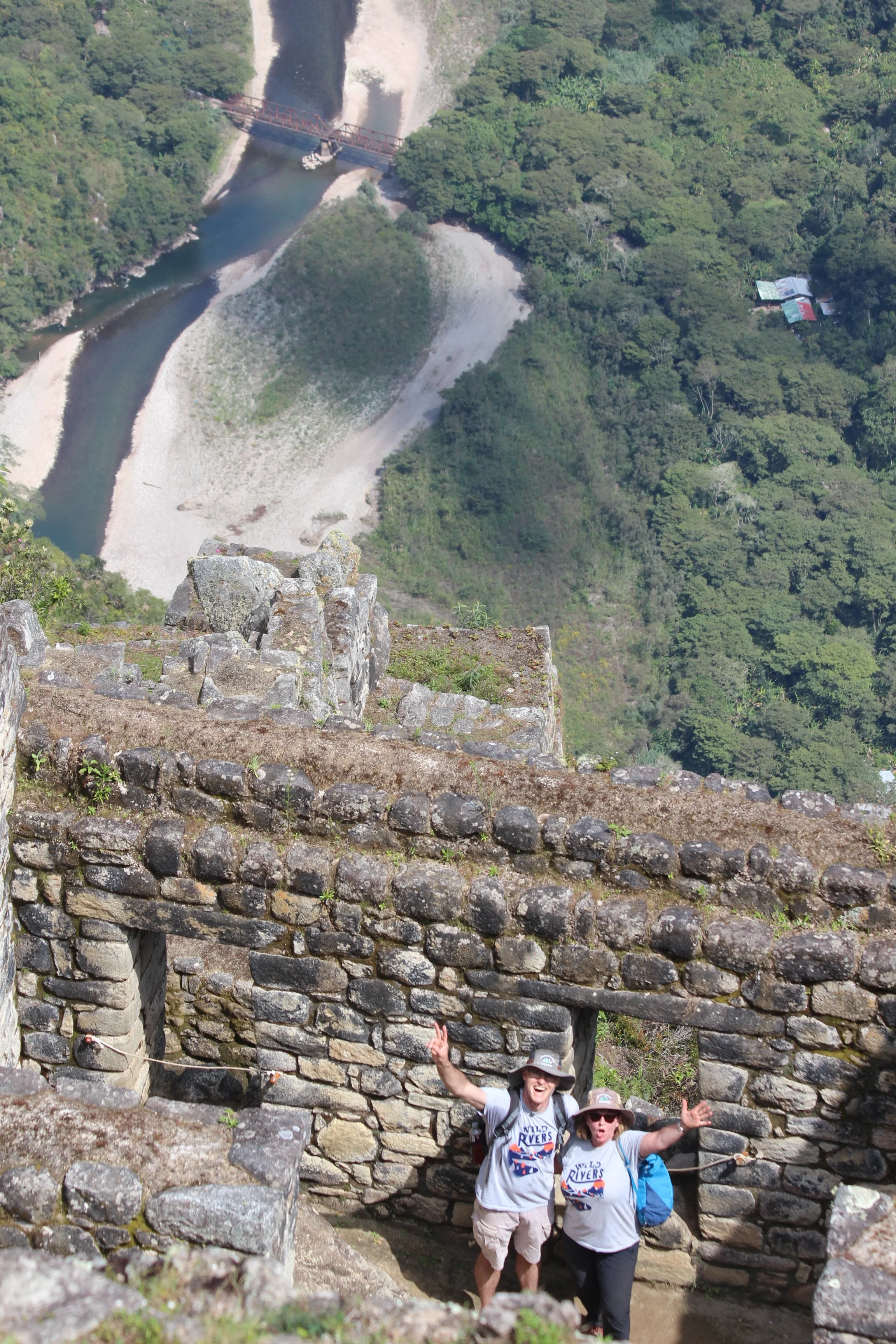
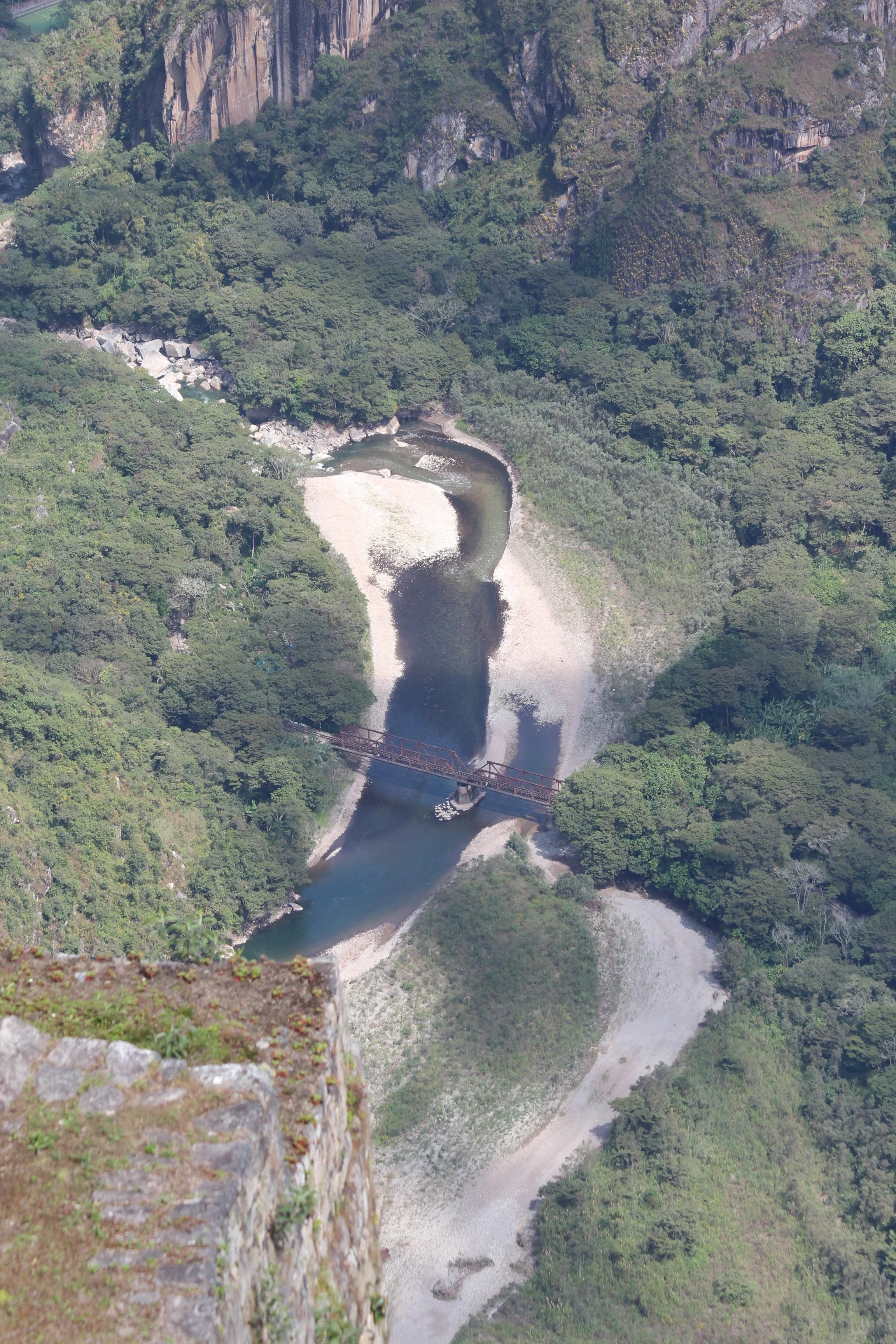
A LONG way down
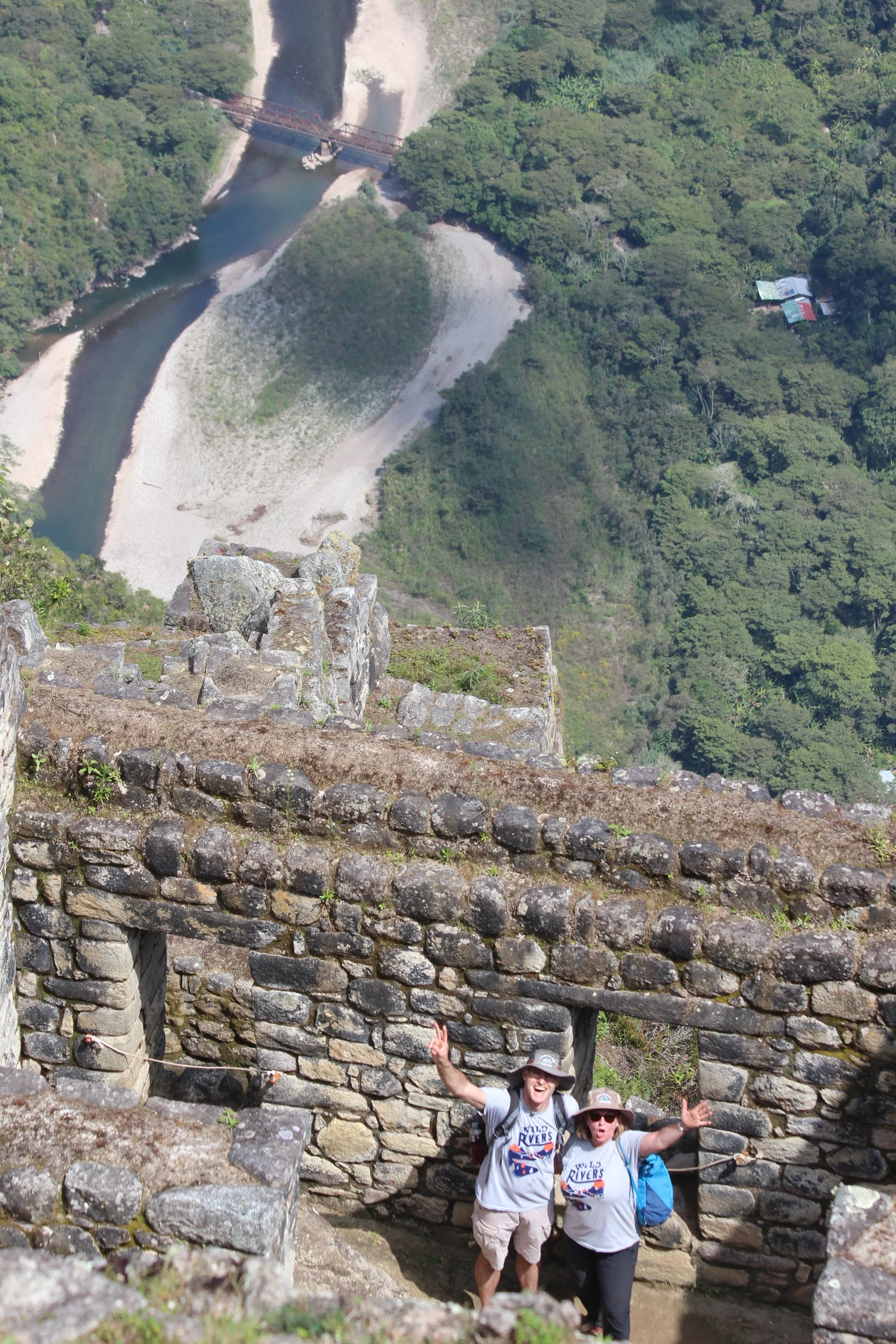
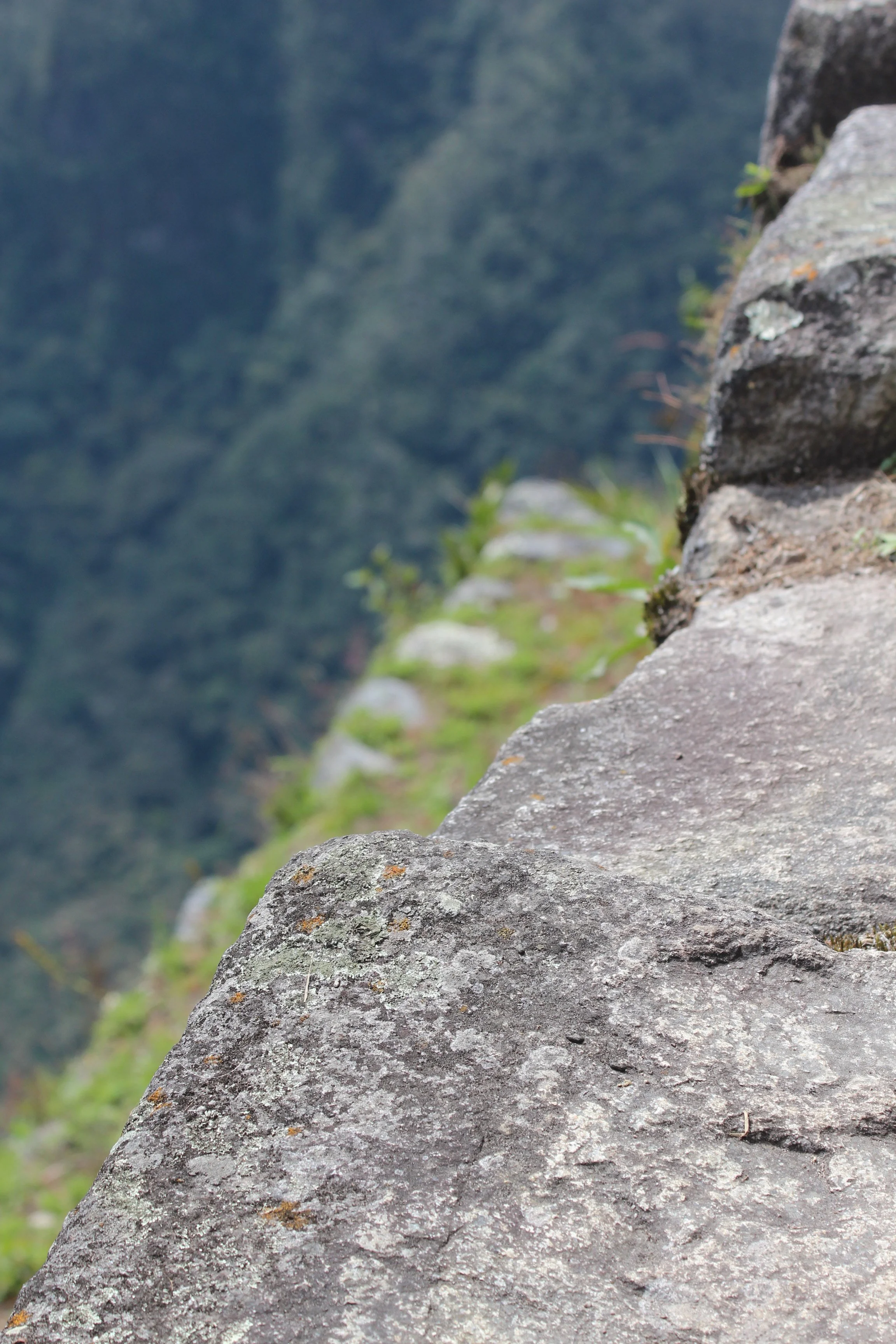
There were steep, uneven stone steps, narrow passages and sections where the mountain seemed to drop away beside you. At some points, you really had to pay attention to where you put your feet. Area where there was nothing to hang onto.
One thing I remember clearly was how people managed to pass each other on the narrow trail. You could hear voices coming around a blind bend long before you could see the hikers. We’d call out to ask how many people were coming, and they would do the same.
Then everyone had to find a place to tuck in against the mountain or stone wall, turn sideways and let the other hikers carefully squeeze past. There wasn’t room for much else. It was a little like a mountain version of negotiating a narrow hallway — except the consequences of losing your footing were a lot more serious!
There were moments when I wondered what on earth I’d signed us up for. Going up was challenging enough, but the thought of coming back down was already beginning to play on my mind.
And the descent? Let’s just say it was more terrifying than the climb. My knees were not particularly impressed with my ambition, and those drop-offs certainly got my attention.
But we kept going.
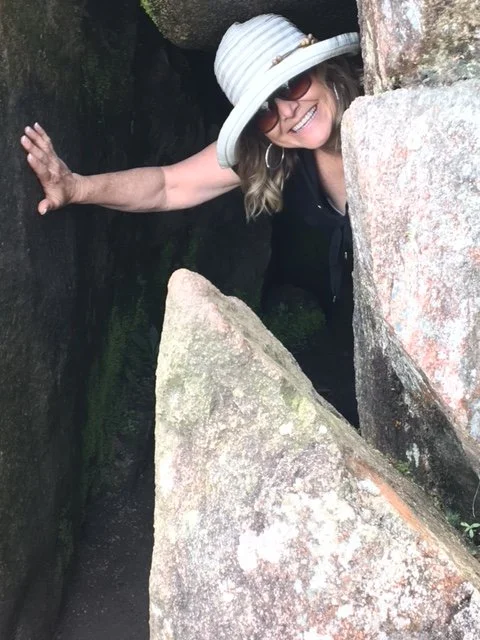
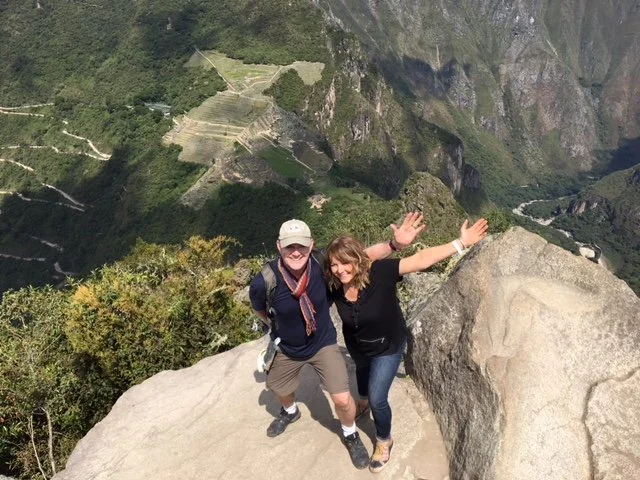
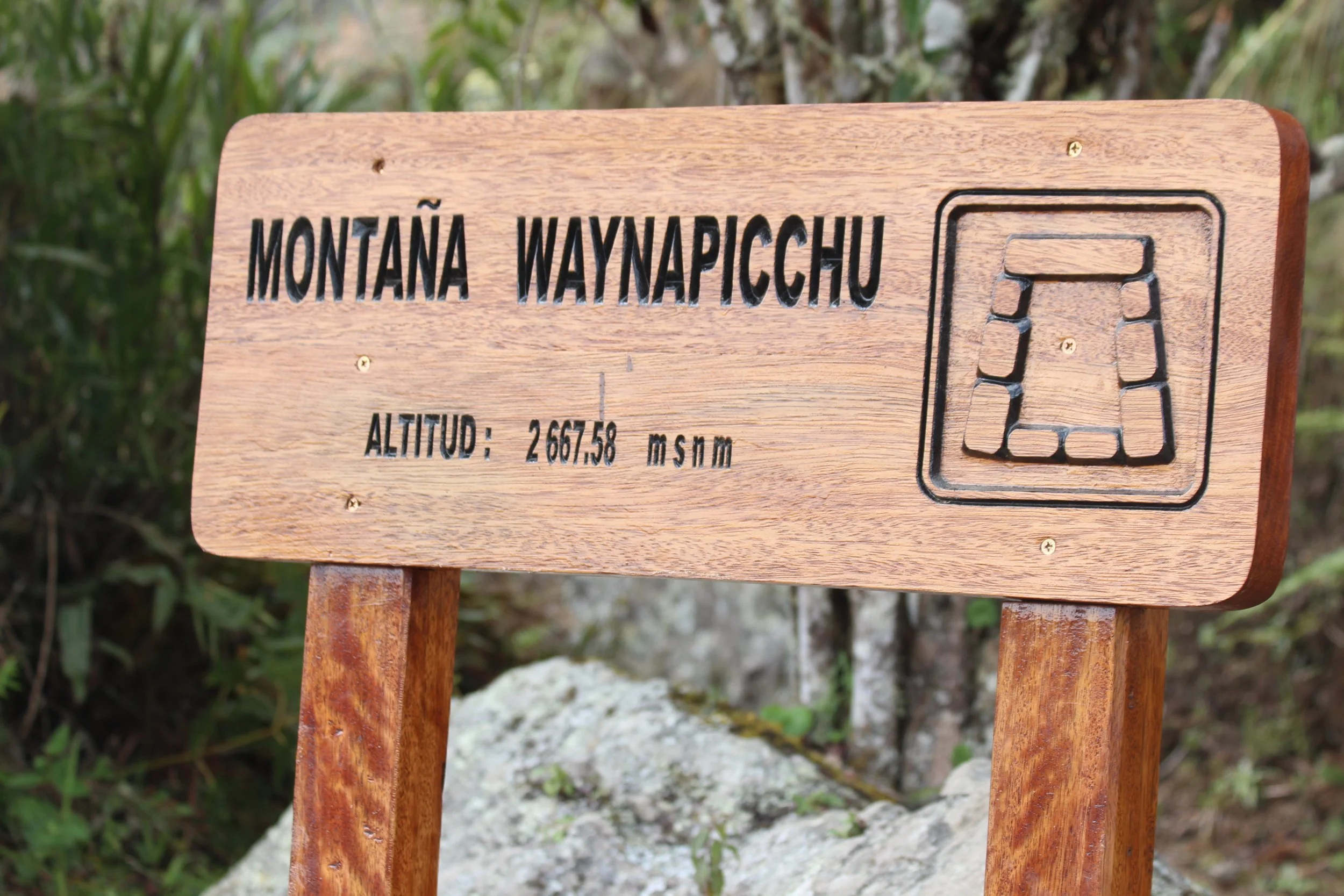
We made it to the top.
At the top, we scrambled and crawled through the rocks to reach a large rock where we could look back towards Machu Picchu. And there it was: the citadel below, the mountains all around us, and that incredible view we’d worked so hard to reach.
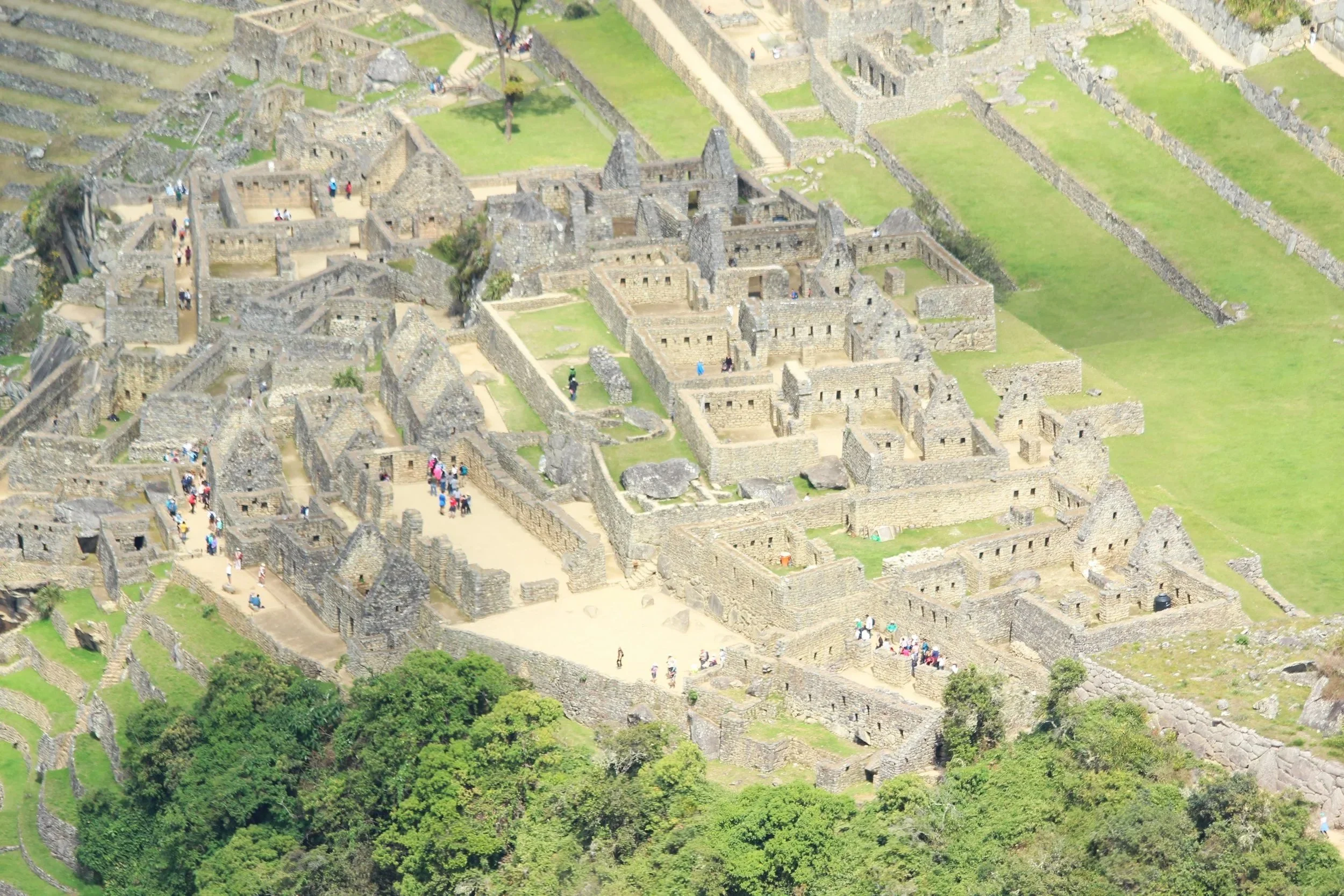
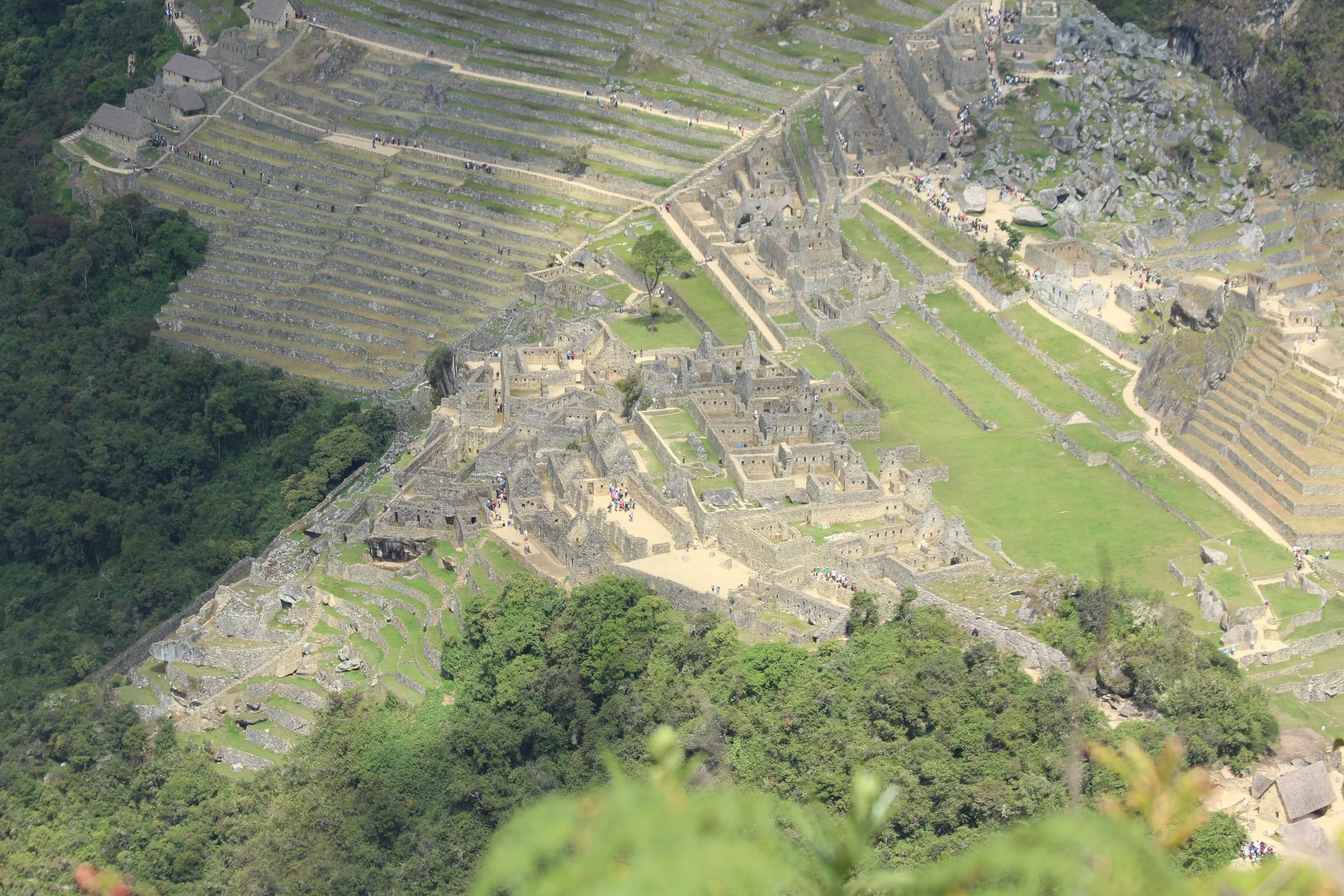
I remember thinking, I cannot believe I actually did this!
It was one of those travel moments when you feel a mixture of pride, relief and absolute amazement. The climb had tested me not in that it was extremely difficult but the mind games and height drop offs but the view made every step worthwhile.
Would I do it again? I’m not so sure. Especially the way down!
But I’m very glad I did it.
And that’s the thing about travel. Sometimes the experiences that challenge us become the stories we tell for years. Machu Picchu was already extraordinary, but climbing Huayna Picchu gave us a whole new perspective — literally and figuratively.
Once we were back on solid footing, with the mountain behind us and our feet firmly on the ground, we continued exploring Machu Picchu on our own.
Our guide had left us hours ago, so now we could wander at our own pace. No schedule to follow. Just us, taking in the details we’d missed while listening to the stories.
And there was so much to notice.
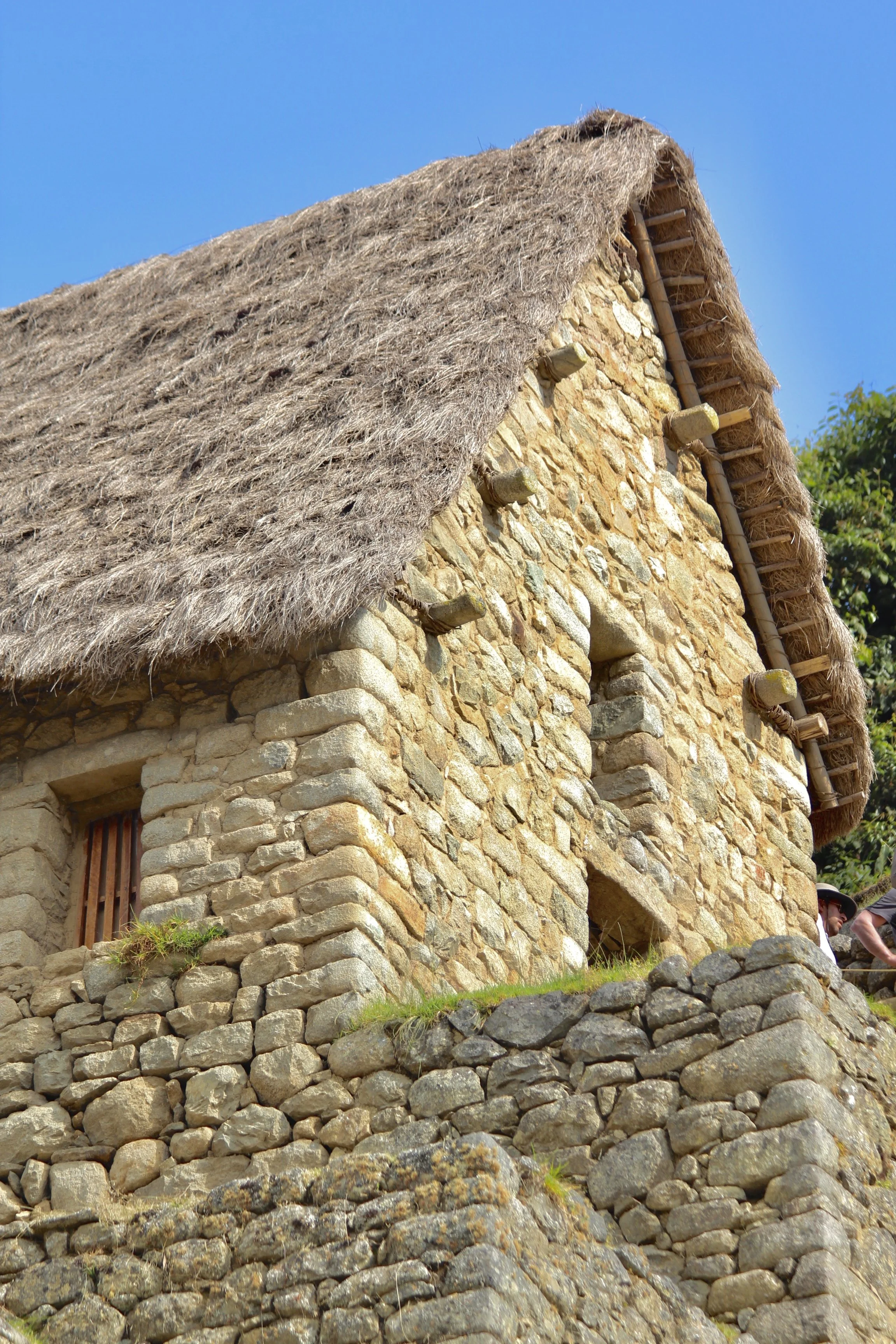
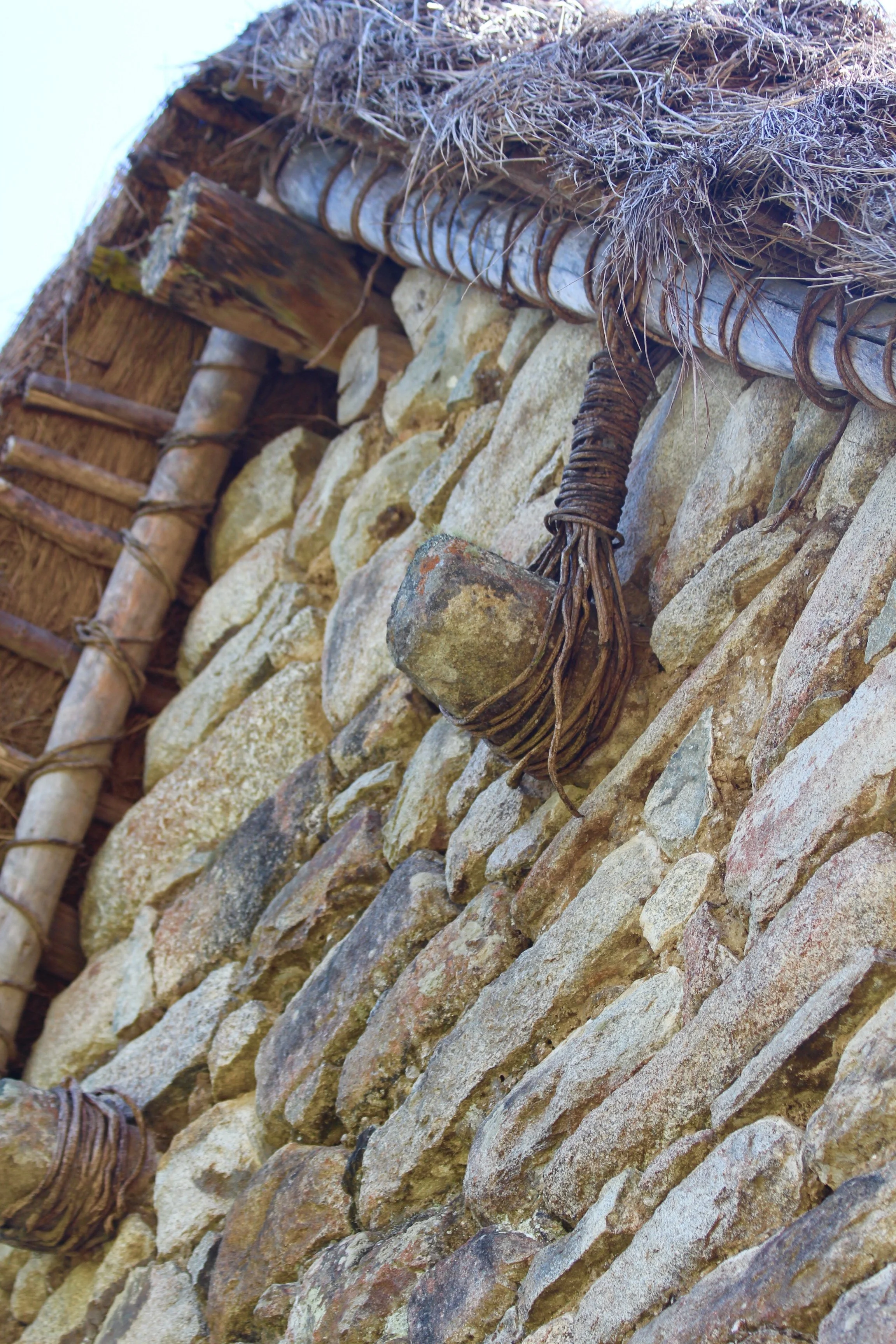
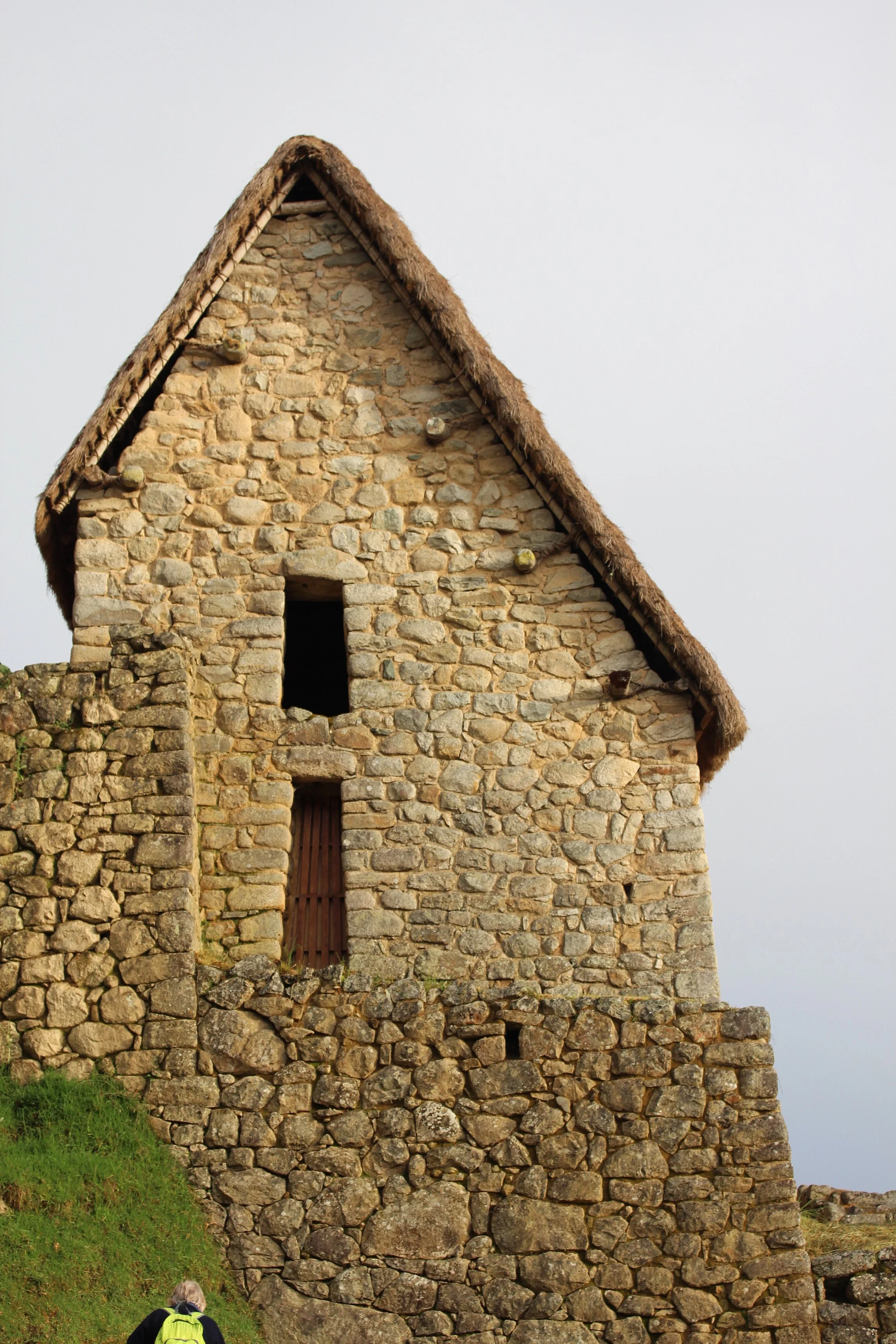
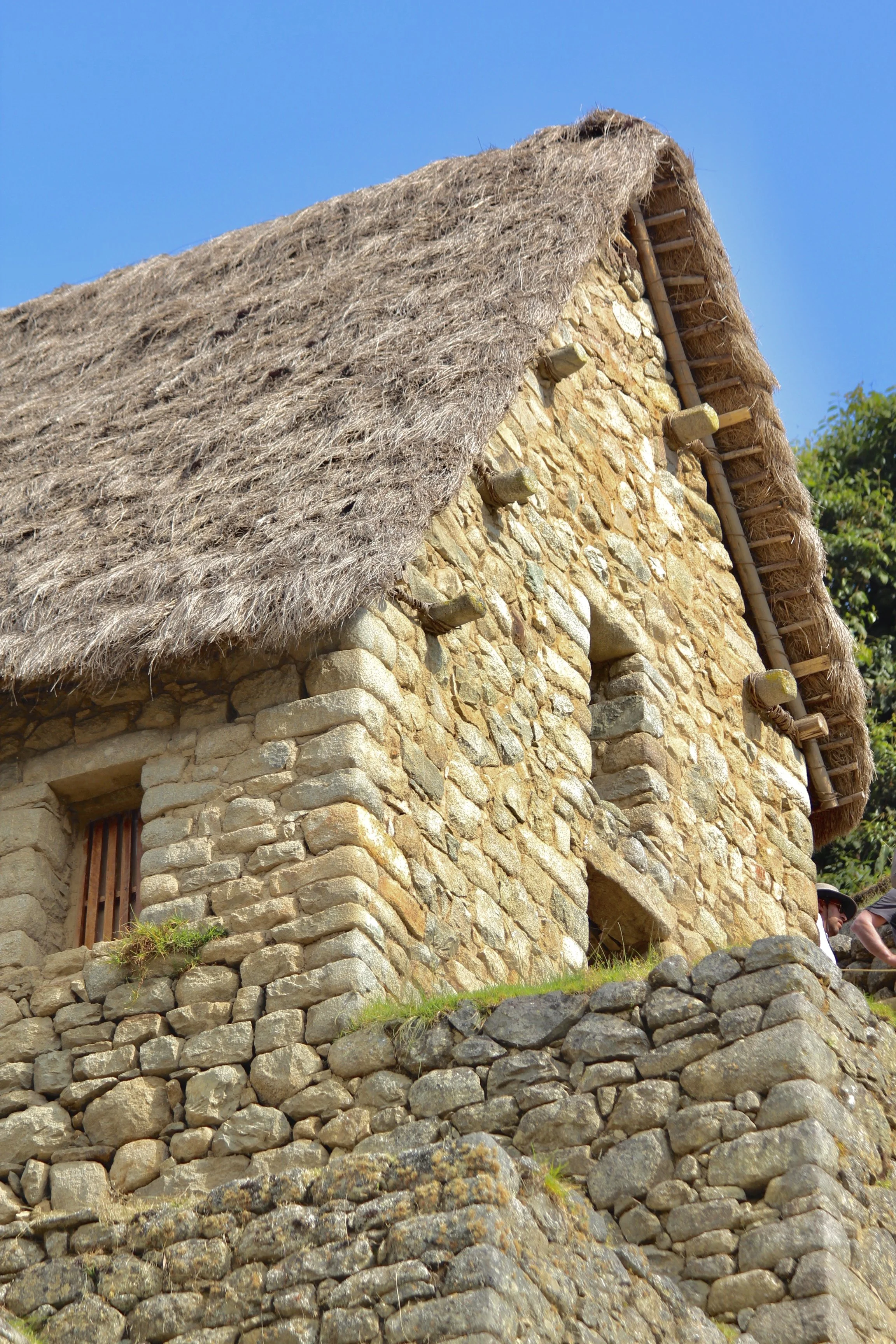
The buildings are mostly roofless now, but imagine them as they would have looked in their day, with steep thatched-grass roofs supported by timber. What remains are the incredible stone walls, doorways and windows. Many of the openings have that distinctive trapezoidal shape — wider at the bottom than the top — a clever feature of Inca architecture.
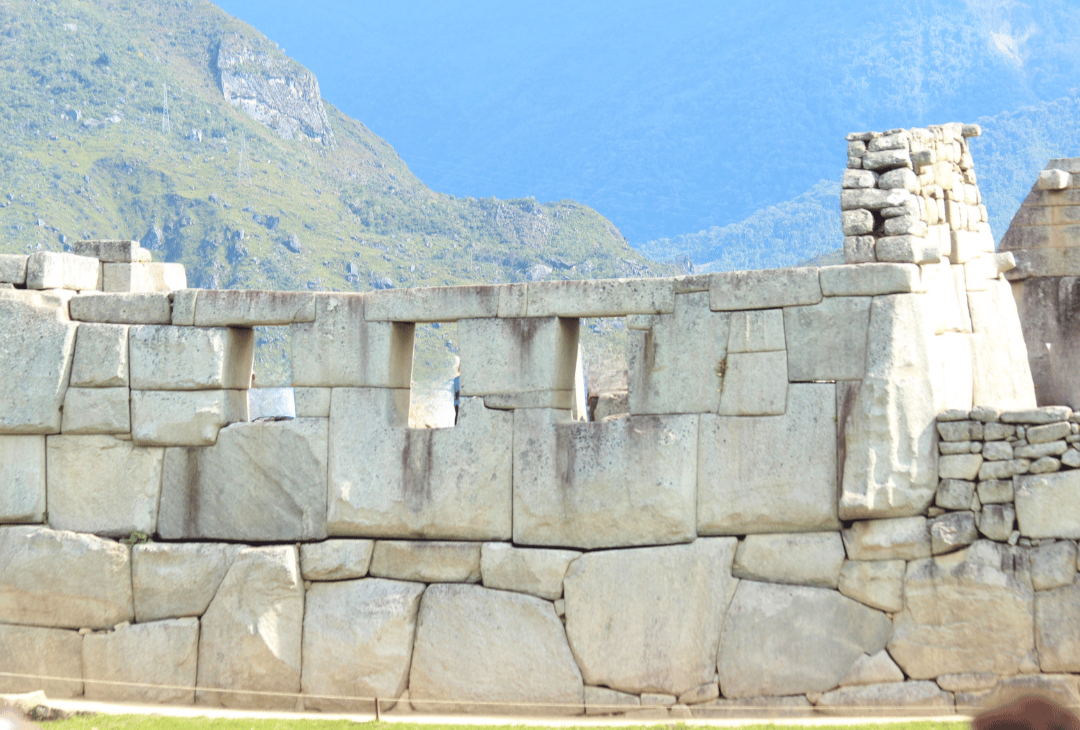
Temple of Three Windows
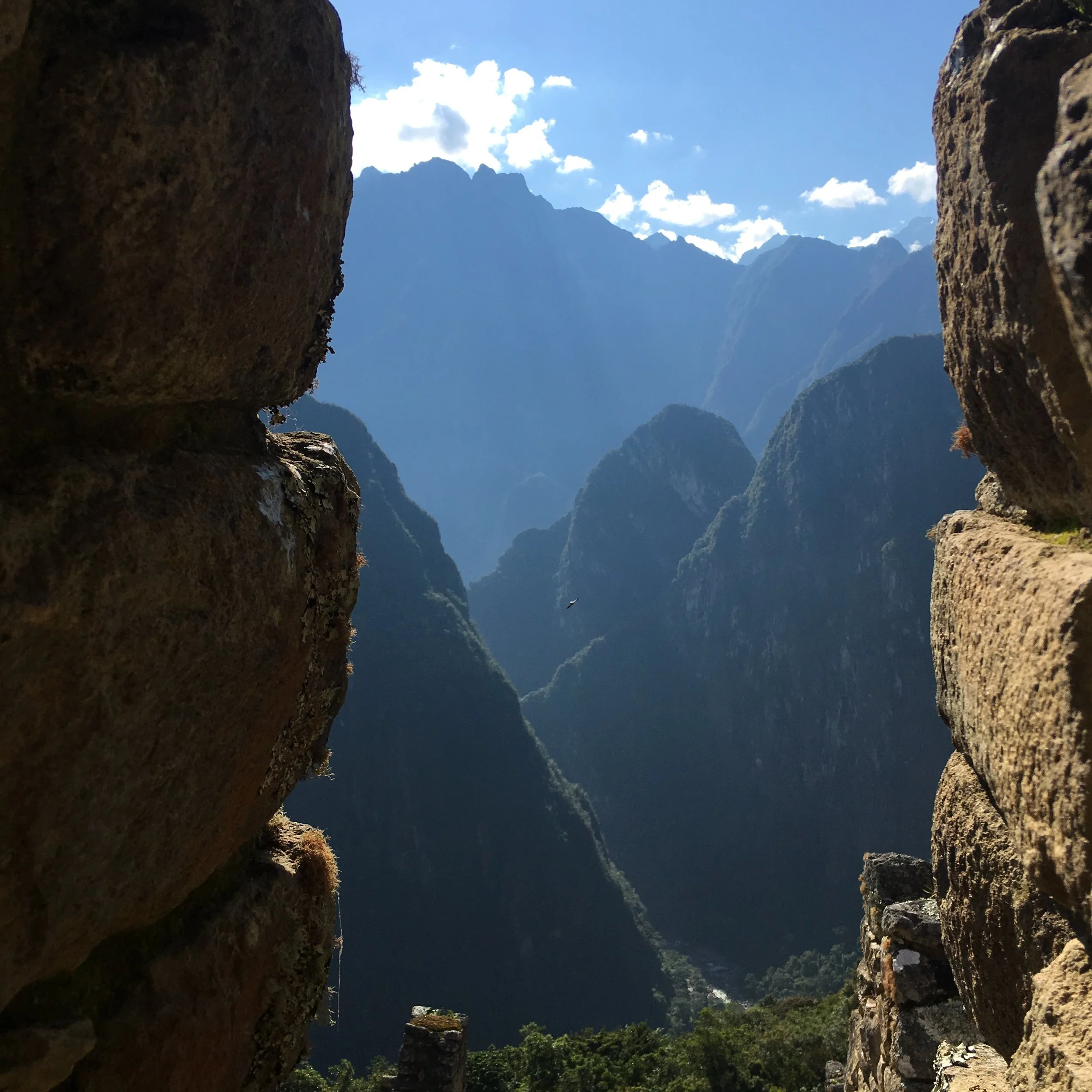
I was fascinated by the way the windows seemed to frame the mountains. The Temple of the Three Windows is a wonderful example. Its three large openings look out towards the surrounding mountains and the Urubamba valley. Rather than simply building walls and putting windows wherever they fit, the Incas seemed to make the landscape part of the architecture itself.
And the stonework! Some of the stones are enormous, yet they fit together with remarkable precision. No mortar holding them in place. Each stone was shaped to fit its neighbours. You can stand there and run your eyes along the joints, wondering how on earth they achieved such accuracy with the tools available to them.
There were ceremonial spaces, open courtyards, terraces and buildings tucked into the mountainside. Some walls have carefully shaped niches, while others have windows and doorways that draw your eye straight out to the landscape.
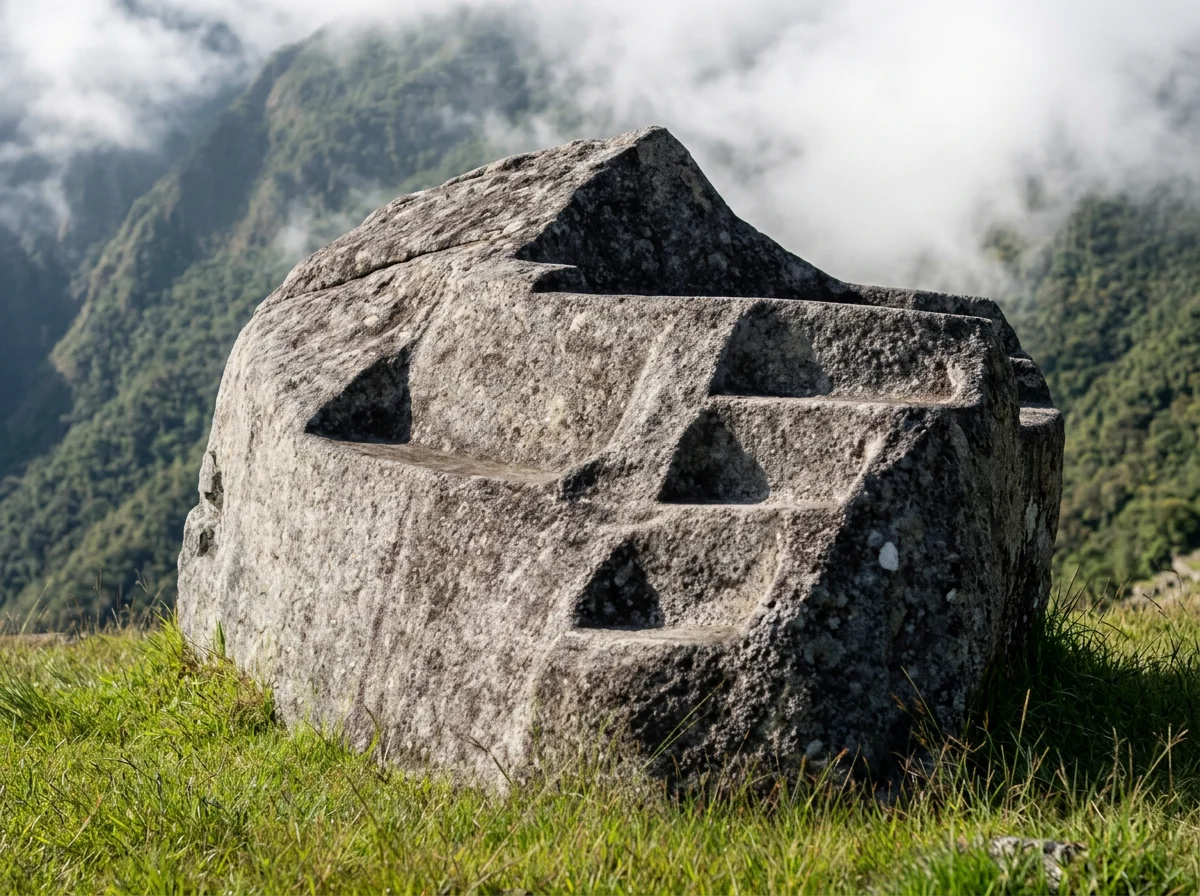
Funerary Rock -Sacrificial Stone
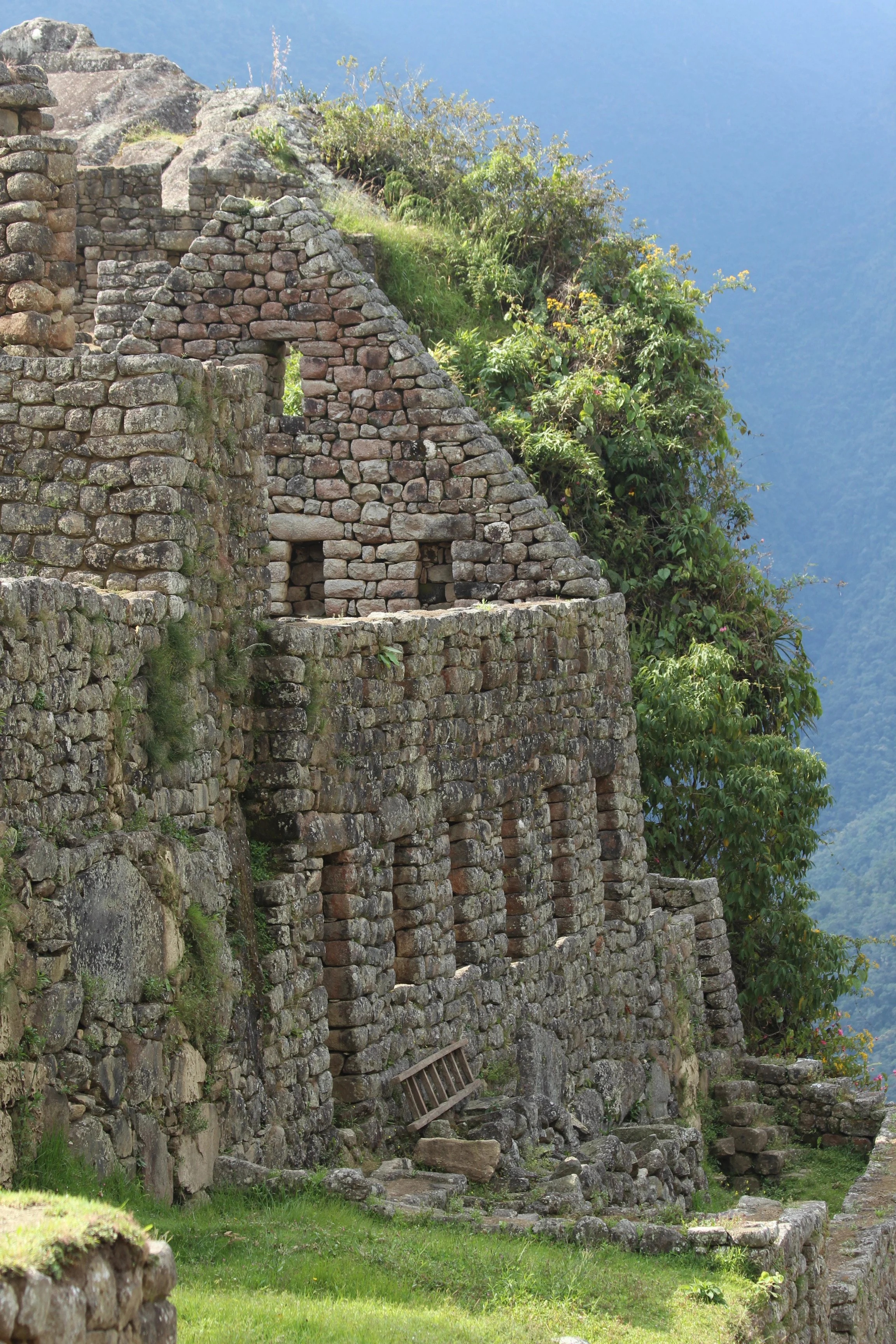
I kept looking from the buildings to the mountains and back again. The Incas didn’t just build a city on a mountain. They created a place that seems to belong to the mountain.
And then there was the single tree standing in the open plaza.
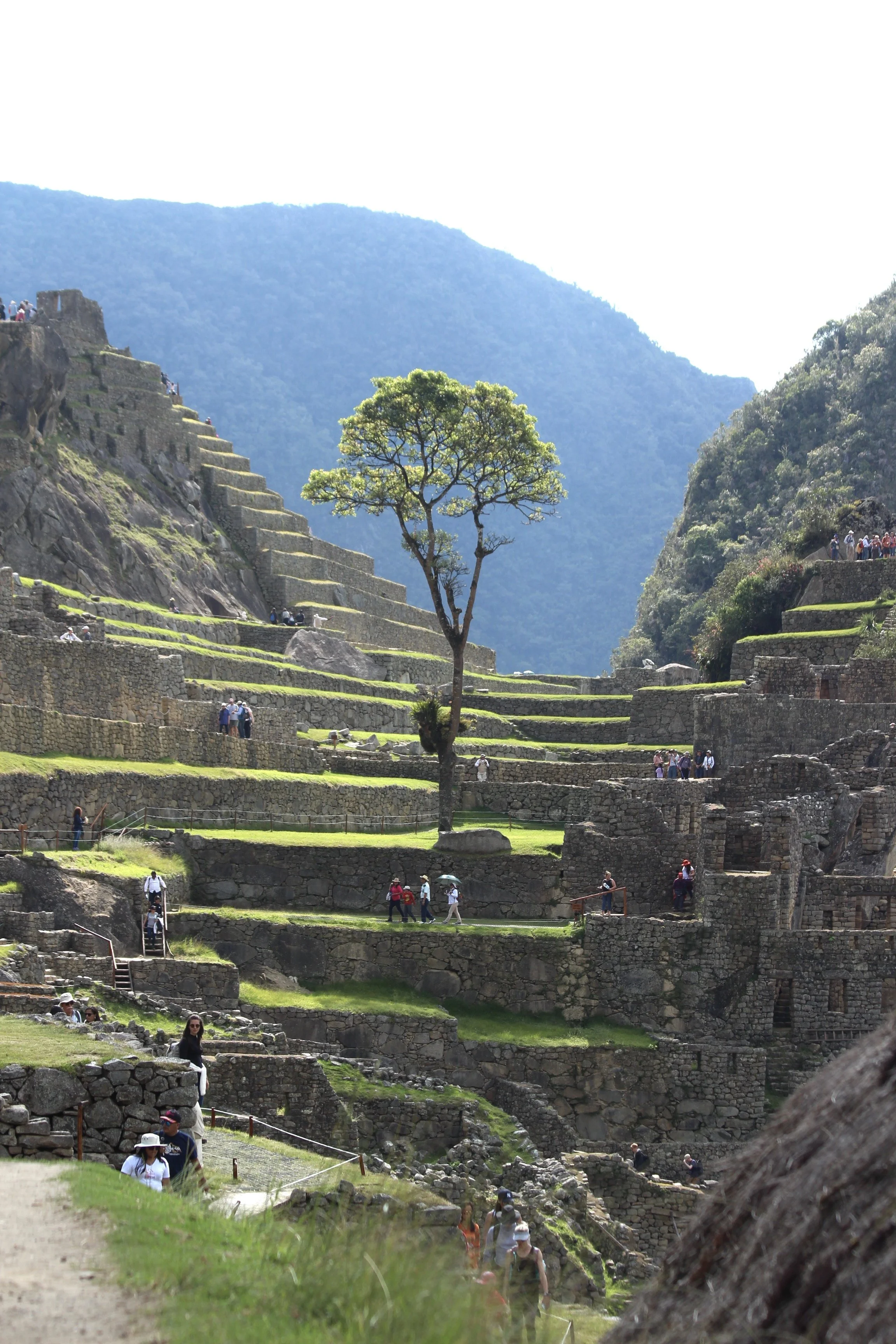
After all that stone, all those walls and terraces, it was such a simple thing to notice. One tree, standing on its own, surrounded by the remains of this extraordinary city. It caught my eye and gave the whole scene a different feeling. A little reminder that nature is always part of the story here.
The Fog Lifted… and So Did My Heart
When we first arrived that morning, the area was wrapped in fog. The mountains and ruins were hidden behind a veil of cloud. We knew we were somewhere special, but we couldn’t see the full picture.
Gradually, the fog began to lift. And there it was.
The citadel revealed itself, layer by layer, until the mountains, terraces and stone buildings came into view. What an introduction! It felt as though the place was slowly unveiling itself just for us.
By the time we’d finished exploring and climbed Huayna Picchu, the view had become even more meaningful. We’d seen it from below, from above and now from every angle we could manage.
I found a ledge near the top, sat down and took a deep breath.
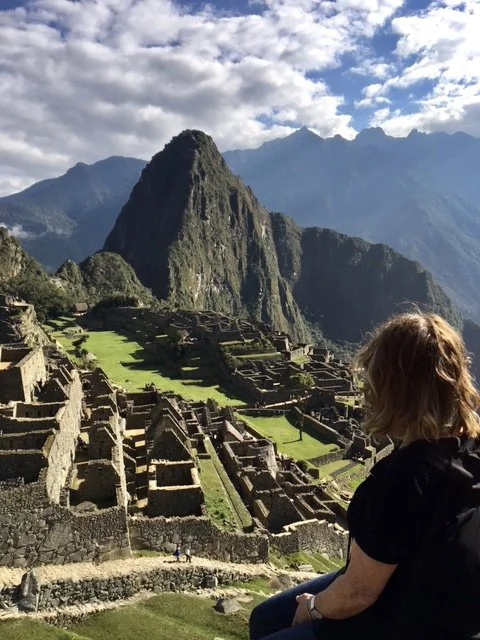
I didn’t want to rush away. I wanted to sit there and take it all in — the mountains, the stonework, the incredible setting and the sheer scale of what the Incas had created. I wanted to remember the feeling, not just collect another photograph.
You know those rare travel moments when you stop thinking about what’s next? No itinerary, no camera, no checking the time. Just being there. BEING PRESENT!
That was one of them.
I sat quietly, looking out over a place that had been on my bucket list for so long. I wanted to soak up every last minute and somehow tuck the whole experience away so I would never forget it.
Eventually, of course, we had to pull ourselves away.
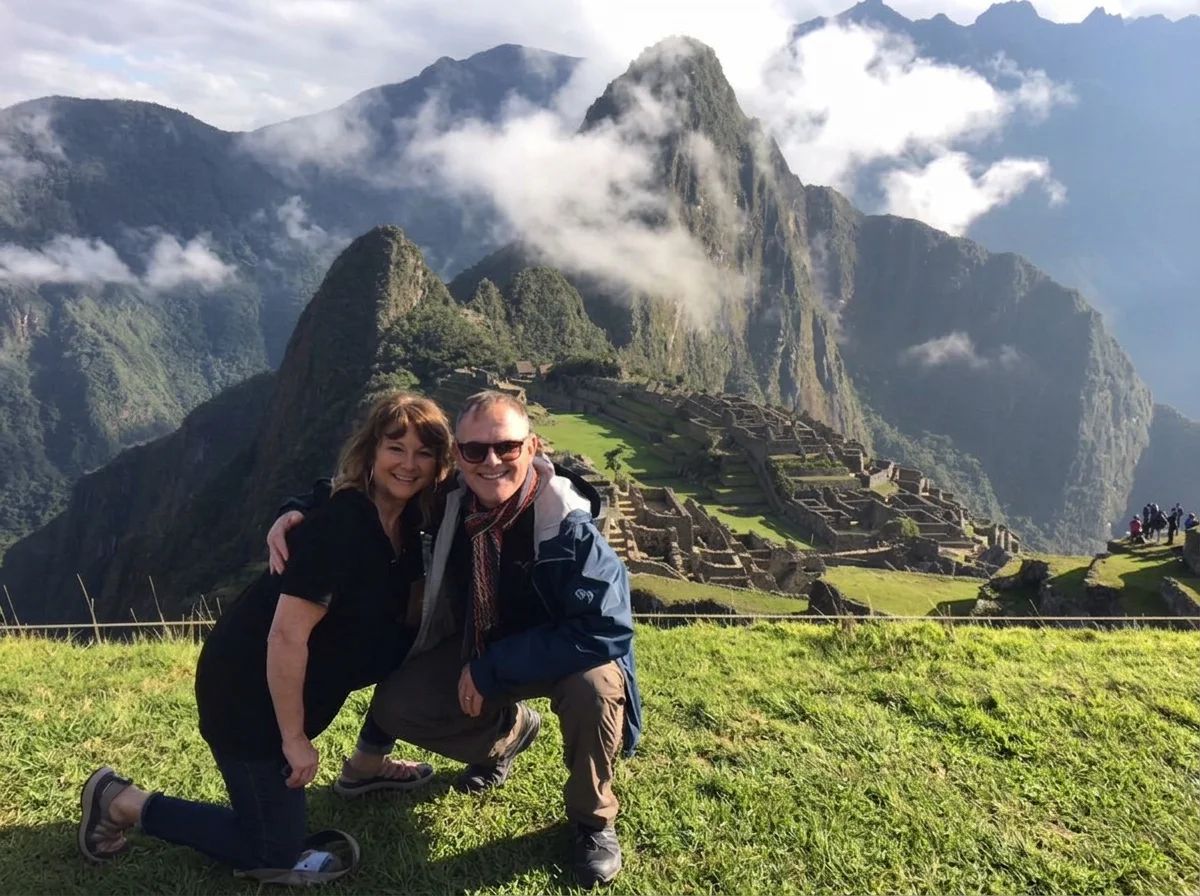
Back down the mountain we went, catching the bus for the winding ride back to Aguas Calientes. After a day of walking, climbing, scrambling and taking in more history than I could possibly absorb in one visit, it was time to celebrate.
And what better way than with a well-earned Pisco Sour, perhaps a mojito or two, and some fabulous food?
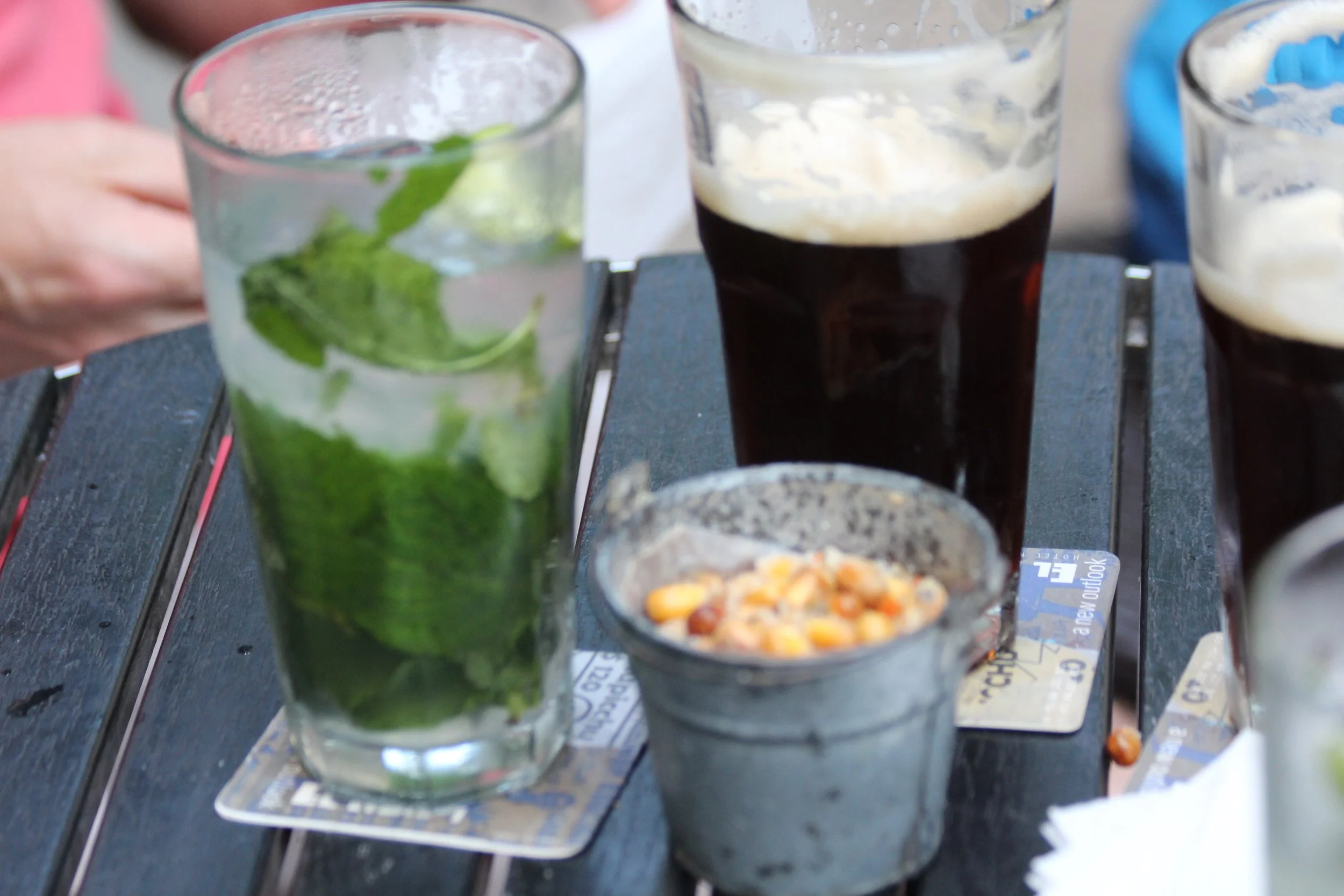
We raised a glass to the day. To the Incas, to the mountains, to the adventure, and perhaps most importantly, to the fact that we’d made it up and down Huayna Picchu in one piece!
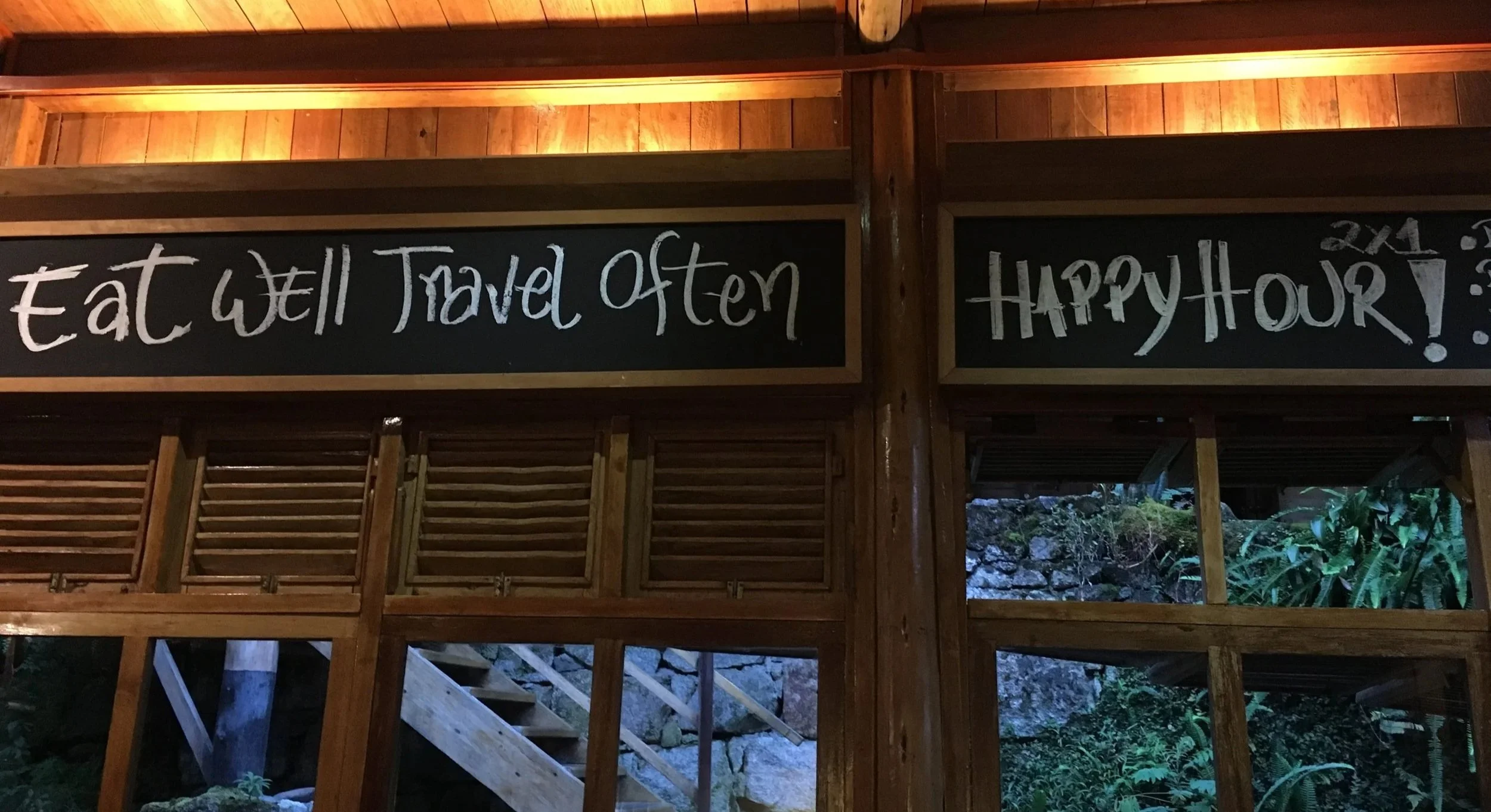
Wow. Just wow.
The next morning we’d be saying goodbye to Aguas Calientes and Machu Picchu. I wasn’t quite ready to leave. This was one of my top three bucket-list destinations, and it had lived up to every expectation — then gone well beyond them.
From the train ride through the mountains to the little town beside the river, the unexpected stone carvings, the first glimpse of the citadel through the fog, and that unforgettable climb, it had been one extraordinary experience after another.
Machu Picchu wasn’t just a place we visited. It was a place we felt.
But Peru wasn’t finished with us yet.
Next stop: Lima! A fast-moving, vibrant city awaited, with another side of Peru to discover.
And off we went… because apparently, we weren’t quite ready to stop exploring.