Luxury Train, Floating Islands & a Naked Spa Mishap
As a young girl, I was fascinated by the Orient Express.
I read about it in books, watched it in movies and imagined what it must have been like to step aboard a train where the journey itself was part of the luxury. It seemed indulgent, glamorous and just a little mysterious — the kind of experience I assumed I might read about but probably never actually do.
Then I went to Peru.
Somewhere in the middle of planning our trip, I discovered the Belmond Andean Explorer.
And I knew.
This was my Orient Express moment.
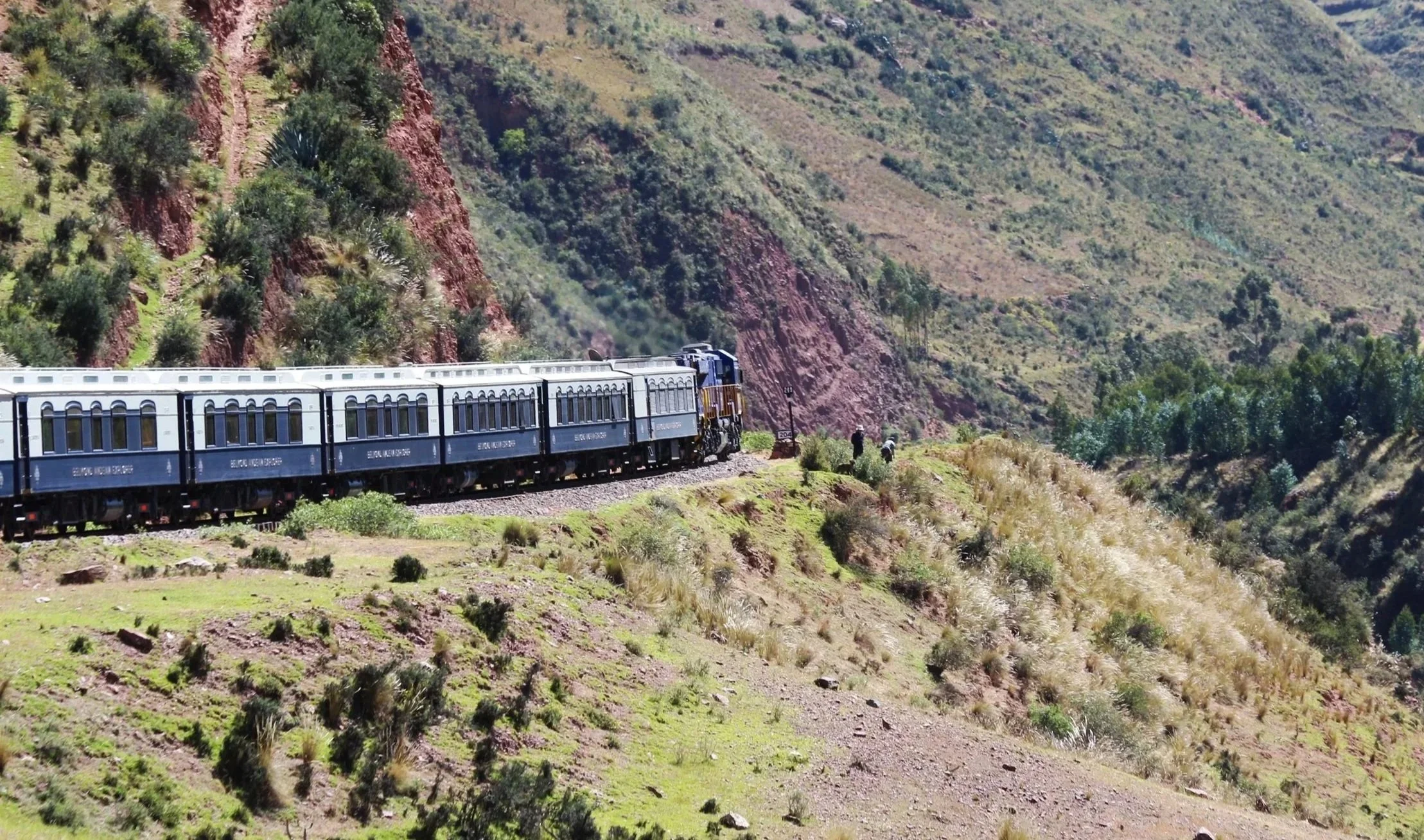
It wasn't travelling across Europe, but through the Peruvian Andes. Instead of European countryside rushing past the windows, we'd be climbing through some of the highest railway routes in the world, crossing the Altiplano and eventually making our way toward Cusco.
There would be champagne glasses, fine dining, a piano bar, a beautiful sleeper cabin and an observation car where I could sit and watch the Andes unfold.
Luxury train through Peru?
How could I possibly say no?
So on the morning of our departure, I was more than excited. I was about to step into one of those childhood dreams I never really expected to come true.
I just didn't know yet that this particular dream was going to come with a wrong hotel room, a very public spa experience, floating islands, dancing, champagne and one of the most memorable journeys of our lives.
The check-in was effortless. Our bags disappeared almost immediately, and we were escorted into a beautiful waiting area where trays of appetizers and drinks were waiting for us.
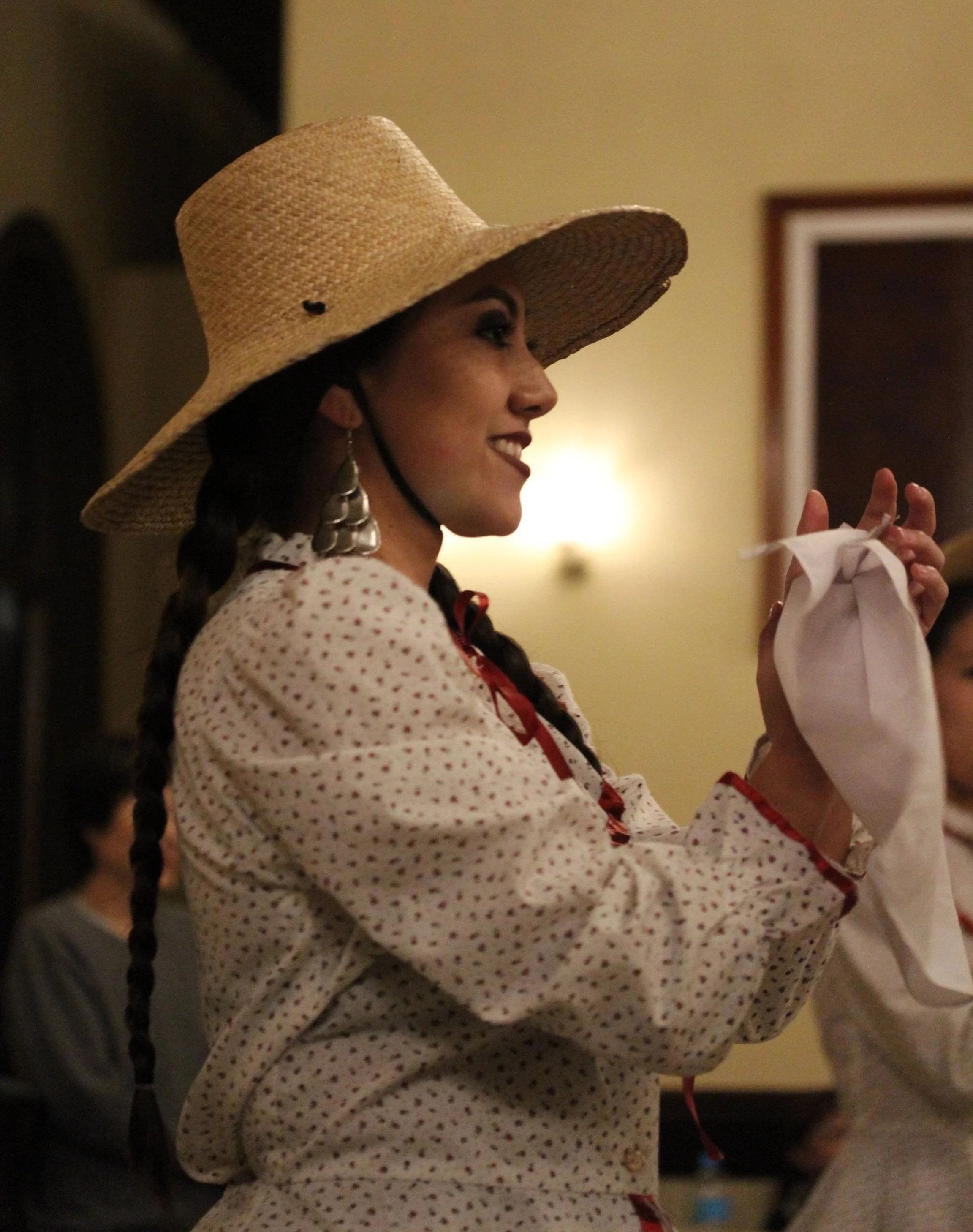
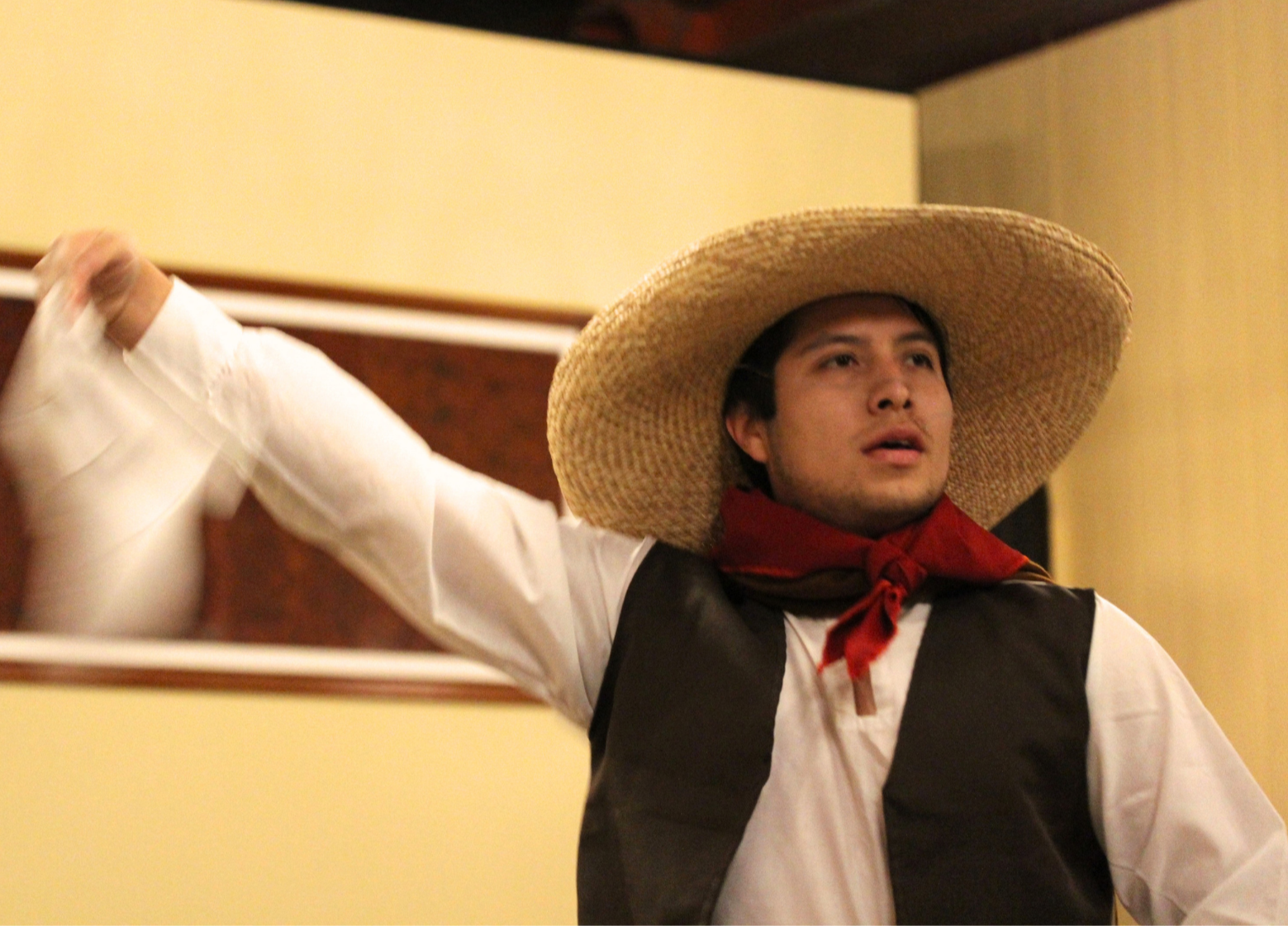
A Peruvian flute player filled the room with music while traditional dancers entertained us.
We already knew were were in for a stellar experience.
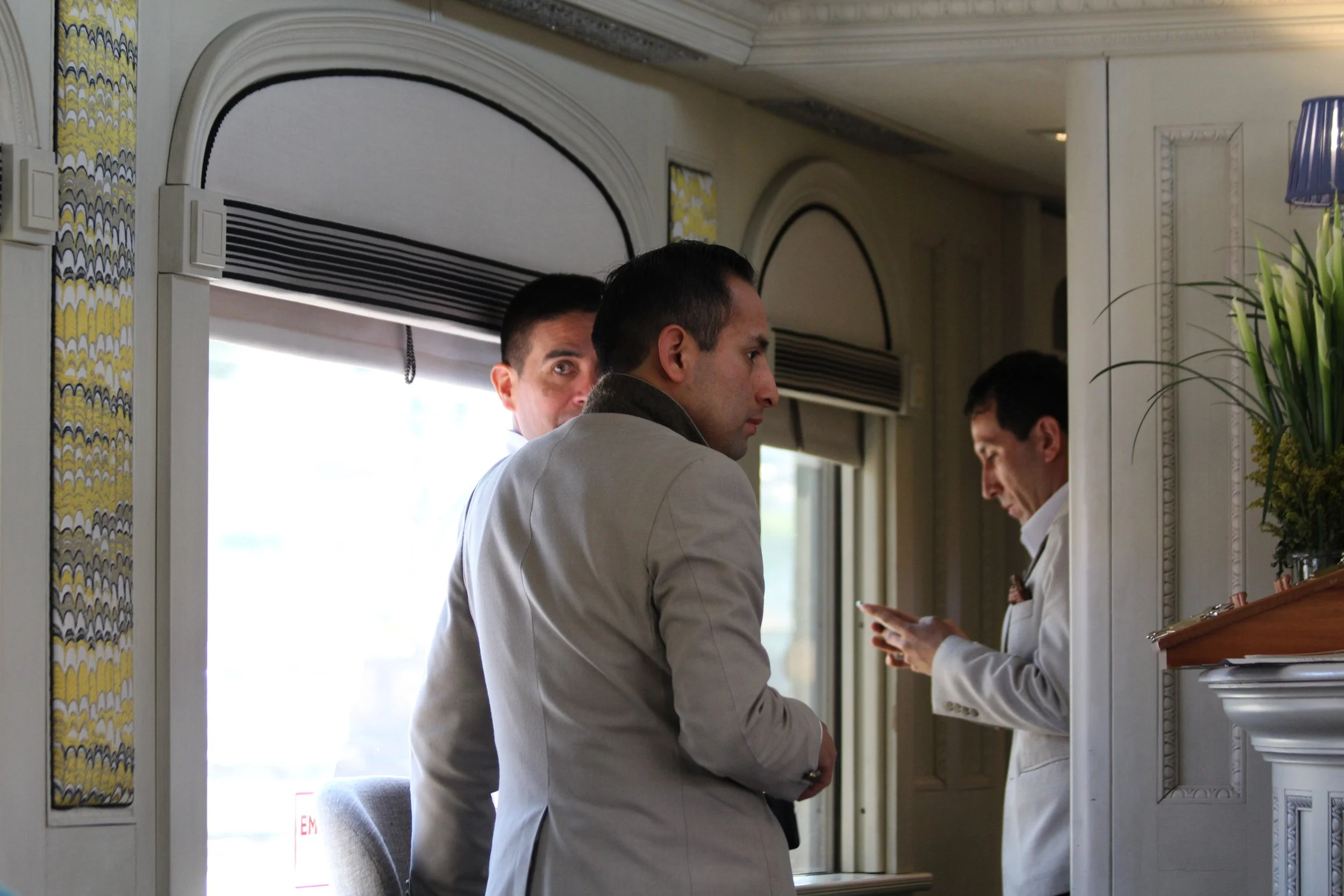
One of the train staff members personally escorted us through the doors and toward the train.
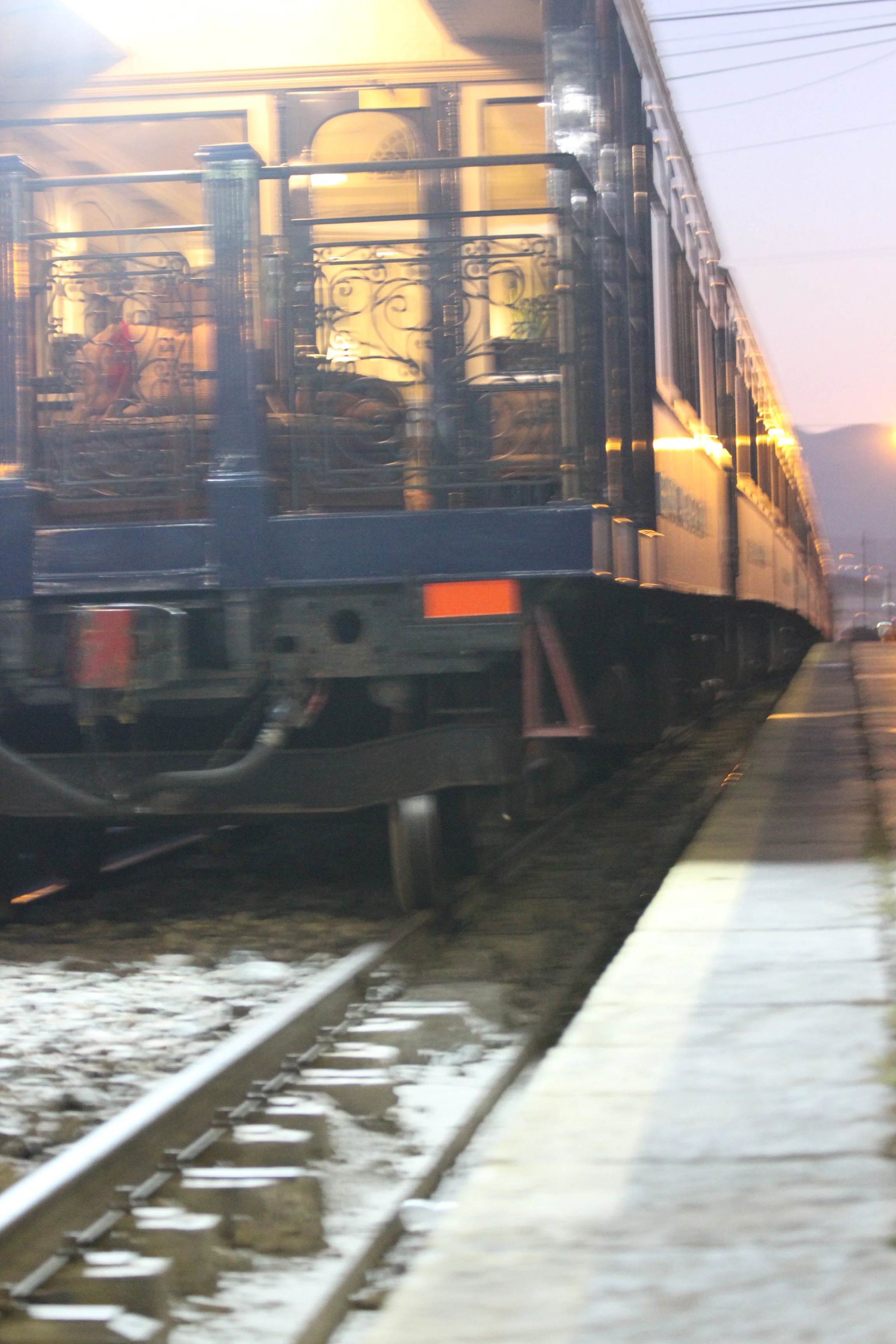
There she was.
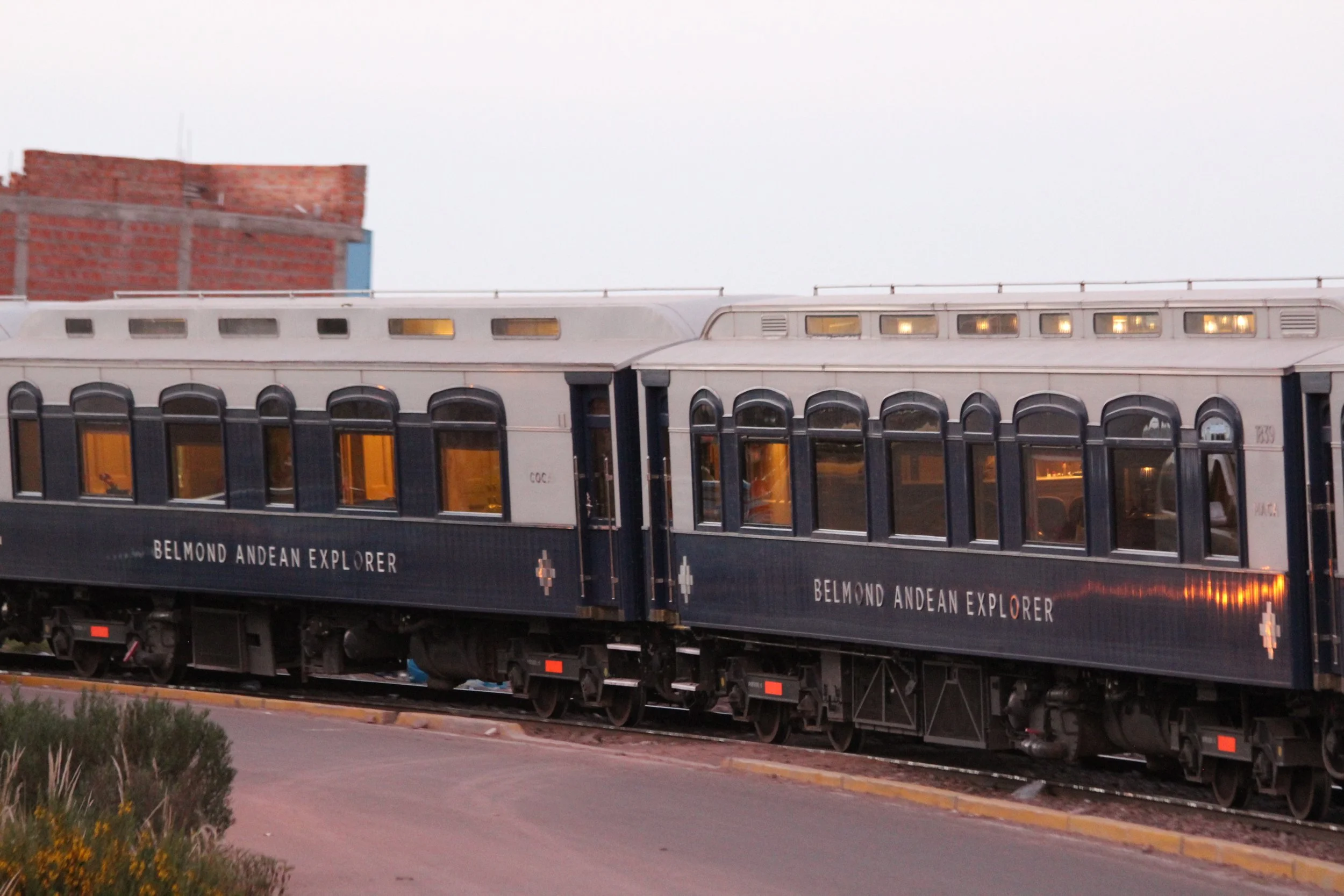
The Belmond Andean Explorer.
A red carpet stretched toward the train, candles flickered along the pathway and velvet ropes guided us aboard. It was dramatic, elegant and just a little bit over the top.
In other words, I loved it.
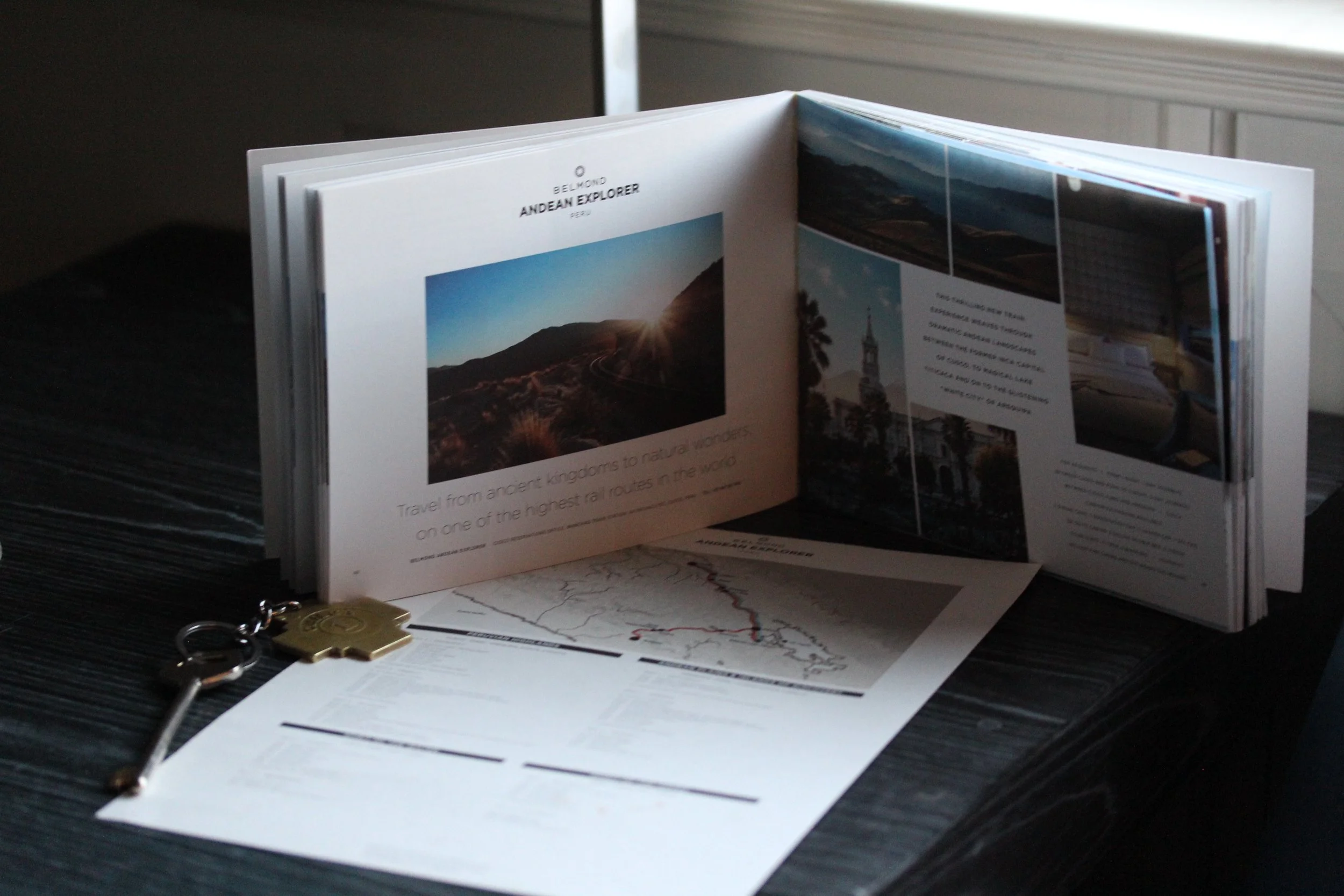
The Andean Explorer is described by Belmond as South America’s first luxury sleeper train, with 24 cabins, two dining cars, a piano bar, observation car, spa carriage, onboard entertainment and excursions. It travels some of the highest railway routes in the world.
And we were about to experience it.
Once aboard, we were escorted into the piano bar.
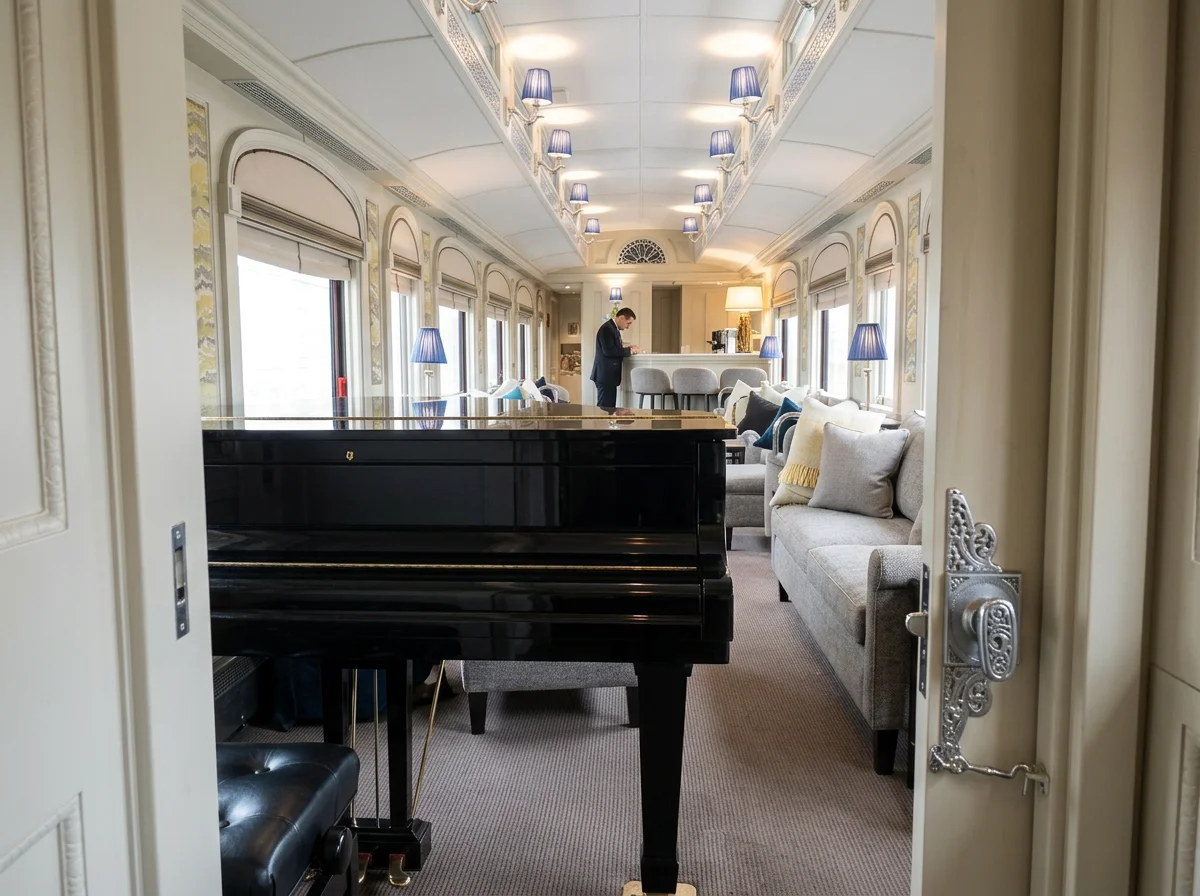
Champagne glasses poured as we waited for the rest of our fellow passengers to arrive.
There would be roughly 480-48 guests.
And, honestly, I’m pretty sure there were almost as many staff members. If I recall I was told about 50 staff.
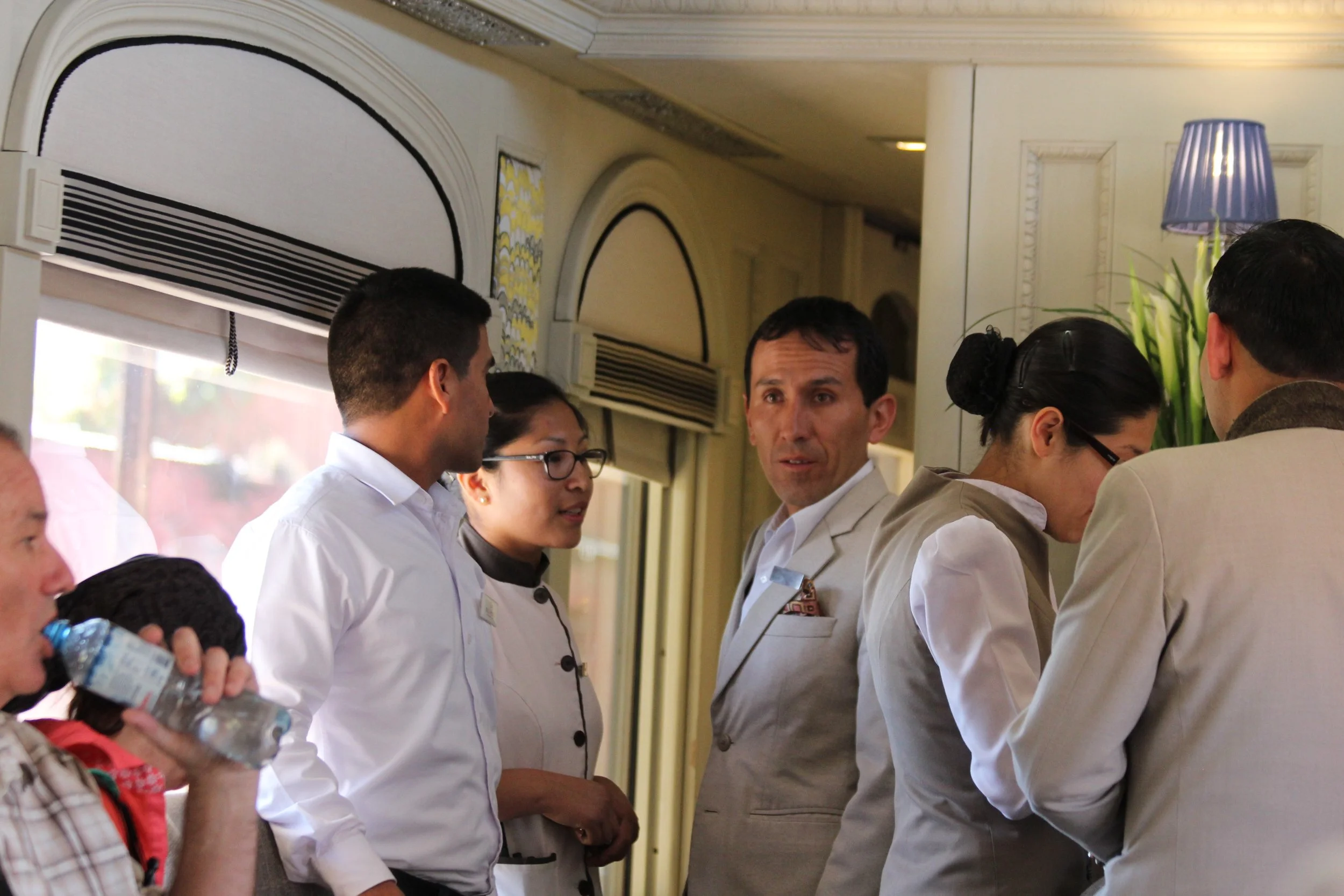
The service was impeccable.
We met our new travel group, and when our names were called, we were escorted to our cabin.
We had booked the largest suite available.
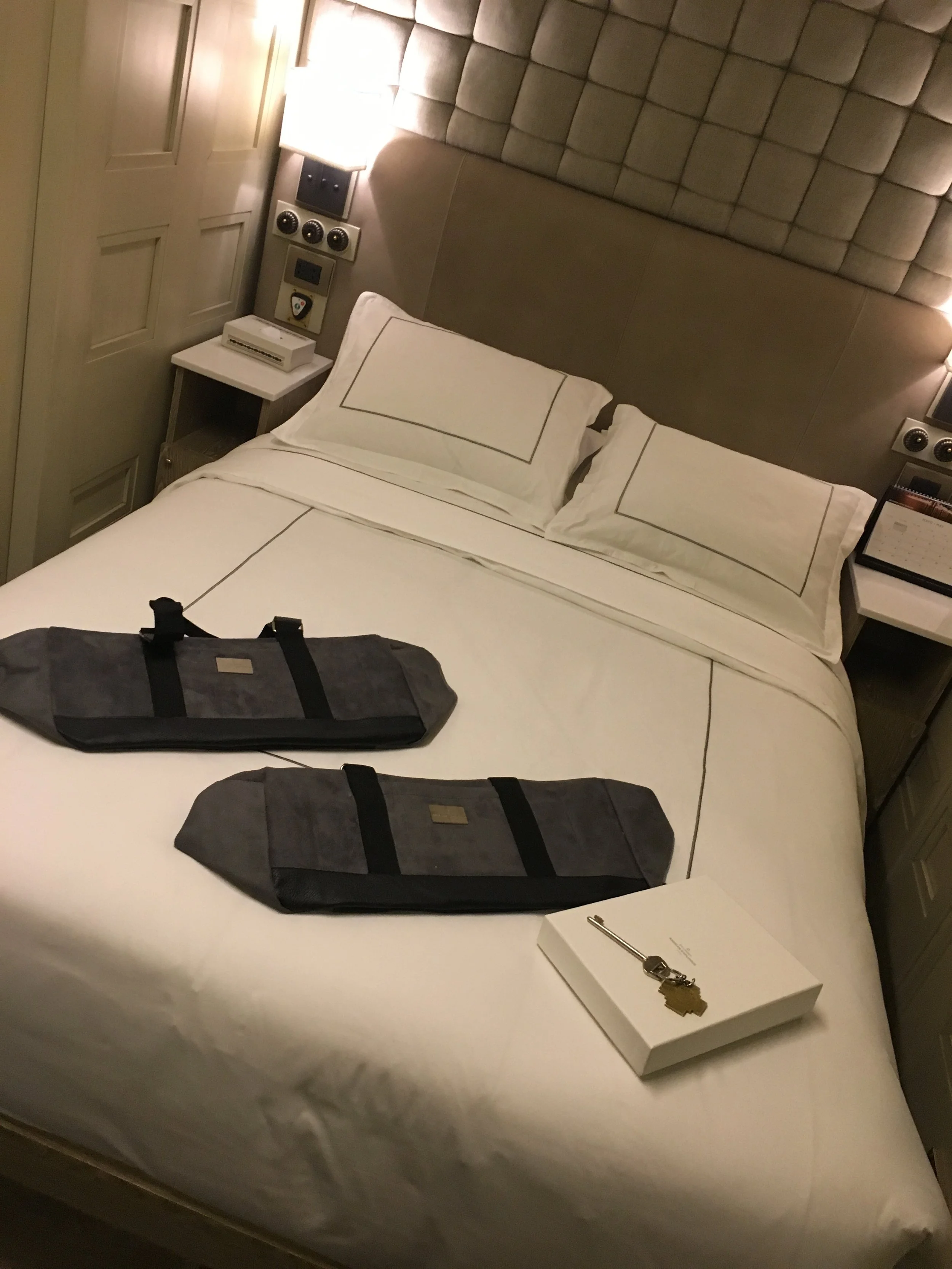
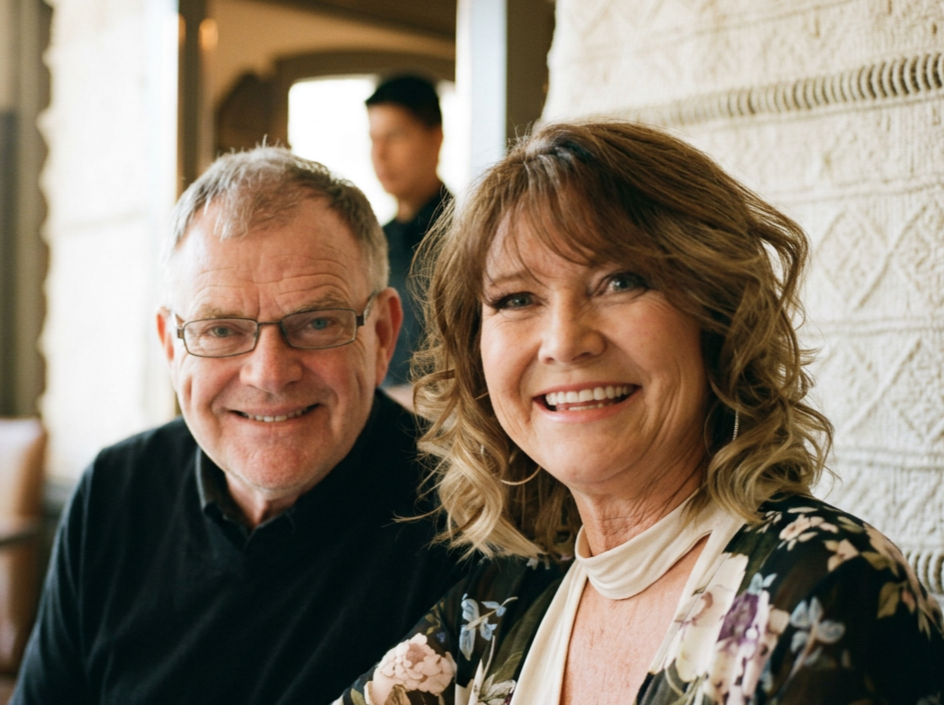
Special 1 year Anniversary Gift - bags and a logoed silver picture frame.
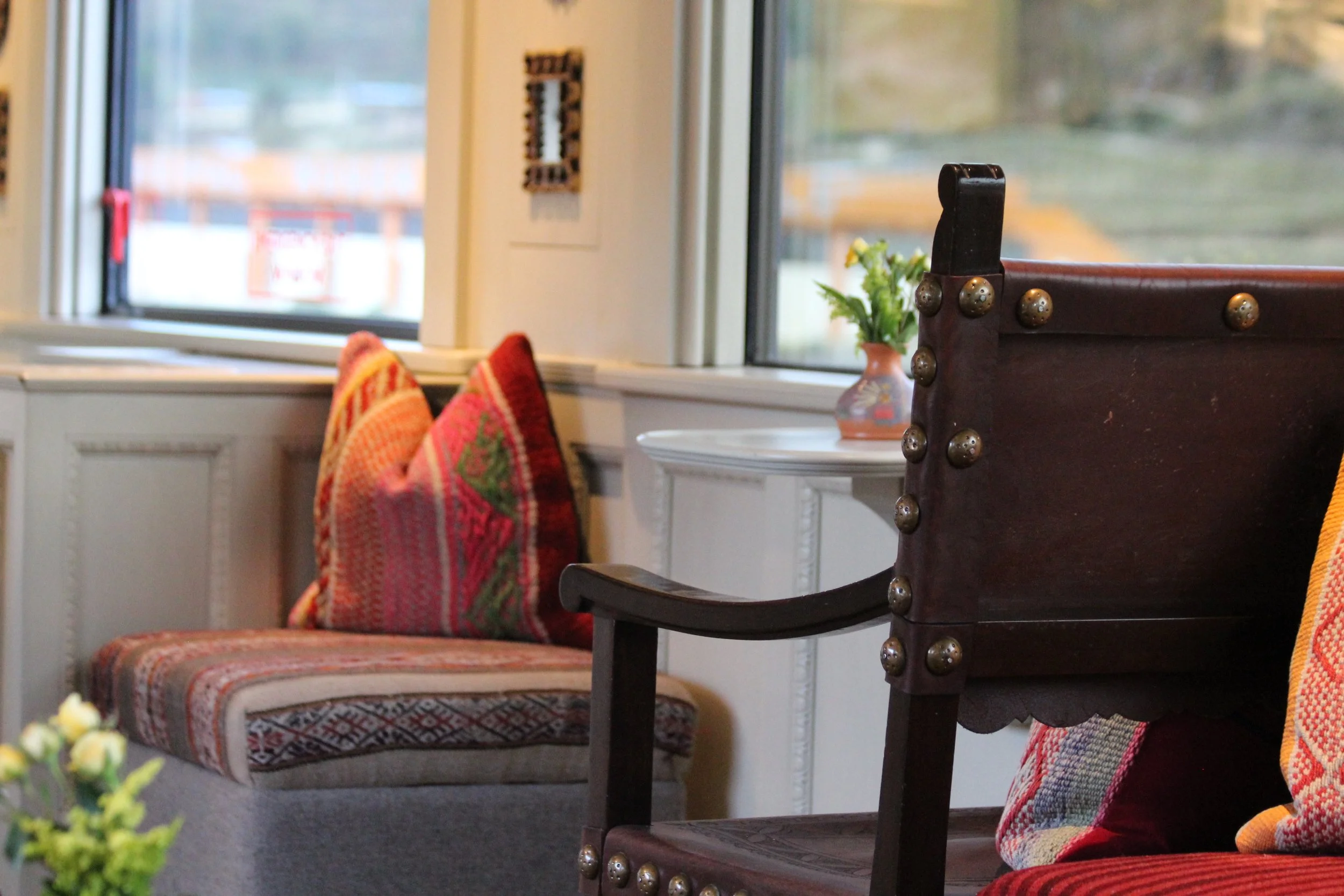
It was beautifully appointed, our bags were already waiting, and everything felt wonderfully civilized.
We unpacked, then headed back to the dining car.
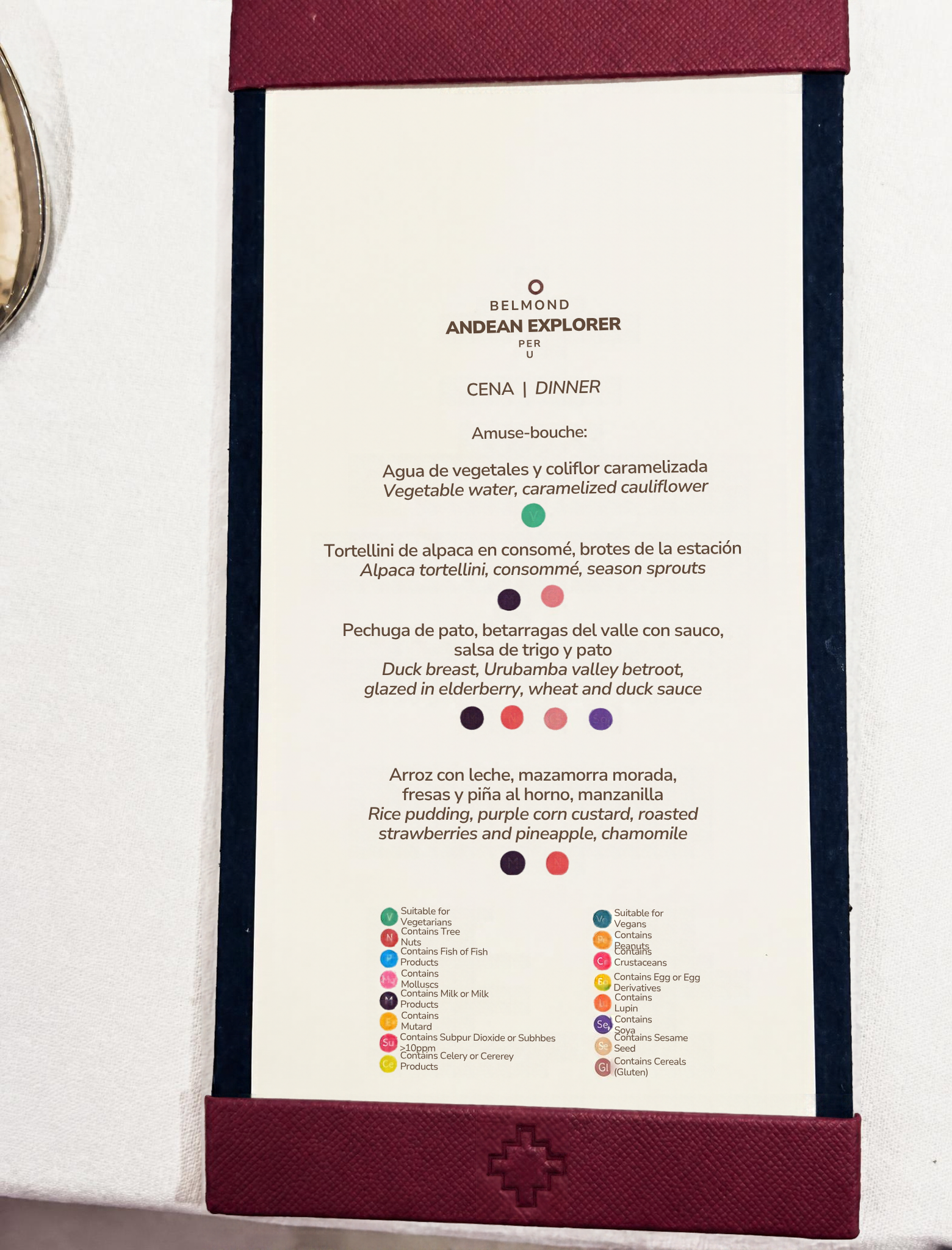
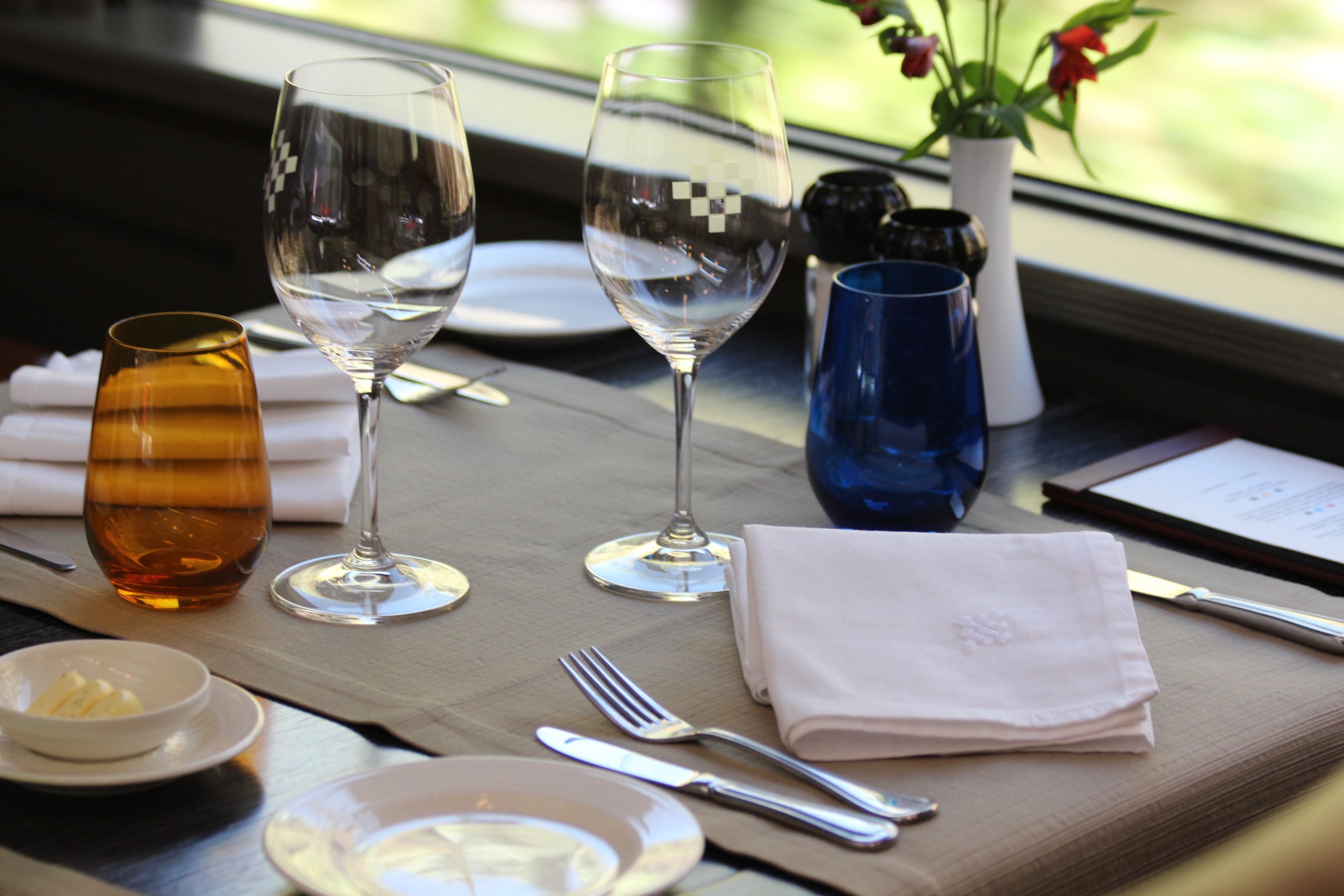
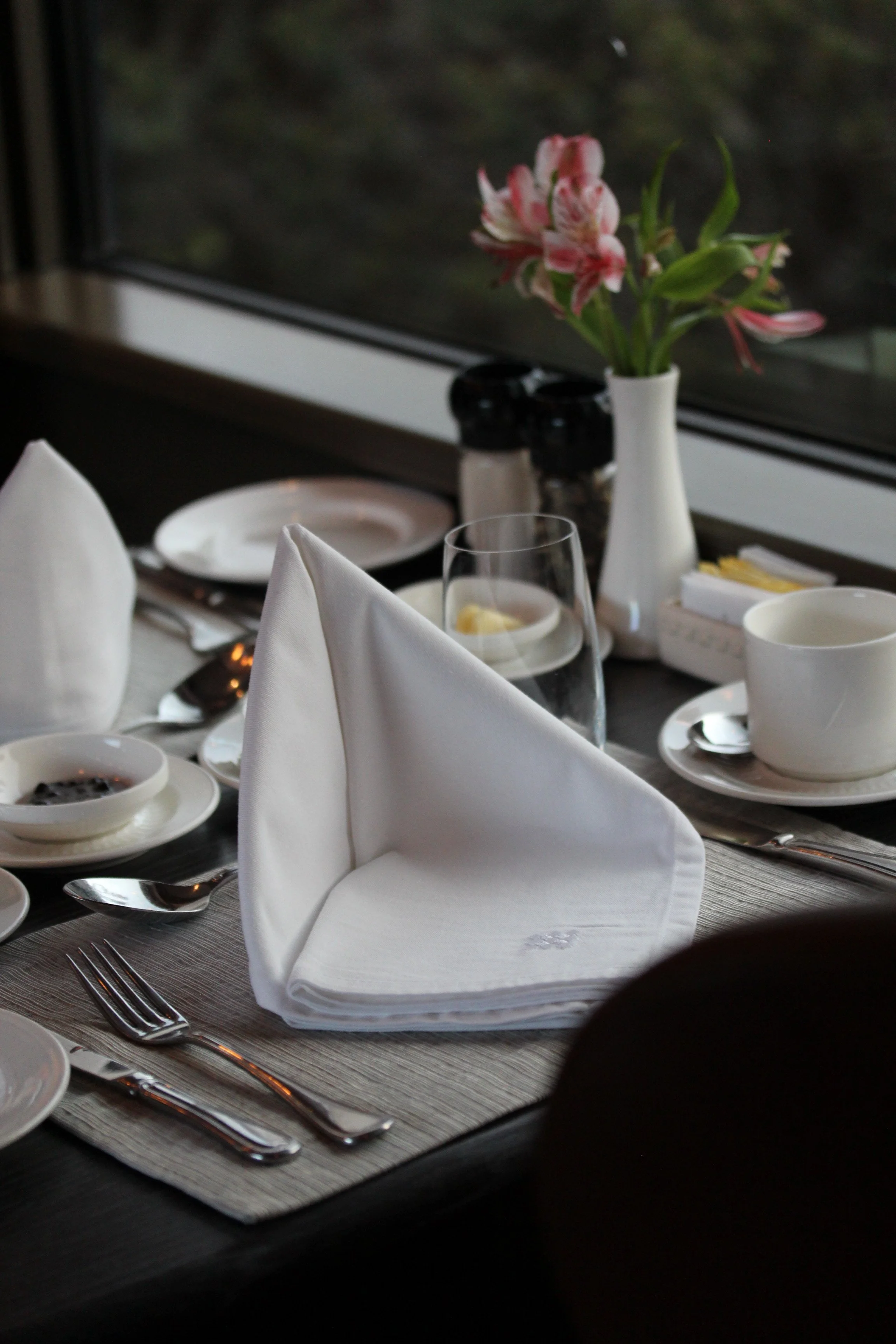
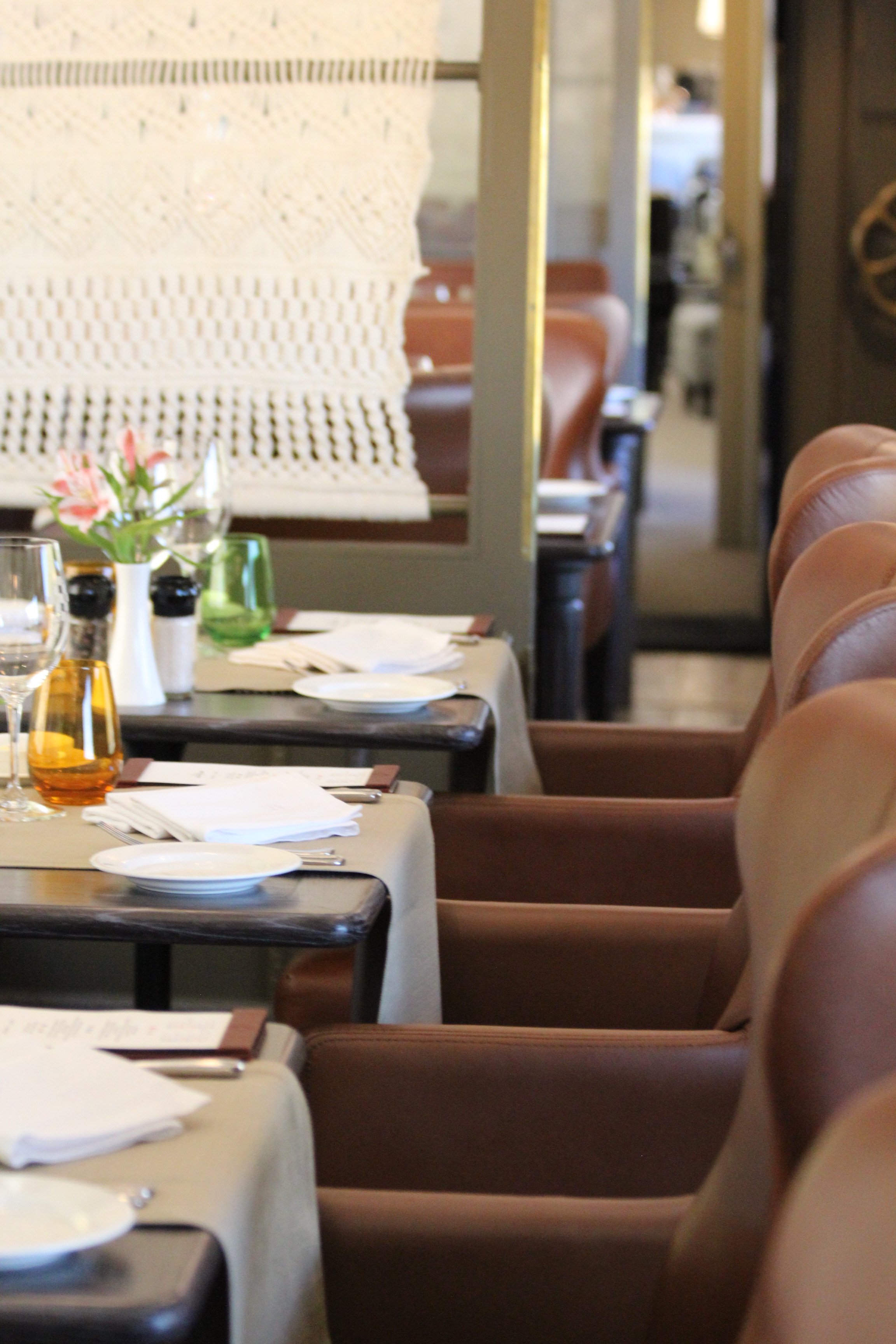
Our table would be our table for the entire journey, which meant we got to know our server — and they quickly got to know us.
That is one of the things I love about travel.
The people you meet along the way become part of the story.
Slowly, the train began to roll away from the station.
We sat at our table and watched the scenery disappear behind us.
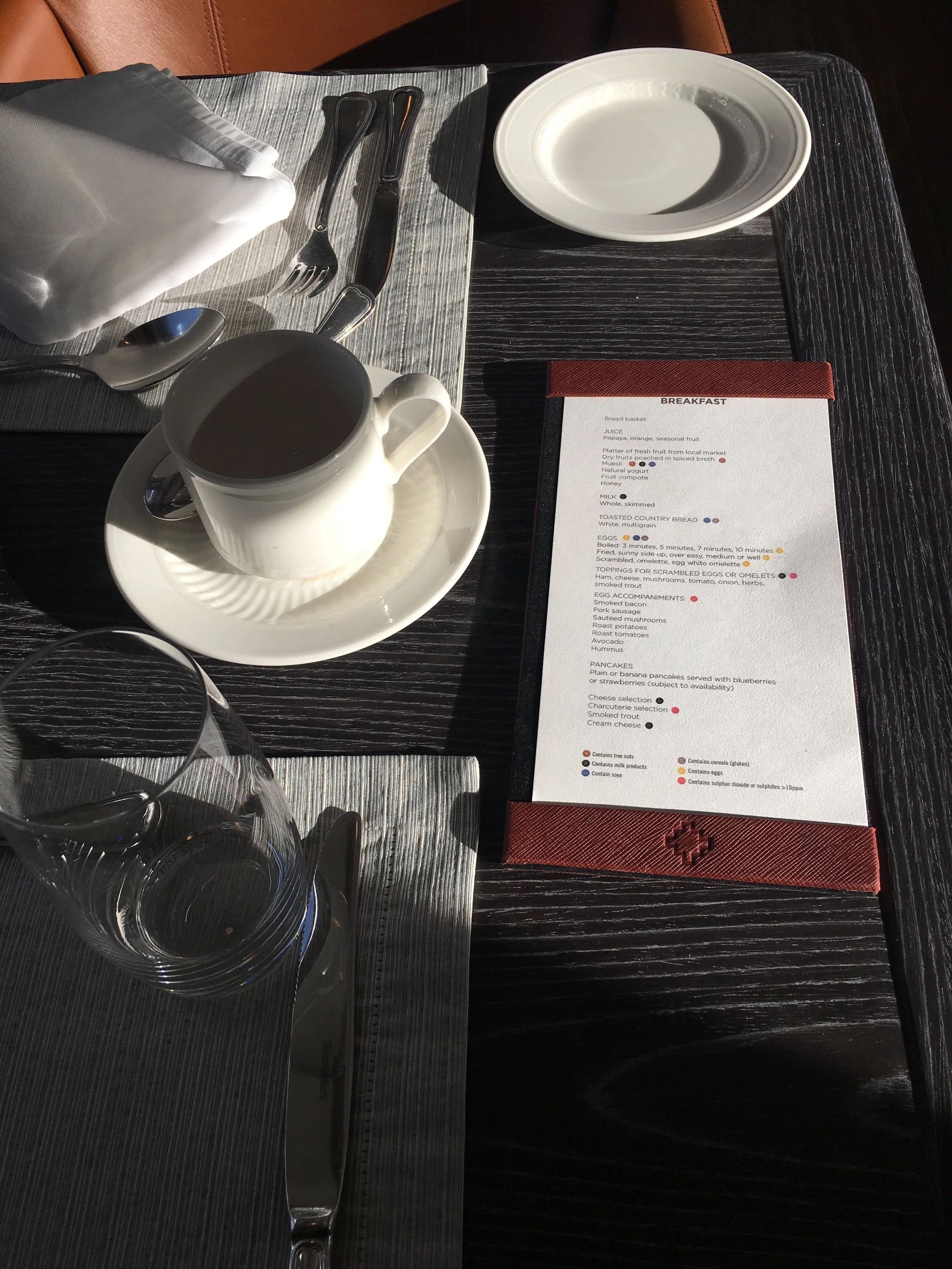
The menu was beautifully presented, and there was plenty of choice. Dietary requirements, allergies and special requests could all be accommodated, which made the experience feel genuinely personal rather than simply luxurious.
And then there was the food.
You could smell it coming from the kitchen before it ever reached the table.
The Andean Explorer’s dining experience features Peruvian cuisine, and Belmond currently describes the train as offering full-board dining and beverages.
After dinner, we moved to the back of the train.
This became my favourite place.
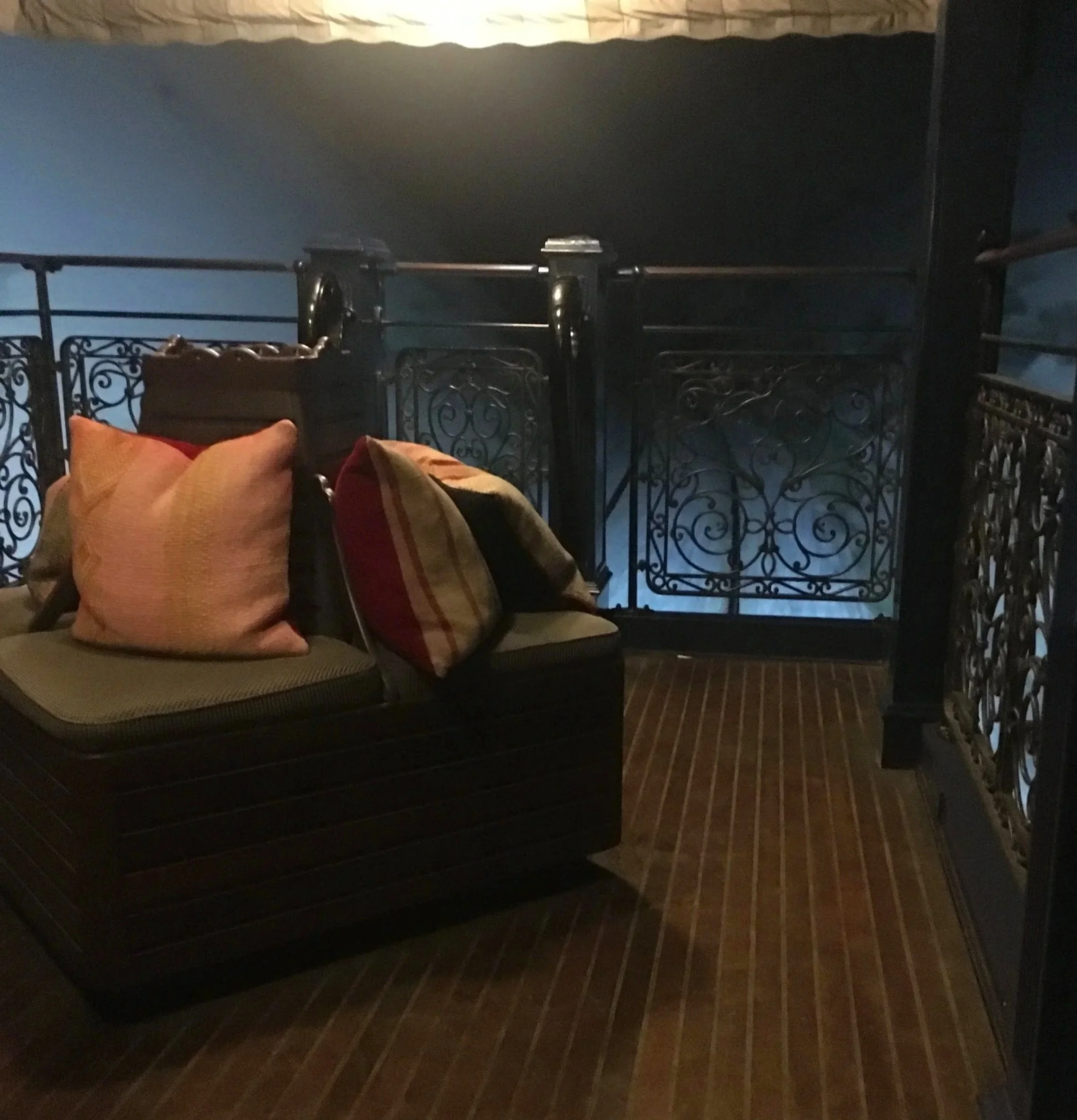
Observation car
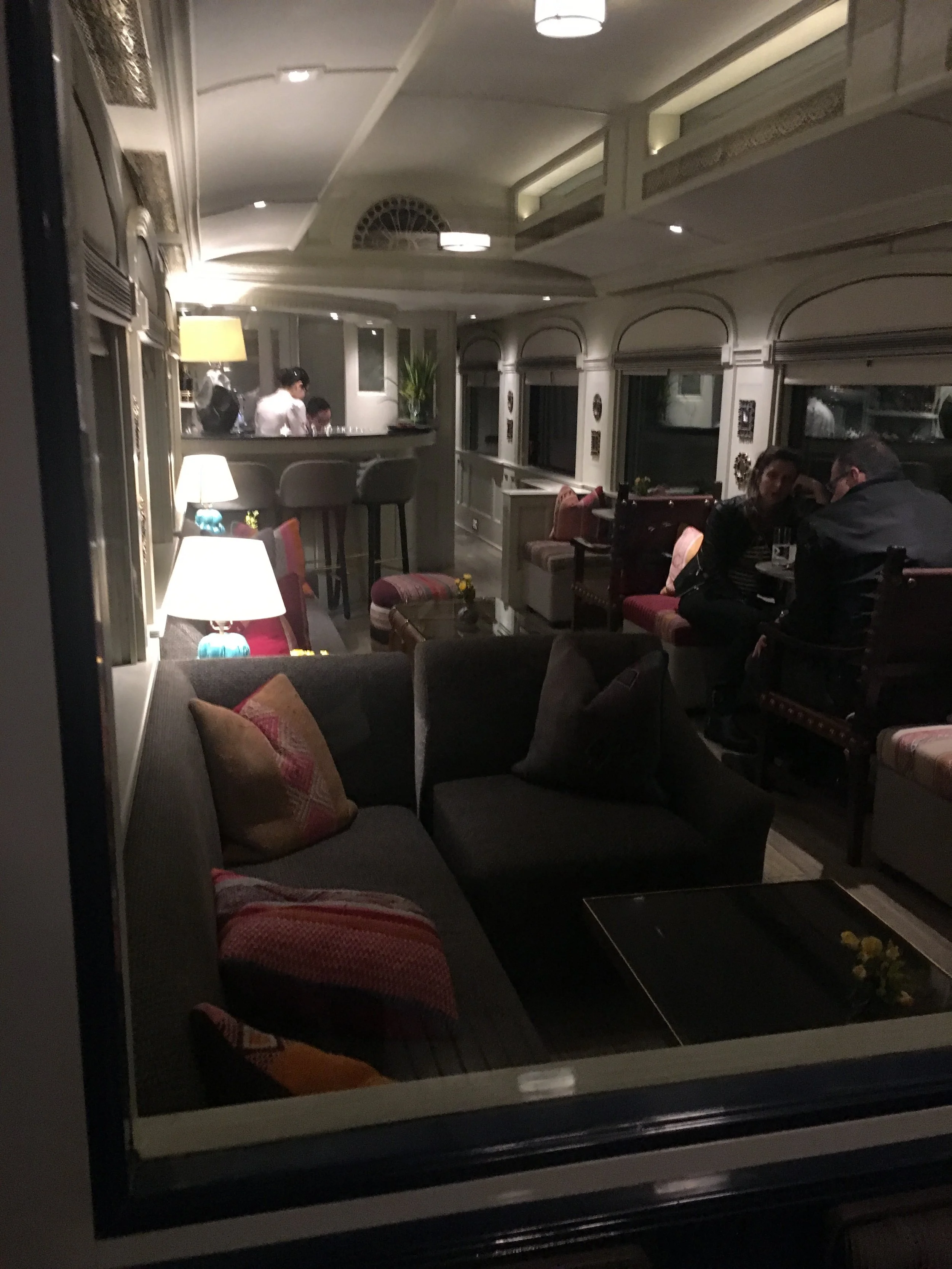
Coffee/Bar Car
The observation car was open to the elements, with comfortable seating where you could sip a cocktail or coffee, watch the landscape disappear into the darkness and listen to that wonderful rhythm of the rails.
The turns were so sharp that I could see the engines above us as the train negotiated the curves.
It was mesmerizing.
And because I am a night owl, I was one of the last people to call it a night.
By morning, we were travelling across the Altiplano, the enormous high plateau of the Andes.
This is high country.
Our destination for the morning was Puno which sits at roughly 3,800 metres above sea level.
We would also experience Lake Titicaca. A large lake that stretches Peru and Bolivia
Before morning had broke I was out the door, looking a bit worse for wear but fully geared for taking pictures from the observation car.
The landscape slowly began to revealing itself.
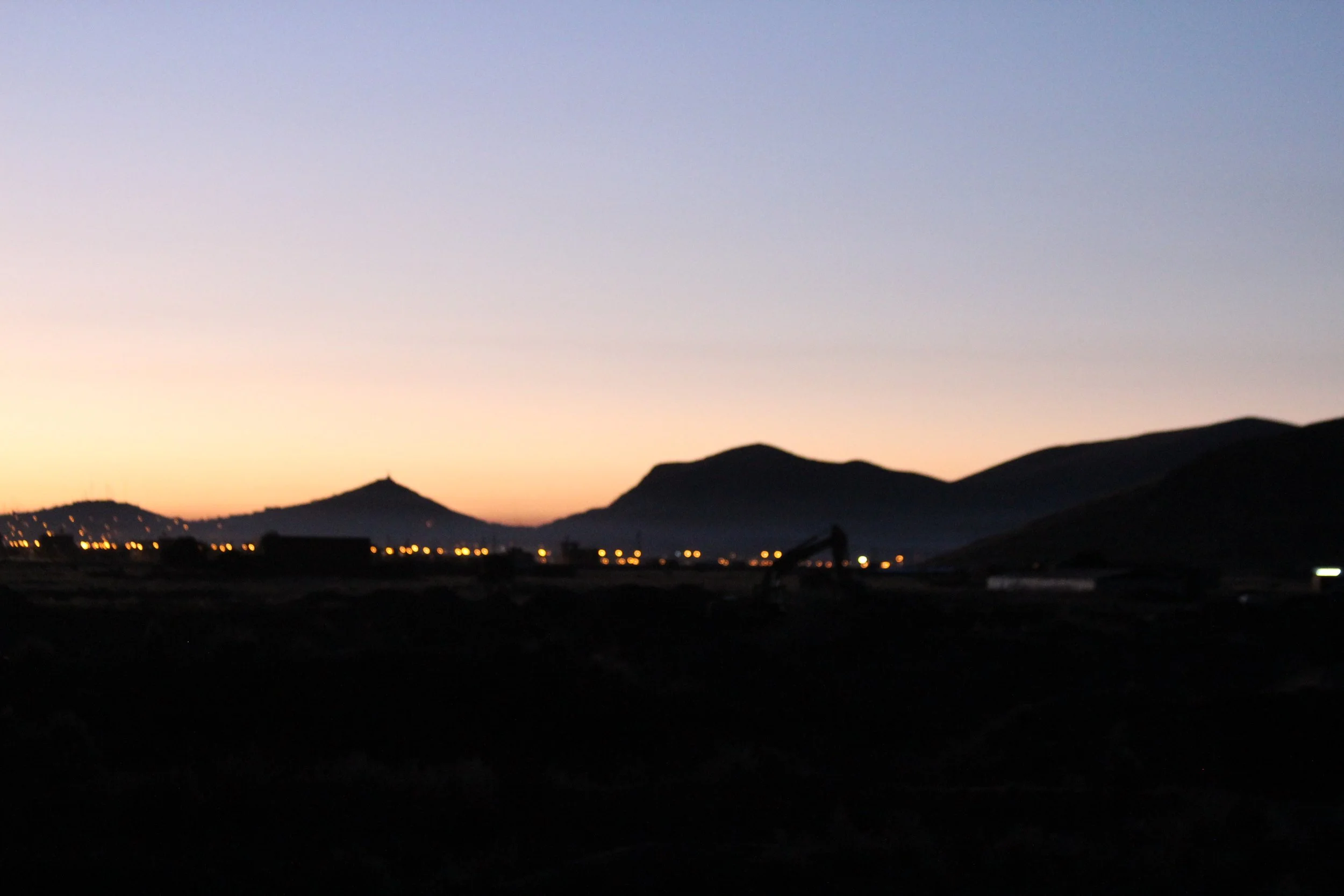
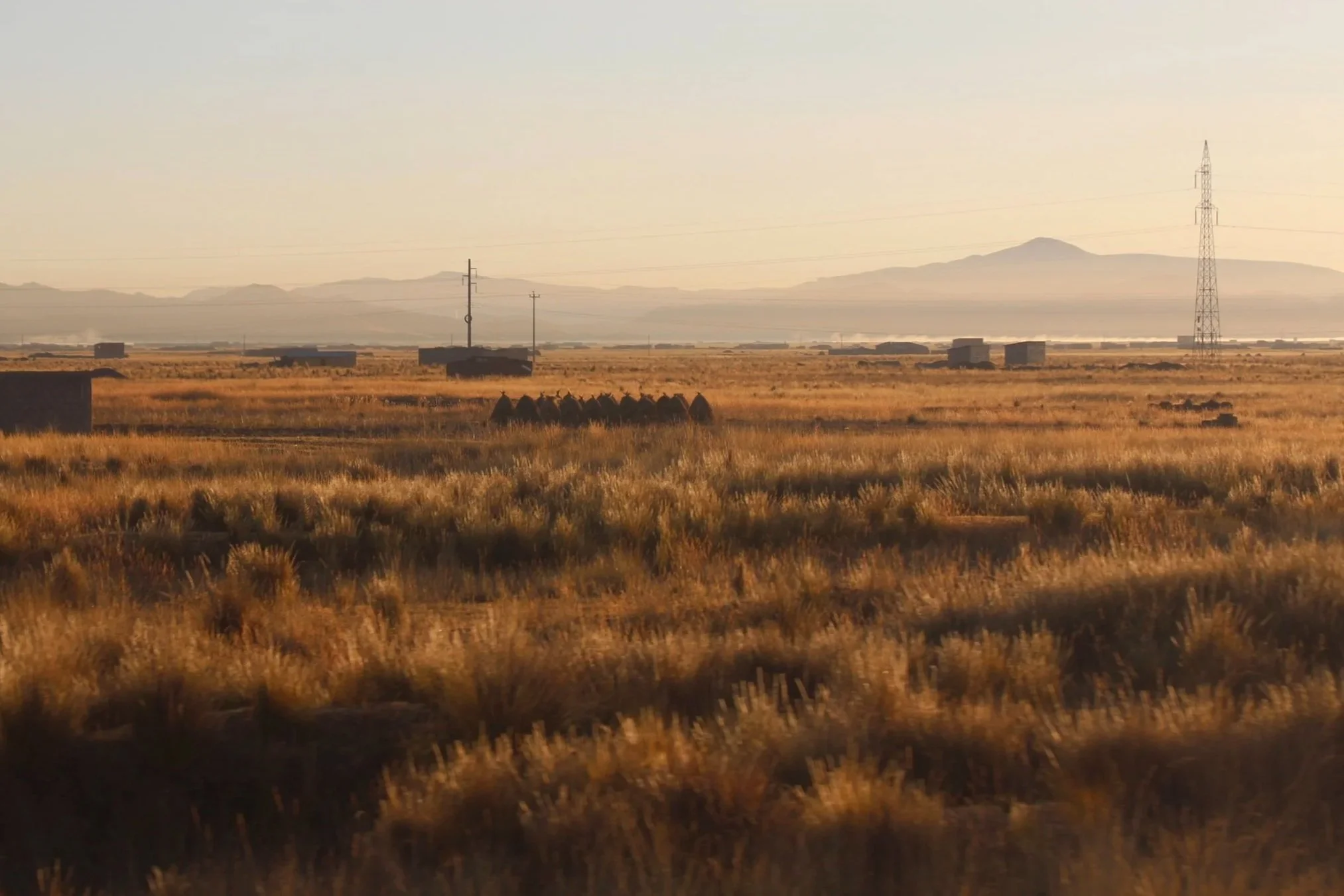
Juliaca area
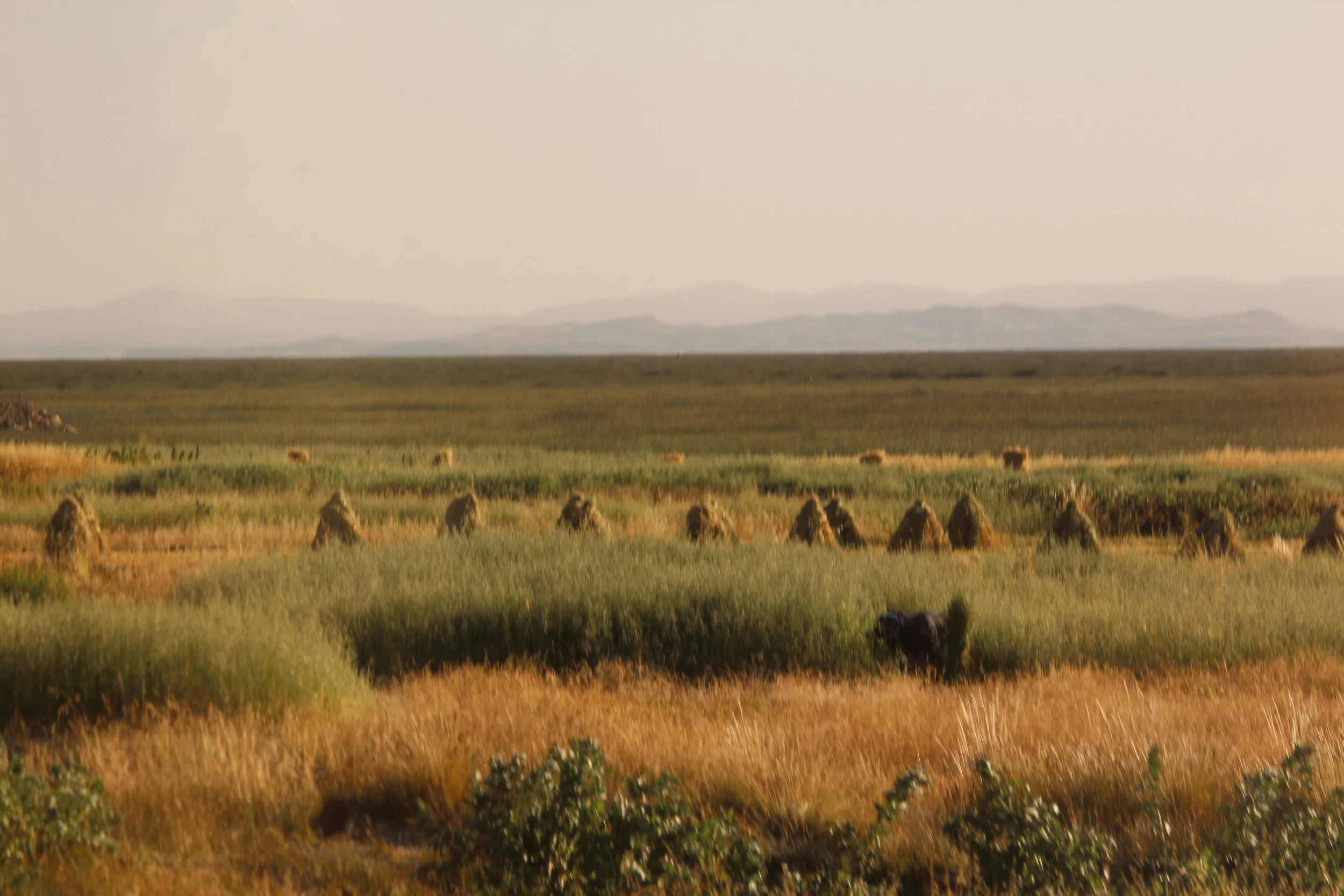
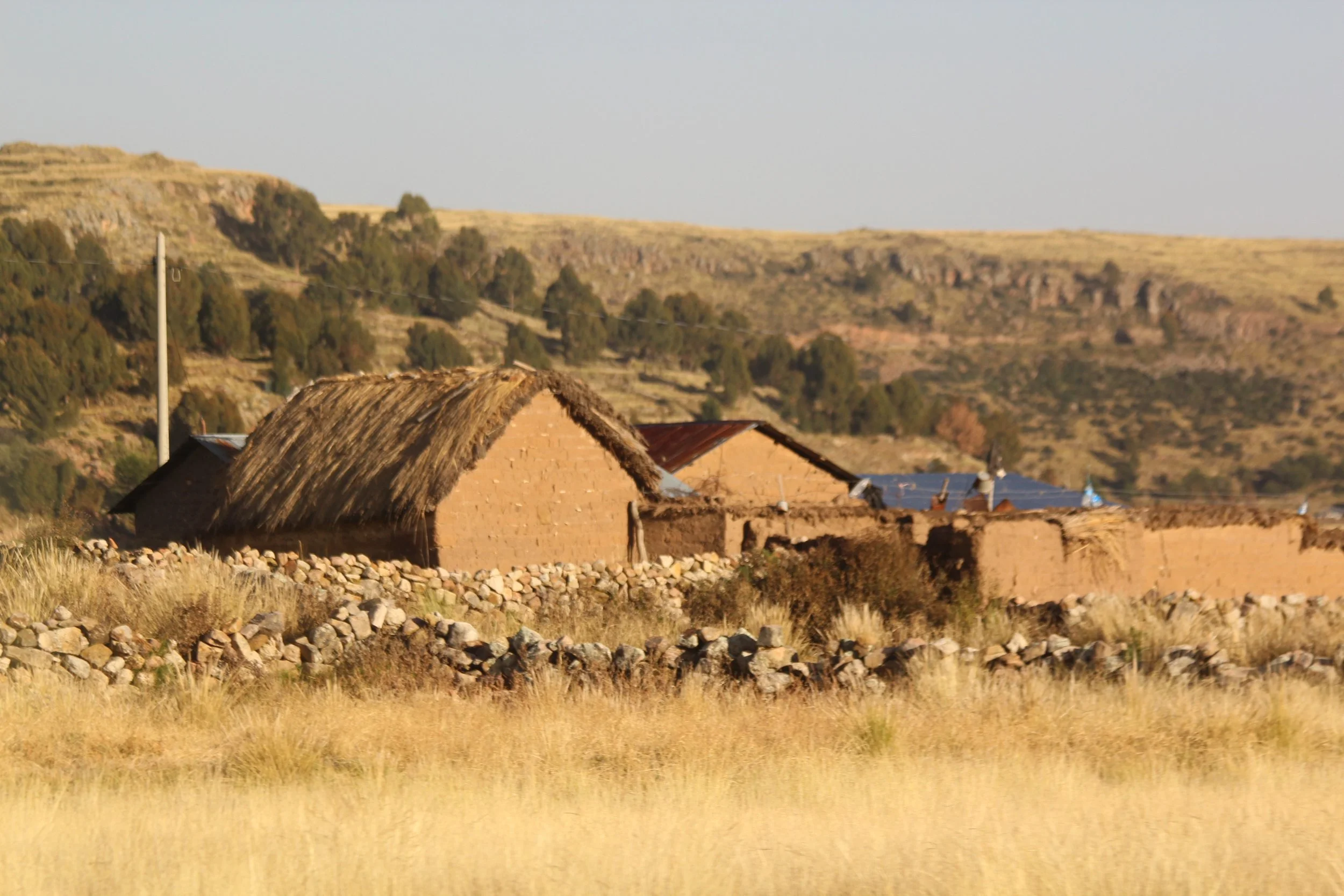
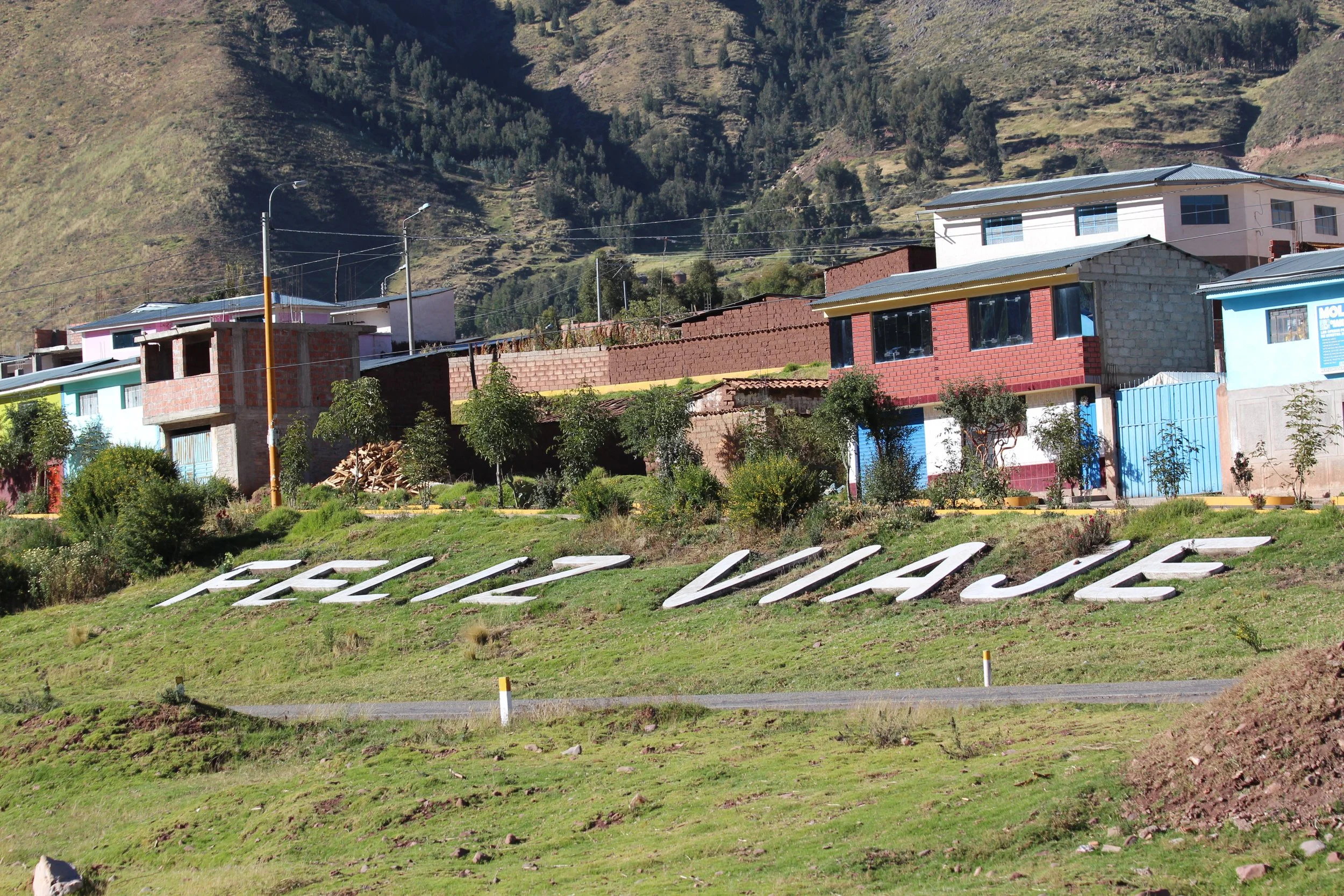
Golden grasses. Green patches of farmland. Small homes with traditional roofs.
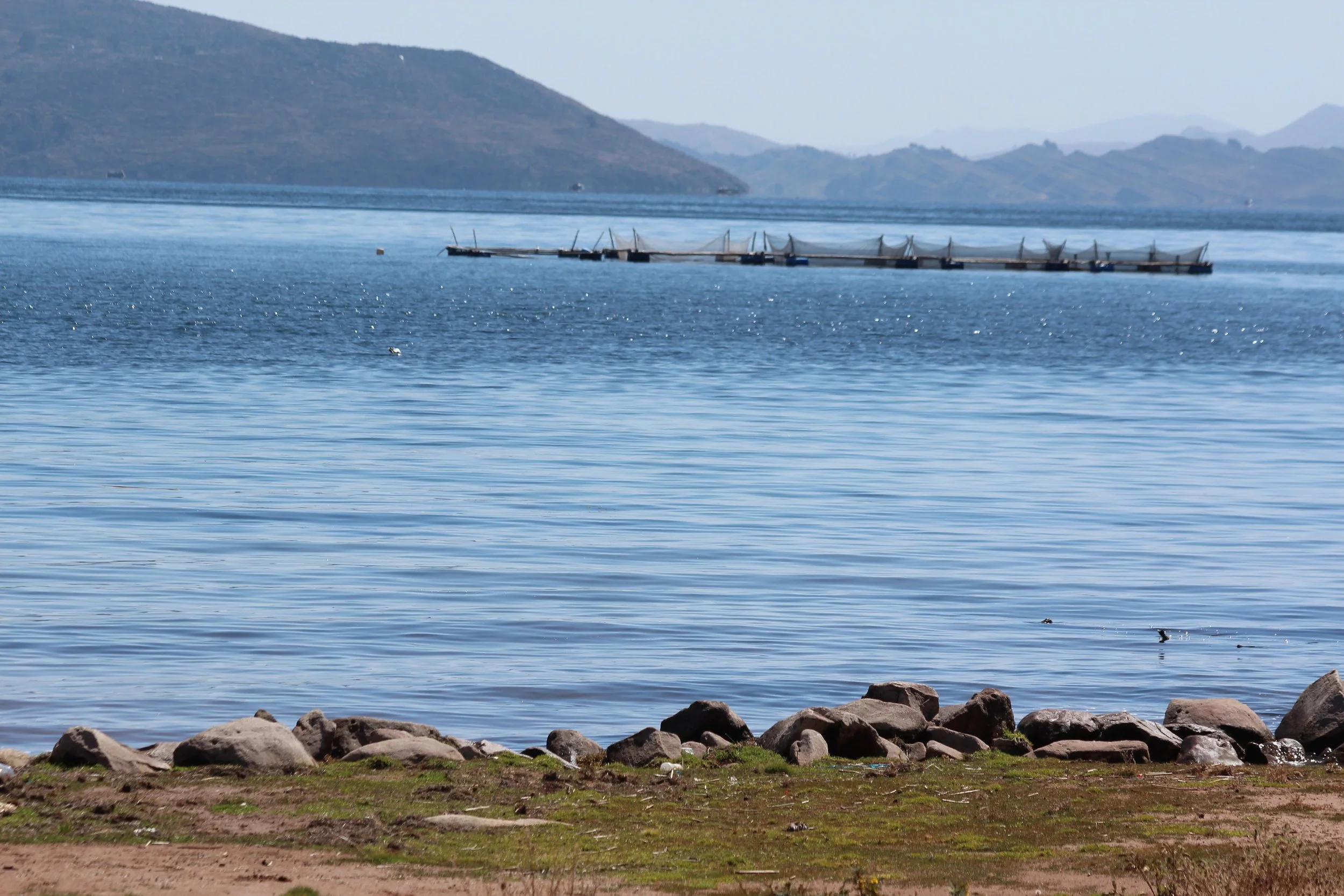
Vast stretches of land, with boats? Was the lake dry?
This was one of those little travel moments that makes you stop looking at the scenery and start really seeing it. Why was this boat, sitting where water should have been.
I later learned that the Puno region is naturally dry during the May-to-October dry season, but the high Andes have also experienced serious periods of drought and water stress in recent years. Lake Titicaca, the enormous lake that dominates this region, has seen significant fluctuations in water levels, particularly during severe drought and El Niño events.
So was the dry shoreline I photographed in May clear evidence of a drought?
This single photograph tells a story that statistics can't.
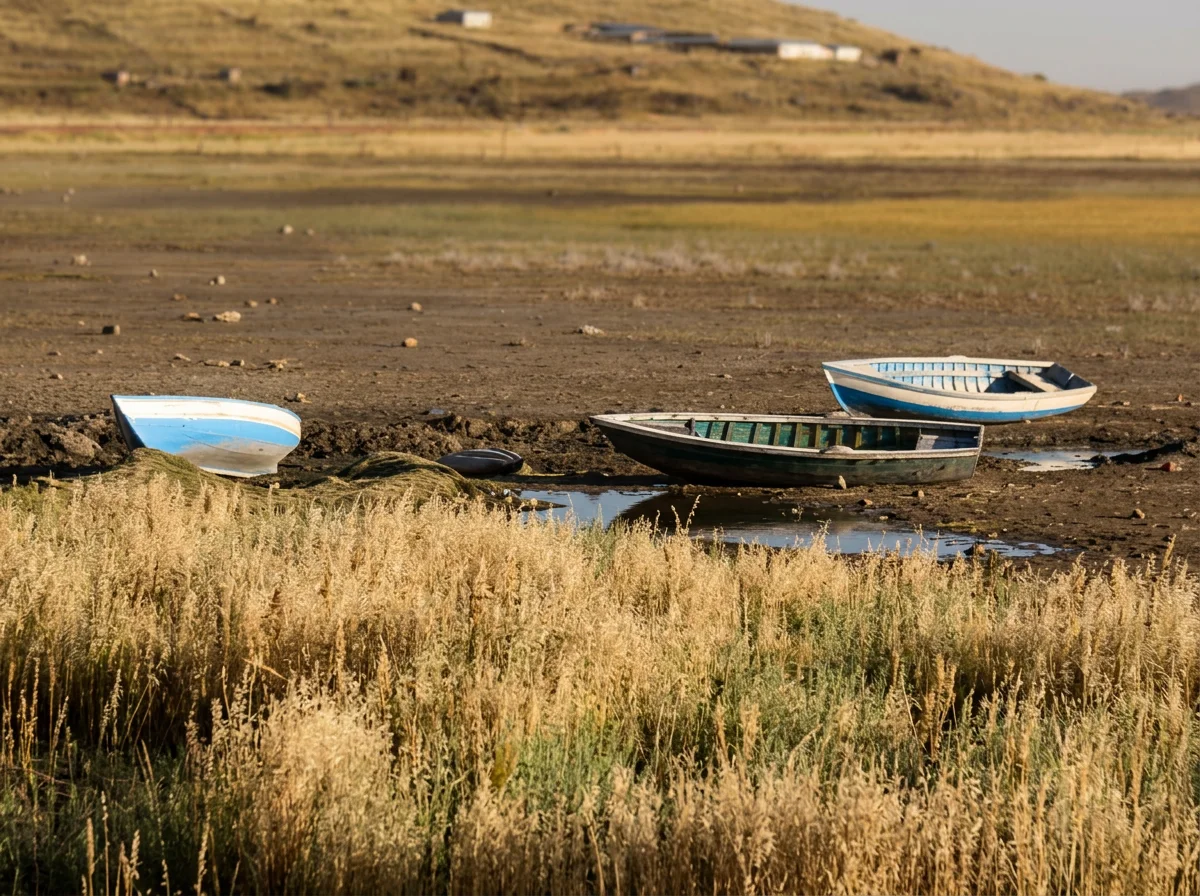
Where is the water? Lake???
It also made me think about how fragile life must be at this altitude. This isn't simply a dramatic landscape for travellers passing through. The lakes, wetlands and seasonal rains are part of the water system that supports farming, livestock and communities that have lived here for generations.
Some of my photographs from the train are unfortunately little more than artistic blurs.
I was having trouble getting my camera to capture the movement and low light, which was heartbreaking because the scenery was spectacular.
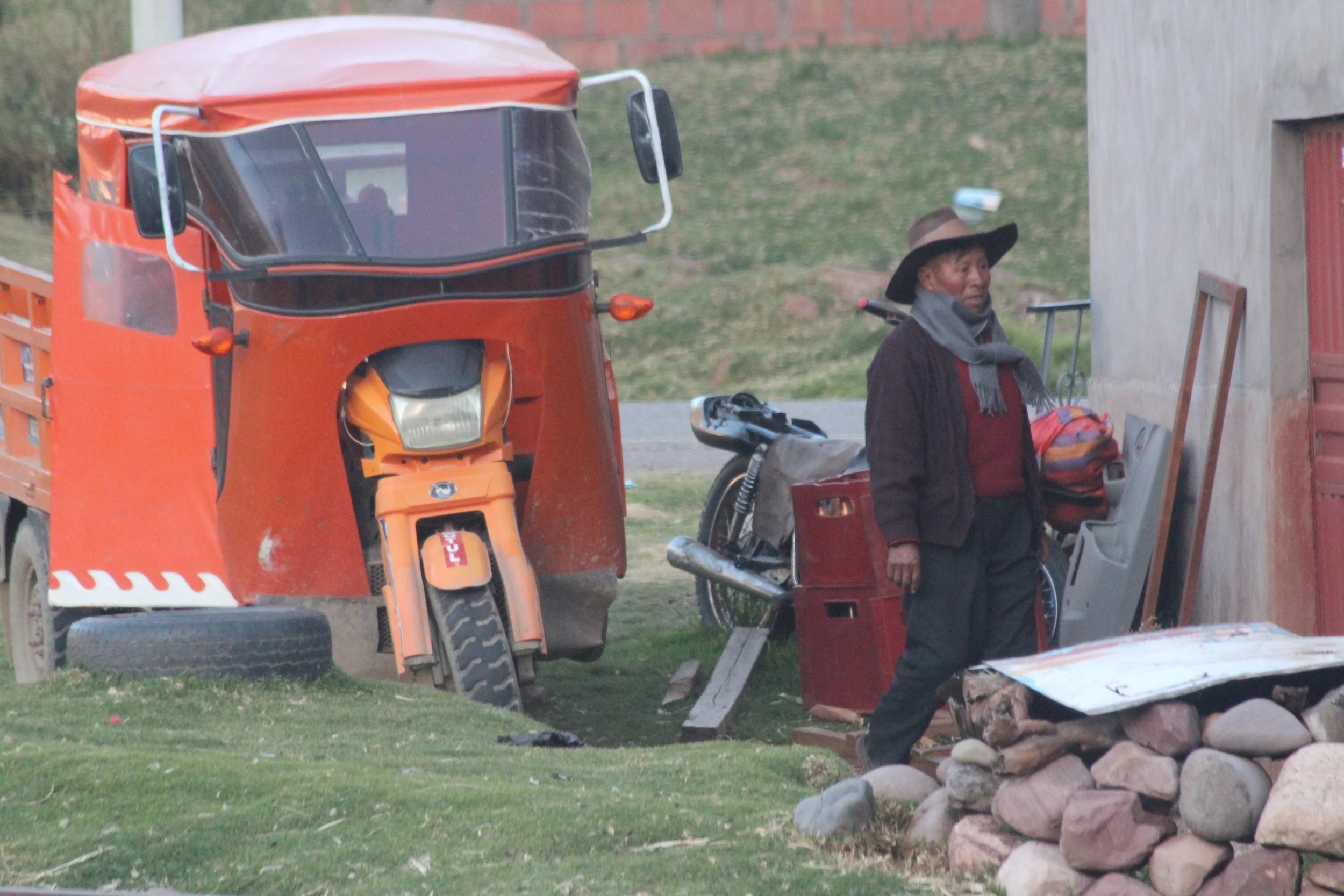
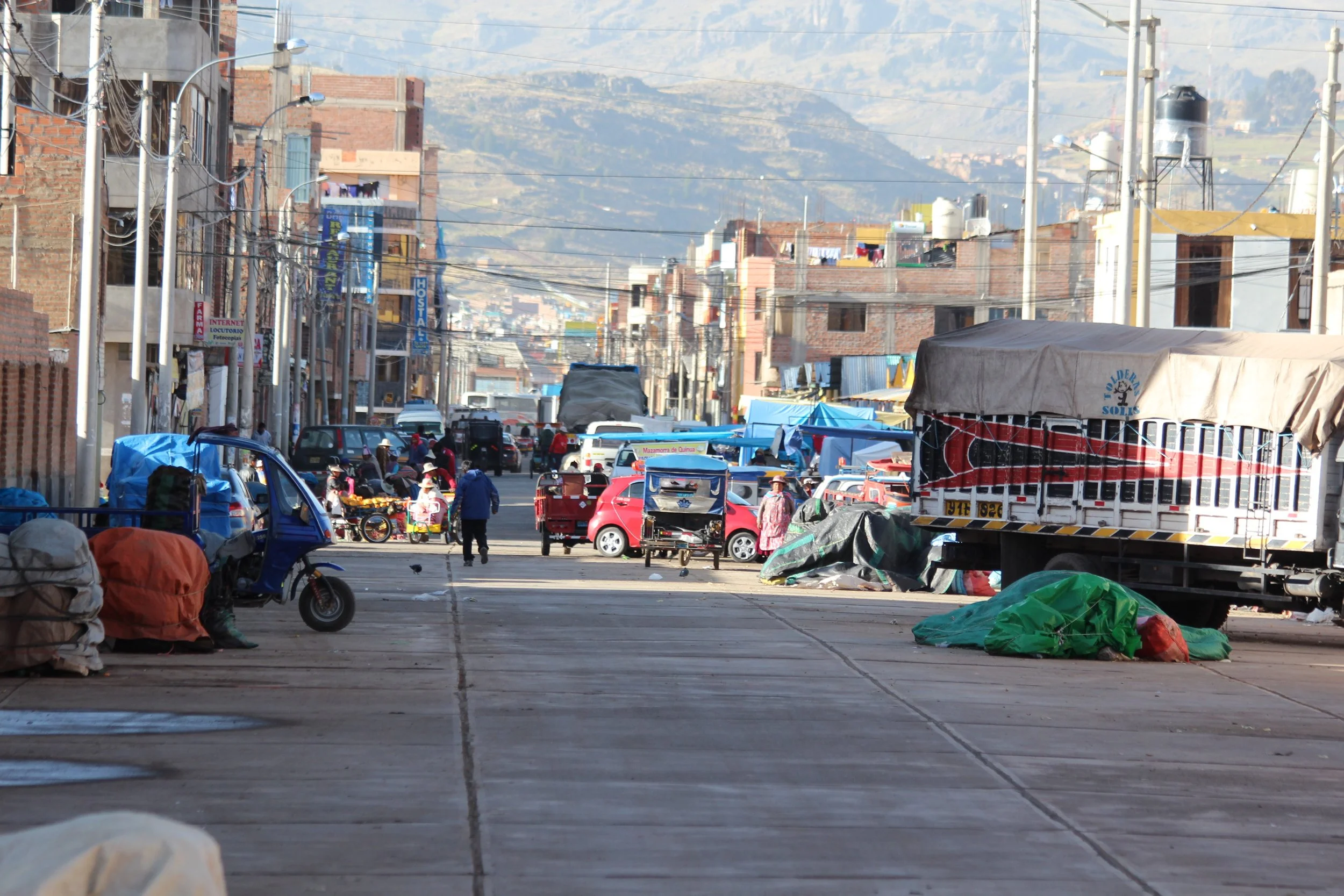
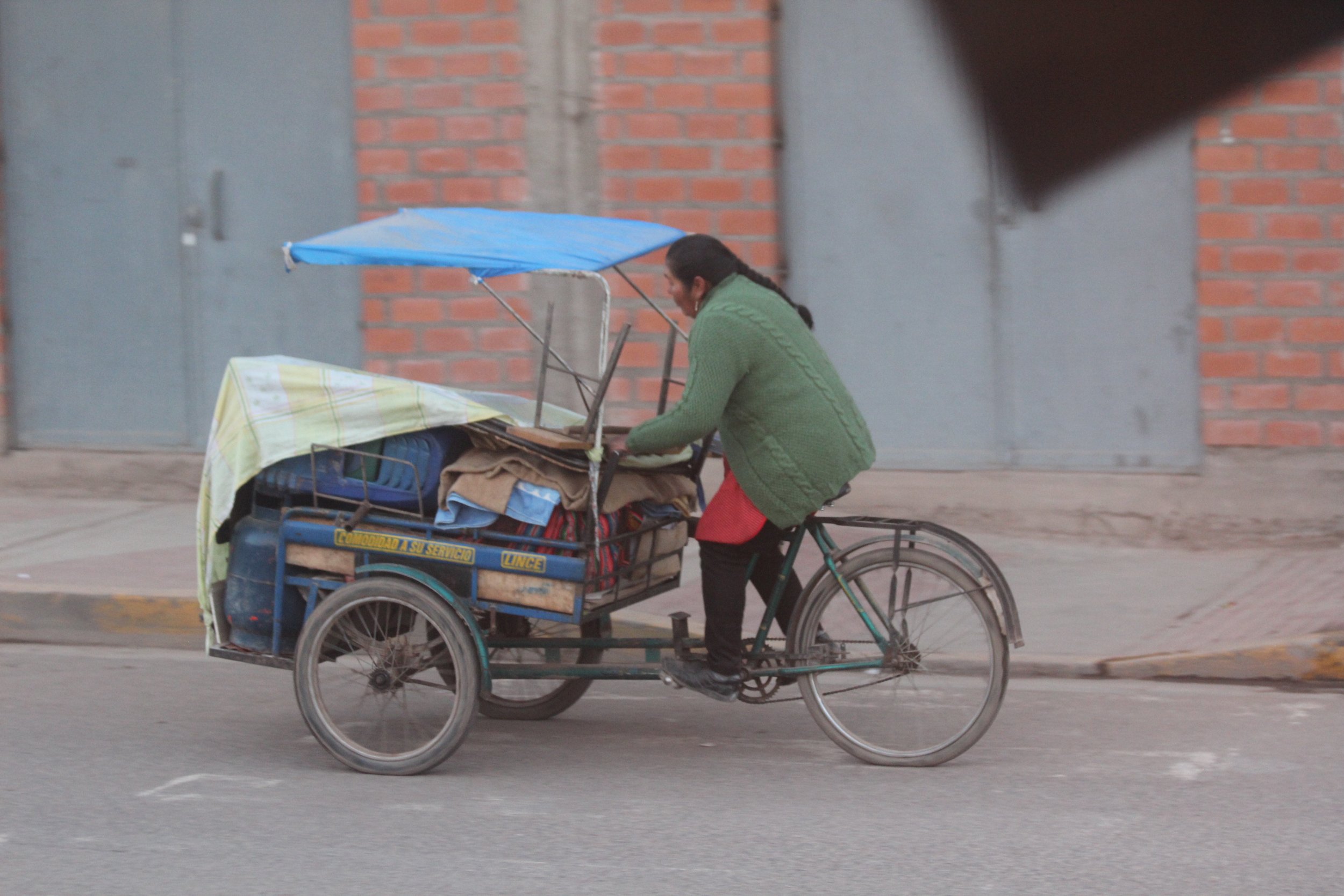
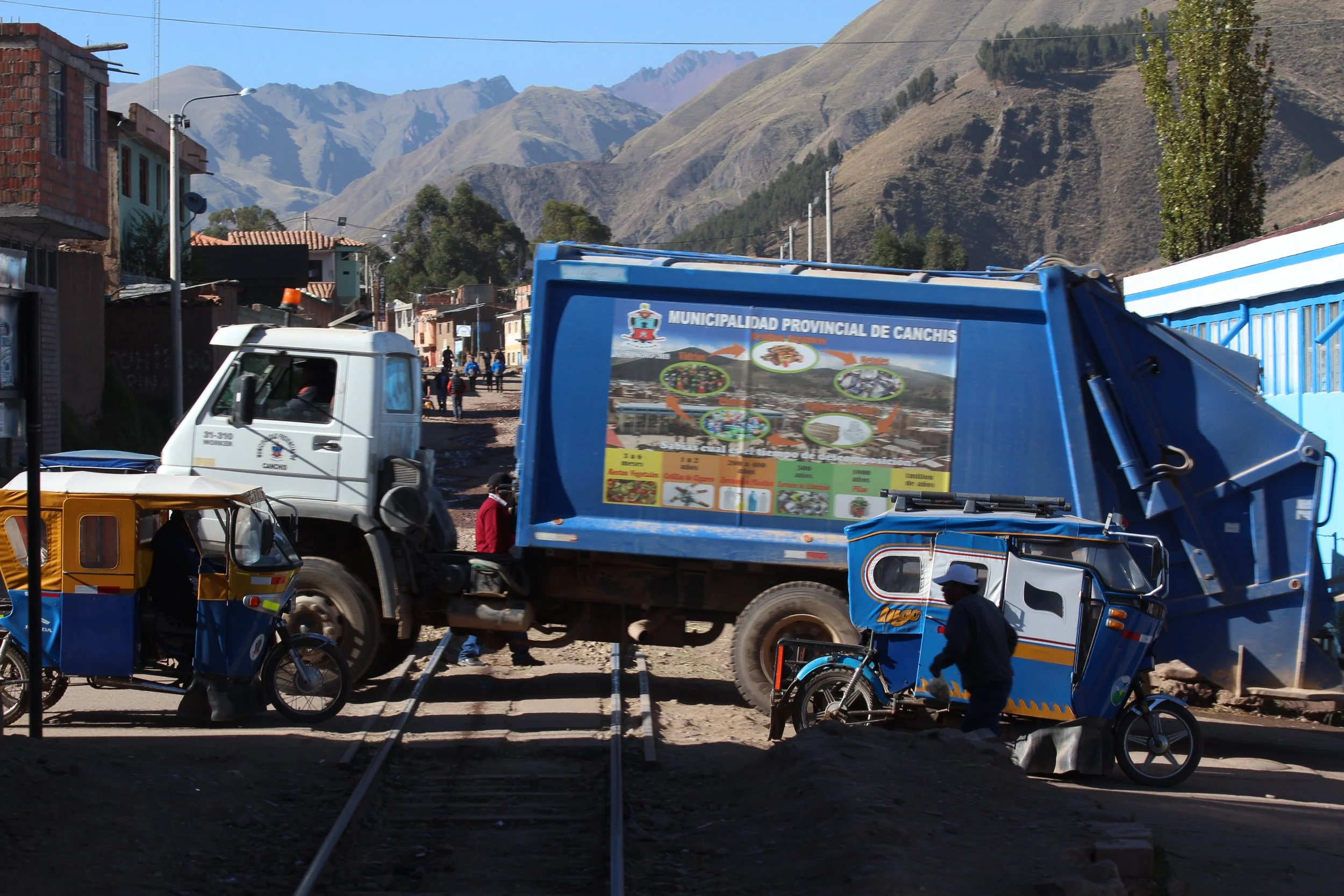
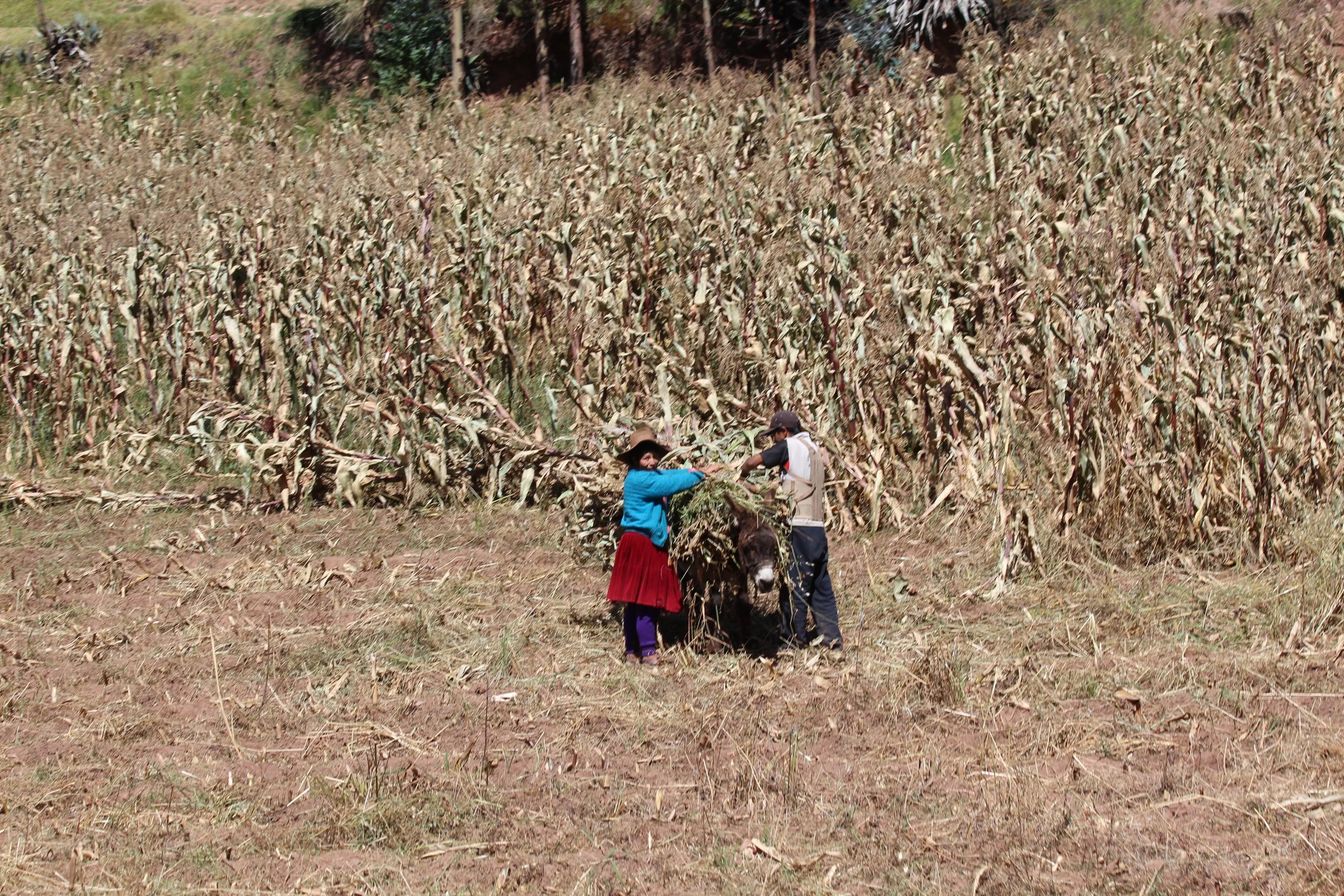
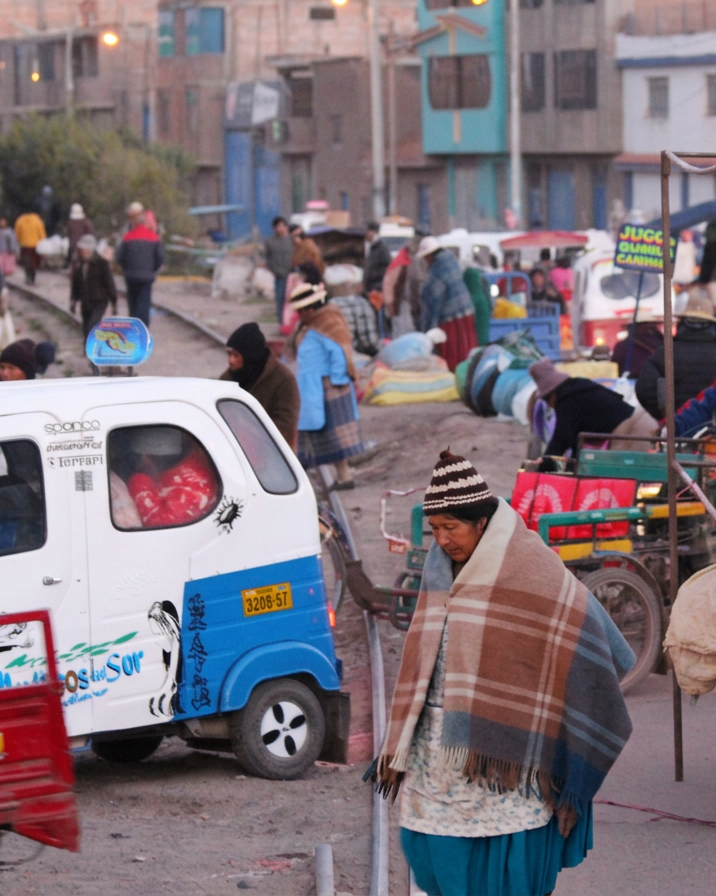
As we approach a city called Juliaca (City of Winds) the landscape change. The city can to life right alongside the railway. I could see vendors preparing their carts and belongings along the tracks, and from my perch in the observation car, I watched people quickly scramble back into position as the train moved through.
I loved seeing this glimpse of everyday life.
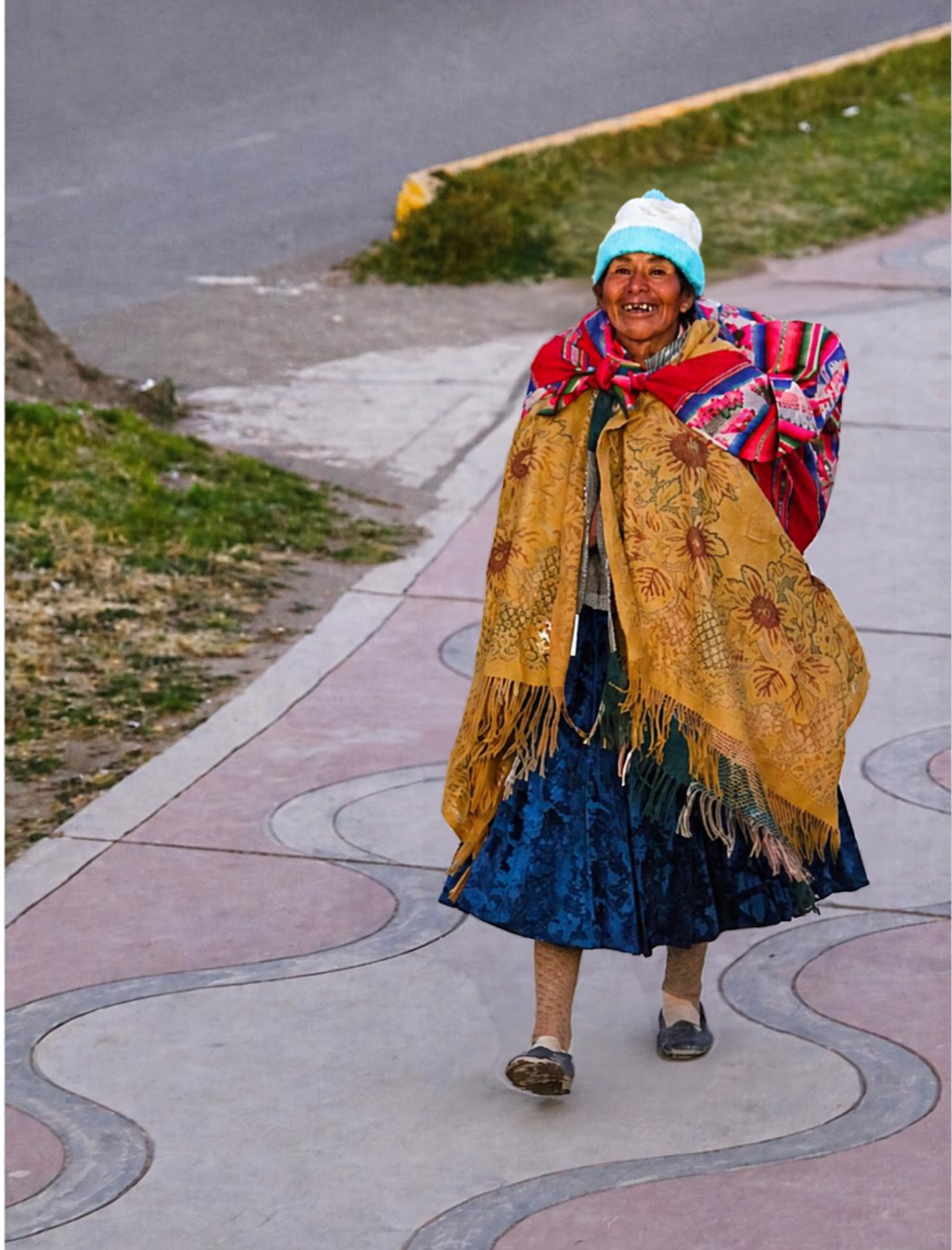
Once through that city we slowly moved towards Puno, a city on the shores of Lake Titicaca and an important centre for the surrounding Andean communities and cultures. The region is also known for its traditional agriculture, livestock and textile traditions.
I was so enthralled with taking photographs that I completely lost track of time.
Suddenly I looked at my watch.
OH MY GOSH.
Breakfast!
I raced through the train toward the dining car, where Don, Sue and Pete were already sitting.
Everyone was in the appointed spot but me.
As I dashed by I mentioned “I’m just going to run to the room, clean up, drop off my camera and come right back.”
“Order me a coffee and breakfast, you know what I like!”
Perfect plan.
Except...
It wasn't.
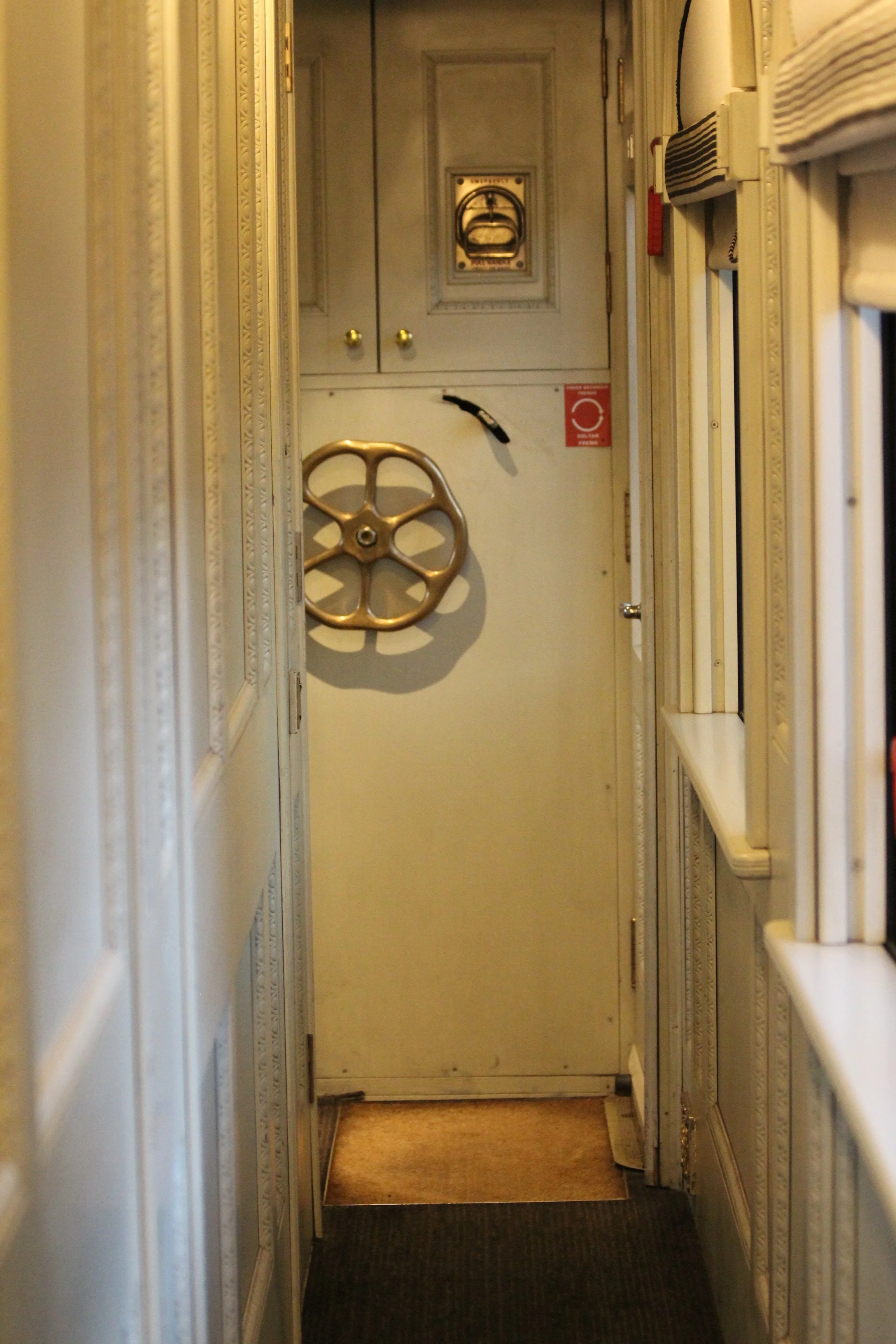
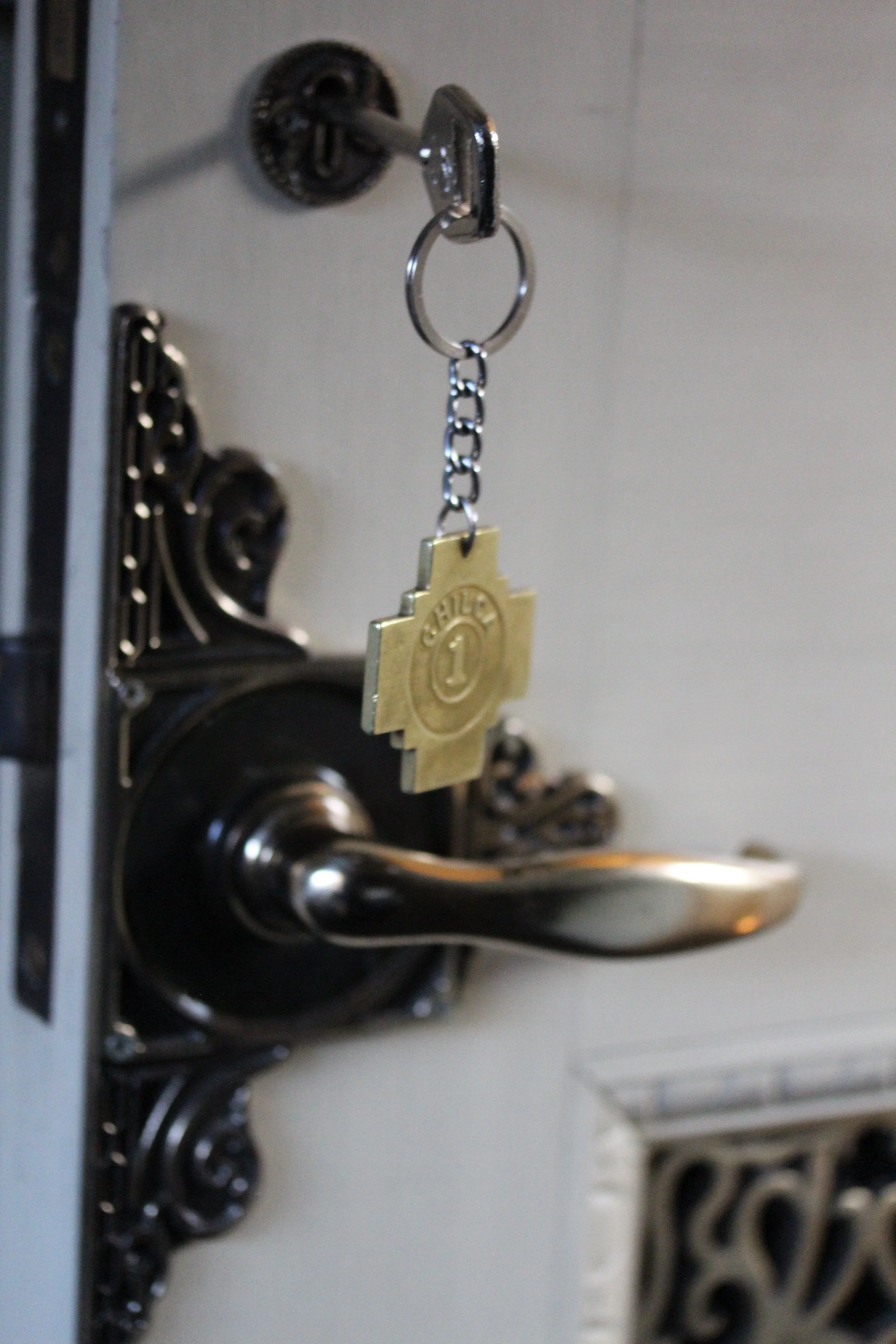
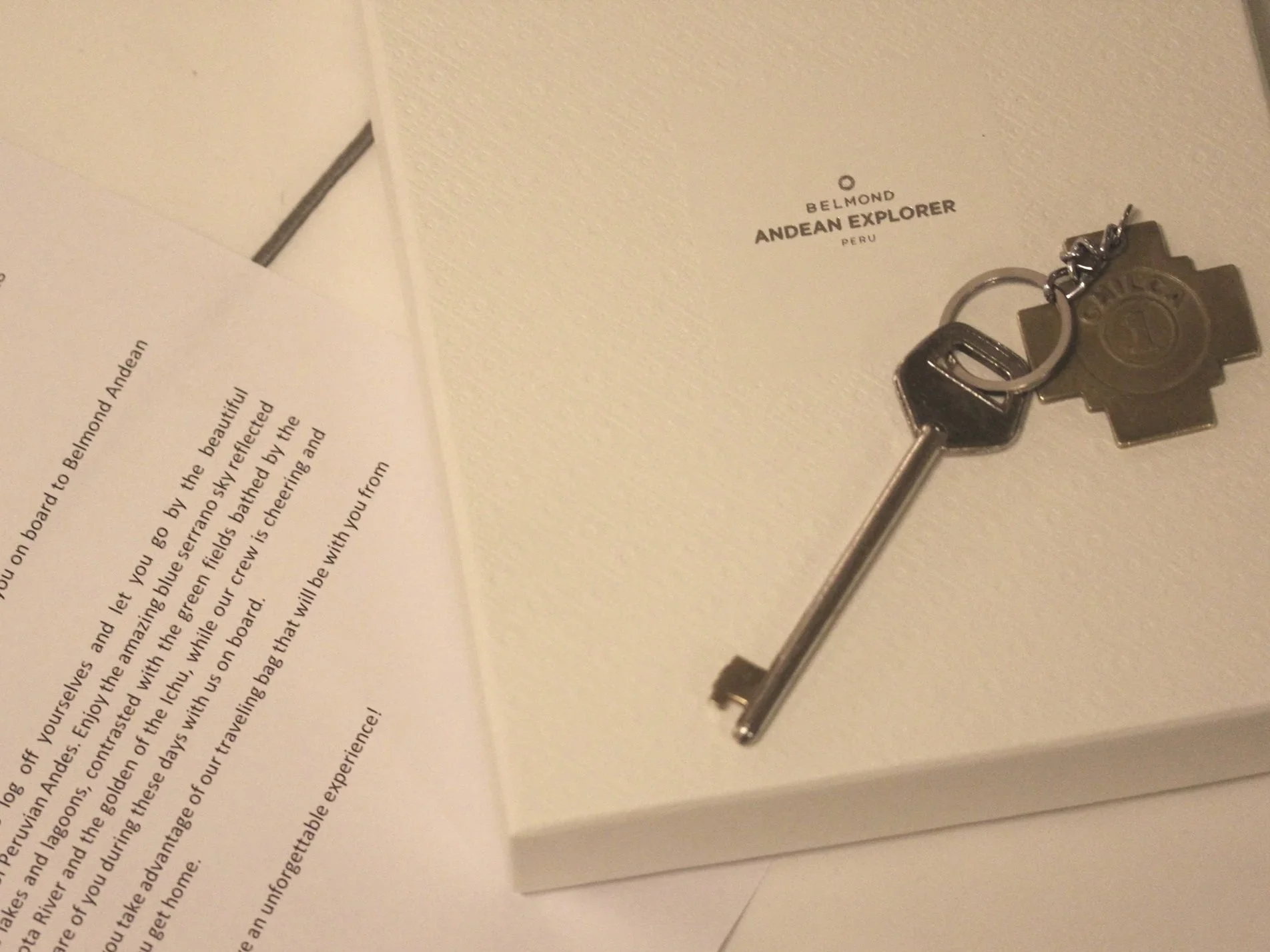
I hurried out the dinning cars and dashed to our suite door, pulled out the skeleton key and opened it.
Then I walked in.
Immediately I was annoyed.
Why were the blinds shut?
If you know me, you know I am claustrophobic, so closed windows are not exactly my idea of luxury.
I walked over, pulled the blinds open and turned around.
There were clothes hanging over the chair.
They weren't mine.
I froze.
Oh. My. Gosh.
I had just opened someone else's suite.
Apparently my key worked on another cabin.
I was mortified.
I was in the WRONG SUITE!!!
I quietly backed out,
closed the door,
recounted the train cars
and finally found my room.
Camera bag dropped off, cleaned up and breakfast enjoyed.
Dignity?
Slightly damaged.
*sidenote - I did mention the key issue to the head of staff because, while this was hilarious after the fact, it was also a legitimate security concern.
I certainly hope the system has since been corrected since my trip.
I chose not to announce it to the other passengers. No reason to turn my mistake into everyone else's holiday anxiety.
The train stopped in Puno and we headed out for our excursion to Lake Titicaca.
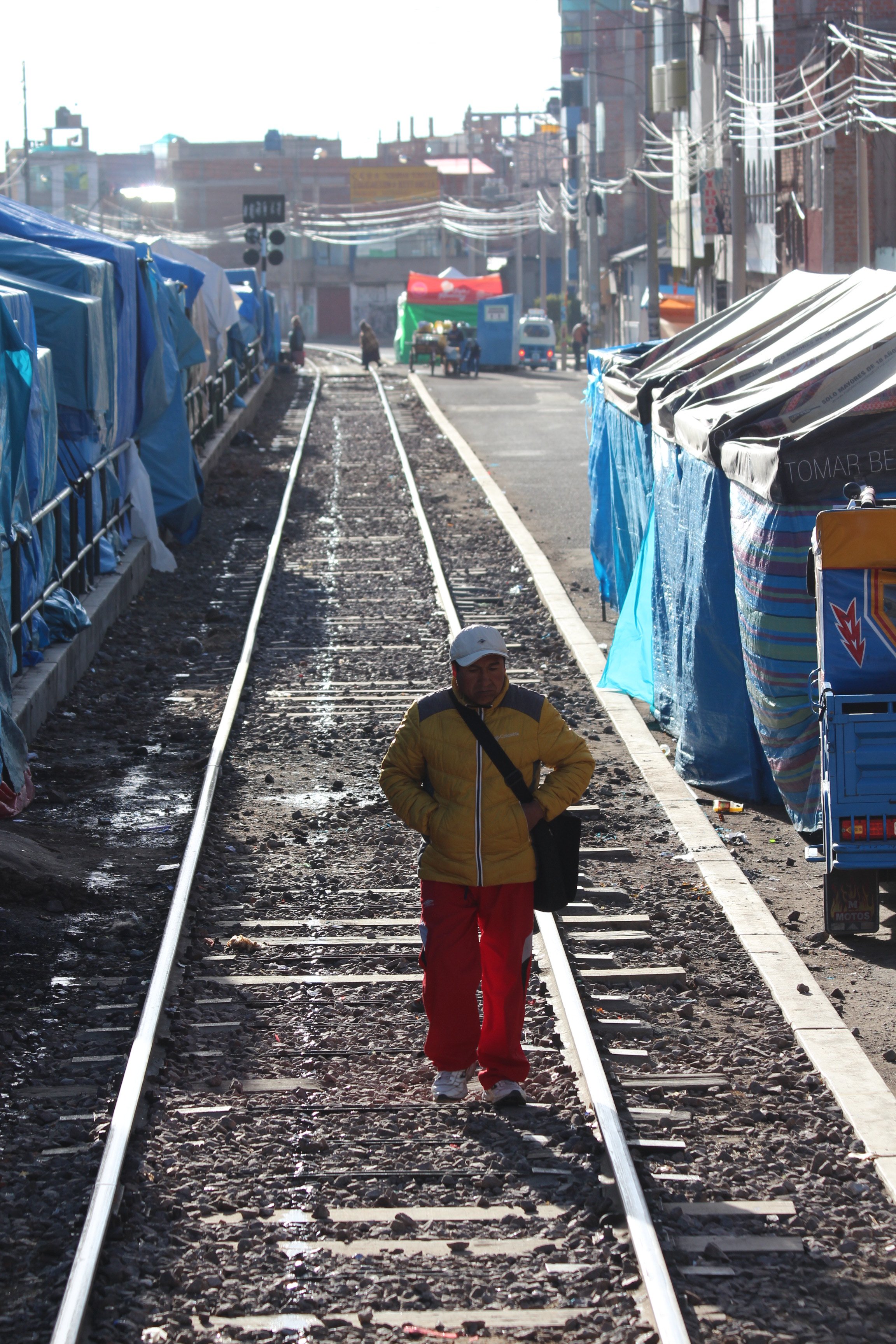
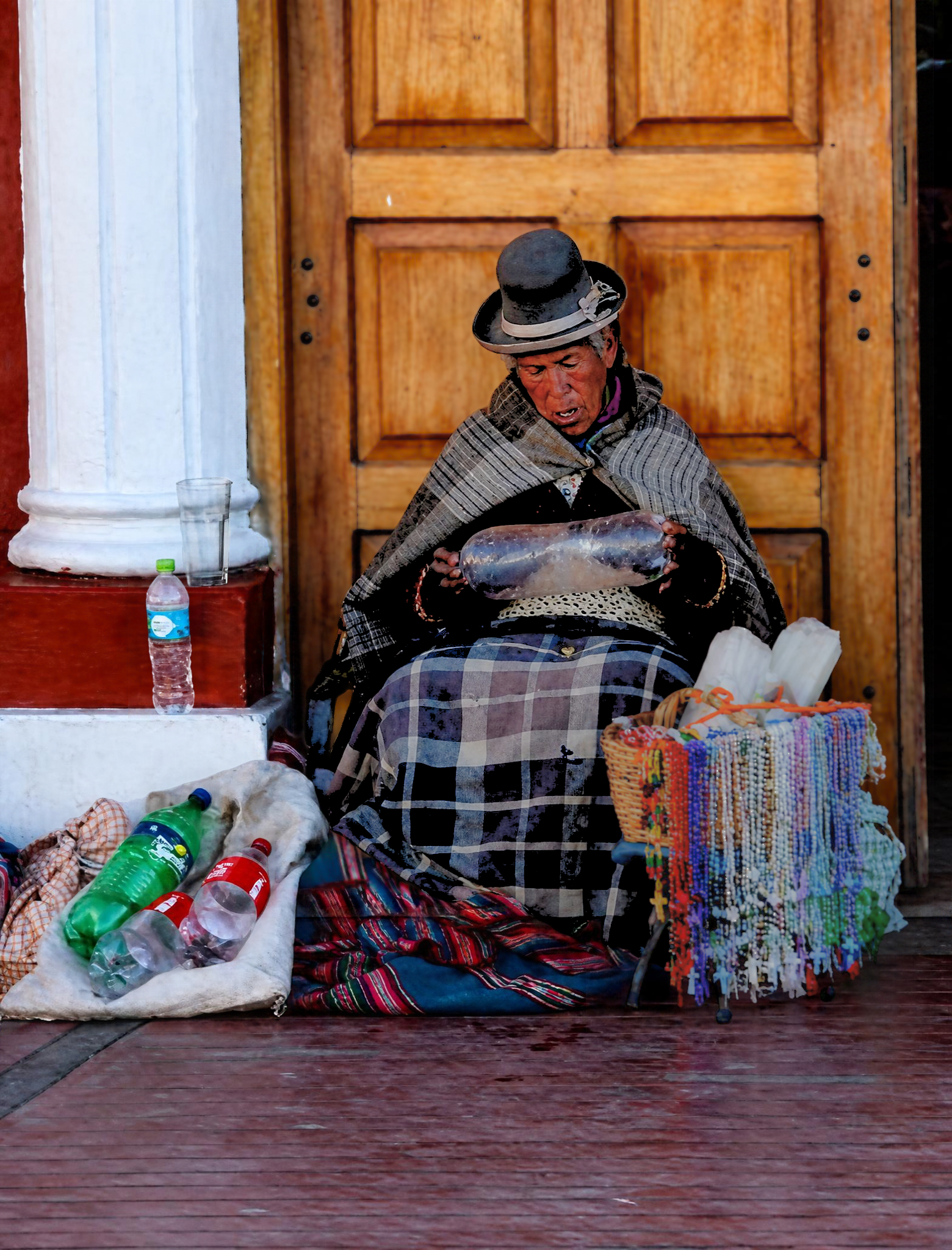
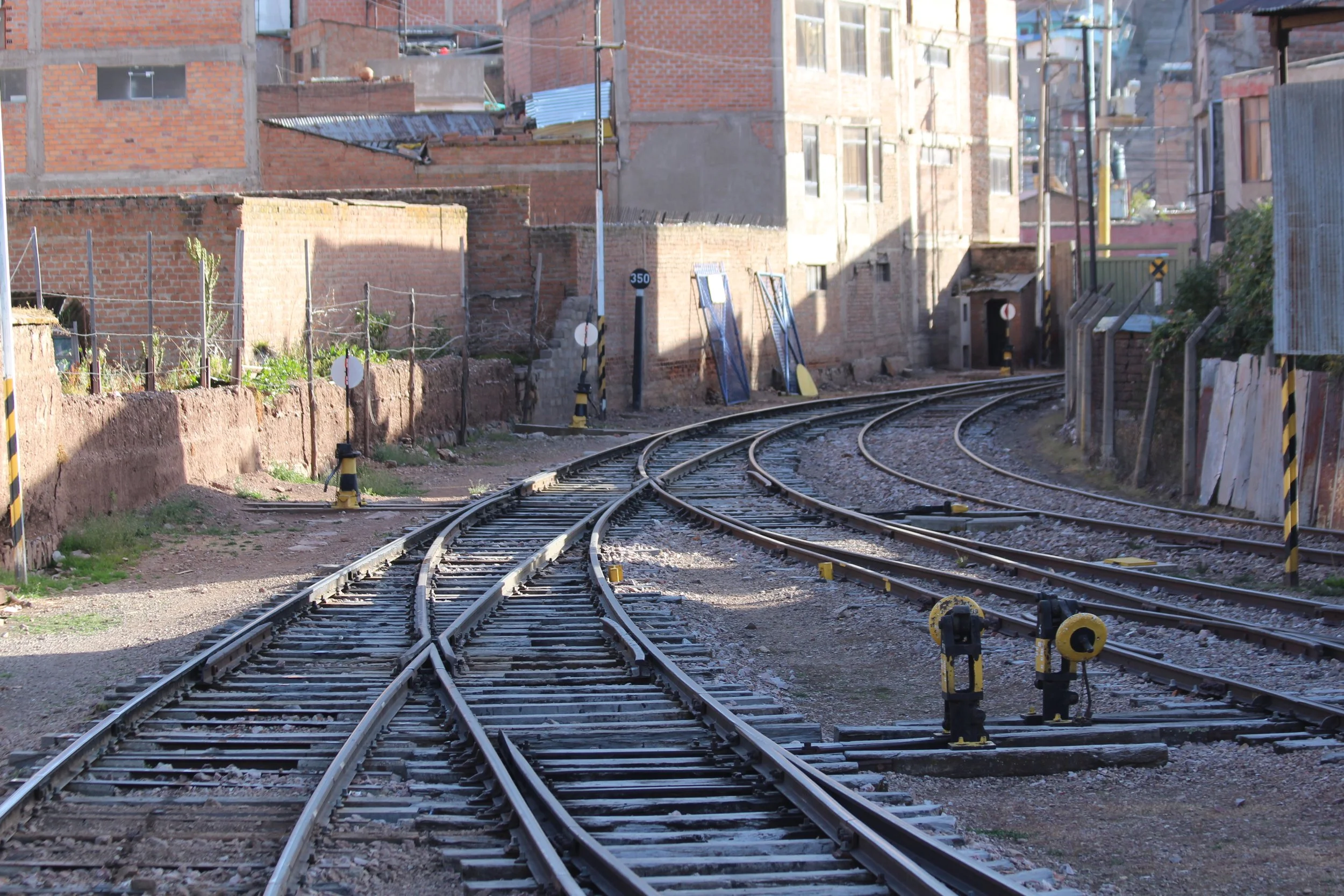
Arrival to Puno
At approximately 3,800 metres above sea level, Lake Titicaca is officially the world's highest navigable lake. It straddles Peru and Bolivia and has been central to Andean cultures for centuries.
At this altitude, Belmond had thoughtfully provided oxygen enrichment on the train, and our cabins had access to oxygen should anyone experience altitude-related problems.
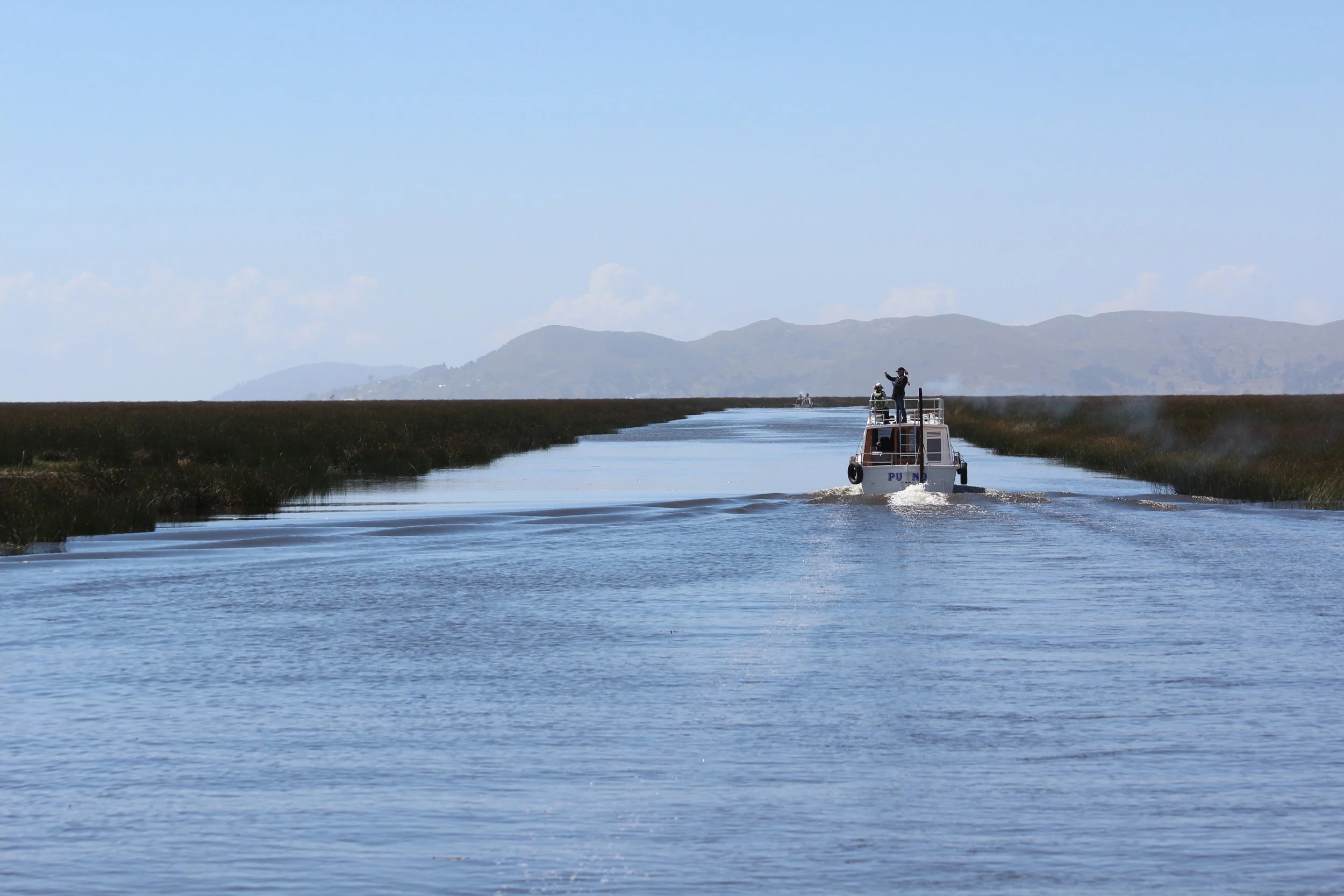
Our first stop was the famous floating islands of the Uros. We boarded a larger boat and headed towards the islands constructed from totora reeds, the same remarkable plant that is also used to make traditional boats.
And these aren't simply decorative islands built for tourists. They are inhabited 24/7.
The construction is extraordinary. Originally created for safety to escape pressure and attacks from more powerful mainland groups, including the Colla and the expanding Inca Empire.
Living on the lake gave them a refuge, and their islands could be moved farther from danger when necessary.
Dense blocks of totora roots are gathered and anchored together, creating the floating foundation. Layers of dried reeds are then added on top to create the walking surface.
And because reeds naturally break down, the islands require ongoing maintenance.
New reeds are continually added.
Think of it as living, floating infrastructure.
From what I could find - there are about 120 islands in the area.
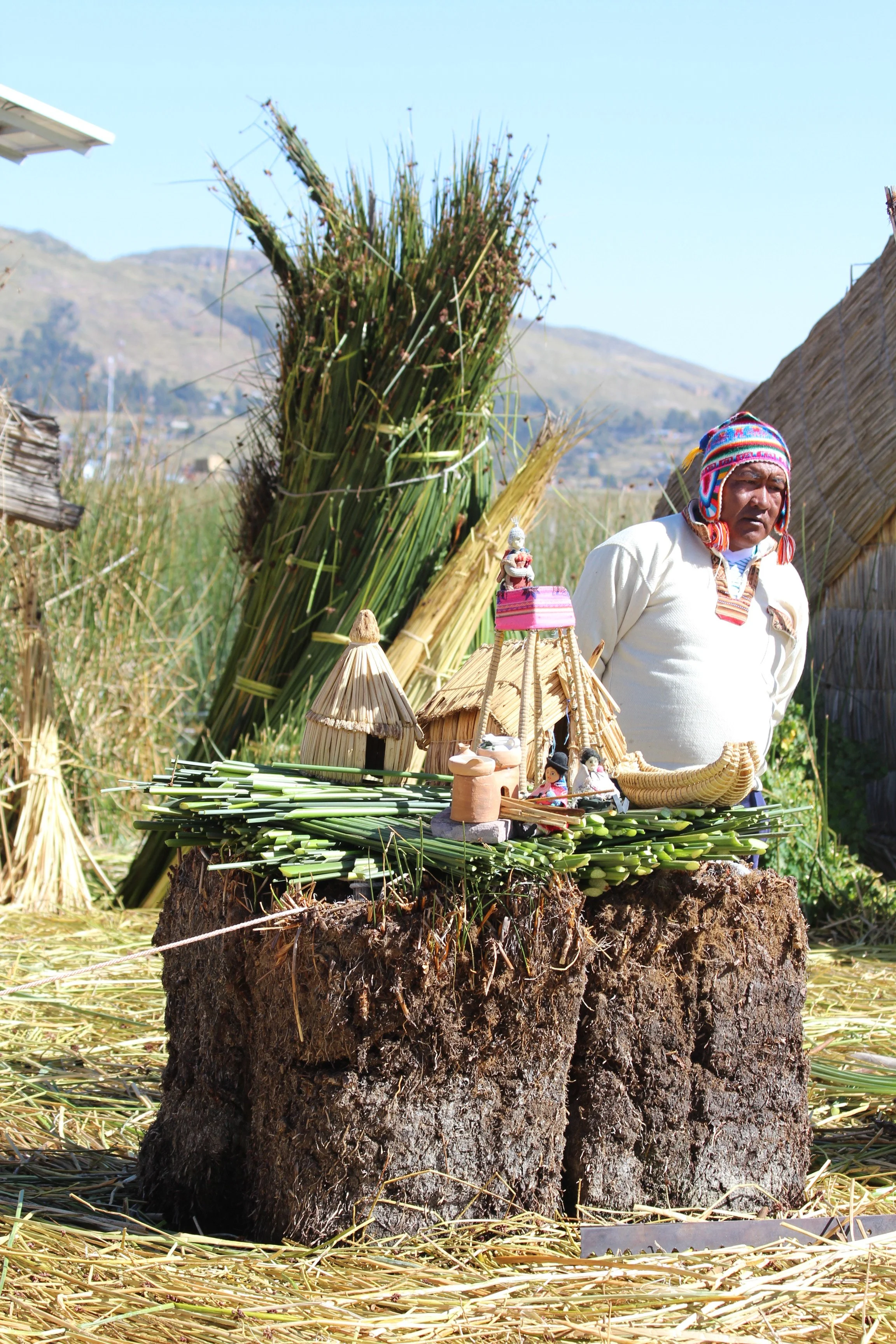
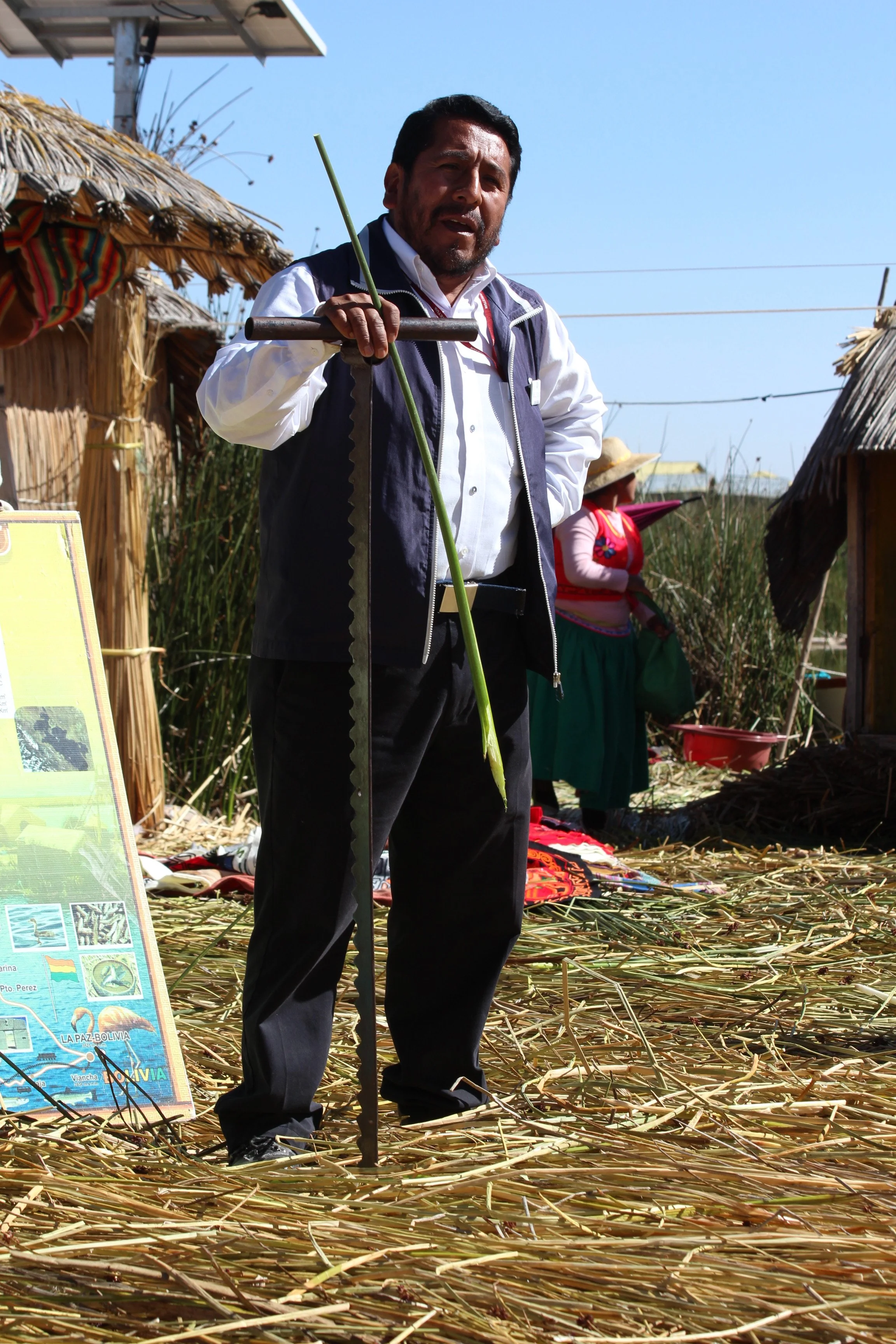
You can see the sharp saw like tool used for construction. The area or island we stepped onto was large enough to host about 6 small simple huts.
Each island looked like a giant straw mat floating on the lake.
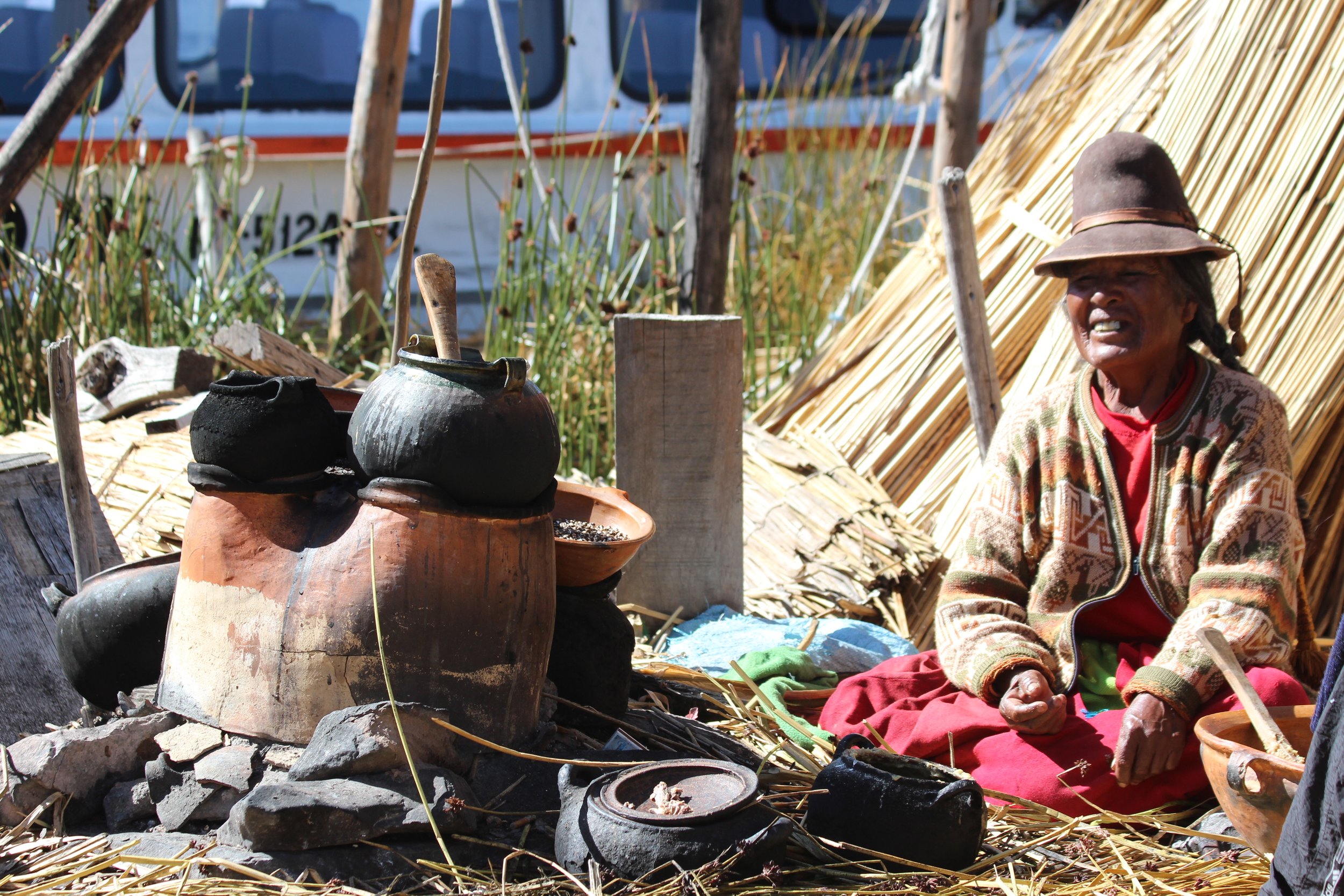
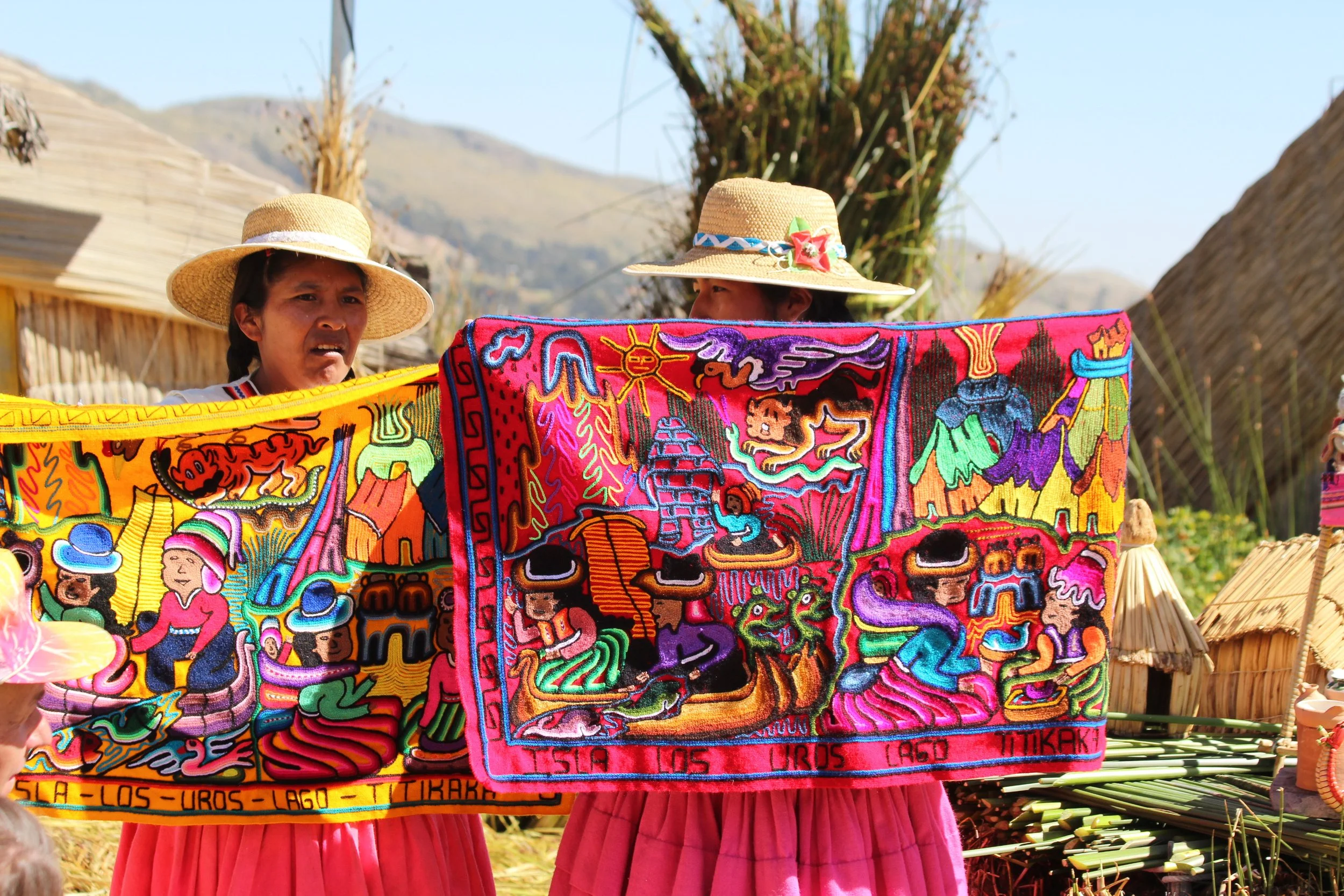
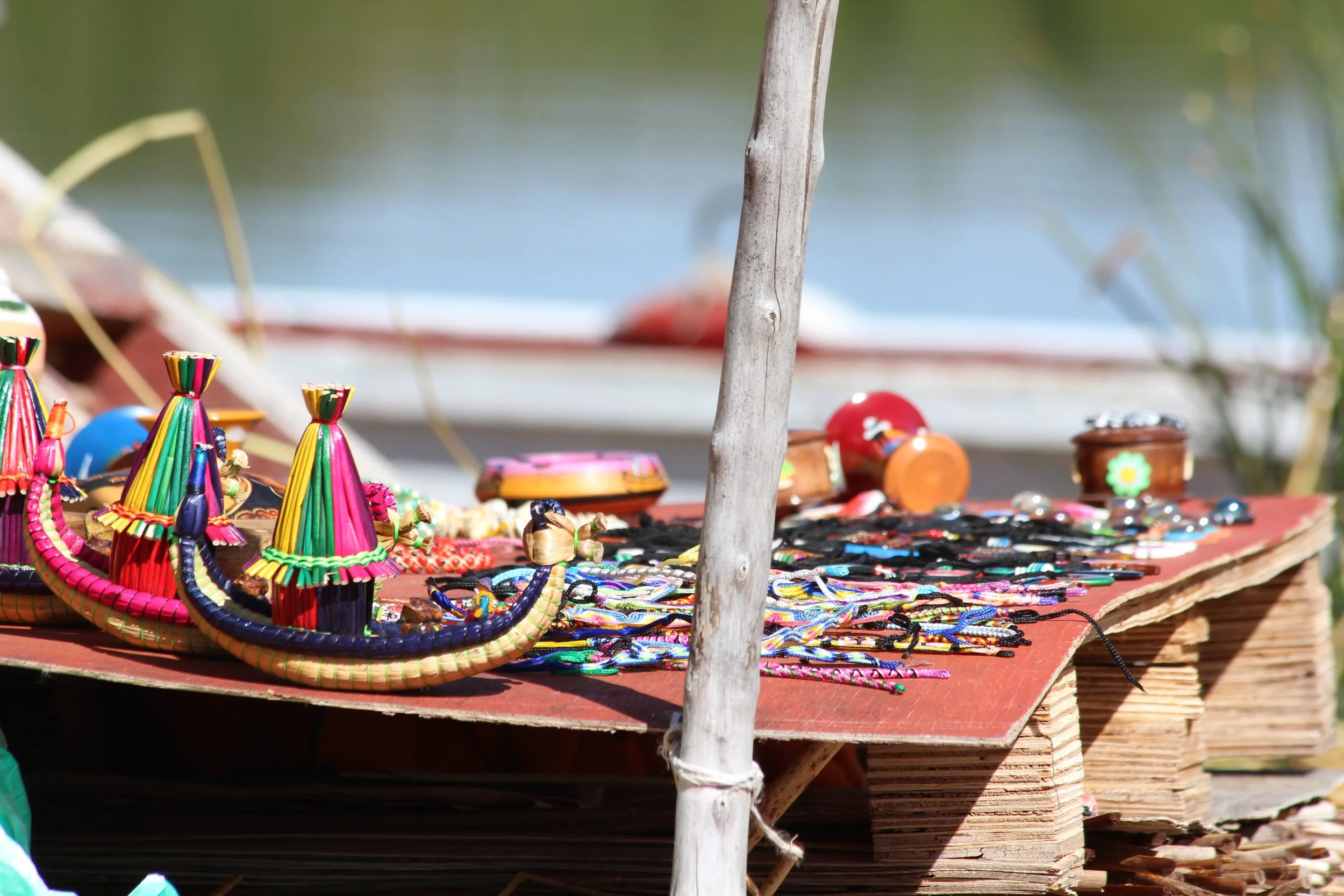
Their small dwellings were very simple, cooking areas were outside, dogs and woven/embroidered goods everywhere.
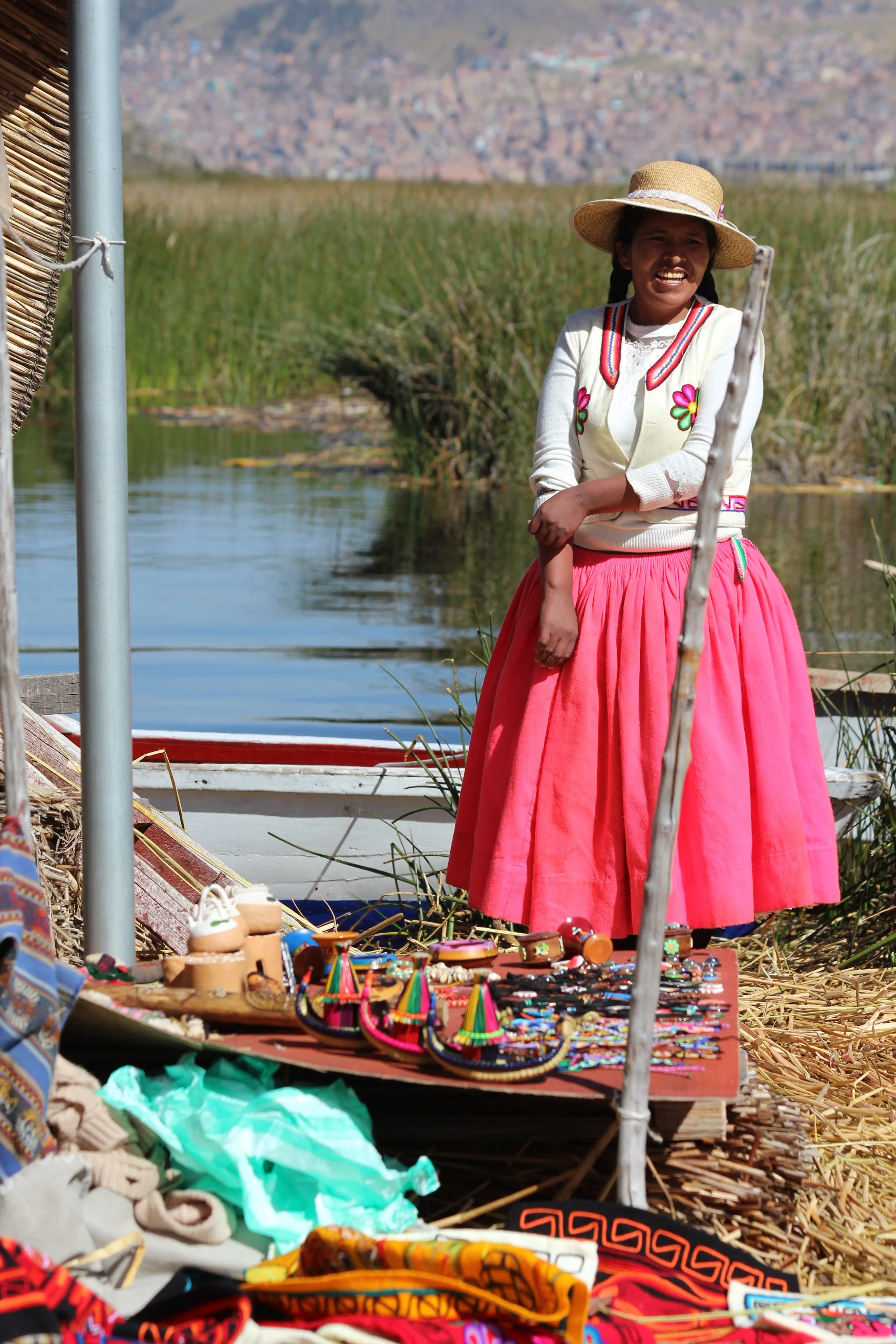
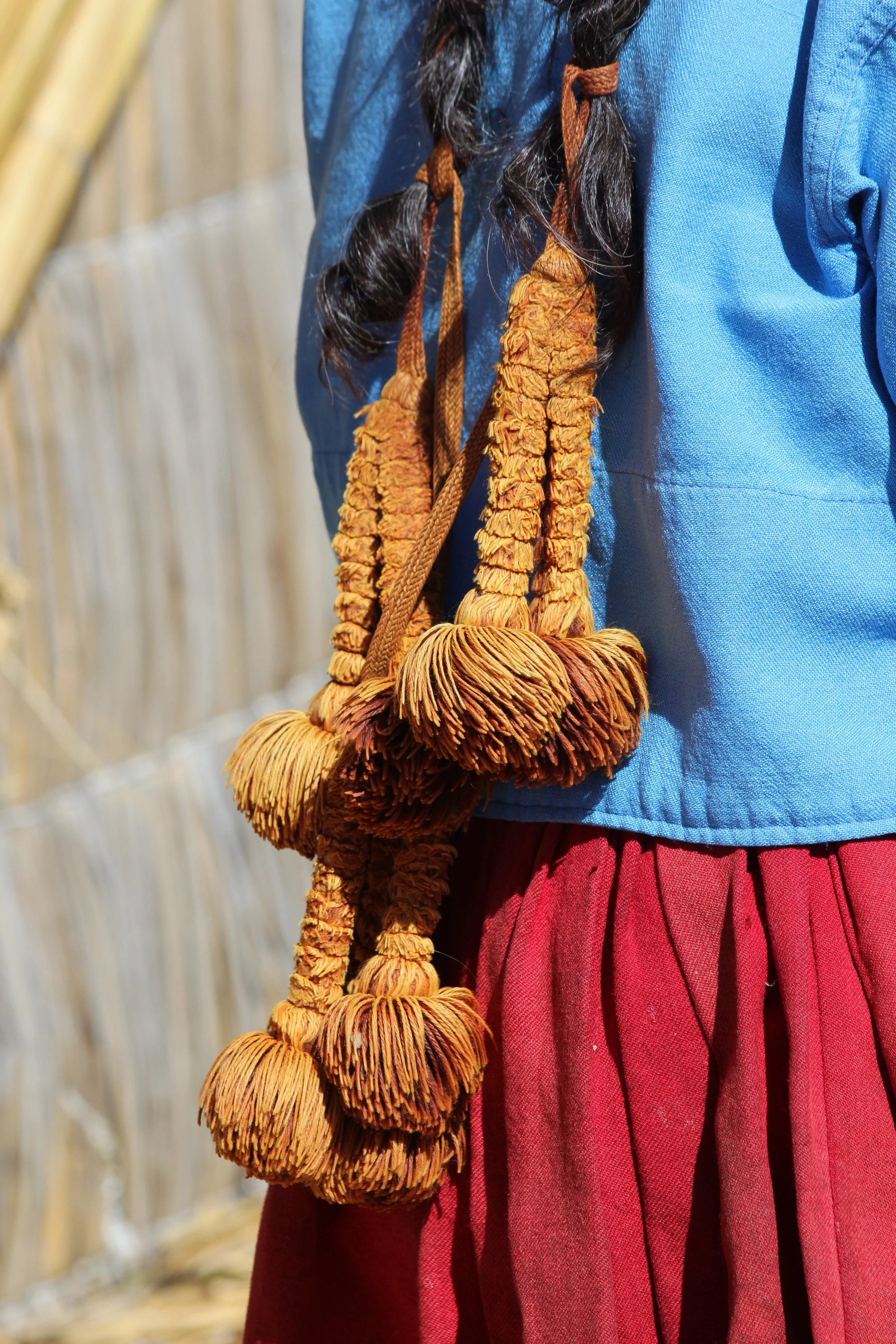
The women wore beautifully coloured traditional clothing, with enormous skirts, layered garments and hats that seemed to add another splash of colour to an already colourful scene.
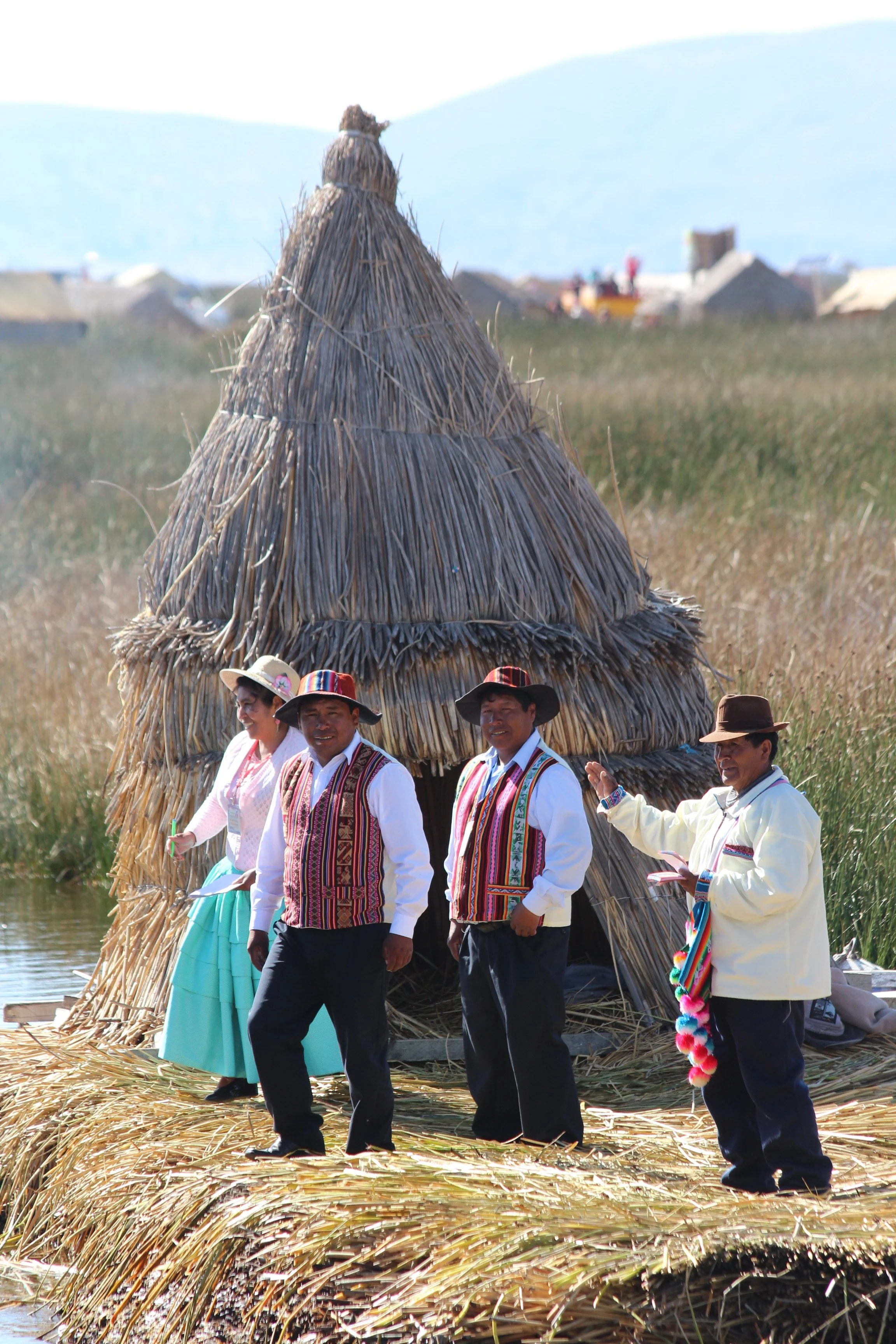
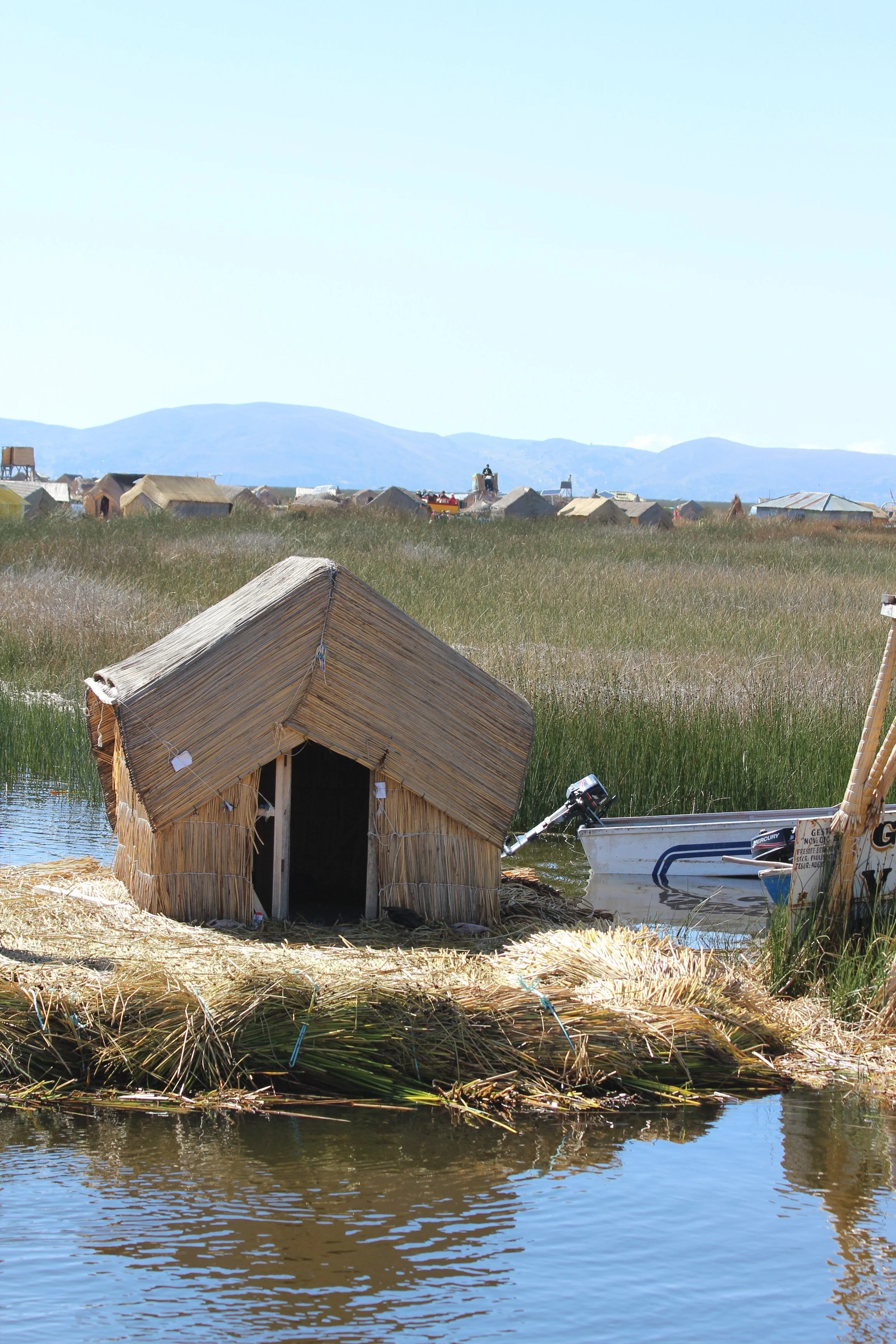
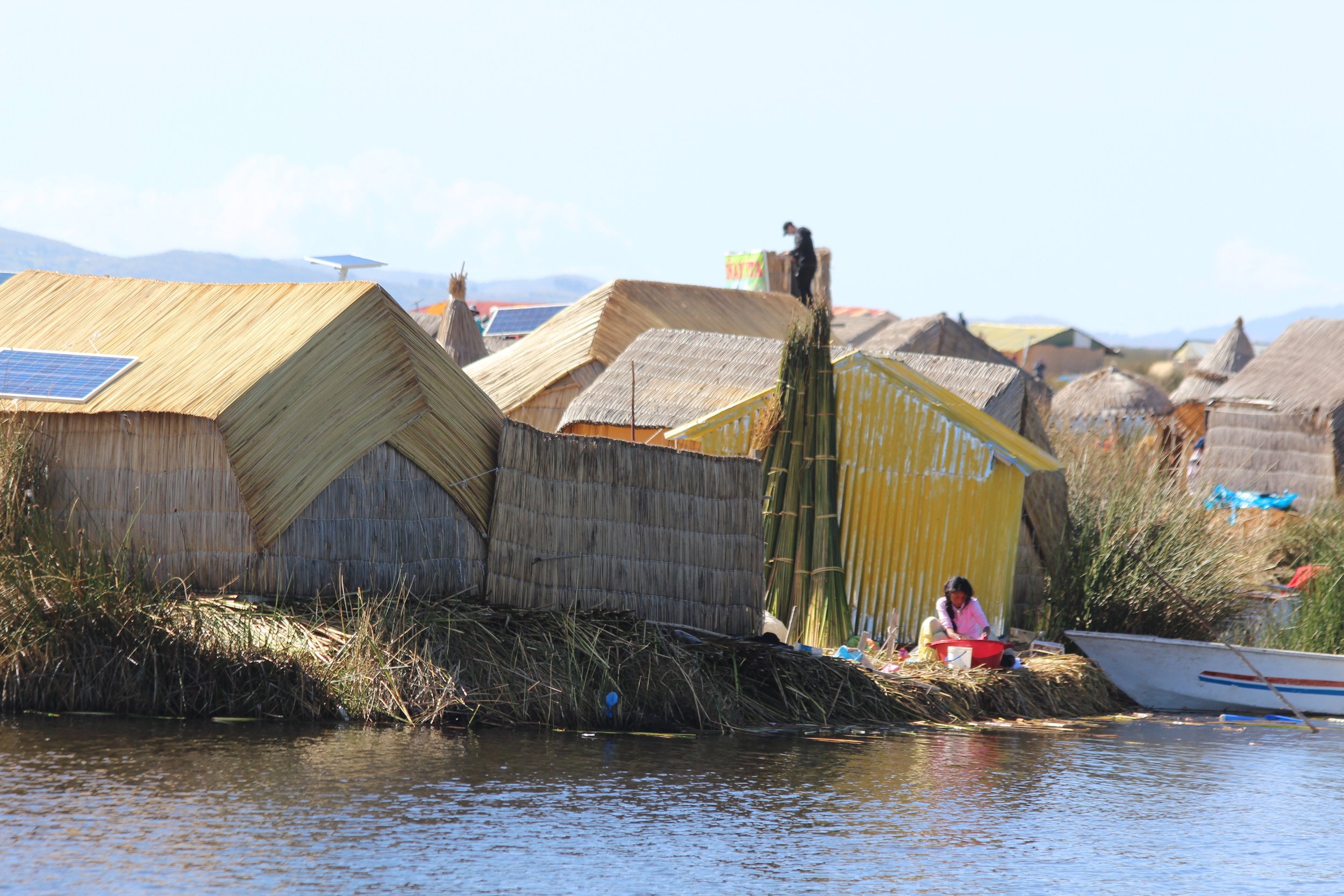
Notice there is a solar panel
We were welcomed into one of the homes.
It was simple.
Very simple.
And yet there was something incredibly powerful about seeing how people have adapted their lives to this extraordinary environment.
Totora isn't just something they stand on.
It has historically been used for homes, boats, crafts and other aspects of daily life.
Then came the boats.
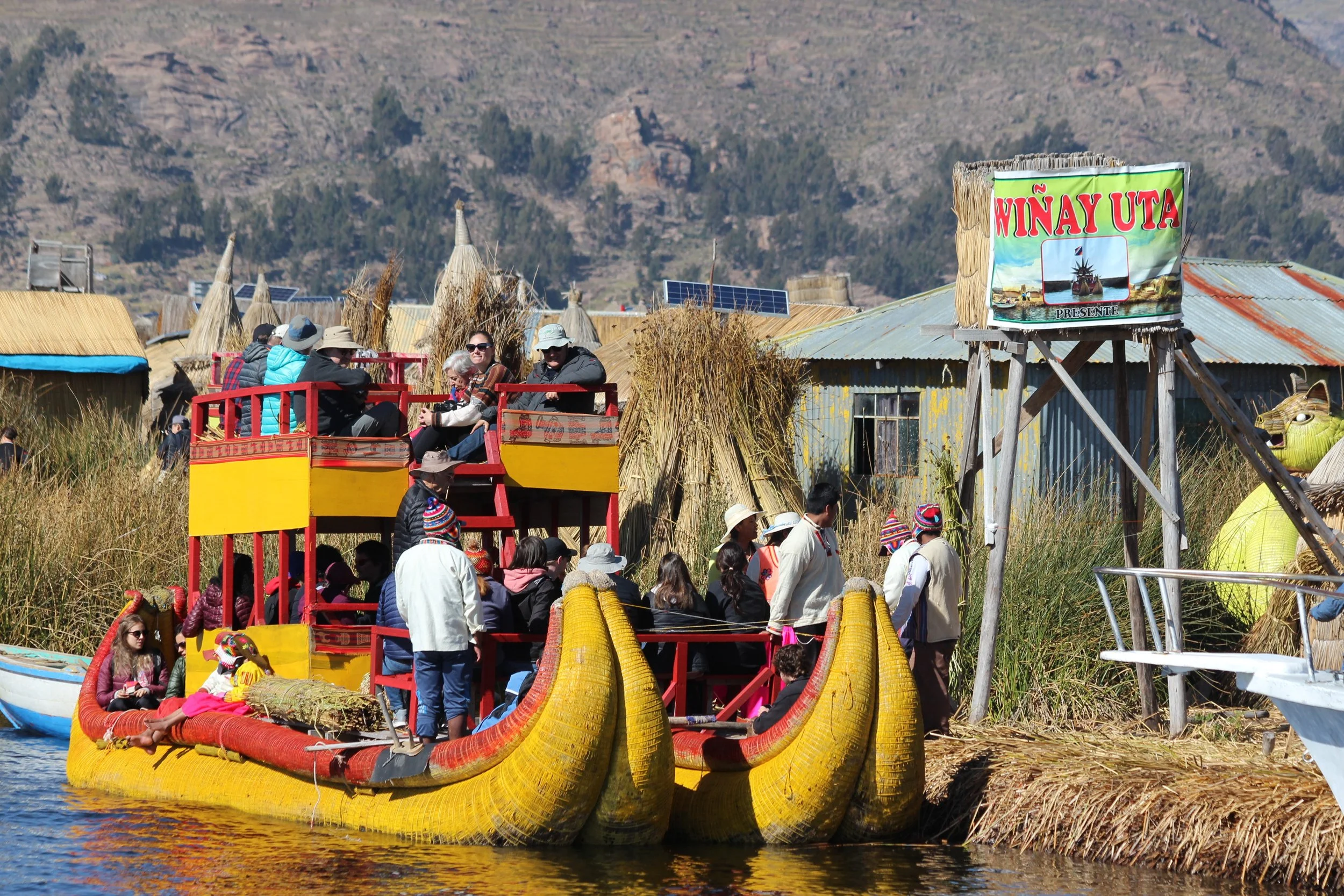
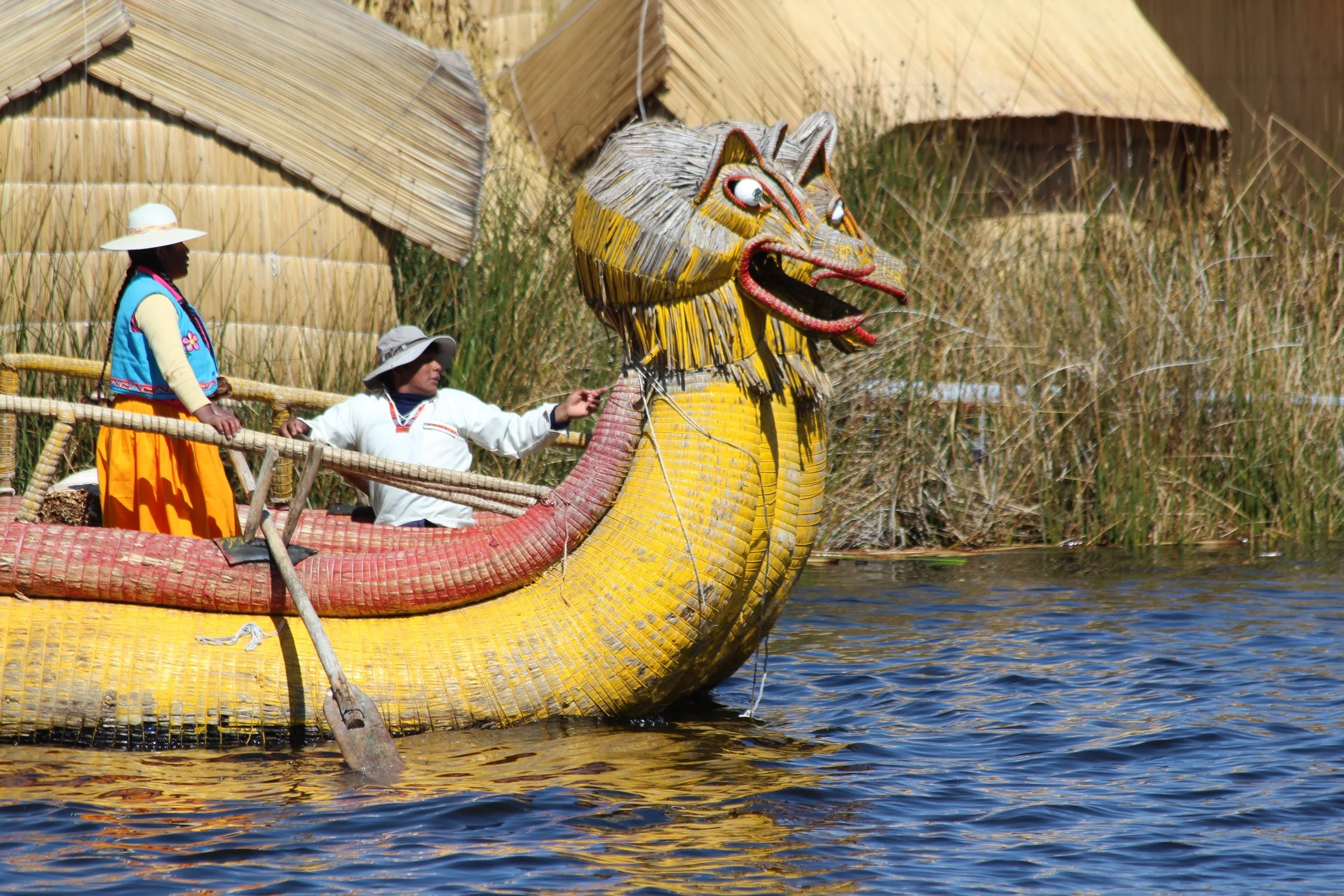
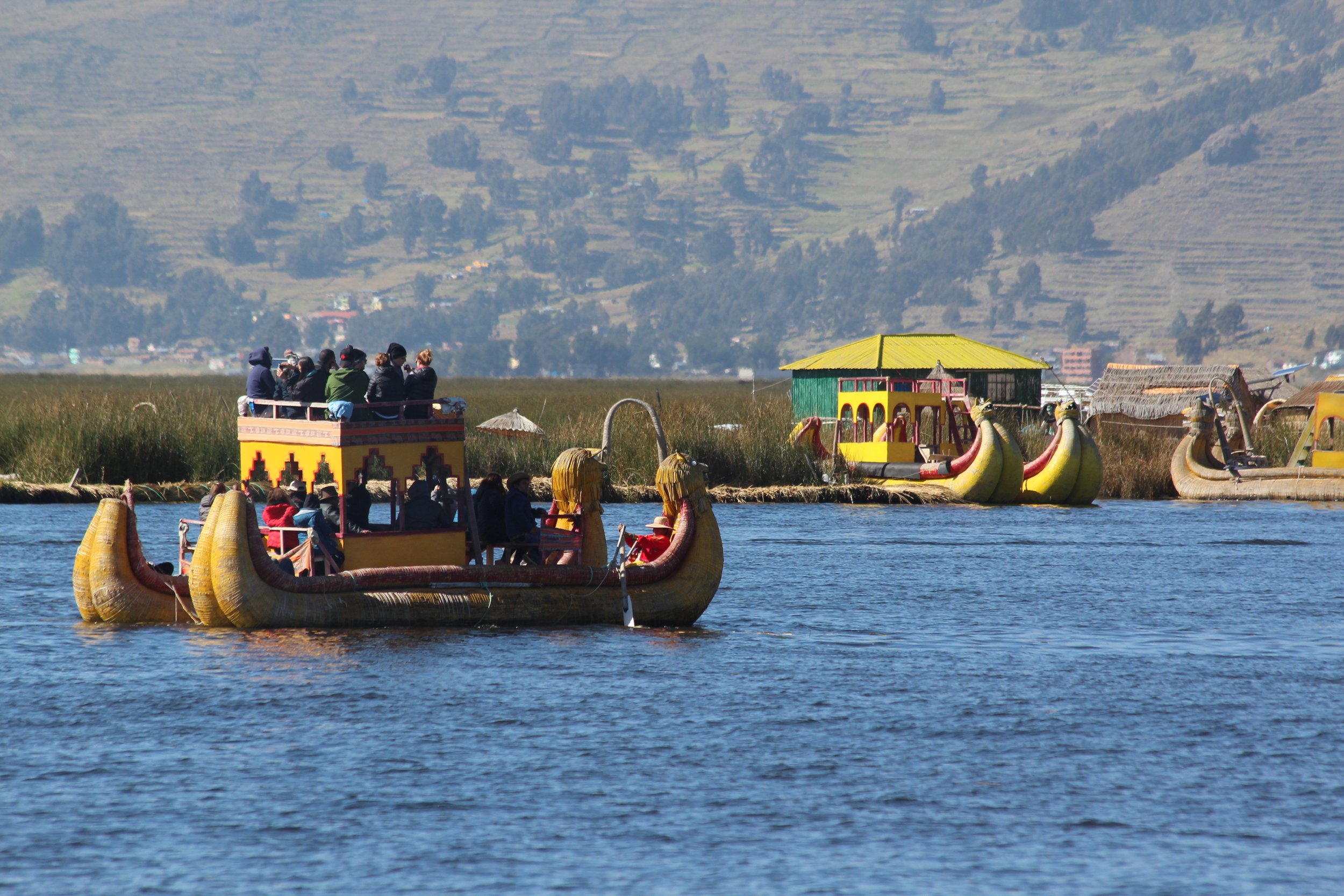
Oh, the boats.
They looked like two enormous reed canoes joined together, complete with a dramatic animal-shaped head on the front.
To me, it looked a little like an Andean version of the Ogopogo.
Obviously, I had to take a ride.
Was it commercialized for tourism?
Absolutely but at come time this was the mode of transportation.
There were woven goods and embroidered textiles everywhere, and colourful souvenirs available to visitors.
But even knowing that, I couldn't help being fascinated by the ingenuity of a people who built their lives around a plant growing in the lake. (more photos in gallery at end of blog)
From the Uros, we continued across the lake toward Taquile Island, where we would have lunch.
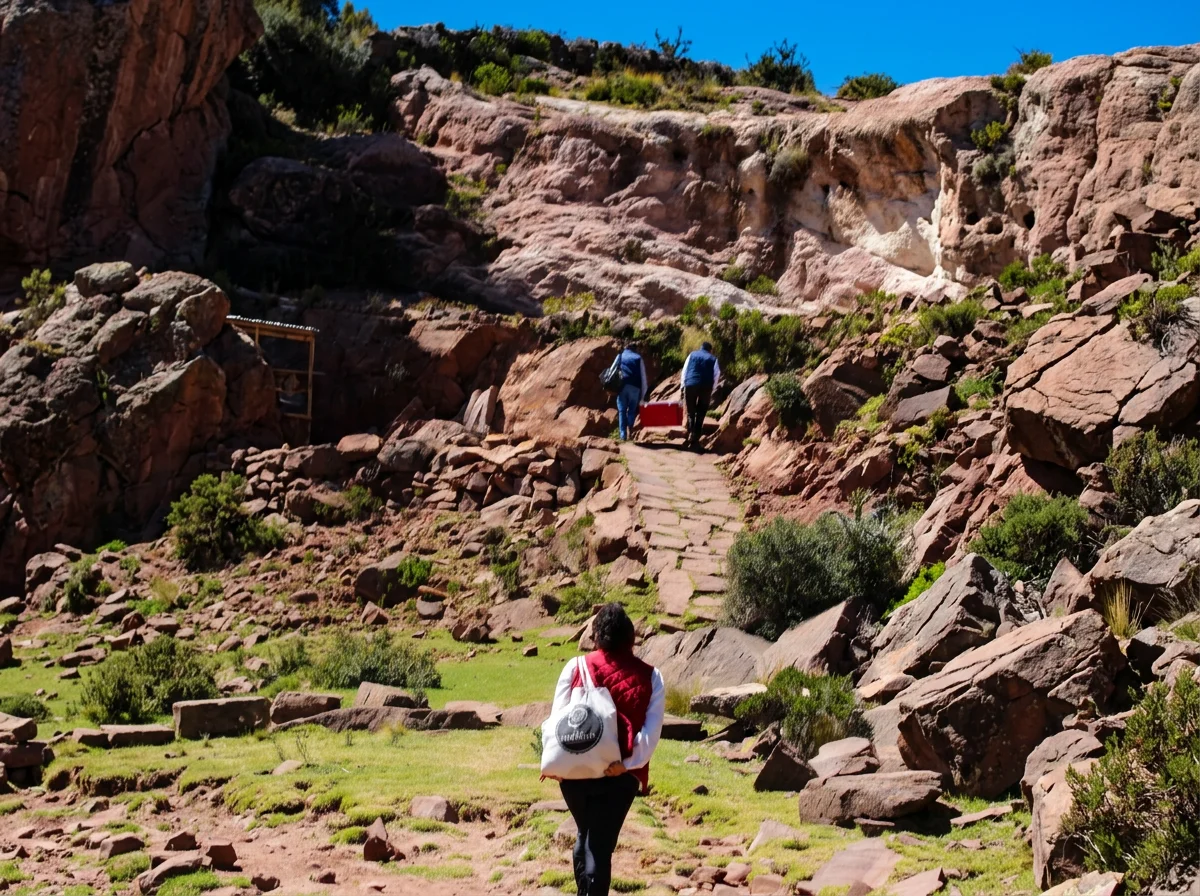
Taquile is very different from the floating islands.
It is a natural island, rocky and rugged, with agricultural terraces carved into the landscape.
We walked through the island, taking in the stone pathways, terraces and views across the lake.
The traditional clothing here caught my eye immediately. The men were knitting. A woman down on the ground weaving by hand.
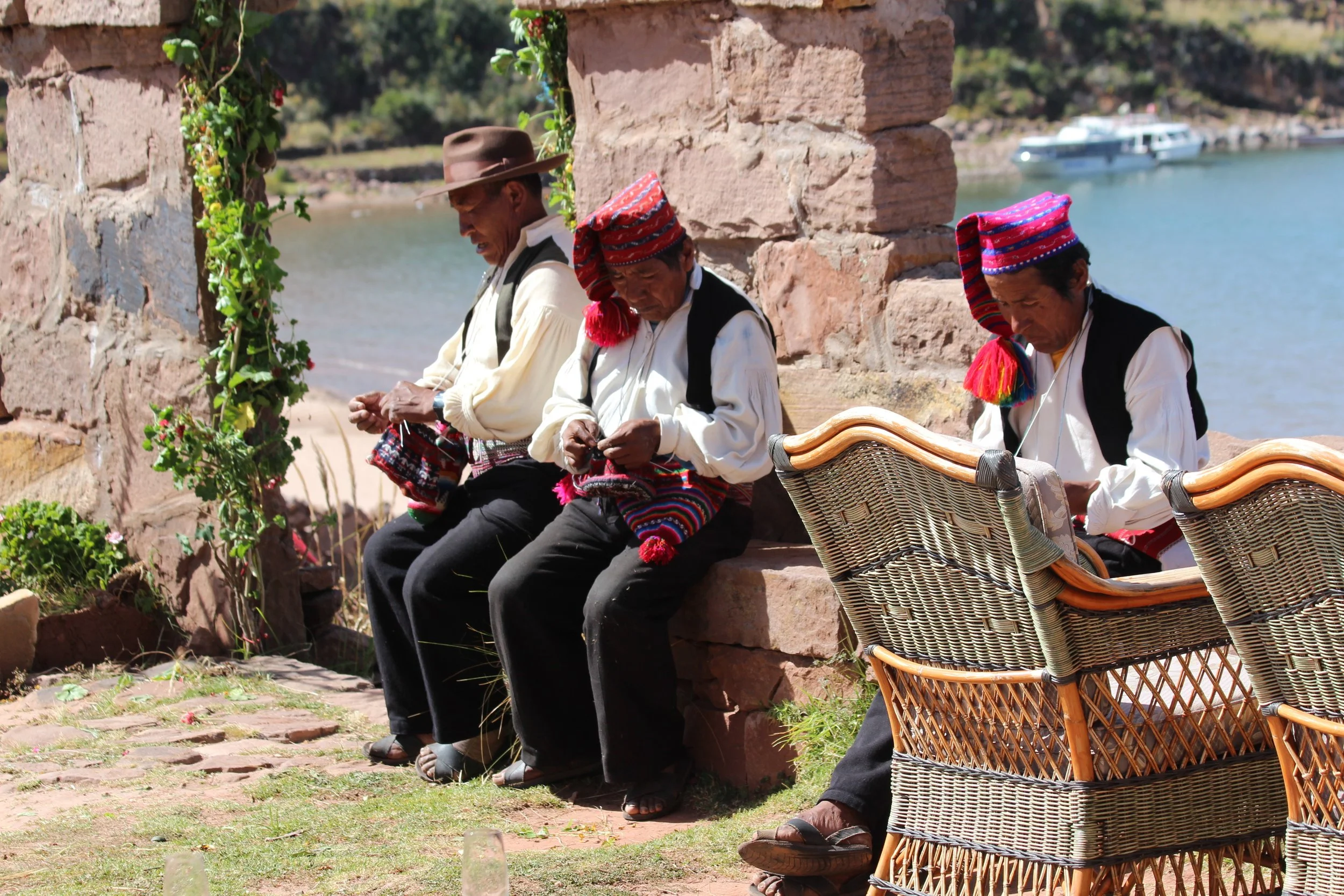
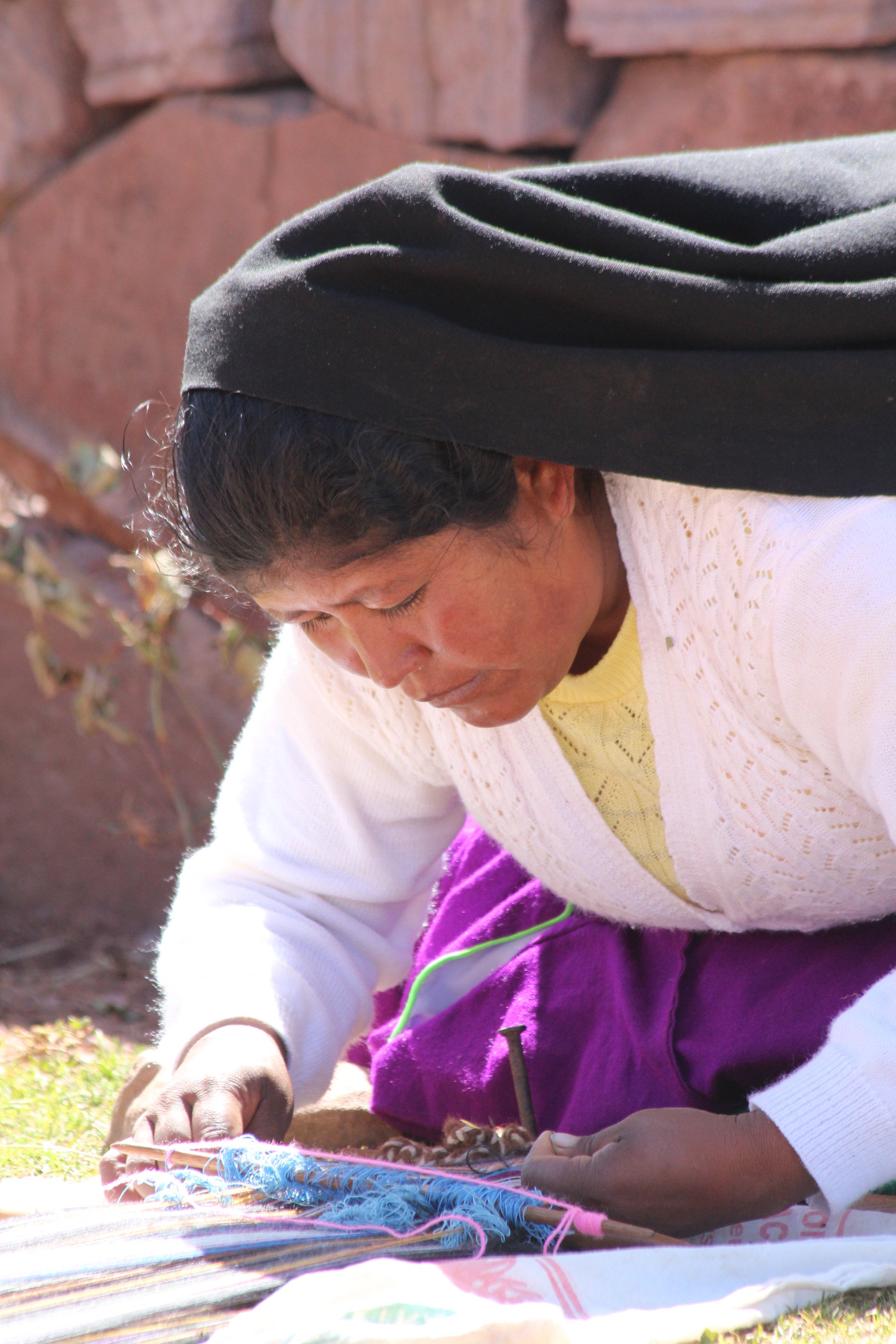
Colour everywhere.
Dark scarves.
Bright skirts.
Taquile is particularly famous for its textile traditions. UNESCO inscribed Taquile and its textile art on the Representative List of the Intangible Cultural Heritage of Humanity in 2008. The textile tradition is practised by both men and women and is woven into everyday community life.
And then came the dancing and music.
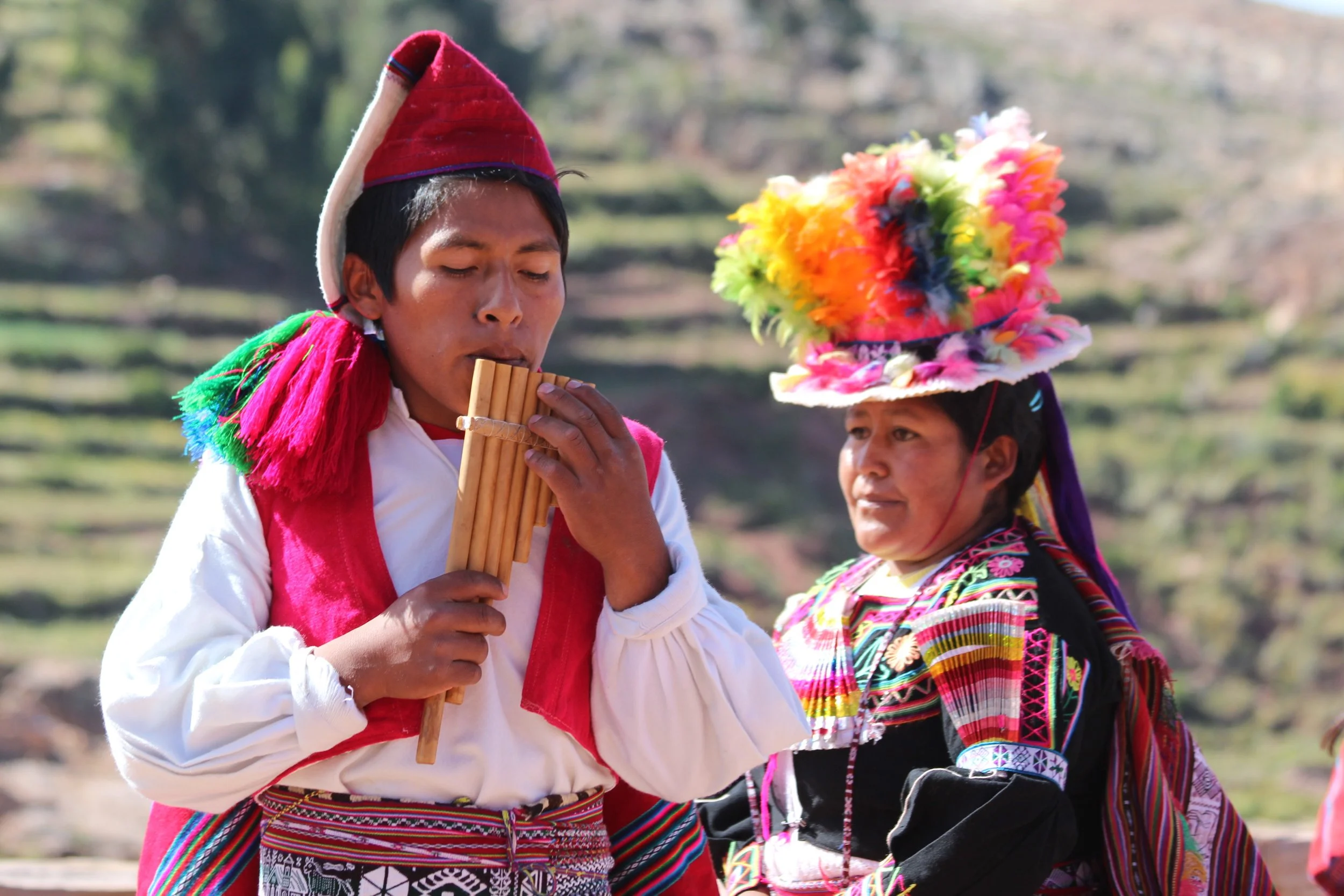
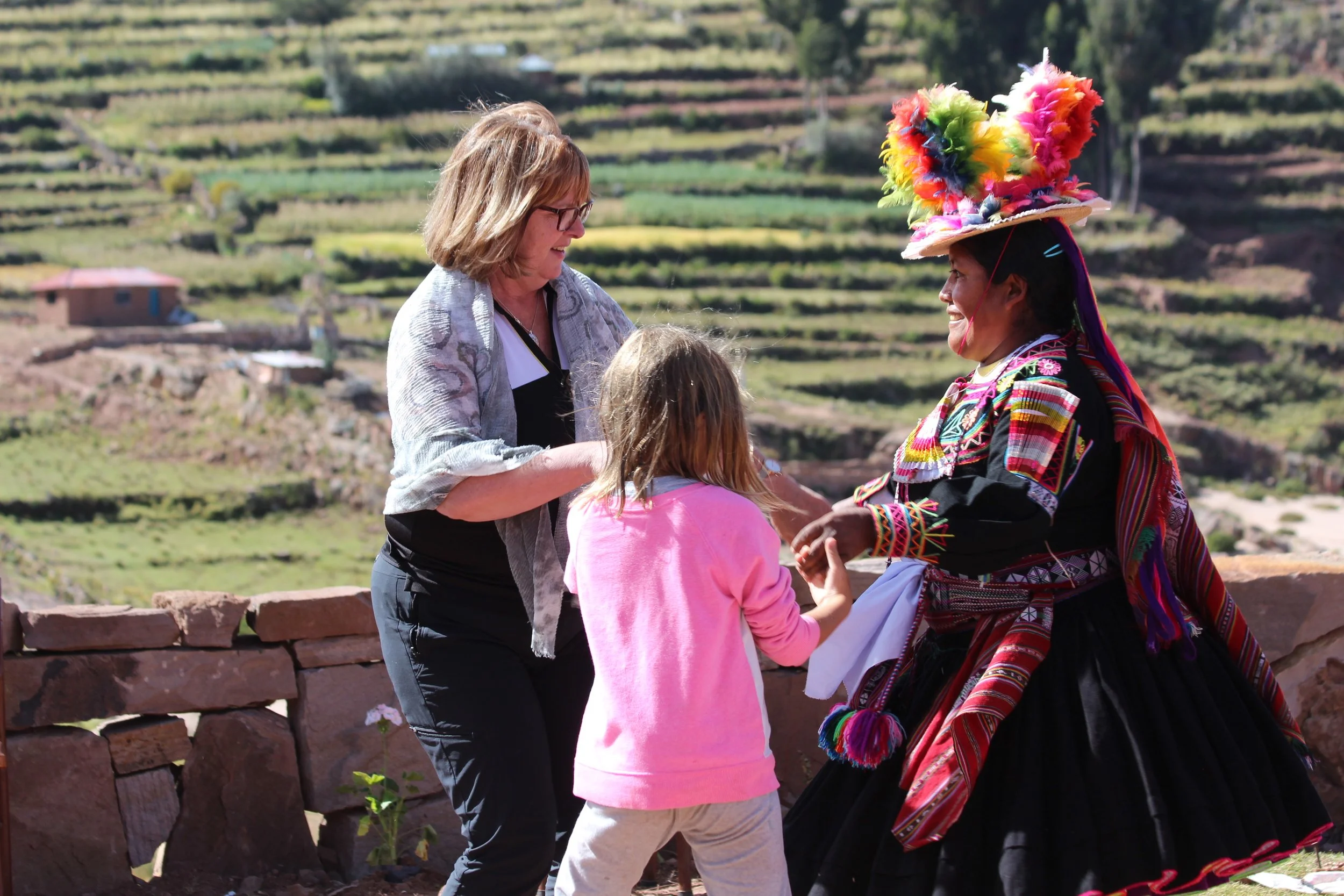
The traditional costumes were spectacular, especially the woman whose hat was topped with bright feathers and colourful ribbons trailing behind her.
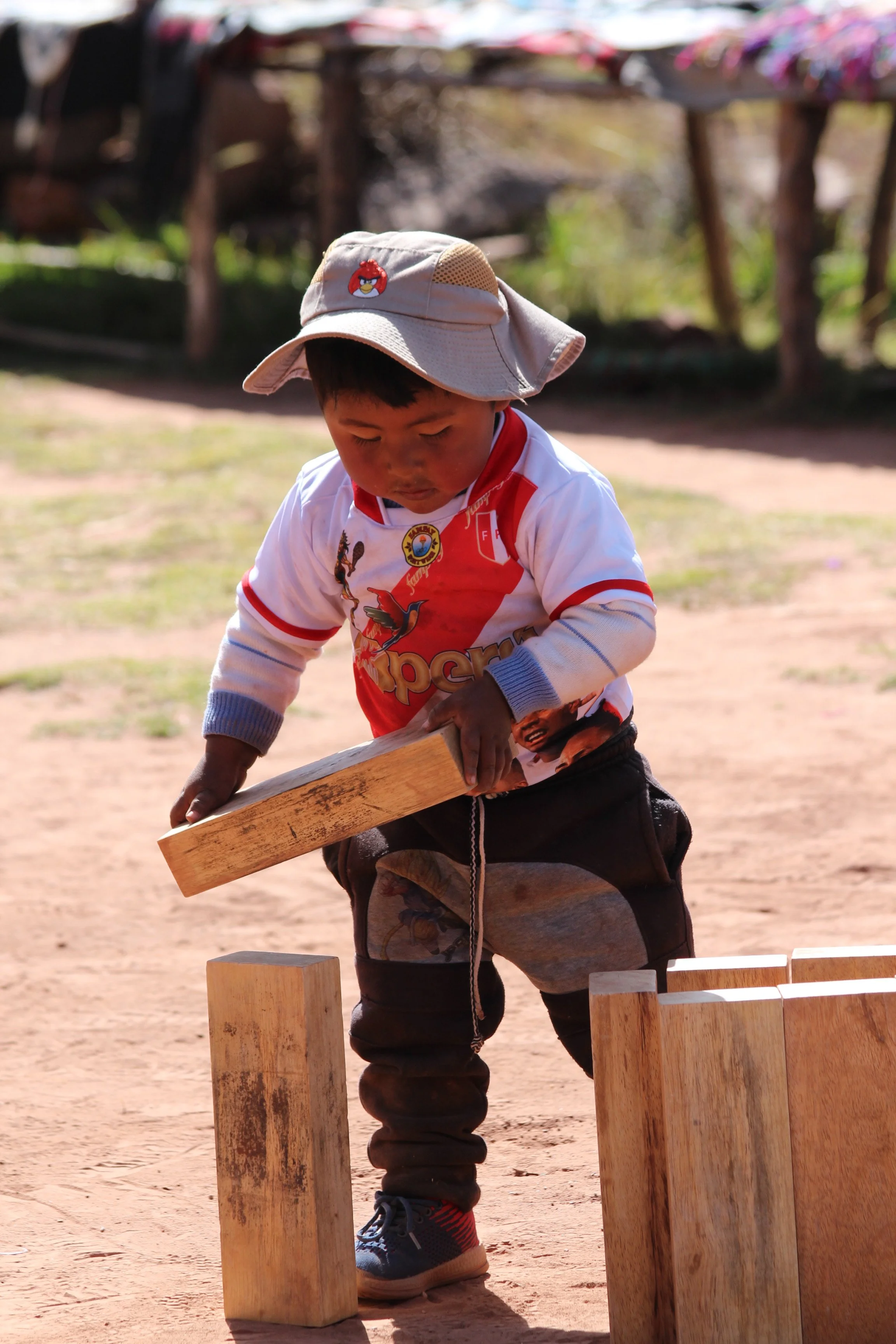
The island also gave us a glimpse into a completely different way of life — agriculture, livestock, fishing and community traditions all woven together on this rugged piece of land in the middle of one of the world's great lakes.
You don't need to understand everything about a place to appreciate it.
Sometimes you just need to slow down enough to look.
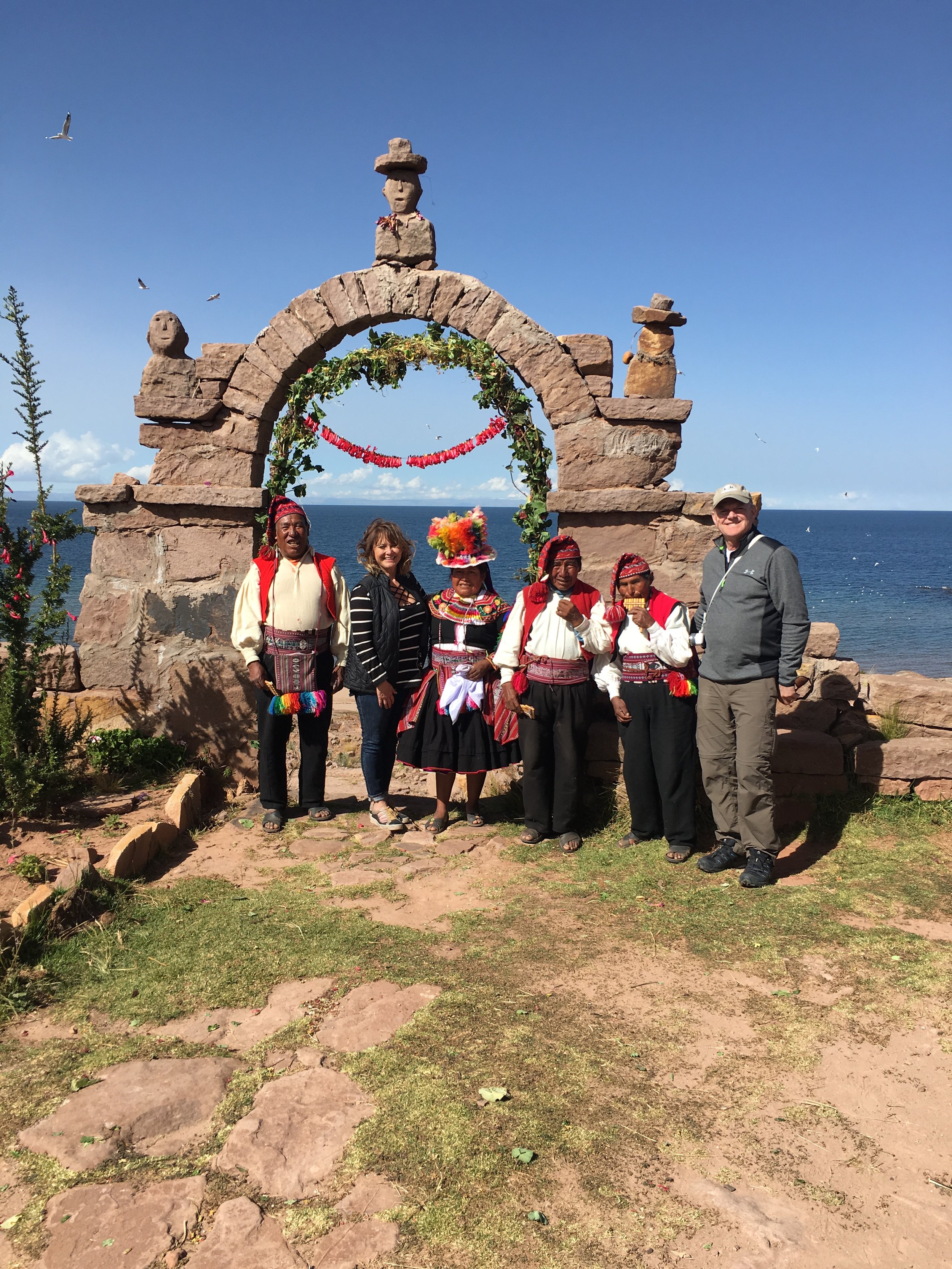
I was particularly interested in the stone arches which had Inca like carved heads. Upon asking my guide I was told the islanders maintain deep reverence for Pachamama or Mother Earth who they believe directly controls harvest fertility, and the Apus, the mountains.
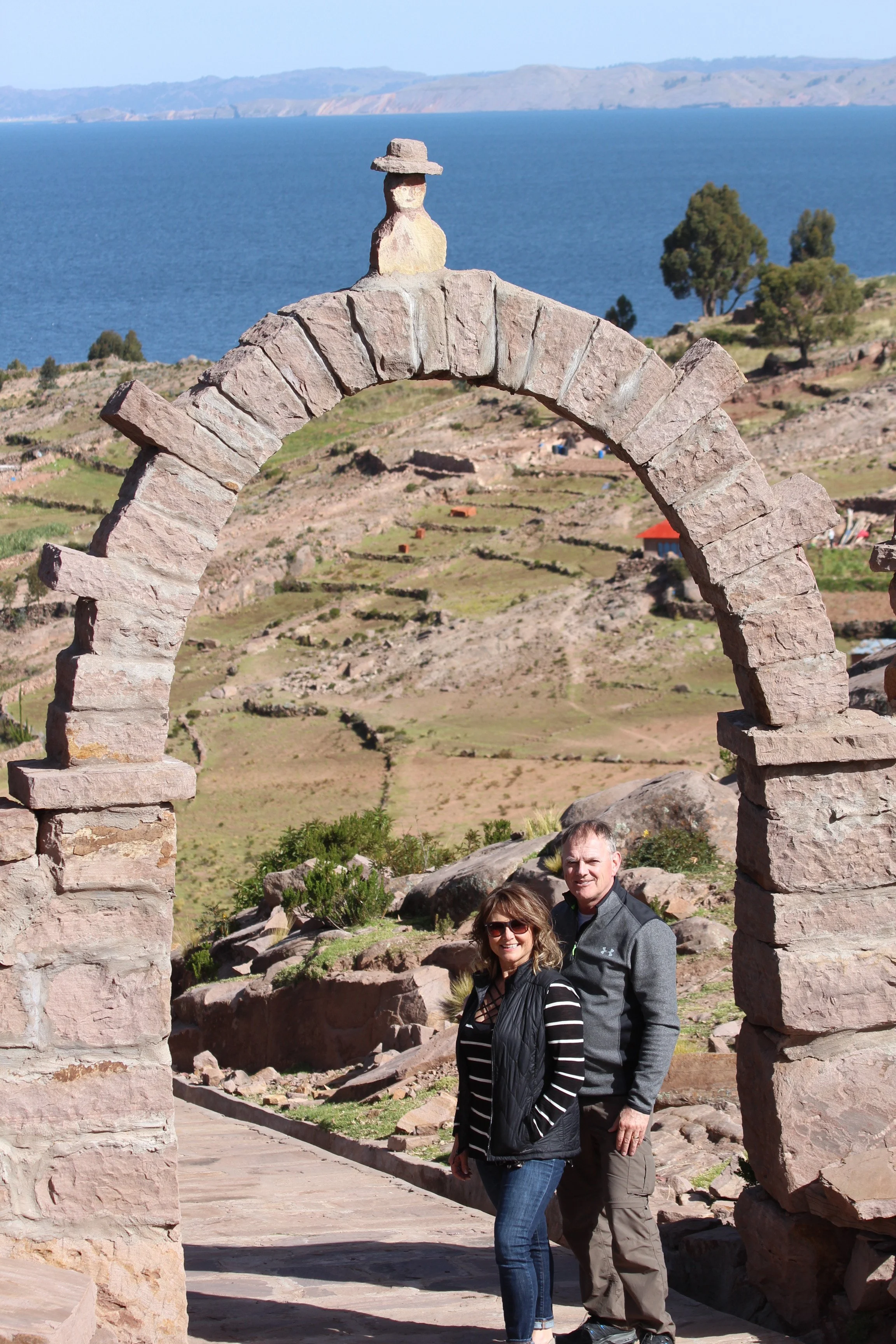
Arches - Taquile
We hiked to the top of the hill and did a standard practice of offering three coca leaves to the earth and mountains to ask for safe travel and permission before any undertak
Our authentic meal was tasty and we headed back to Puno.
We had a little free time, wandered around, found a small coffee shop and waited for our train. live music - I suspect this was organized. It was jazz and Mother’s day. What a great way to celebrate.
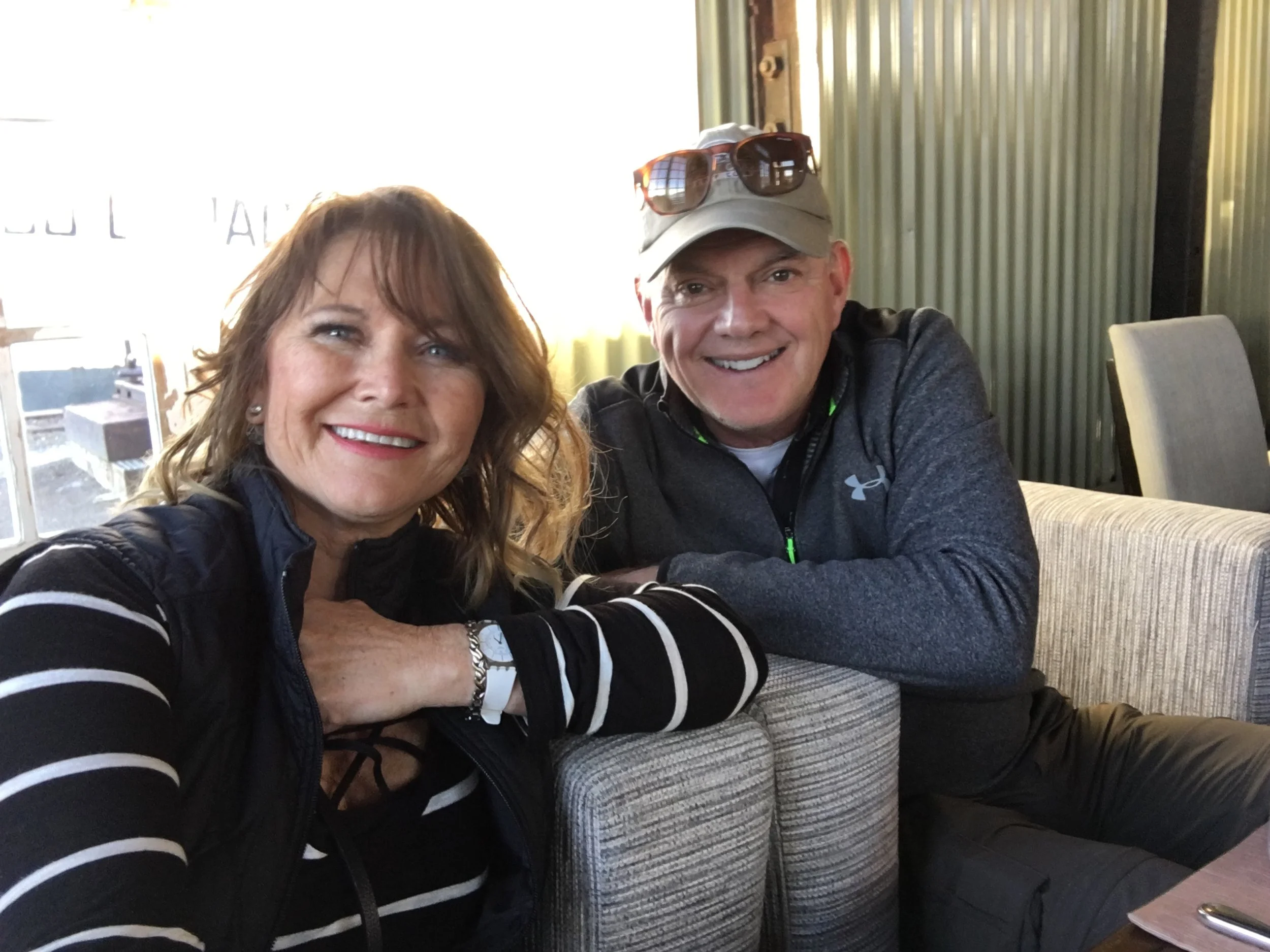
Back aboard, we freshened up.
Now, here's where having the gift of the gab pays off.
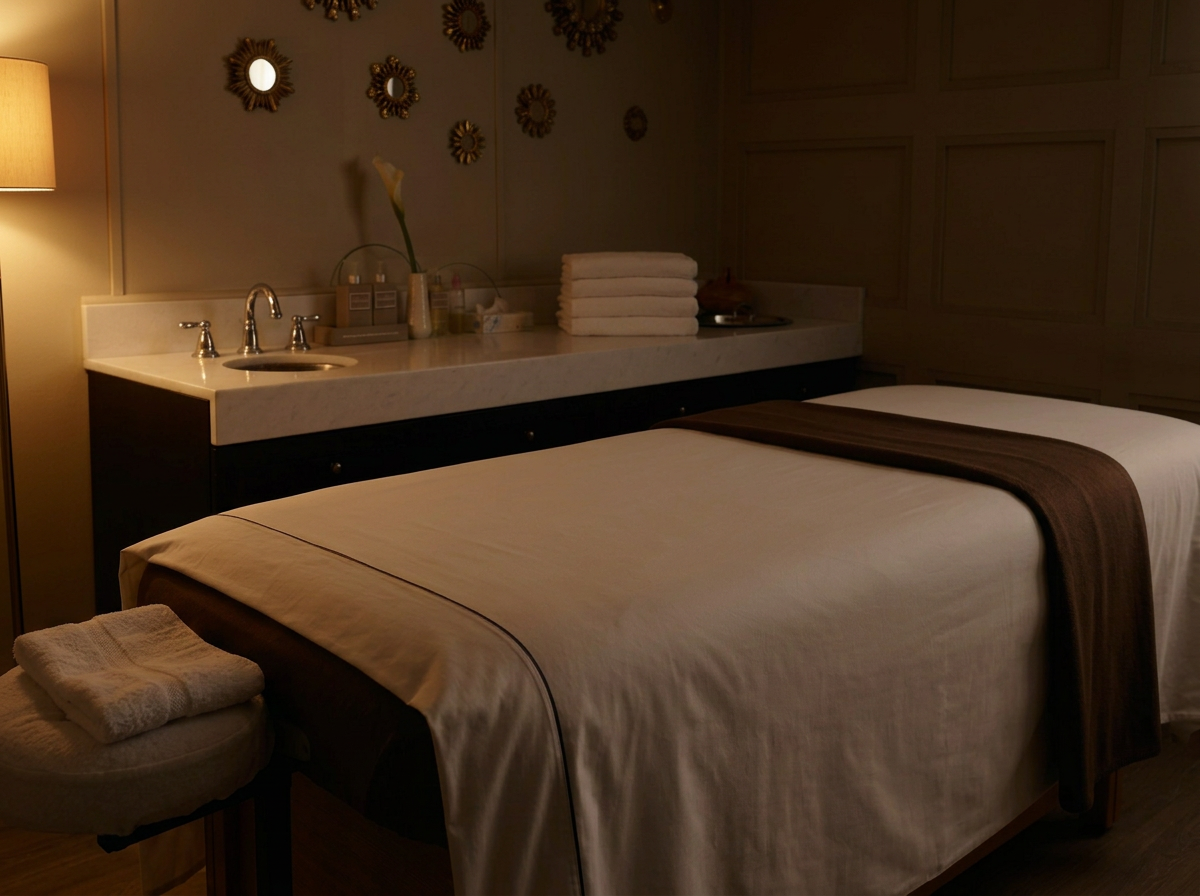
The Train Director quietly approached me. Whether it was to soften my door issue embarrassment or other, I do not know, but a brand-new spa carriage was available for me to try a complimentary treatment or my choice.
Well...
Obviously.
I arranged for the massage to happen before we reached Marangani.
I was excited.
I walked to the spa car,
removed my clothes,
tucked myself underneath the sheet
and settled in for what I assumed would be a very relaxing experience.
The massage was wonderful.
Remember I do not like curtains closed so had ask the lovely young lady to lift the blinds.
Totally relaxed.
Eyes shut.
With the sway of the train car, soft music and skillful hands, I drifted off.
Heaven on the rails…
A gentle touch and a whisper,
“We’re all done. You can get dressed now.” and she slipped out the door.
Slowly I opened my eyes.
It was dark outside. And we had stopped.
At the train station in Marangani.
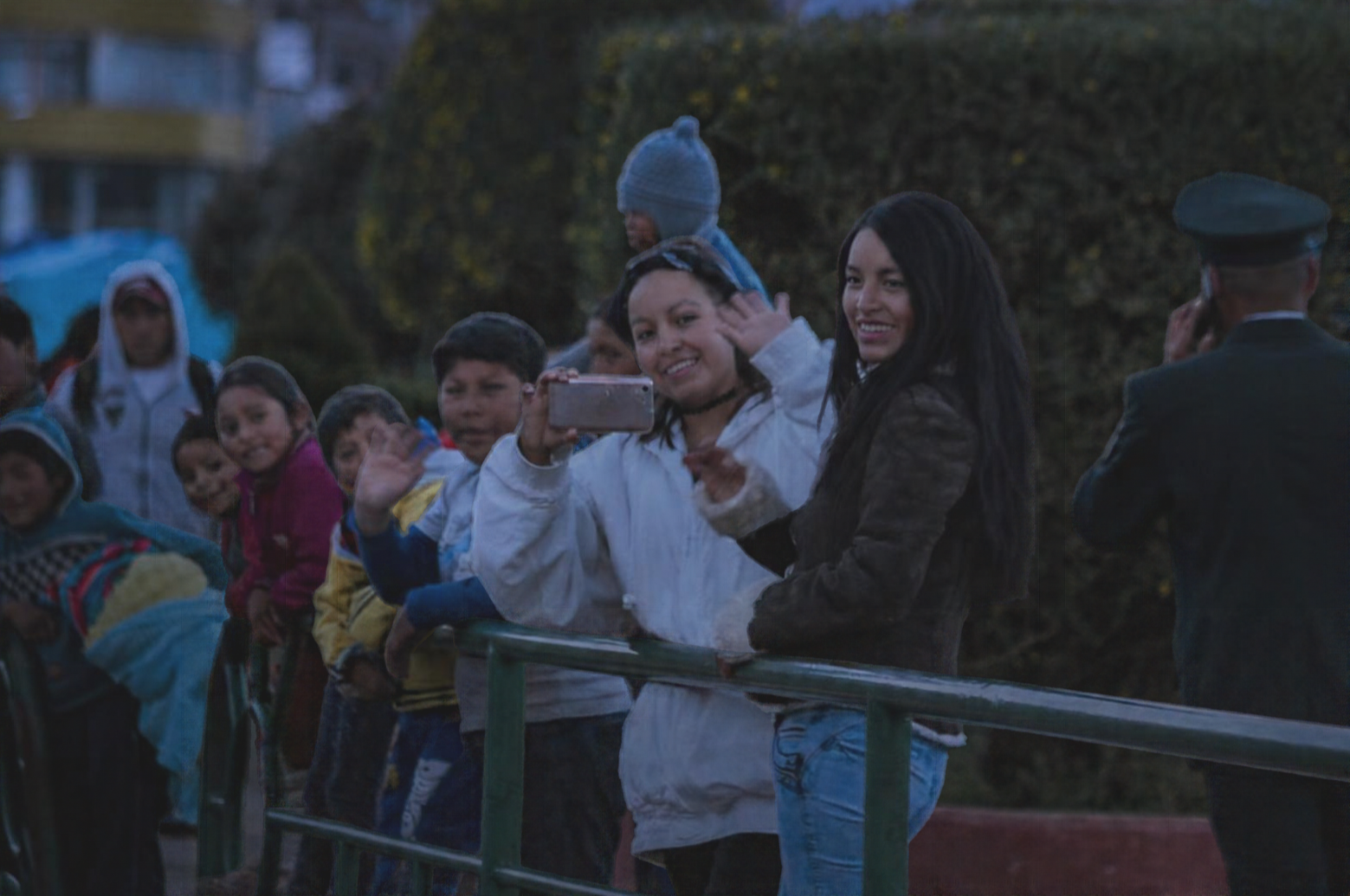
Apparently, when a luxury train stops in a town, people come to see it.
Which meant there were people outside on the train platform looking in the car windows.
Of course the lights were on in my spa car.
And the blinds were open.
So there I am, lying on a massage table wearing absolutely nothing but a sheet.
I could see the housecoat hung neatly on the hanger but not close enough to reach from the bed.
I was suddenly aware that I was no longer enjoying a private spa treatment.
I was a fish in a very luxurious fishbowl.
I called out.
Nobody heard me.
So I attempted what can only be described as a dignified emergency escape.
I slithered off the far side of the massage table, crawled across the floor with my sheet wrapped around me, reached for the blind chain and pulled it down.
Problem solved.
Dignity?
We'll call it a work in progress.
ONLY ME, right.
Because, honestly, there is always a story.
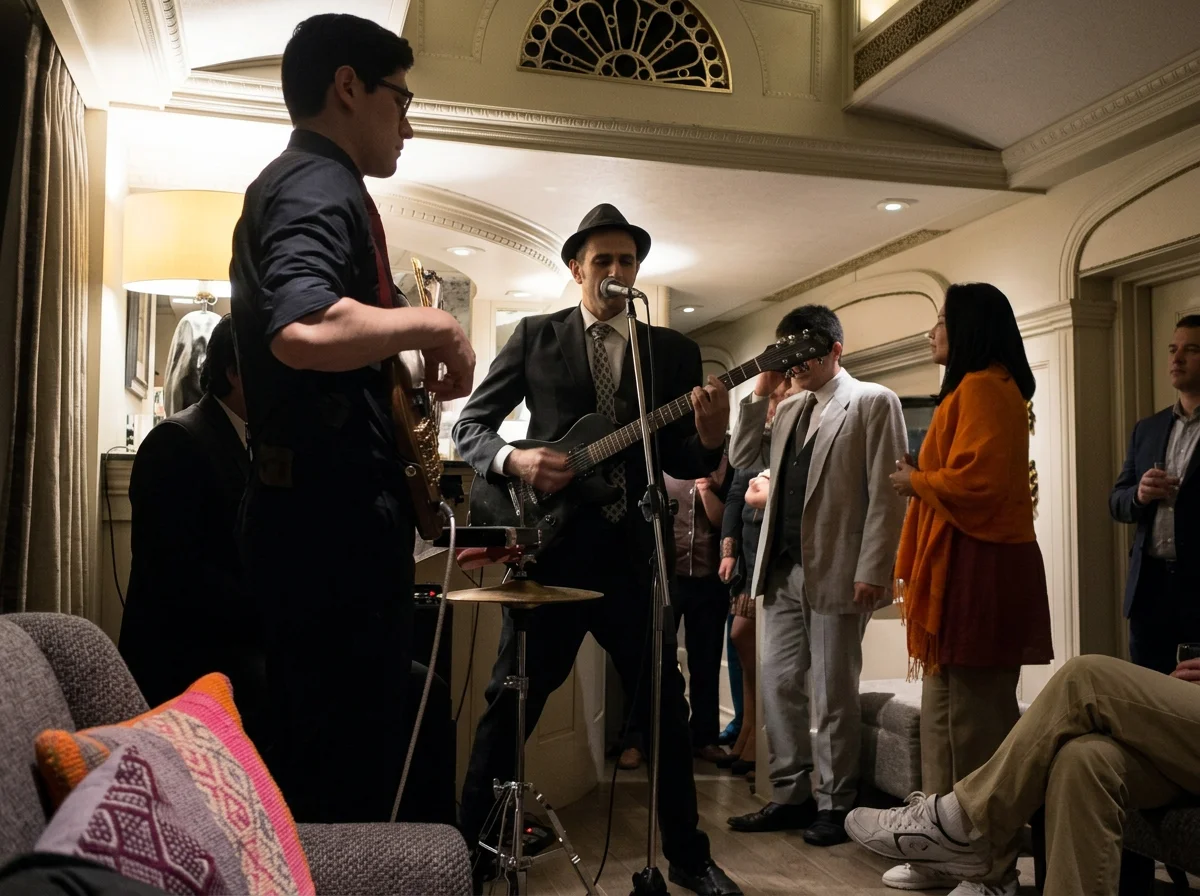
I brushed off my embarrassment and we moved to the Piano bar for the evening entertainment, the music started. First jazz and the dancing began. Before long, we were doing the Macarena.
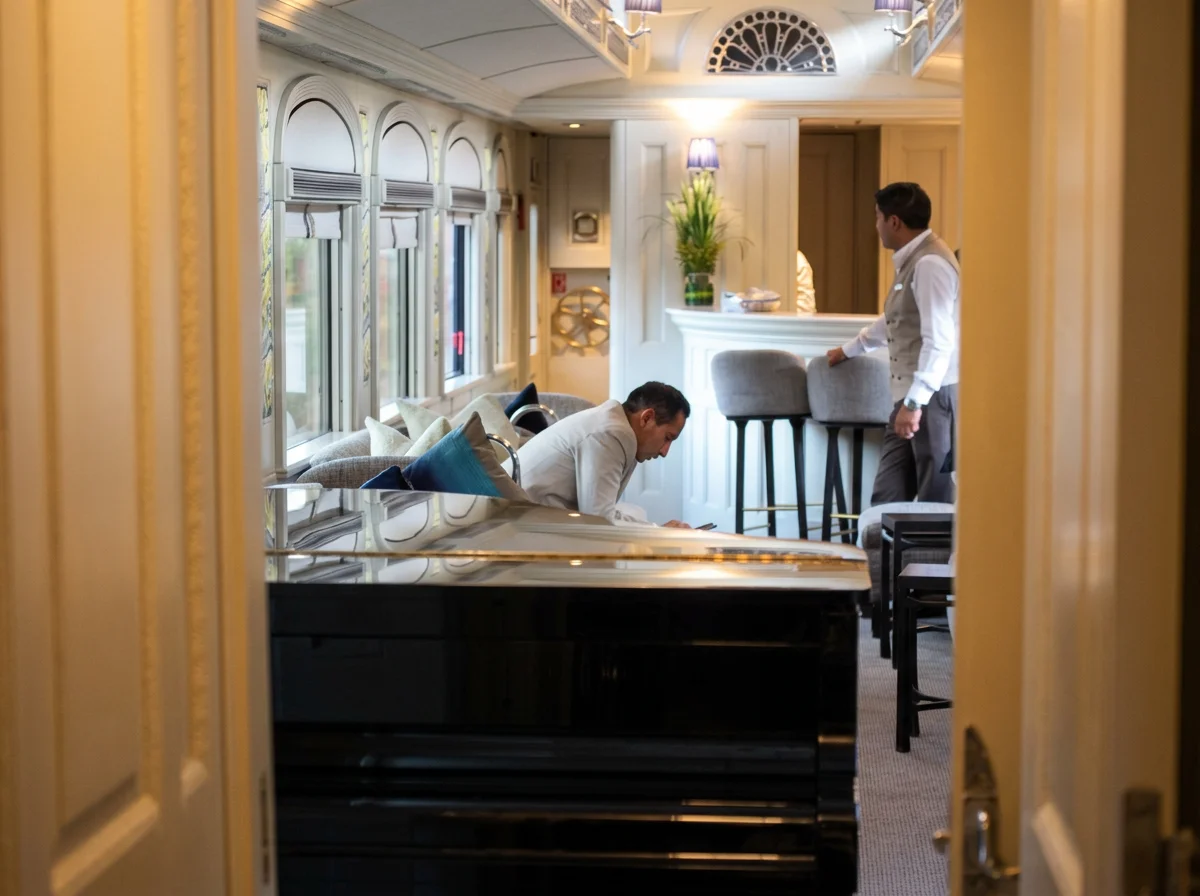
The piano bar came alive with music, singing and dancing, and this was when we really got to know our fellow travellers. What a night, one where nobody wanted to go to bed.
Again us Canadians were the last ones to leave. We are a hardy bunch that is for sure.
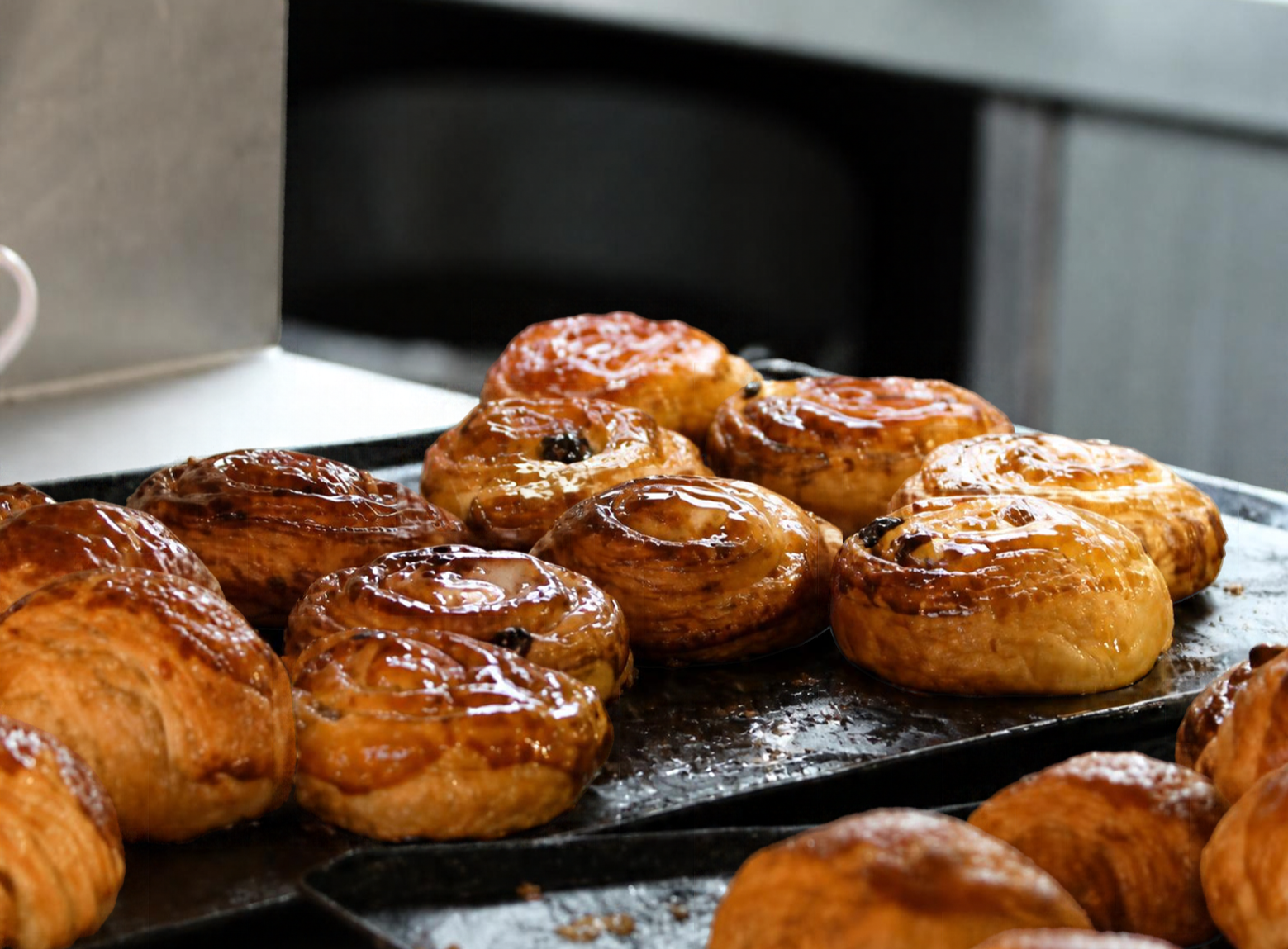
The next morning, I woke to the smell of fresh-baked bread.
There are worse ways to wake up. (Like the night before but that was now in the rear view mirror.)
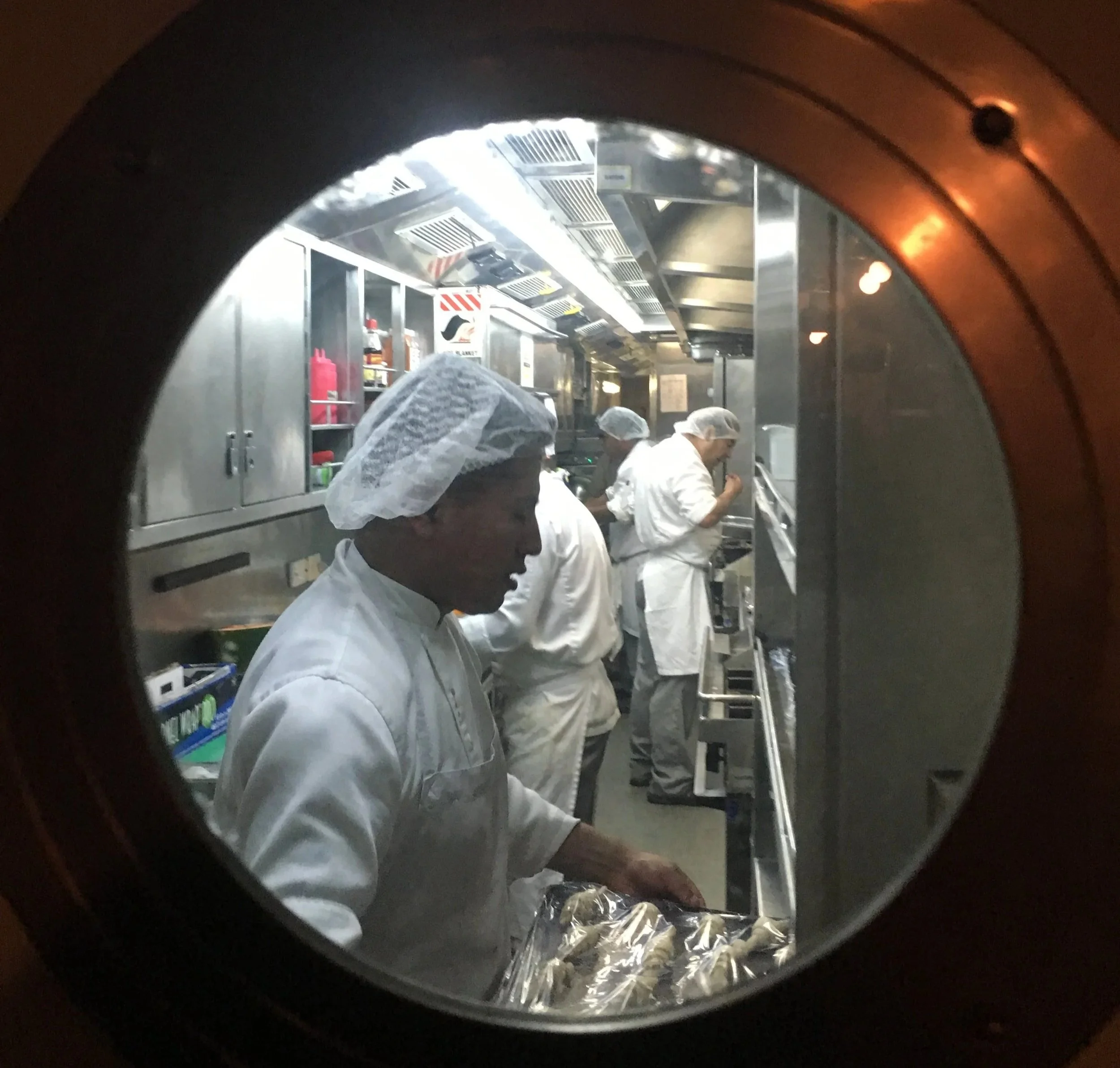
I peeked through the little porthole and could see the kitchen bustling behind the scenes.
Chefs were working.
Staff were preparing breakfast.
Bread was coming out.
The mystery behind the incredible food was solved.
We were being spoiled.
Completely spoiled.
Belmond Train Menu is created by the Belmond hotel in Cusco and it was stellar.
I say goodbye to the small town with my dignity intact.
Thank GOD!!!
The scenery is breathtaking
None of us had struggled with bad altitude sickness.
I think we have now climatized for our trip to Machu Picchu.
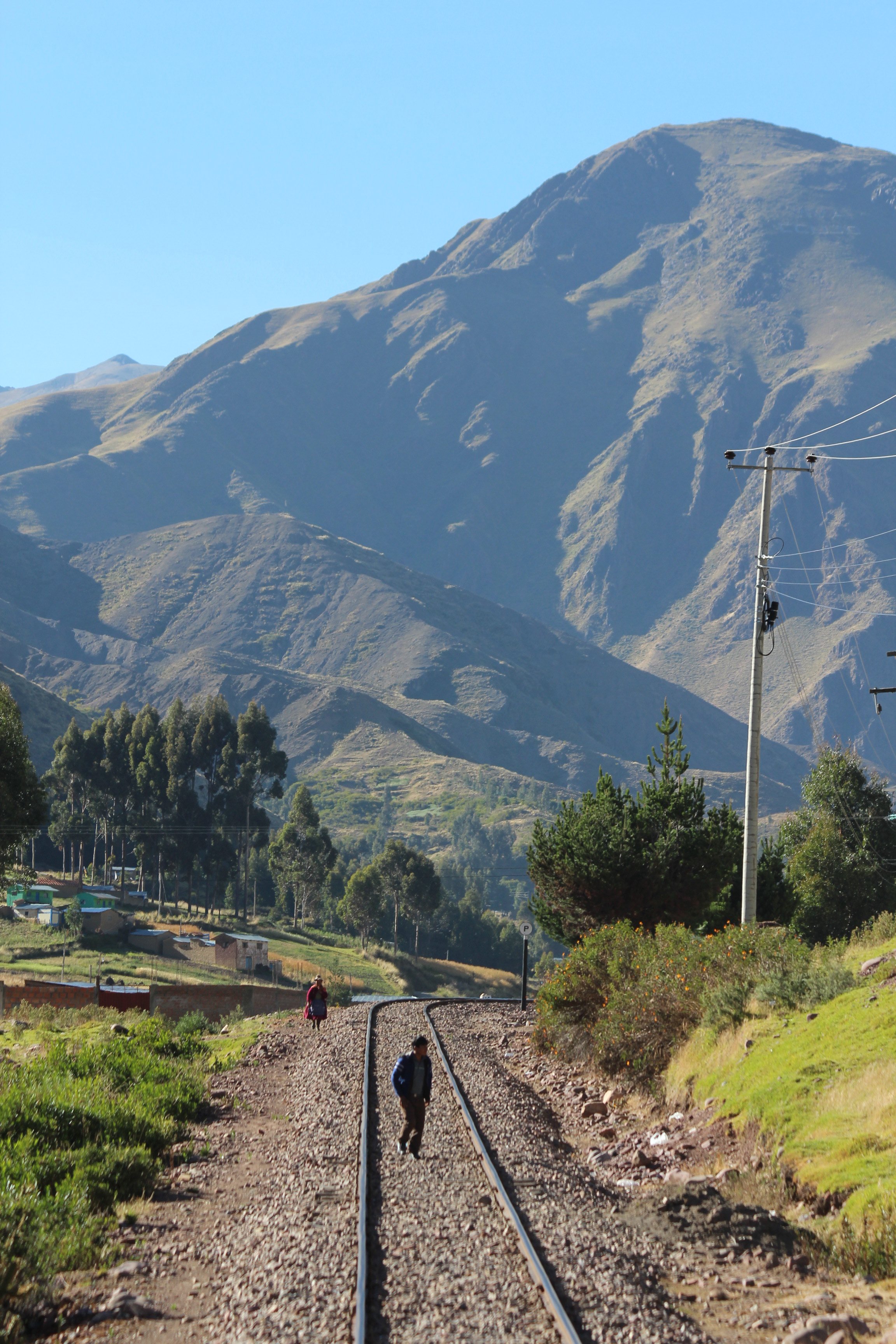
NEXT, Our destination was Raqchi, an important archaeological site associated with the Inca.
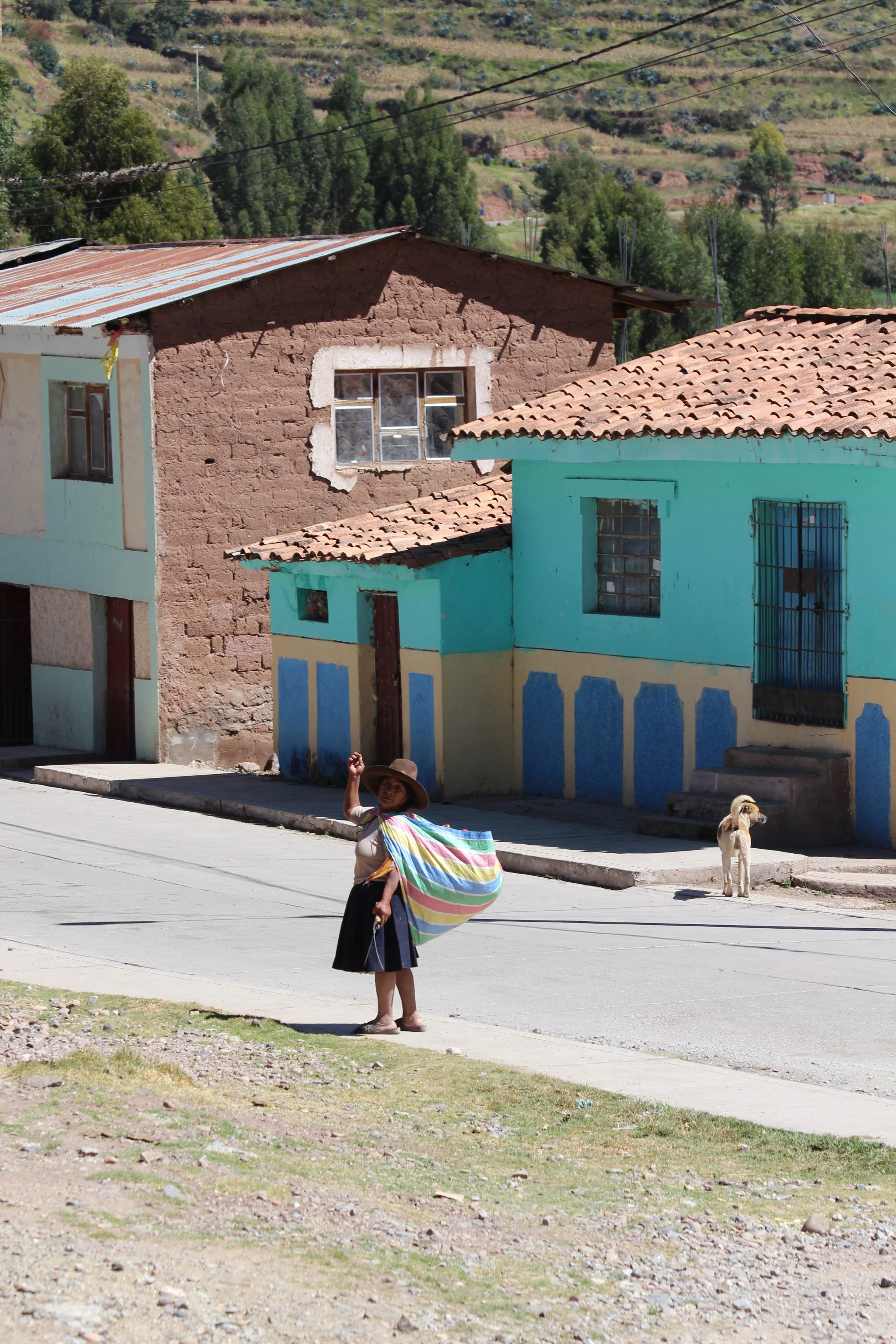
The town is filled with colour and history.
We take a short bus ride to reach our tour.
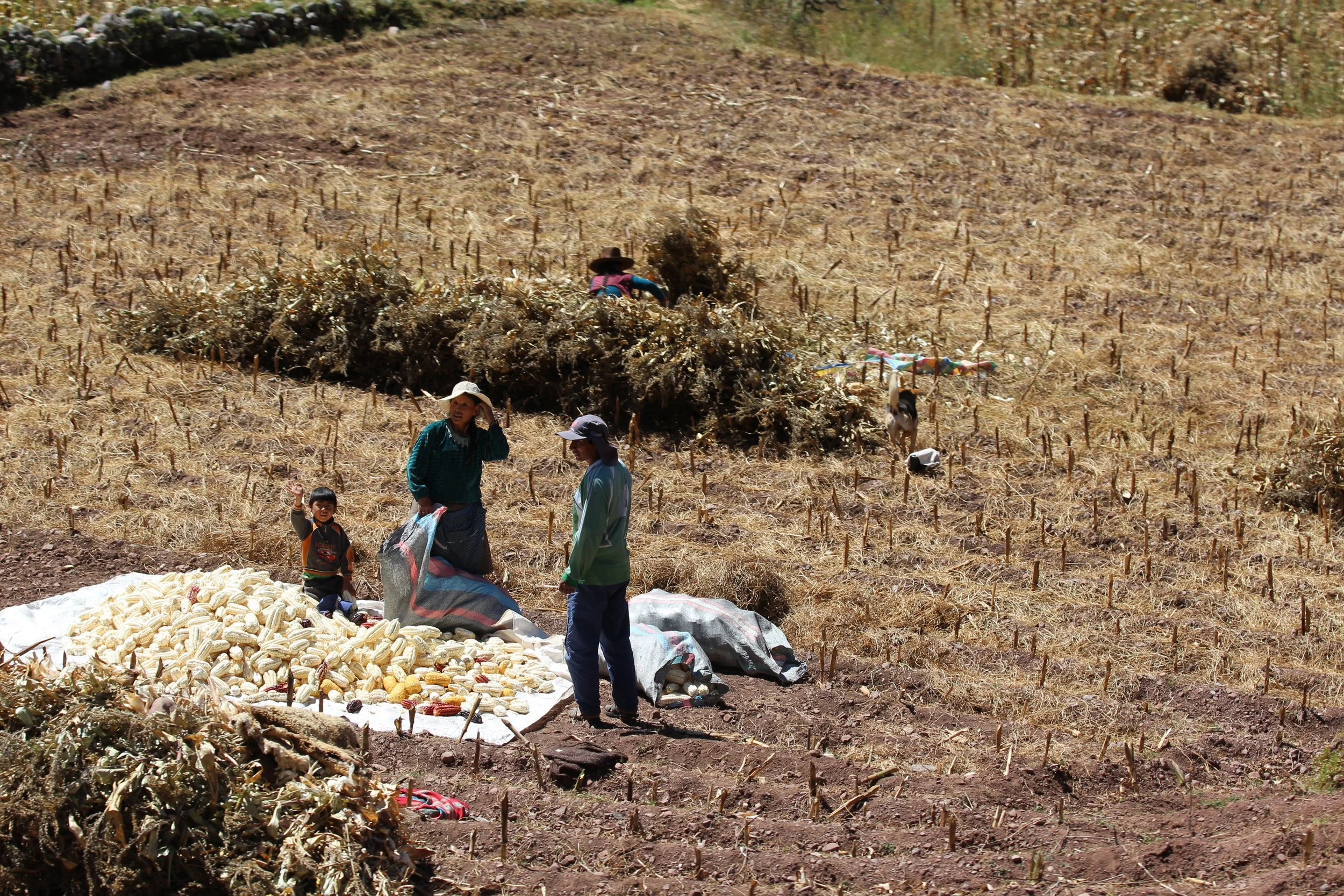
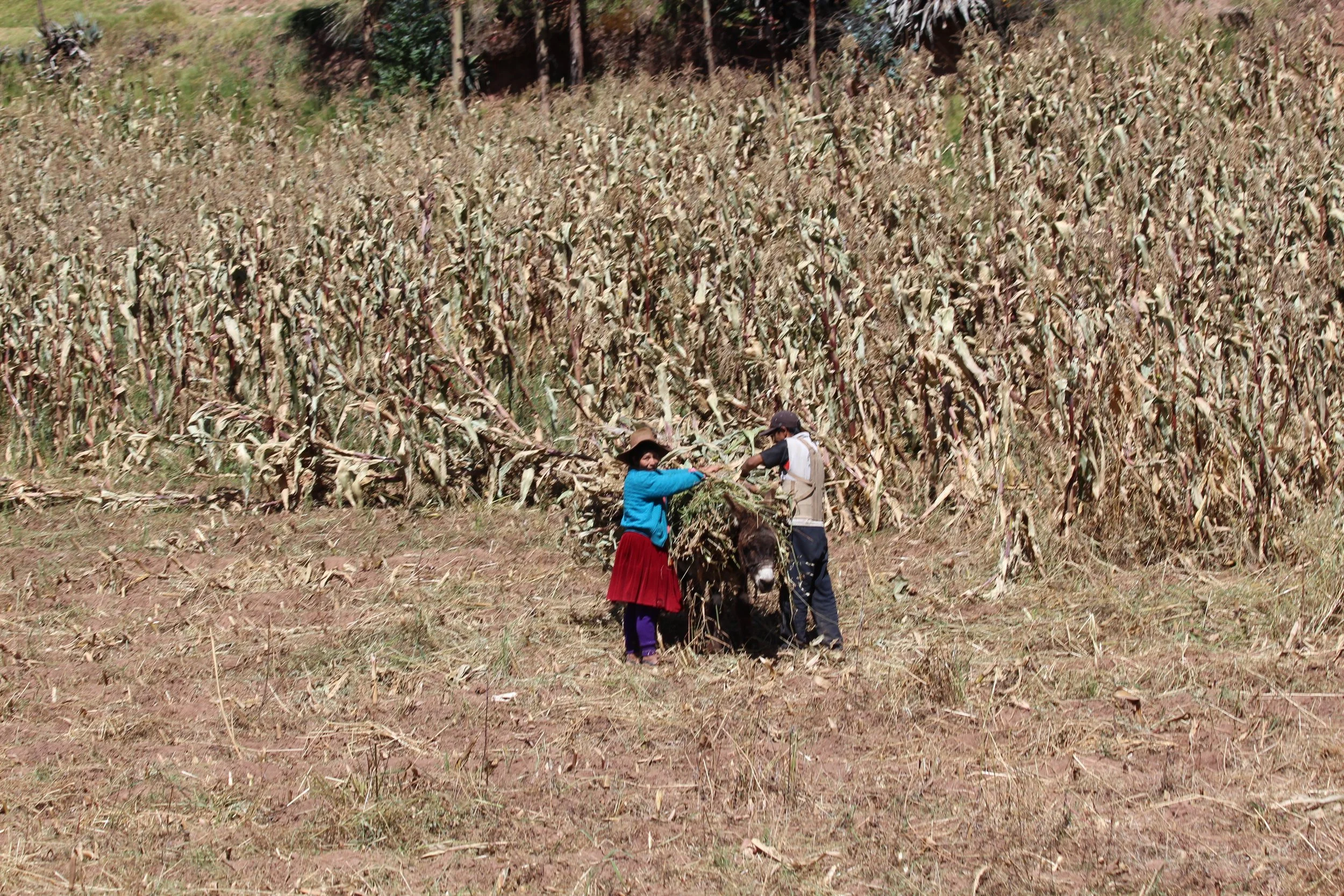
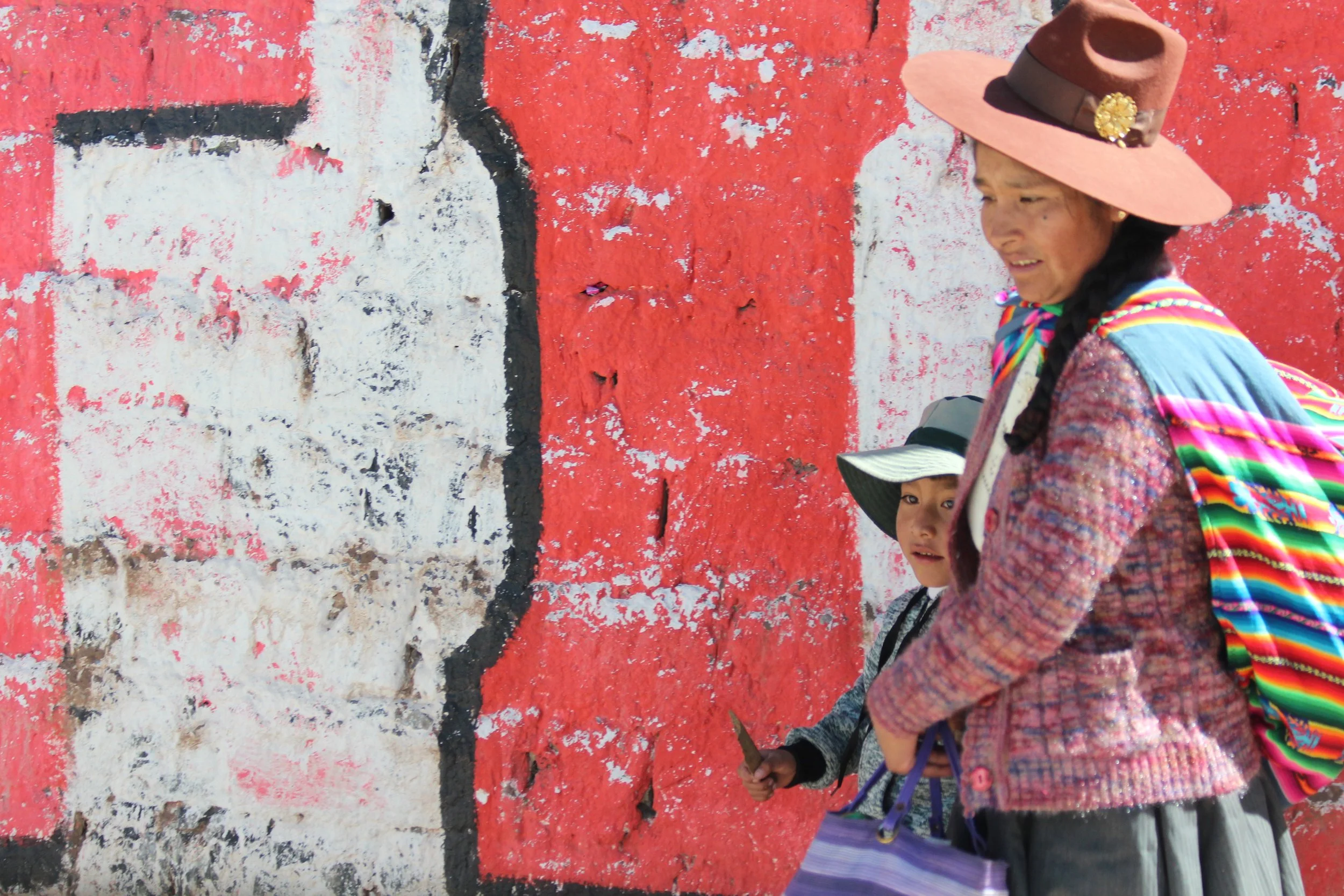
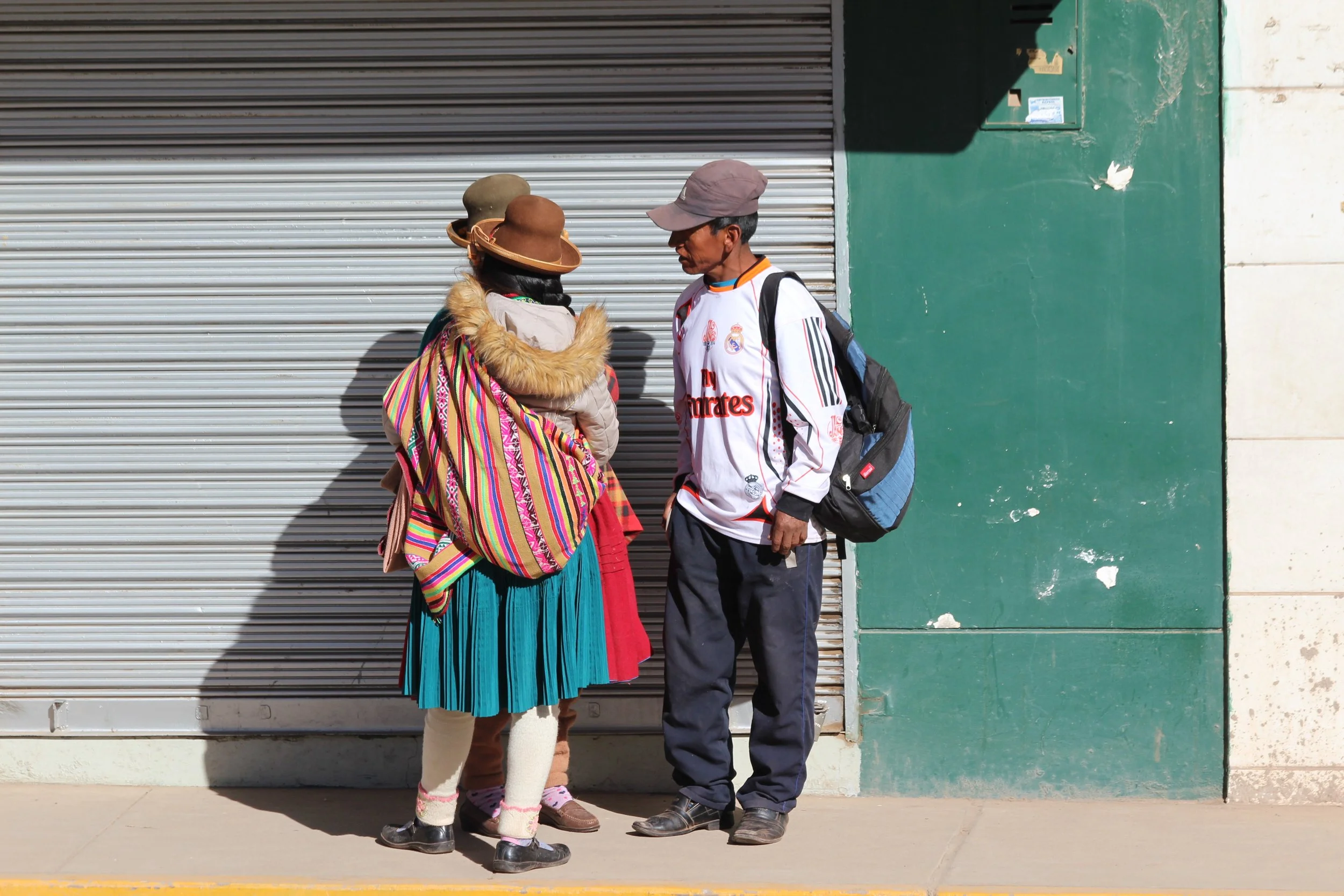
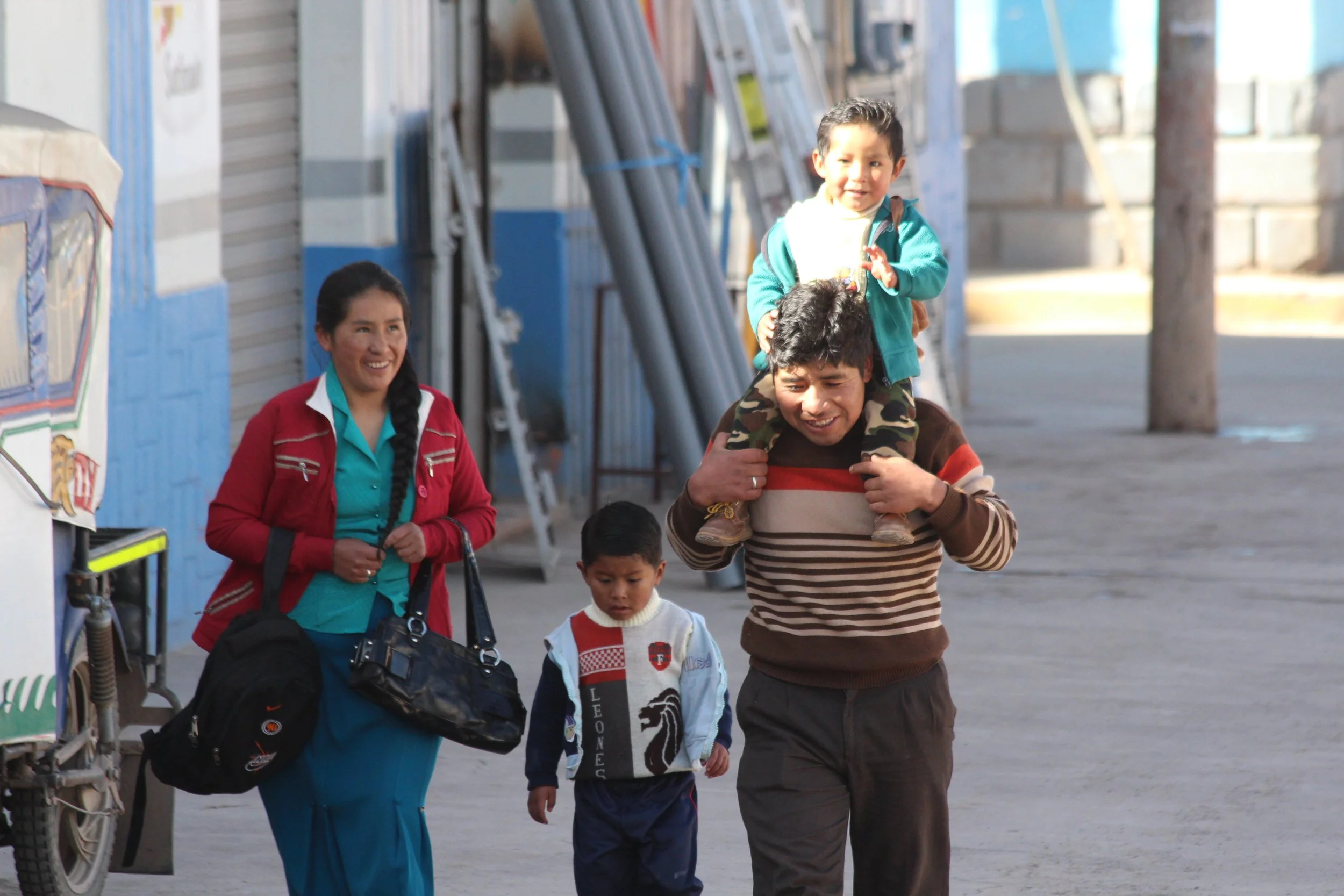
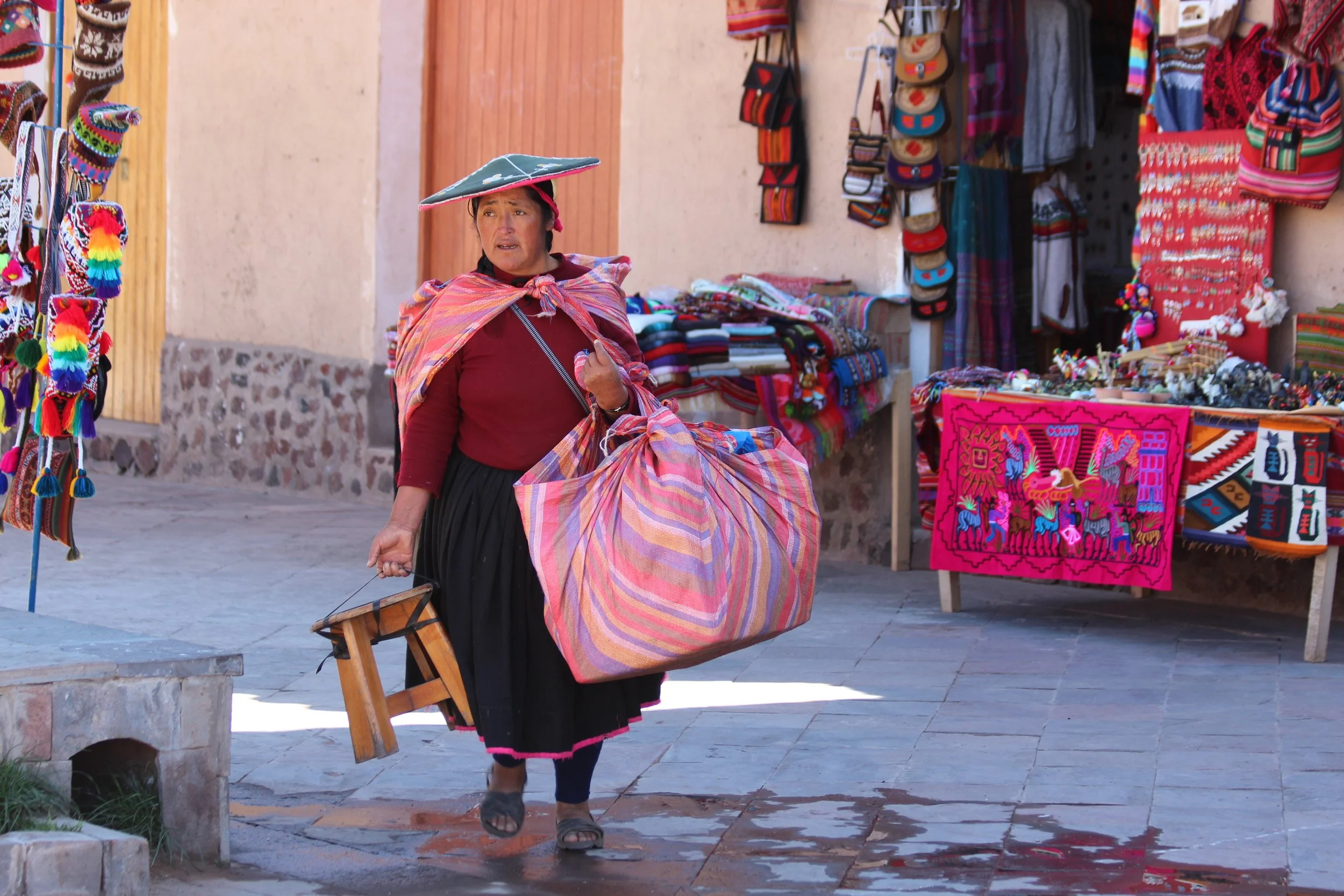
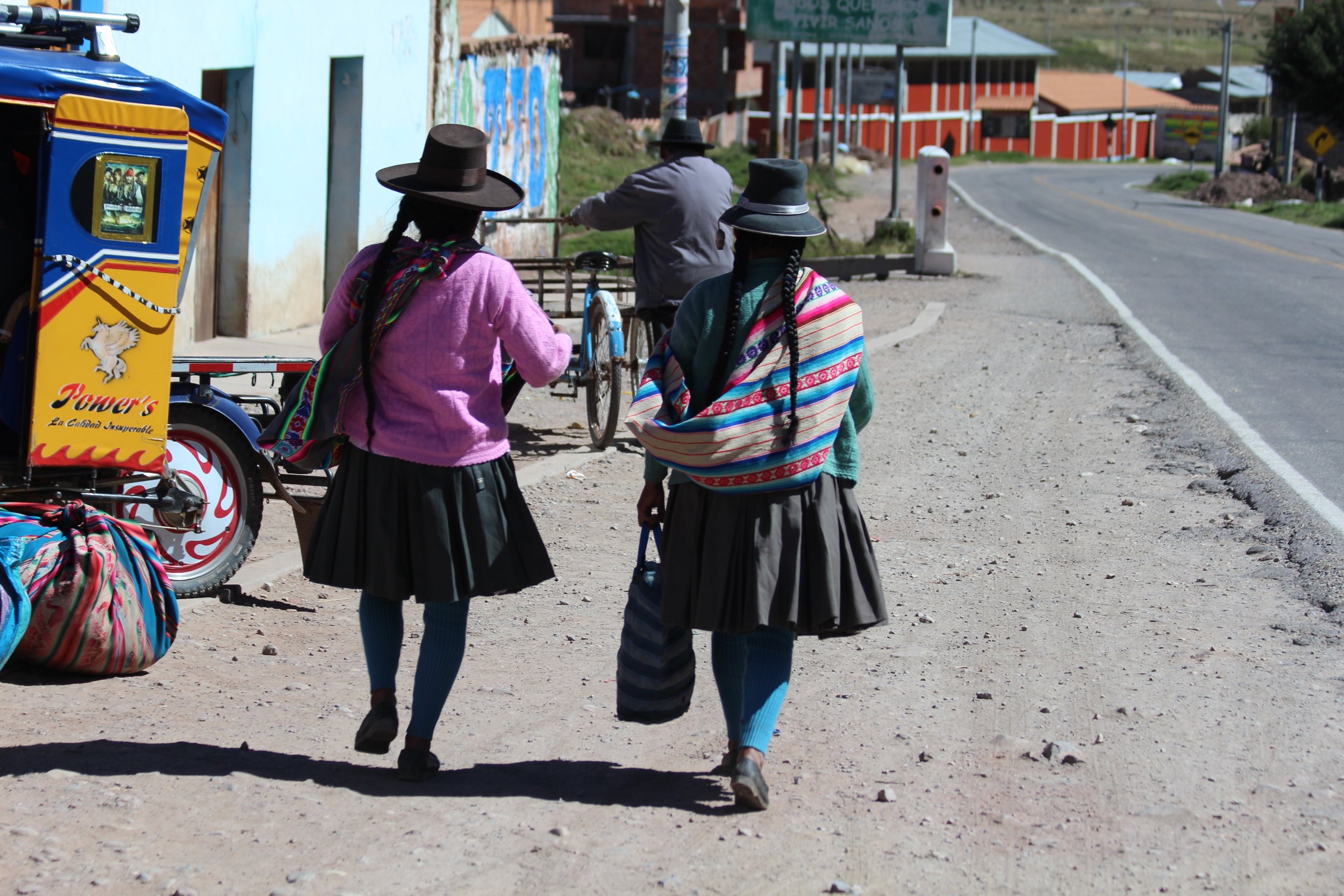
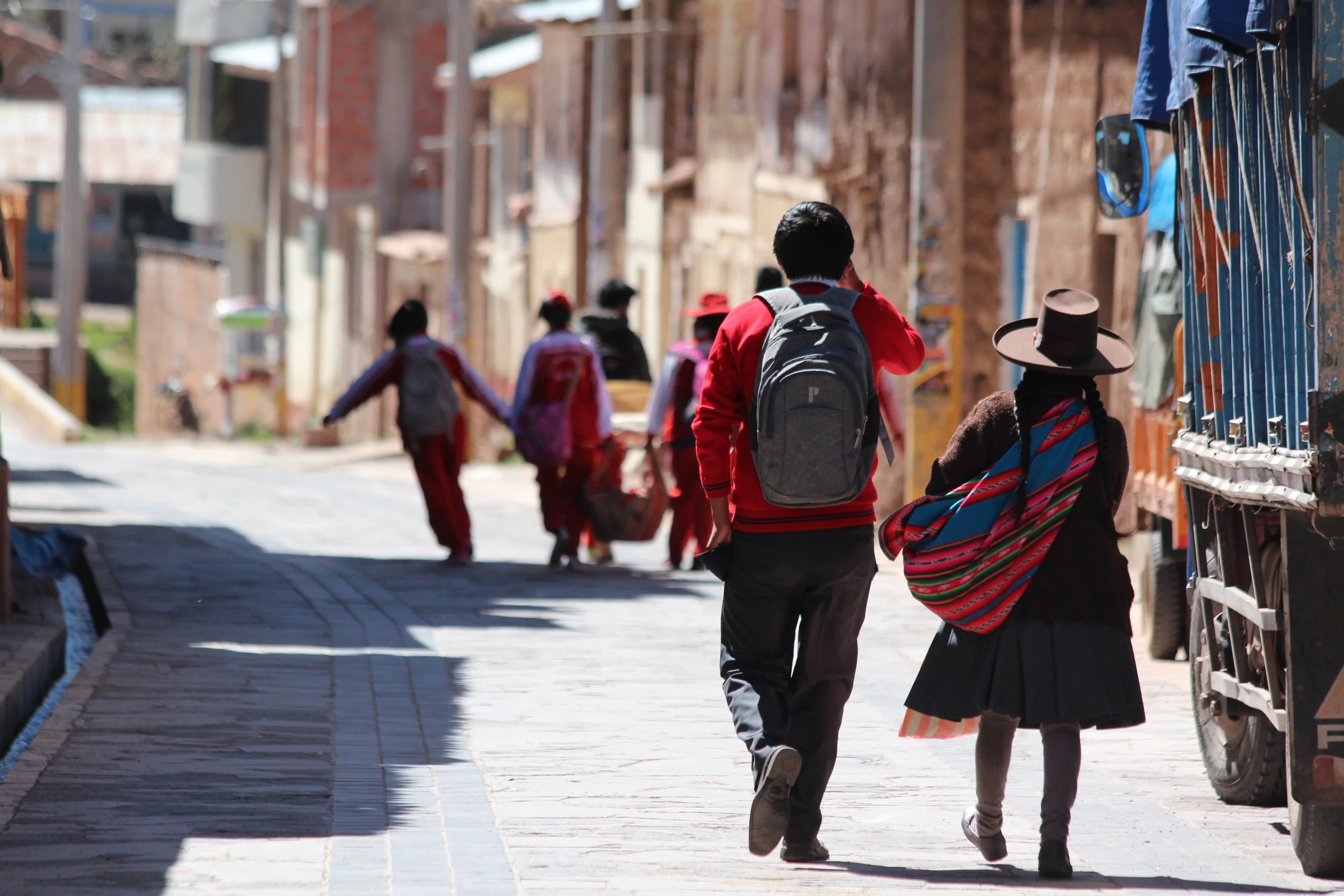
As we travel through the town I can’t help but snap photos of the families that live here.
The children are so adorable.
Their little round faces, big smiles and curiosity.
I am constantly amazed at how much the women can haul in their make shift bags.
And the Hats…
I also am noticing that men do not seem to be as noticeable.
Was it because their clothing blended in?
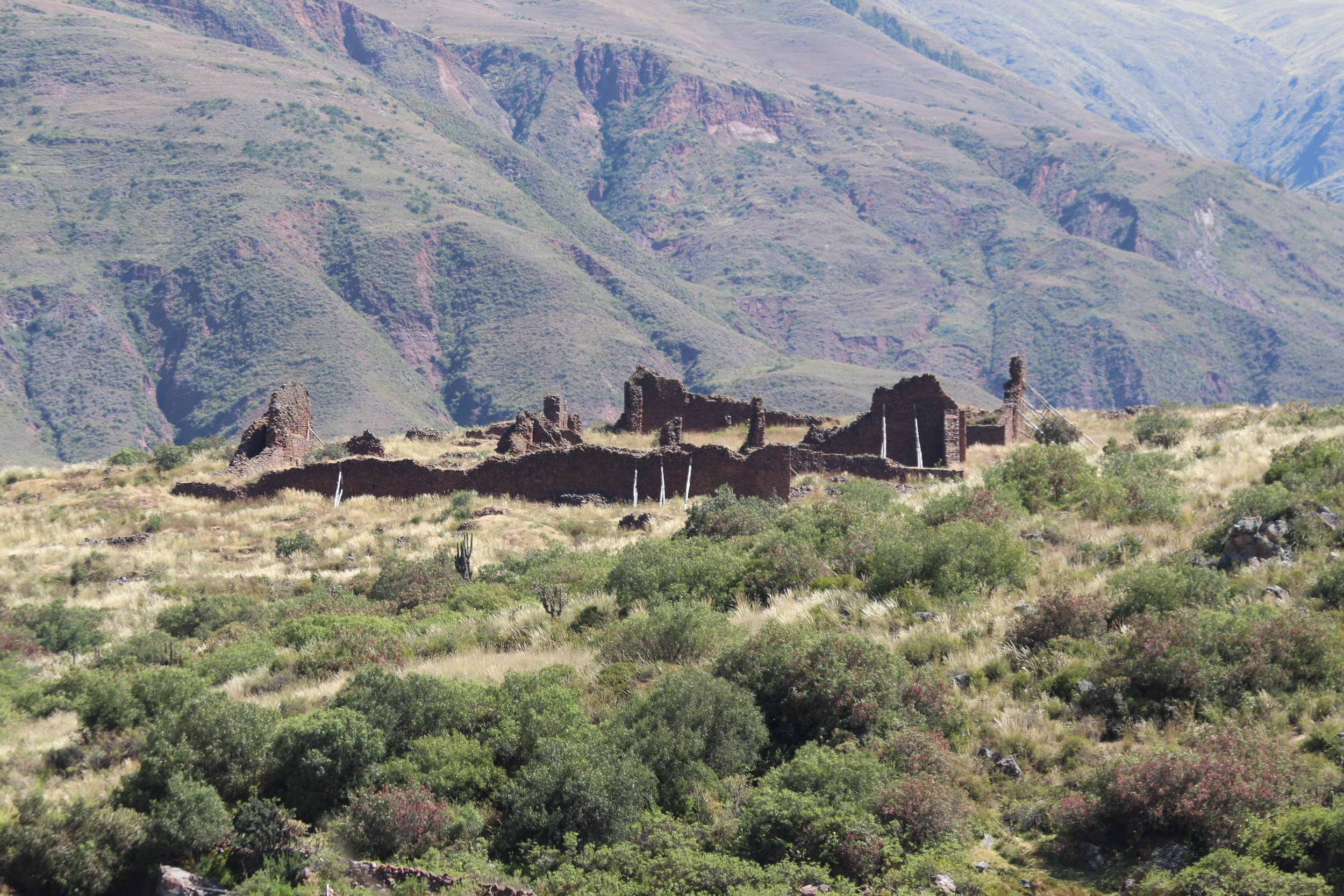
Raqchi , an ancient Inca archaeological site that, at first glance, might look like a collection of old stone walls.
But look a little closer and you start to realize this was far more than a temple.
Raqchi was a place where religion, food, storage, agriculture and everyday life all came together. And once I understood what I was looking at, those scattered walls and round buildings suddenly made a whole lot more sense.
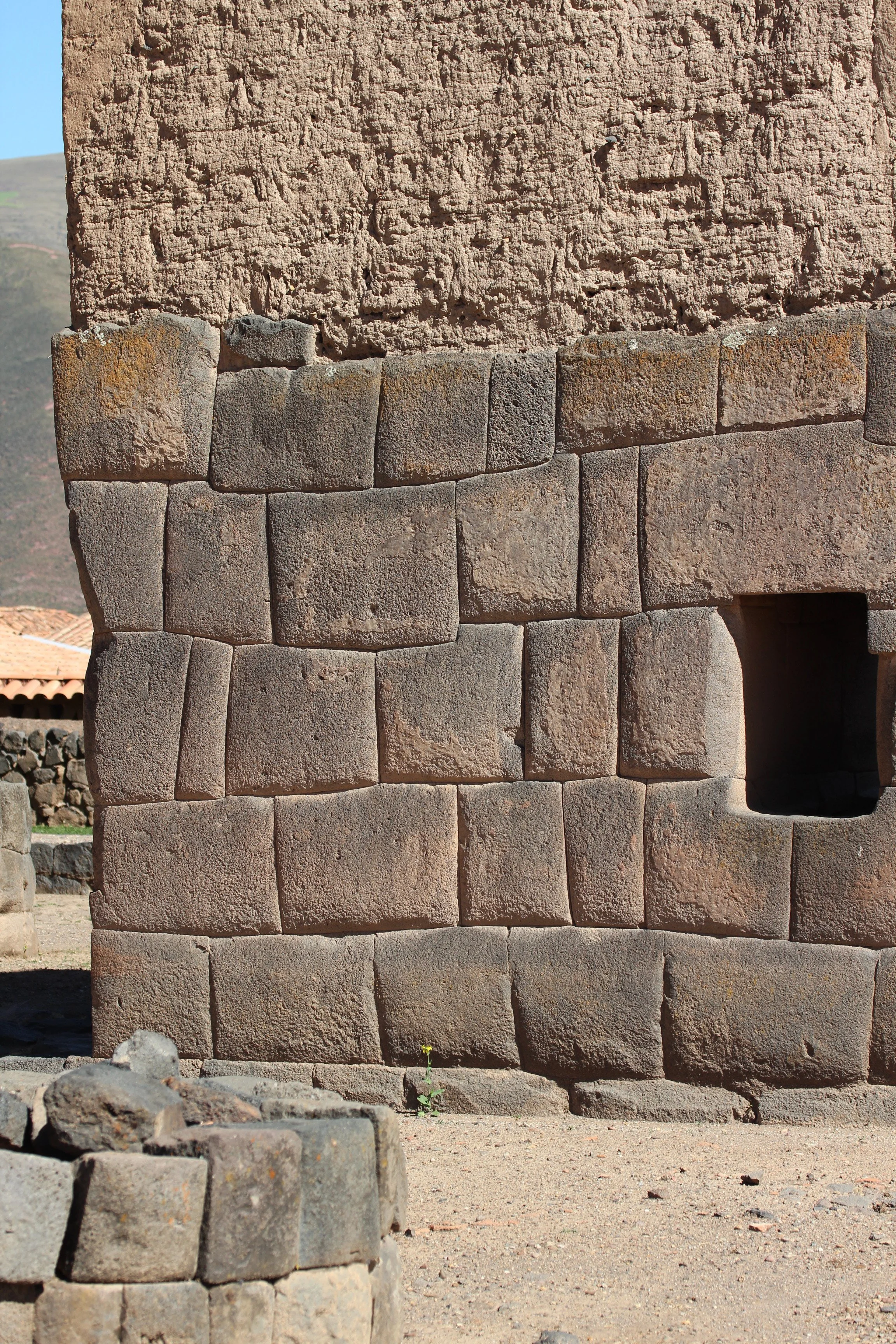
The star of the show is the Temple of Wiracocha, dedicated to Wiracocha, the Inca creator god. Even today, what remains is impressive. The enormous central wall combines carefully fitted stone at the bottom with adobe — sun-dried mud brick — above it. The original roof is long gone, but parts of the surviving wall still reach roughly 12 metres high.
Standing there, I couldn't help but wonder what this must have looked like when it was complete.
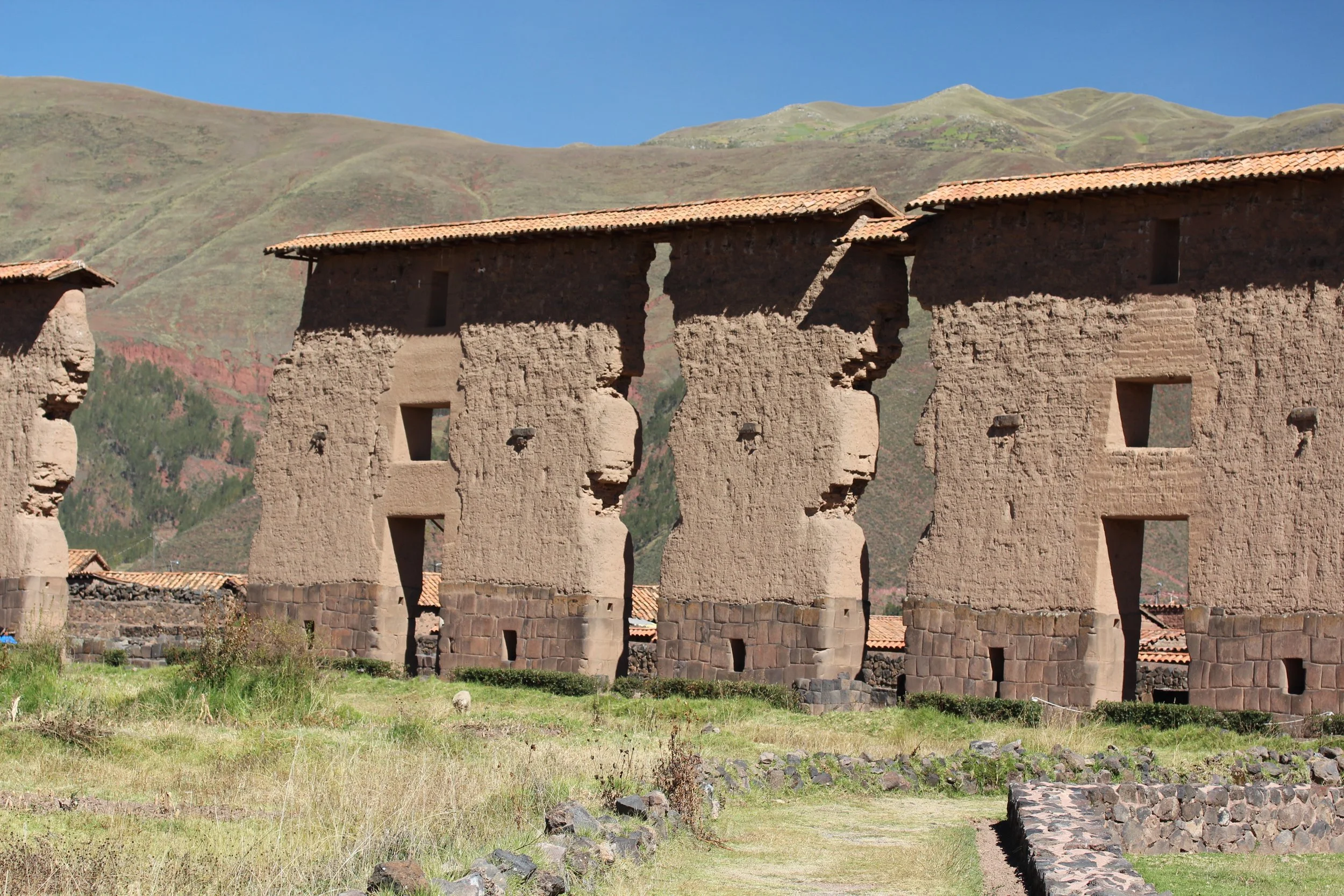
I learned that Raqchi wasn't simply one big temple. It was a much larger complex with courtyards, residential areas, fountains, an artificial lake and, perhaps most fascinating to me, rows and rows of round storage buildings.
There are thought to have been 152 of these circular structures, known as qolqas.
Ancient storage units.
Basically, the Inca had their own version of a very impressive food pantry.
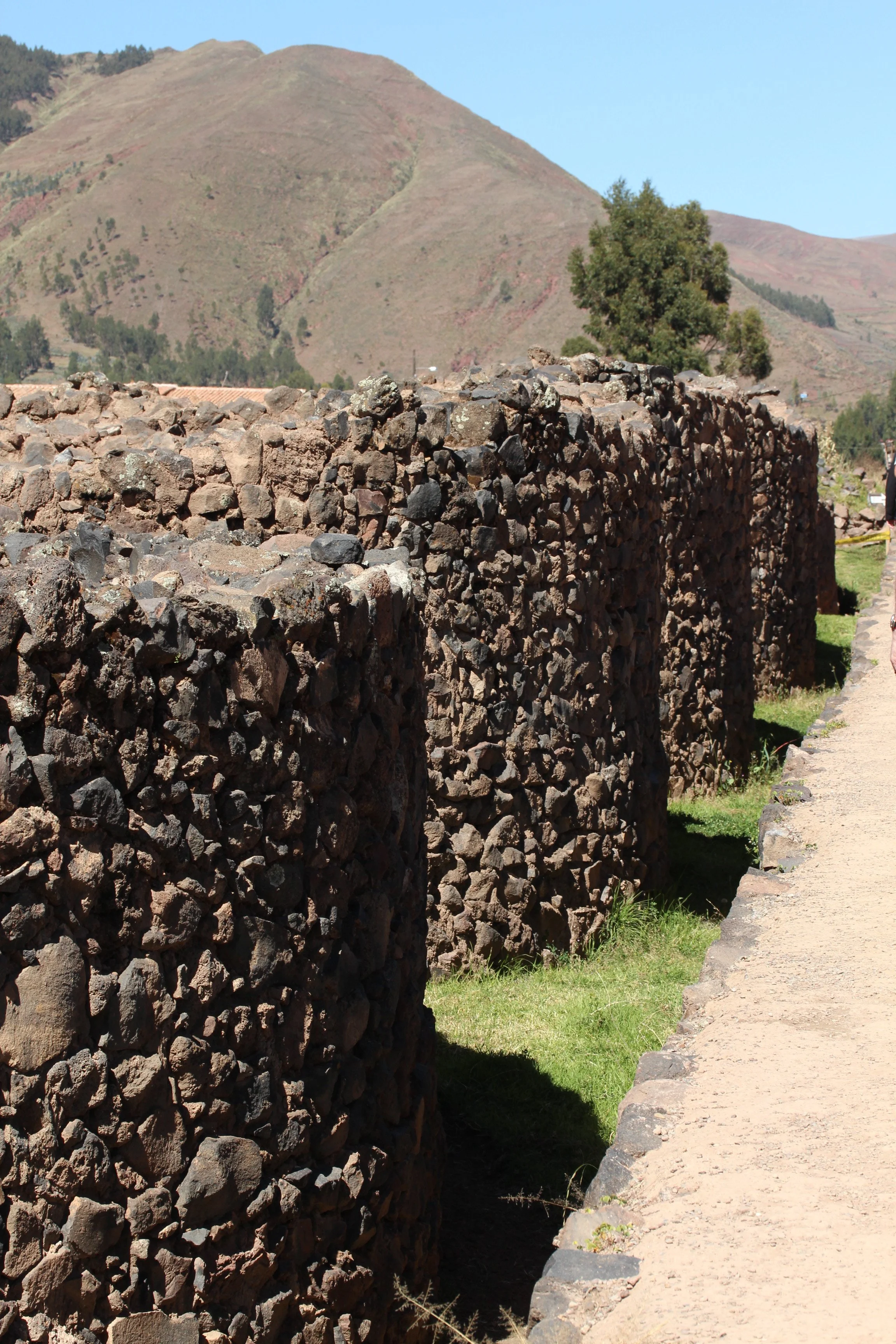
These storehouses could hold crops and other supplies, including maize, potatoes and quinoa. Potatoes could also be preserved as chuño, a freeze-dried form that could be stored for much longer.
Think about that for a minute.
This wasn't simply a place where people came to worship.
It was part of a system designed to feed and support people.
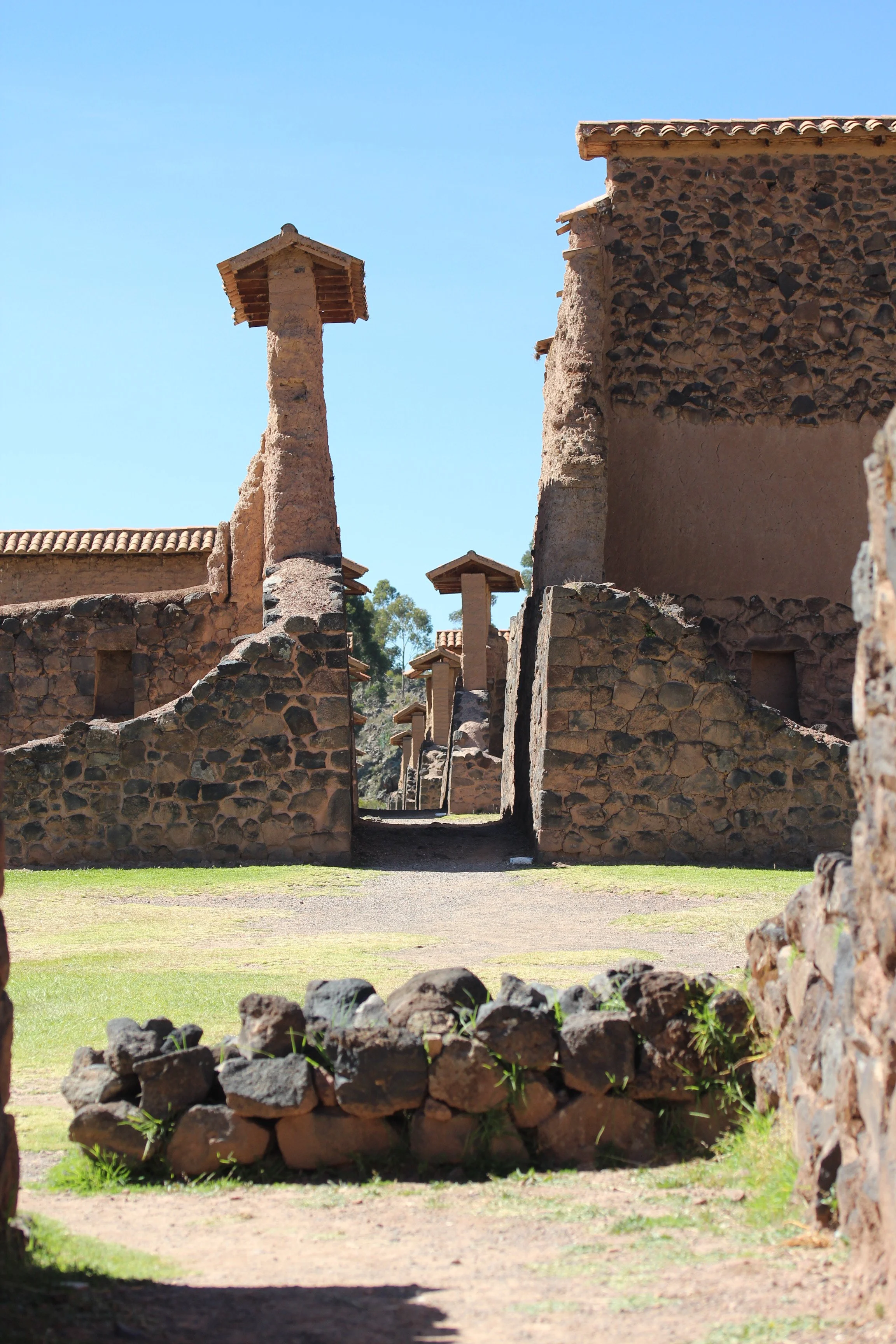
The Inca understood something we still understand today: you don't wait until you're hungry to figure out where dinner is coming from.
Spanish colonial rule disrupted the Inca political system, and communities in the region were later relocated into the valley.
When you stand in a place like Raqchi.
And you look around. You realize they had figured out some pretty important things.
How to store food.
How to preserve it.
How to move it.
How to organize communities.
How to build on a massive scale.
And how to create a system where the practical business of keeping people fed could exist alongside their spiritual life.
Not bad for a civilization without a computer, a supermarket or a Costco.
Our visit to Raqchi was the final excursion of our Belmond Andean Explorer journey before arriving in Cusco.
The past couple days were packed with the perfect amount of luxury and exploring.
And to think this was a plan B.
A option that came together because “NO” was not an option.
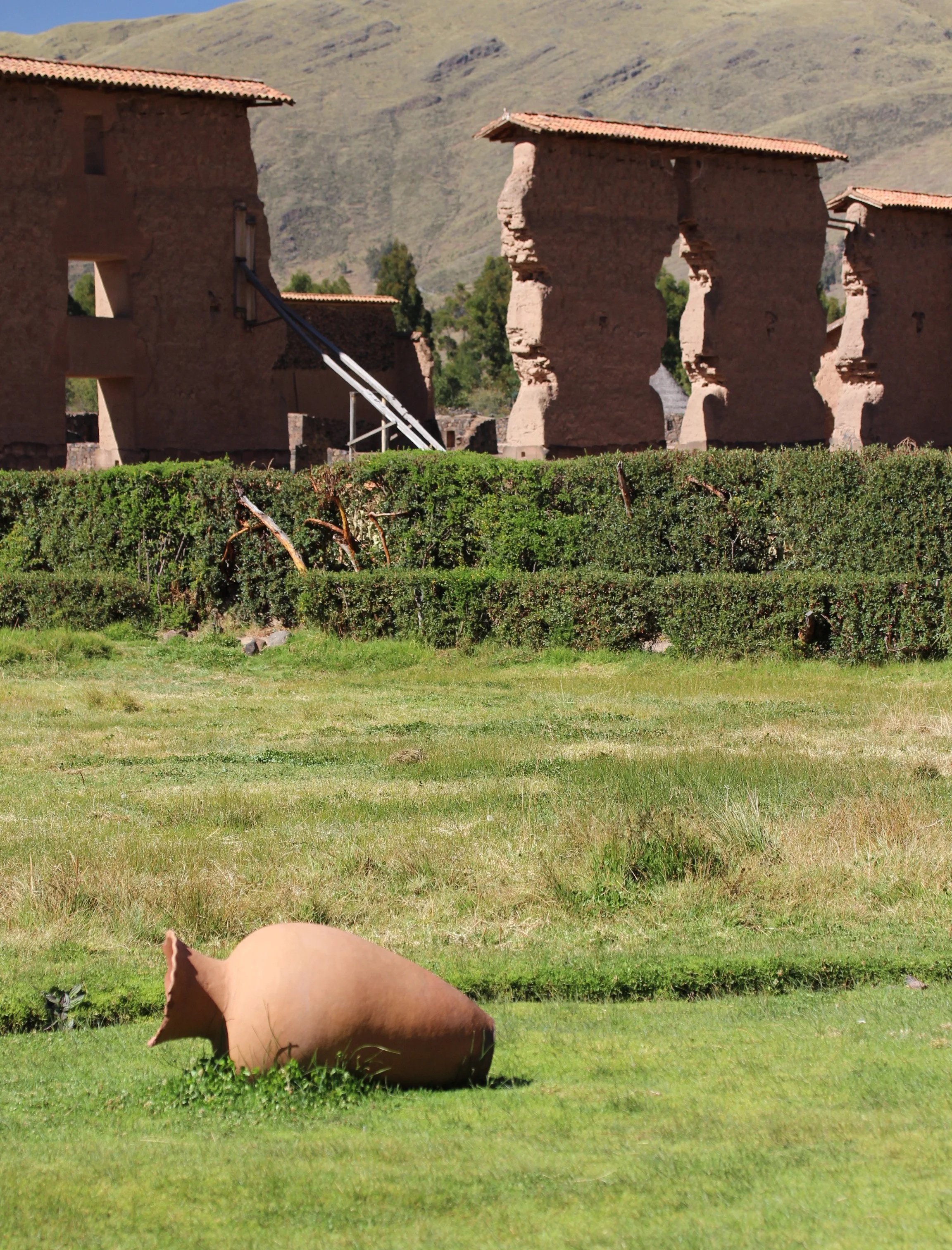
We climbed back aboard the train for our final brunch, and as we continued toward Cusco.
I found myself thinking about just how much we had seen in such a short time.
The luxury of the train.
The vastness of the Altiplano.
Lake Titicaca.
The floating islands.
The people.
The food.
The music.
And now Raqchi.
It was the perfect final chapter before Cusco.
And, as I've learned over and over again while travelling, sometimes the places that make the biggest impression aren't the ones you expected.
They're the ones that make you stop, look around and say:
“Wow. I had no idea.”
This train trip had everything.
Including, two stories that I will probably be telling for the rest of my life.
As we finally arrived in Cusco, our bags were removed before we even stepped off.
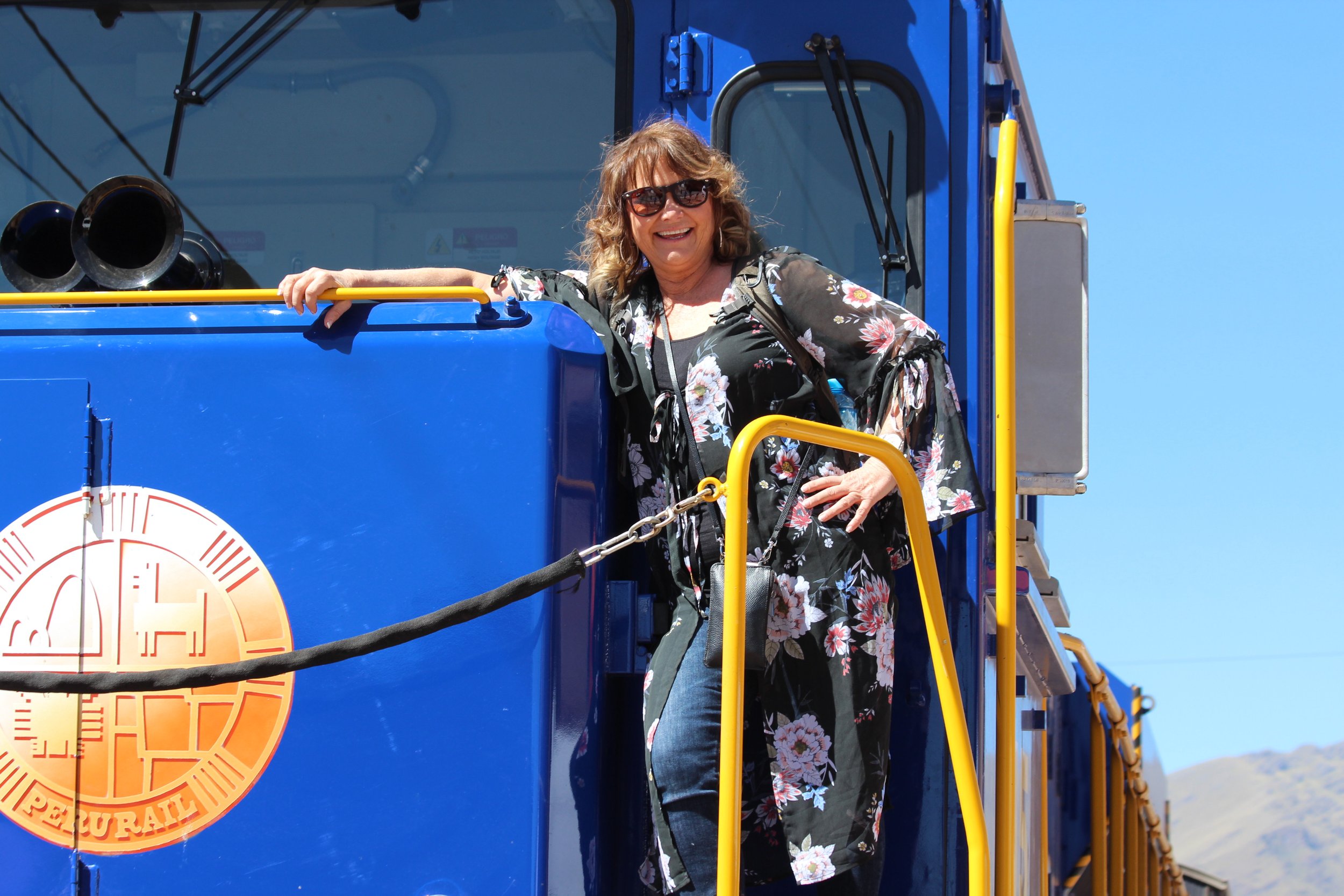
The staff lined the platform, clapping, offering high-fives and thanking us as we departed.
Our waiter, Miguel or room attendant, Carolina, Arnaldo Train Superviser and the entire staff and engineers.
It felt like we were being celebrated.
And somehow, it felt exactly right.
We had been welcomed aboard with red carpets, champagne glasses and music.
We were leaving with applause and appreciation.
If I had to sum up the Belmond Andean Explorer, saying it exceeded my expectations would be an understatement.
It was a trip of a lifetime.
Was it expensive?
Yes.
Was it worth it?
For us, absolutely.
Because travel isn't always about getting from one place to another.
Sometimes the journey is the destination.
And sometimes the things that don't go according to plan become the stories you tell forever.